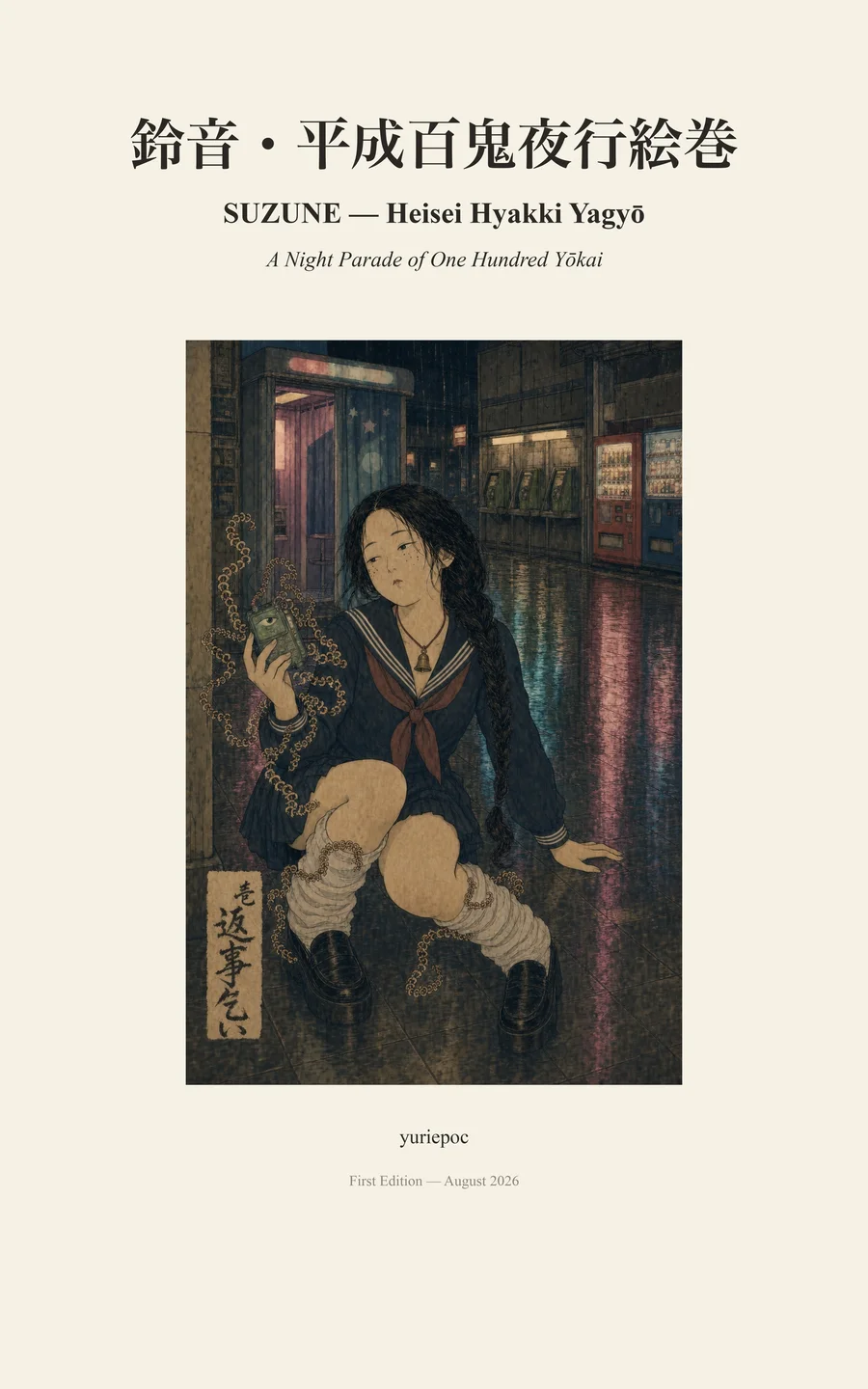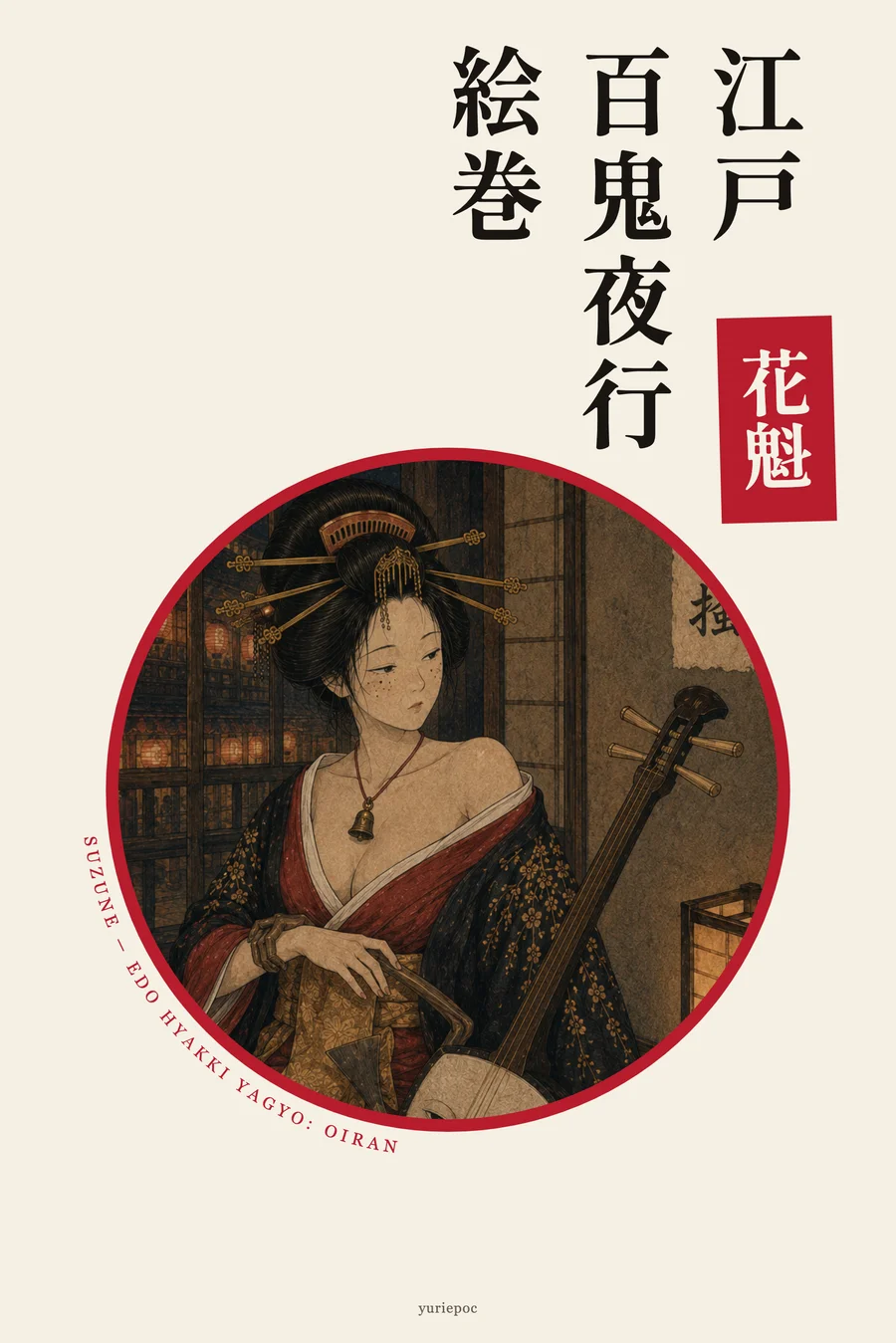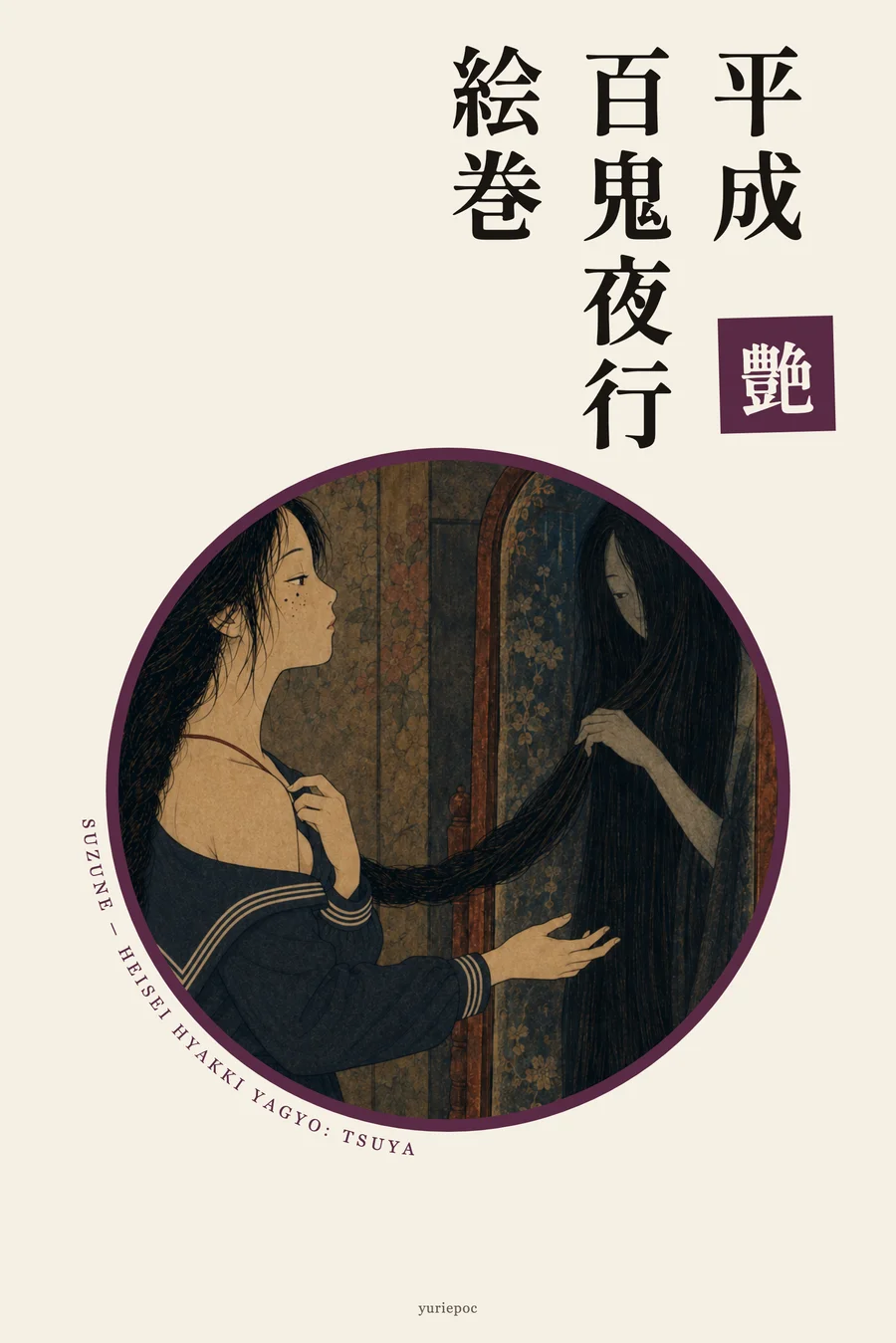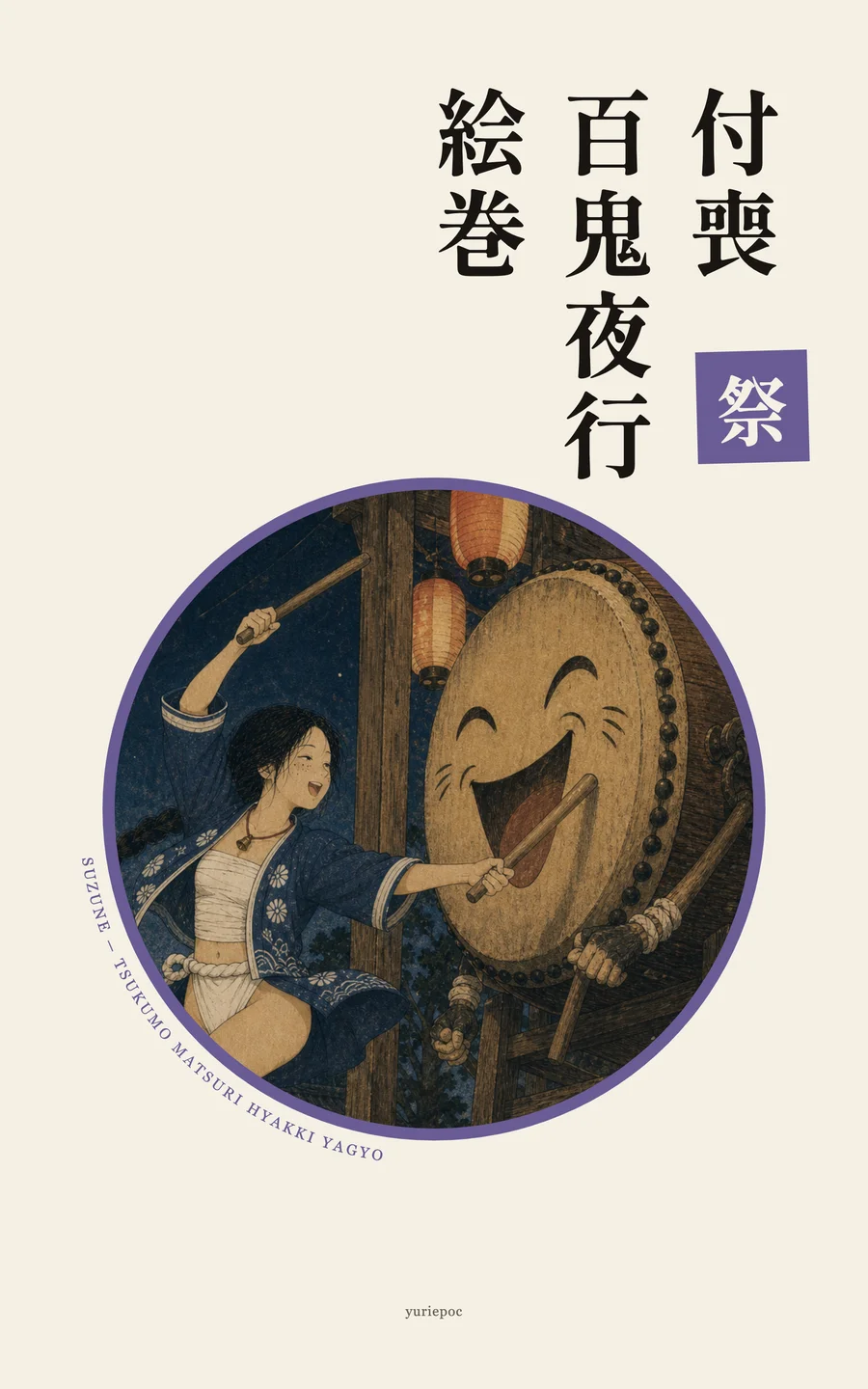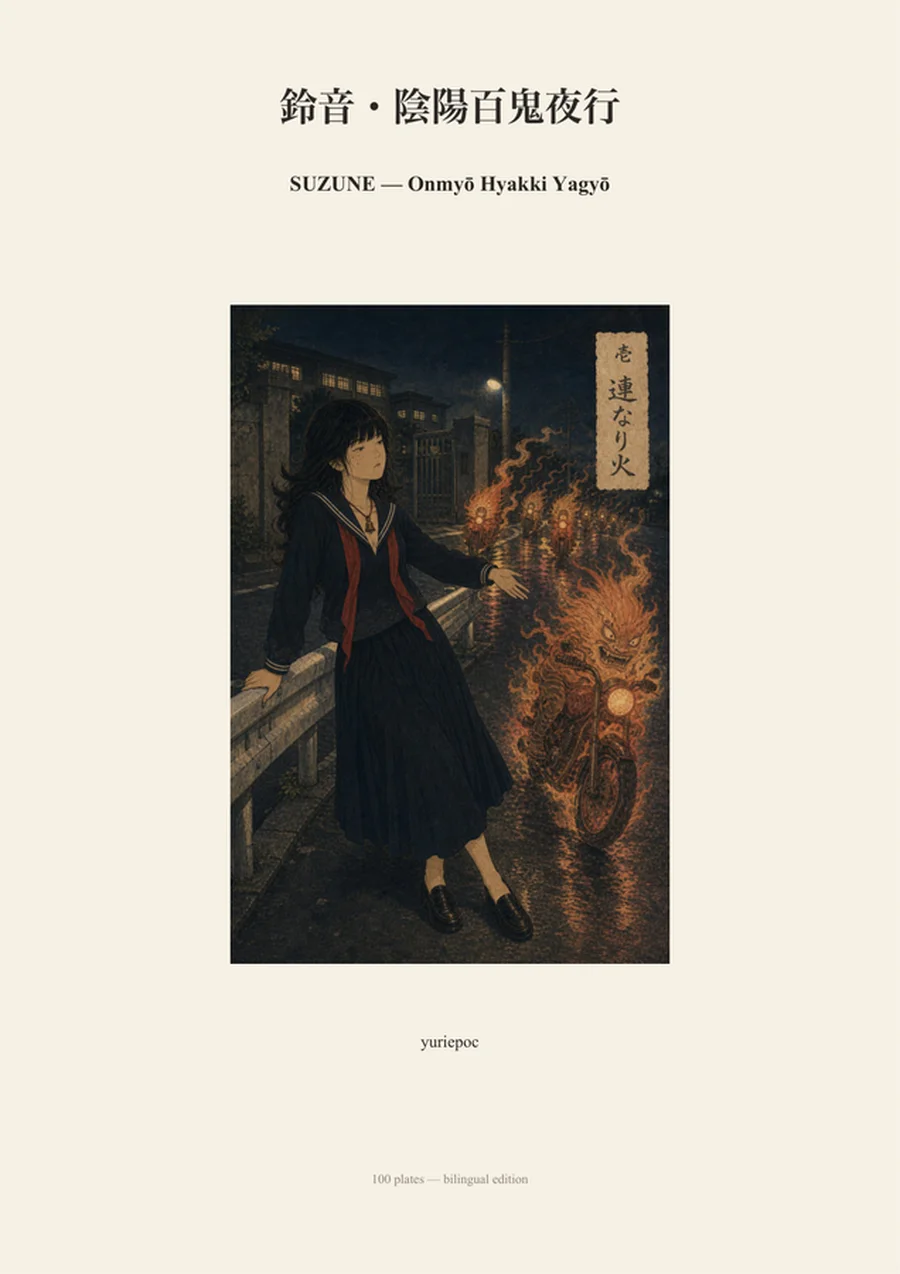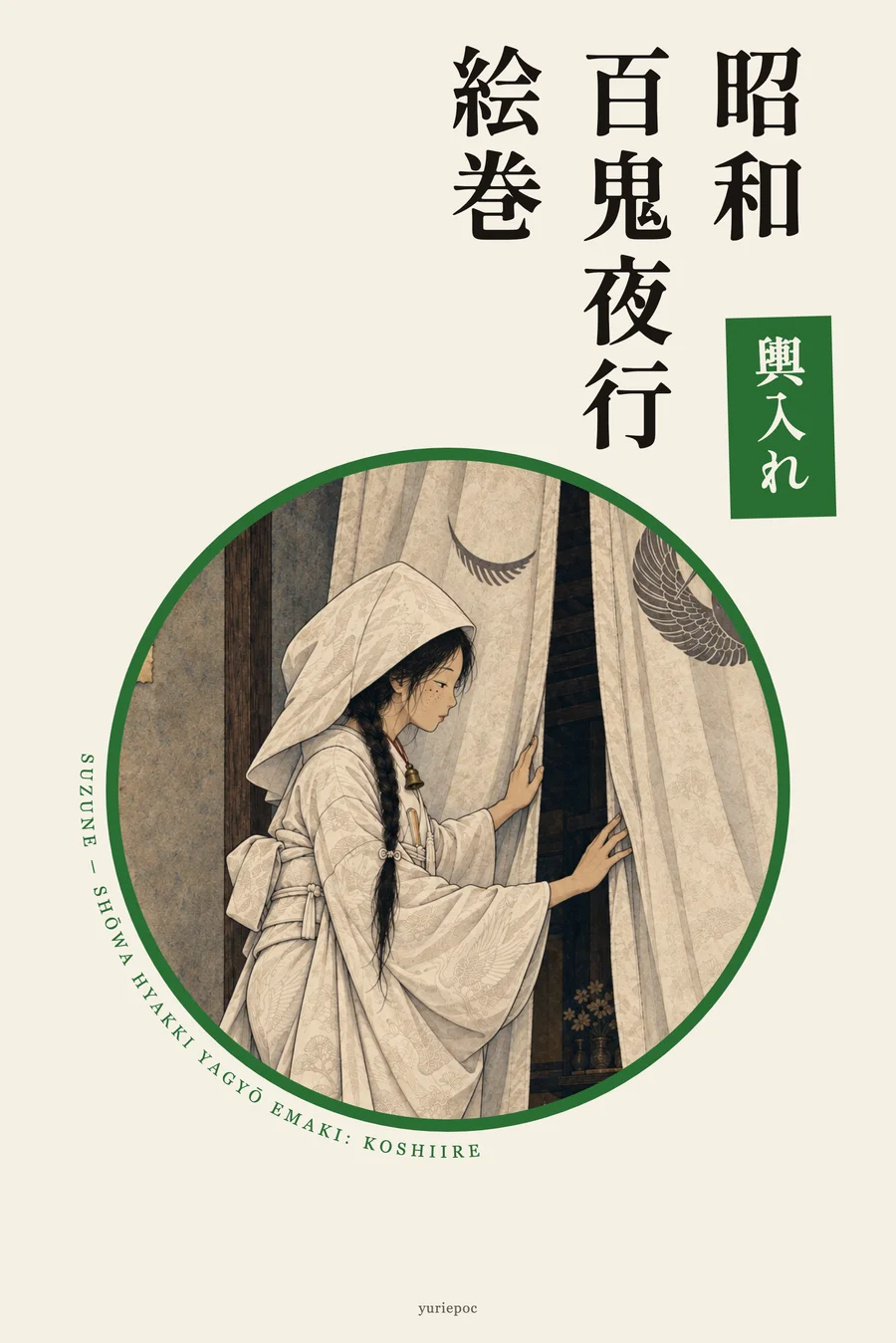
À propos de ce livre
Devant la pièce de l’autel, dans la maison de sa belle-famille, Suzune, en kimono blanc de mariée, passe sous le rideau de la mariée (hanayome noren). C’est là que commence son entrée dans la maison comme épouse.
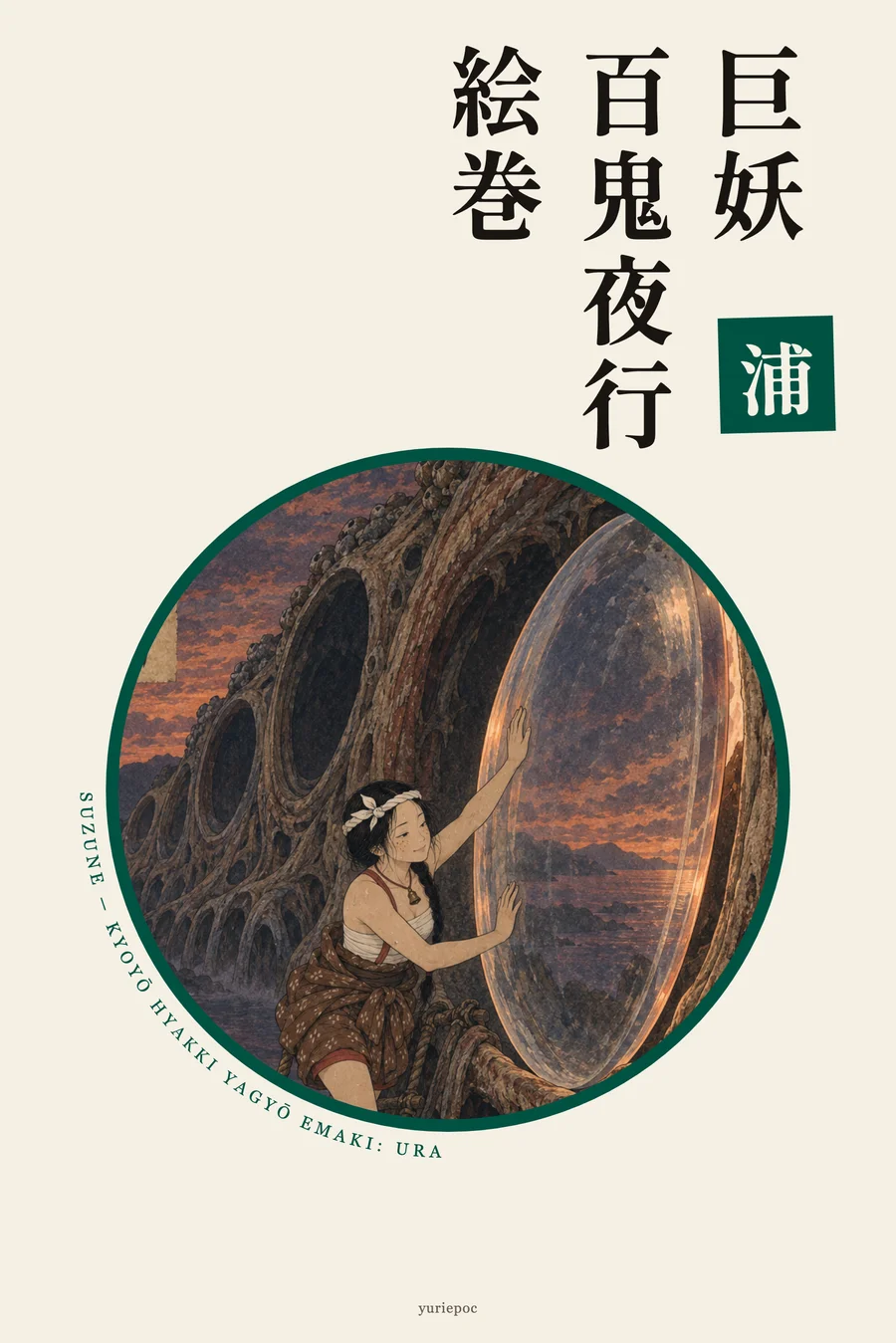
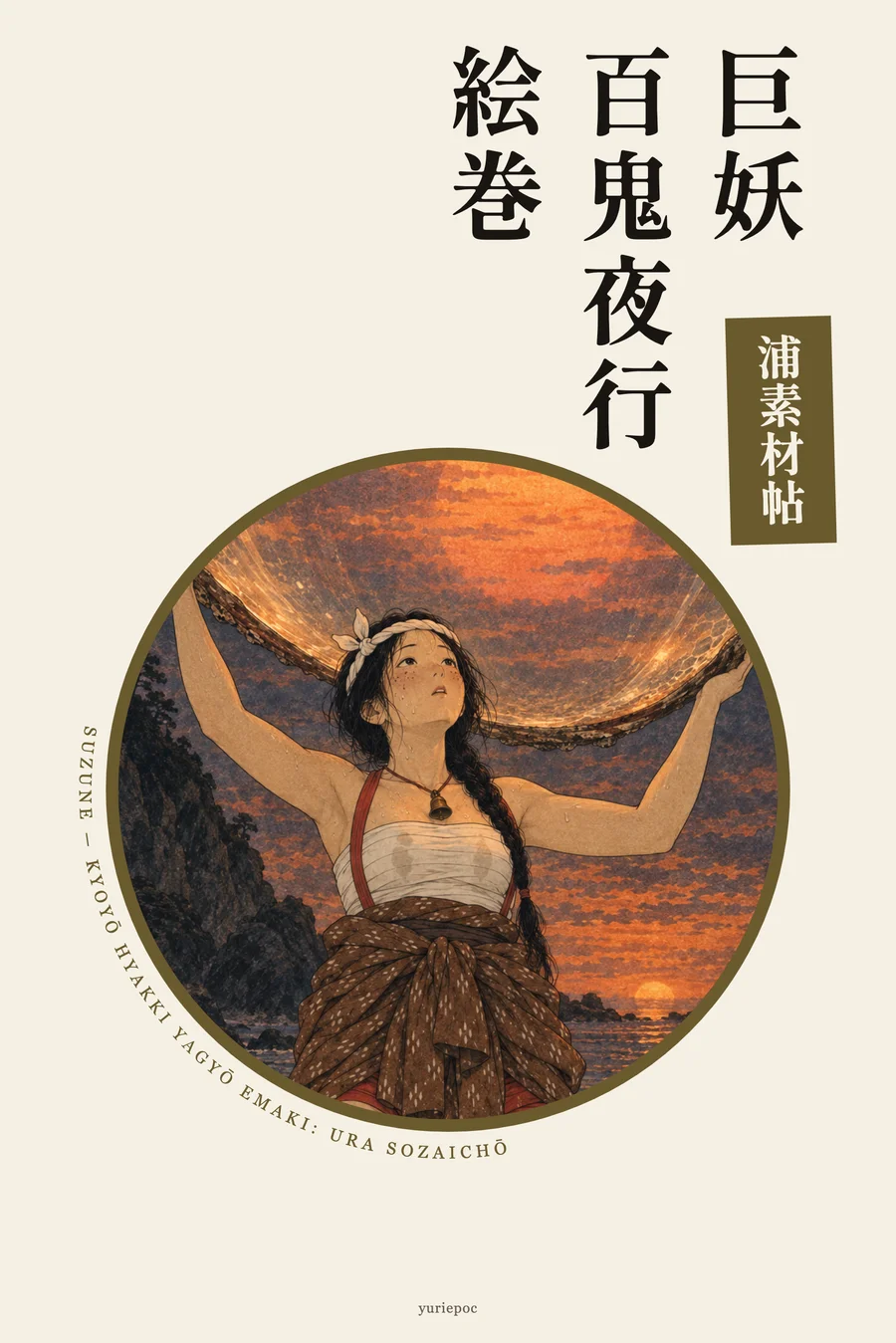
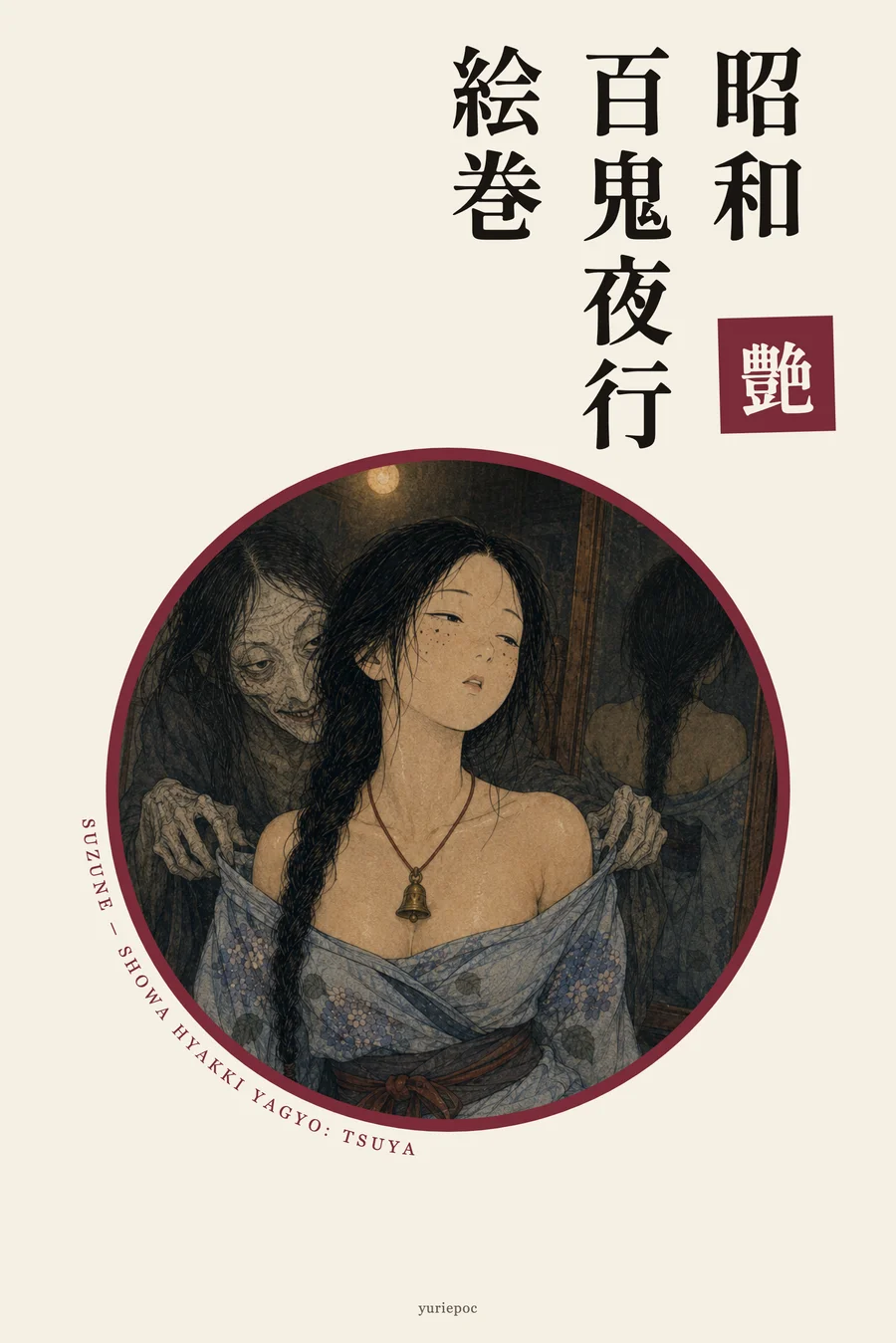
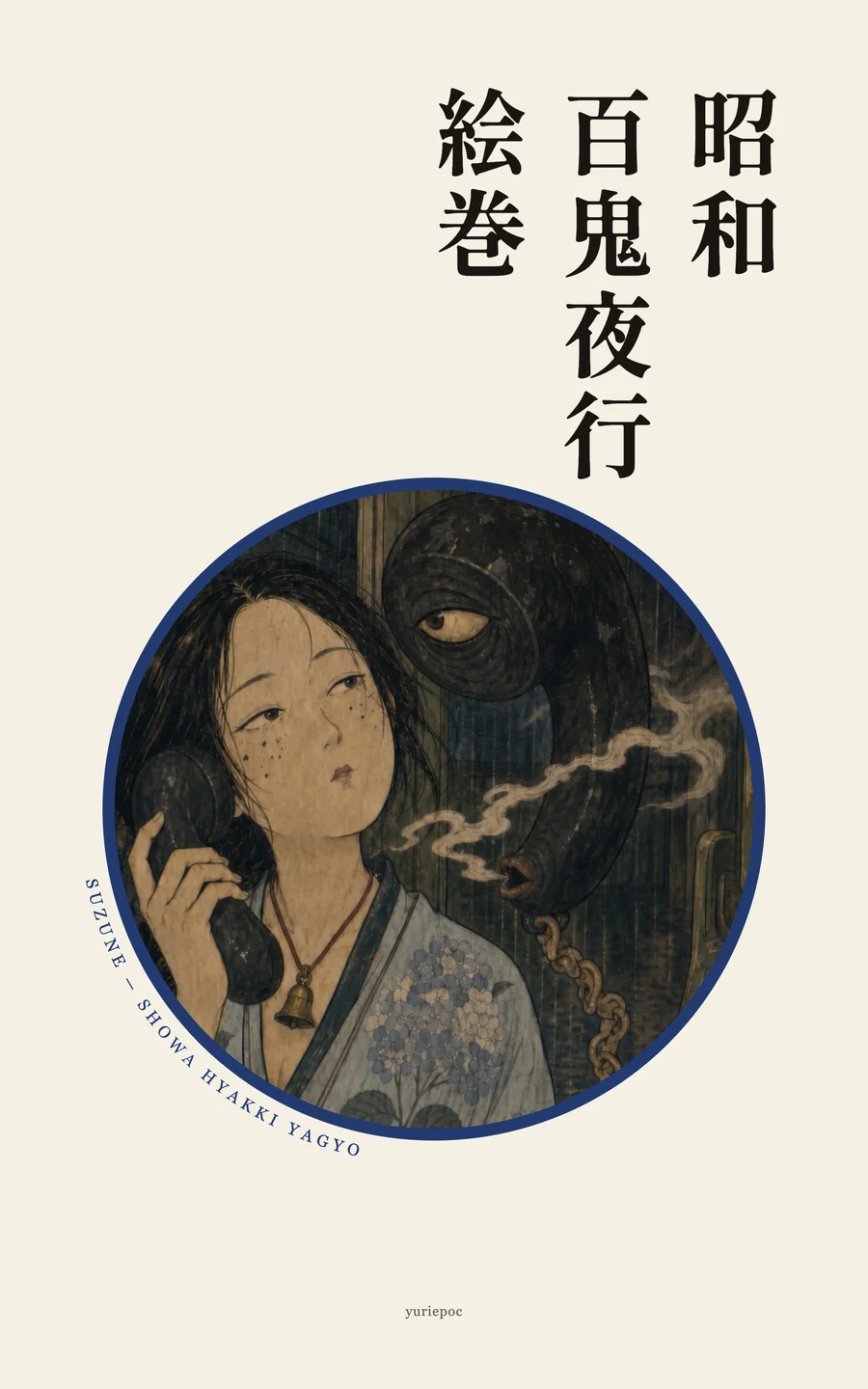
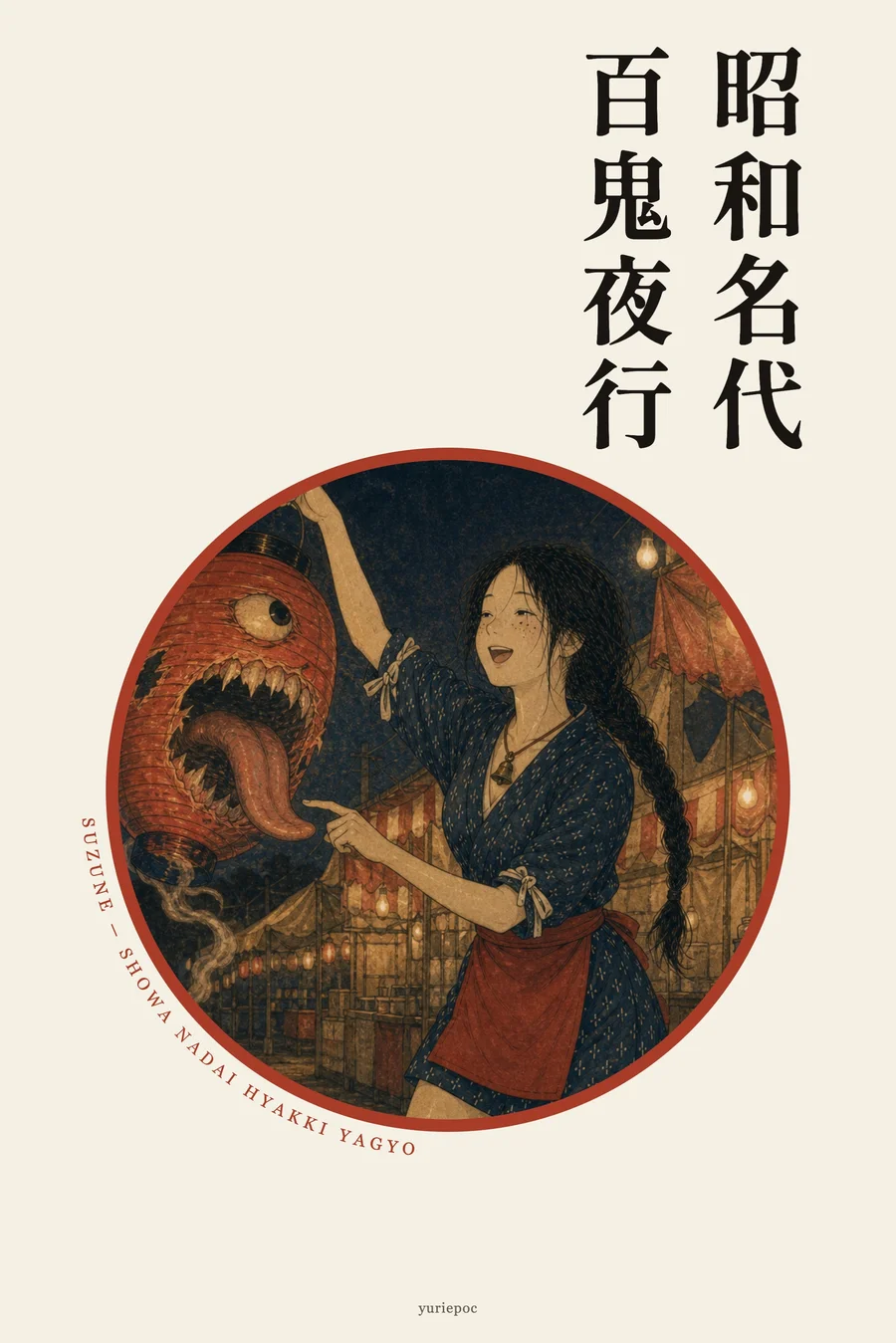
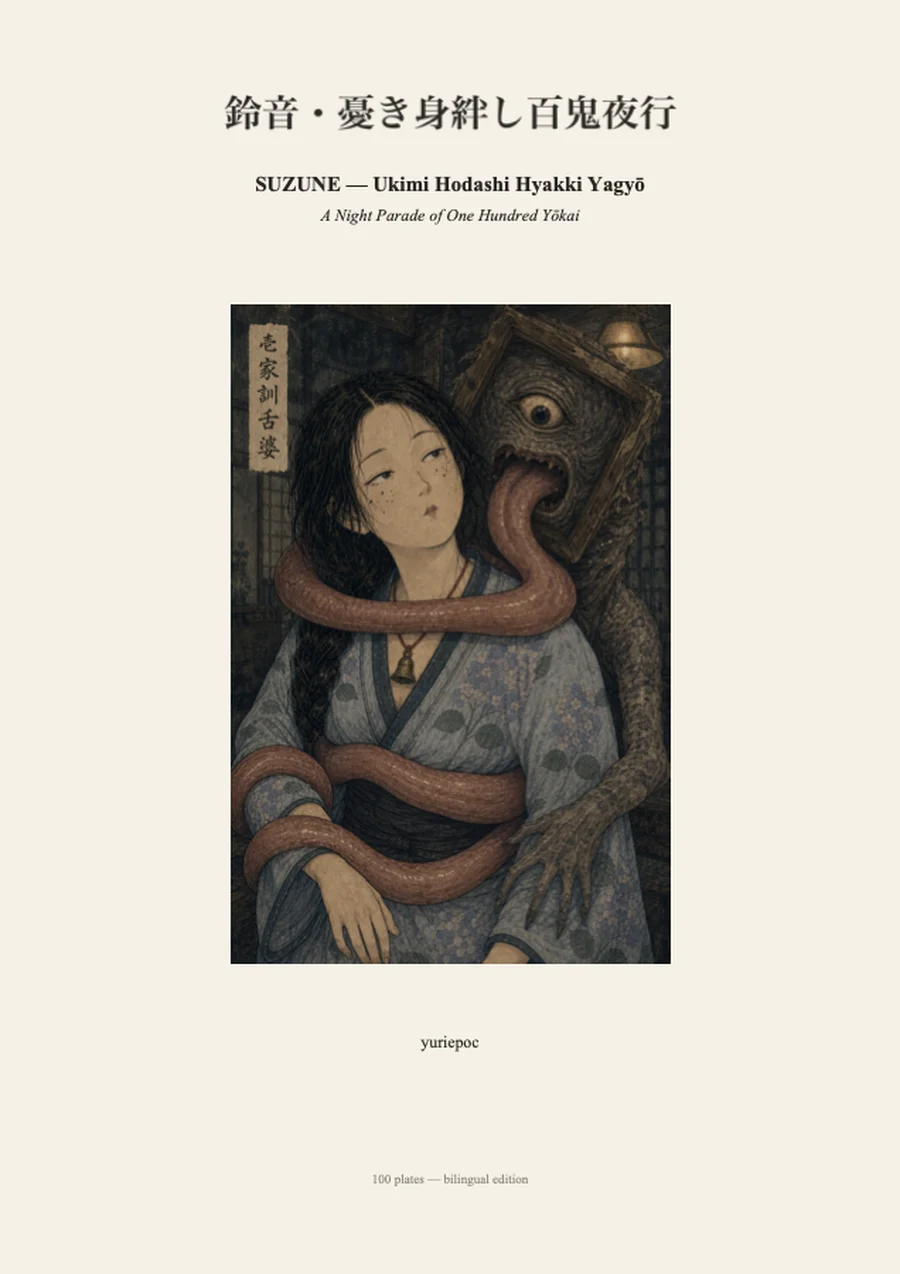
Dans ce livre, Suzune, une clochette rouge au cou, épouse cent yōkai l’un après l’autre, en entrant dans le corps de l’un, puis dans le corps du suivant. Le yōkai de chaque planche accomplit un usage de mariage et accueille Suzune à l’intérieur de son propre corps. Le monde de la planche suivante est fait de l’intérieur du corps de ce yōkai. À chaque page, un degré plus profond.
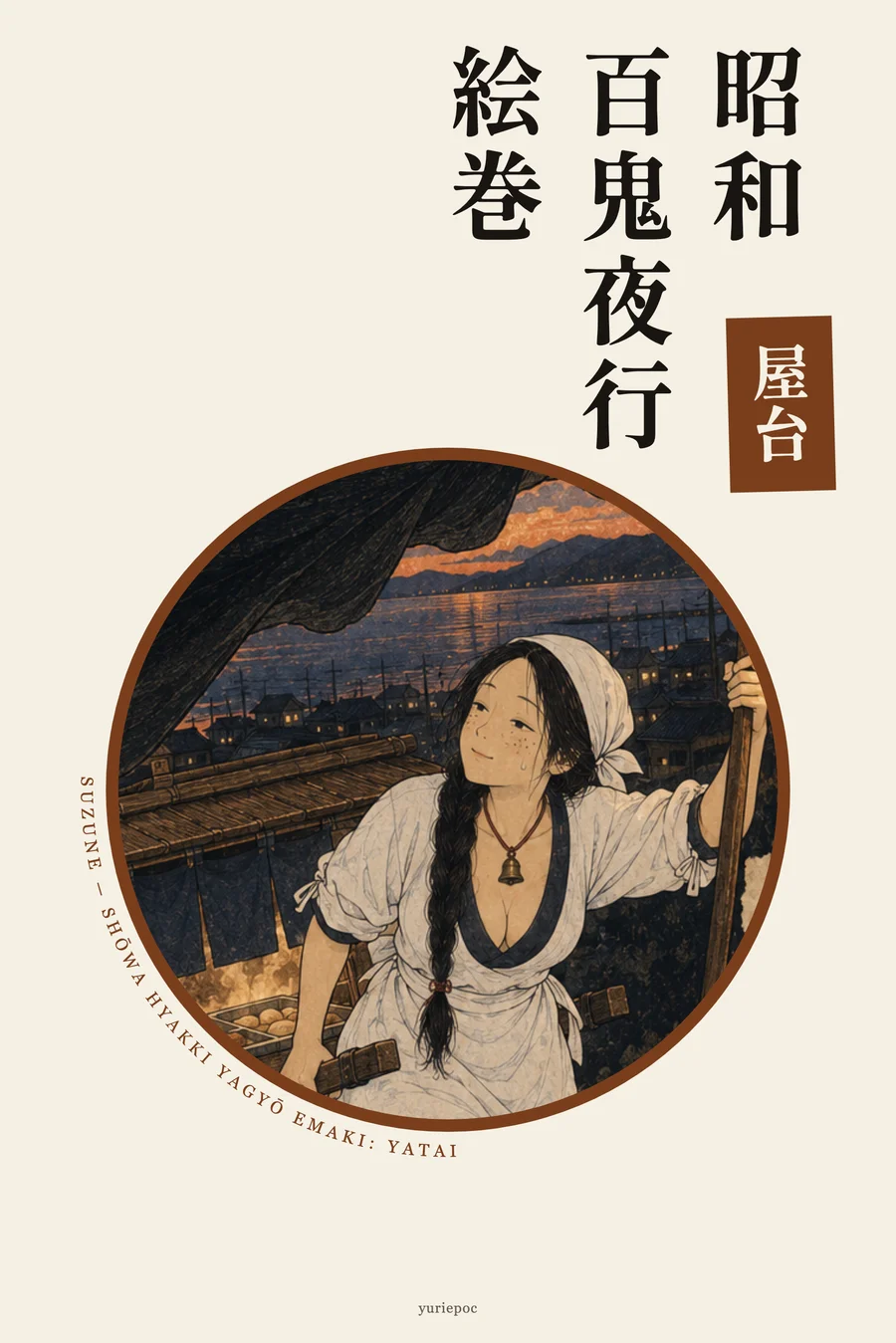
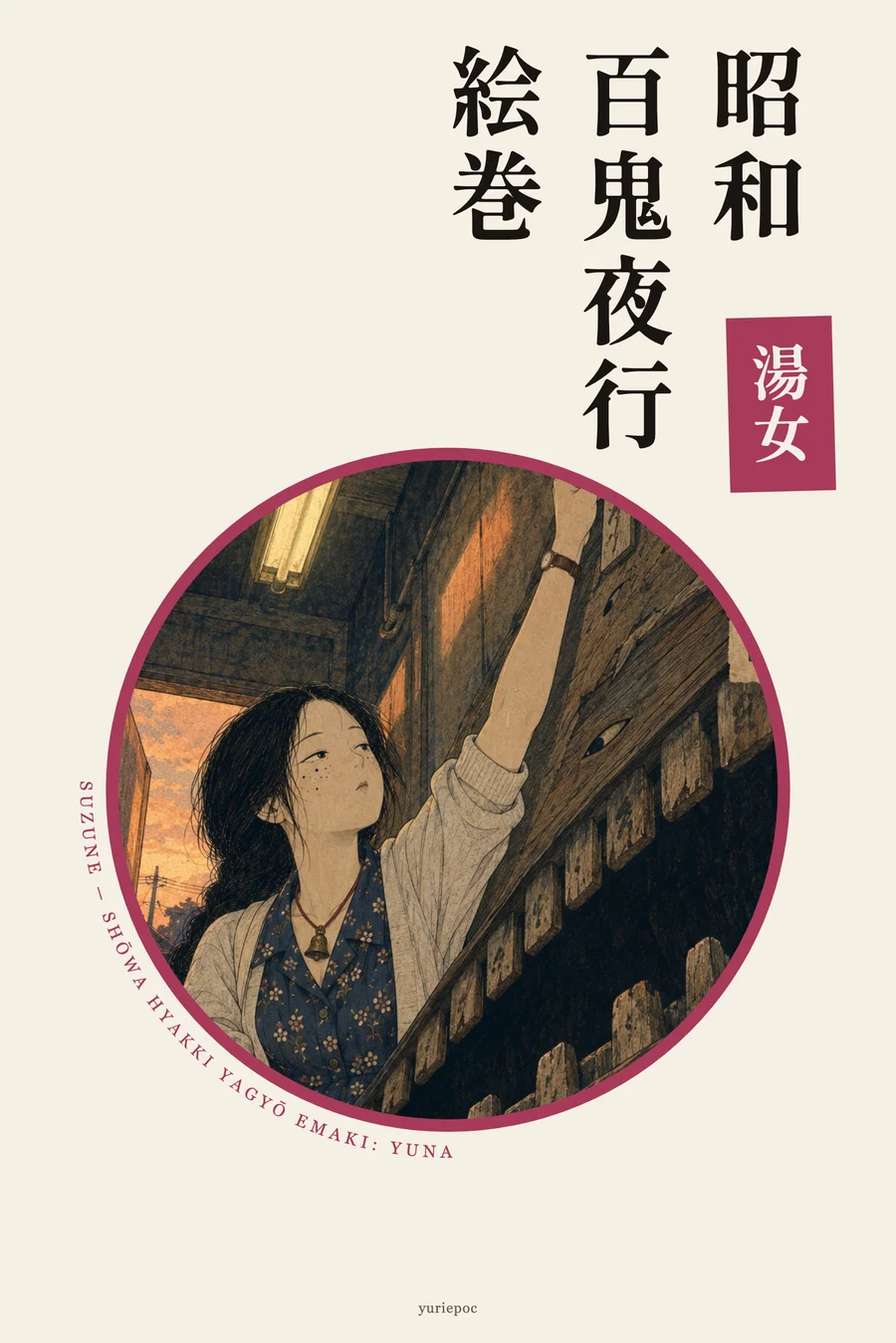
La scène est le Hokuriku, du début de l’ère Shōwa jusqu’aux années 30 de Shōwa (1955–1964). C’était le temps où l’on célébrait les noces à la maison et où le cortège de la mariée passait sur la route. Passer sous le rideau de la mariée, échanger les coupes, enjamber le feu. Ces usages ont réellement été pratiqués, surtout dans le Hokuriku, et chaque planche indique ce qui a pu être vérifié. La dernière planche est l’intérieur de la clochette que Suzune porte au cou. Là se trouve de nouveau la chambre du matin de la première planche.
100 planches, 204 pages. En face de chaque planche sont écrits, en japonais et en anglais, l’origine du yōkai, ses signes, la conduite à tenir et le récit. Quatre-vingt-douze des cent yōkai ont été créés pour ce livre à partir des objets et des usages du mariage, comme le noren, la soie yūzen et les coffres. Les huit autres — les feux de renard, l’Umi-nyōbō, le messager du Palais du Dragon, l’époux serpent, l’épouse grue, la princesse Uriko, le mariage des souris et le masque collé à la chair — viennent des traditions et des contes populaires de diverses régions.
Planches d’exemple
-
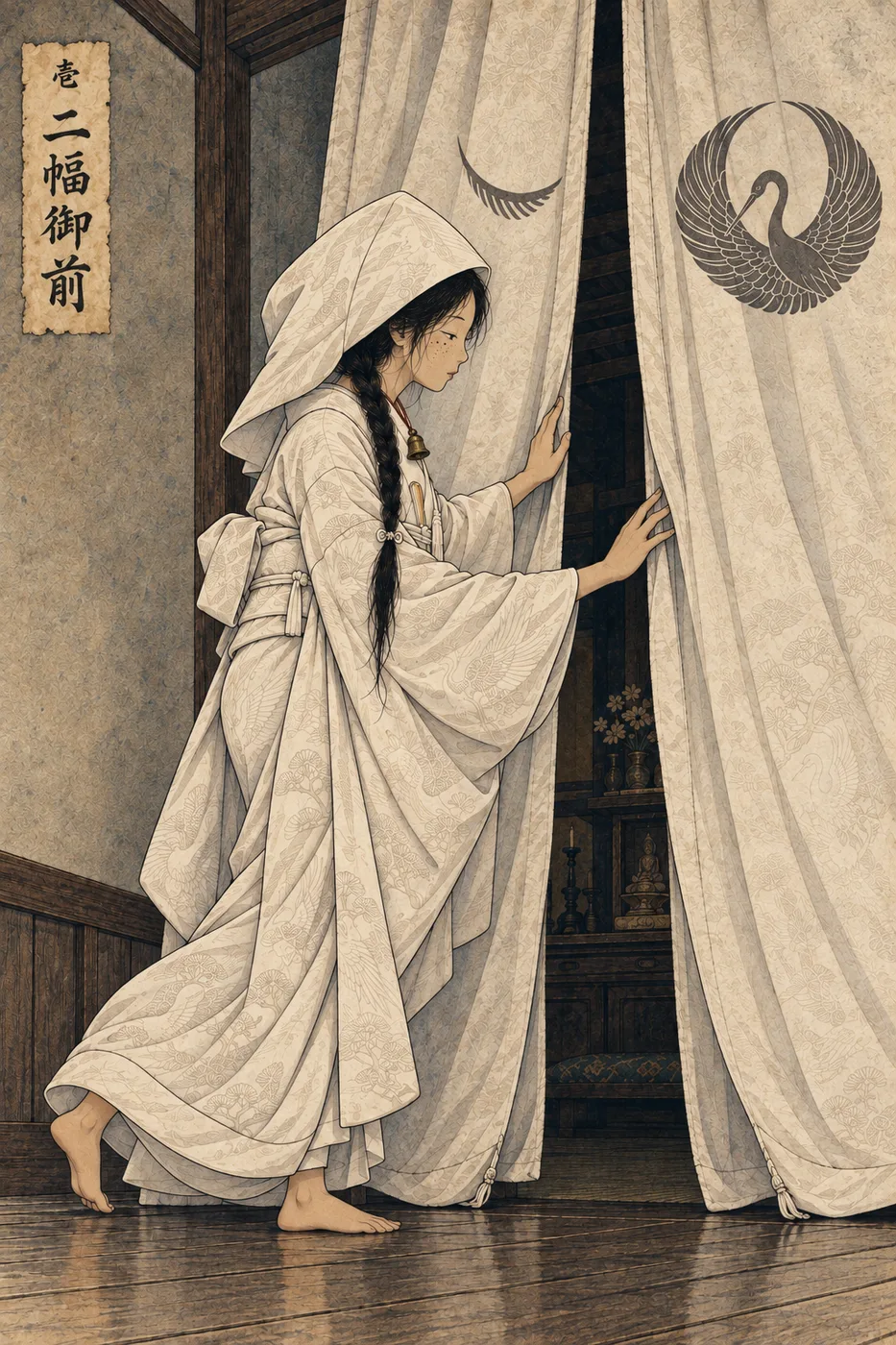
Planche 1
The Lady of Two Panels
二幅御前Futahaba-gozen
Origine
The bridal noren is a pair of cloth panels. In Noto and Kaga, in Ishikawa Prefecture, the bride's mother prepared them and hung them at the entrance of the Buddhist altar room in the groom's house.
花嫁のれんは、二枚の布である。石川県の能登と加賀で、花嫁の母が用意し、婚家の仏間の入口に掛けた。
-
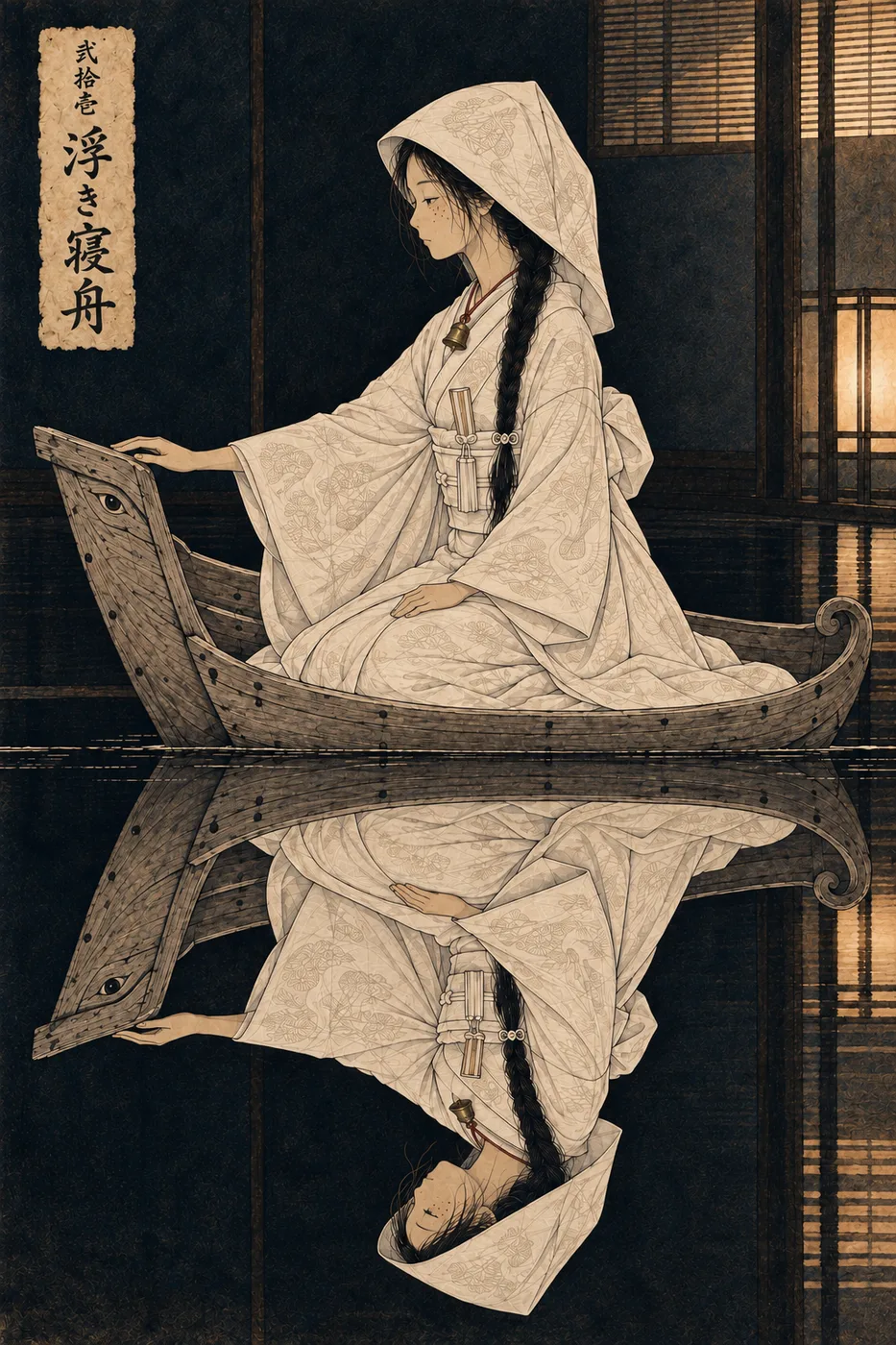
Planche 21
The Drifting-Sleep Boat
浮き寝舟Ukinebune
Origine
In the water country of Itako in Ibaraki, a flat rowboat once carried the bride across the river together with her household goods. Ukinebune is that bridal boat turned yokai, and it carries them across without spilling a single drop of water.
茨城県の潮来の水郷では、かつて嫁入りにろ舟を使い、家財道具と花嫁を乗せて川を渡った。浮き寝舟は、その嫁入り舟が妖怪になったもので、水を一滴もこぼさずに運ぶ。
-
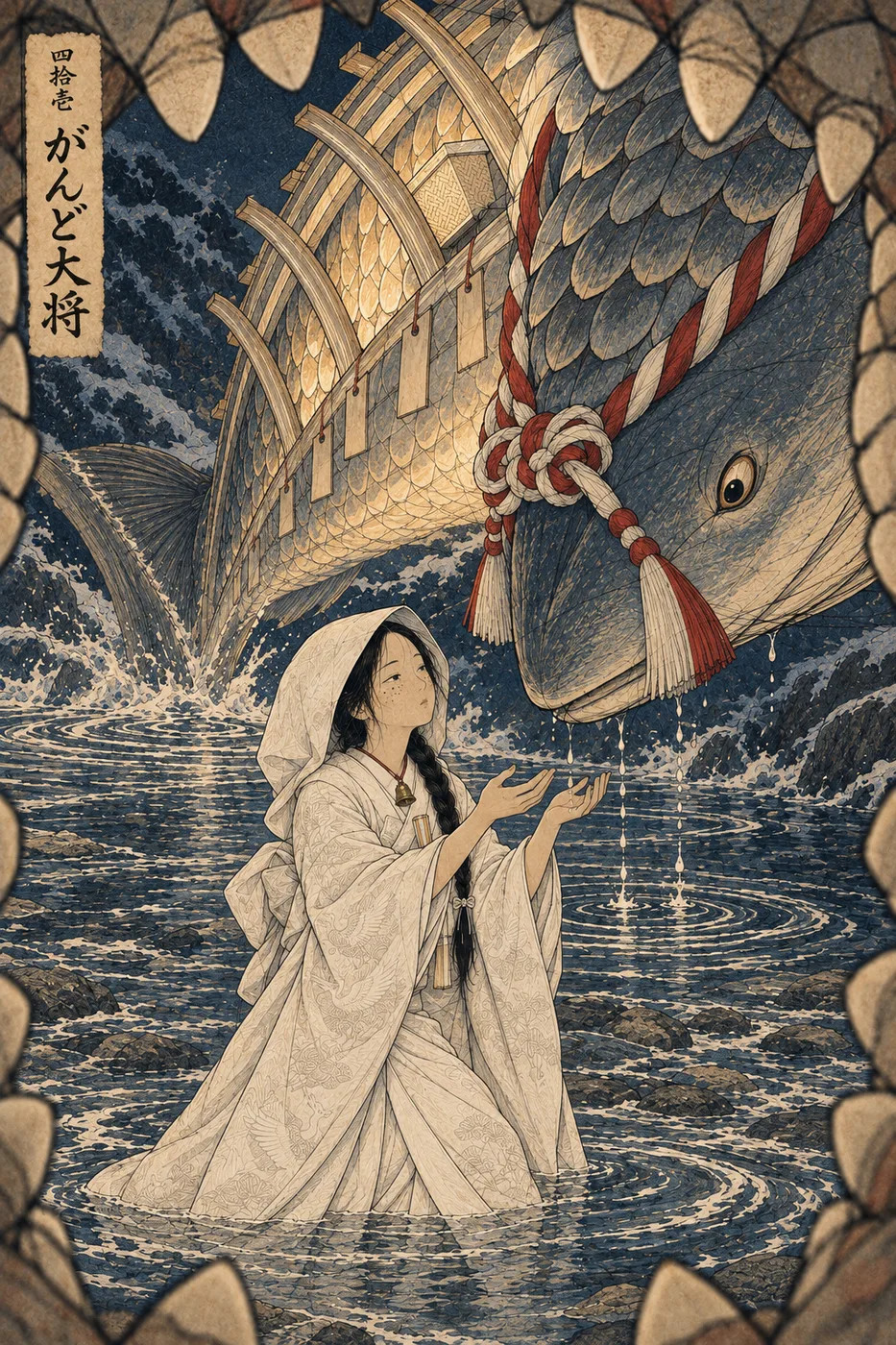
Planche 41
General Gando, the Yellowtail
がんど大将Gando Taishō
Origine
Gando Taishō is a yokai born from the yellowtail of yomeburi. Yomeburi is a custom along the Toyama coast. In the year of a marriage, the bride's family sends a yellowtail to the groom's house at the end of the year.
がんど大将は、嫁ぶりの鰤から生まれた妖怪である。嫁ぶりは、嫁いだ年の暮れに嫁の実家が鰤を贈る、富山の海沿いの風習である。
-
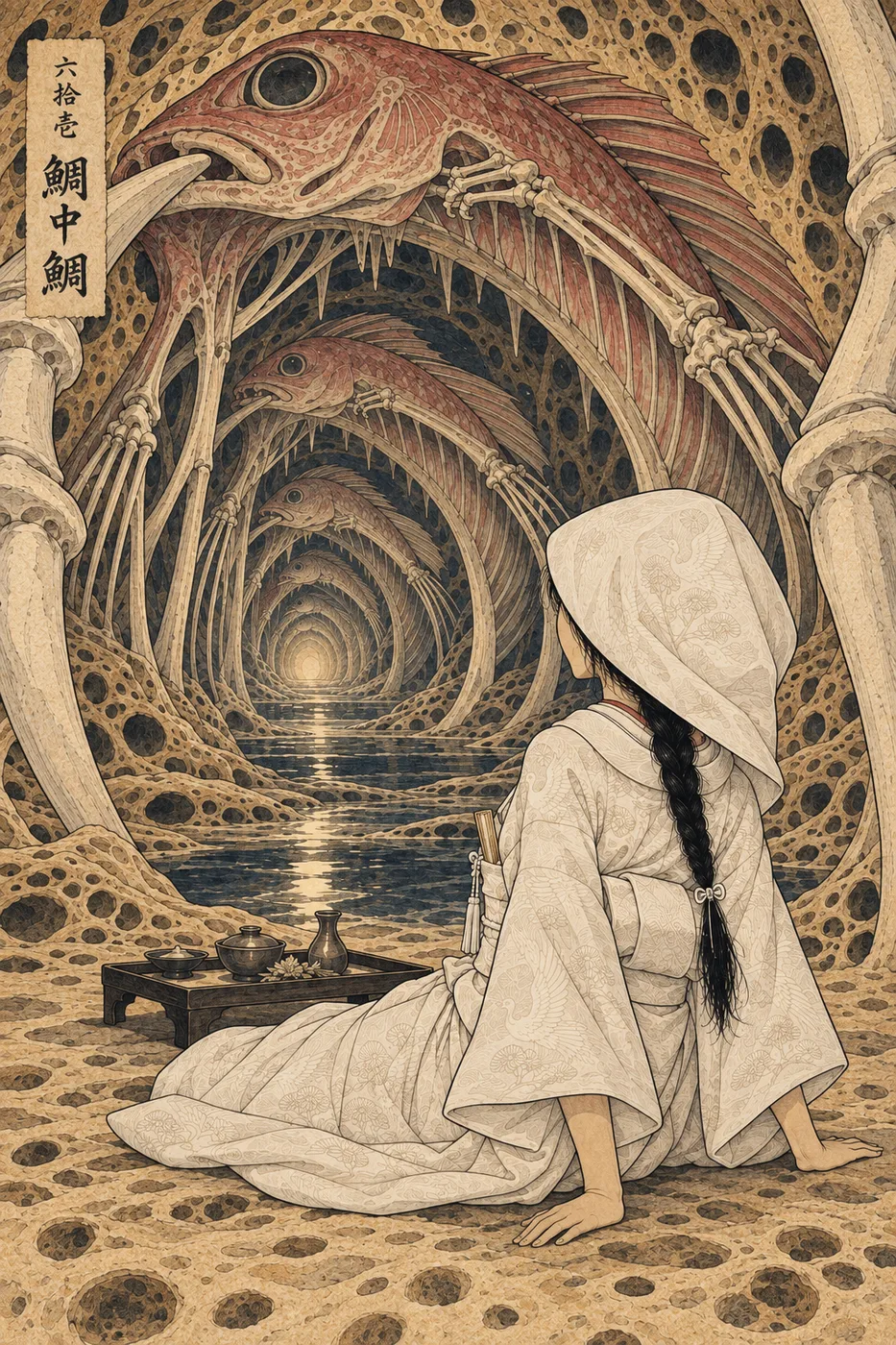
Planche 61
The Bream Within the Bream
鯛中鯛Taichūtai
Origine
Taichūtai, the Bream Within the Bream, is a spirit born from the sea bream at a wedding feast. At a wedding feast, a bream is served whole, from head to tail.
鯛中鯛は、祝い膳の鯛から生まれた妖怪である。祝言の膳には、頭から尾までそろった鯛が出る。
-
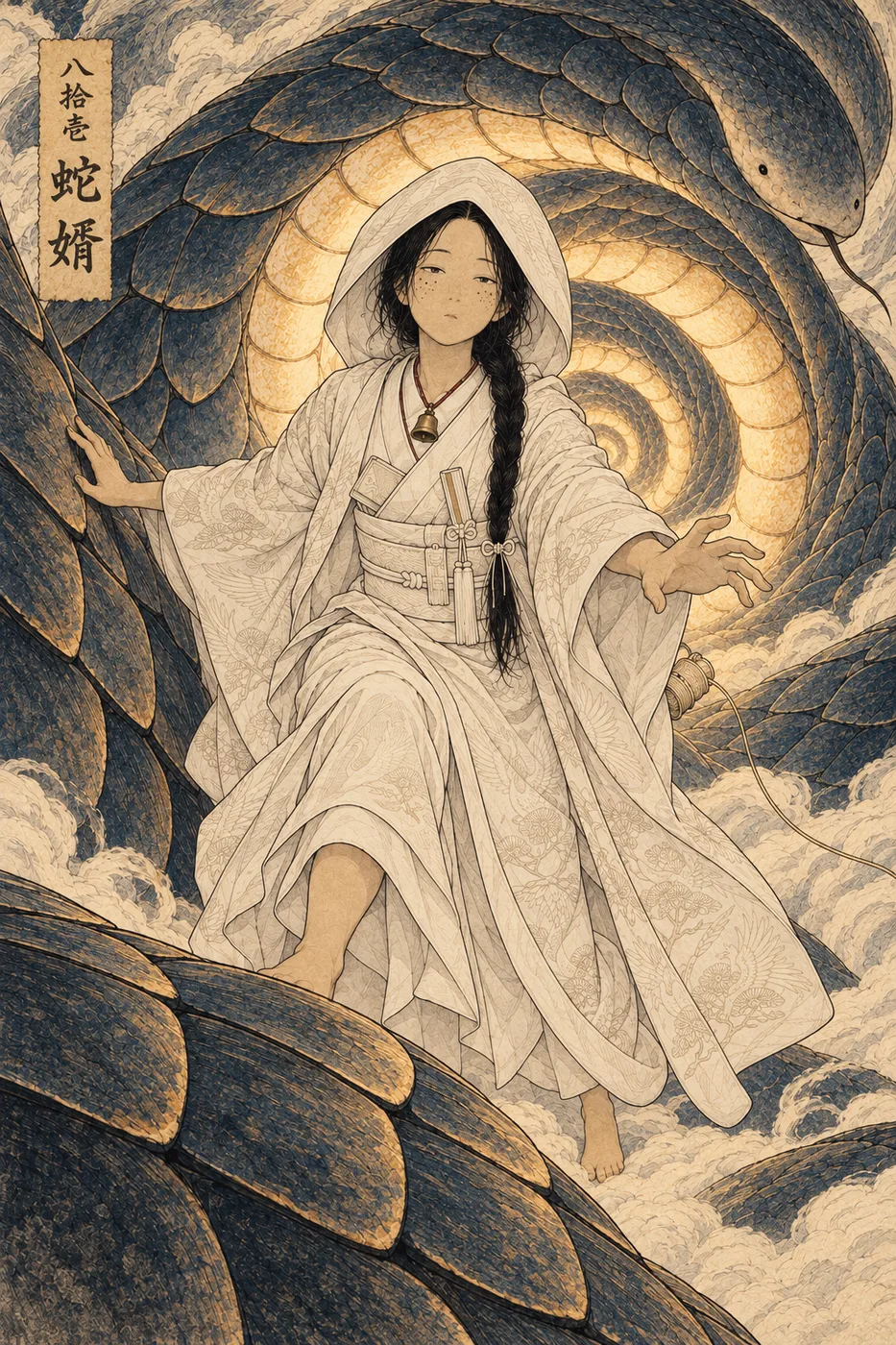
Planche 81
The Serpent Bridegroom
蛇婿Hebimuko
Origine
Hebimuko, the Serpent Bridegroom, is the husband who visits a girl every night. In the Kojiki, in the story of Mount Miwa, the girl pins a needle with thread to the hem of the man's clothes.
蛇婿は、夜ごと娘のもとへ通う婿の妖怪である。『古事記』の三輪山の話では、娘が男の裾に糸付きの針を刺した。
Autres livres