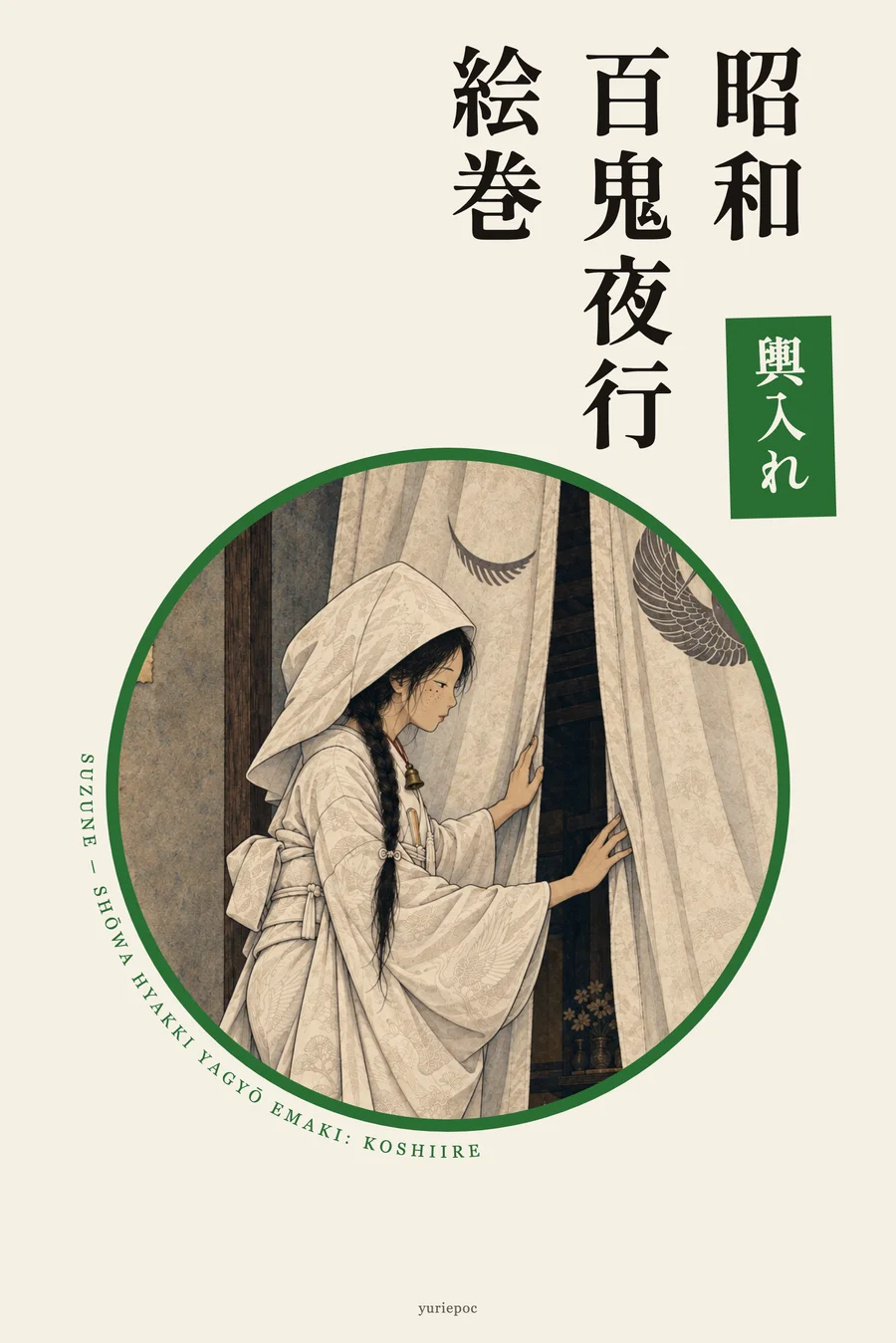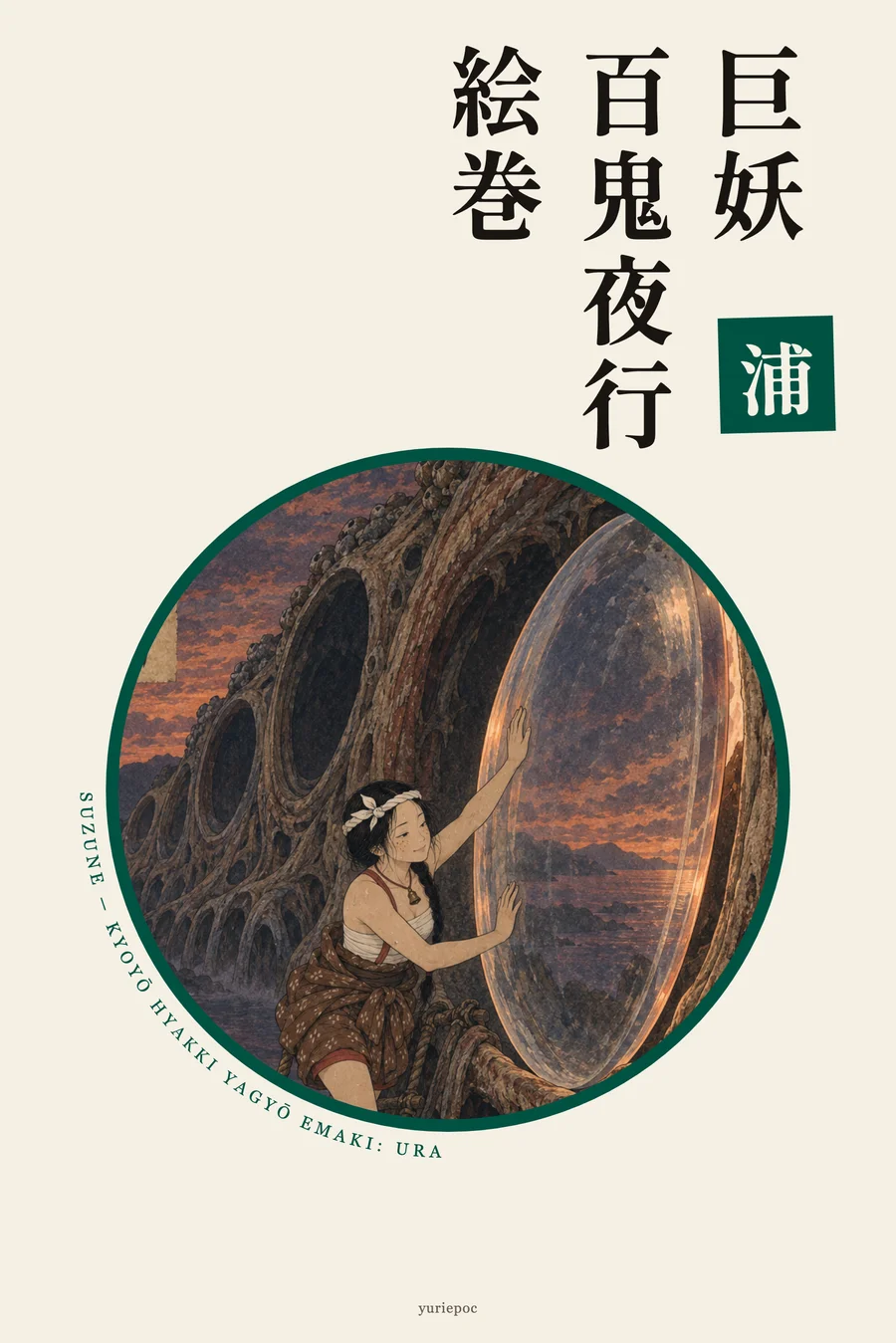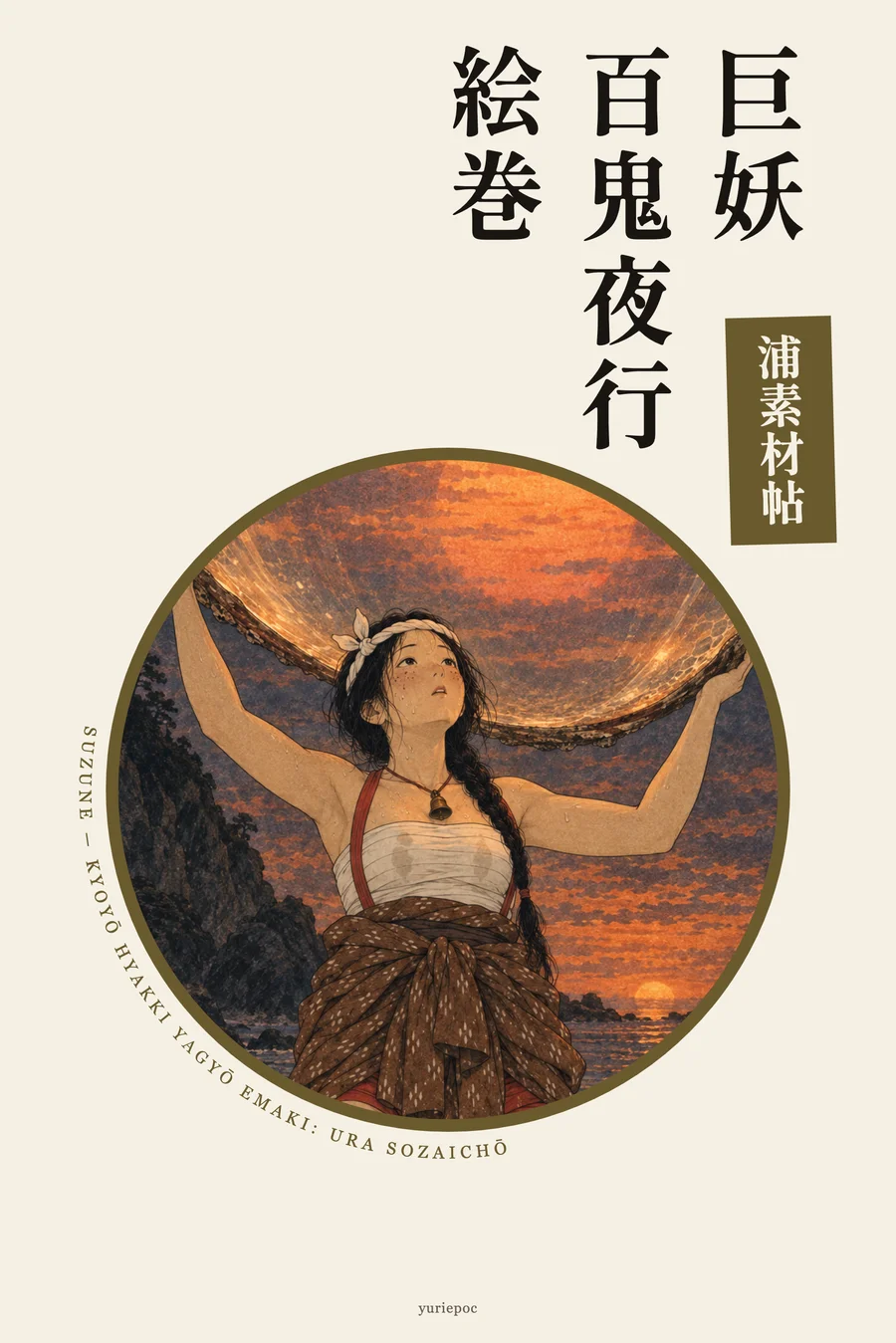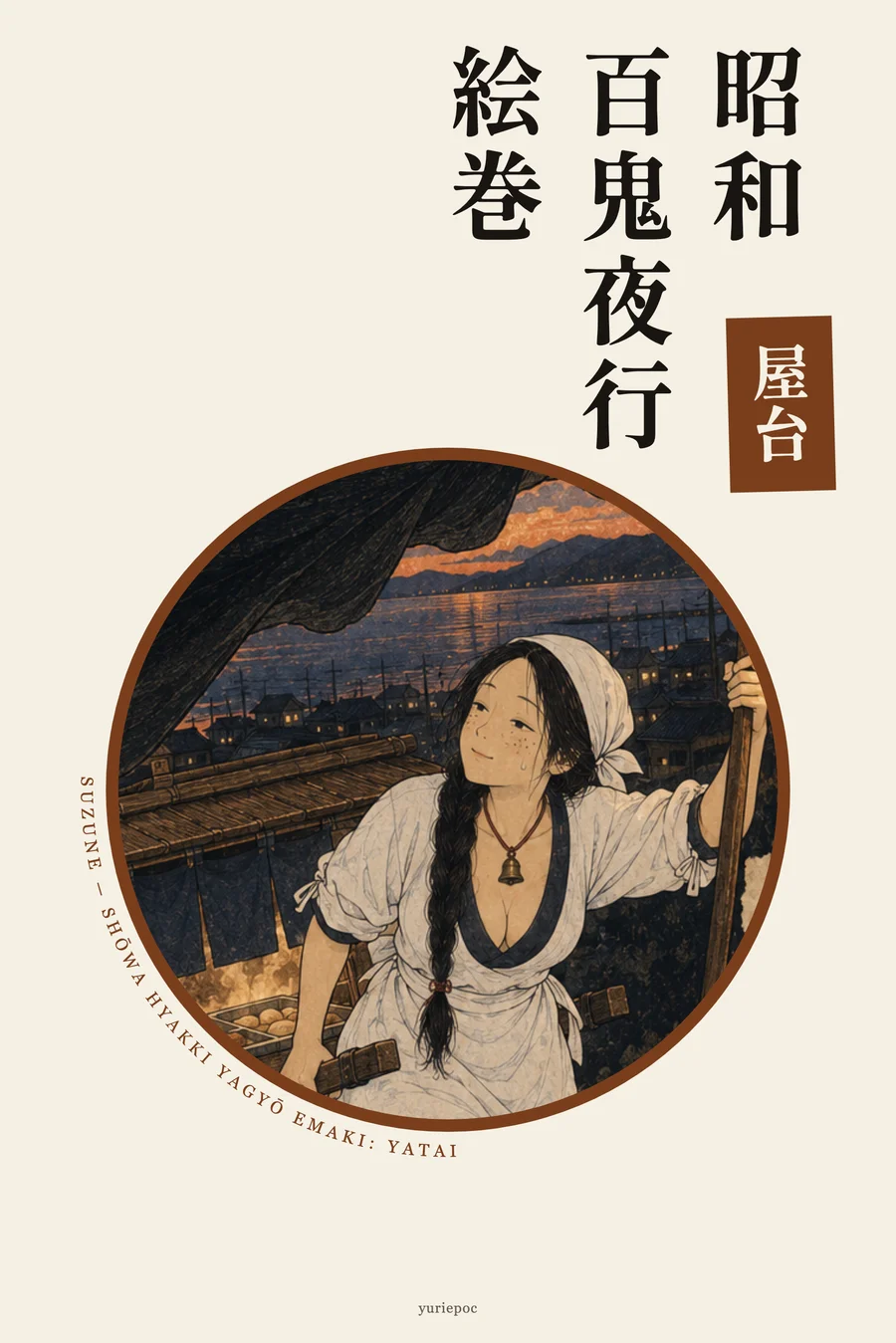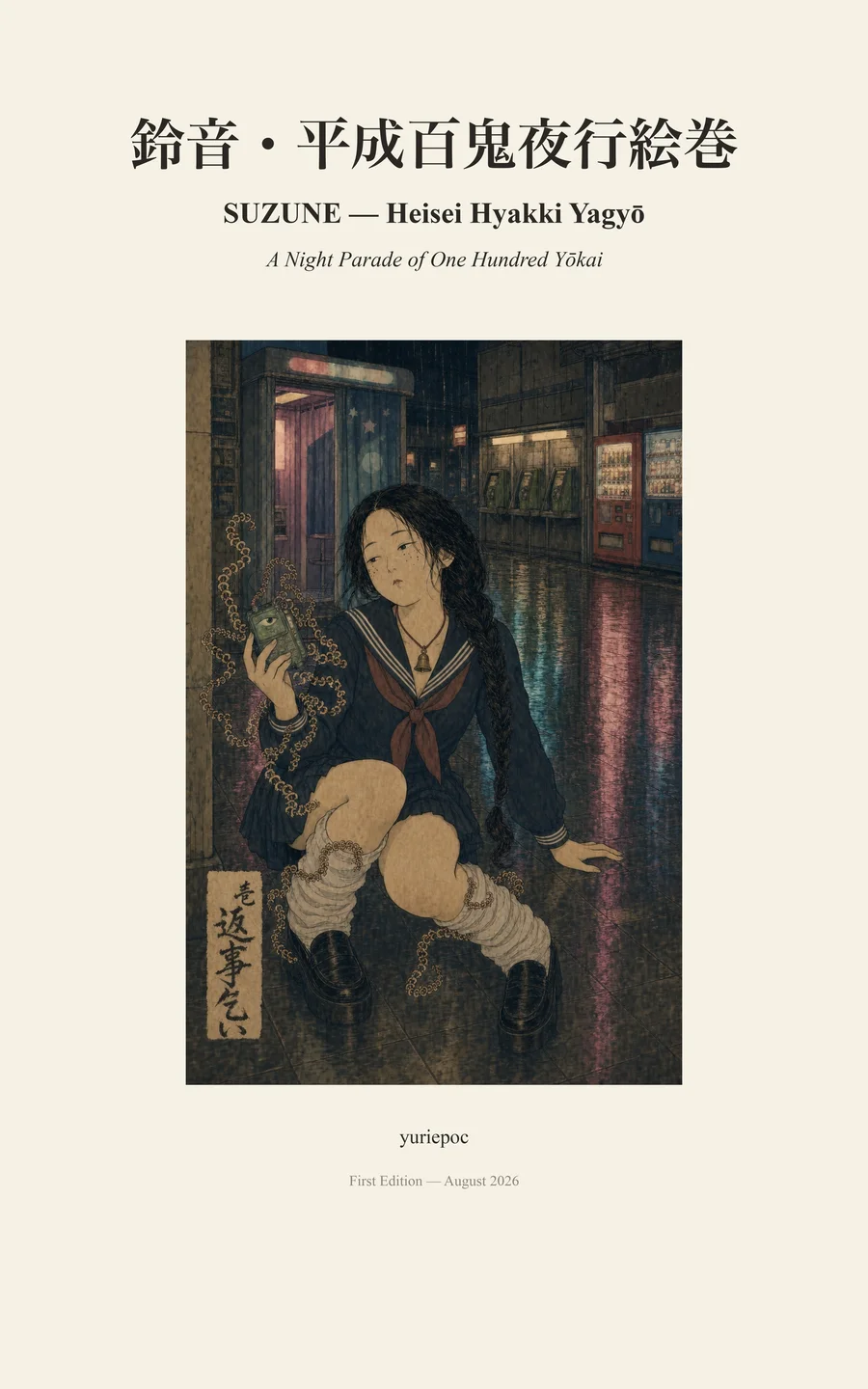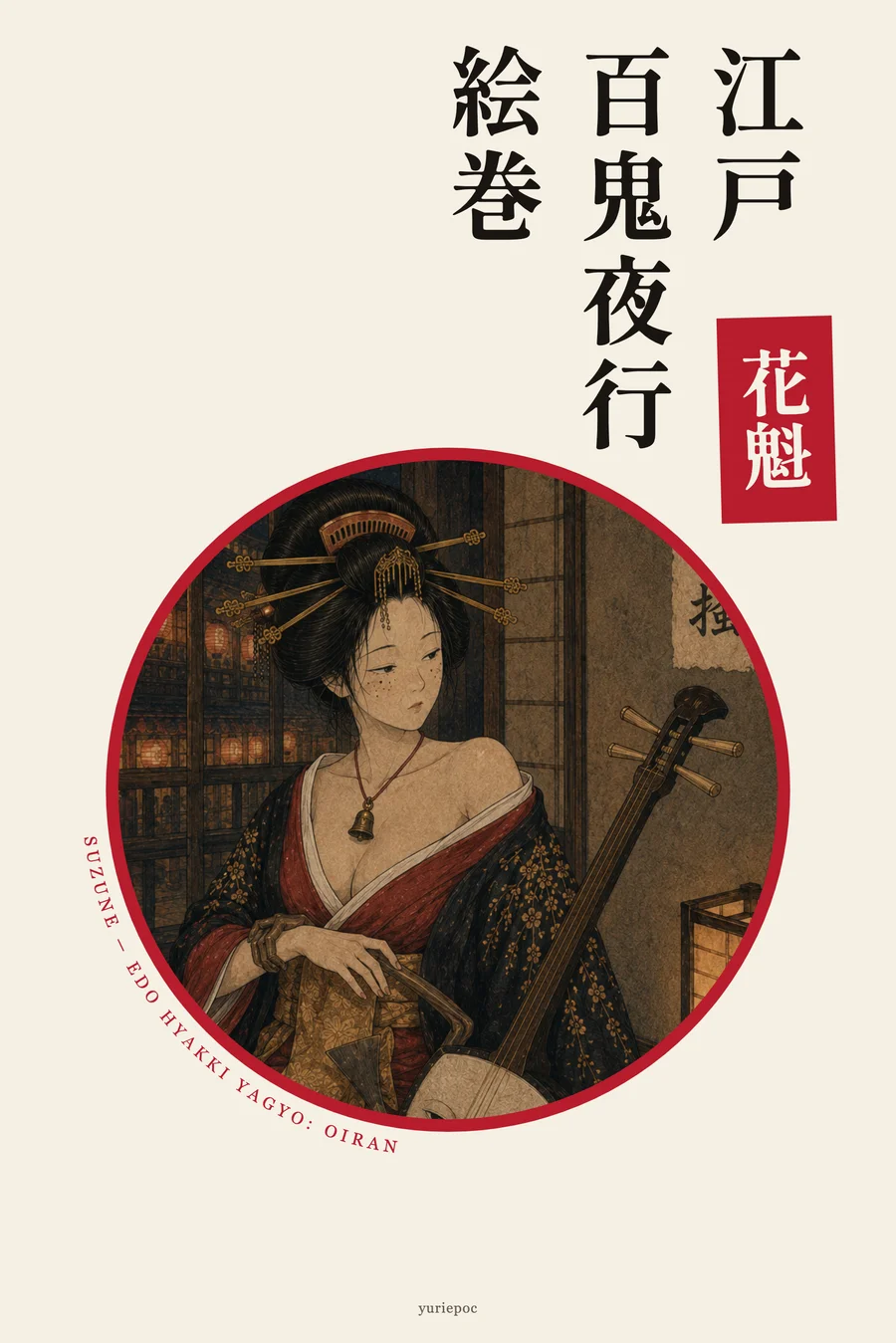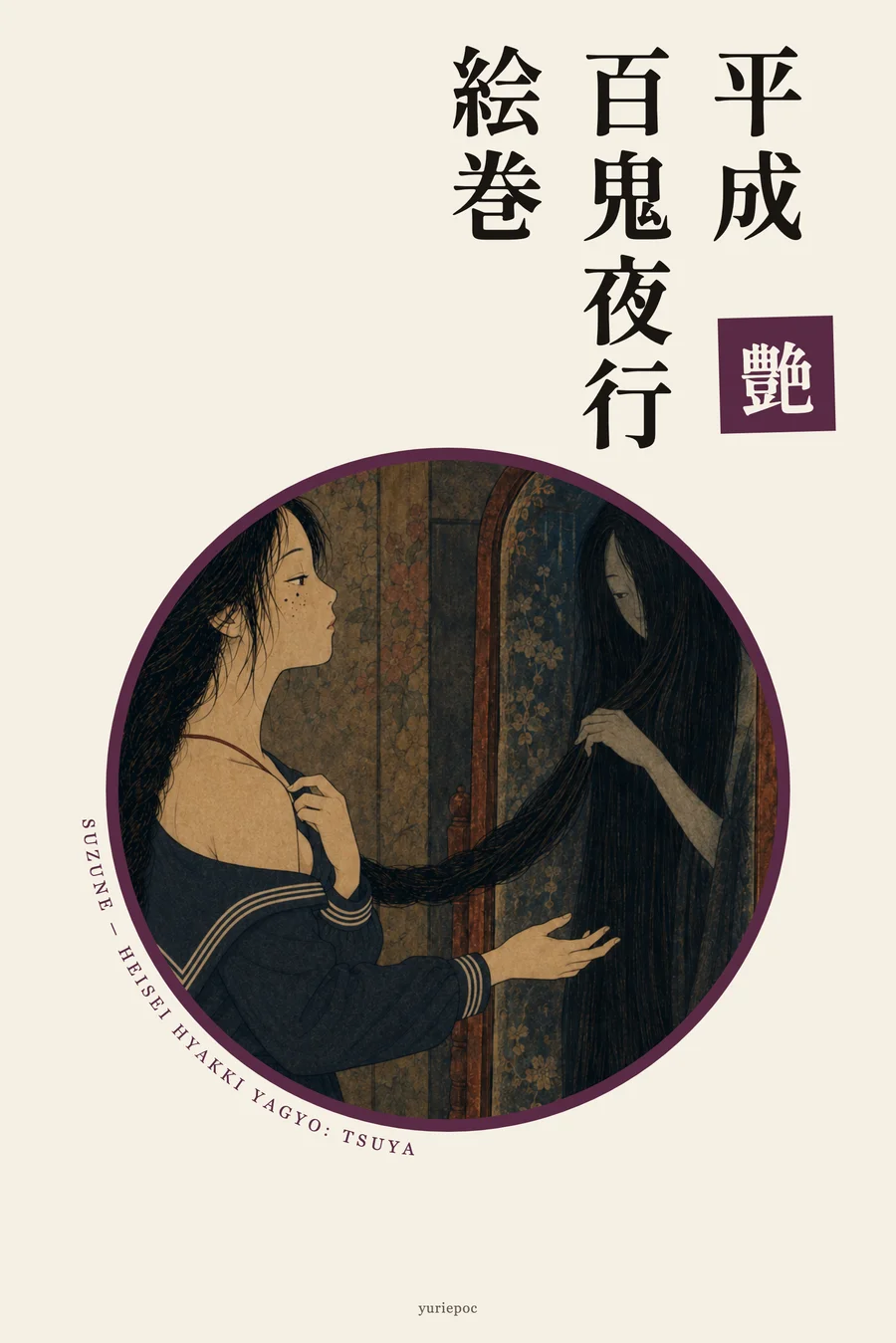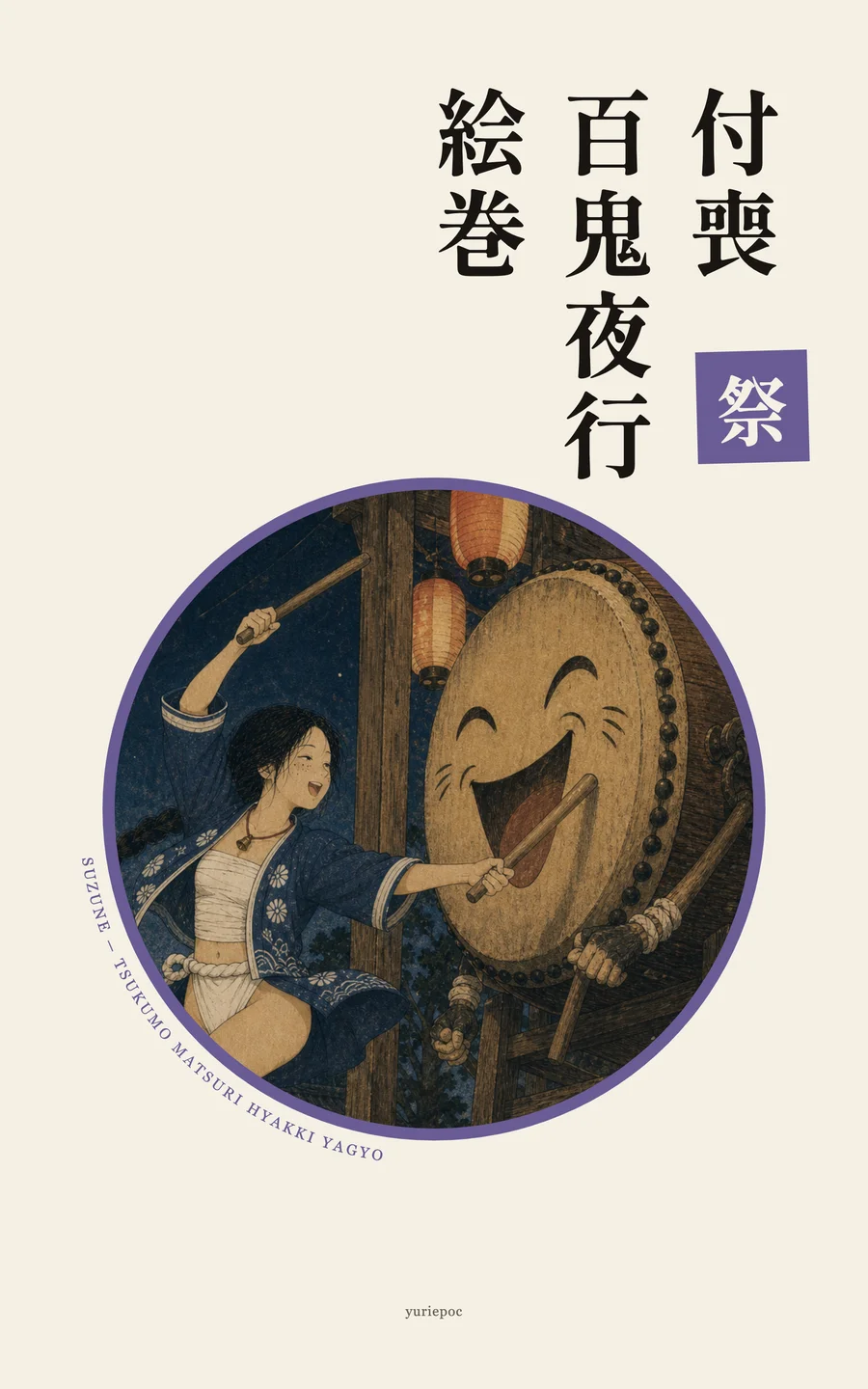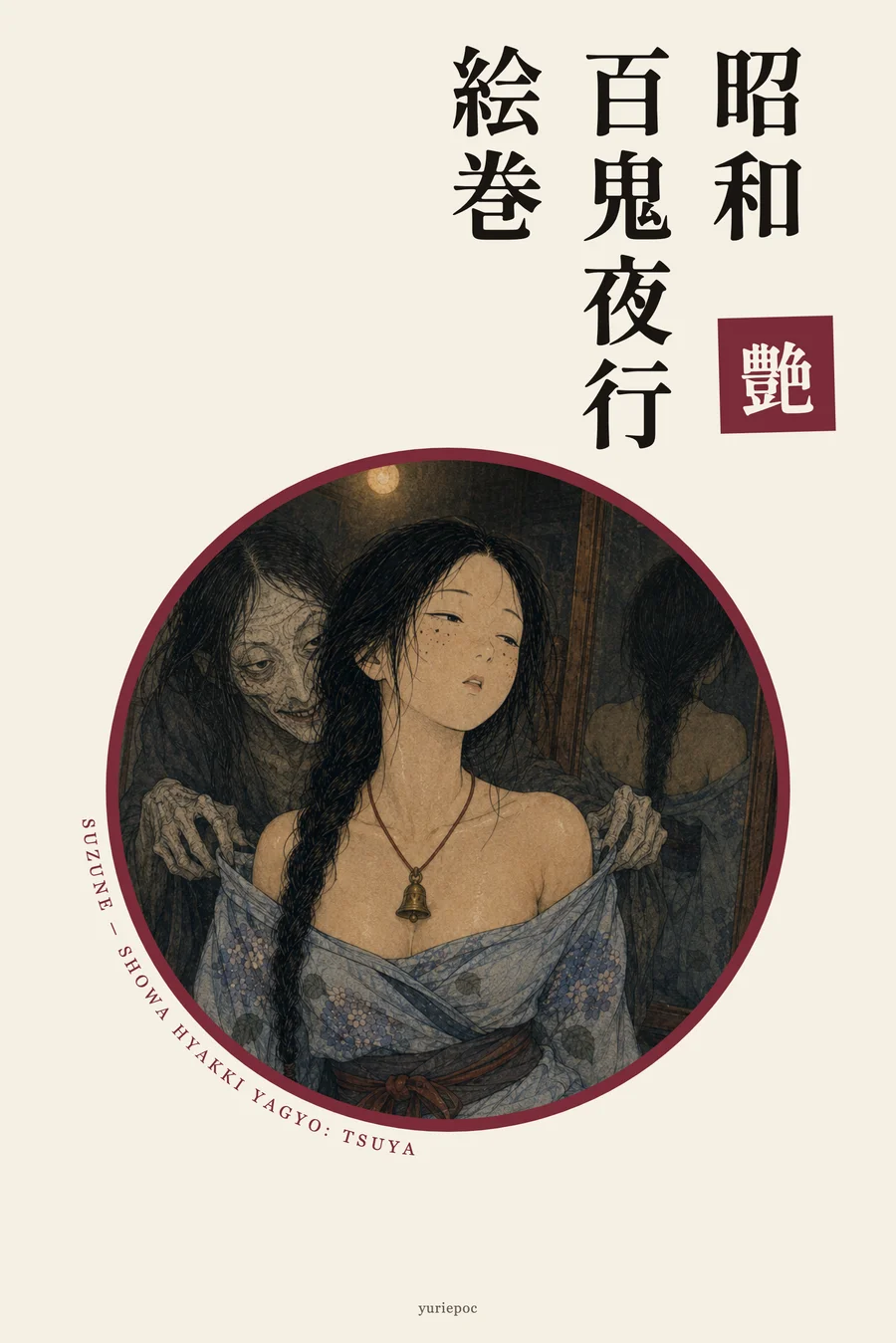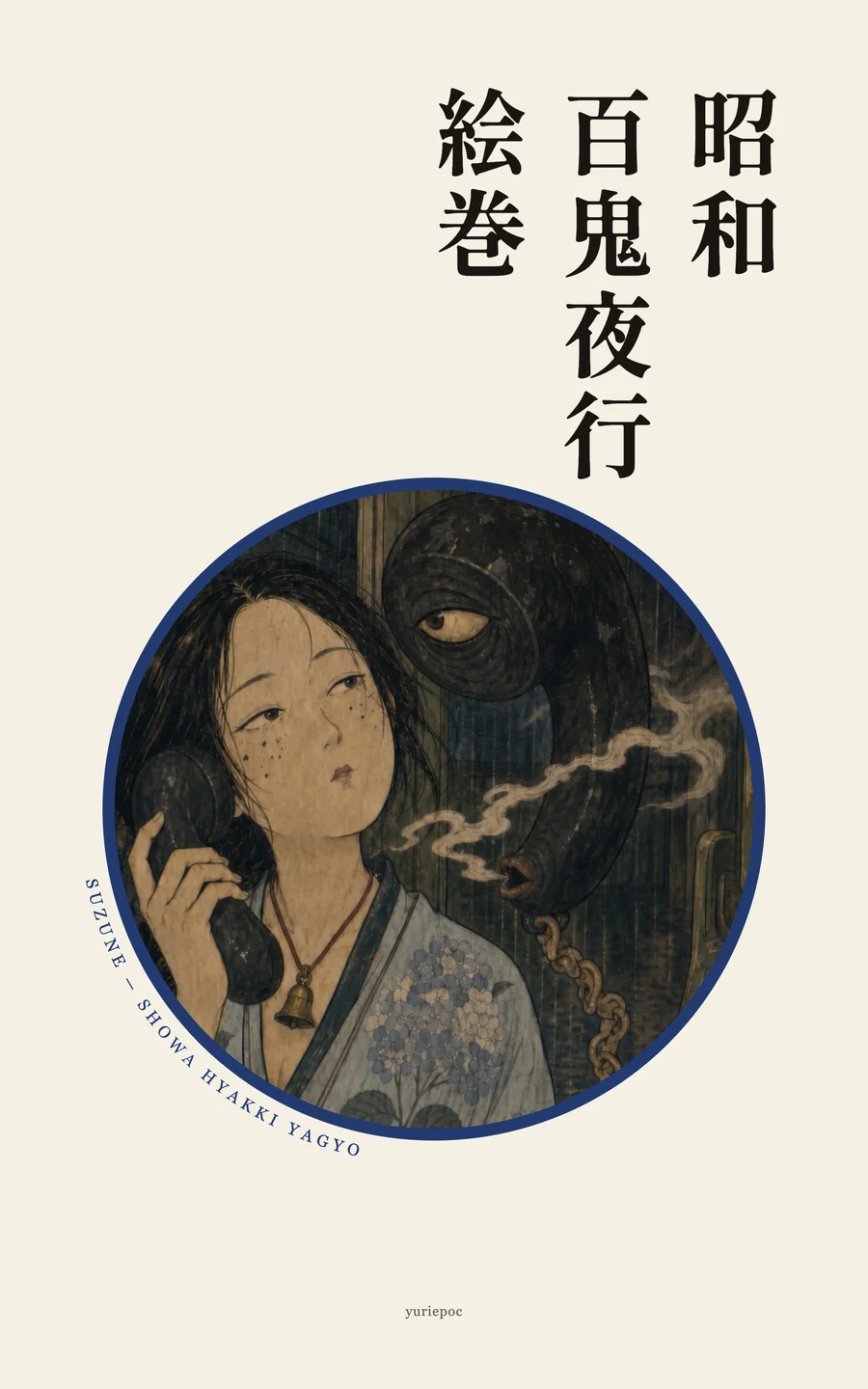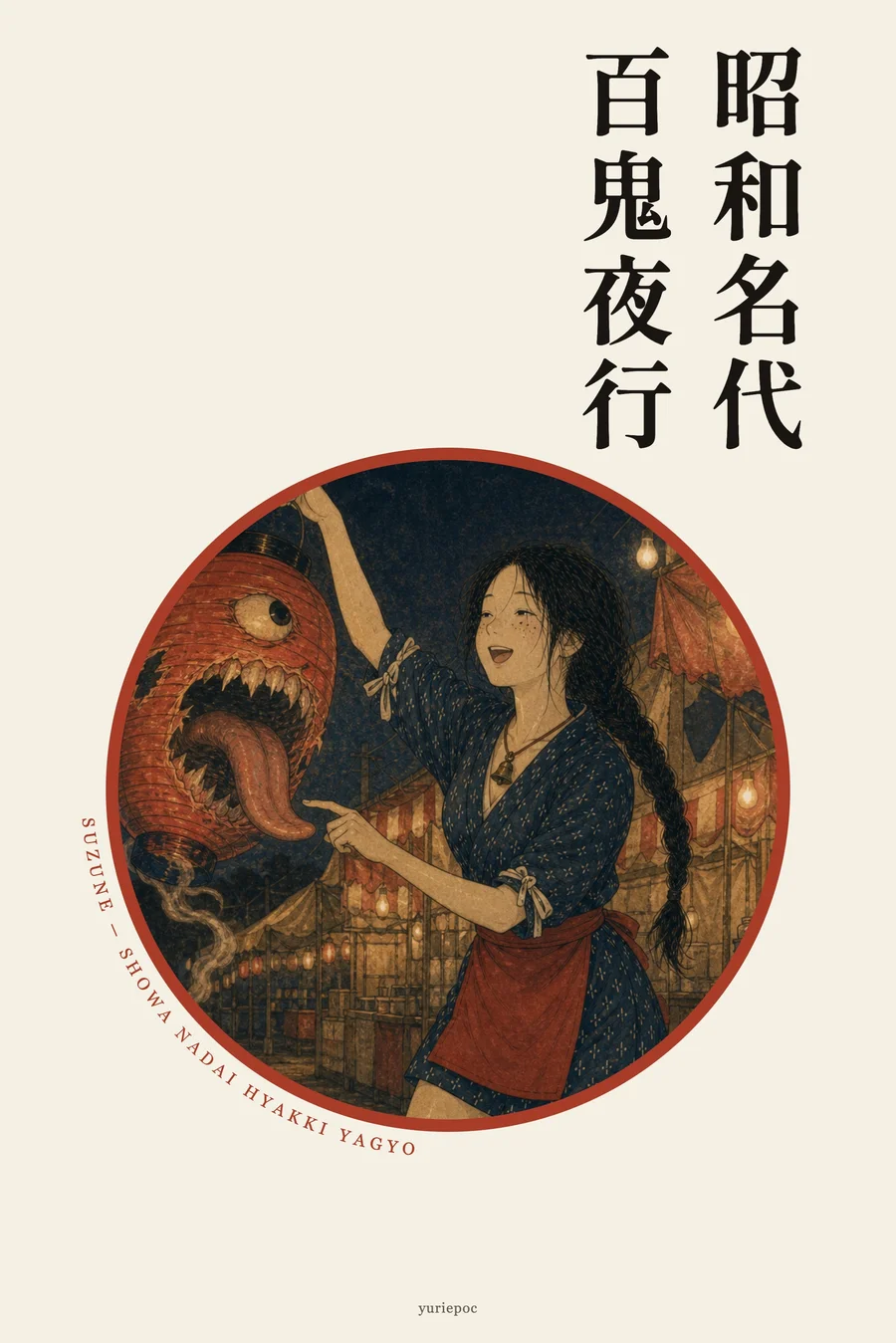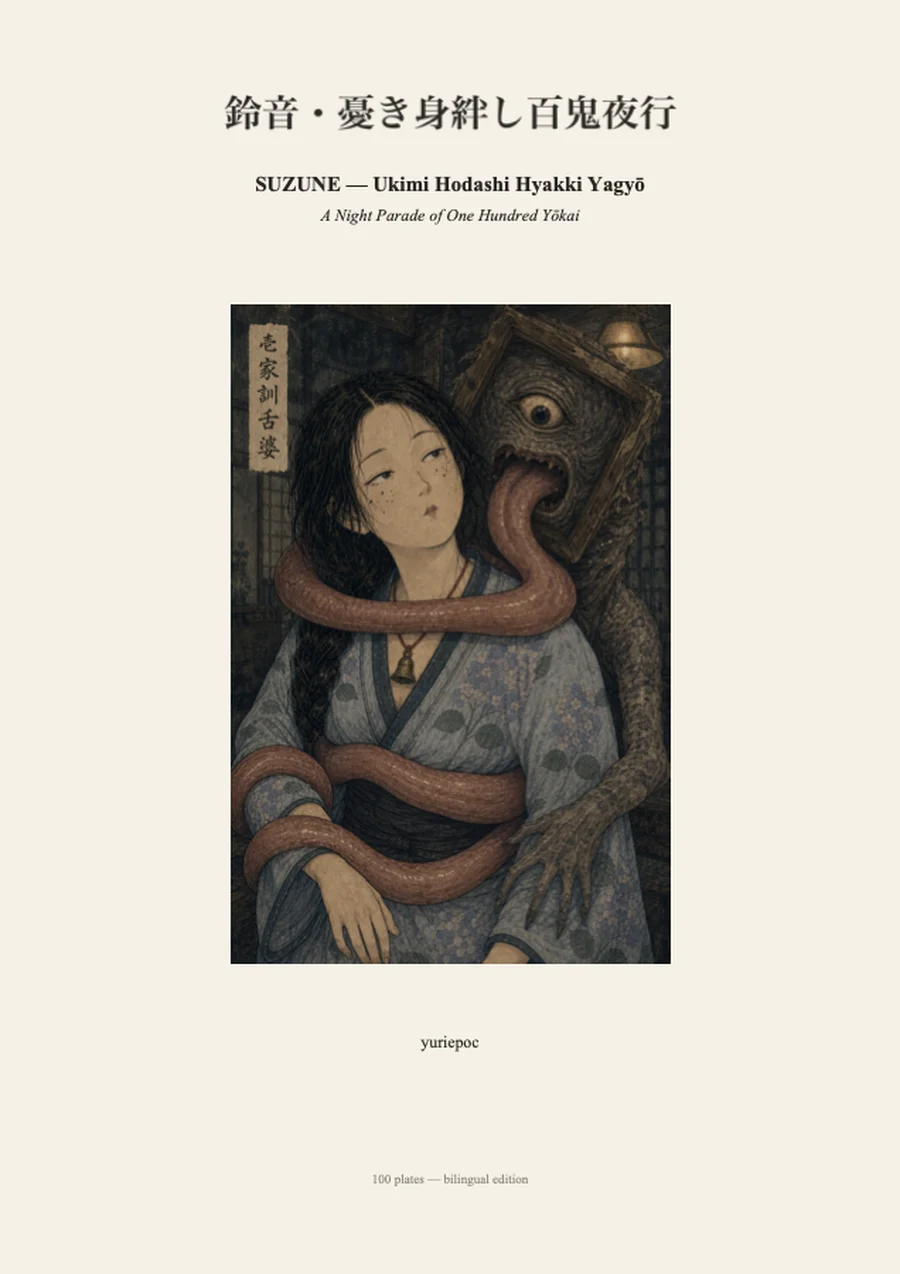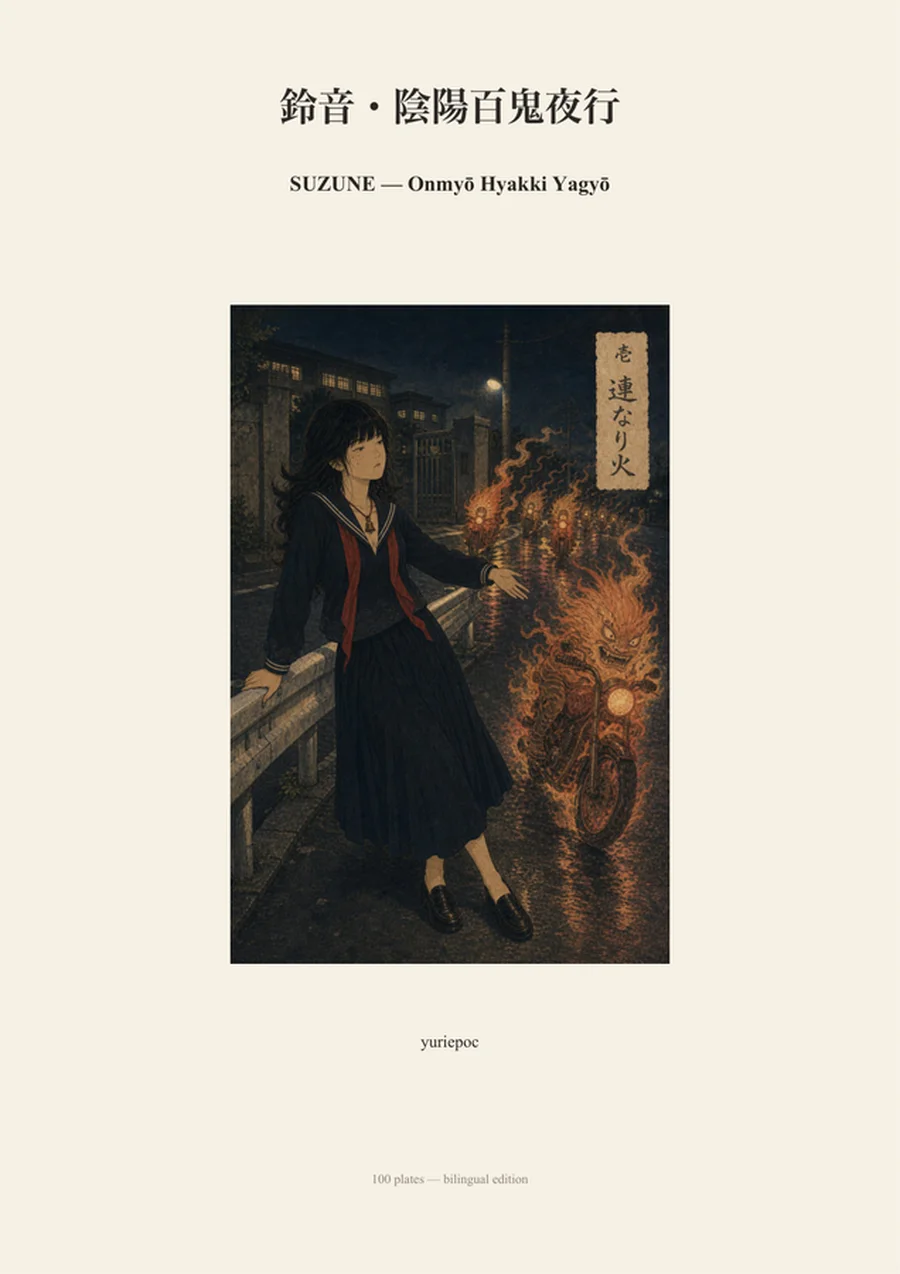
À propos de ce livre
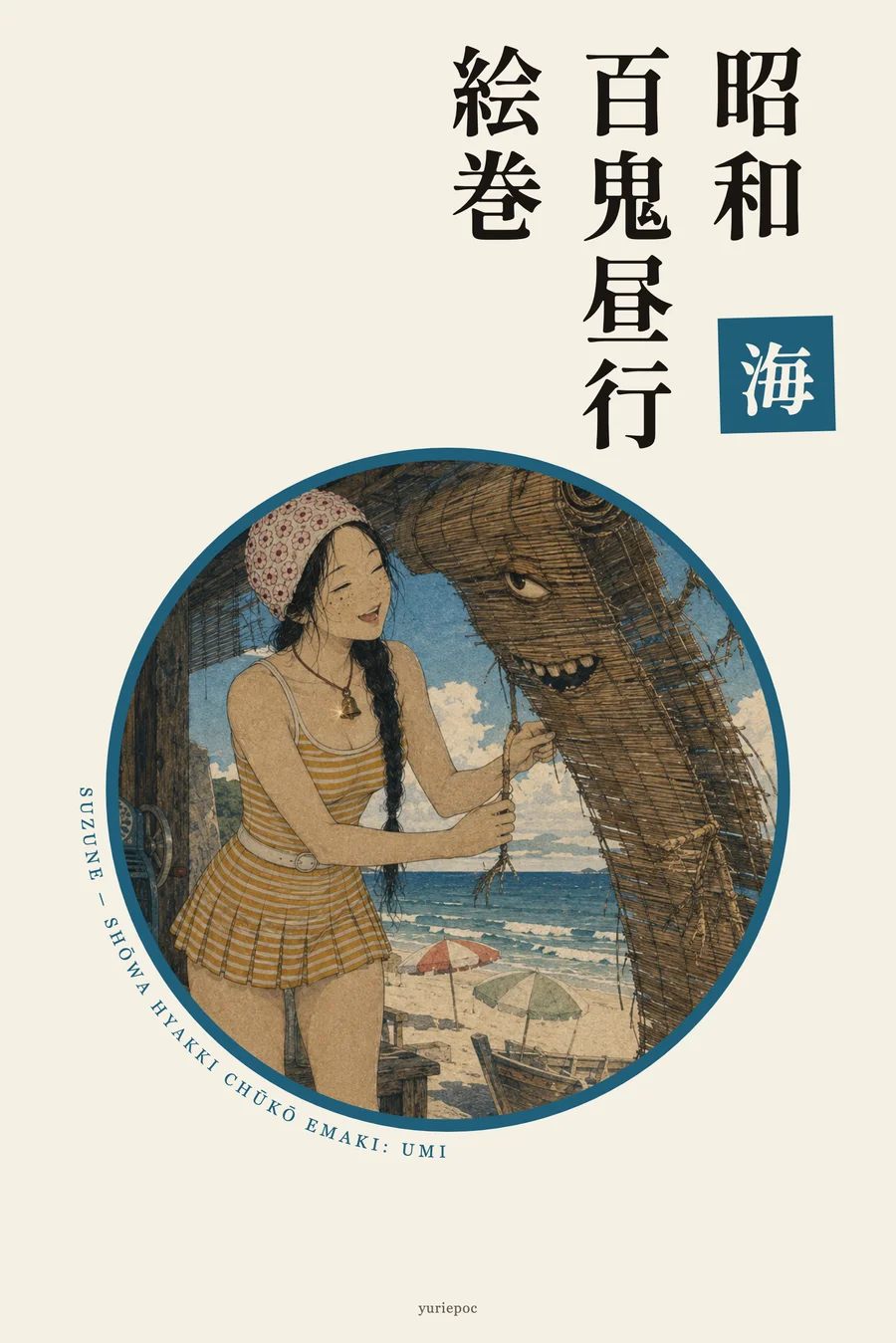
Le matin de l’ouverture de la saison des bains de mer, le store de bambou de la cabane de plage se relève tout seul, avant l’arrivée des clients. C’est là que commence cette journée d’été.
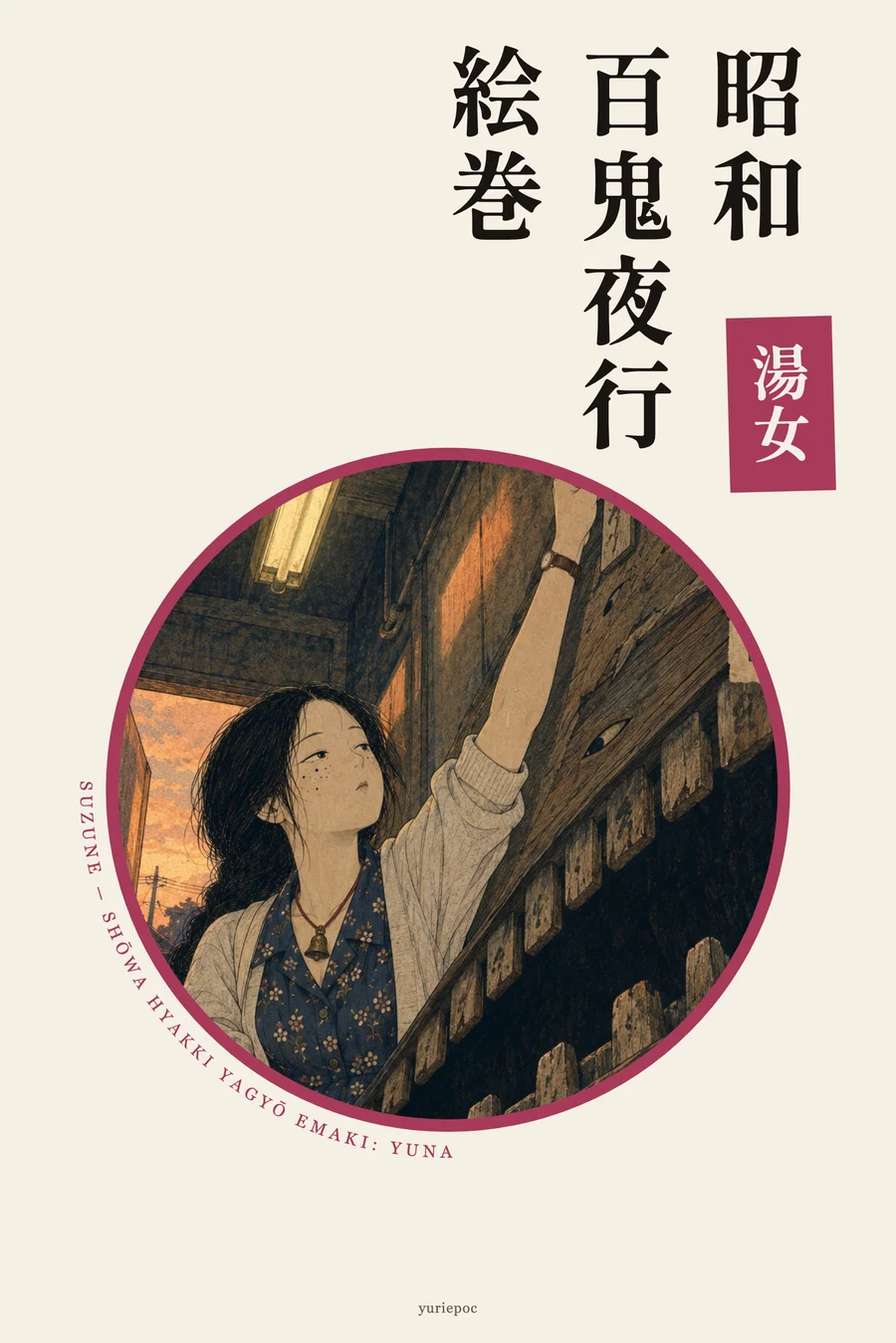
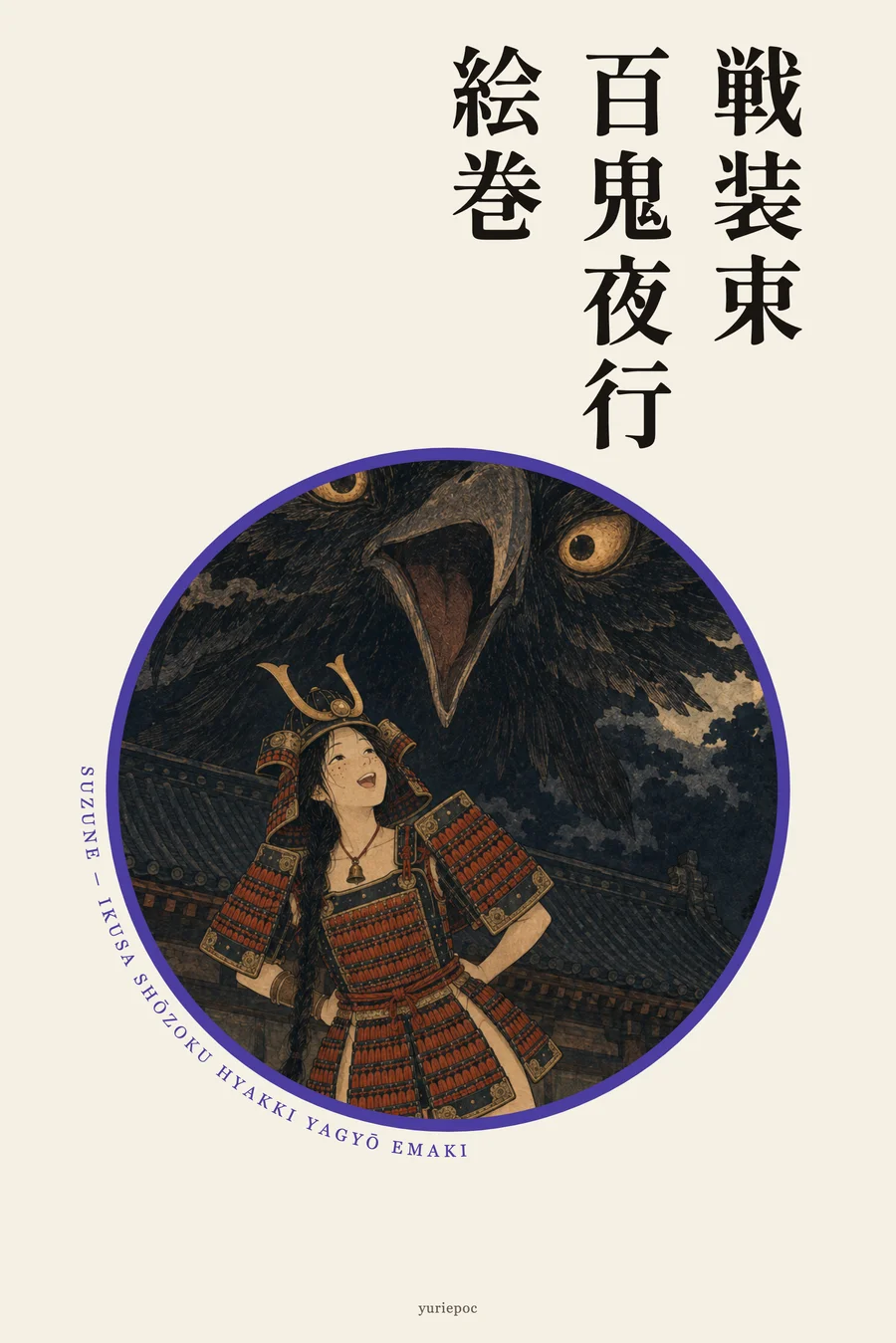
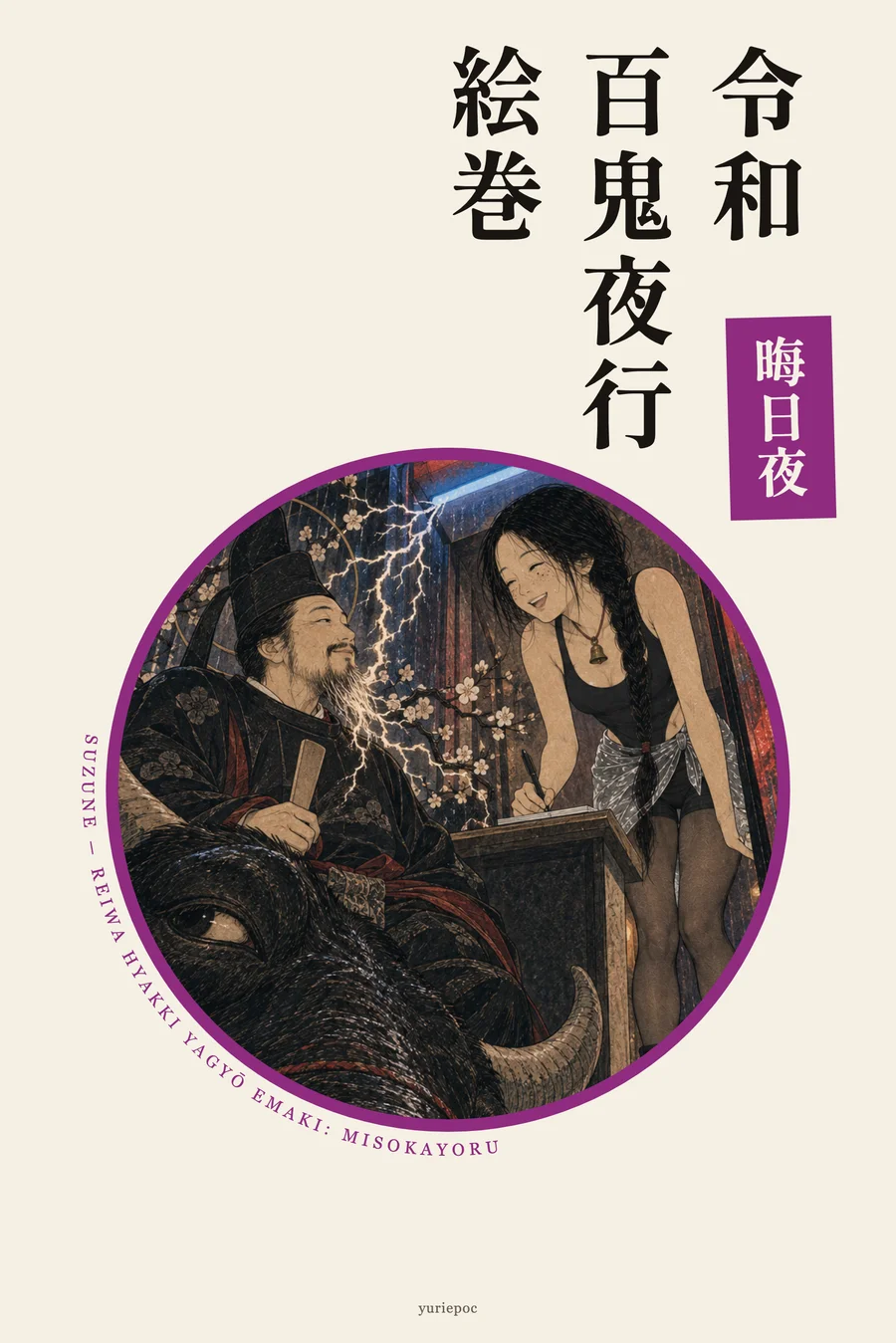
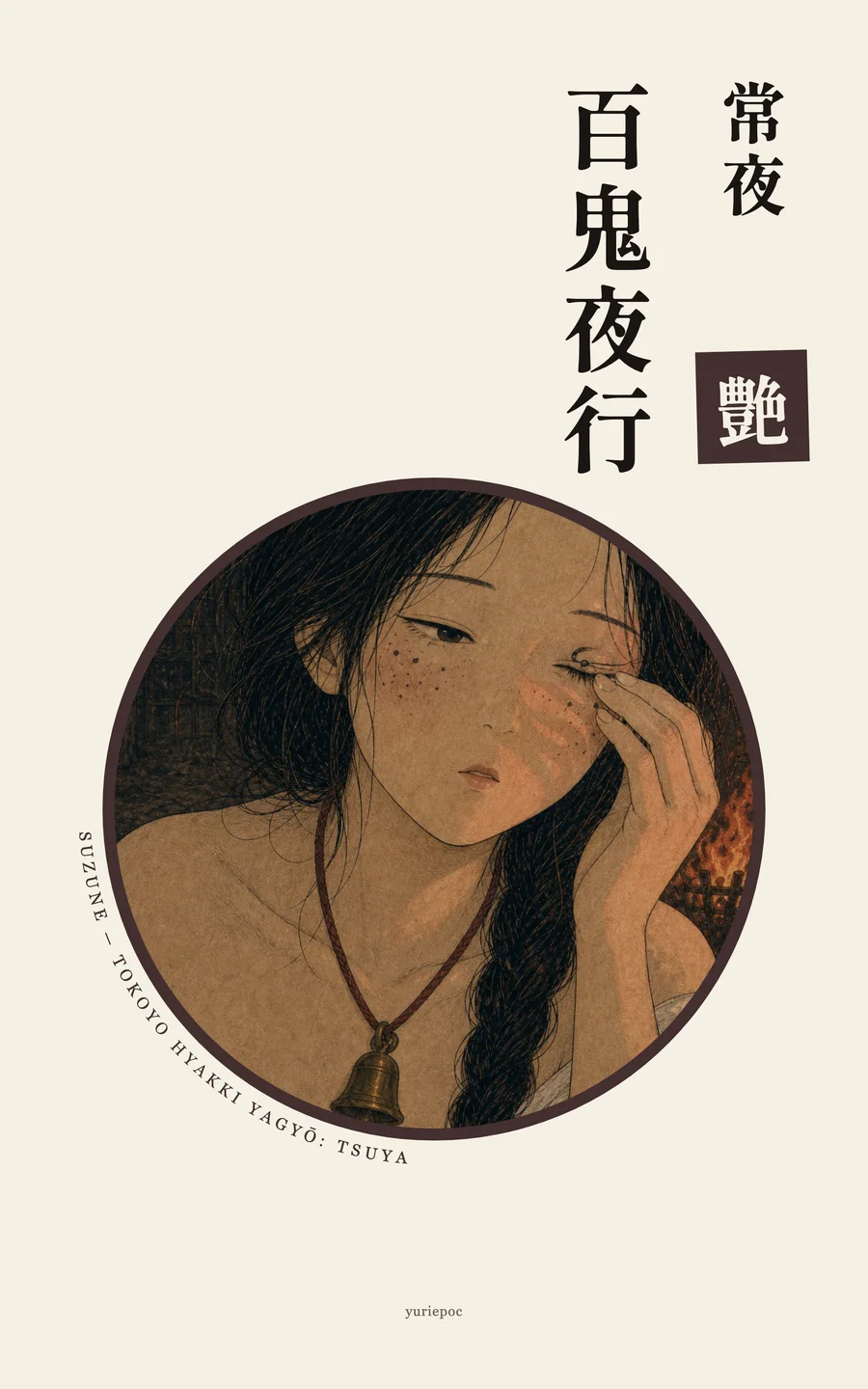
Dans ce livre, Suzune, une clochette rouge au cou, rencontre cent yōkai à la cabane de plage et sur le sable. Bouées, glace pilée, nattes de paille, bouteilles de limonade ramune. Vagues, sable, brume de mer, chemin du soleil couchant sur l’eau. Les yōkai nés des objets de la cabane de plage et de la mer elle-même sortent sur la plage claire, en plein jour, et jouent avec Suzune. Suzune ne regarde pas de loin. Elle les poursuit, les éclabousse, perd à pierre-feuille-ciseaux, et rit.
Le défilé des cent démons marche la nuit ; ici, on l’a fait marcher de jour, d’où le titre « Hyakki Chūkō », le défilé de jour. Du matin à midi, l’averse et le crépuscule, la nuit passée sur place, puis le calme du soir à la fermeture de la saison. À la dernière planche, le store redescend, et les yōkai rentrent au large par le chemin du soleil couchant.
100 planches, 204 pages. En face de chaque planche sont écrits, en japonais et en anglais, l’origine du yōkai, ses signes, la conduite à tenir et le récit. Sur les cent, dix-huit s’appuient sur des yōkai et des croyances de la mer transmis depuis longtemps, et quatre-vingt-deux ont été créés pour ce livre. Une petite mention sous chaque nom indique de quel cas il s’agit.
Planches d’exemple
-
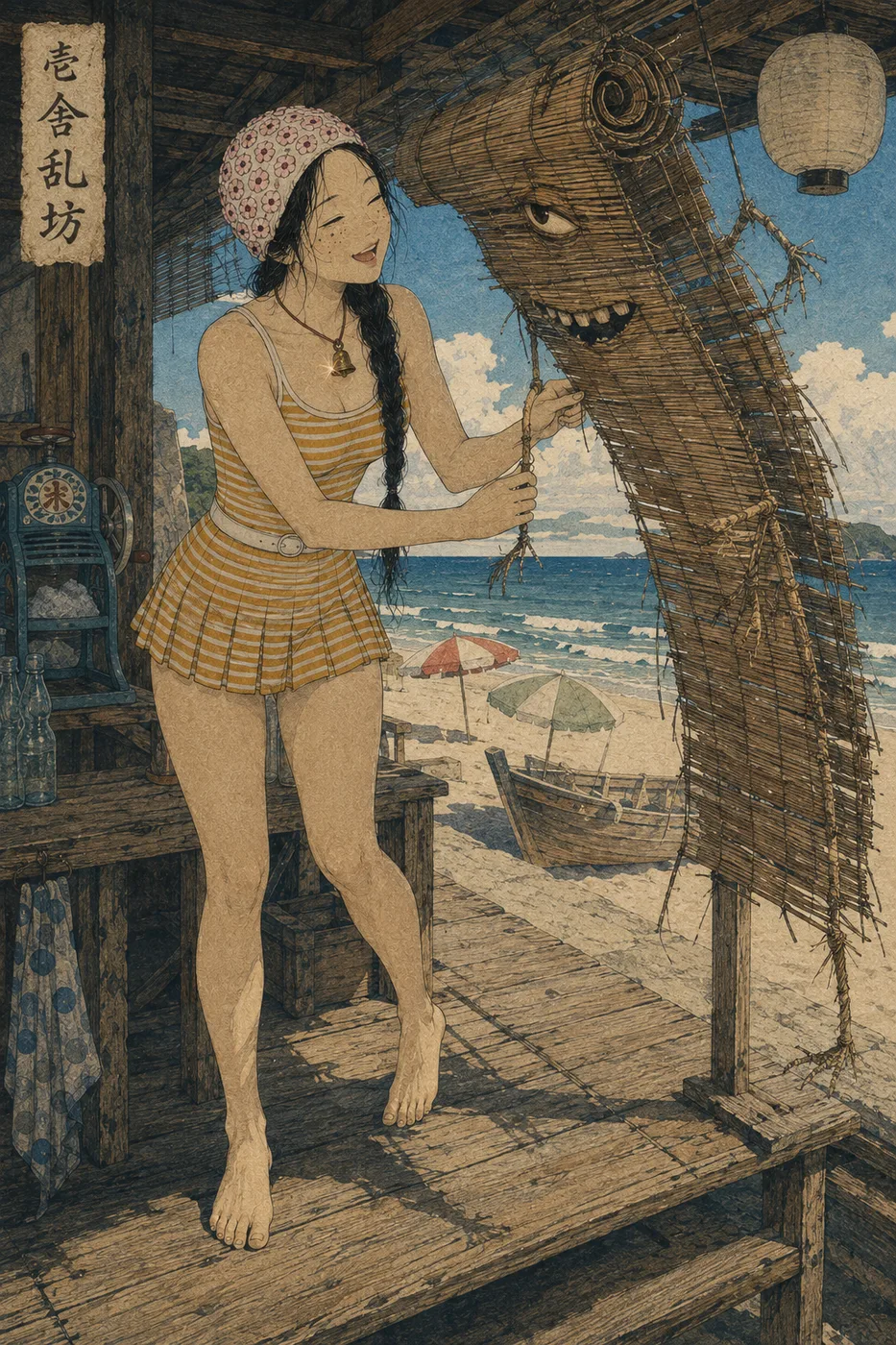
Planche 1
The Rising Blind
舎乱坊Sharanbō
Origine
Sharanbō is a yokai that lives in the bamboo blind of a beach house. A bamboo blind is a sun shade woven from thin bamboo. All winter the blind stays rolled up in a dark storeroom.
舎乱坊は、海の家の簾にいる妖怪である。冬のあいだ簾は暗い納戸で丸まって夏を待つ。
-
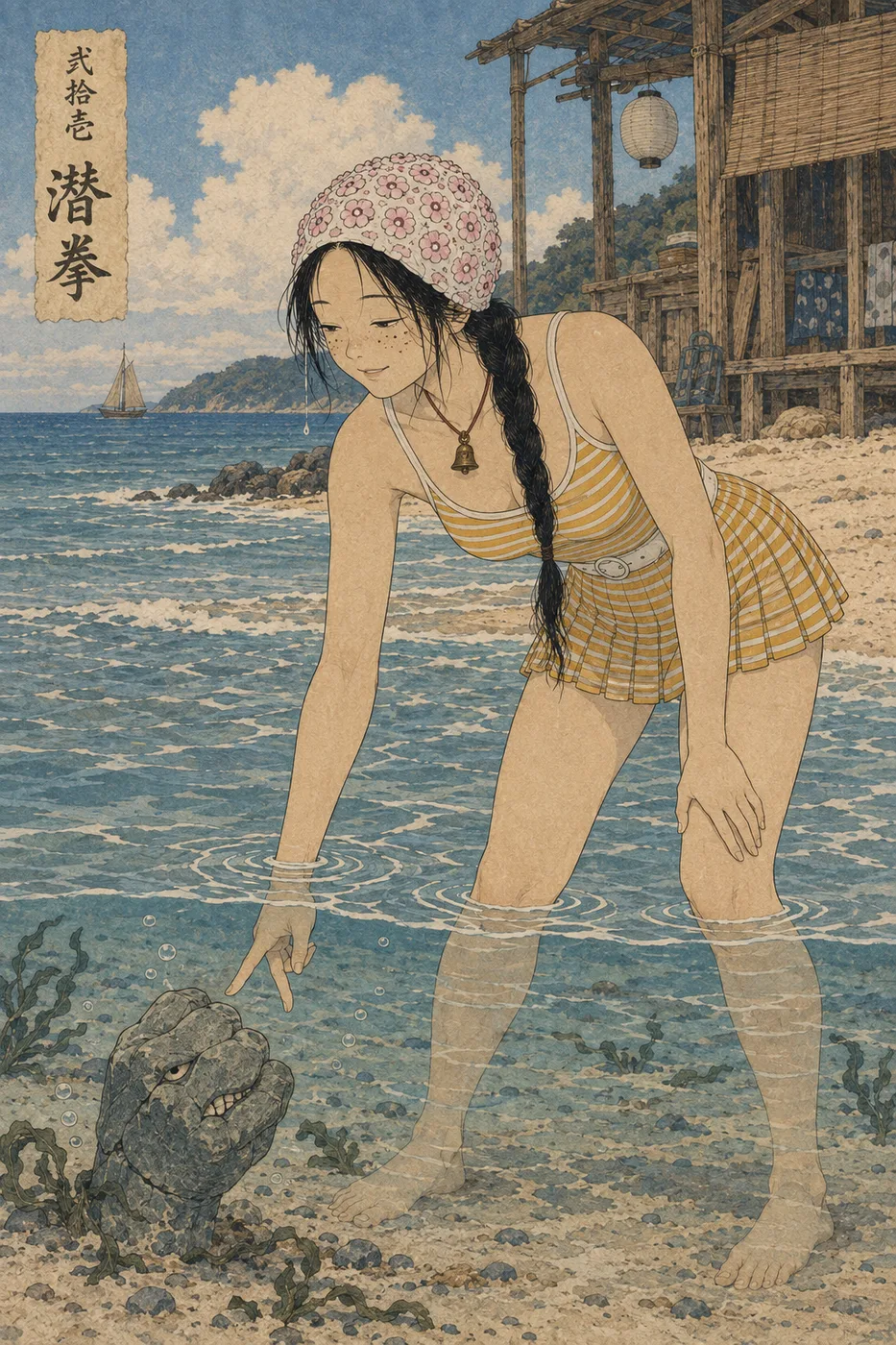
Planche 21
The Underwater Fist
潜拳Moguriken
Origine
Moguriken is a yokai of the shallow water. Nobody can shout the rock-paper-scissors chant underwater, and Moguriken found that boring.
潜拳は、浅瀬の水の中にいる妖怪である。水の中では掛け声が出せず、じゃんけんができない。
-
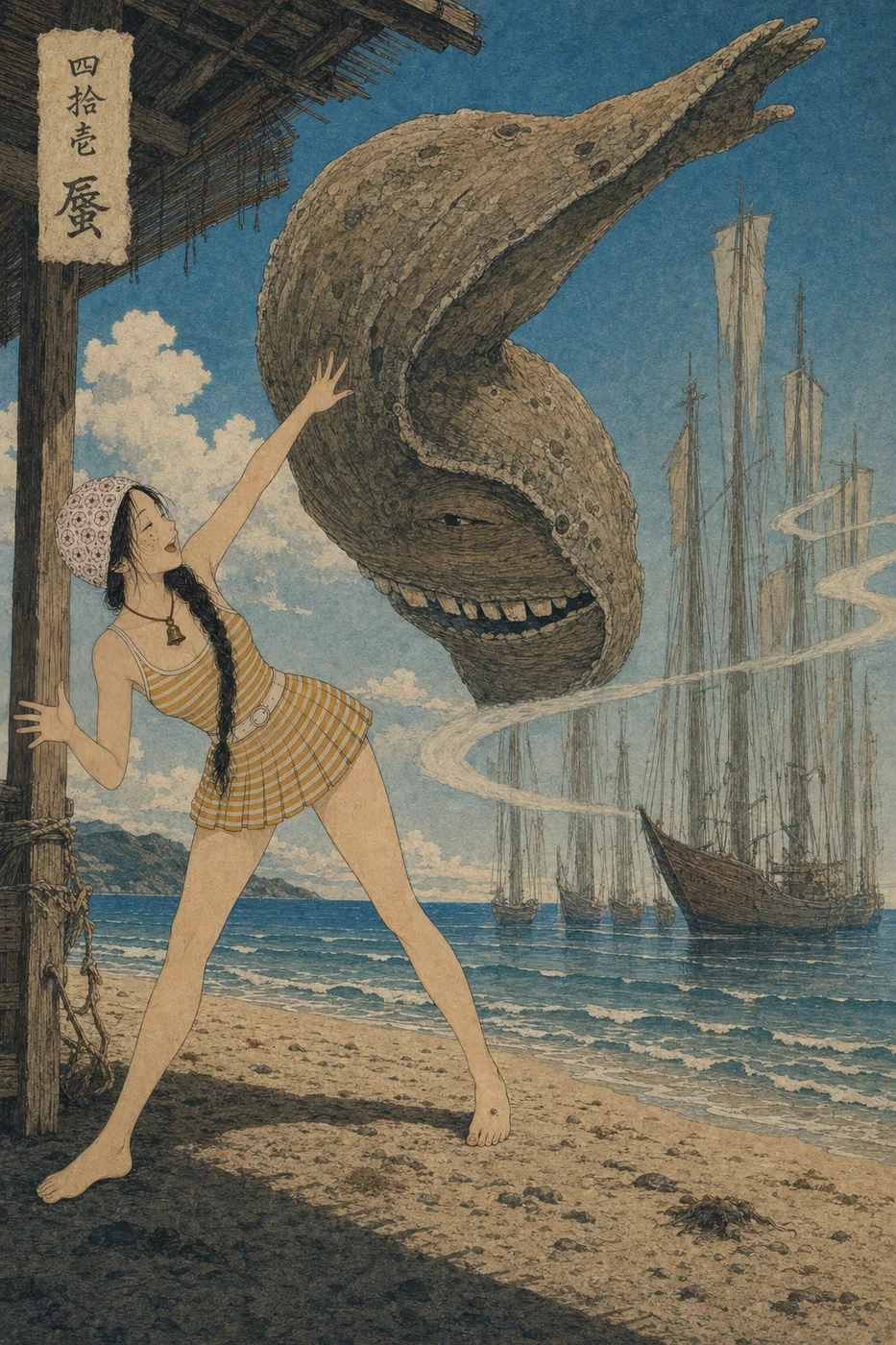
Planche 41
Shin, the Mirage Breather
蜃Shin
Origine
Shin is a spirit that hides far out at sea at noon, when there is no wind. Nobody knows whether it is a clam or a dragon.
蜃は、風のない昼の沖にひそむ妖怪である。蛤か龍か、正体は決まっていない。
-
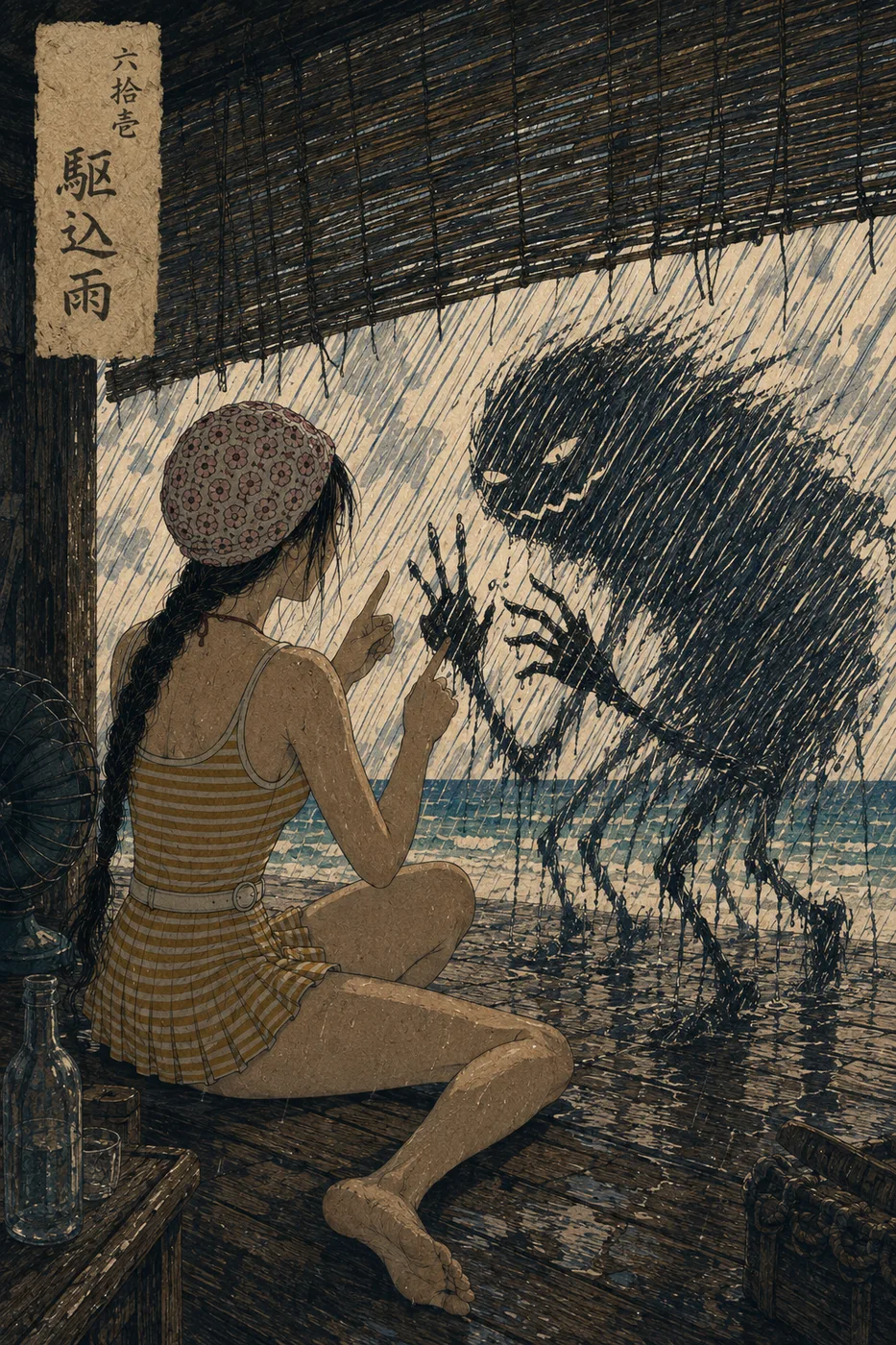
Planche 61
The Rain Dashing Indoors
駆込雨Kakekomiame
Origine
Kakekomiame is a yokai born from a single drop of an evening shower. When it has no place left to fall, the rain wants to take shelter.
駆込雨は、夕立の一粒から生まれる妖怪である。降る場所がなくなると、雨は雨宿りがしたくなる。
-
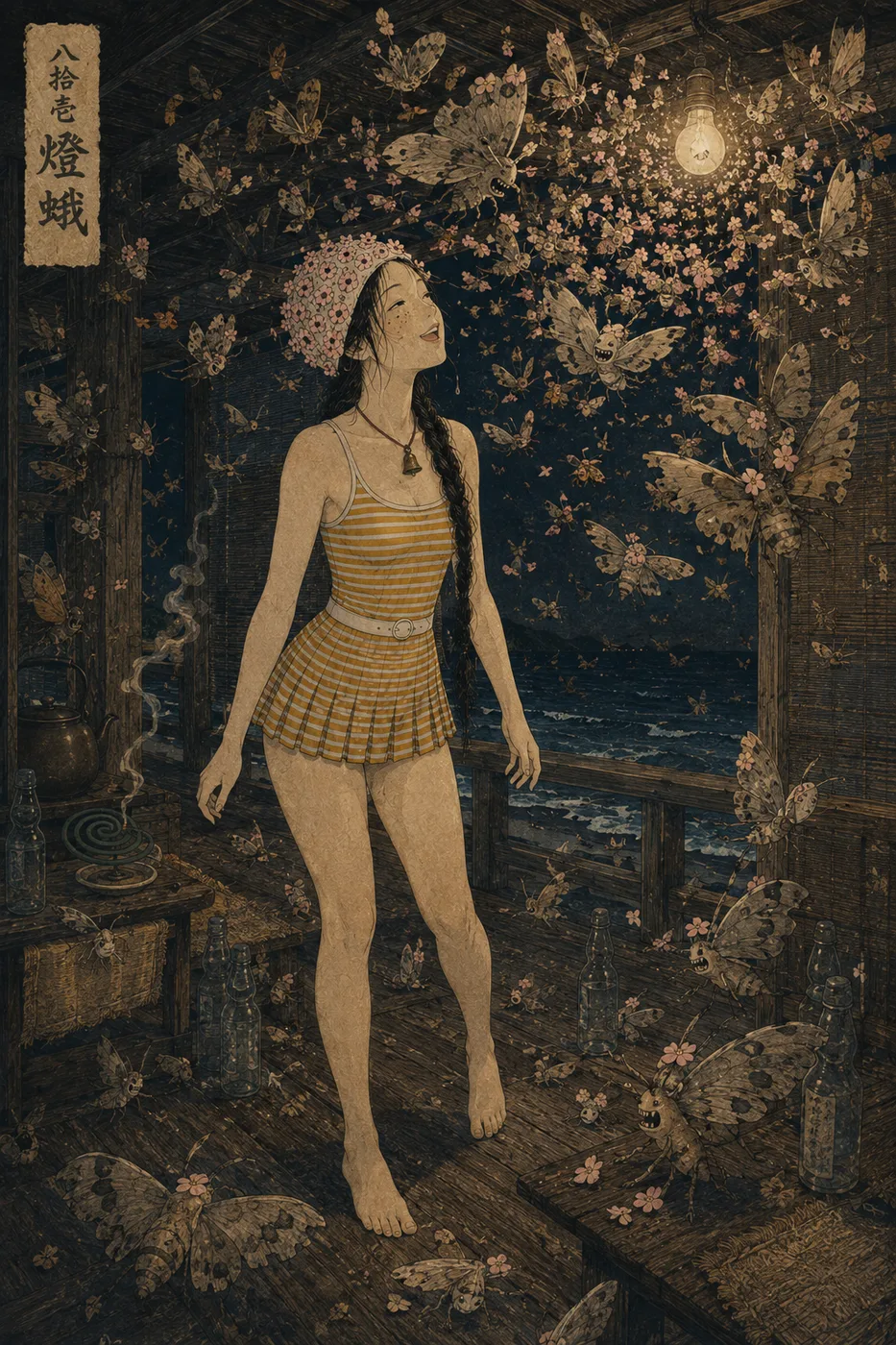
Planche 81
The Bare-Bulb Moth
燈蛾Tōga
Origine
Tōga is a spirit that lives among the bugs around the bare bulb, a light bulb with no shade. It looks at the same light every night, and it begins to want something that blooms near the light.
燈蛾は、かさのない裸電球に集まる虫の中にいる妖怪である。毎晩同じ光を見て、光のそばに咲くものがほしくなった。
Autres livres