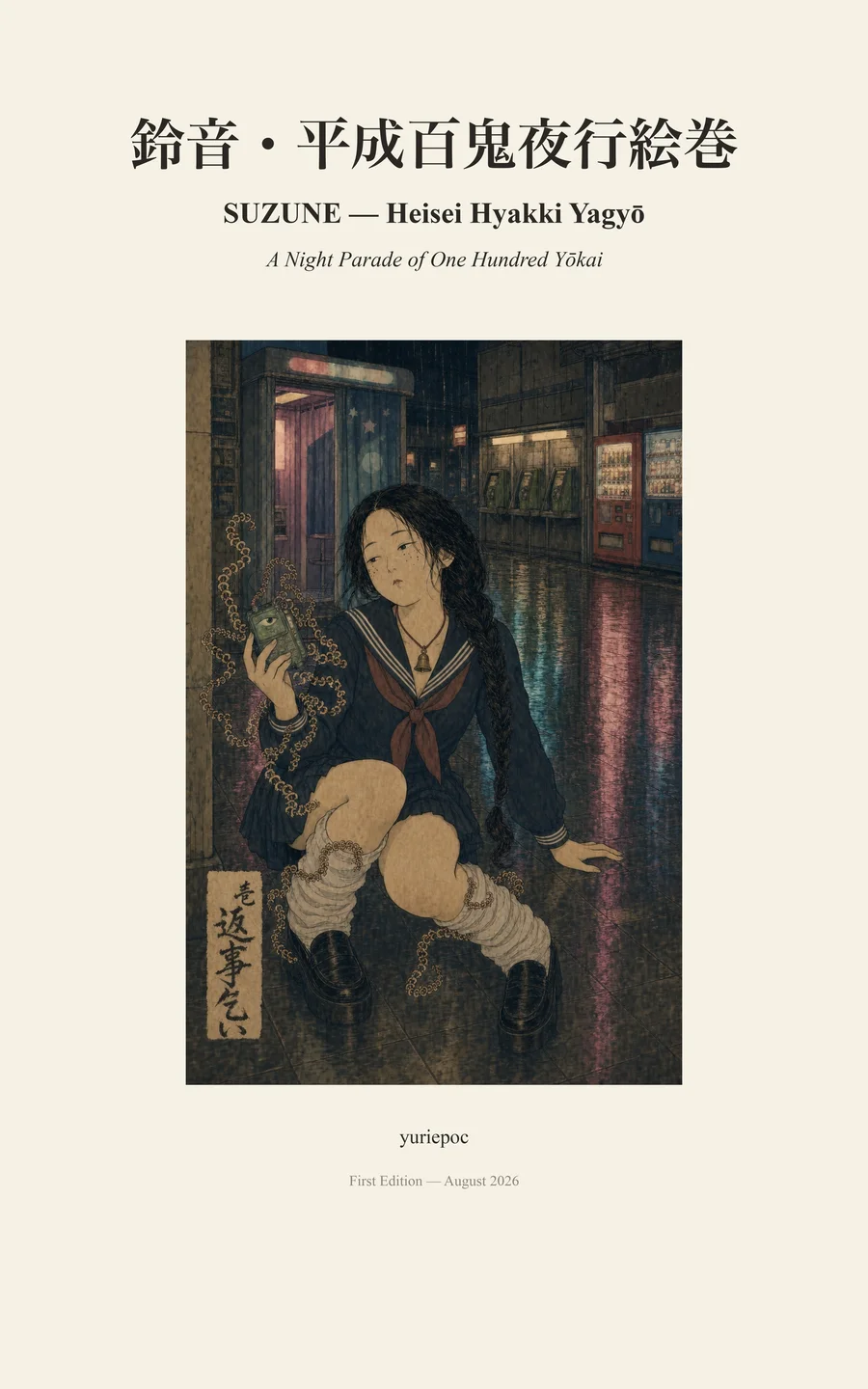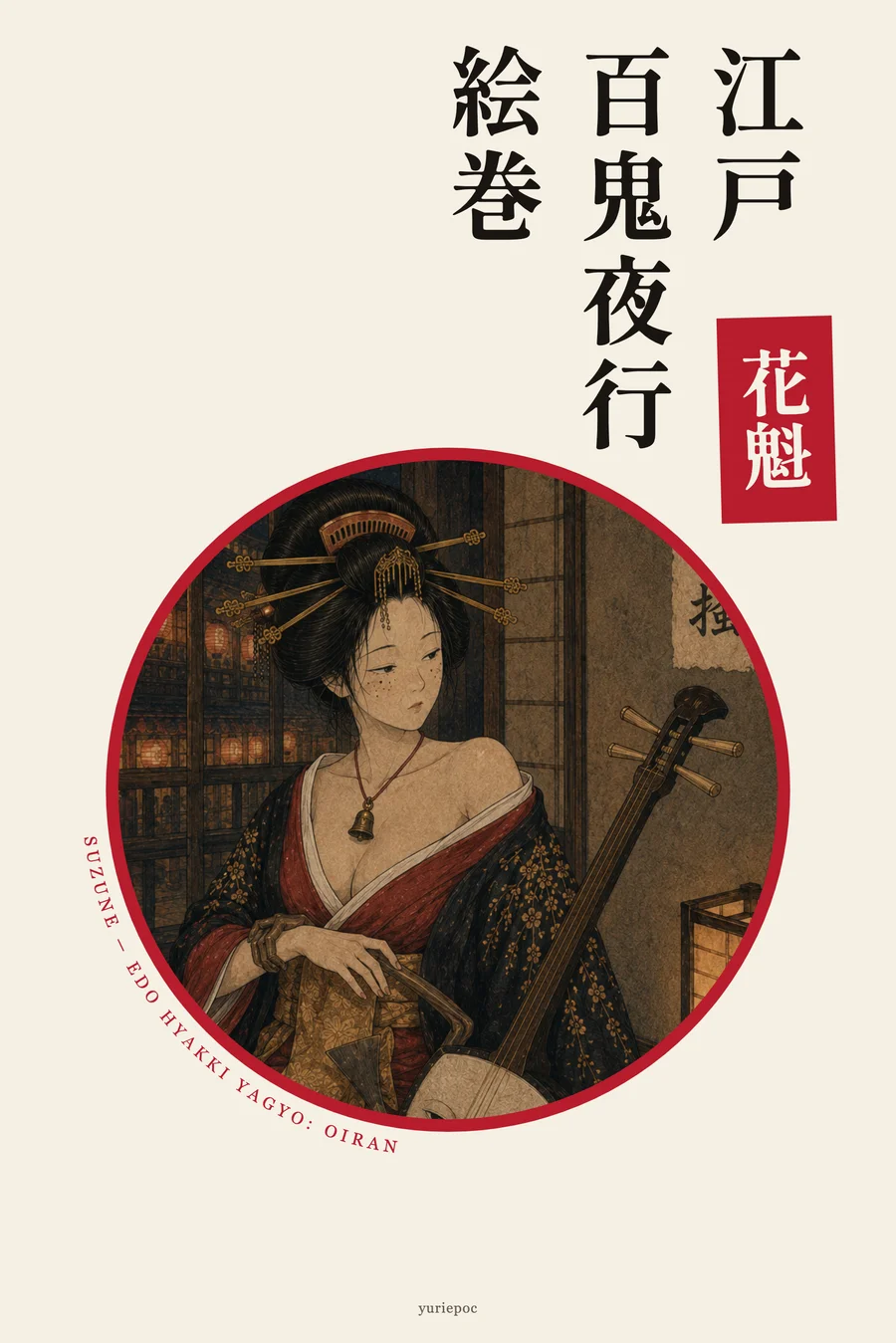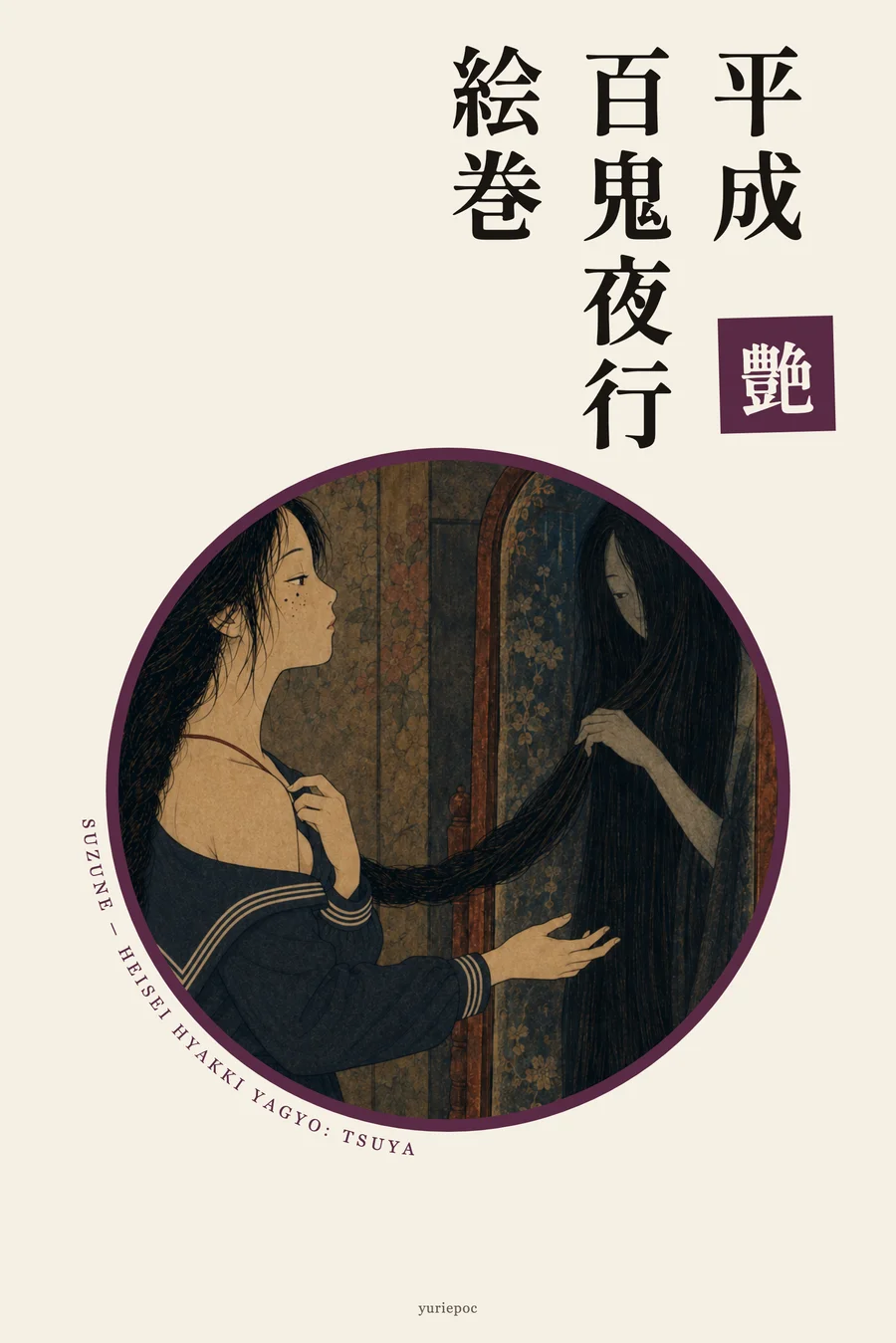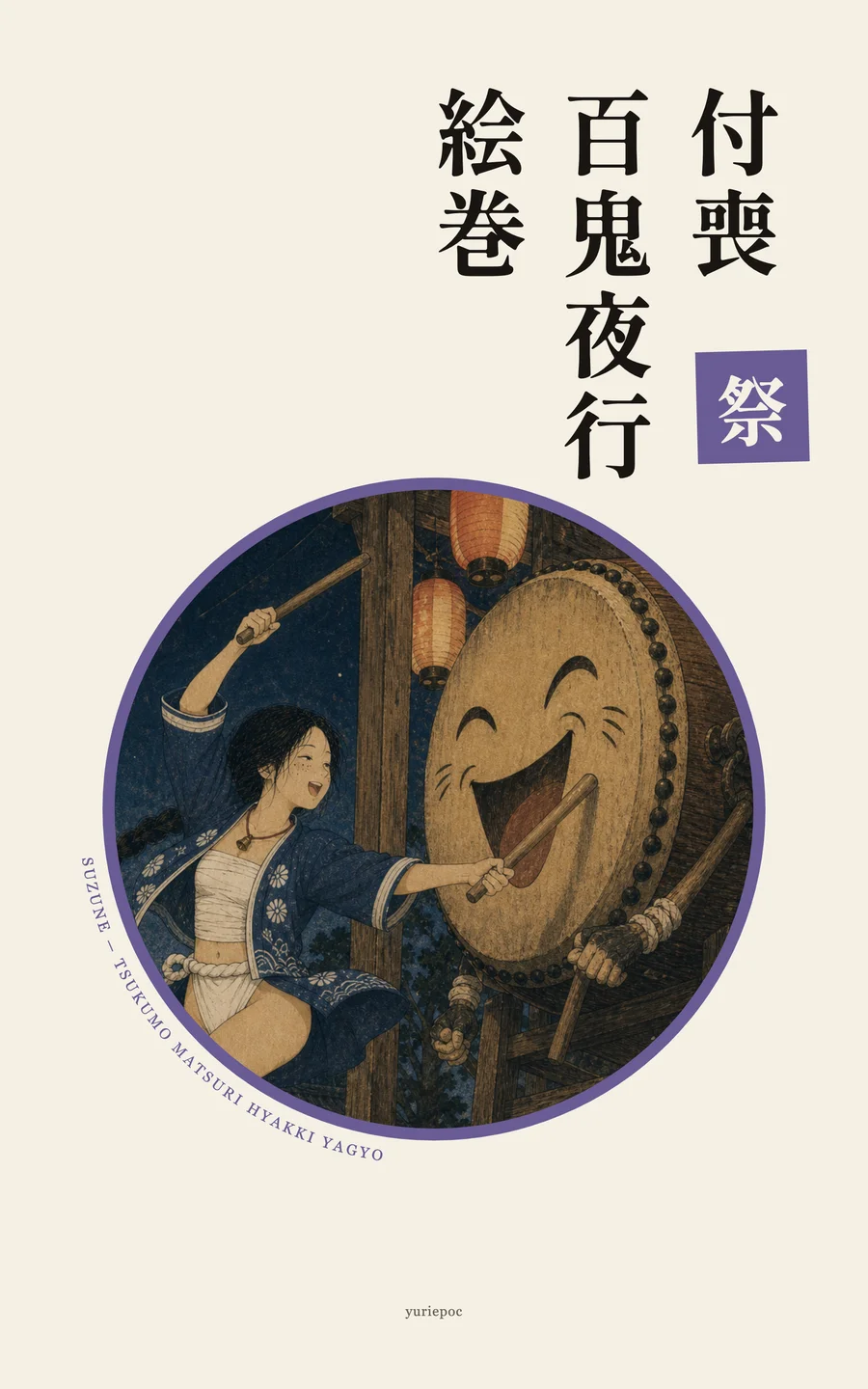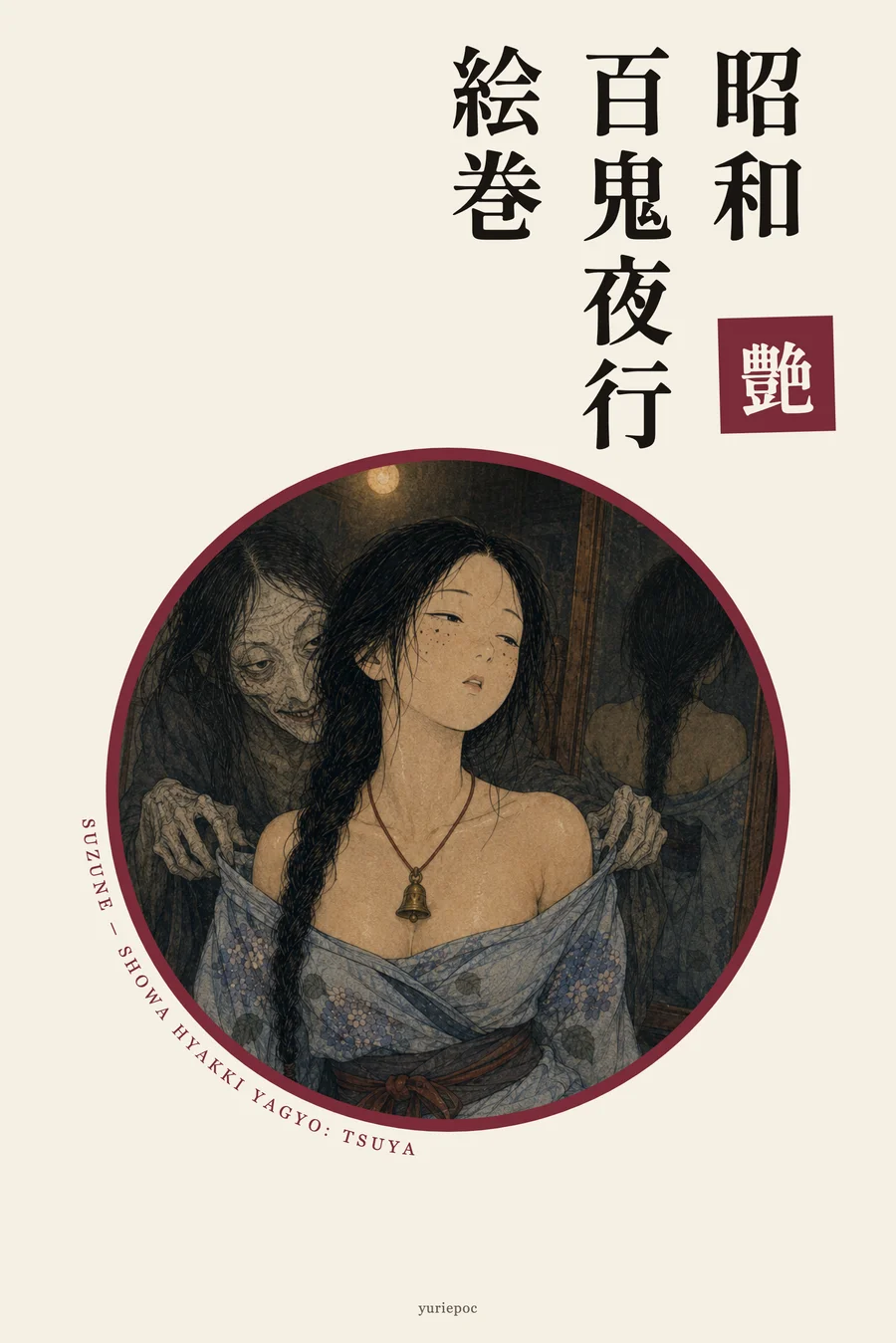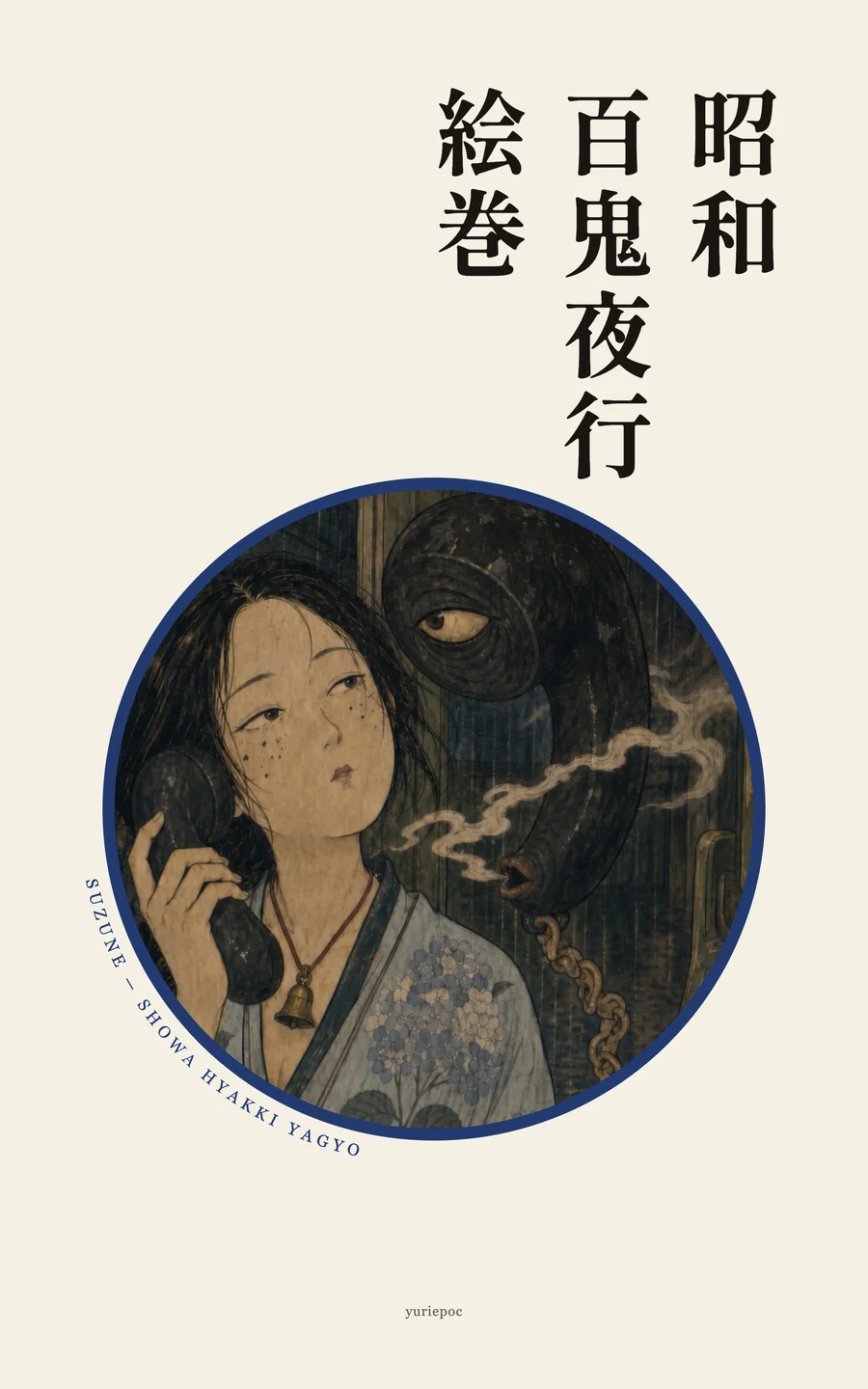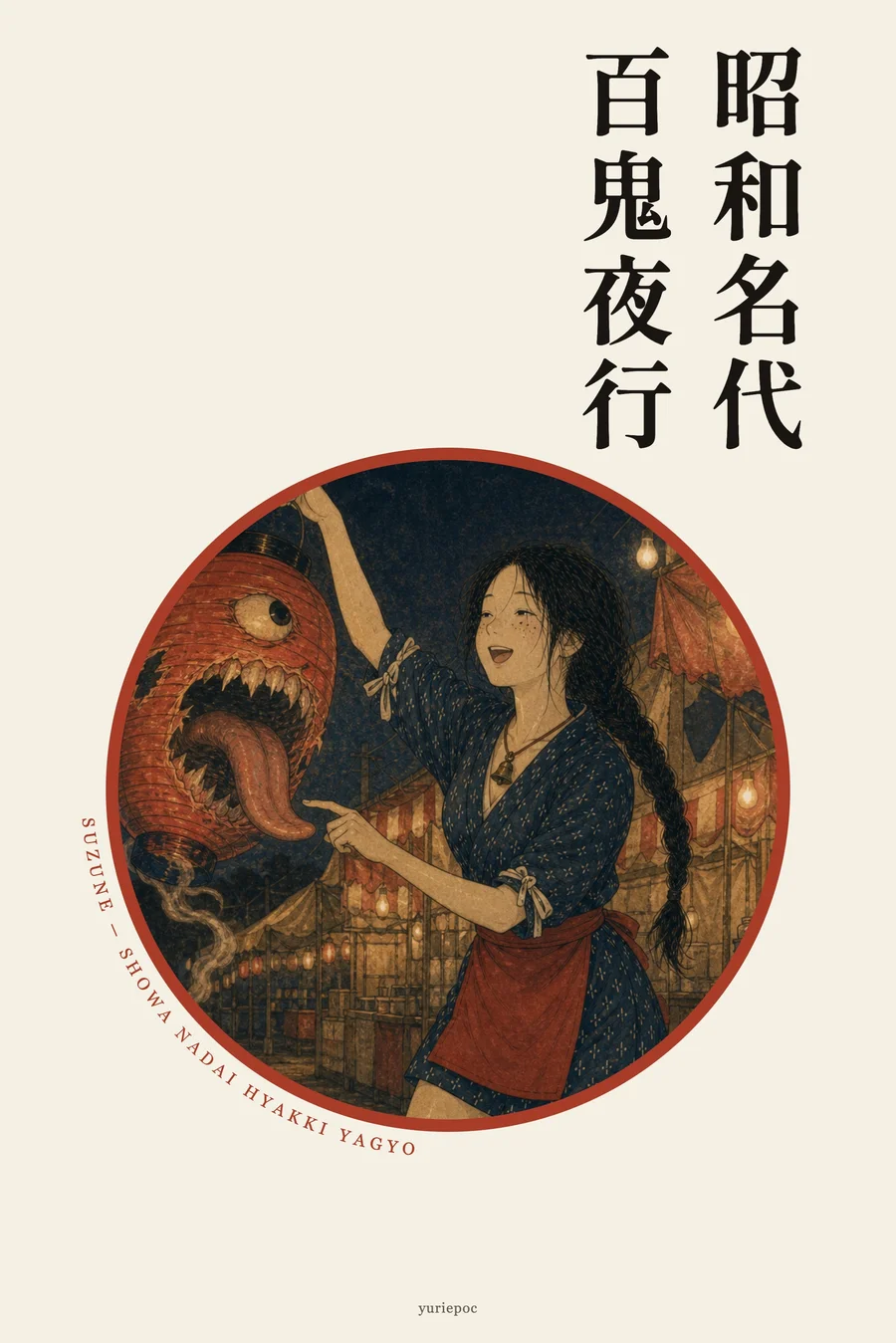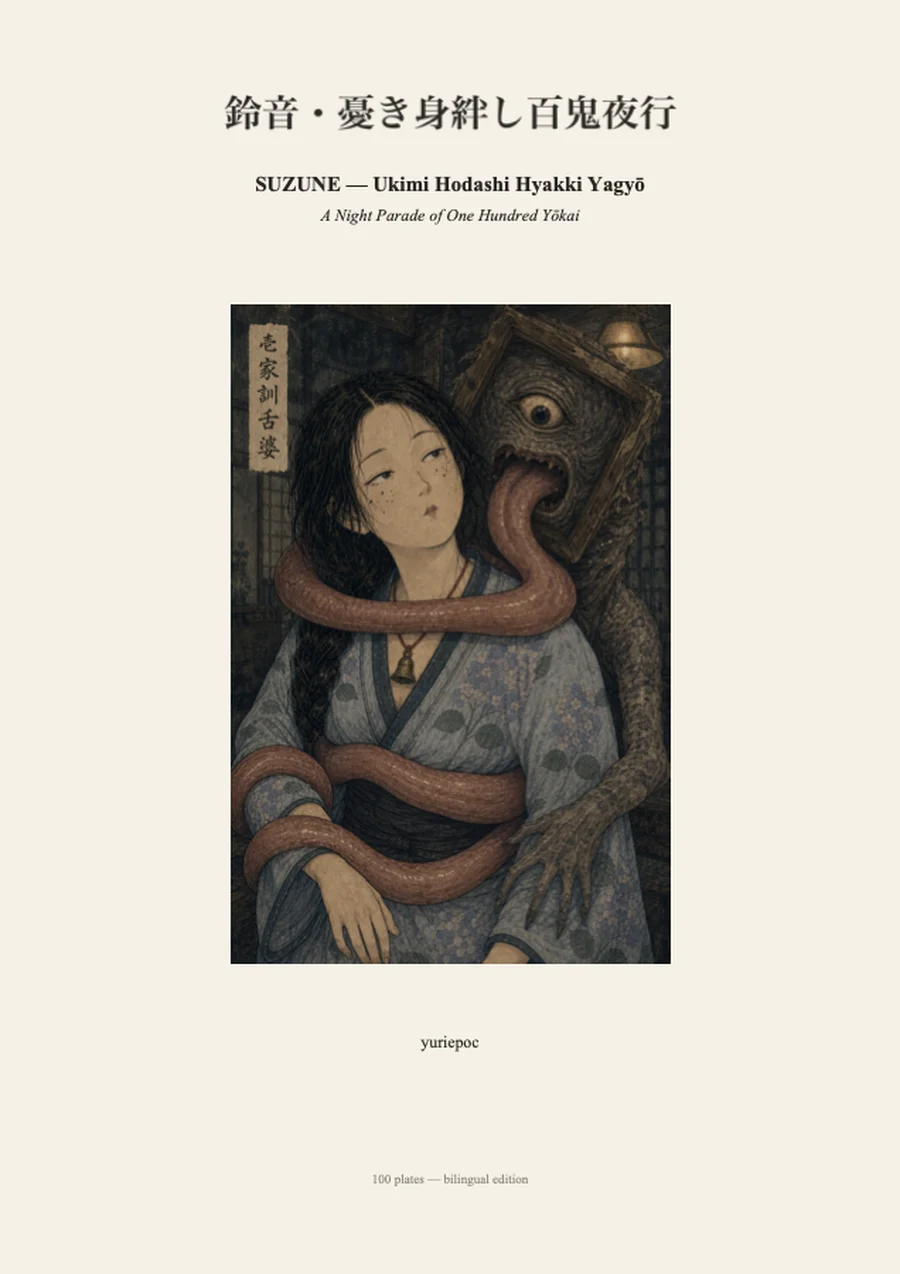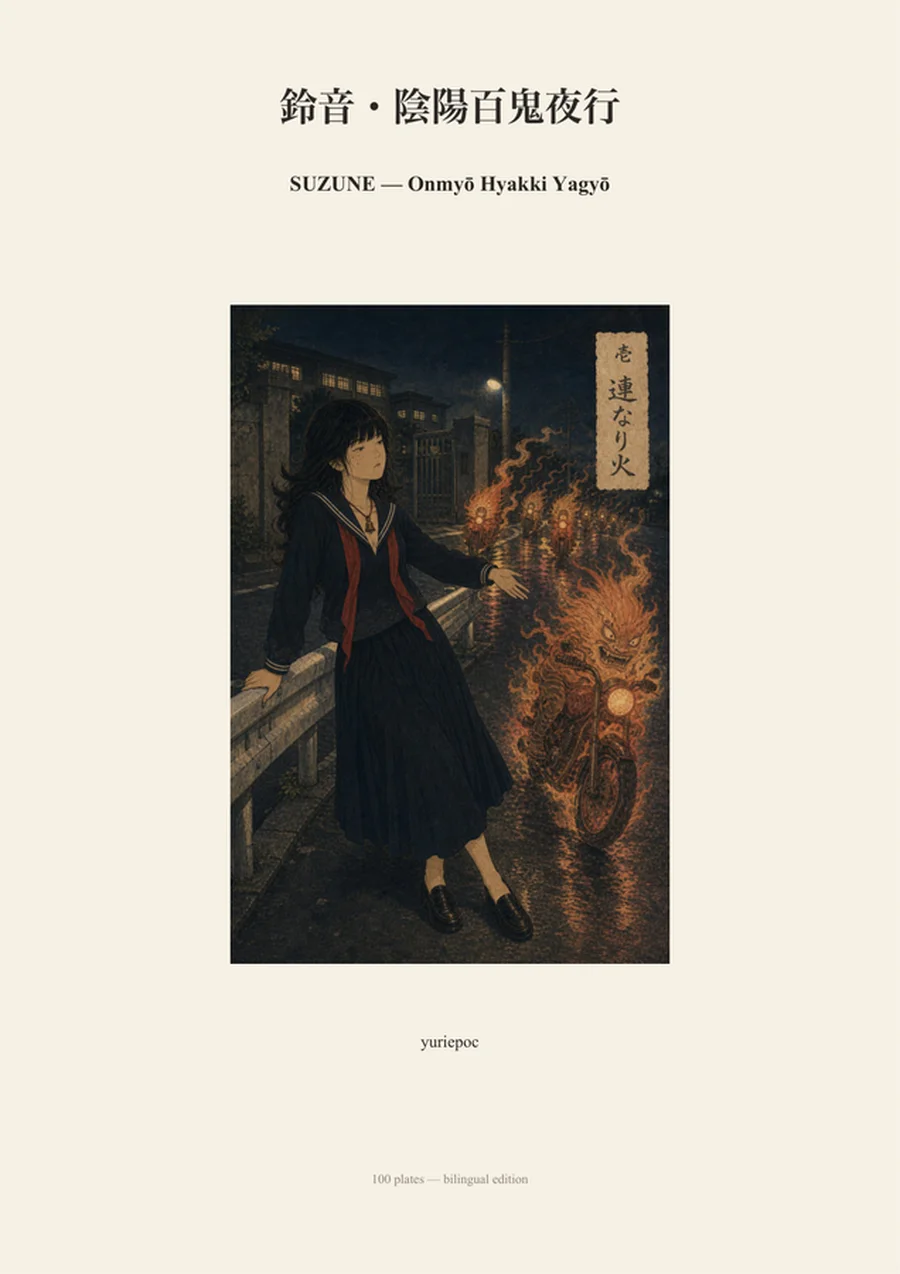
À propos de ce livre
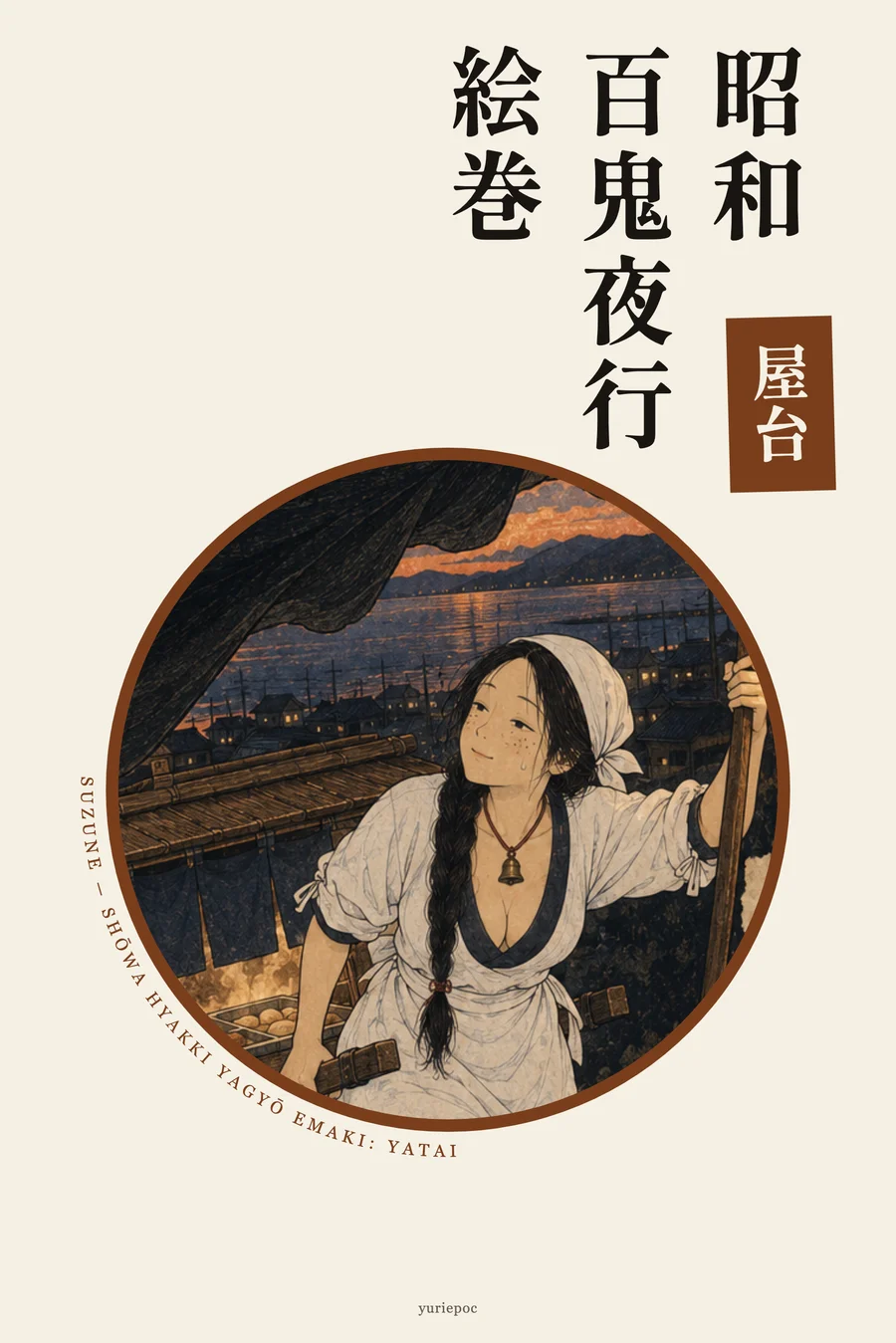
À la tombée du jour, Suzune tire sa charrette d’oden et monte la pente. Elle ne vend que de l’oden et du saké chaud. C’est là que commence la nuit.
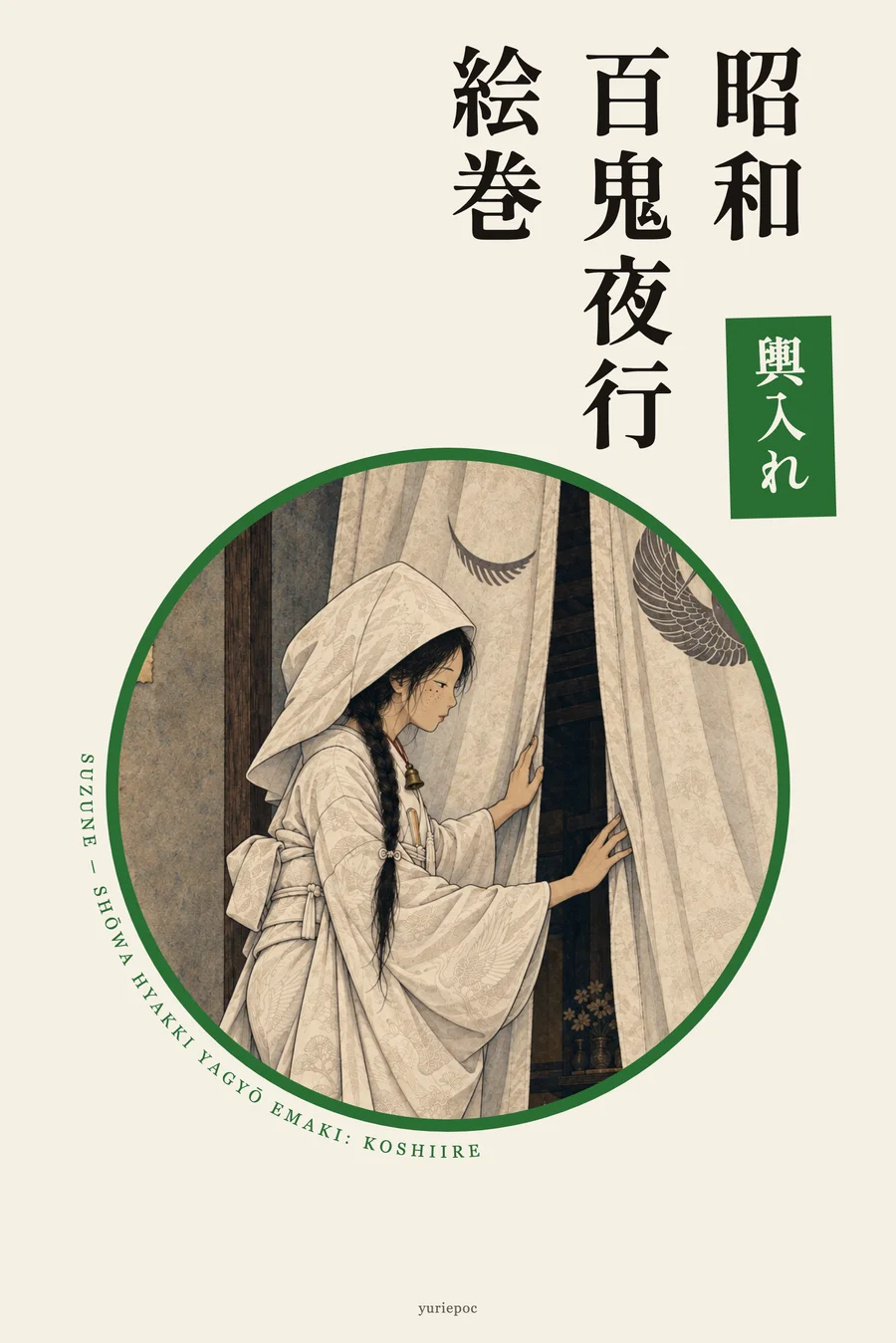
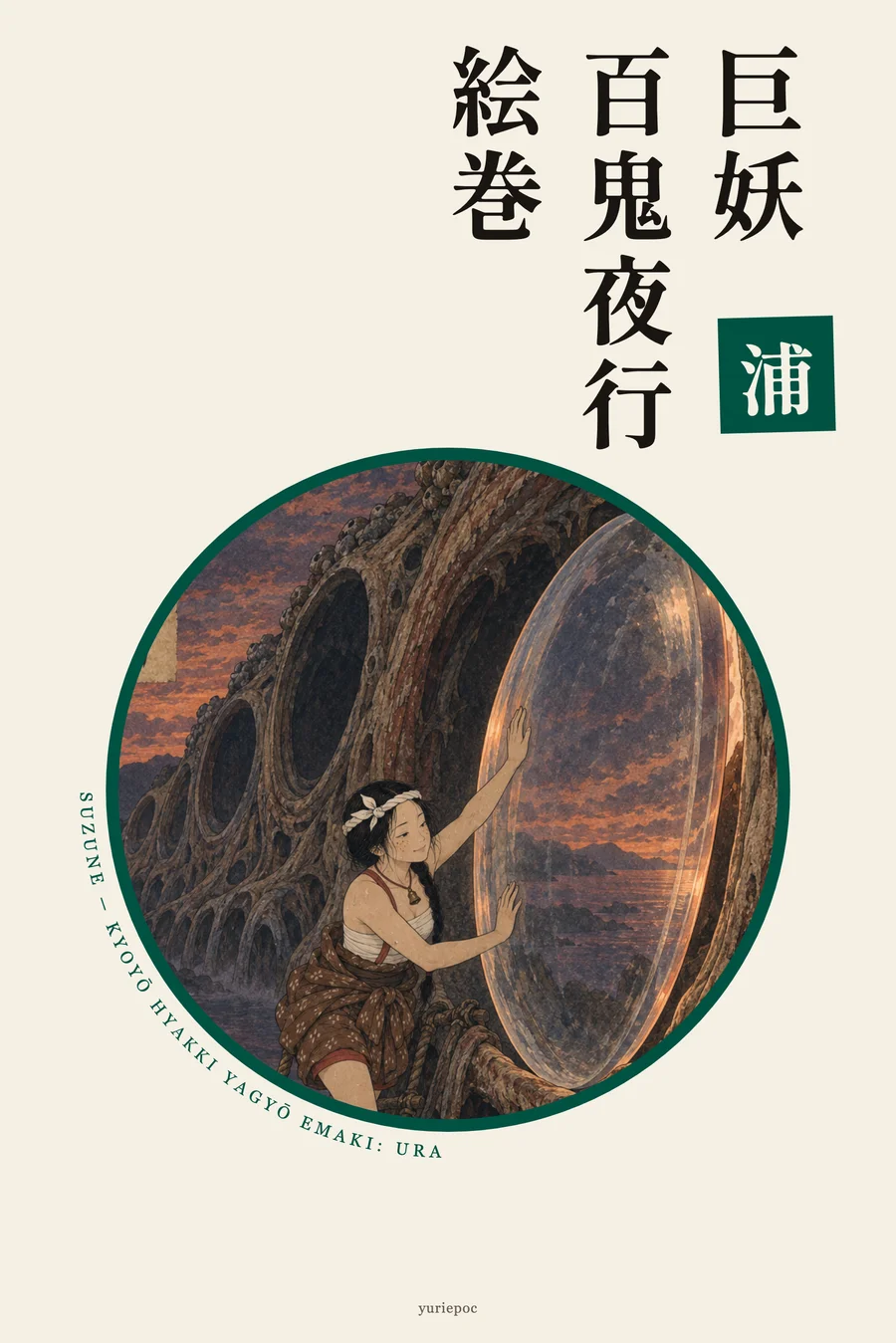
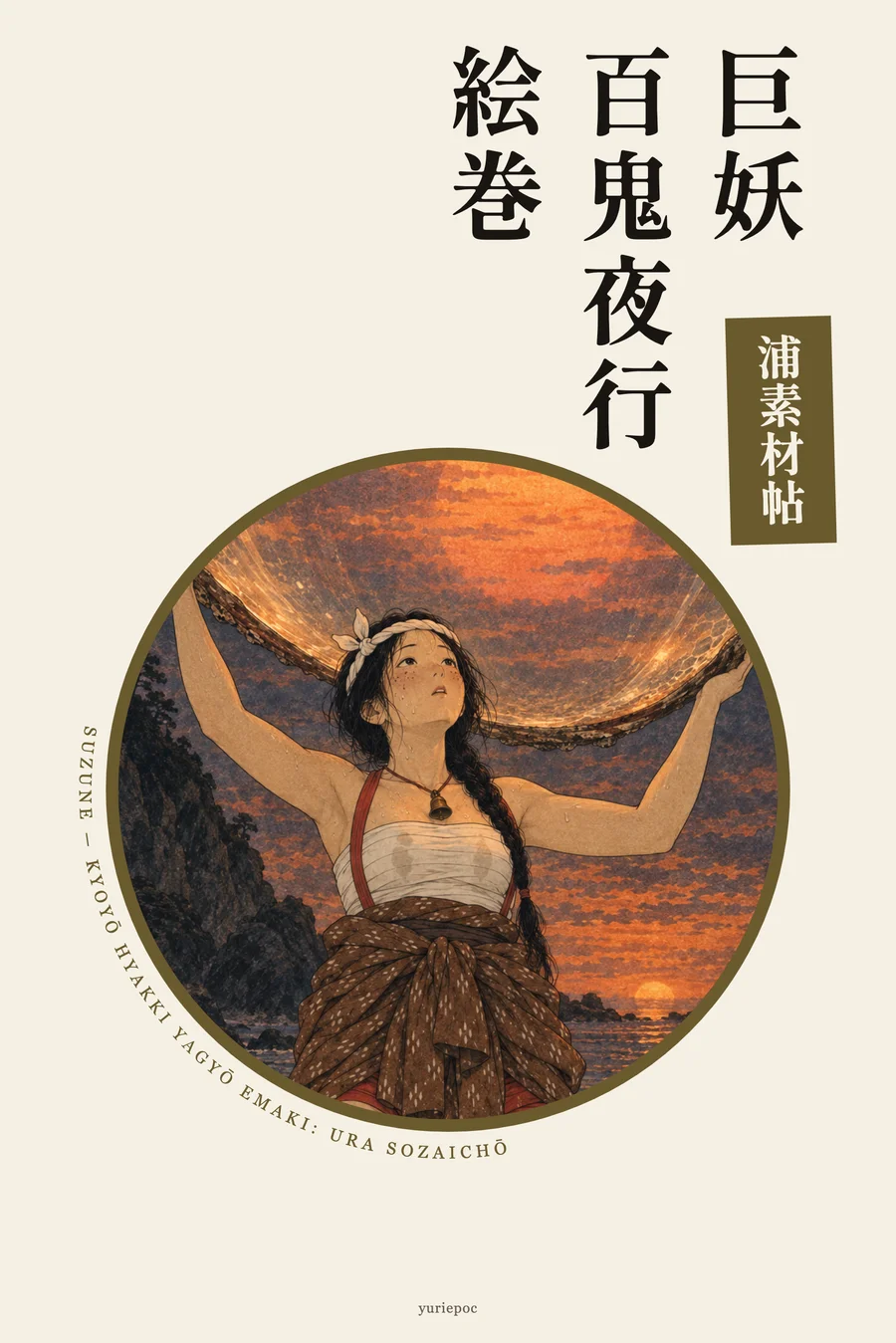
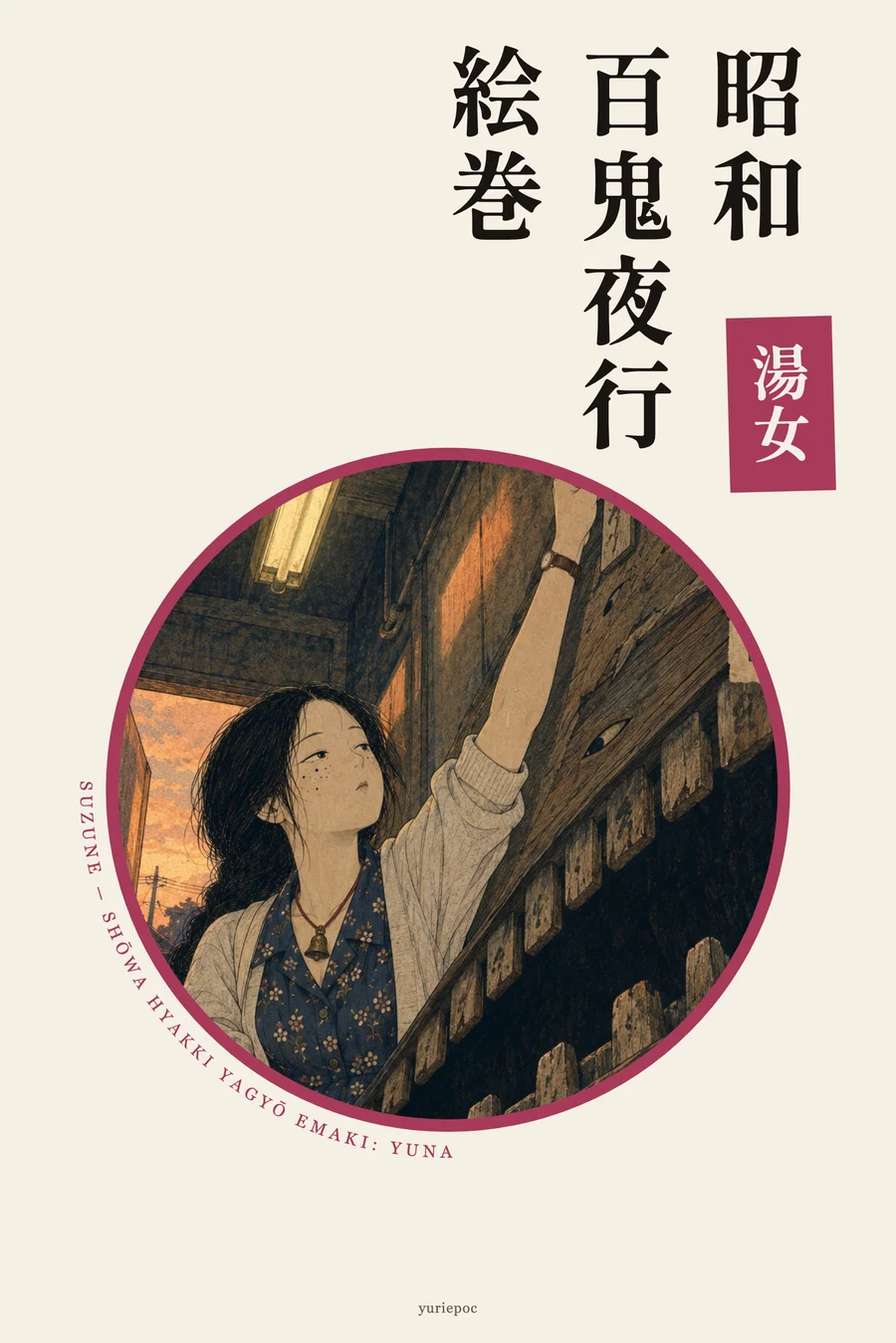
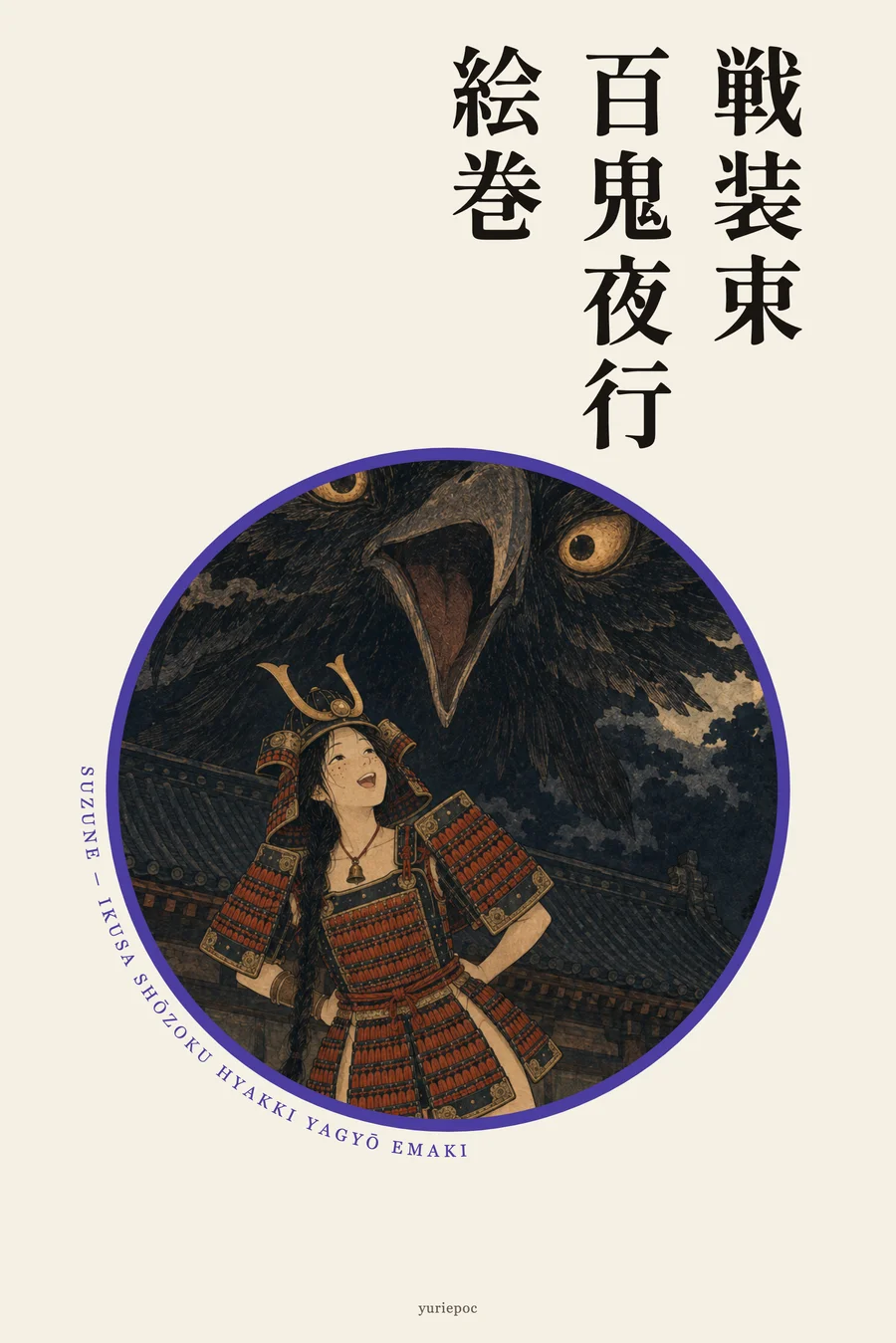
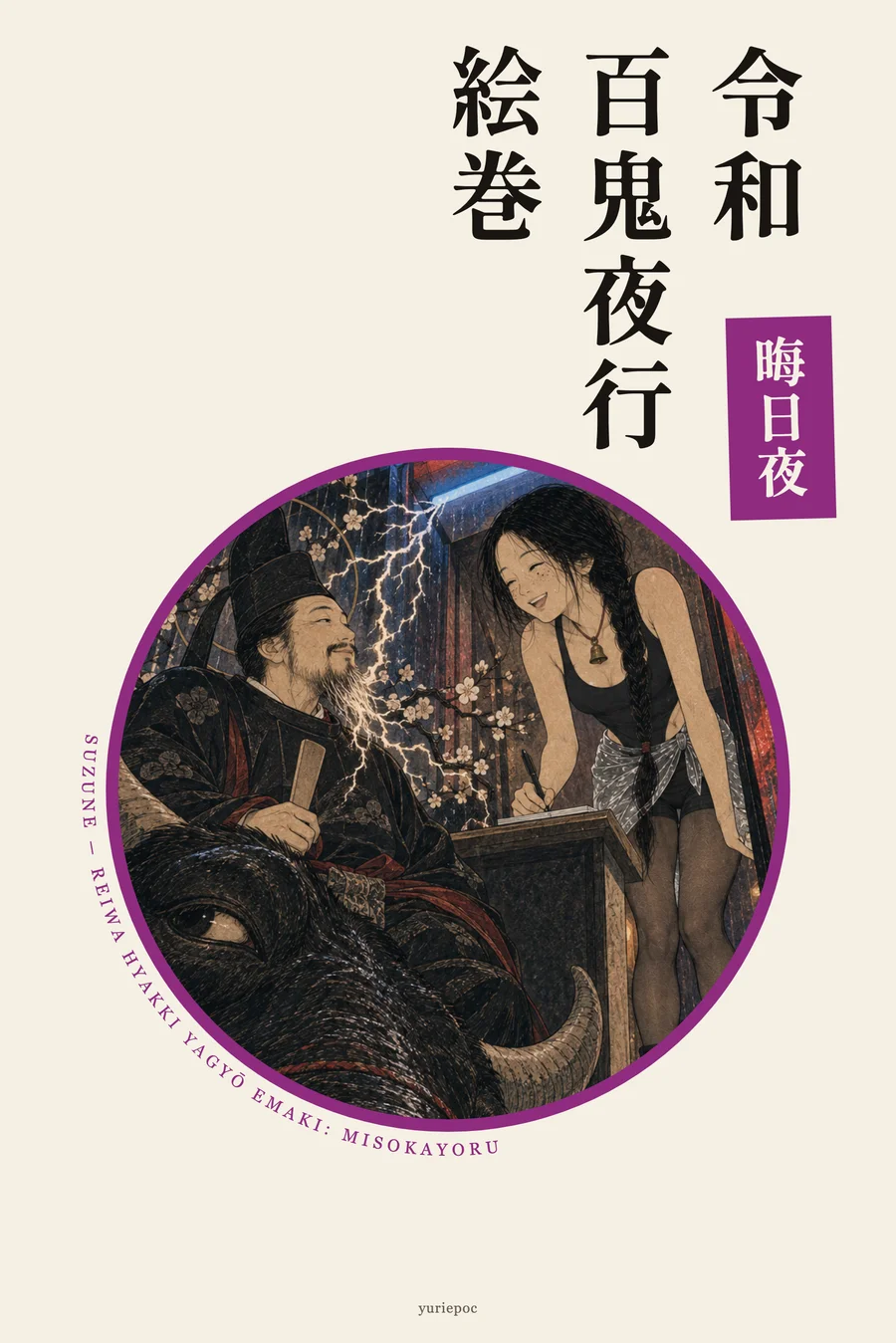
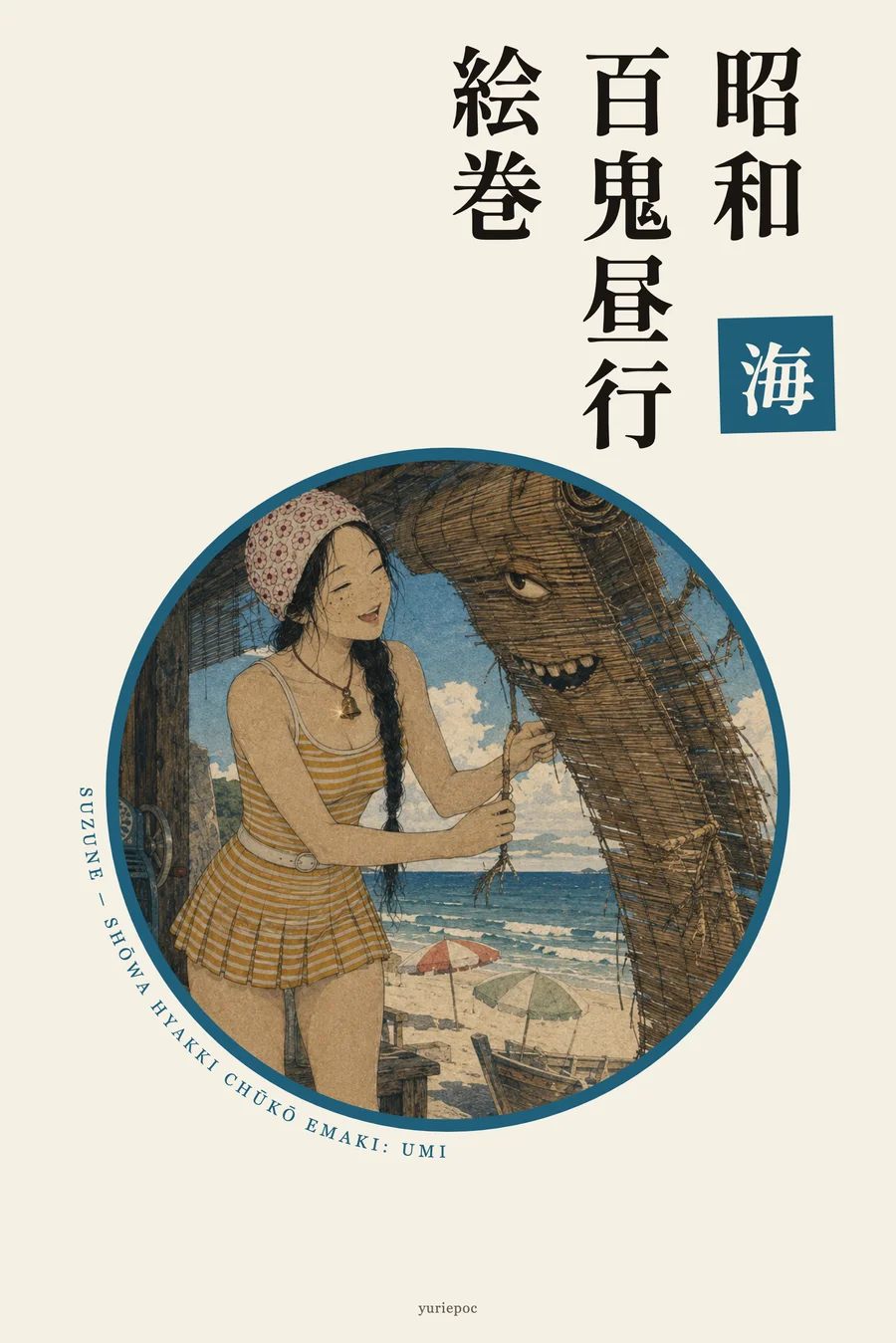
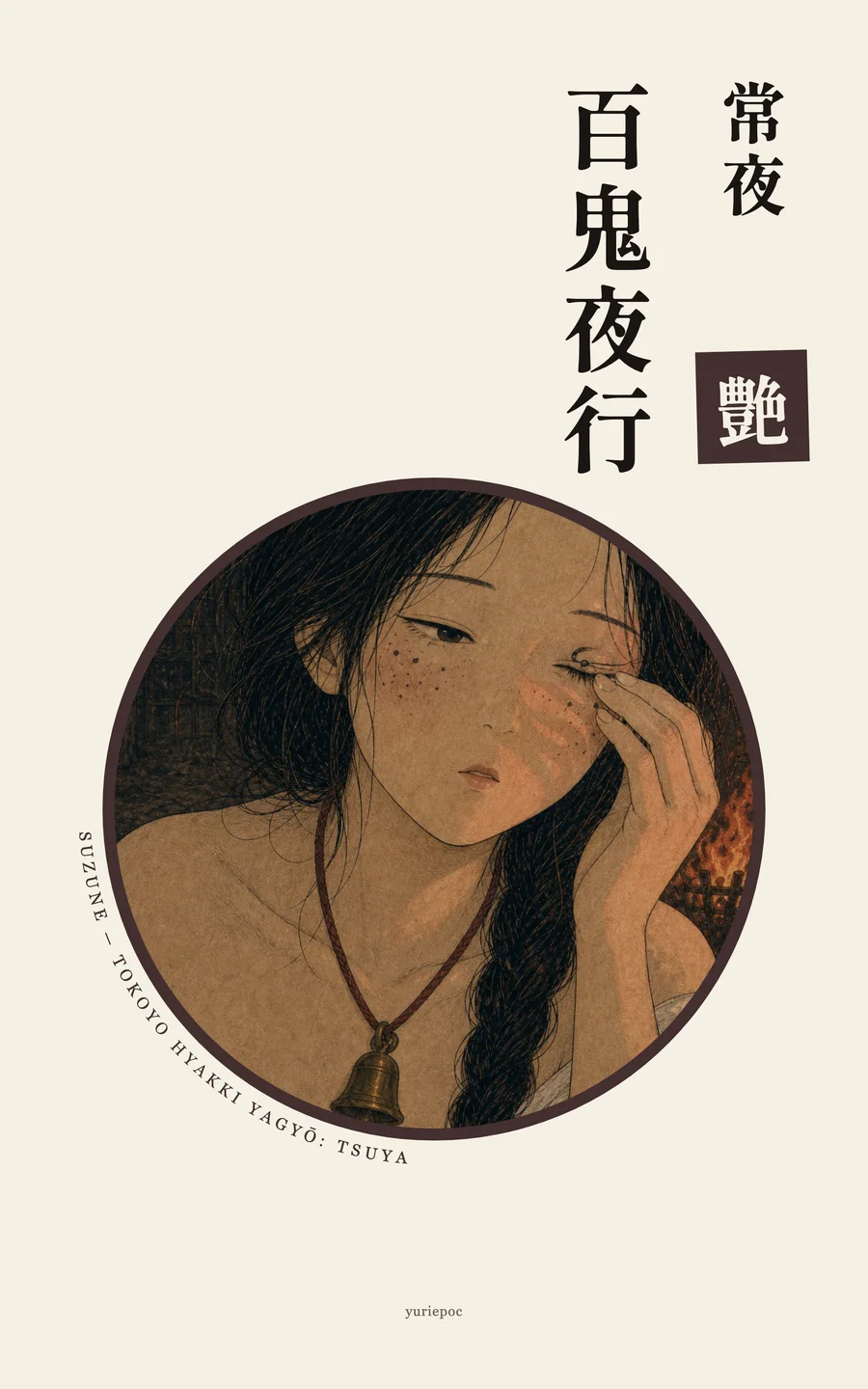
Dans ce livre, Suzune, une clochette rouge au cou, reçoit cent yōkai comme clients à sa charrette. Ses clients ne sont pas des célébrités. Ce sont de petits yōkai, dont on ne parle que dans un seul village ou sur une seule plage : Aburabō, Obariyon, Oden-gitsune, Tokkuri-tanuki, Yarōka-mizu, Sōhachibon, Tantan-kororin. Suzune a l’habitude des yōkai. Un client est un client : elle chauffe le saké, encaisse, et boit avec eux quand ils la servent.
La scène est le port de Kanaiwa, à Kaga, dans les années 30 de l’ère Shōwa (1955–1964), peu avant que les charrettes tirées à bras ne disparaissent des rues. Tablier blanc kappōgi sur un kimono de coton bleu marine, serviette nouée sur les cheveux. Les planches suivent l’ordre d’une nuit : le soir, la nuit, le cœur de la nuit, l’aube ; la dernière est le chemin du retour dans la brume du matin.
100 planches, 204 pages. En face de chaque planche sont écrits, en japonais et en anglais, l’origine du yōkai, ses signes, la conduite à tenir et le récit. Les cent yōkai figurent tous dans des documents de folklore ou des recueils de contes des régions du Japon ; aucun n’a été inventé pour ce livre. Les origines ne rapportent que les sources vérifiées ; ce que l’on ignore est dit inconnu.
Planches d’exemple
-
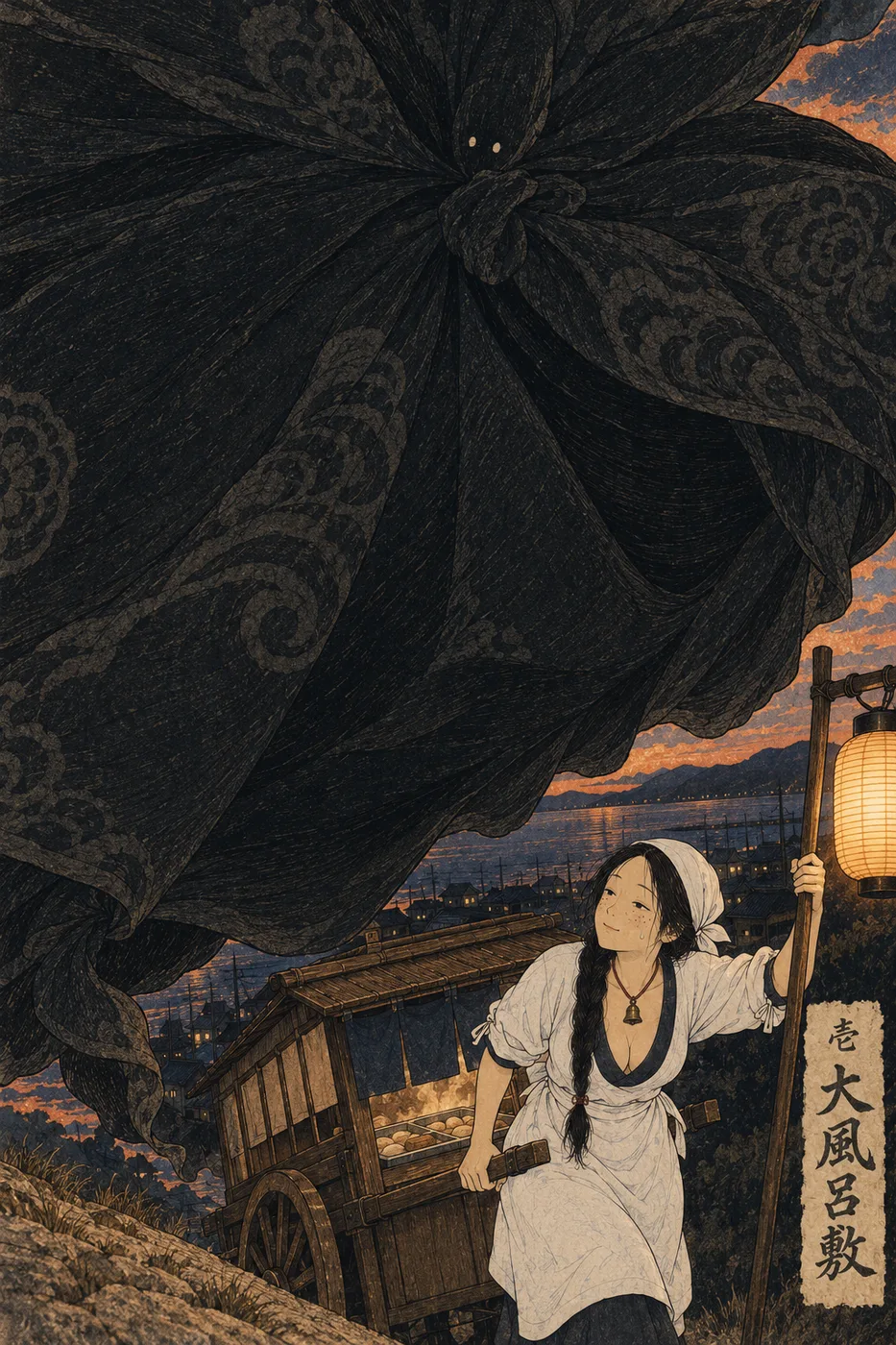
Planche 1
The Giant Wrapping Cloth
大風呂敷Ōfuroshiki
Origine
Ōfuroshiki is a strange visitor from Kotonami, Kagawa Prefecture, now part of the town of Mannō. Takeda Akira wrote it down in Kagawa no Minzoku in 1984. At dusk, a huge furoshiki, a square wrapping cloth, flies in from nowhere.
大風呂敷は、香川県琴南町(いまのまんのう町)に出る怪異である。武田明が『香川の民俗』(1984年)に、日暮れに大きな風呂敷がどこからか飛んでくる、と書いた。
-
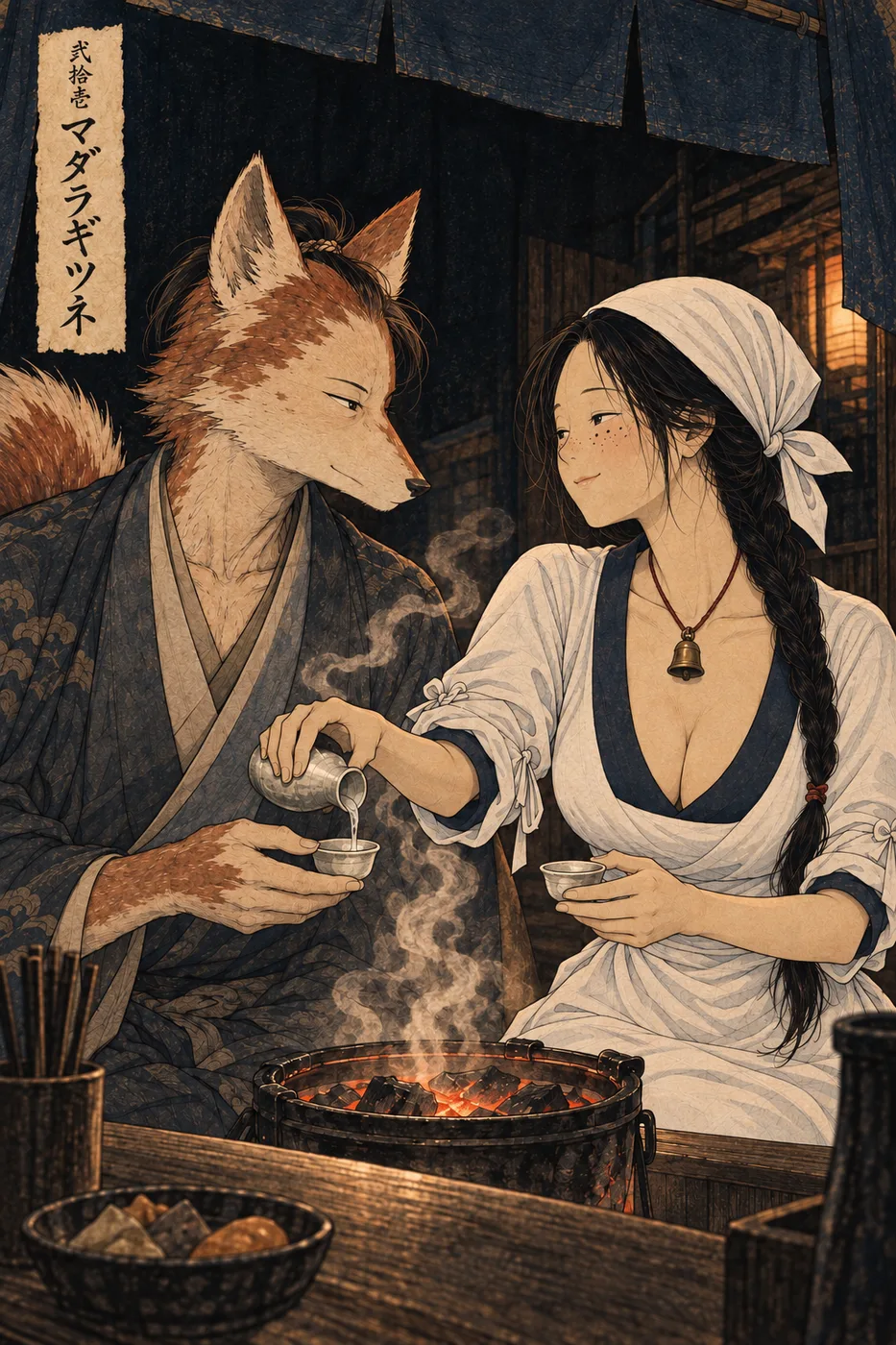
Planche 21
The Spotted Fox
マダラギツネMadara-gitsune
Origine
Madara-gitsune, the Spotted Fox, is a fox that appeared on the road from Hosorogi to Mikuni in Echizen, now Fukui. The travel essay Hokkoku Kidan Junjōki tells how it danced under its own ghost fire at night. When a man came near, it turned into a young man.
マダラギツネは、越前の細呂木から三国への道に出た狐である。『北国奇談巡杖記』に、鬼火で踊り、近づいた男の前で若衆に化けたと書かれている。
-
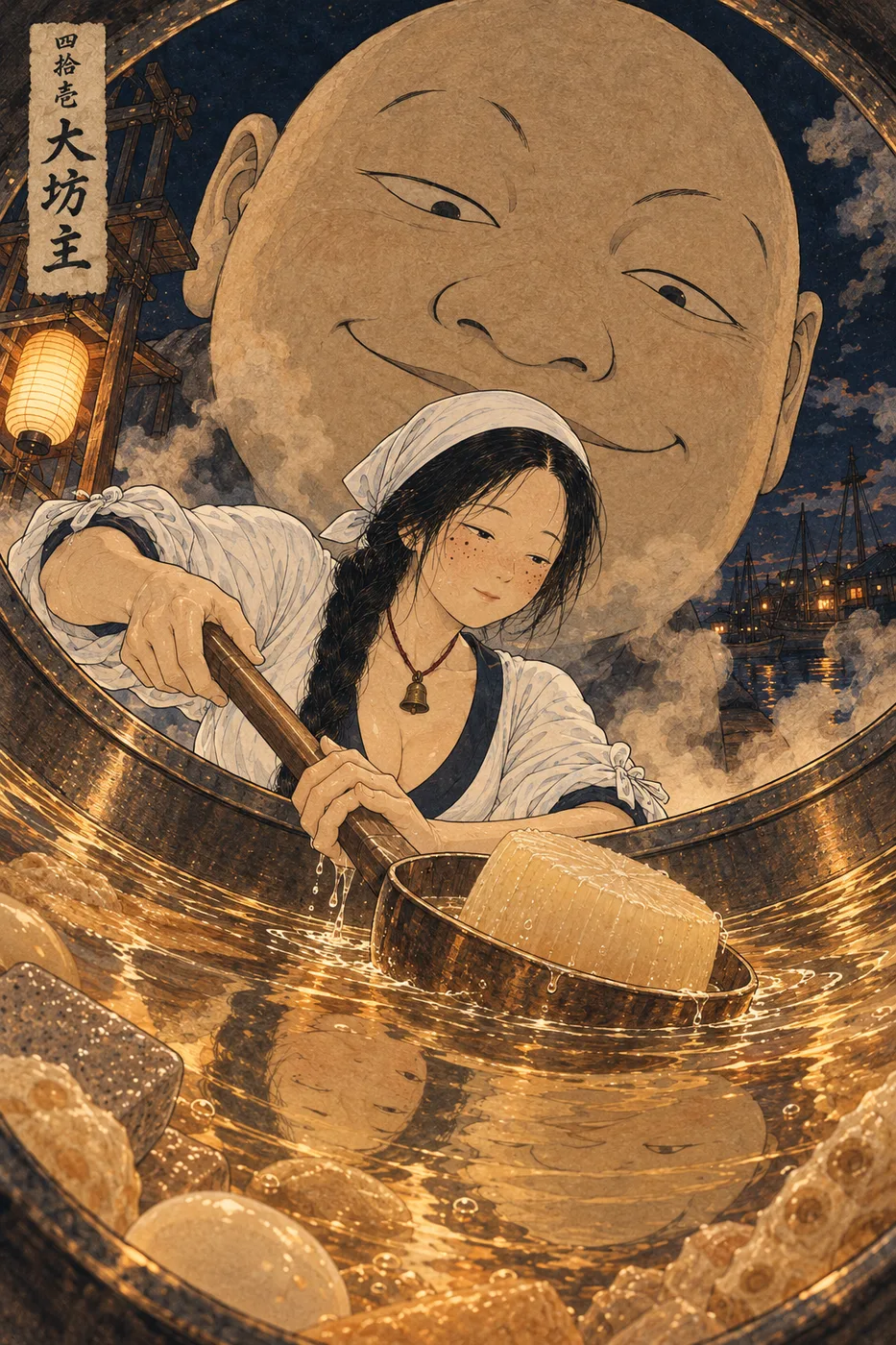
Planche 41
The Great Monk
大坊主Ōbōzu
Origine
Obozu is a giant monk. In the Etchu Bakemono Emaki, he tries to carry a woodcutter, asleep on Kurikara Pass, up into the sky.
越中の『ばけもの絵巻』に、大きな坊主の姿をした大坊主が出る。倶利伽羅峠の木こりを天へ連れていこうとした。
-
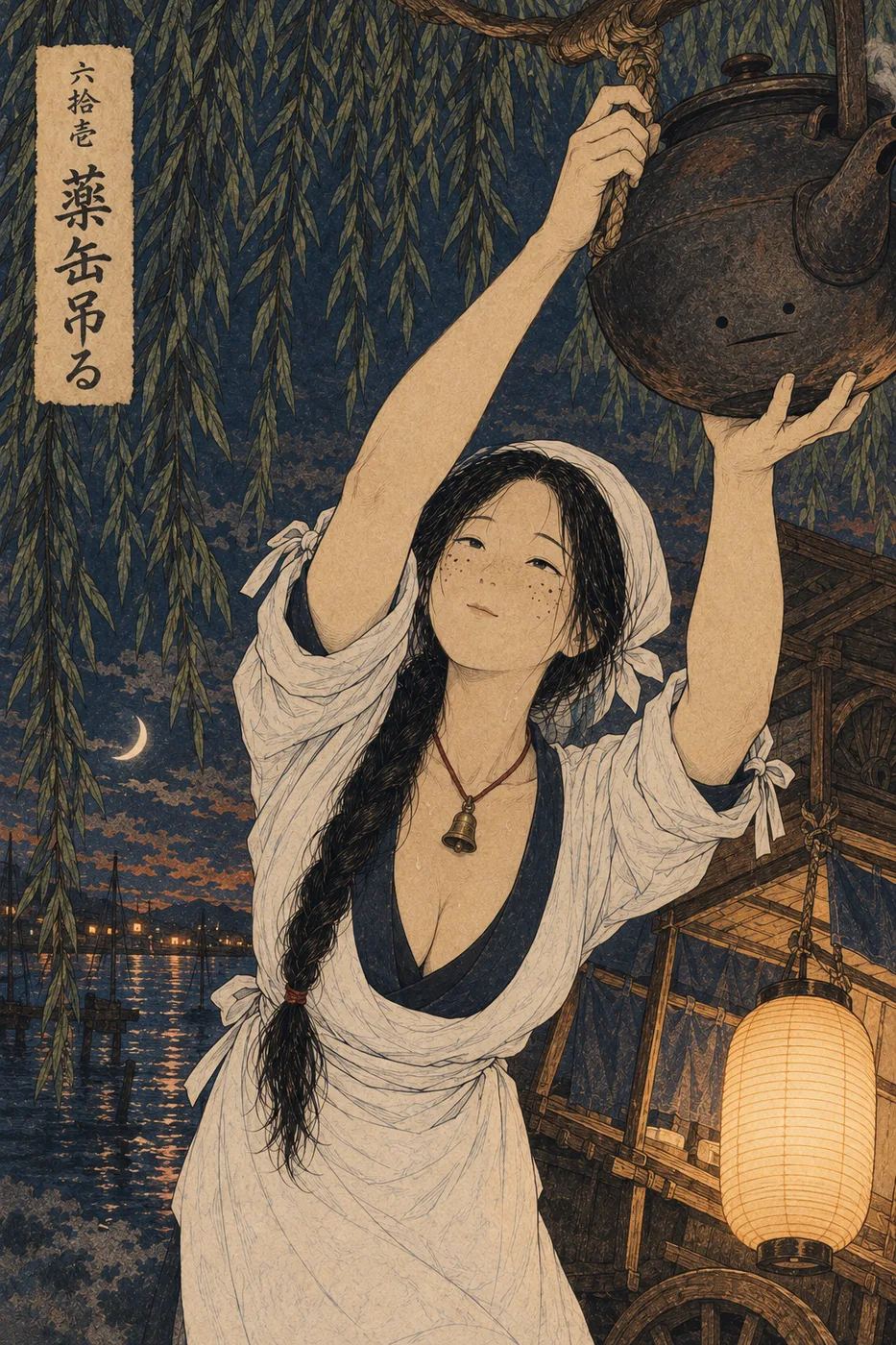
Planche 61
The Hanging Kettle
薬缶吊るYakanzuru
Origine
Yakanzuru is a yokai in the shape of a kettle, told about in the Nagano region. If a person walks through a forest late at night, it comes hanging down from a tree.
薬缶吊るは、長野地方で語られてきた薬缶の姿の妖怪である。夜遅く森を歩くと、木の上からぶら下がってくる。
-
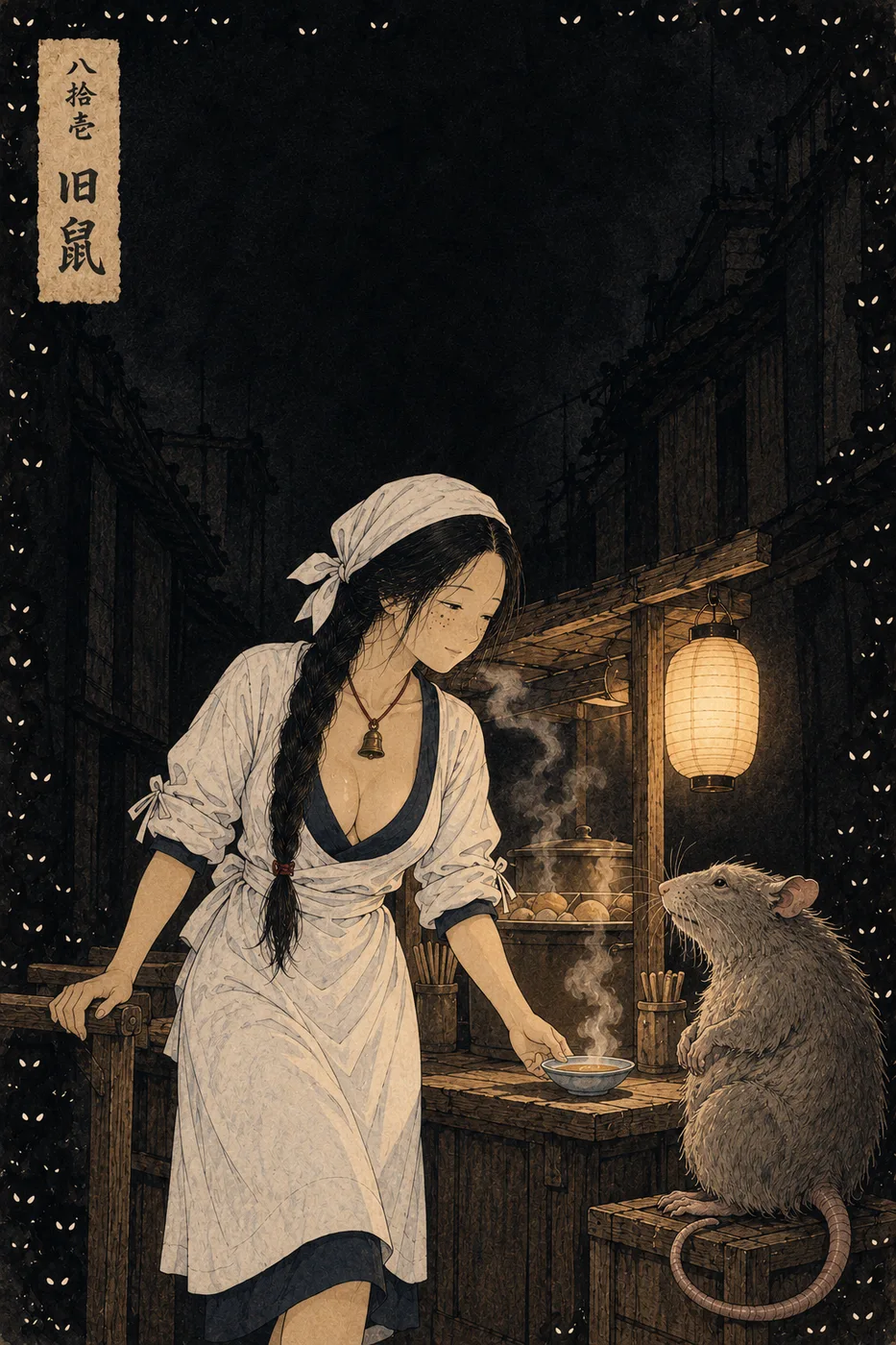
Planche 81
The Old Rat
旧鼠Kyūso
Origine
Kyūso (The Old Rat) is a yōkai rat that has lived for a very long time. In the Ehon Hyakumonogatari, a Kyūso in Yamato eats cats, while a Kyūso in Dewa raises the kittens of a mother cat that has died.
旧鼠は、長く生きたネズミの妖怪である。『絵本百物語』では、大和の旧鼠は猫を食い、出羽の旧鼠は母を亡くした子猫を育てた。
Autres livres