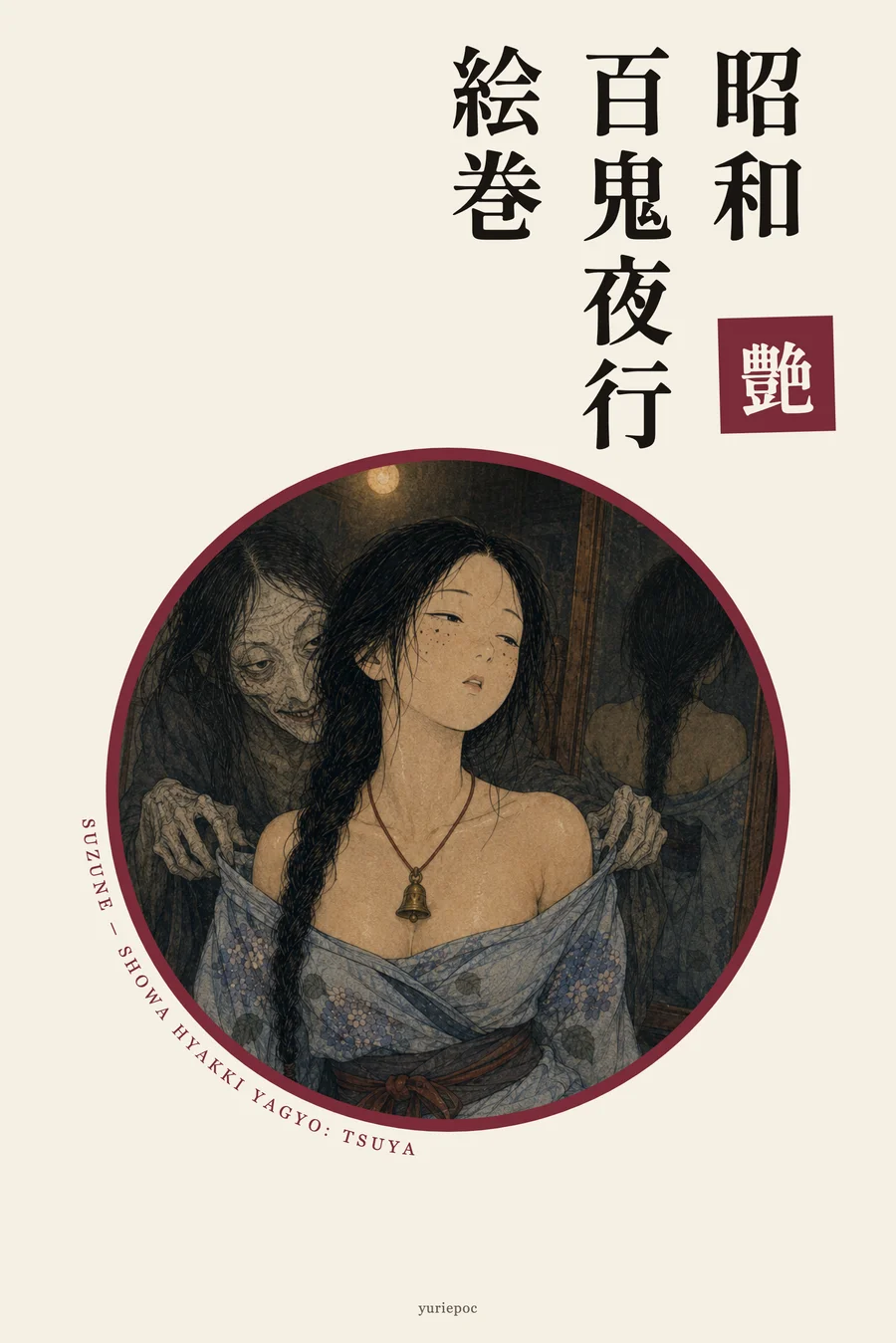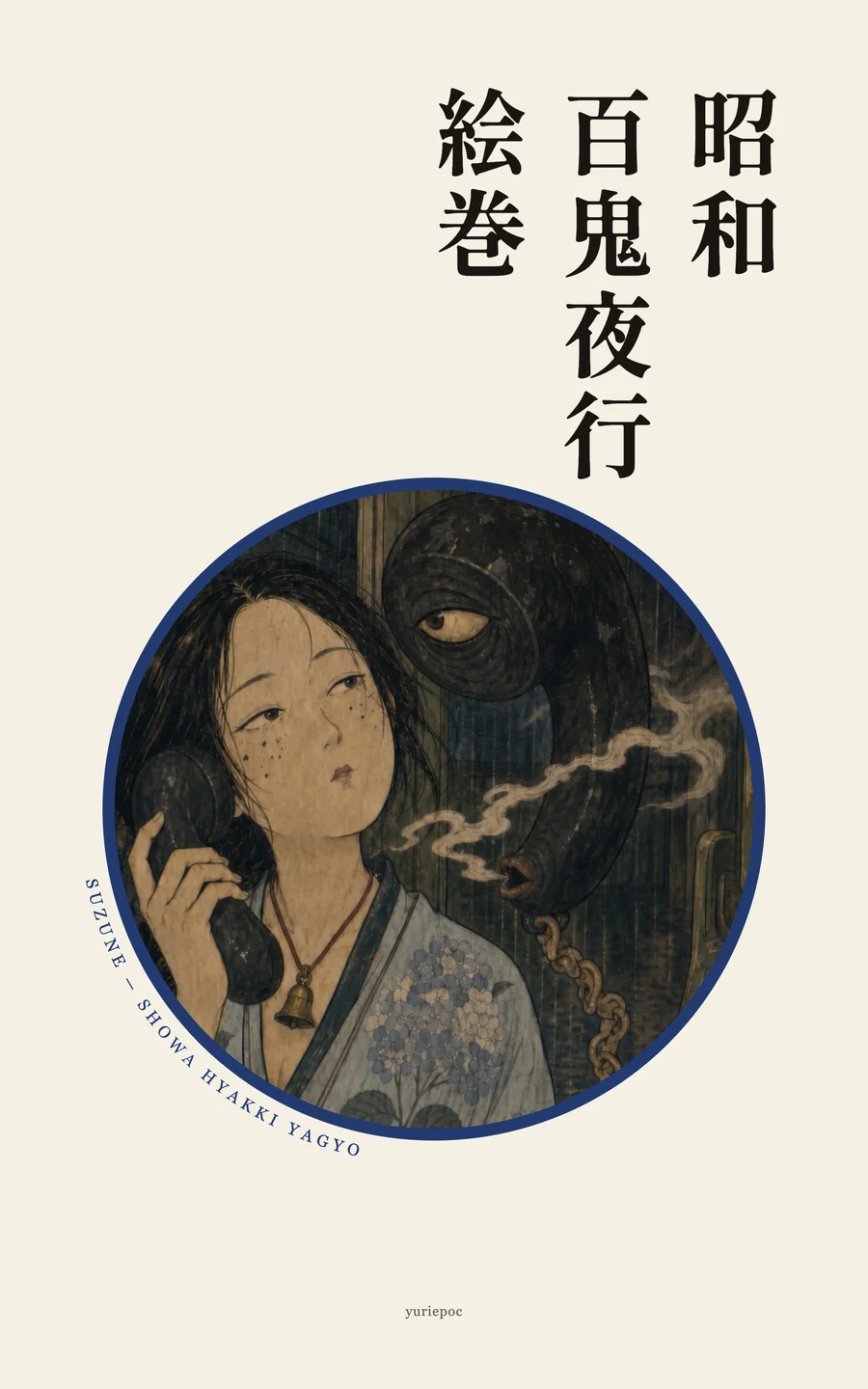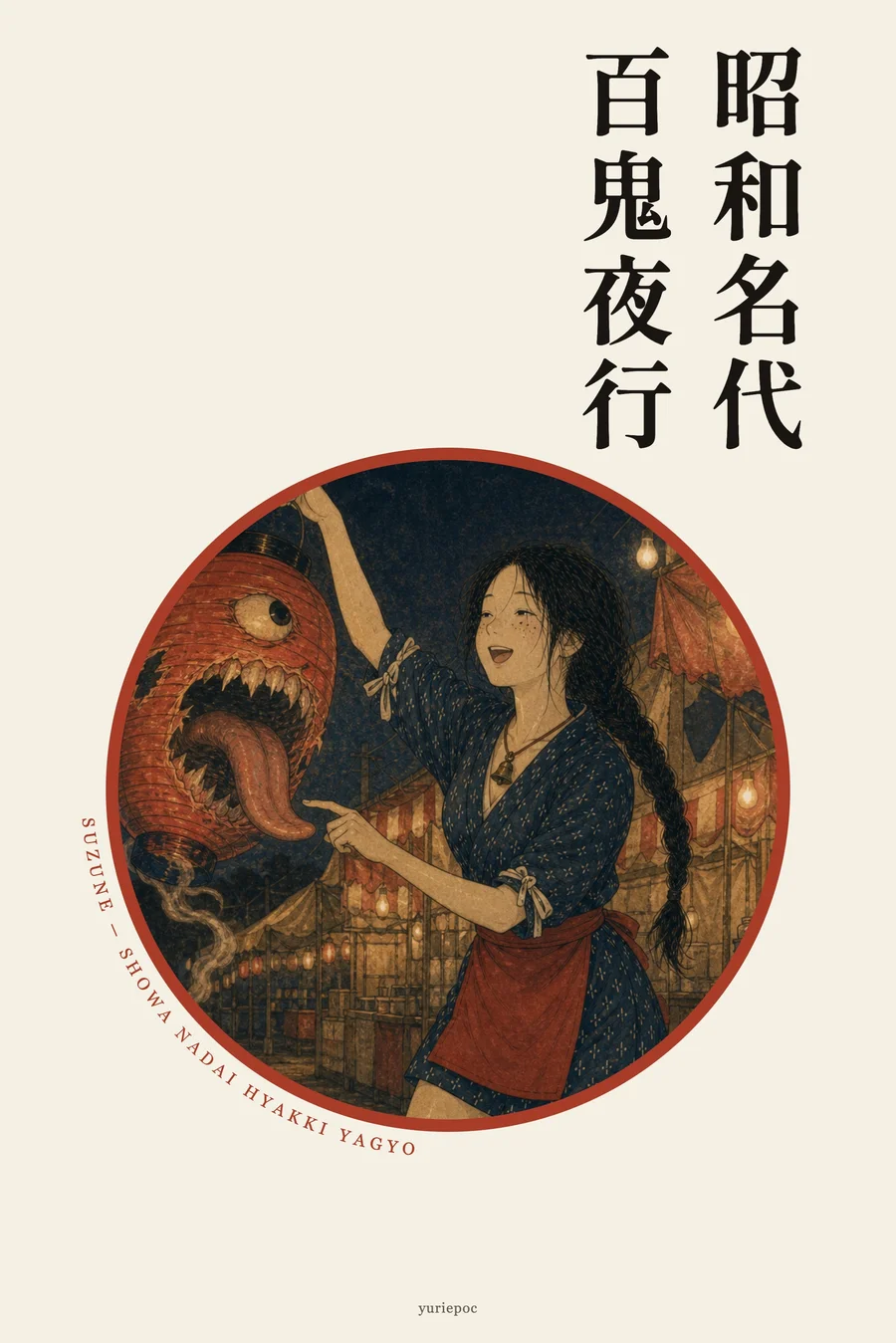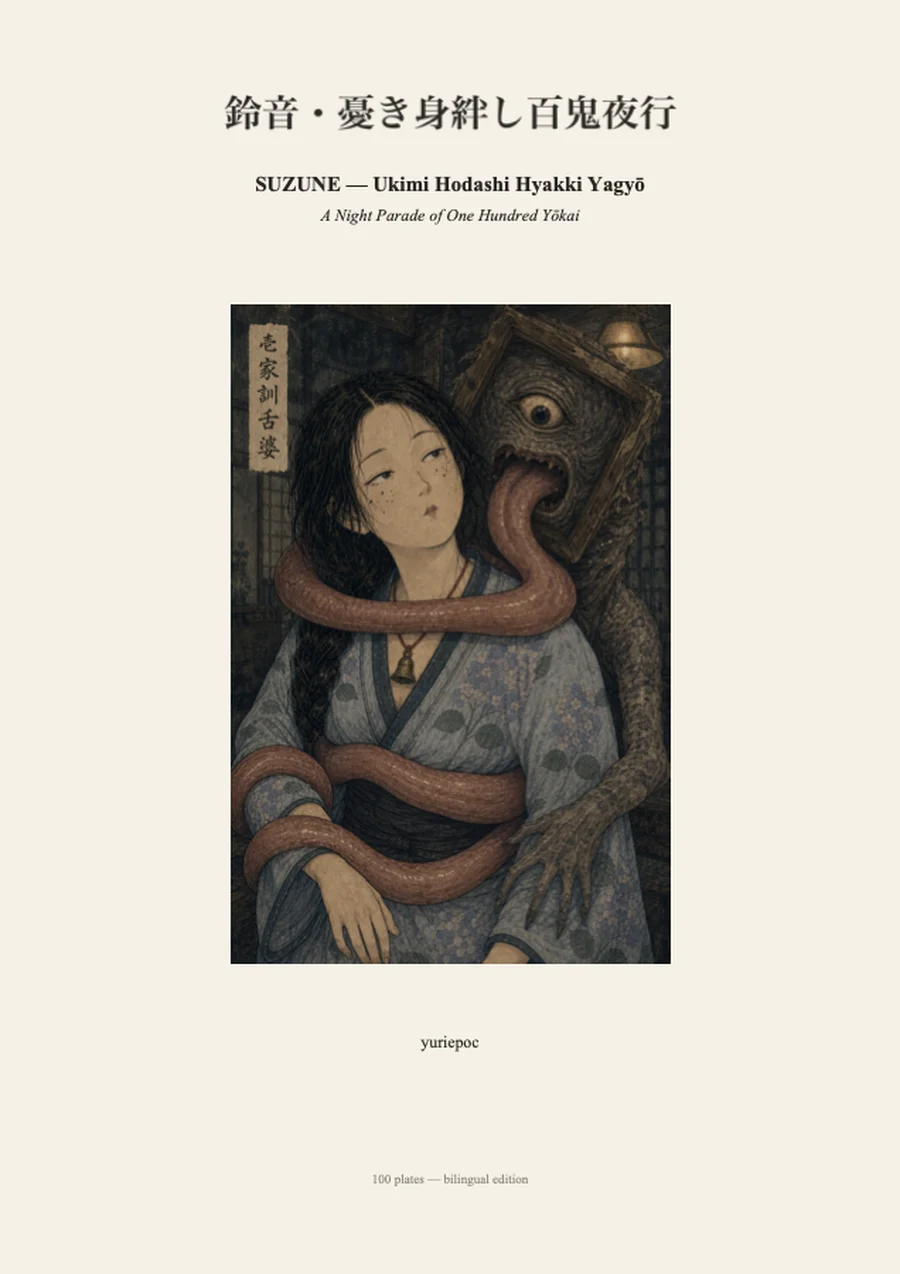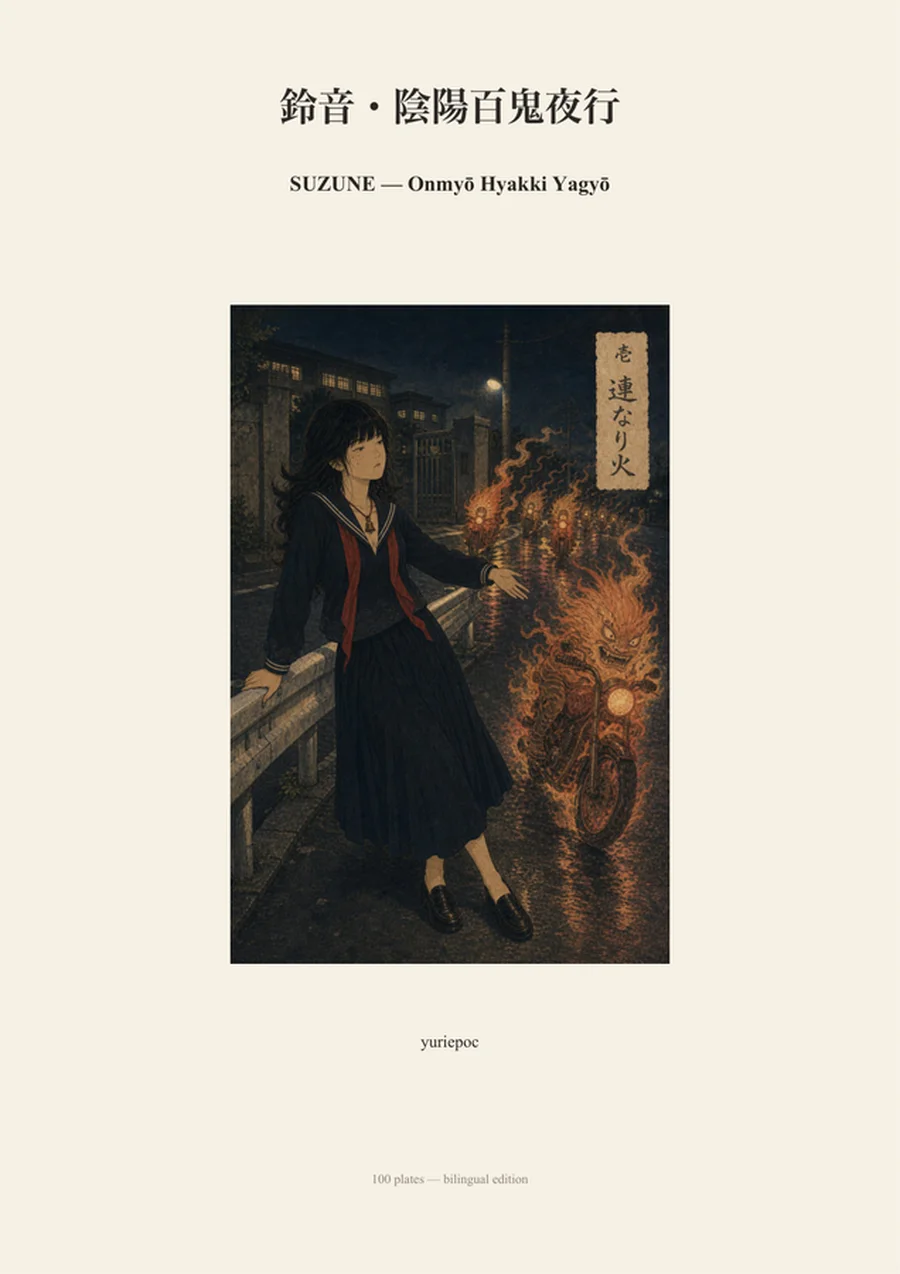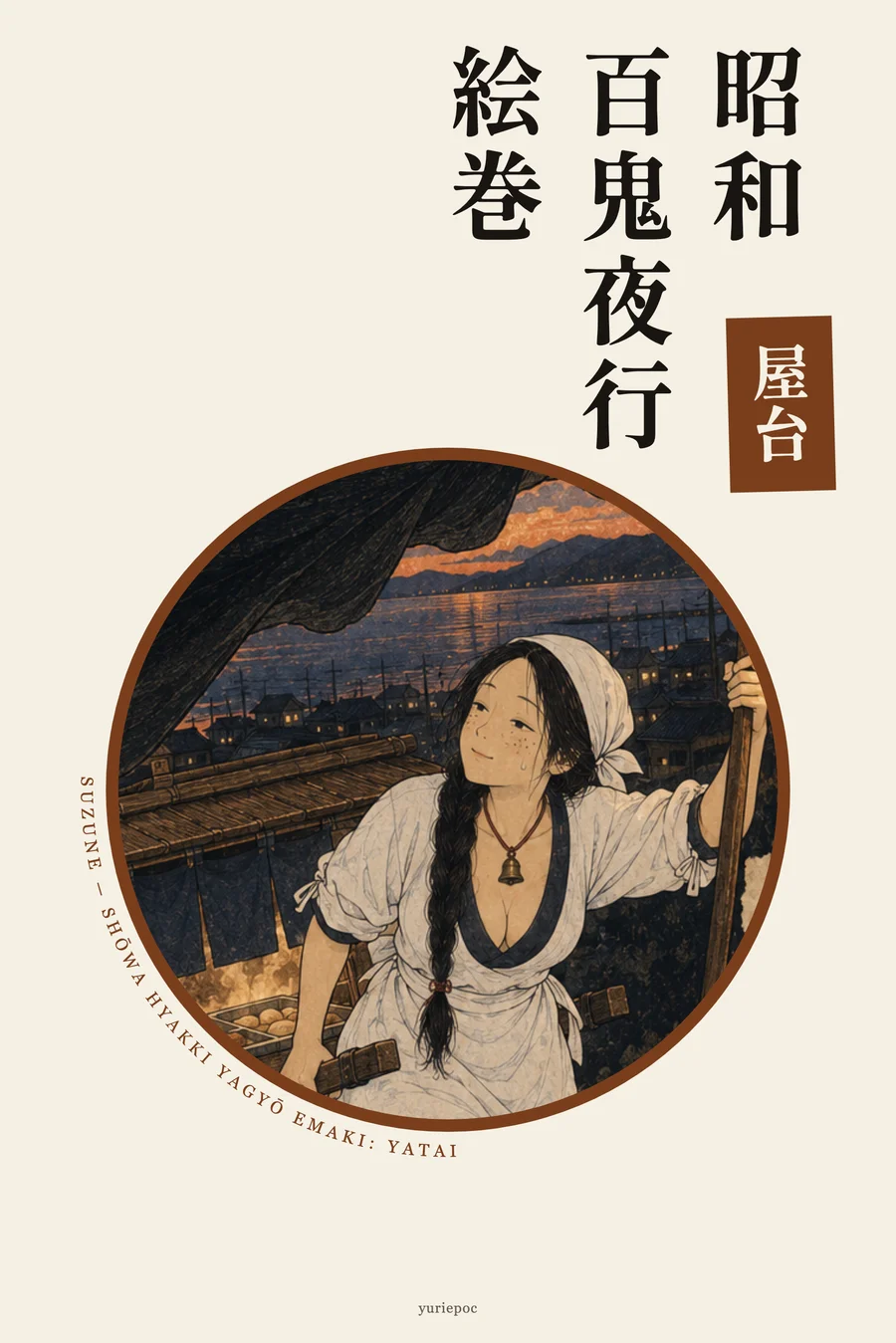
紹介About this book
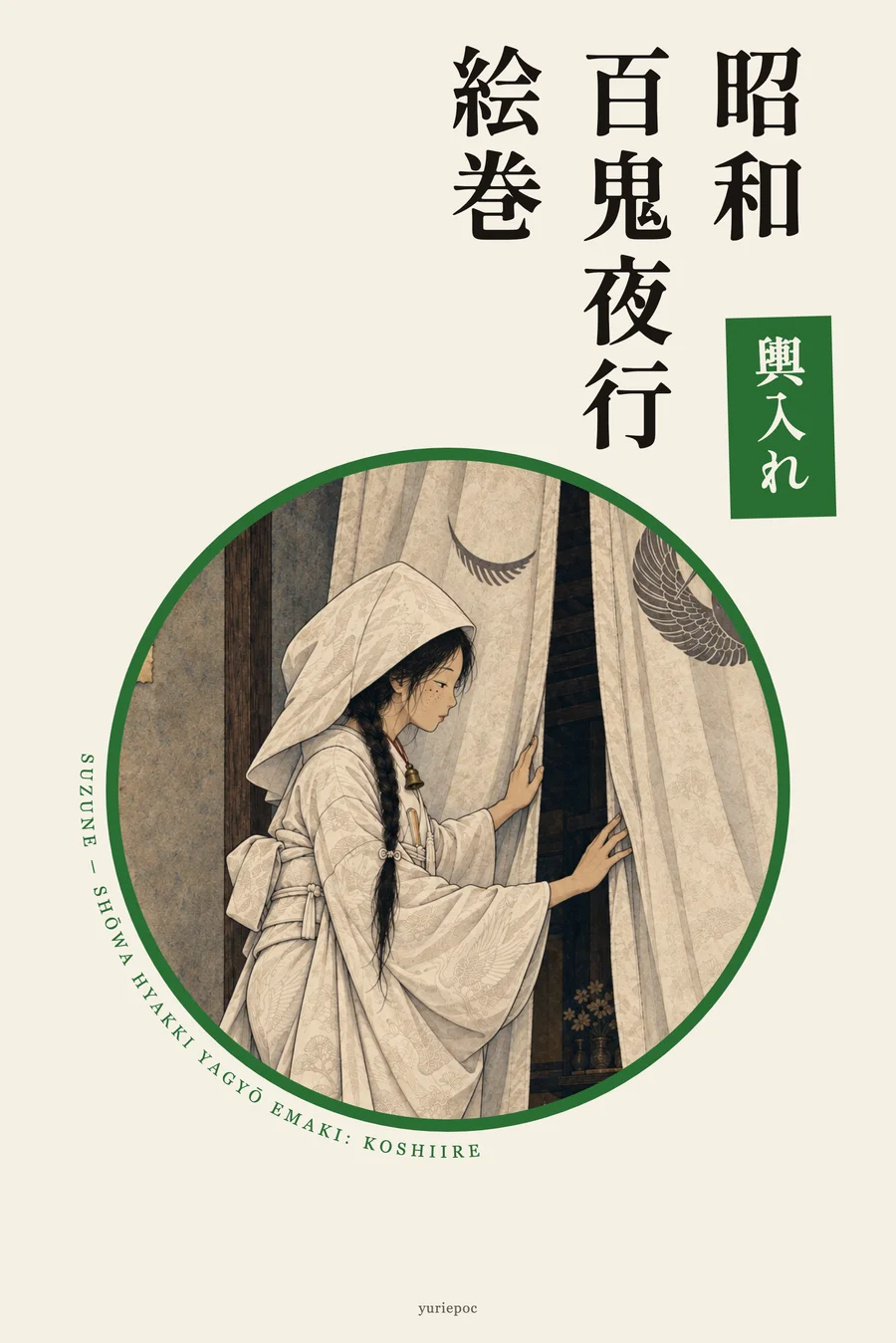
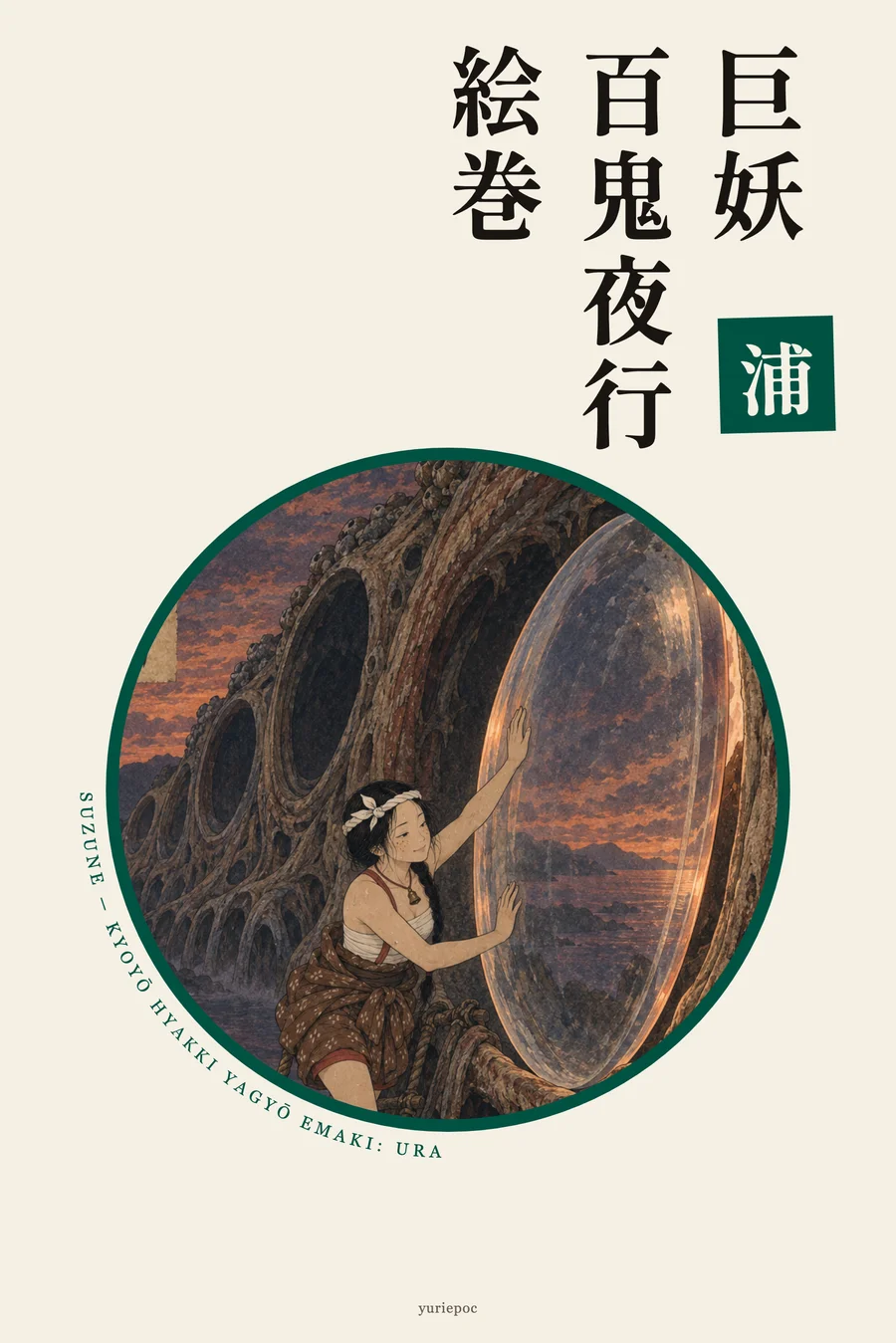
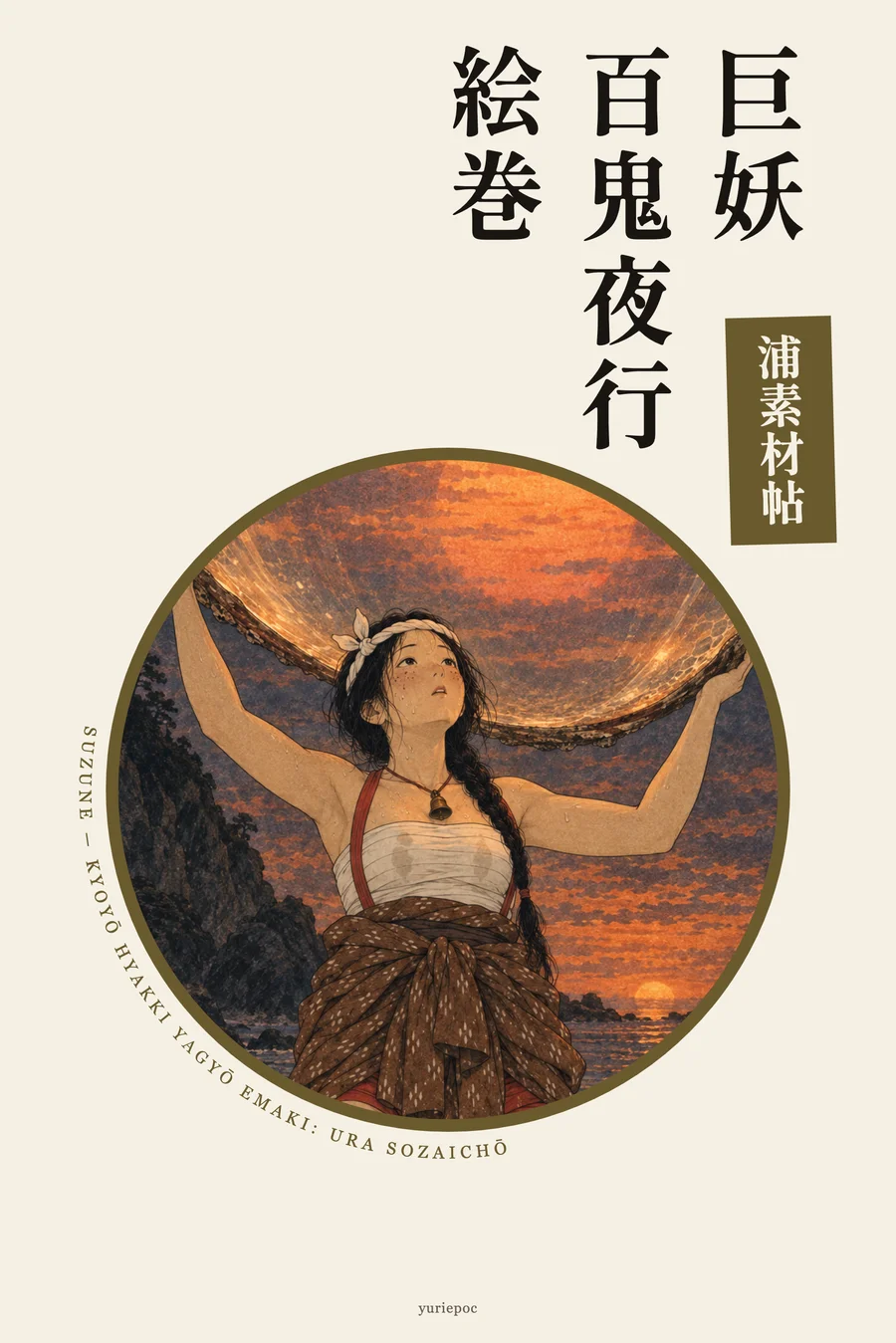
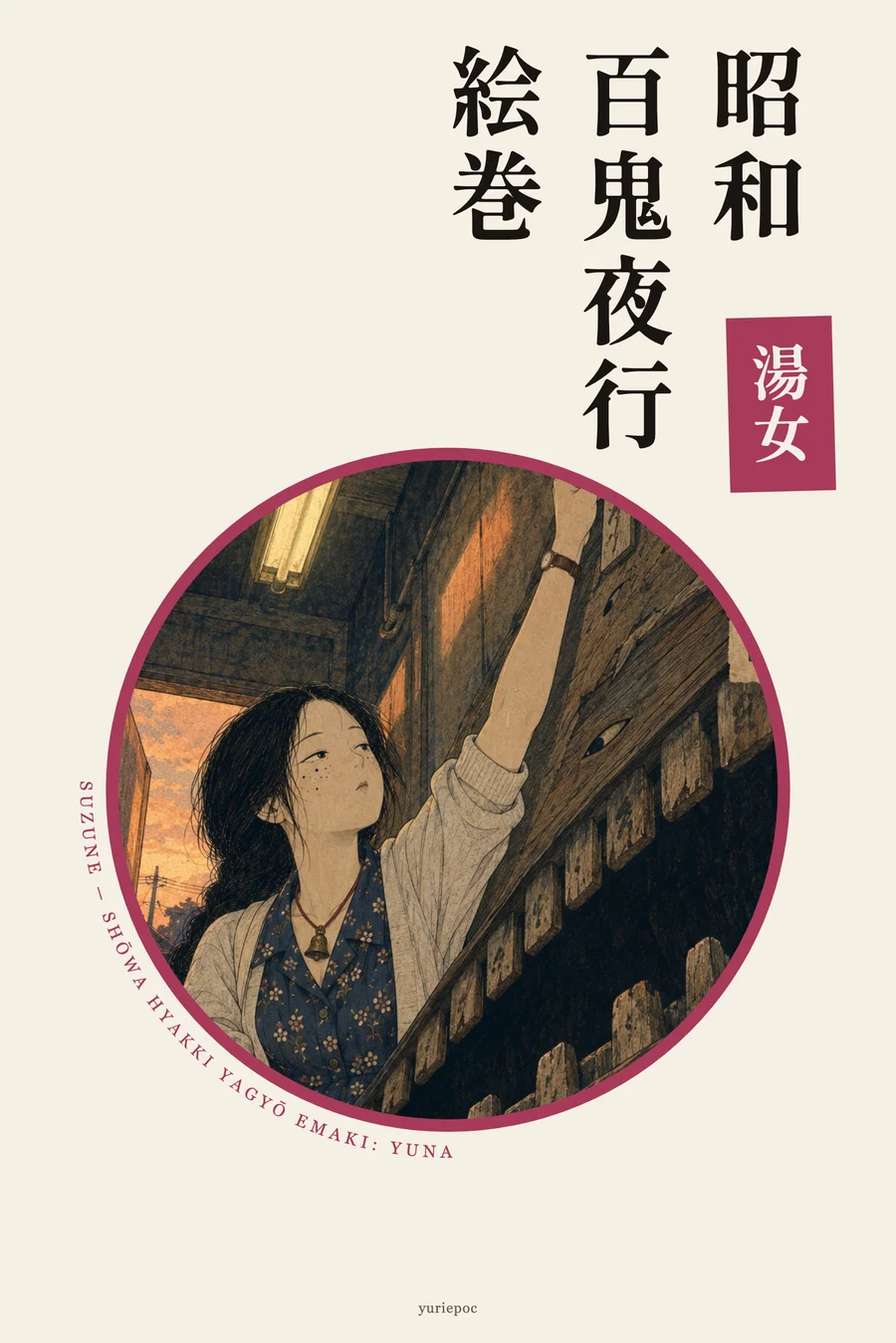
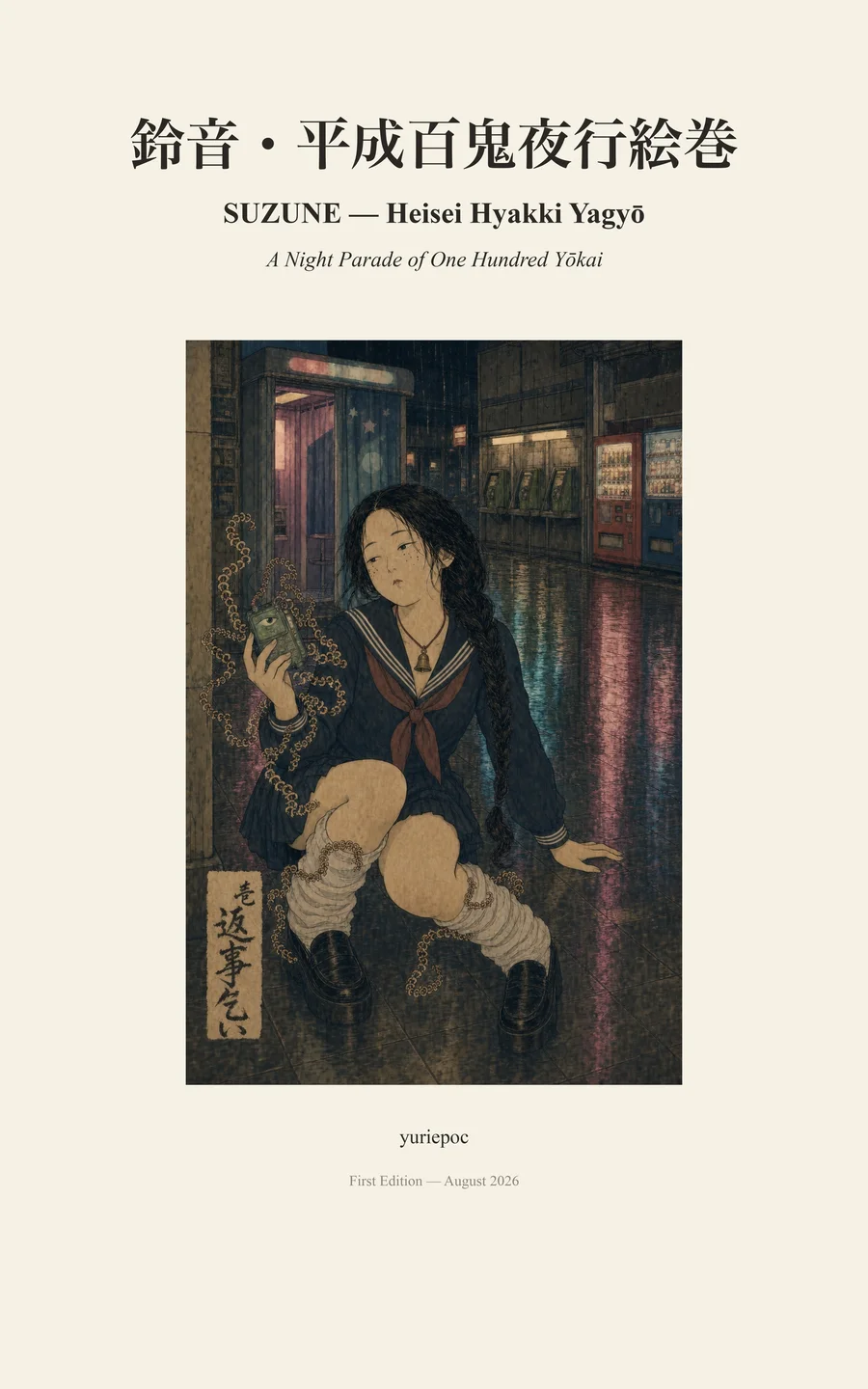
日暮れ、鈴音はおでんの屋台を引いて坂を上ります。売るのはおでんと燗酒だけ。そこから一晩が始まります。
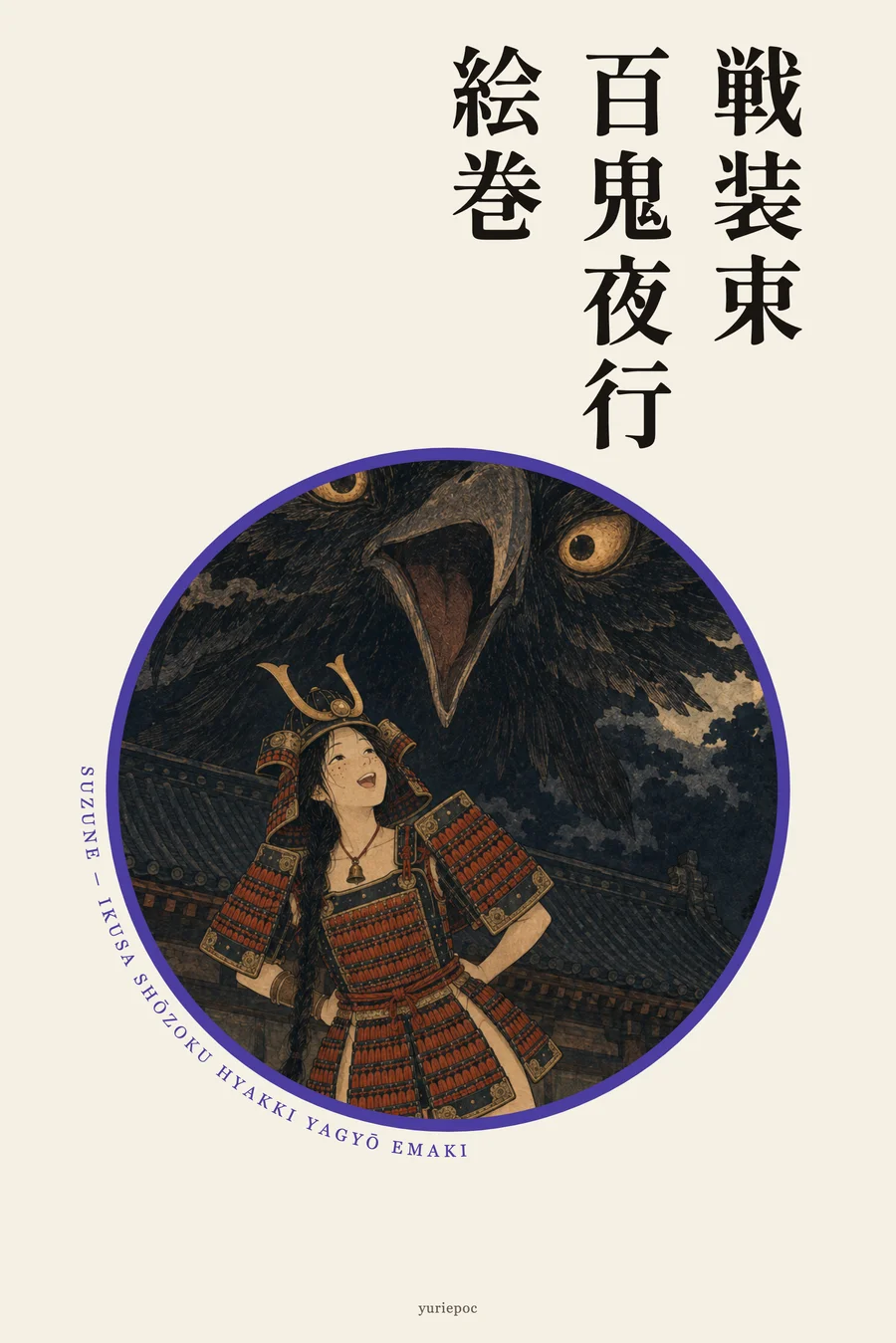
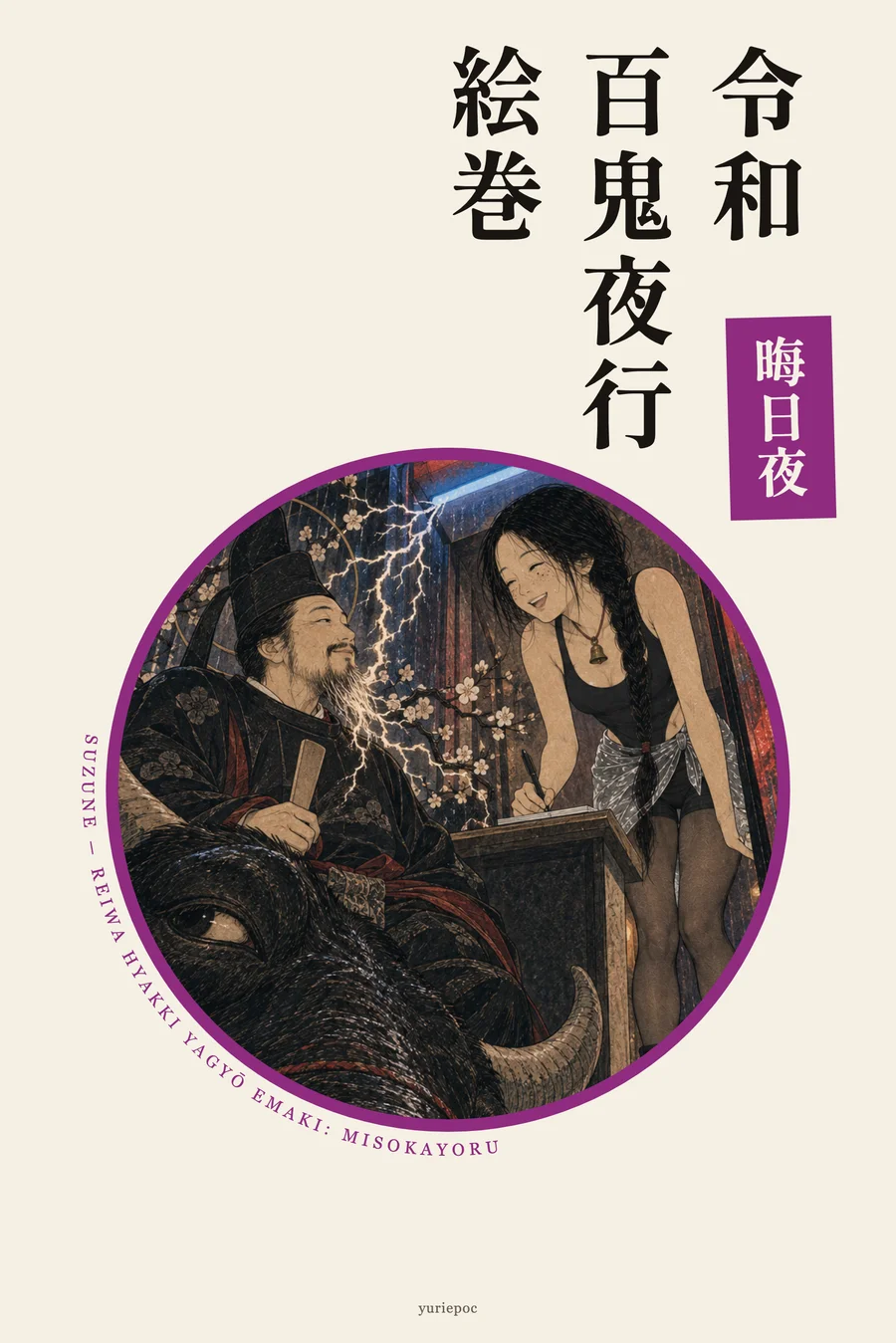
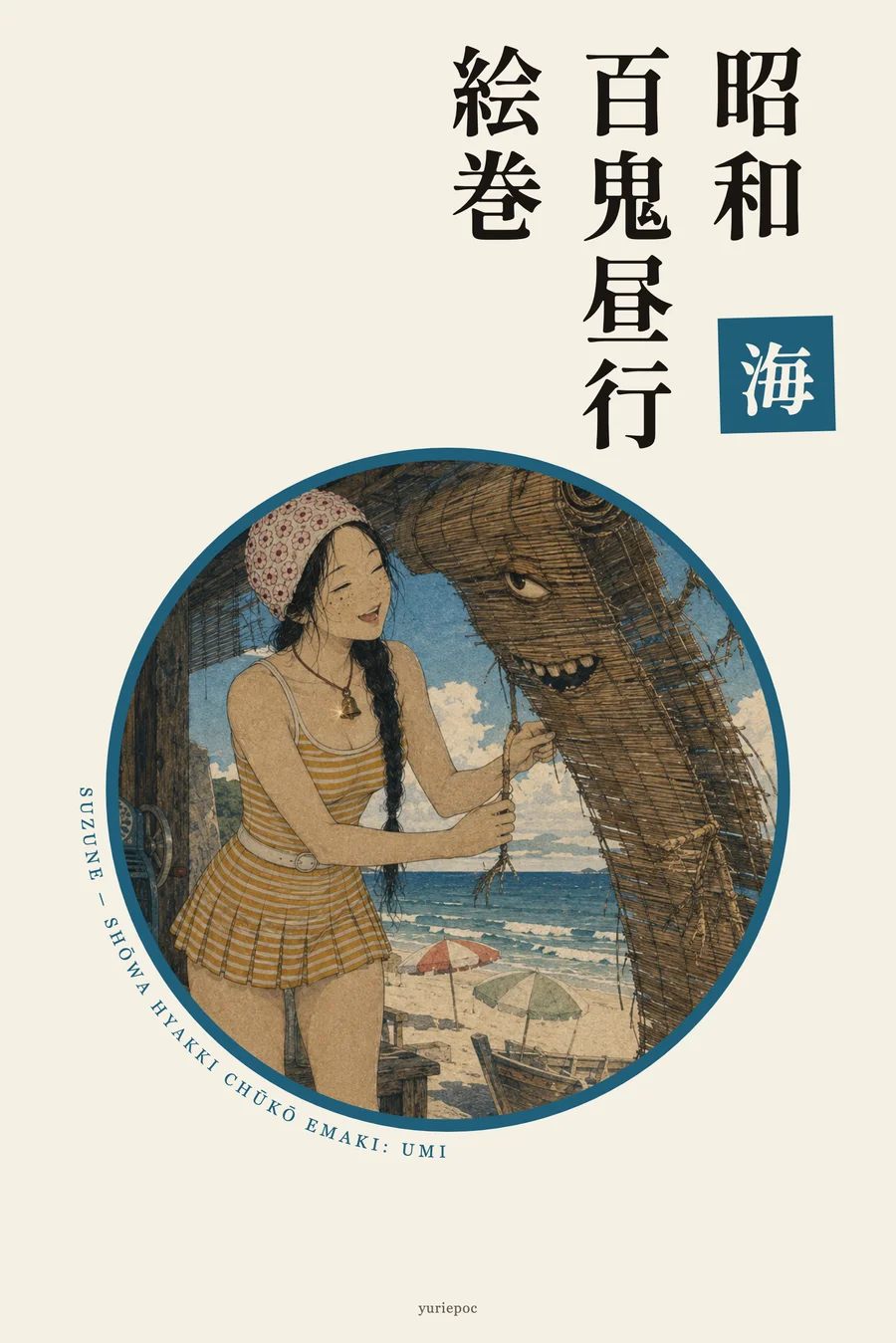
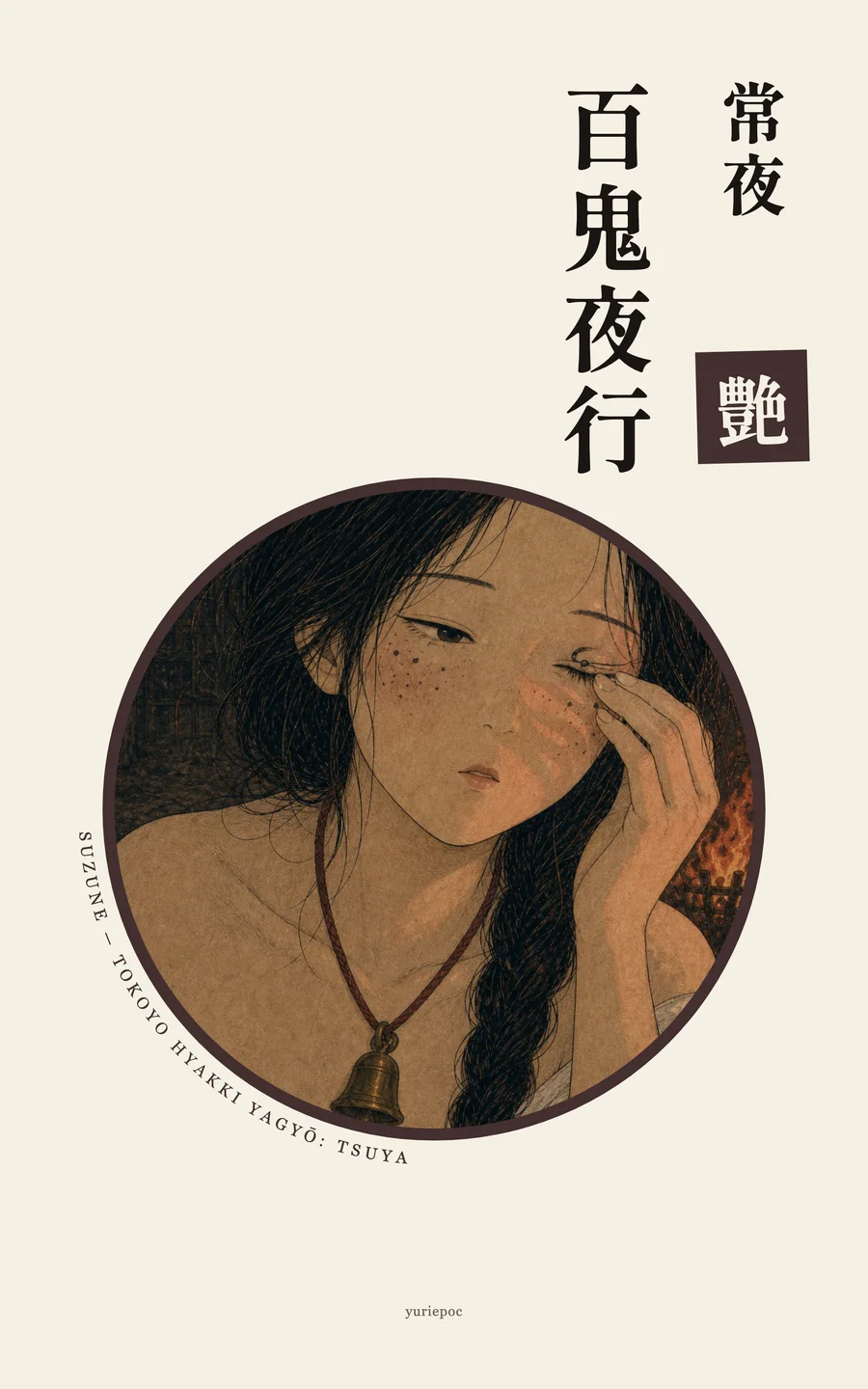
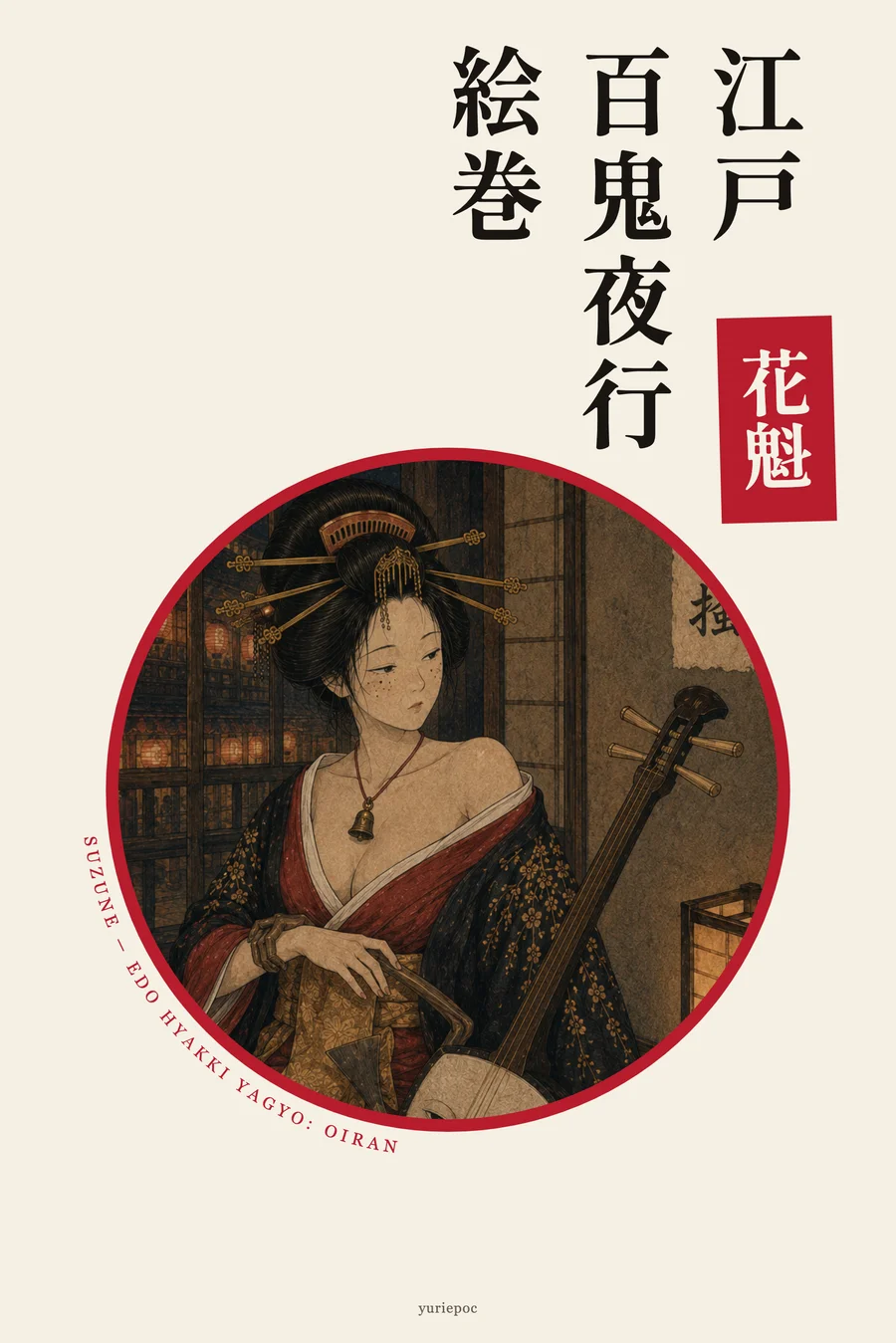
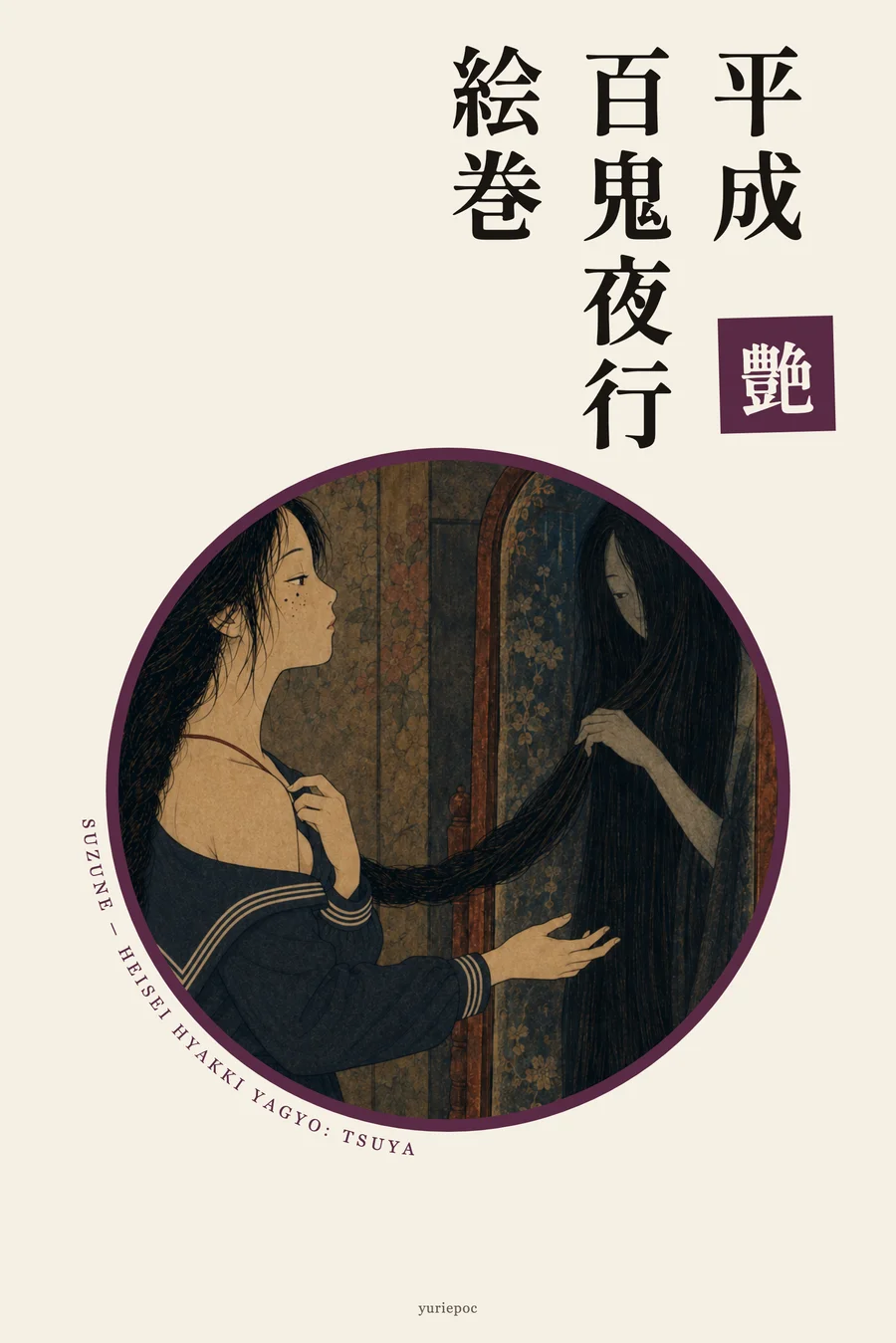
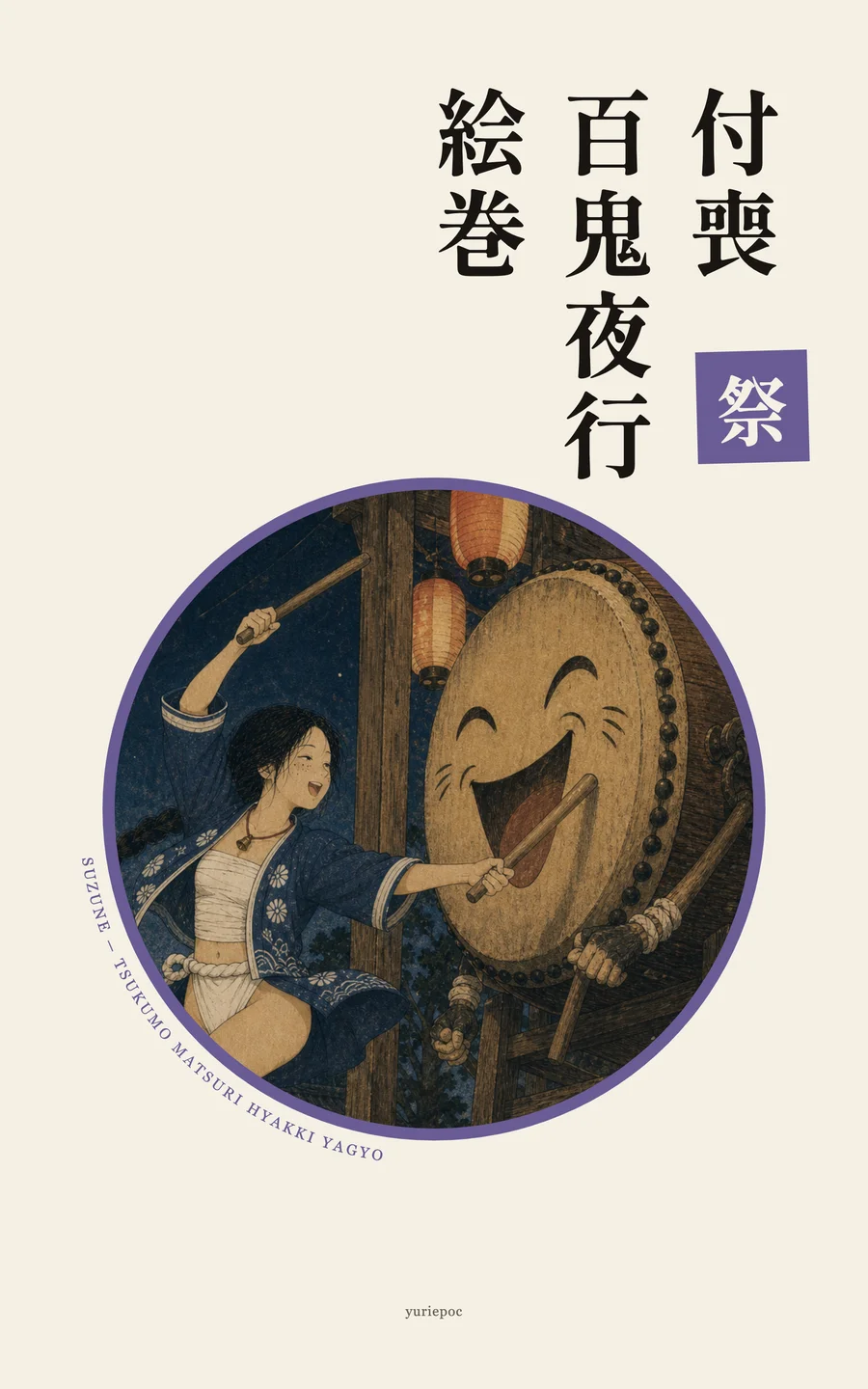
首に赤い鈴を下げた鈴音が、屋台で百体の妖怪を客に迎える絵巻です。客は、名の知られた大物ではありません。ひとつの村、ひとつの浜でだけ語られてきた、小さな妖怪たちです。油坊、おばりよん、オデンギツネ、トックリタヌキ、ヤロカ水、そうはちぼん、タンタンコロリン。鈴音は妖怪に慣れています。客は客として燗をつけ、勘定をもらい、注がれれば一緒に飲みます。
舞台は昭和三十年代の加賀、金石の港町。引き屋台が町から消える少し前のころです。白い割烹着に紺の木綿の着物、手ぬぐいの姉さんかぶり。宵、夜、丑三つ、暁と、一晩の順に図が並び、最後の図は朝もやの帰り道です。
図版100点、全204ページ。各図の向かいに、妖怪の「由来」「見分け」「作法」「筋書」を日本語と英語で書きました。百体の妖怪は、すべて各地の民俗の記録や昔話集に出てくる妖怪で、この本のために作った妖怪はいません。由来には確かめられた典拠だけを書き、分からないことは分からないと書いています。
At dusk, Suzune pulls her oden cart up a slope. She sells only oden and warm sake. That is where one night begins.
Suzune, a girl with a small red bell at her neck, welcomes one hundred yōkai to her cart. Her customers are not the famous ones. They are small yōkai, told of in only one village or on one beach. Suzune is used to yōkai. A customer is a customer: she warms the sake, takes the money, and drinks along when they pour for her.
The setting is the harbor town of Kanaiwa in Kaga, in the late 1950s and early 1960s, a little before the pulled carts disappeared from the streets. She wears a white kappōgi apron over a navy cotton kimono, with a white towel tied over her hair. The plates follow one night in order, evening, night, the small hours, and dawn, and the last plate is the road home in the morning mist.
100 plates, 204 pages. Facing each plate is its origin, signs, practice, and story in Japanese and English. All one hundred yōkai appear in folklore records or folktale collections from the regions of Japan; none was invented for this book. The origins state only what the sources confirm, and what is unknown is called unknown.
見本図Sample plates
-
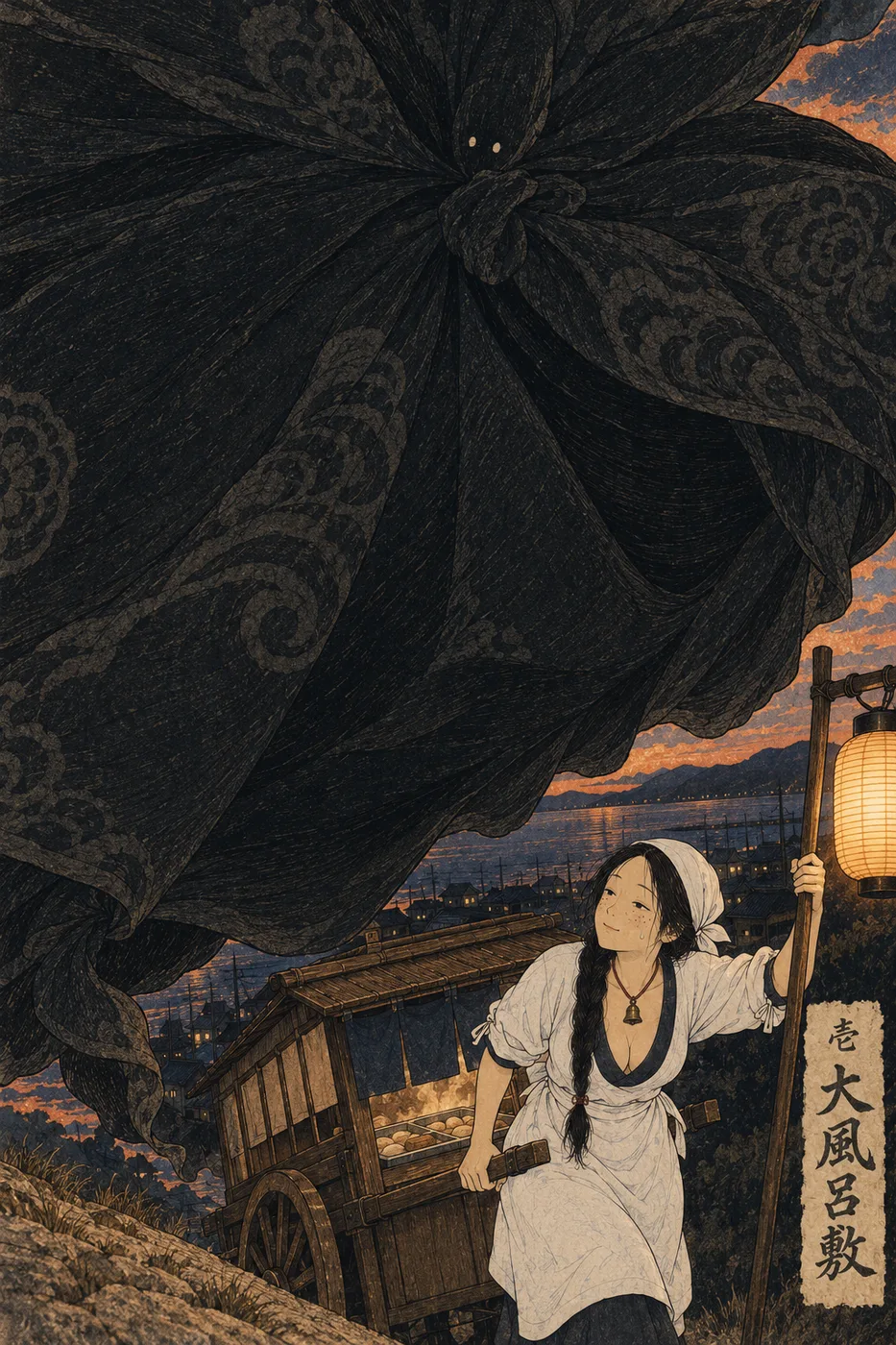
第一図 / Plate 1
大風呂敷Ōfuroshiki
The Giant Wrapping Cloth
由来 / Origin
大風呂敷は、香川県琴南町(いまのまんのう町)に出る怪異である。武田明が『香川の民俗』(1984年)に、日暮れに大きな風呂敷がどこからか飛んでくる、と書いた。
Ōfuroshiki is a strange visitor from Kotonami, Kagawa Prefecture, now part of the town of Mannō. Takeda Akira wrote it down in Kagawa no Minzoku in 1984. At dusk, a huge furoshiki, a square wrapping cloth, flies in from nowhere.
-
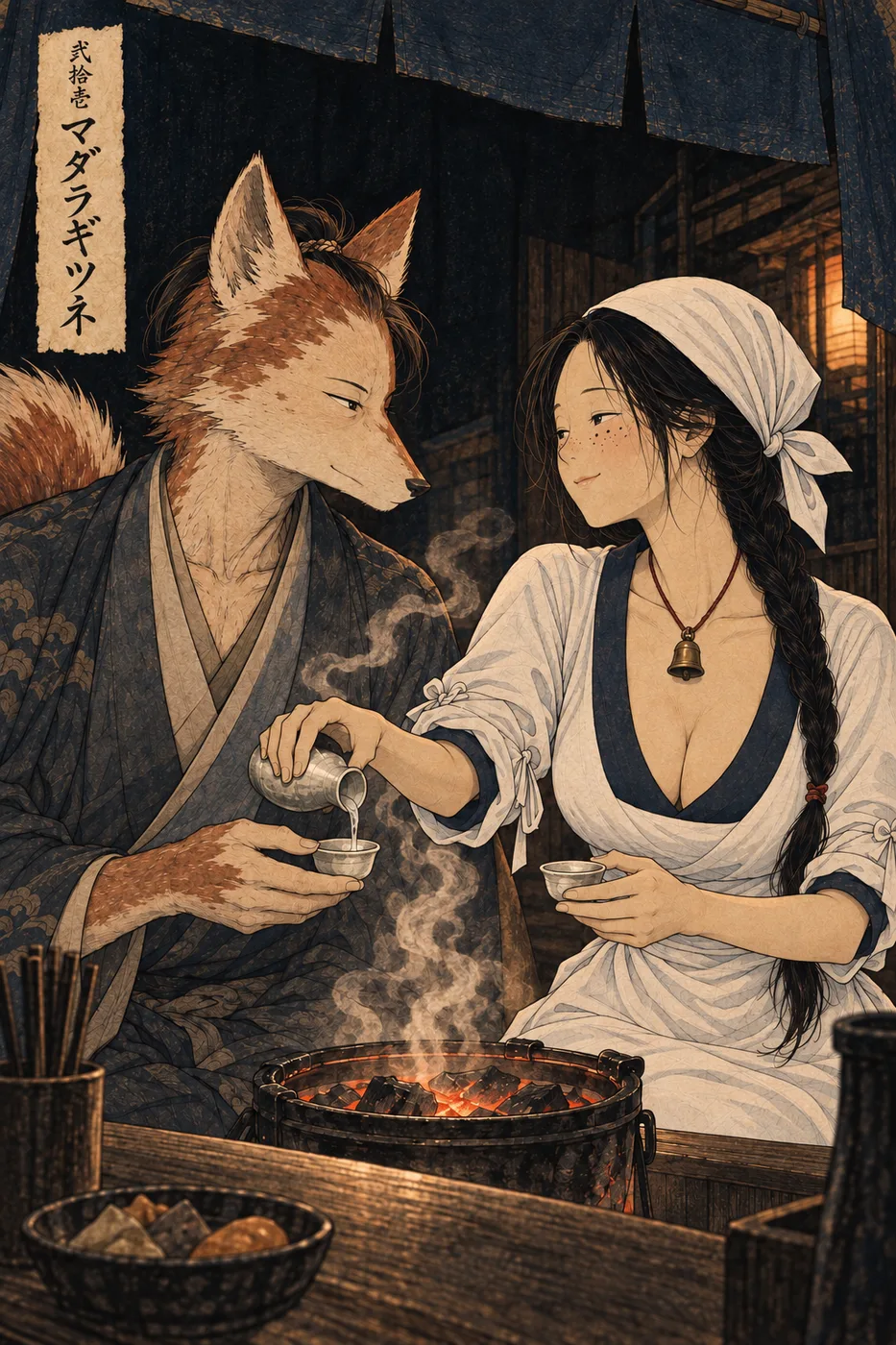
第二十一図 / Plate 21
マダラギツネMadara-gitsune
The Spotted Fox
由来 / Origin
マダラギツネは、越前の細呂木から三国への道に出た狐である。『北国奇談巡杖記』に、鬼火で踊り、近づいた男の前で若衆に化けたと書かれている。
Madara-gitsune, the Spotted Fox, is a fox that appeared on the road from Hosorogi to Mikuni in Echizen, now Fukui. The travel essay Hokkoku Kidan Junjōki tells how it danced under its own ghost fire at night. When a man came near, it turned into a young man.
-
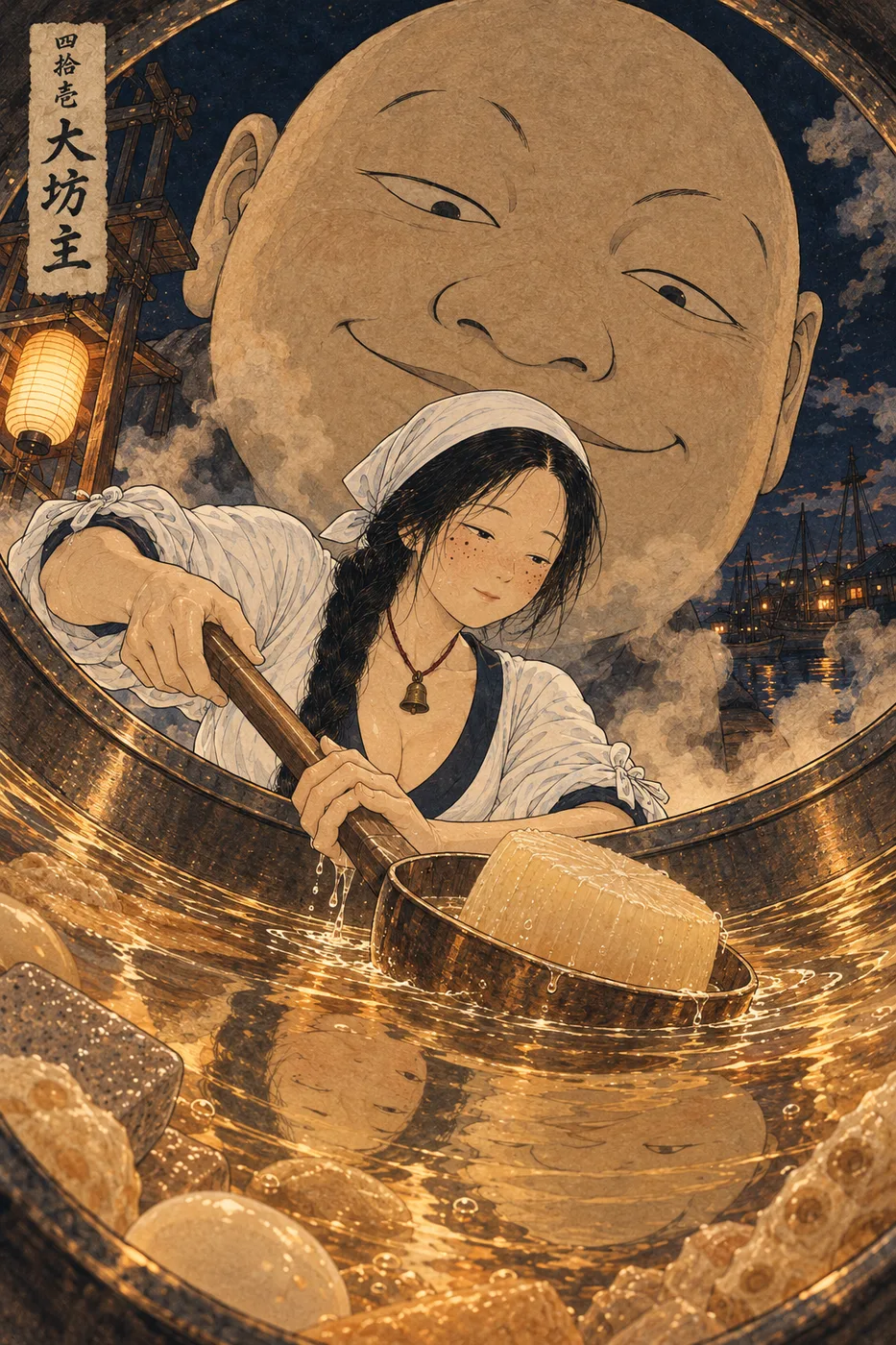
第四十一図 / Plate 41
大坊主Ōbōzu
The Great Monk
由来 / Origin
越中の『ばけもの絵巻』に、大きな坊主の姿をした大坊主が出る。倶利伽羅峠の木こりを天へ連れていこうとした。
Obozu is a giant monk. In the Etchu Bakemono Emaki, he tries to carry a woodcutter, asleep on Kurikara Pass, up into the sky.
-
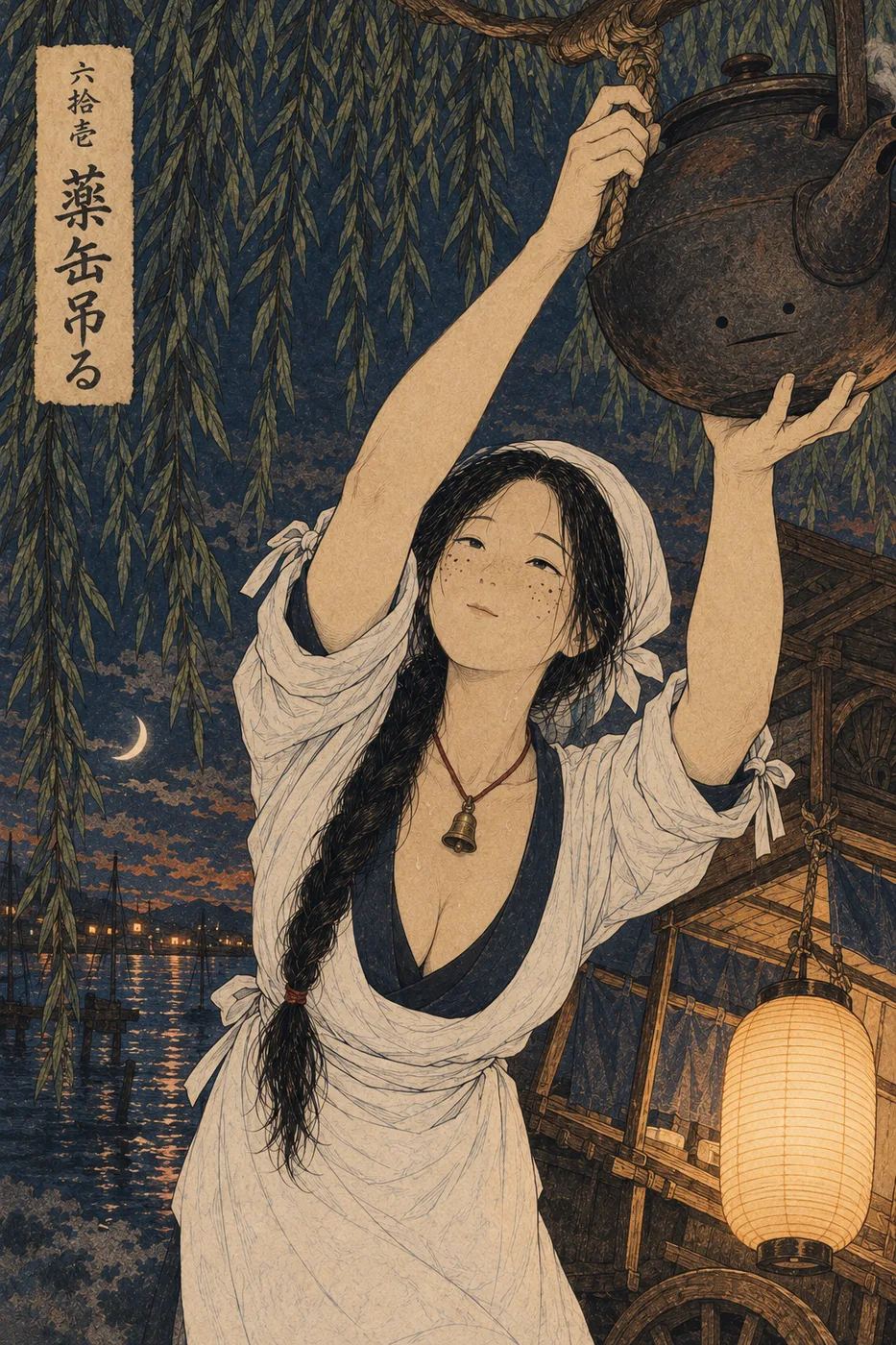
第六十一図 / Plate 61
薬缶吊るYakanzuru
The Hanging Kettle
由来 / Origin
薬缶吊るは、長野地方で語られてきた薬缶の姿の妖怪である。夜遅く森を歩くと、木の上からぶら下がってくる。
Yakanzuru is a yokai in the shape of a kettle, told about in the Nagano region. If a person walks through a forest late at night, it comes hanging down from a tree.
-
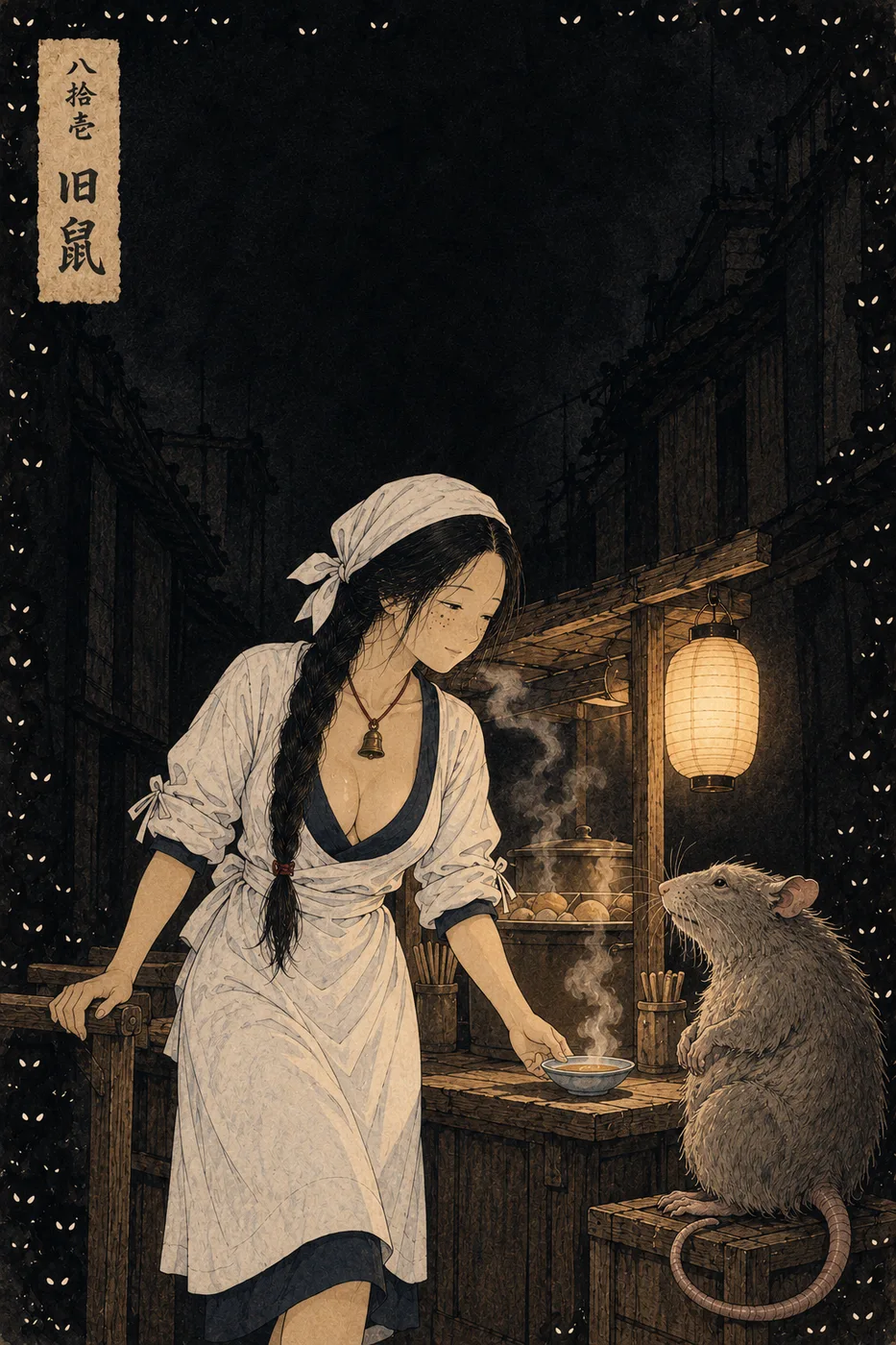
第八十一図 / Plate 81
旧鼠Kyūso
The Old Rat
由来 / Origin
旧鼠は、長く生きたネズミの妖怪である。『絵本百物語』では、大和の旧鼠は猫を食い、出羽の旧鼠は母を亡くした子猫を育てた。
Kyūso (The Old Rat) is a yōkai rat that has lived for a very long time. In the Ehon Hyakumonogatari, a Kyūso in Yamato eats cats, while a Kyūso in Dewa raises the kittens of a mother cat that has died.
ほかの本Other books