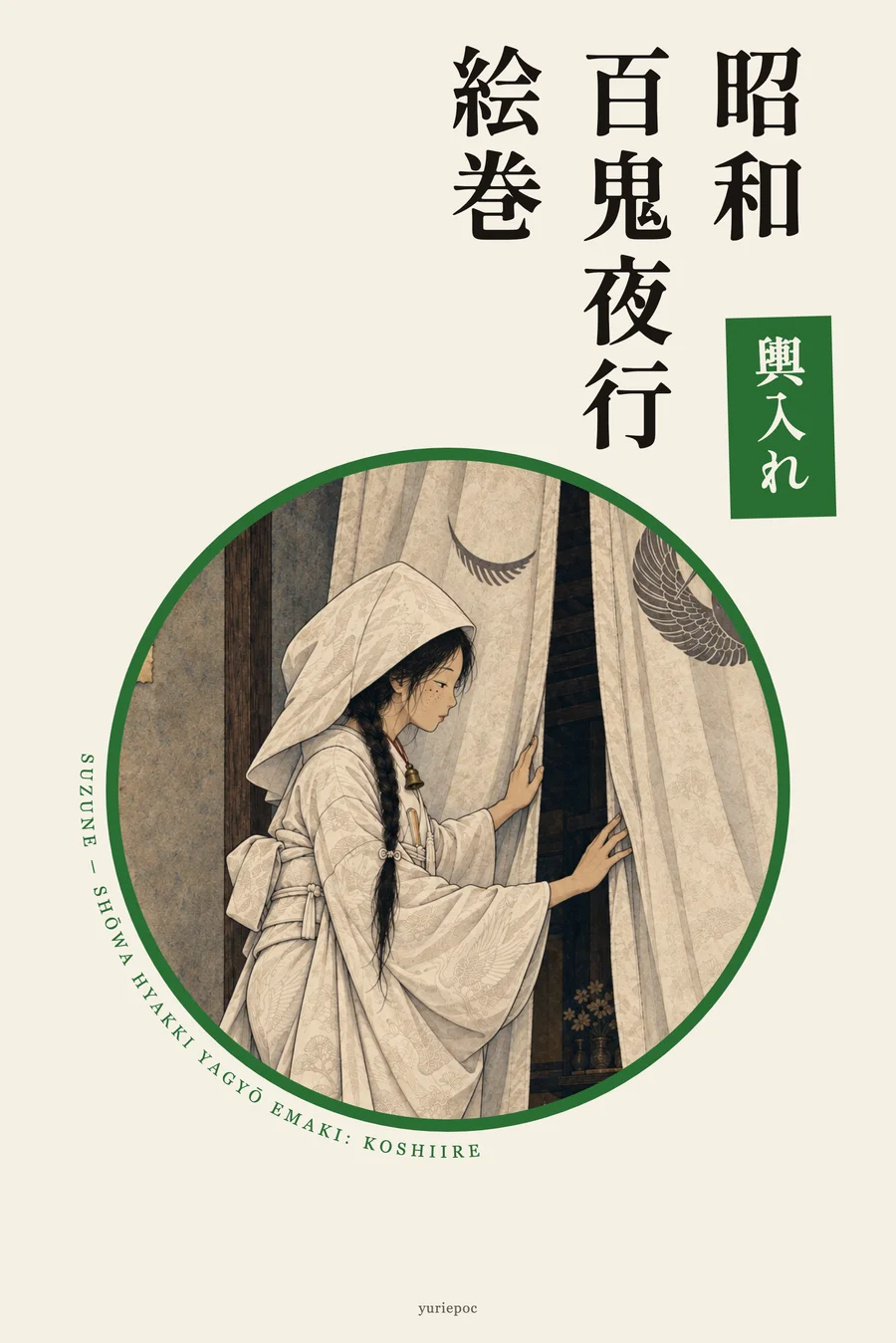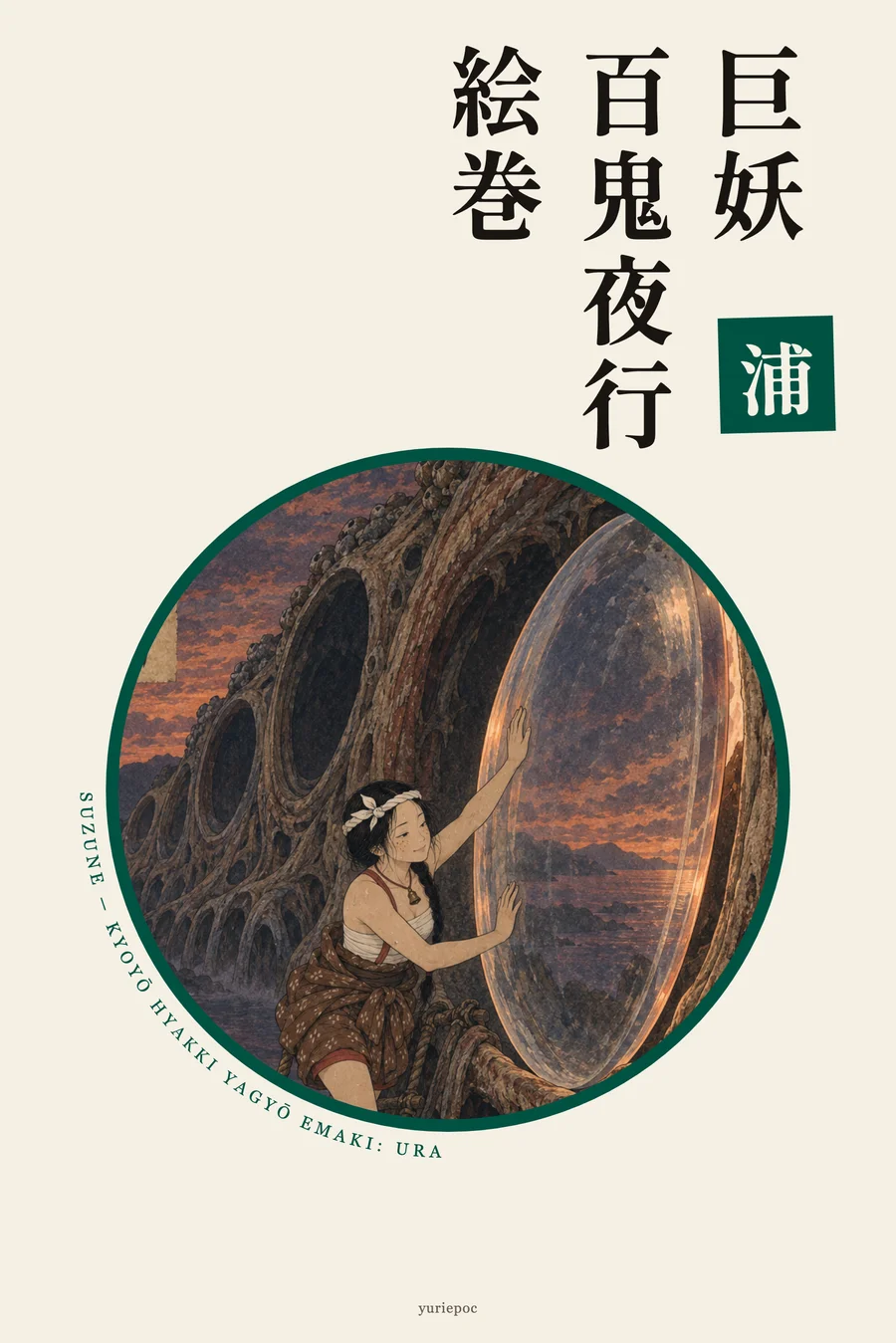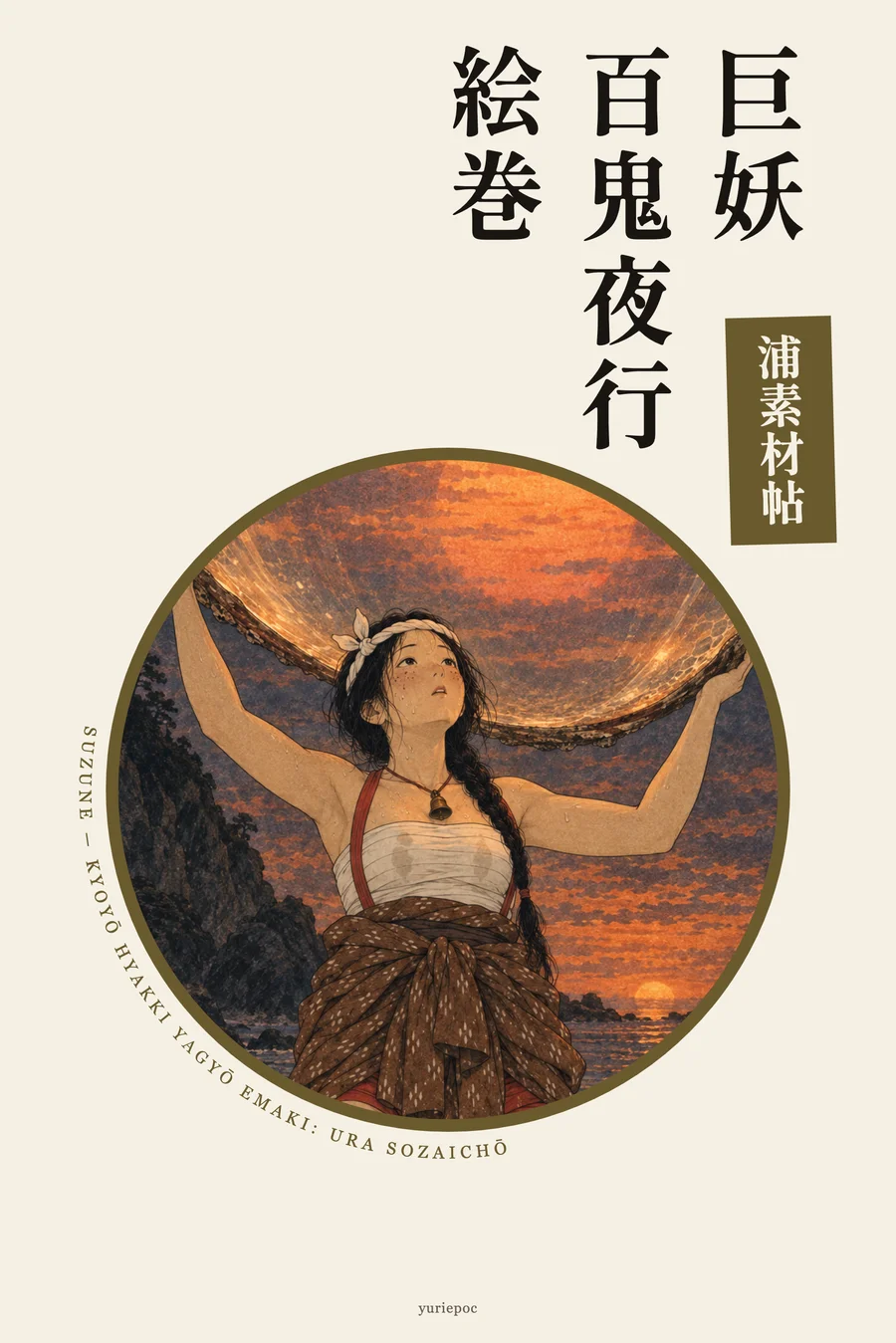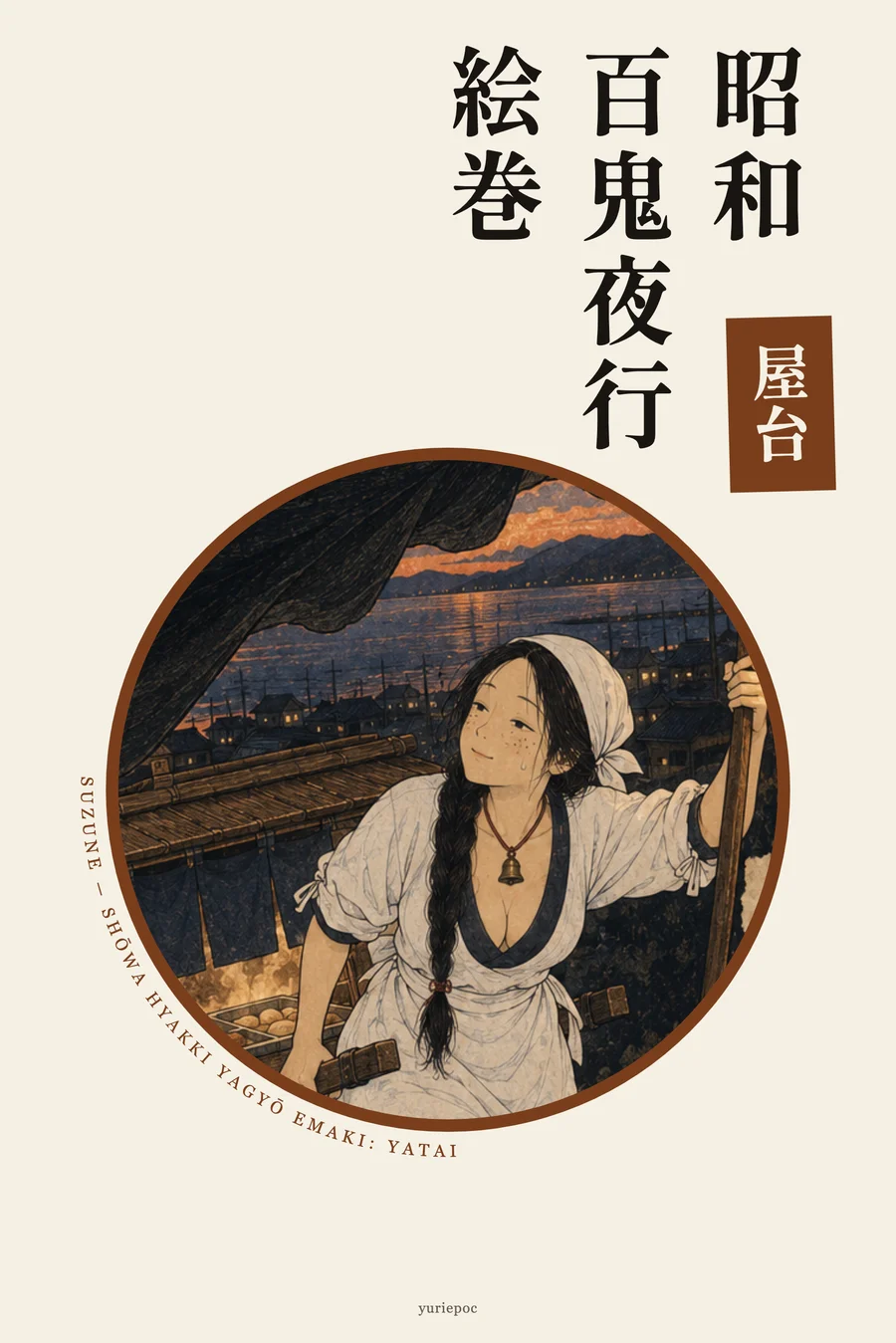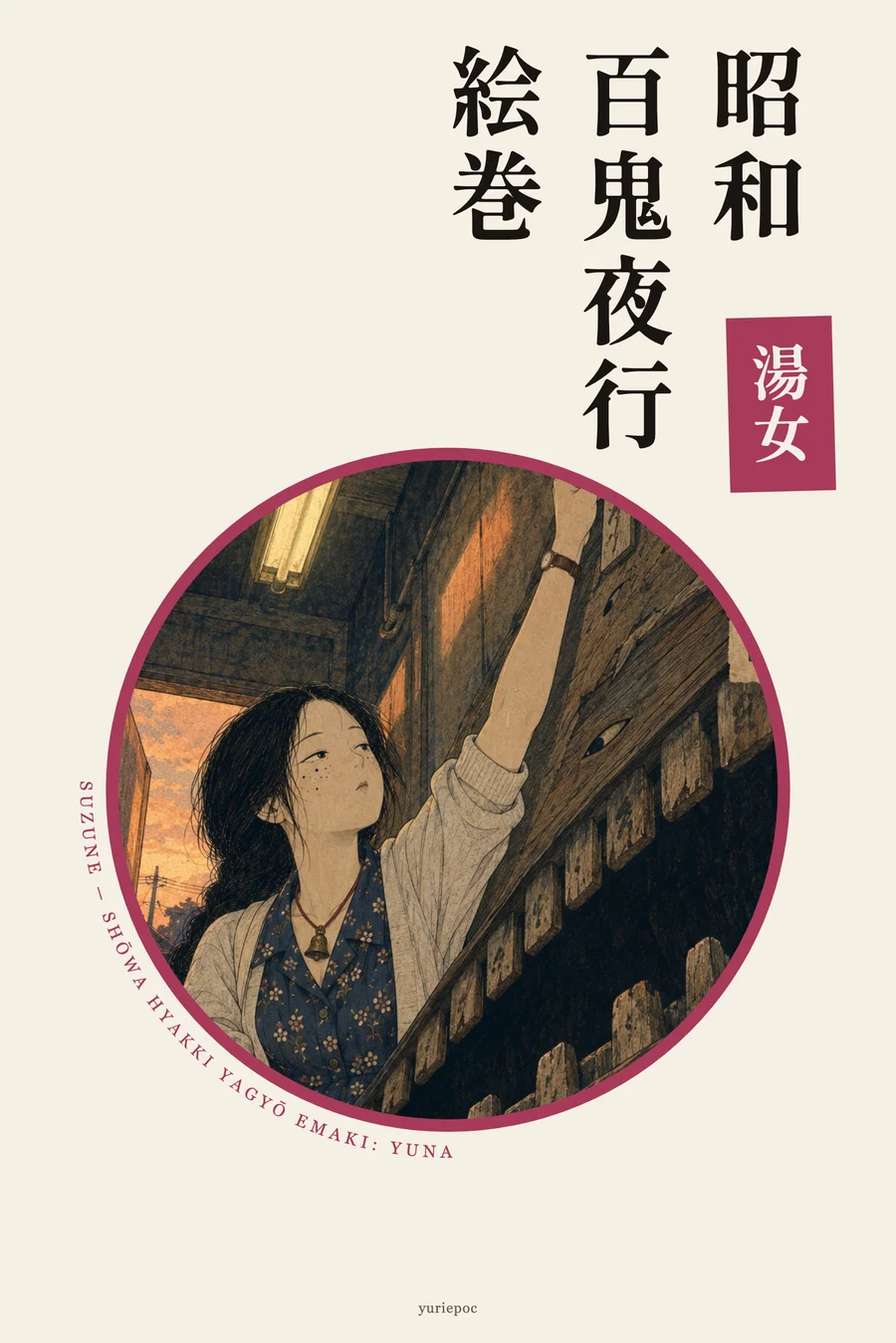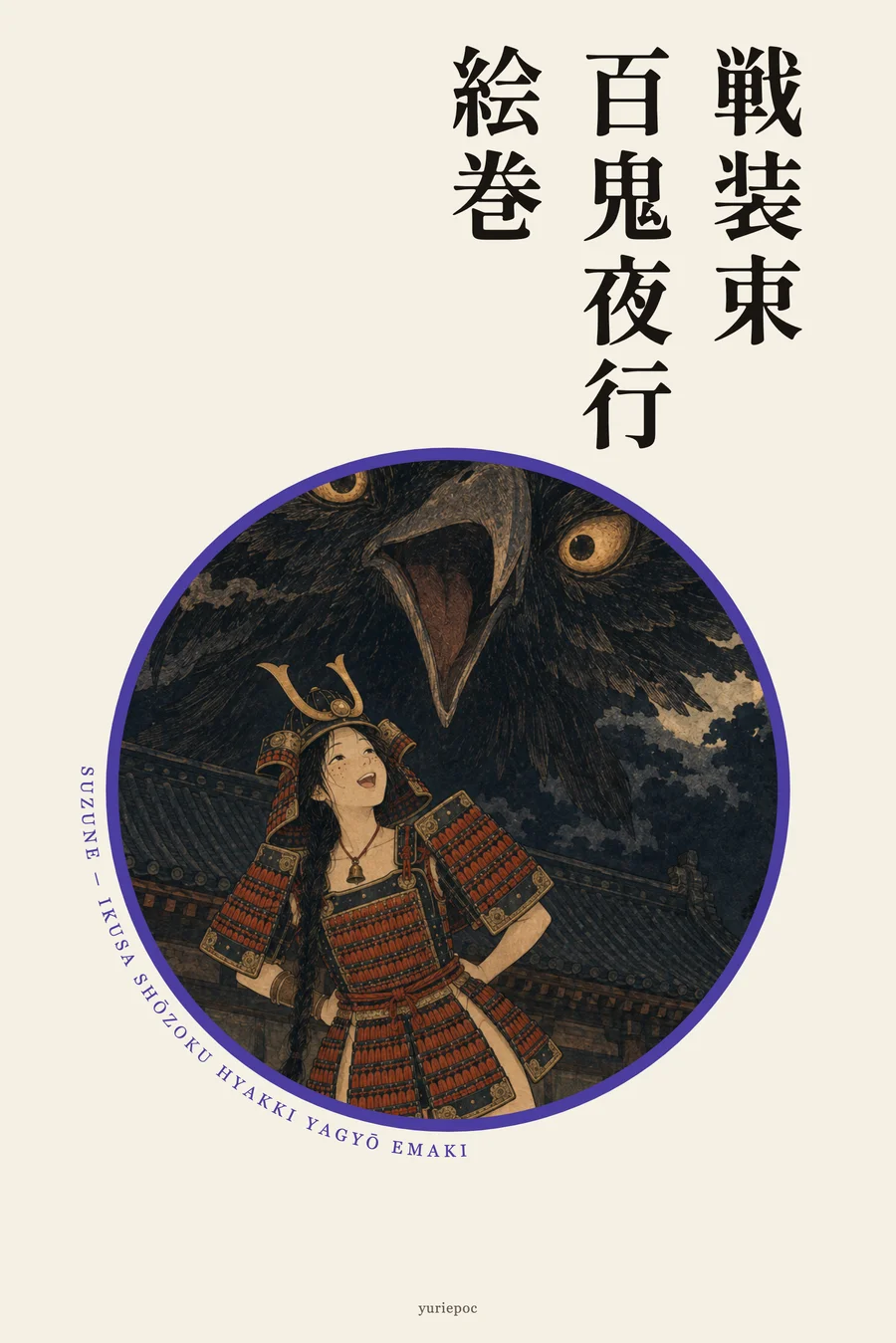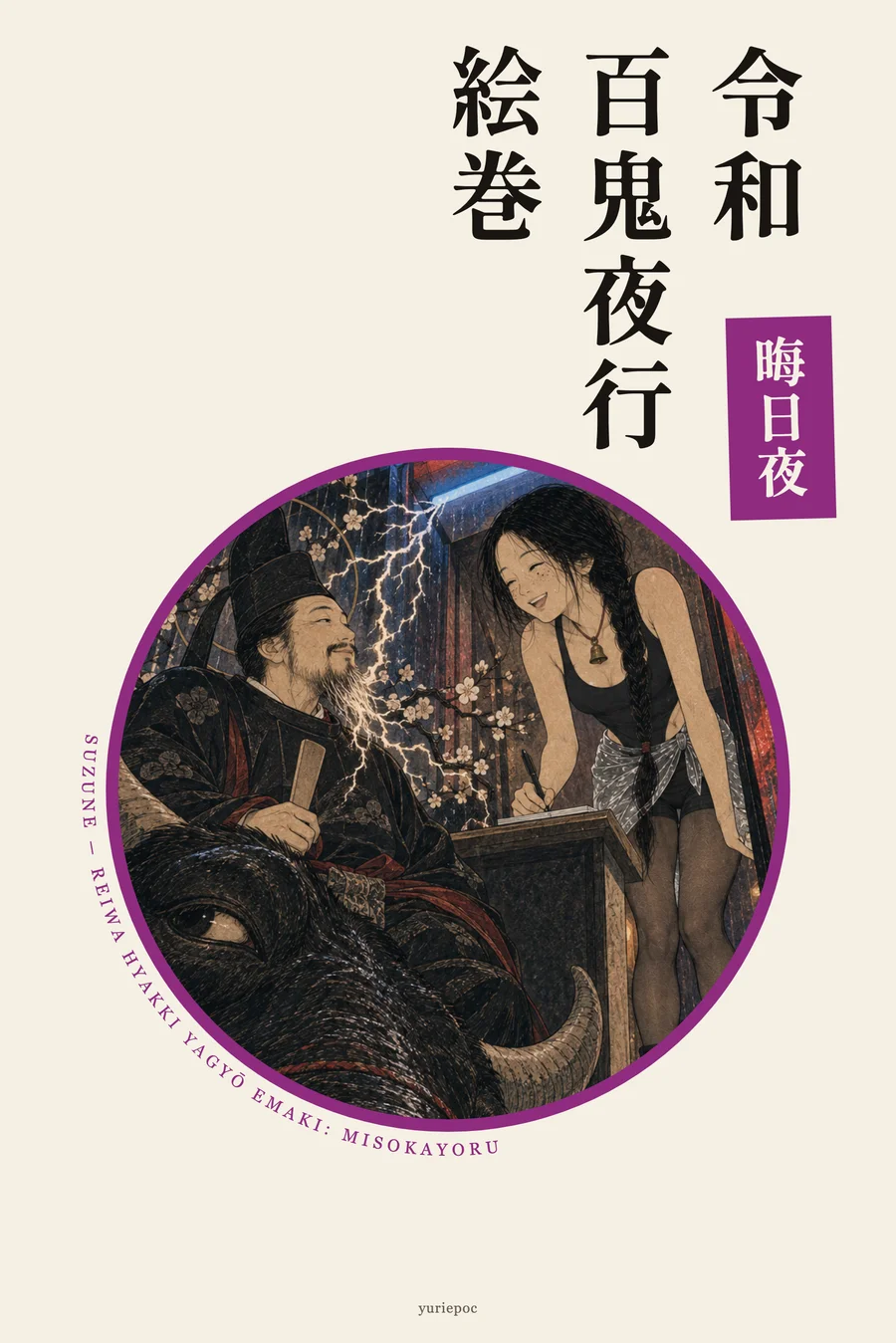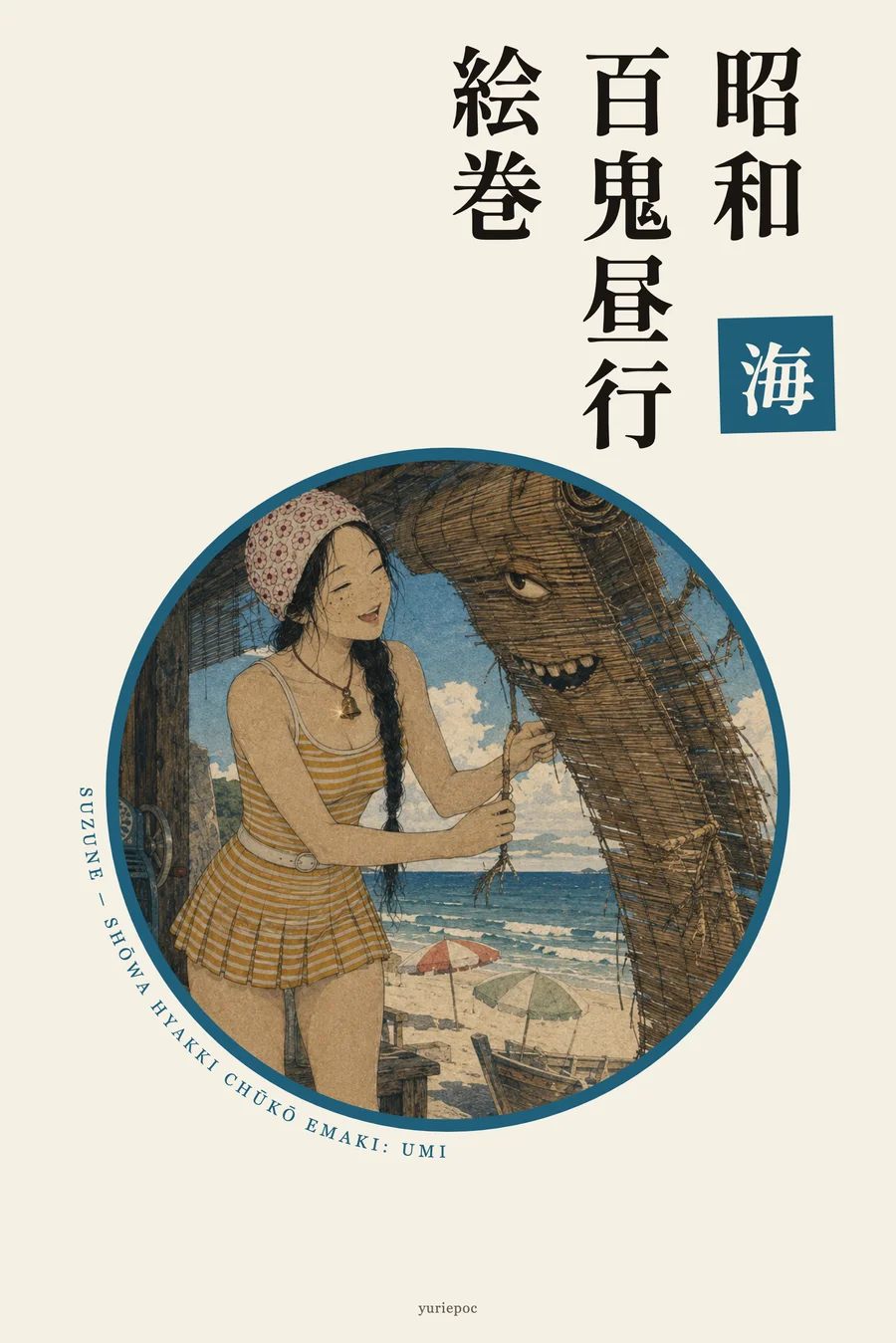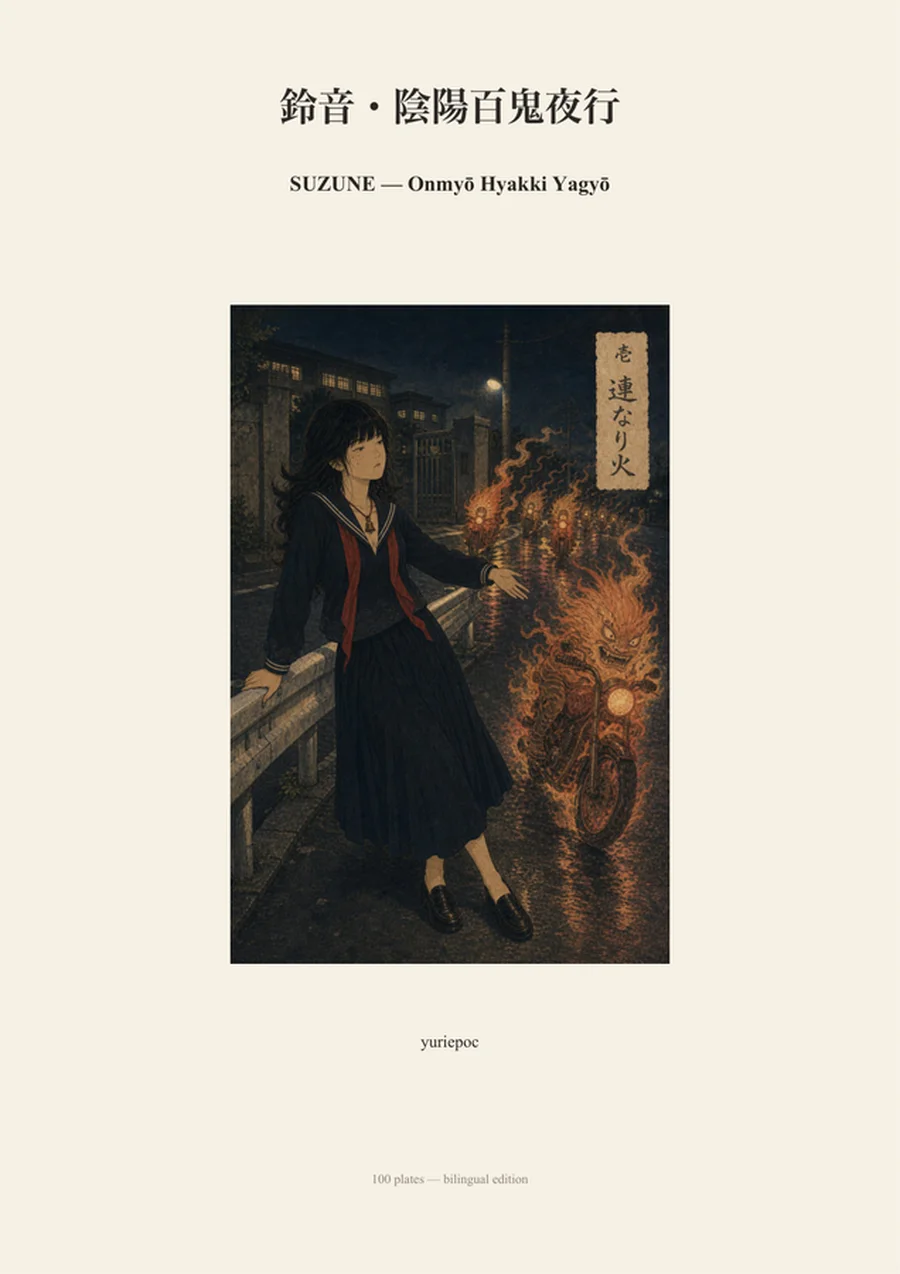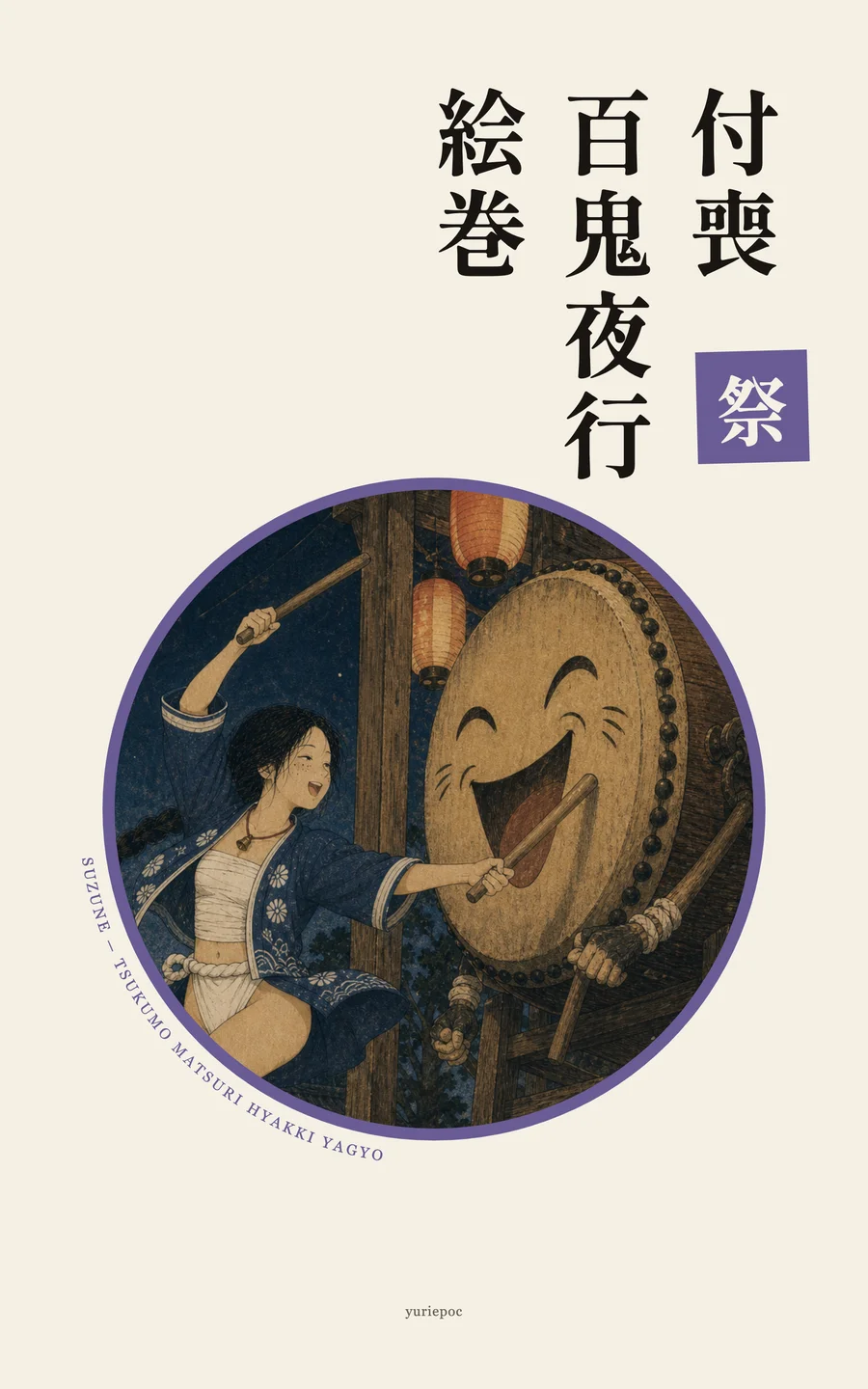
紹介About this book
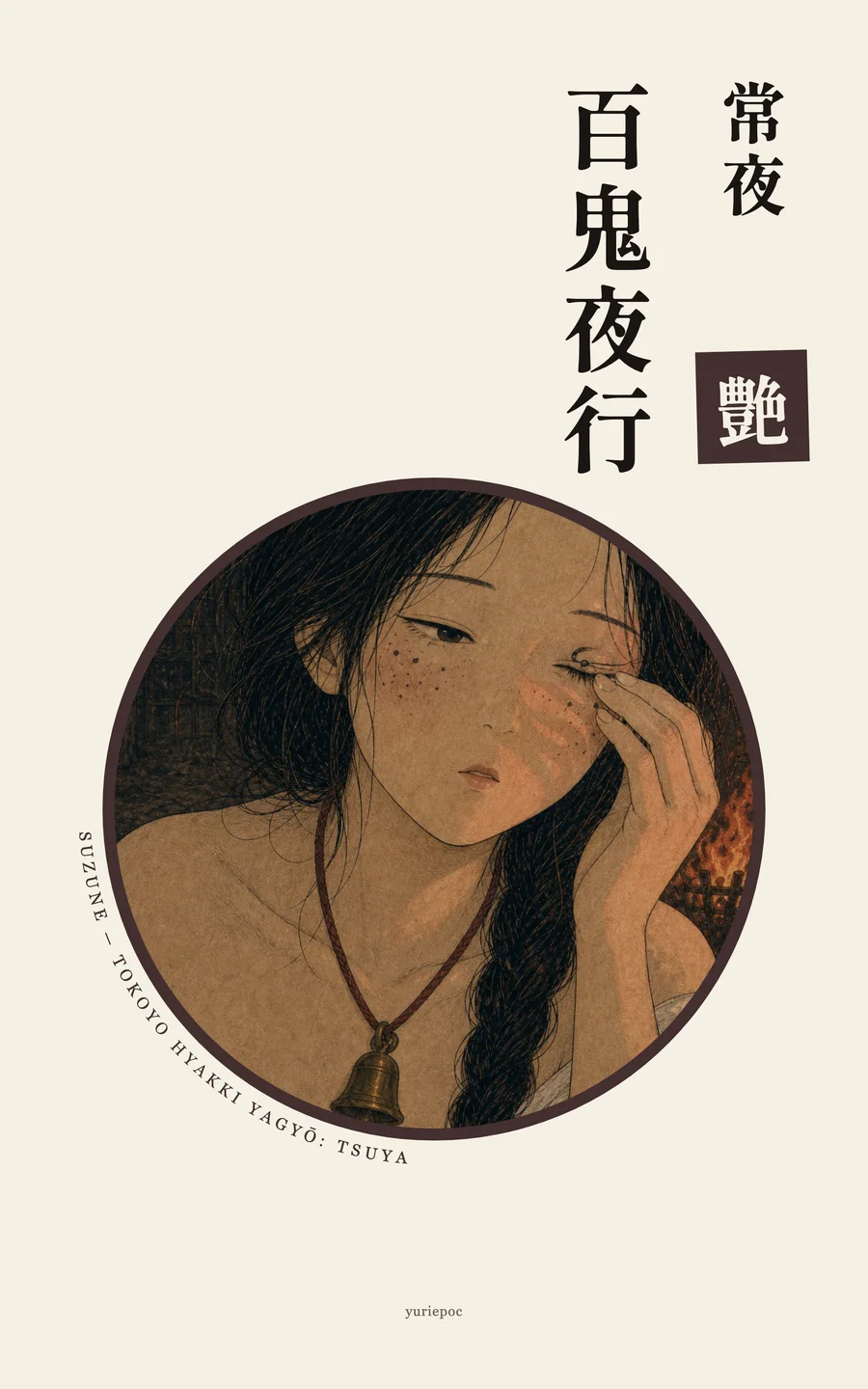
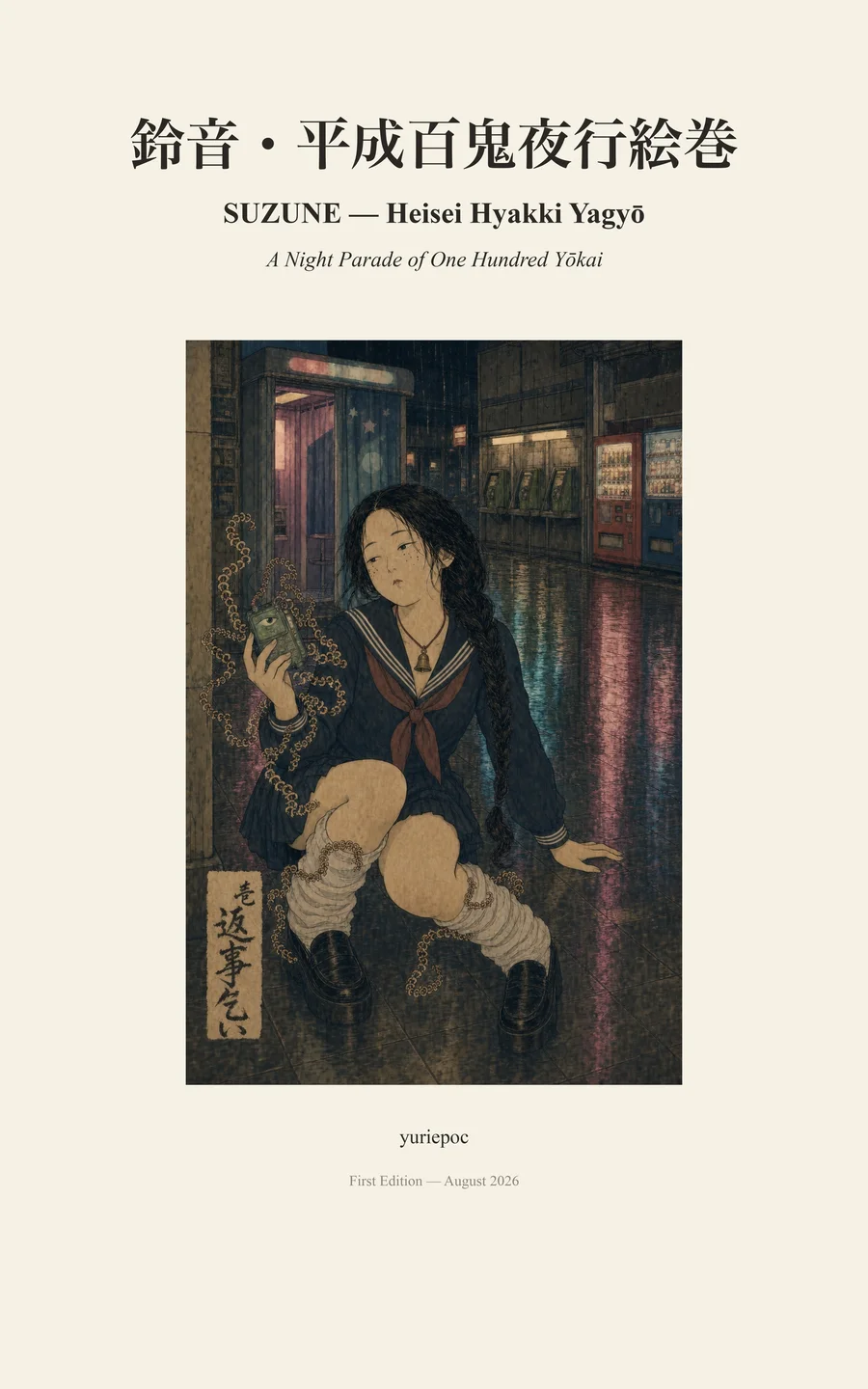
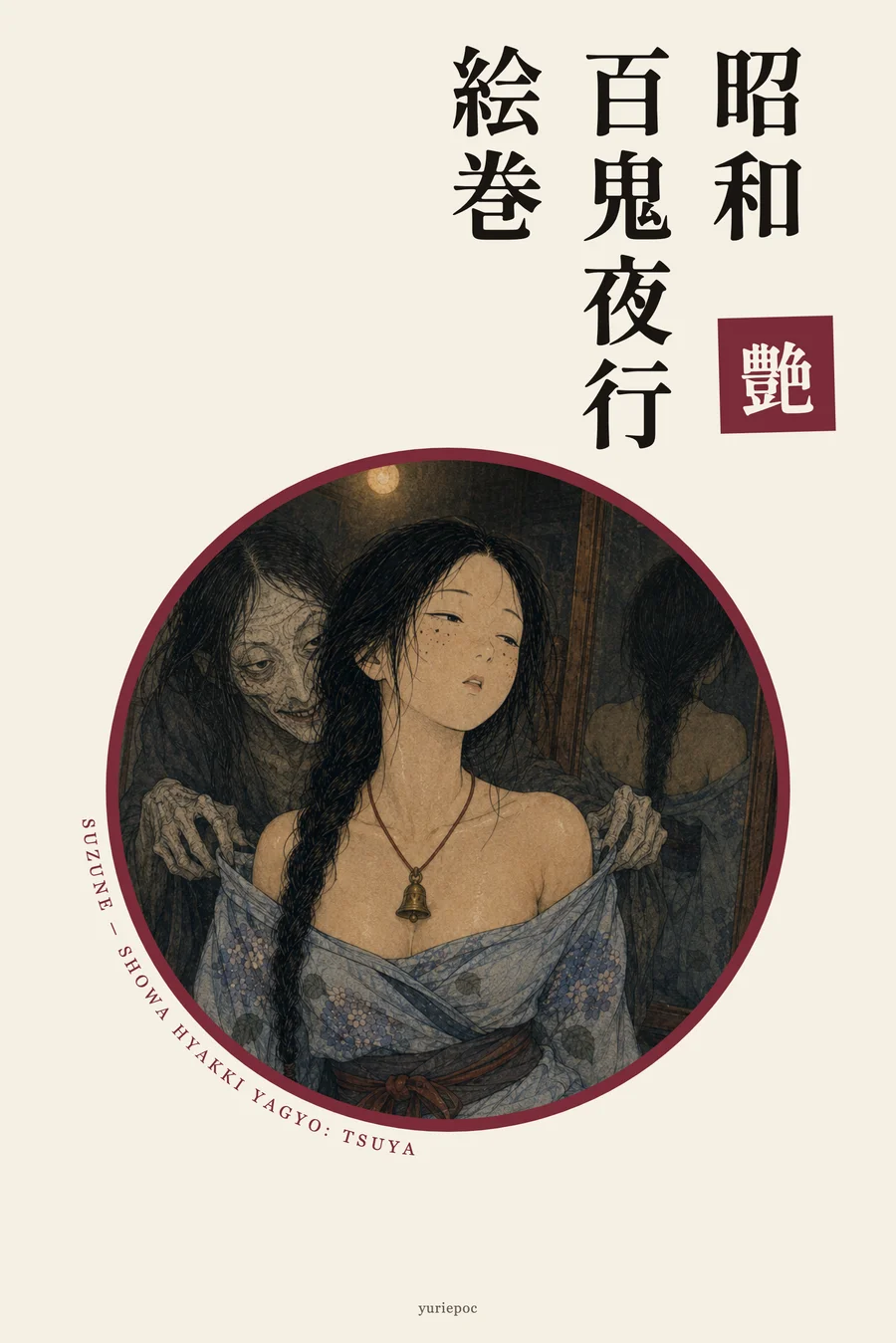
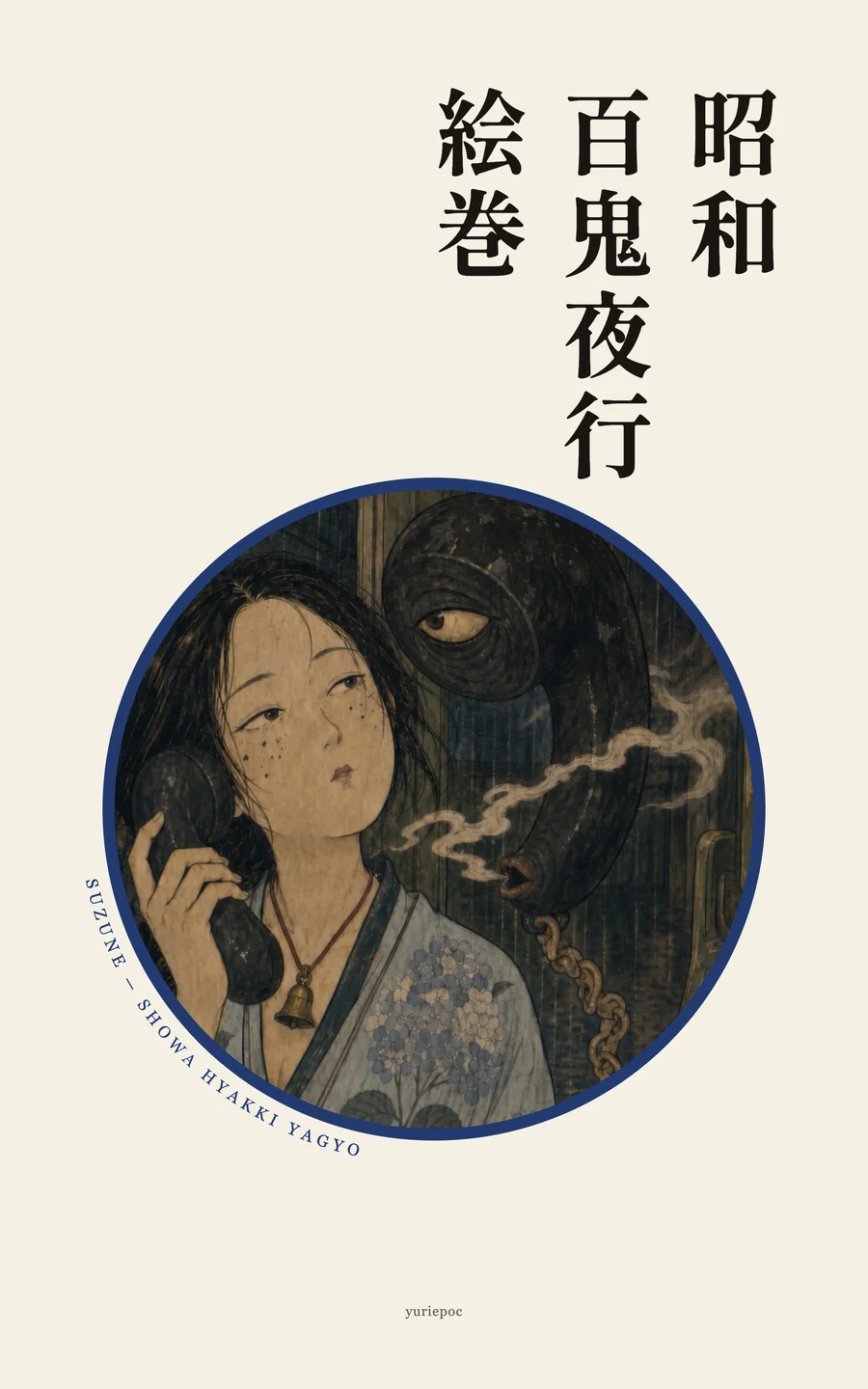
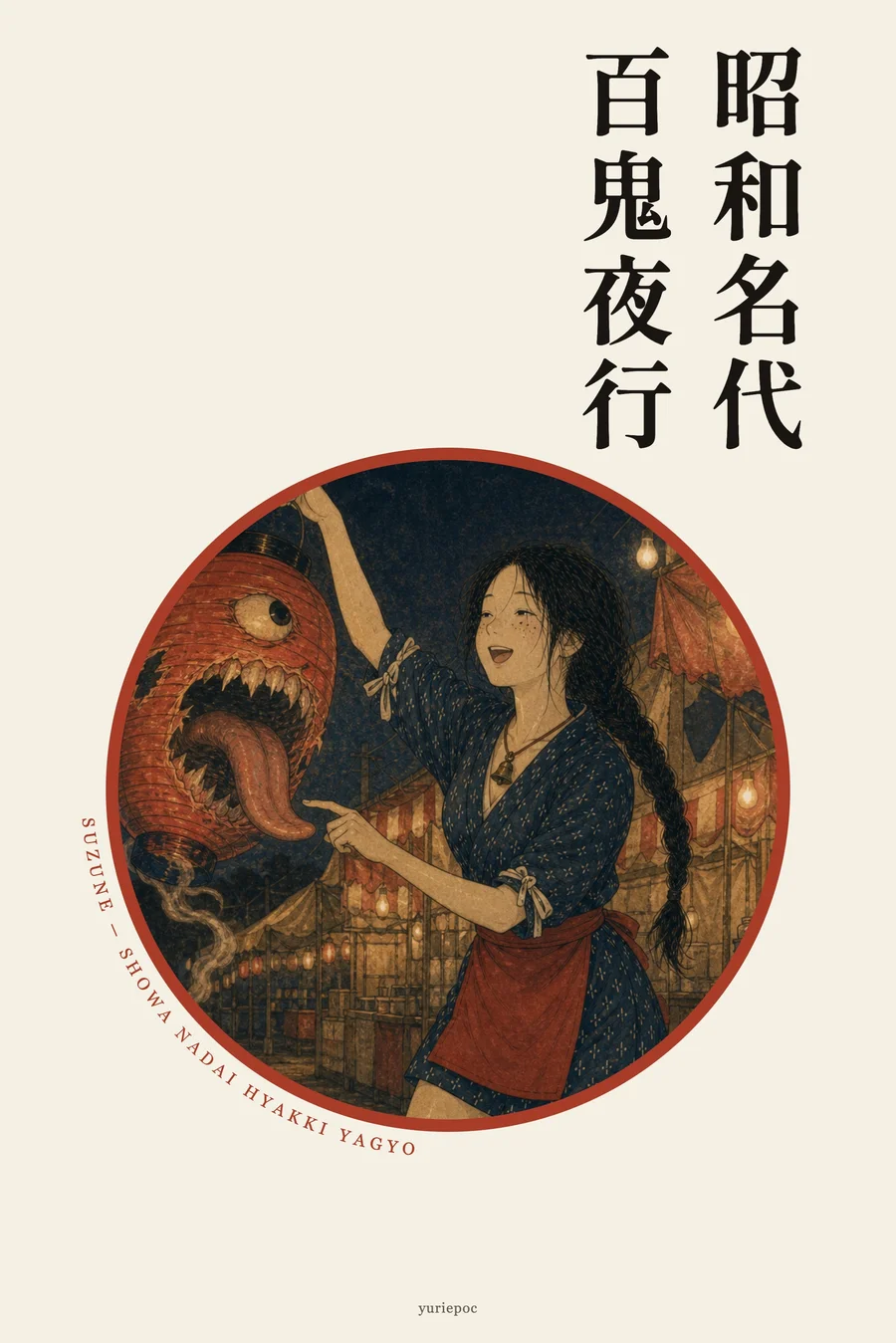
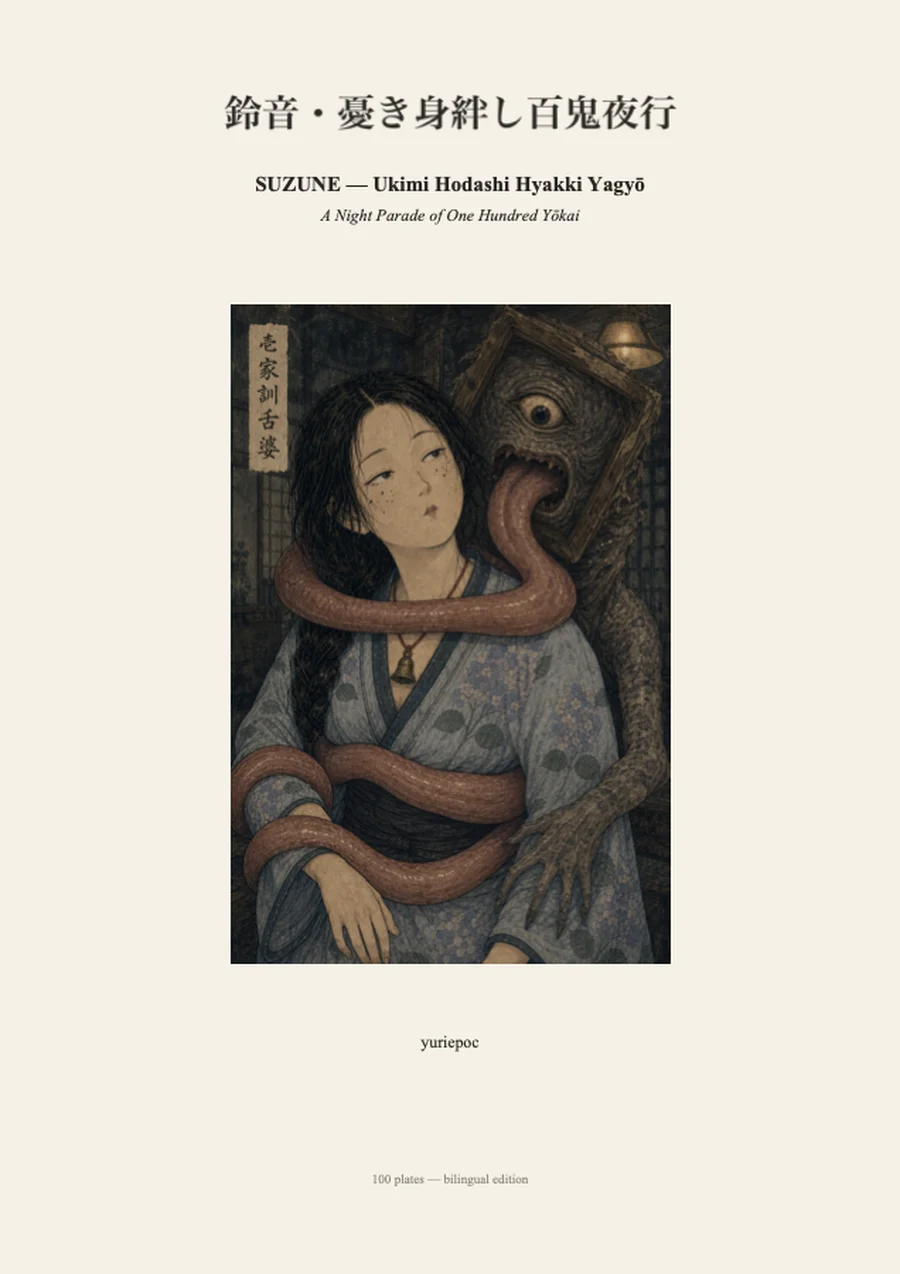
祭の晩、器物は笑う。宵宮の大太鼓がひとりでに一番を打ち、鳥居が背をかがめてくぐられたがり、古提灯が火袋を膨らませて笑いだす。長く使われた道具はいつか目を覚ますという付喪神の古い約束が、昭和三十年代の祭の夜に、百の姿でいっせいに果たされた。この行列は、おどろおどろしくない。笑っている。
舞台はある町の祭礼の一夜である。百のうち三十六は江戸の絵師たちが描き残した伝承の付喪神、六十四はこの祭のために生まれた新作である。娘は逃げない。法被に晒、六尺褌の祭装束で、太鼓には相打ち、綱には綱引き、くじ箱には全番くじで応じる。妖怪と人が同じ拍子で笑う夜は、百年にいちどしか来ない。
笑い通した夜にも、朝は来る。最後の一枚に立つのは神楽鈴の末の一粒「小鈴」——夜の終わりの一振りを鳴らす役である。娘は自分の首の鈴をつまみ、その音にそっと重ねる。祭は明け、器物はただの道具に戻ってゆく。鳴り残るのが百の器物の音か、娘の胸の鈴のひと粒か——それは、最後までめくった人だけが知ることになる。
On festival nights, the tools begin to laugh. The great taiko strikes its own first beat, the shrine gate stoops down, wanting to be passed through, an old lantern puffs out its paper belly with laughter. The ancient promise of tsukumogami — that implements long used will one day wake — comes due all at once, in a hundred shapes, on a festival night in Shōwa-thirties Japan. This parade is not a fearsome one. It is laughing.
The stage is a single night of a town festival. Of the hundred yōkai, thirty-six follow tsukumogami lore drawn by Edo-period artists such as Toriyama Sekien; sixty-four were born for this festival alone. The girl does not run. Dressed in a happi coat, a chest wrap, and a rokushaku loincloth, she answers drum with drum, tug with tug, lottery box with every ticket at once. A night when yōkai and human laugh to the same beat comes once in a hundred years.
Even a night of laughter has its morning. The final plate belongs to Kosuzu, the last grain of a kagura bell rack, whose duty is to ring the night to its close. The girl takes the little bell at her own throat and quietly joins its sound. The festival ends; the implements return to being tools. Whether what keeps ringing is the hundred implements, or the single bell at her chest — only those who turn every page will know.
見本図Sample plates
-
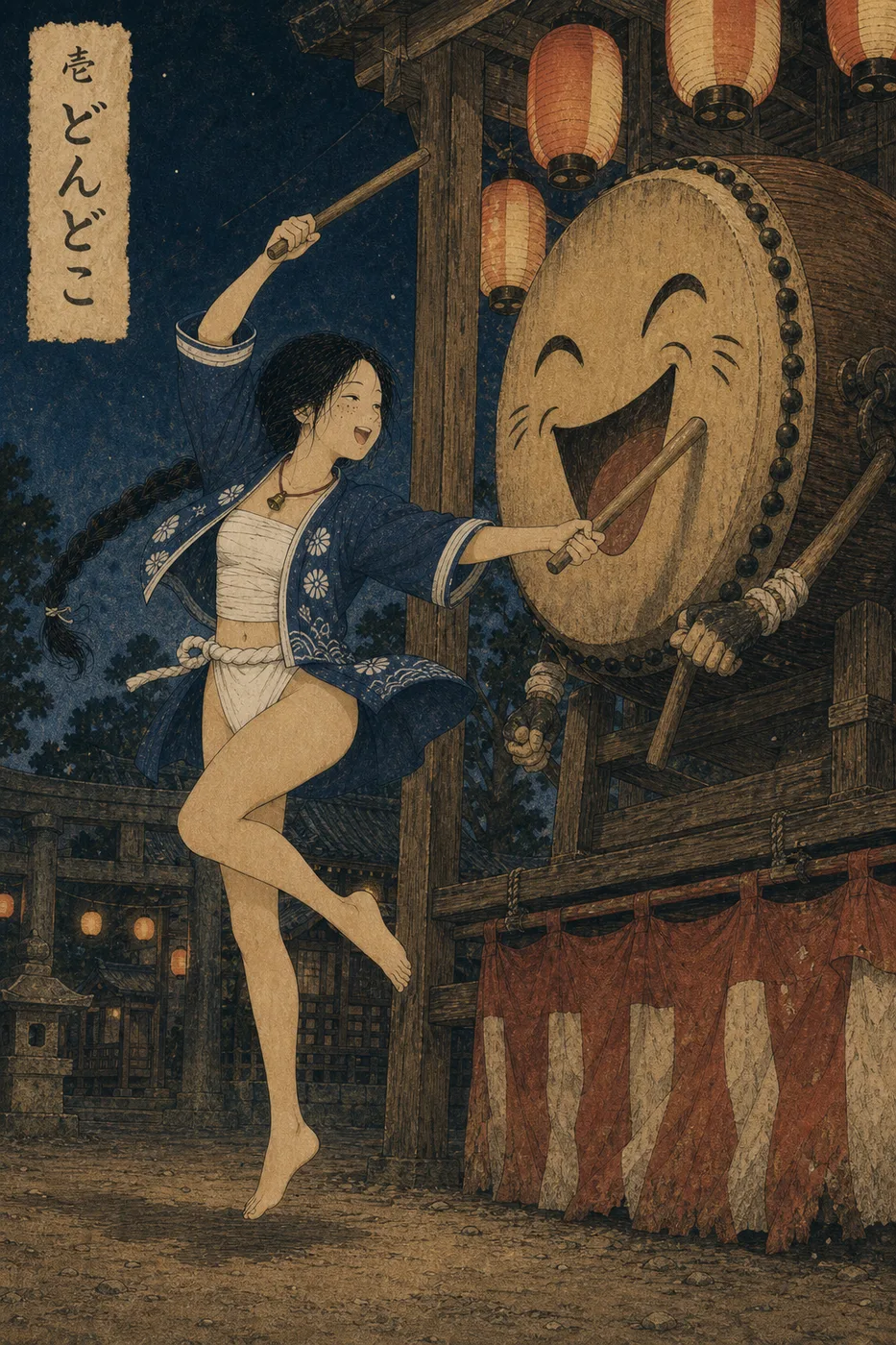
第一図 / Plate 1
どんどこDondoko
The Self-Beating Drum
由来 / Origin
どんどこは、宵宮の太鼓にいる妖怪である。打たれるたび拍子が皮の内にたまる。
Dondoko lives inside the festival drum at the evening shrine fair. Every strike soaks into the drumhead as rhythm, and on a night with no one around, the hoarded rhythm spills out as laughter.
-
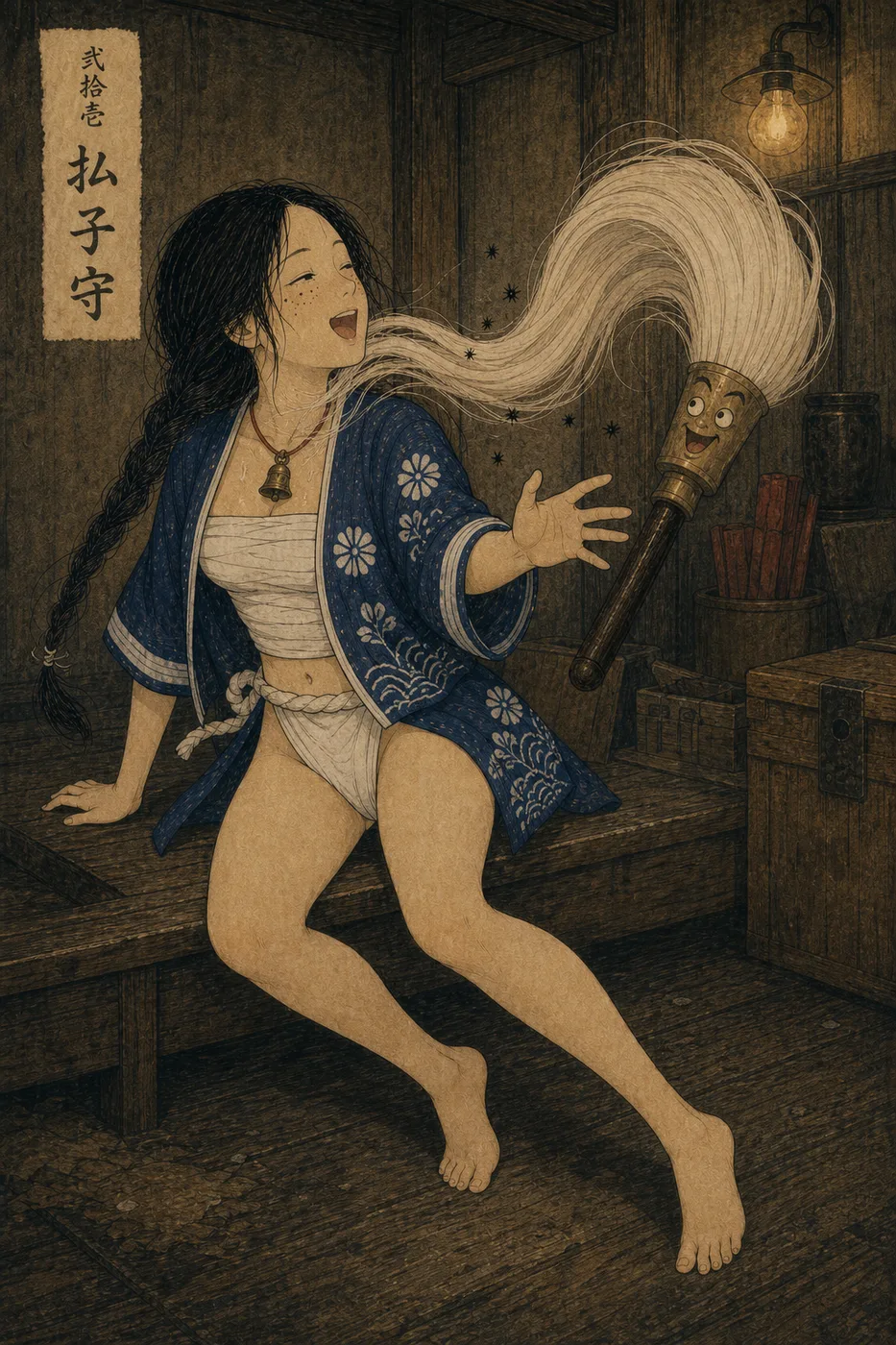
第二十一図 / Plate 21
払子守Hossumori
The Fly-Whisk Guardian
由来 / Origin
払子守は、法要でこらえた笑いを毛先に吸い続けた払子が生まれた妖怪である。祓うはずの魔を逃し、人の笑いを集めたくなった。
The hossu whisk absorbed every held-back laugh at each memorial service, tremor by tremor, into its bristle tips. Instead of sweeping away evil, it gathered people's laughter. That is how Hossumori was born.
-
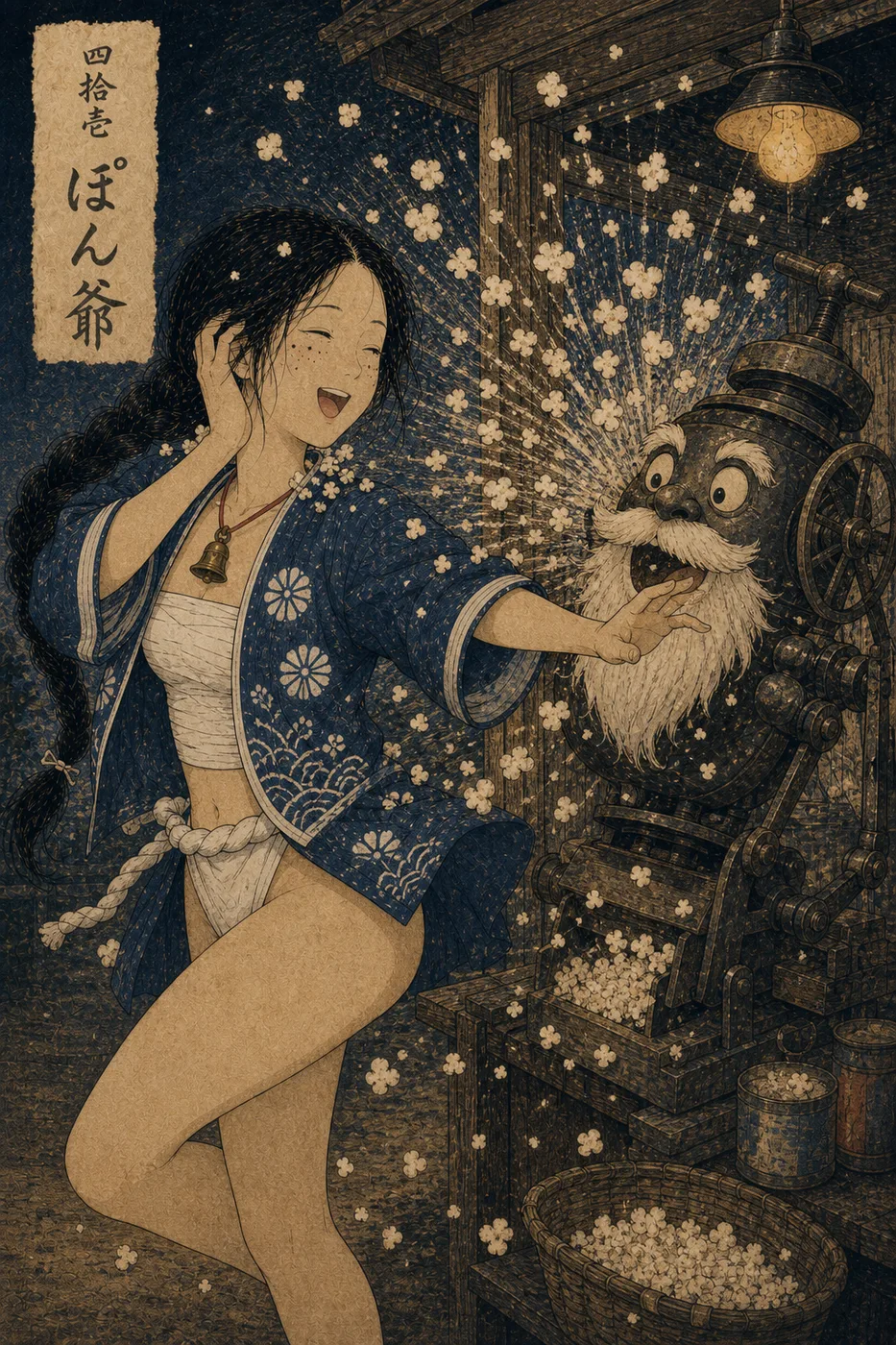
第四十一図 / Plate 41
ぽん爺Ponjii
The Popping-Rice Grandpa
由来 / Origin
ぽん爺は、米を弾く機械にひそむ妖怪である。米粒は火であぶられるたび声を殺して圧をため込んだ。
Ponjii is a spirit living inside a rice-popping machine. Every time the grains were roasted, they held their voice and pressure inside.
-
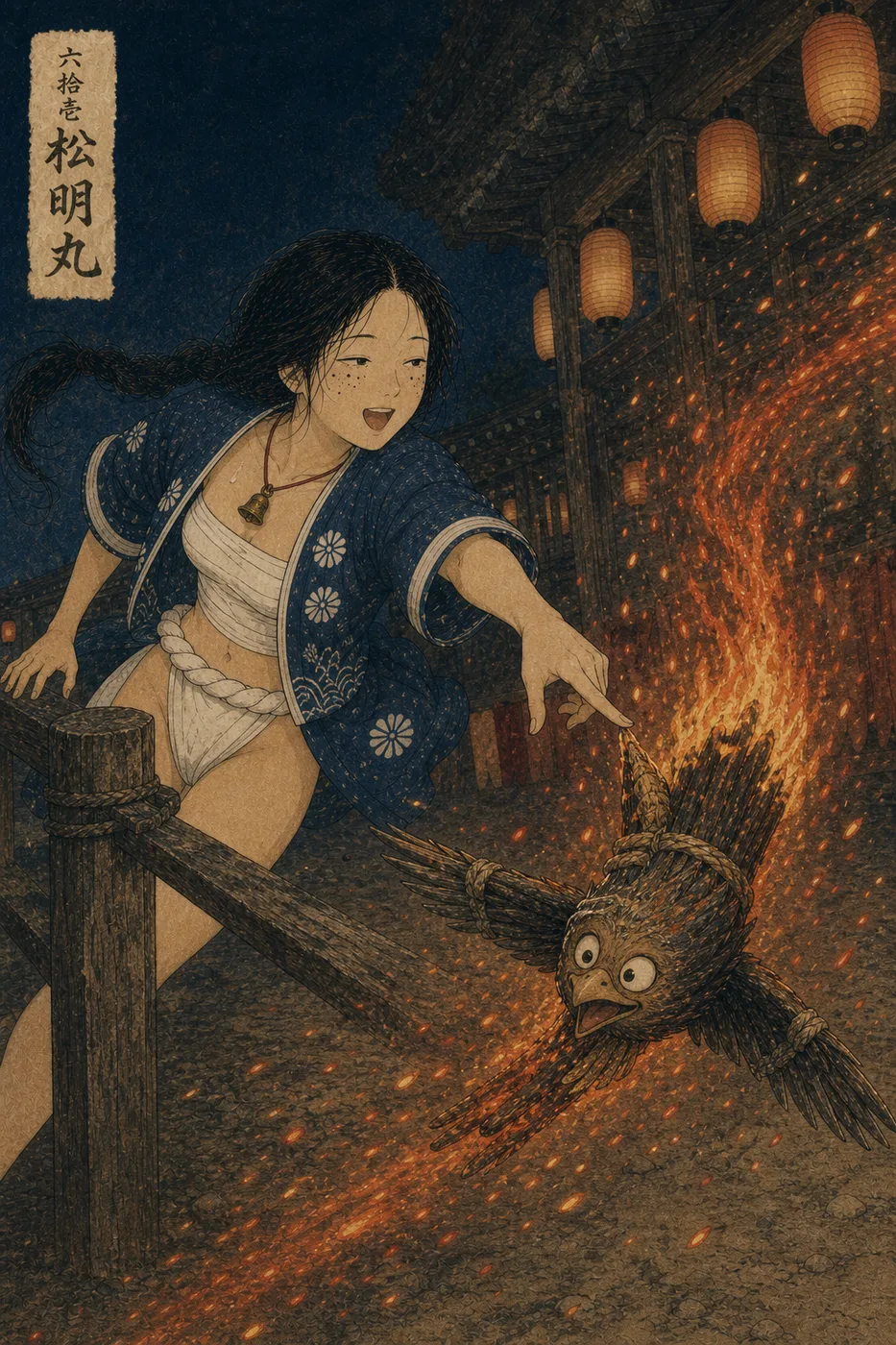
第六十一図 / Plate 61
松明丸Taimatsumaru
The Torch Fireball
由来 / Origin
松明丸は、振られた松明の火の粉から生まれる妖怪である。火の粉に尾が生え、尾はやがて羽に育つ。
Taimatsumaru is born from the sparks of a waved festival torch. A spark grows a tail, and the tail slowly grows into wings.
-
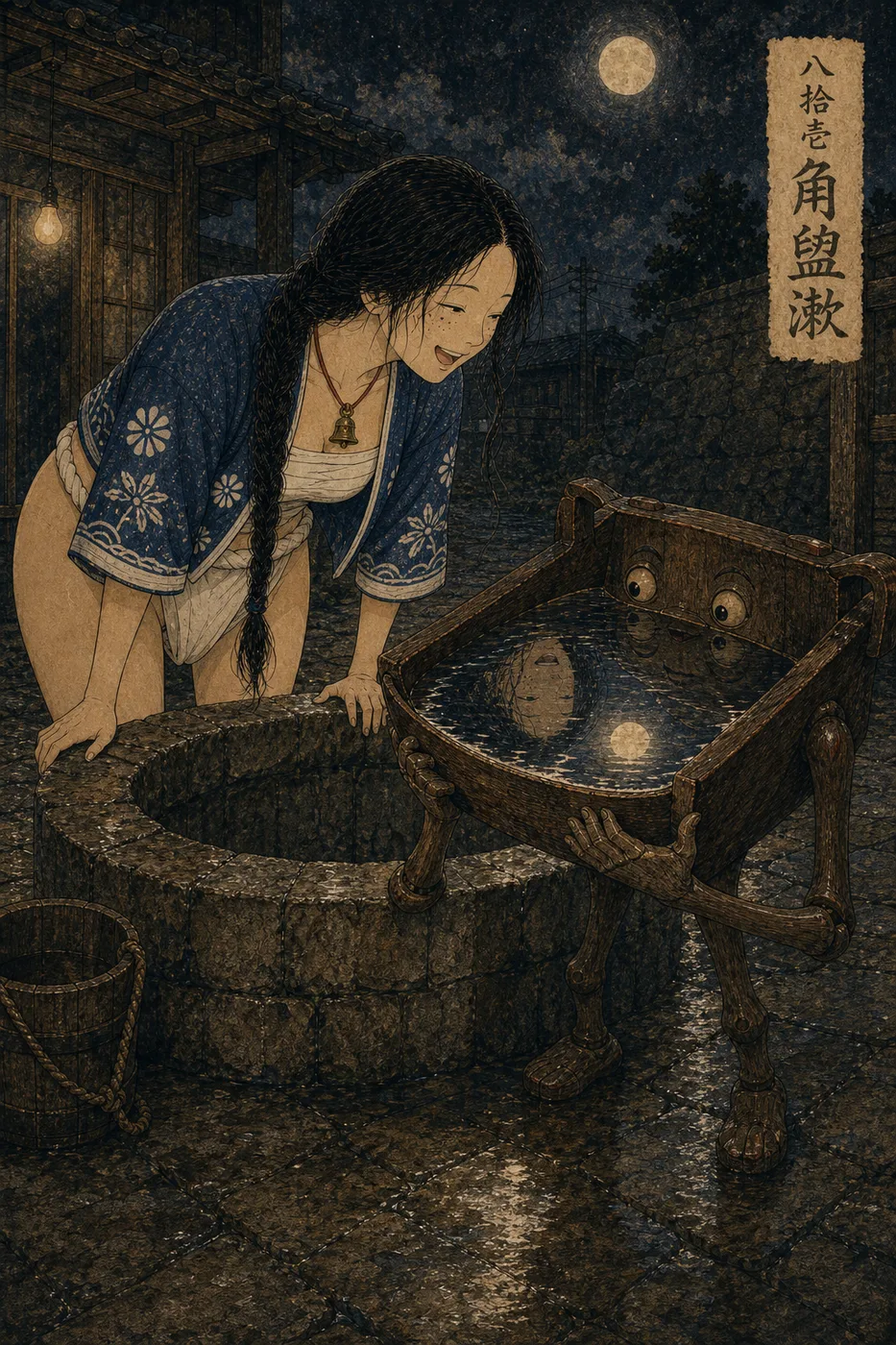
第八十一図 / Plate 81
角盥漱Tsunohanzō
The Horned Wash-Basin
由来 / Origin
角盥は、角のような柄が四本ついた洗面だらいである。二百年ほど前の『百器徒然袋』は、腕になった柄が水鏡を持つ姿を角盥漱と呼んだ。
Tsunohanzō is a washbasin with four curved horn-shaped handles. About two hundred years ago, Toriyama Sekien's Hyakki Tsurezure-bukuro pictured those handles as arms lifting a mirror made of water.
ほかの本Other books