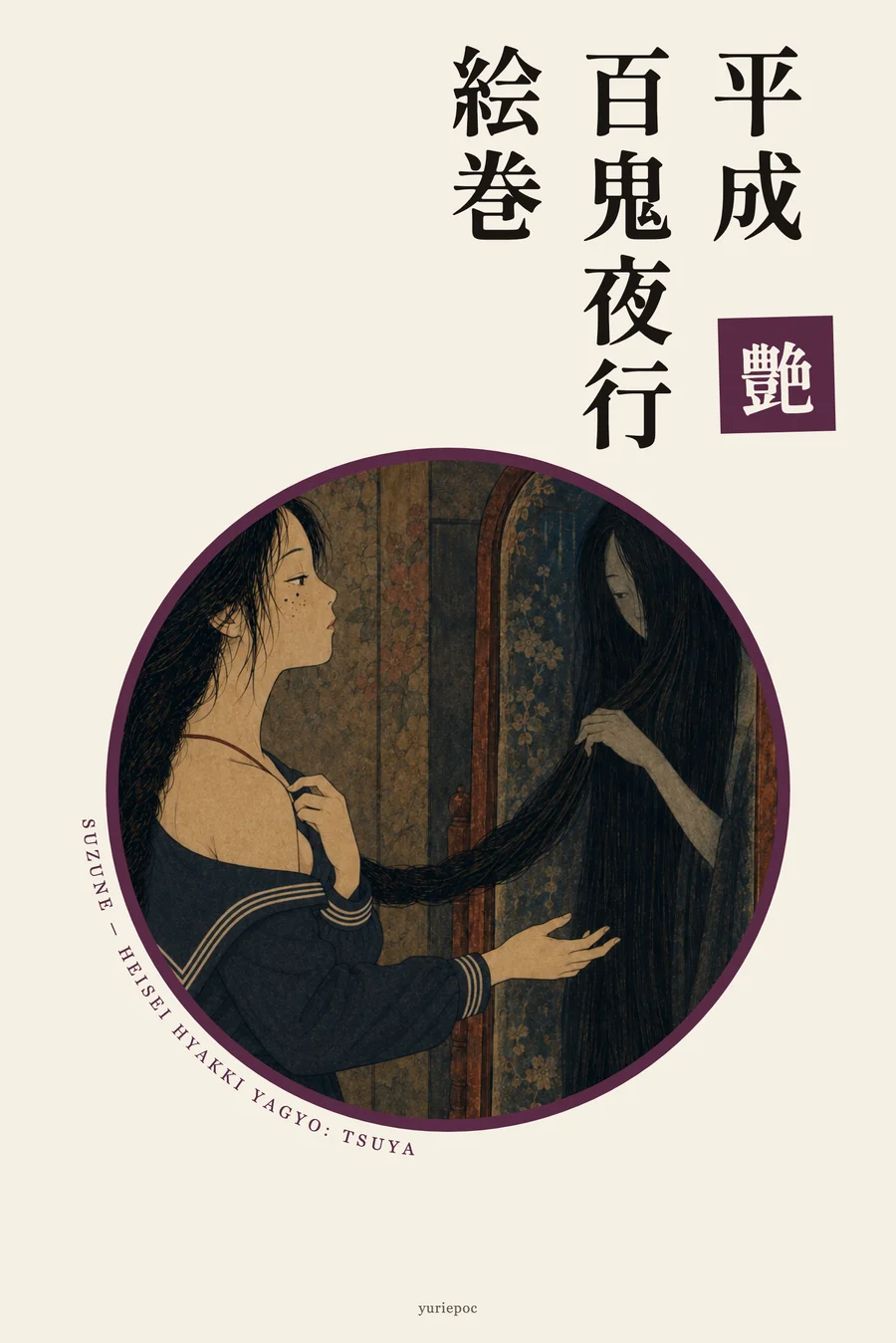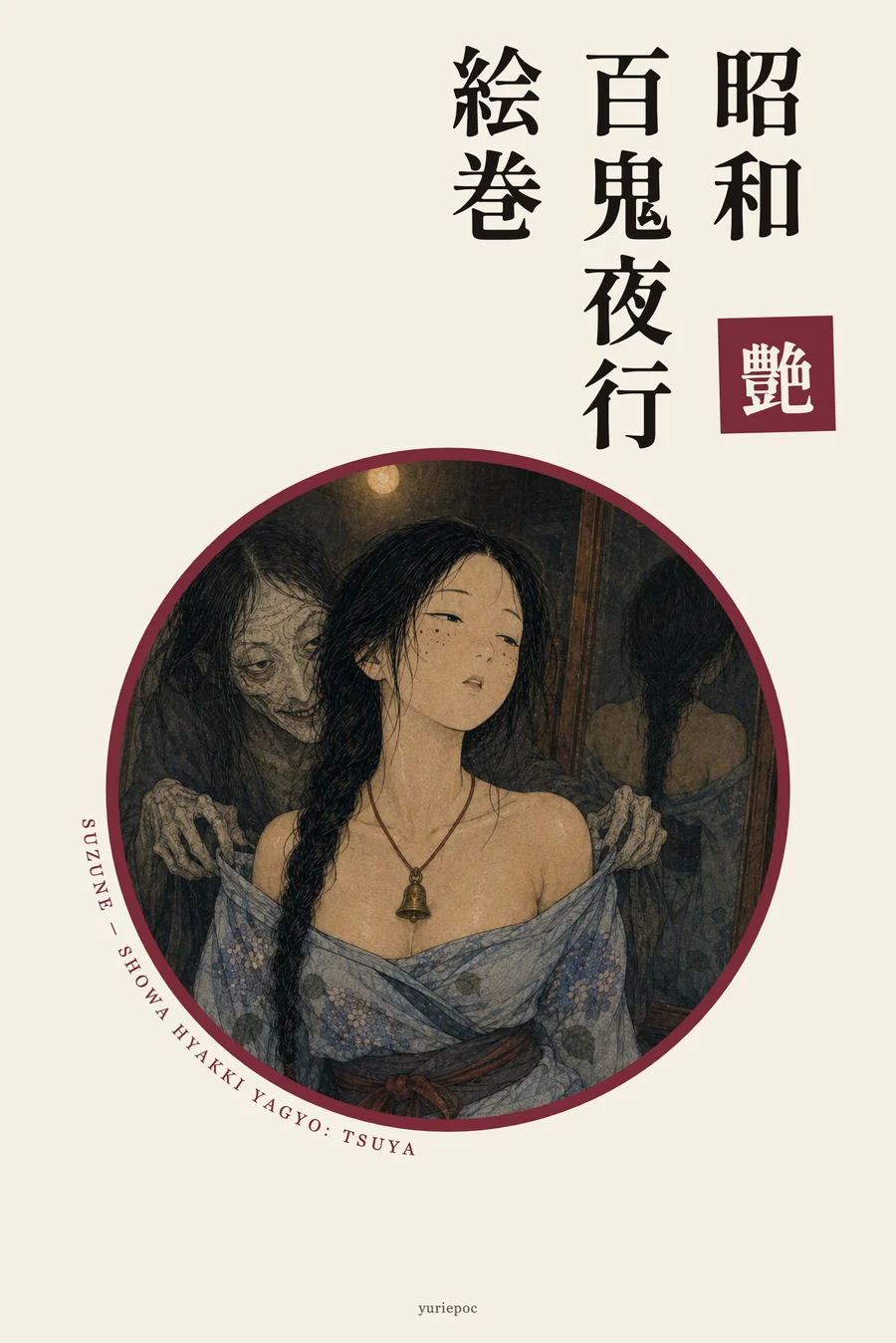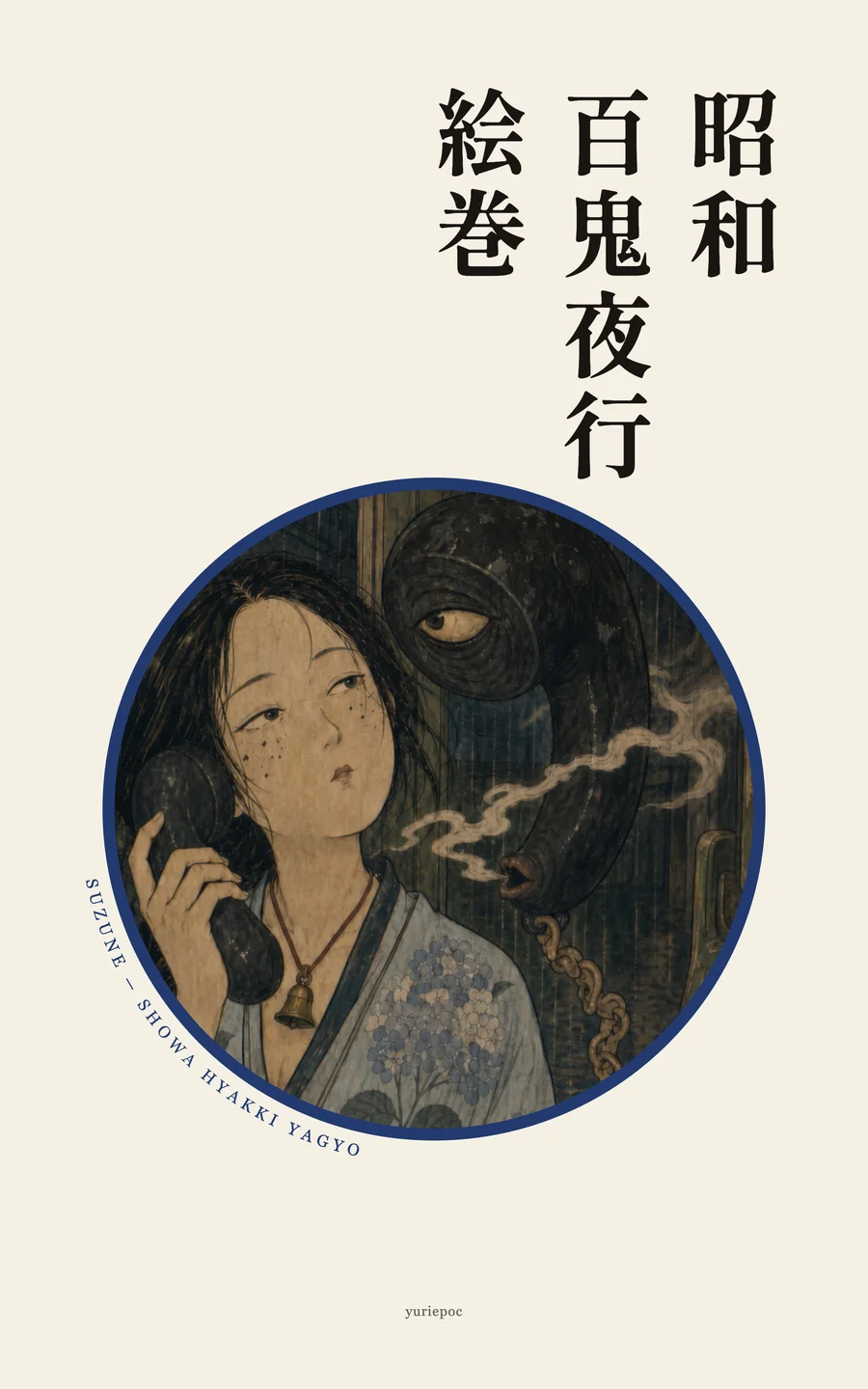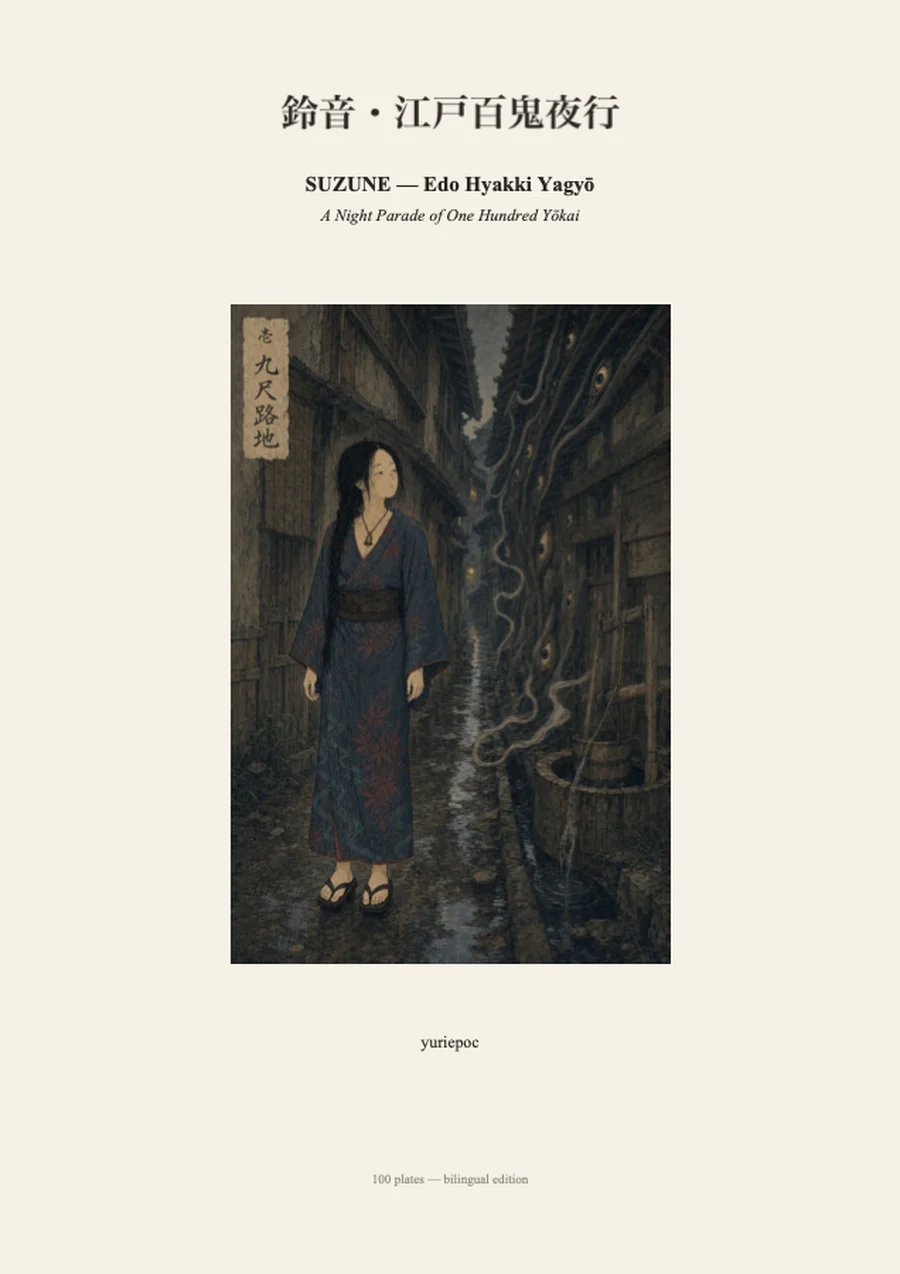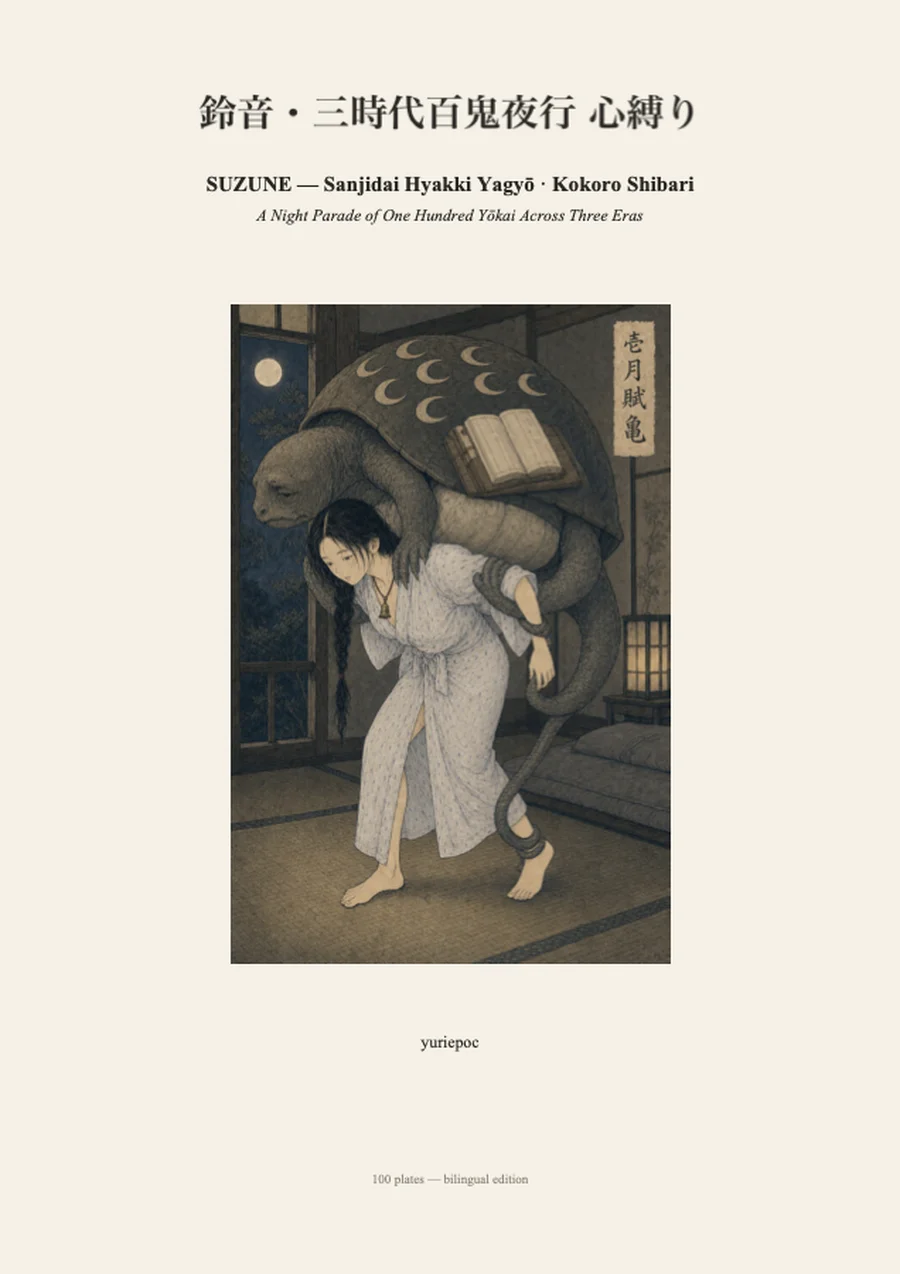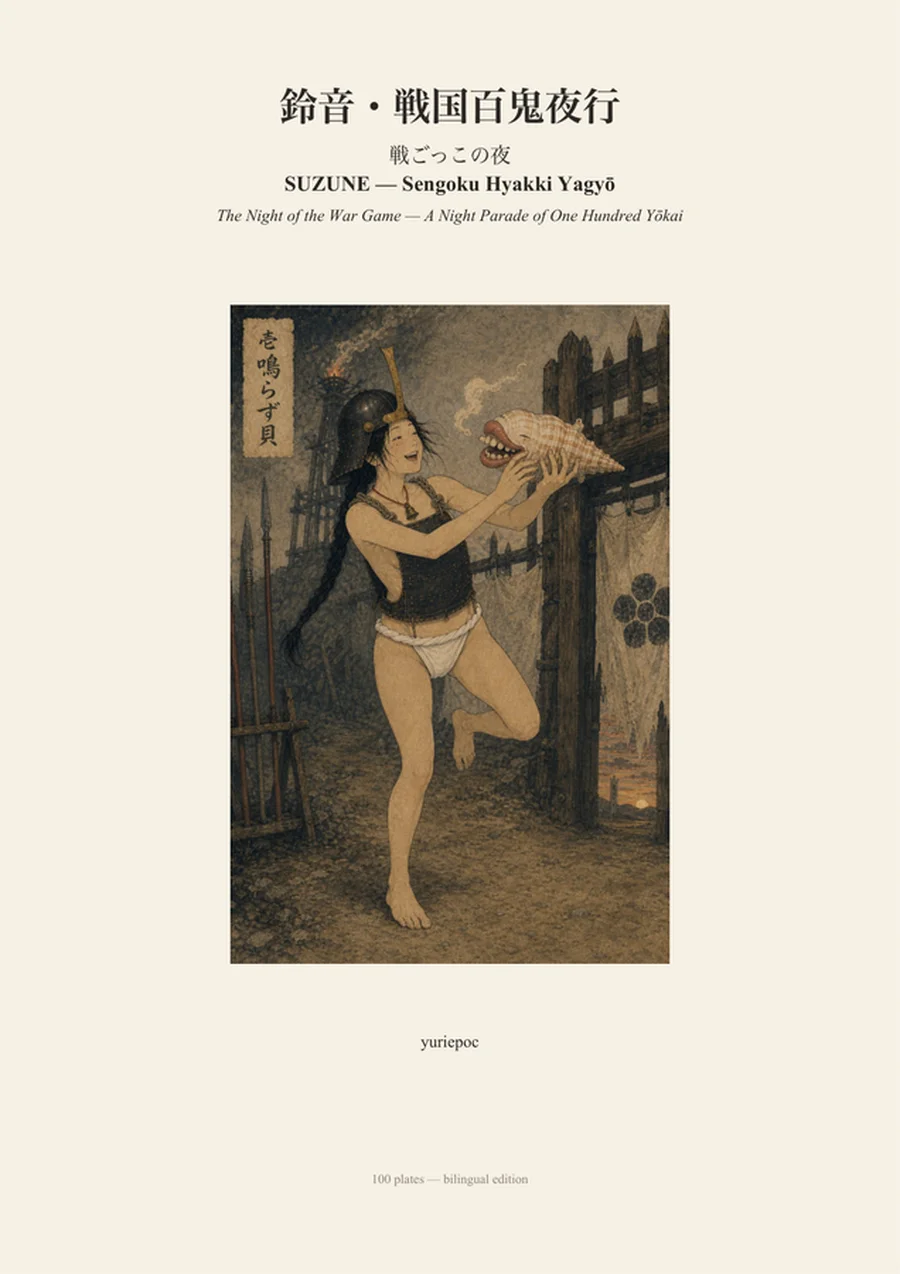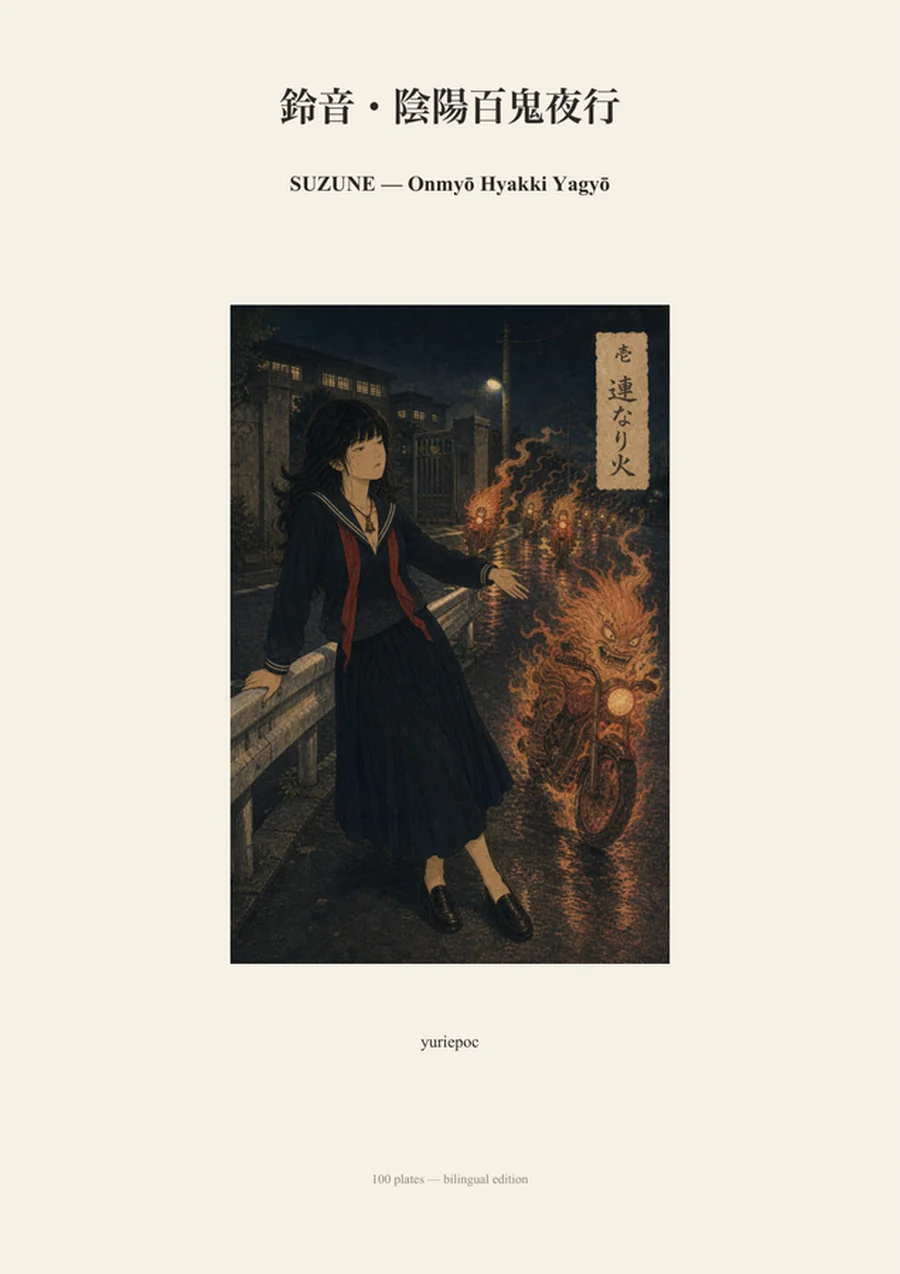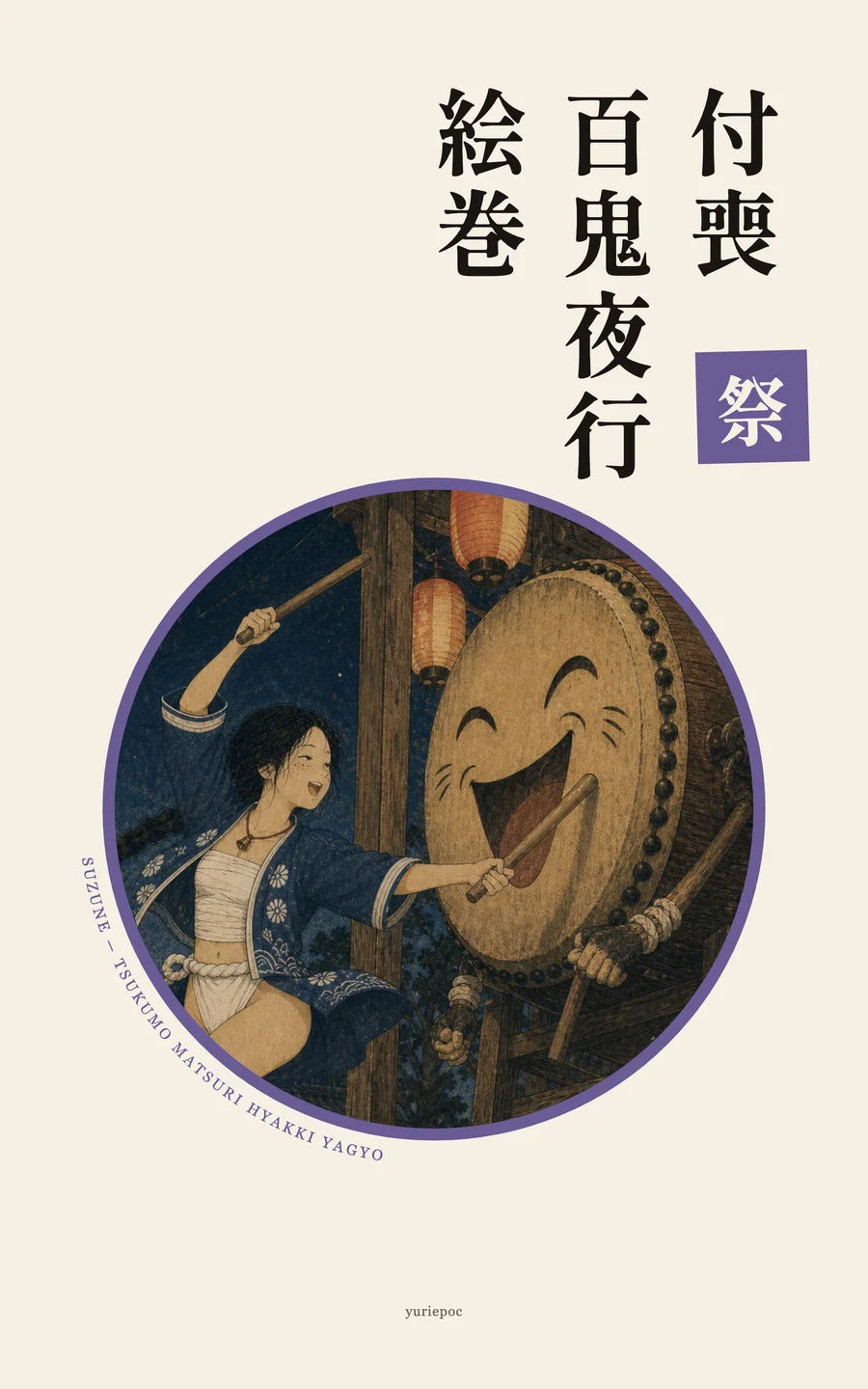
About this book
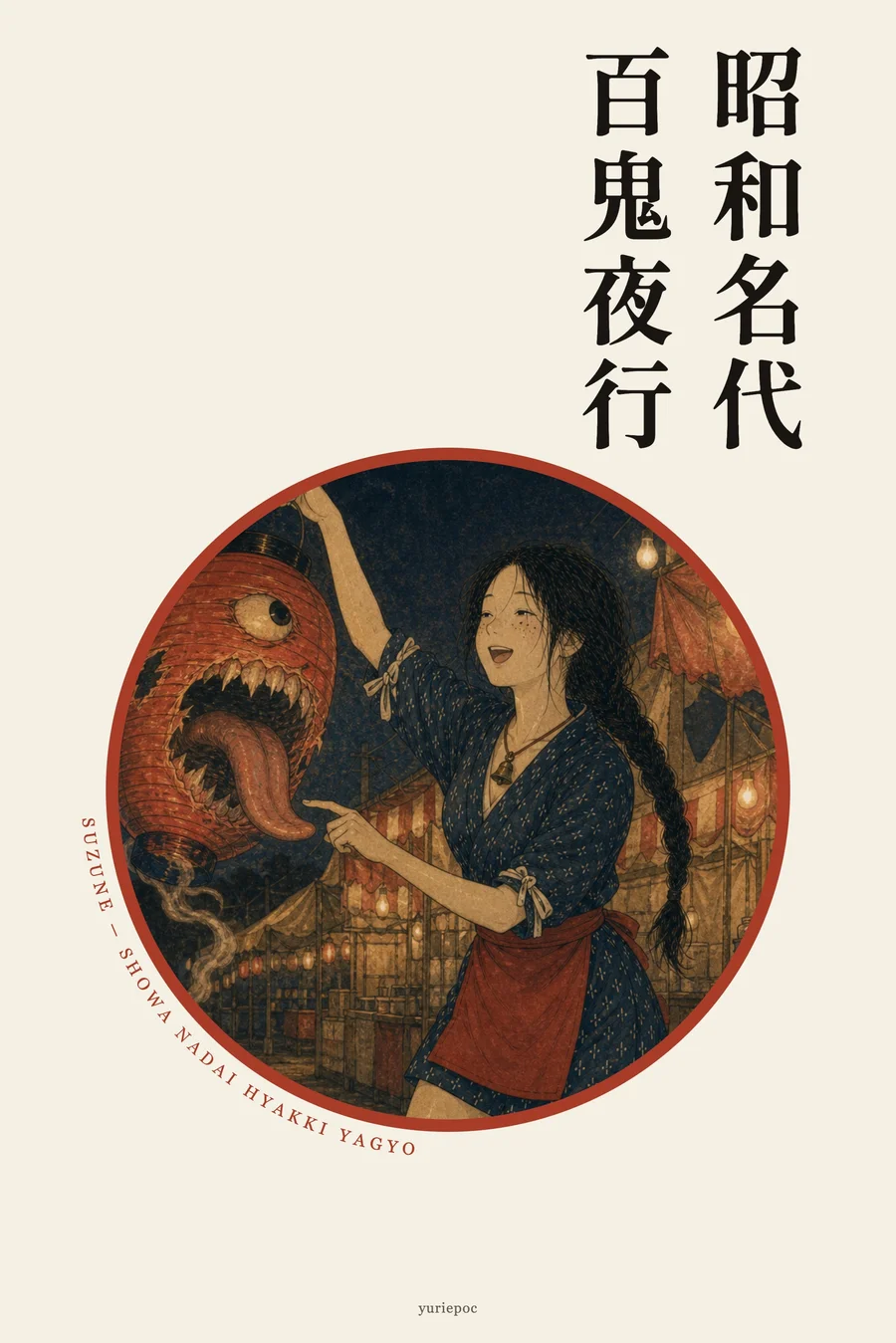
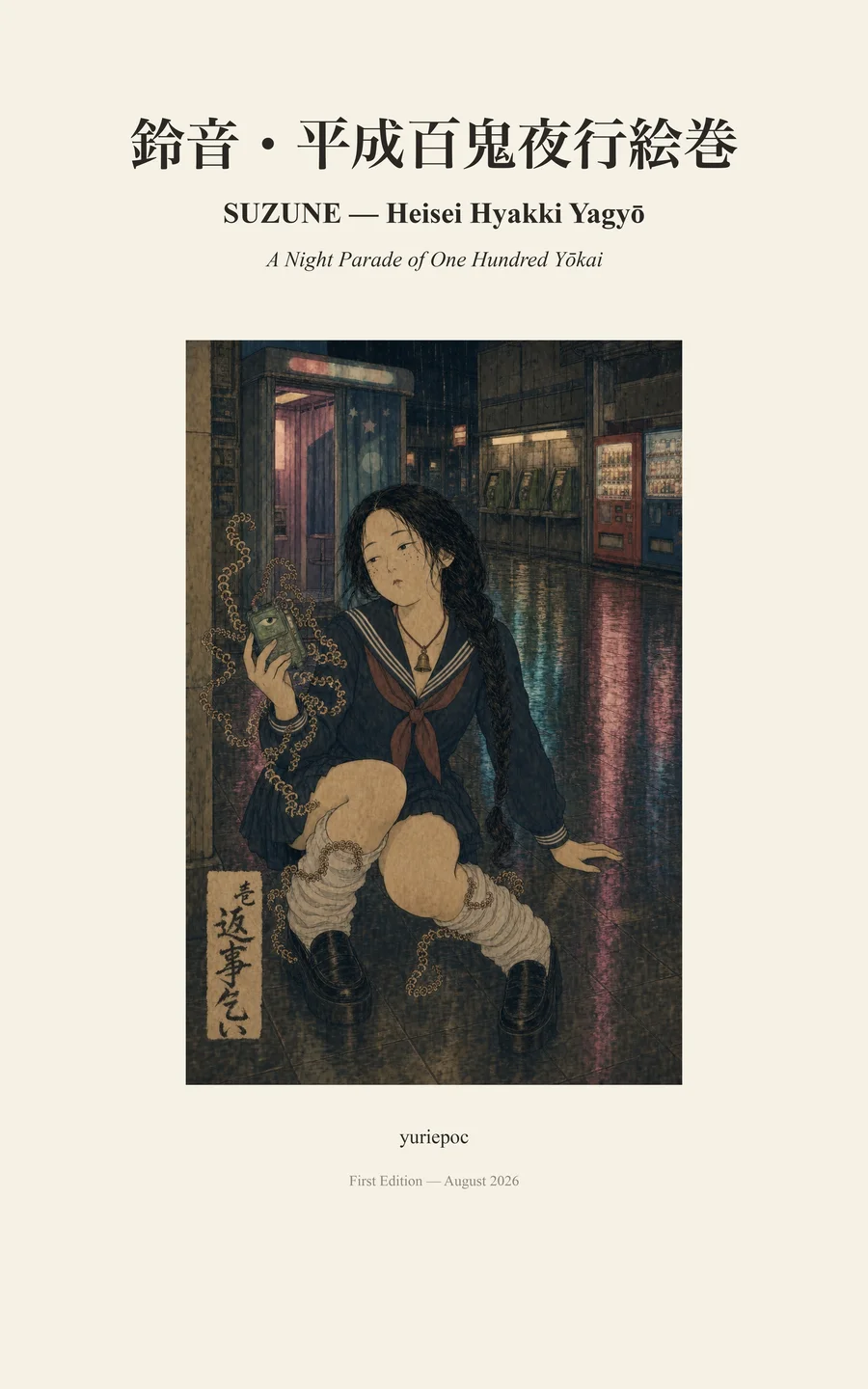
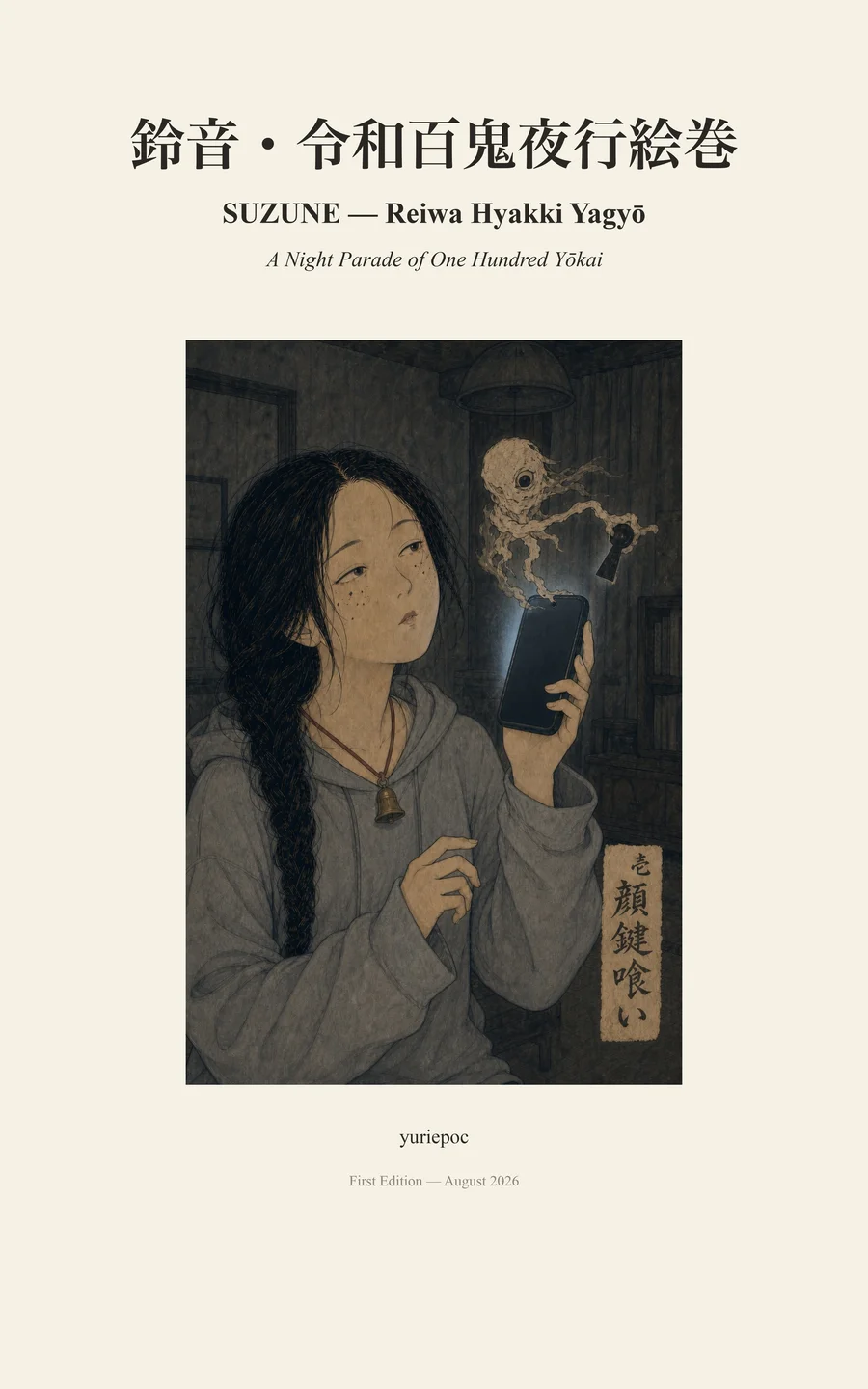
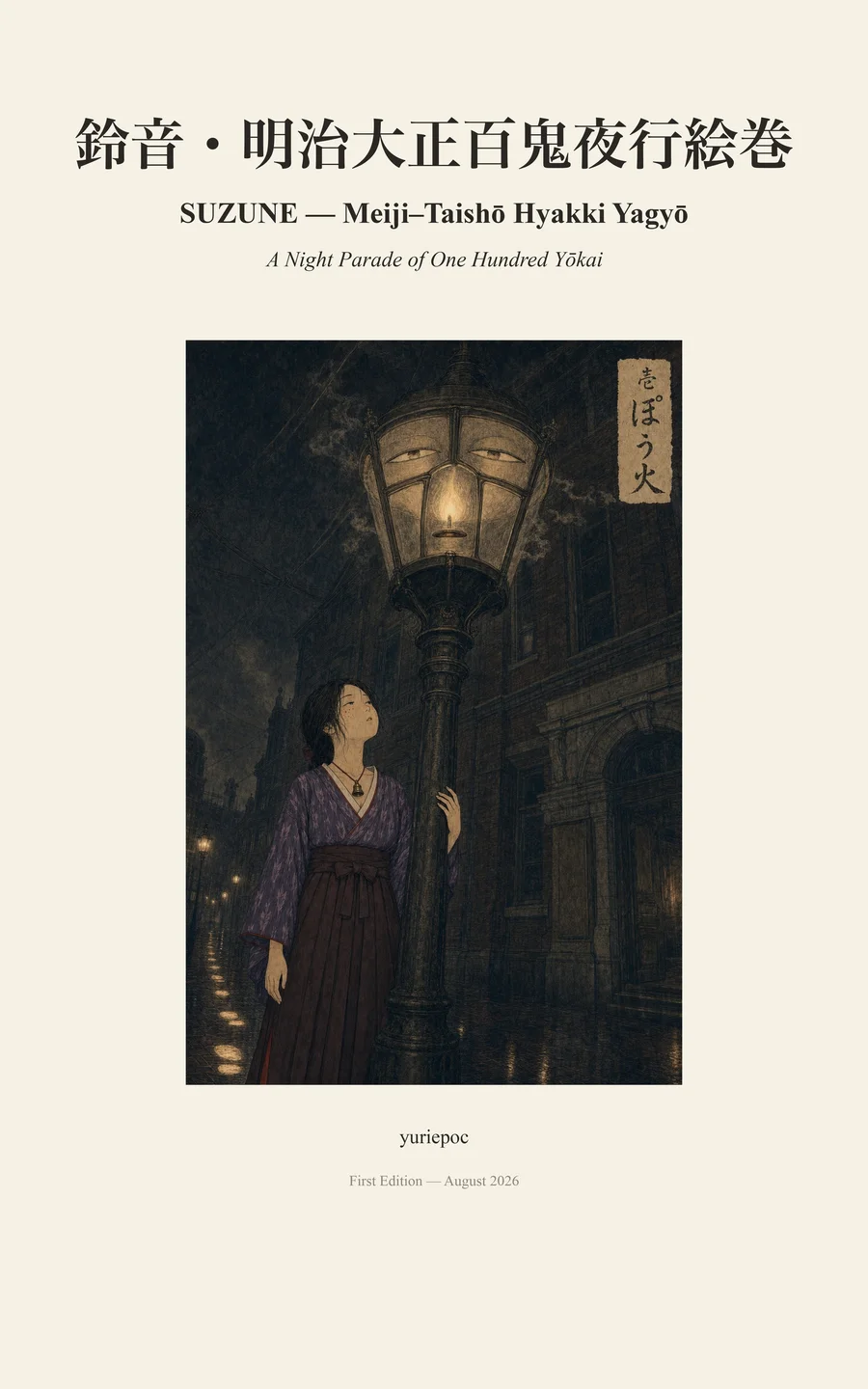
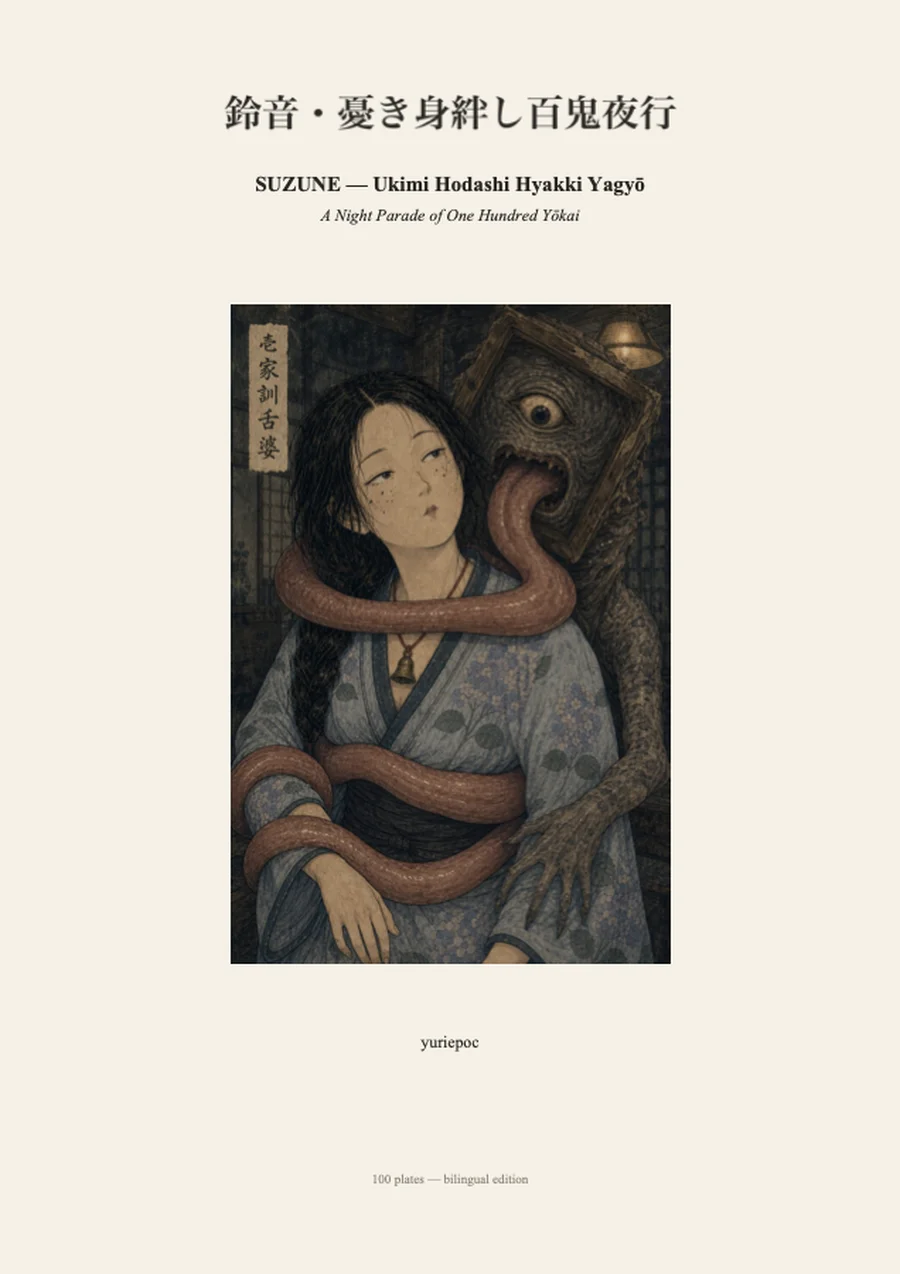
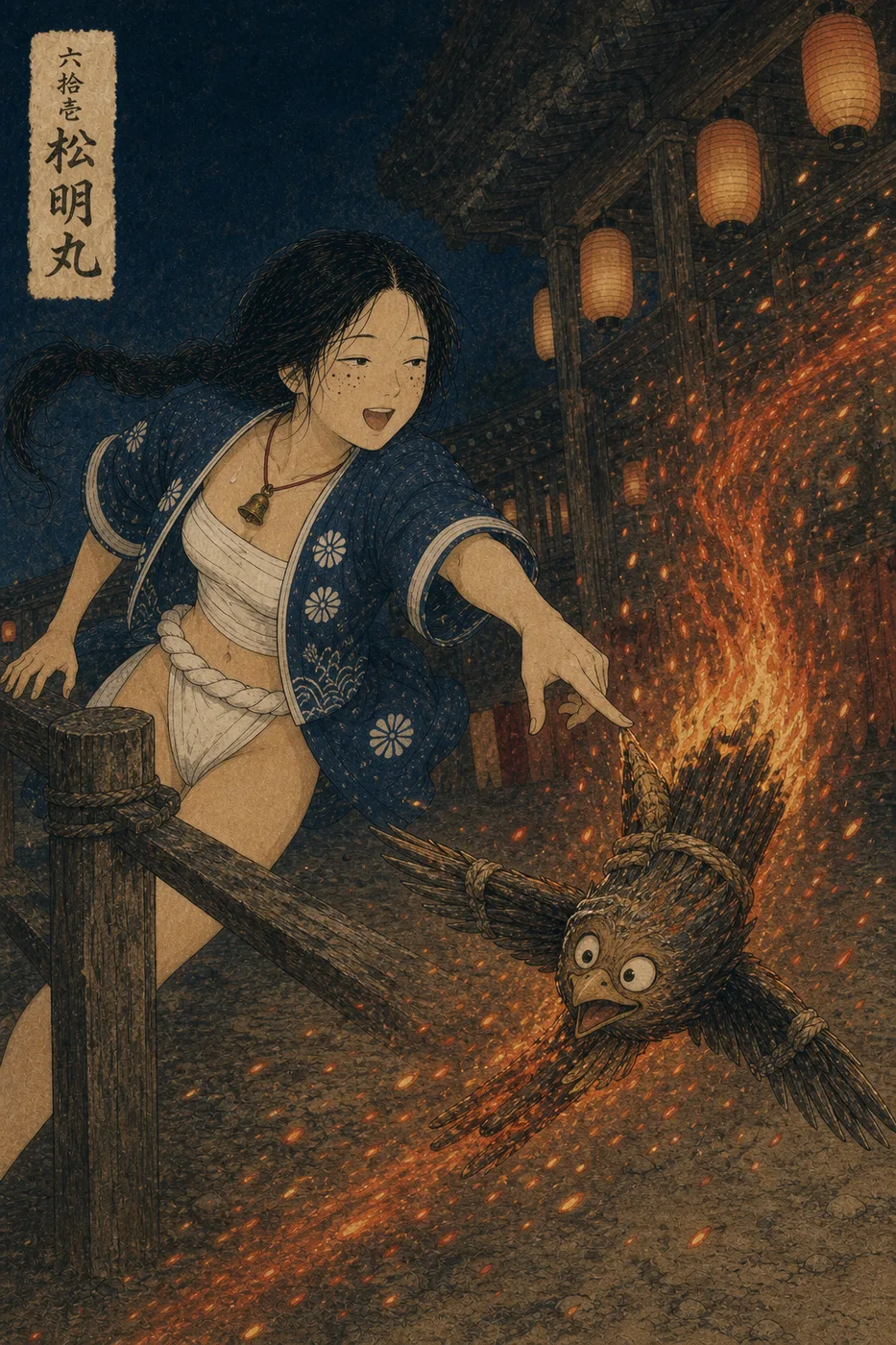
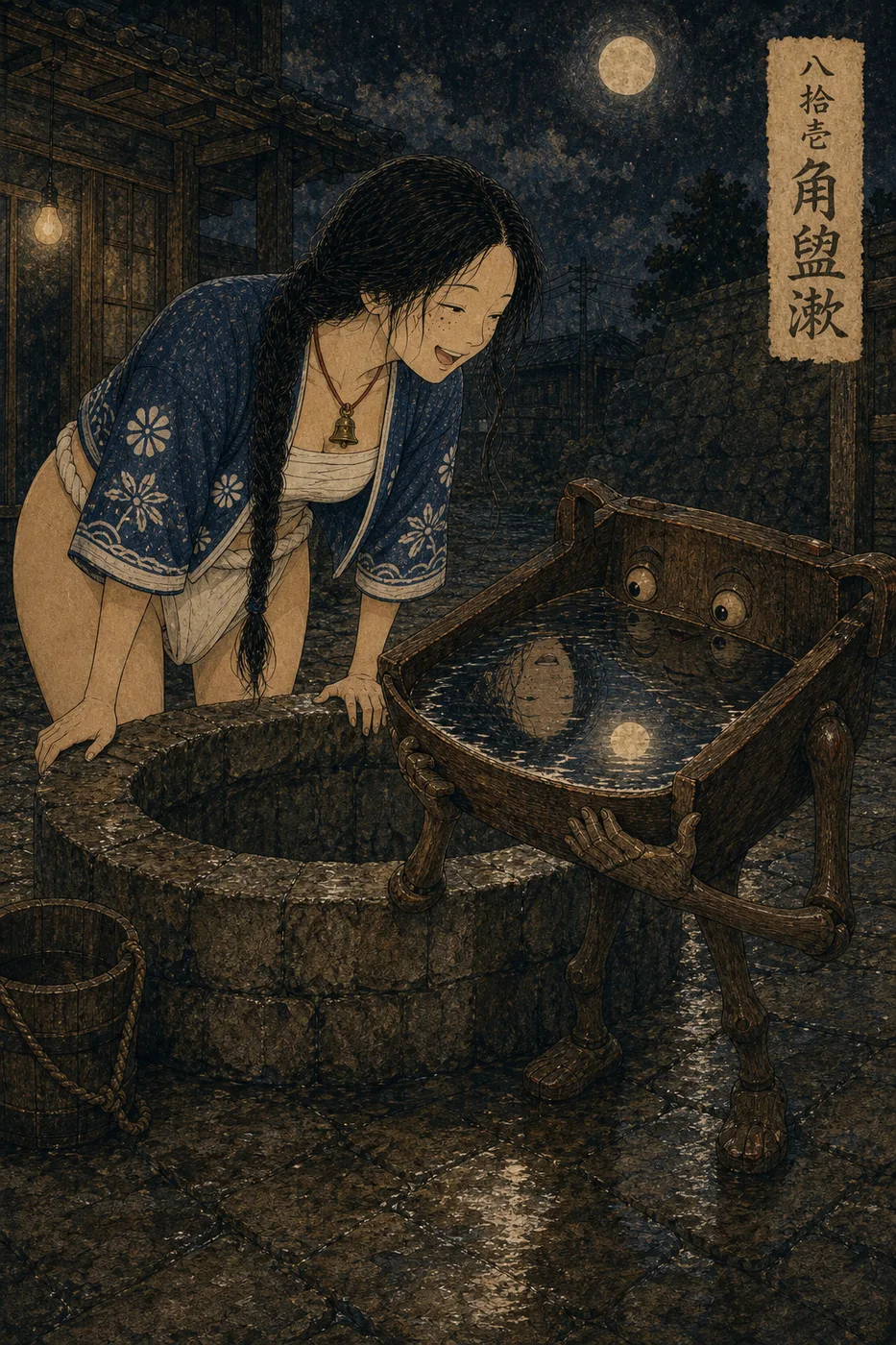
On festival nights, the tools begin to laugh. The great taiko strikes its own first beat, the shrine gate stoops down, wanting to be passed through, an old lantern puffs out its paper belly with laughter. The ancient promise of tsukumogami — that implements long used will one day wake — comes due all at once, in a hundred shapes, on a festival night in Shōwa-thirties Japan. This parade is not a fearsome one. It is laughing.
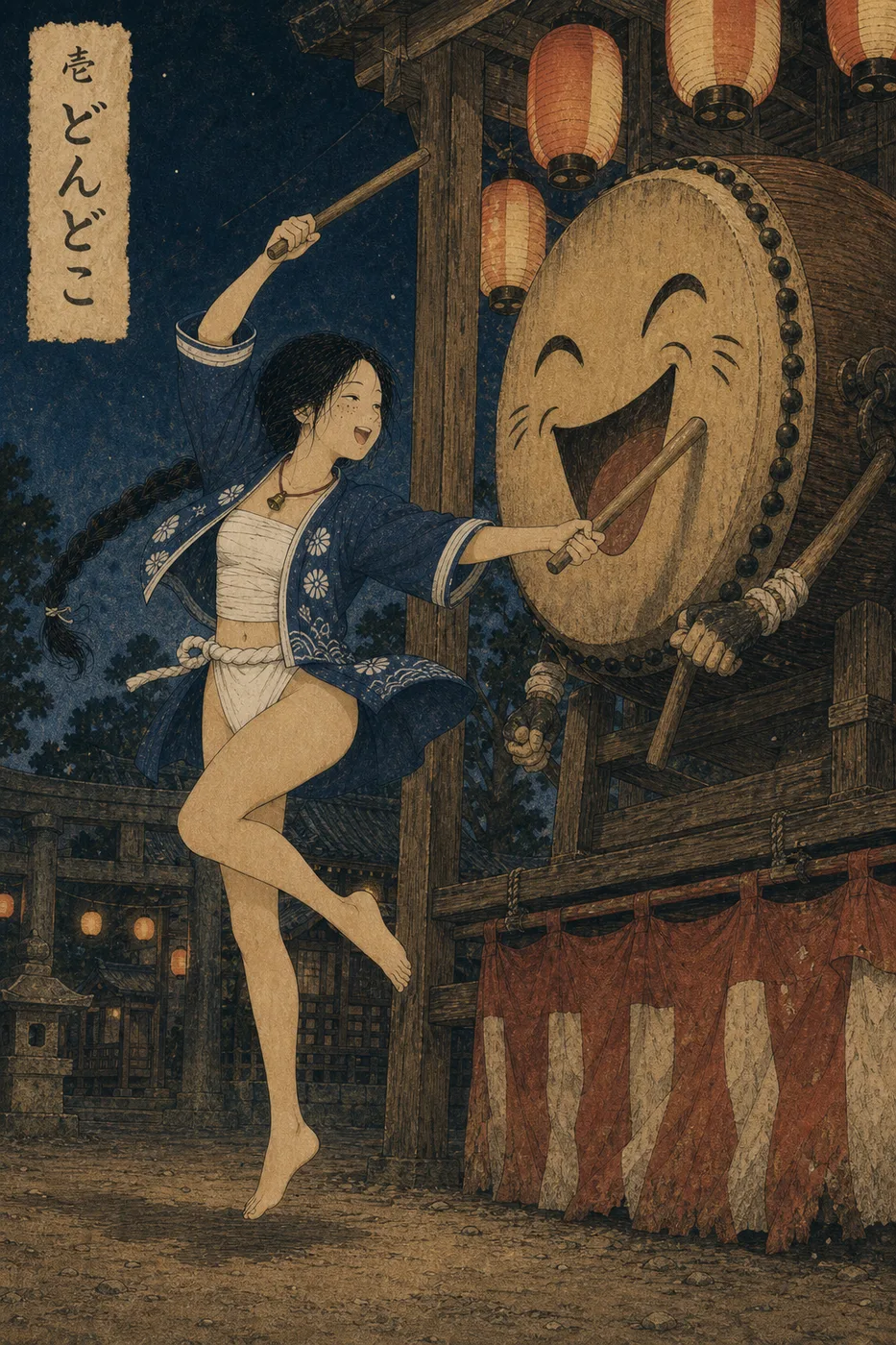
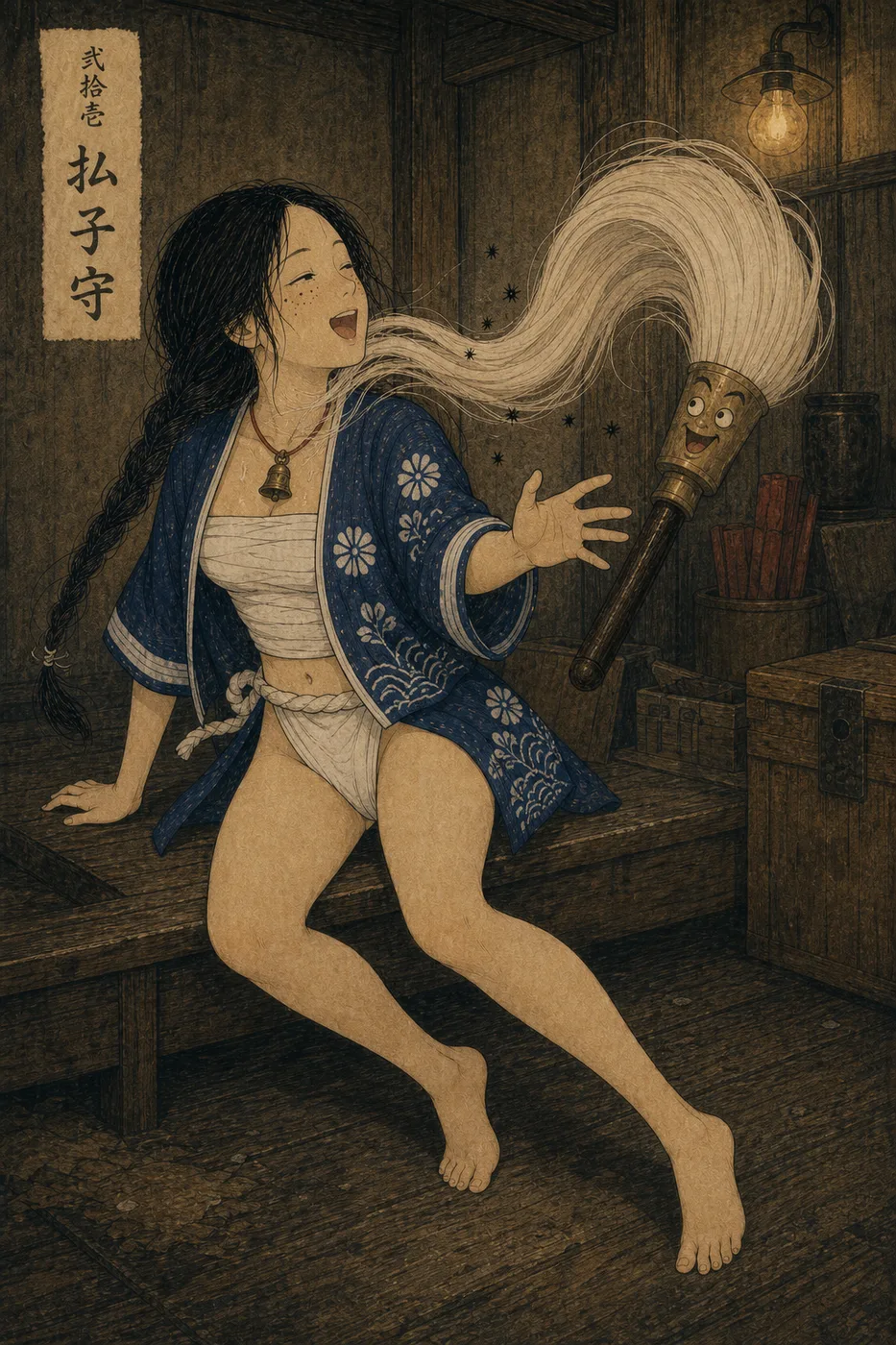
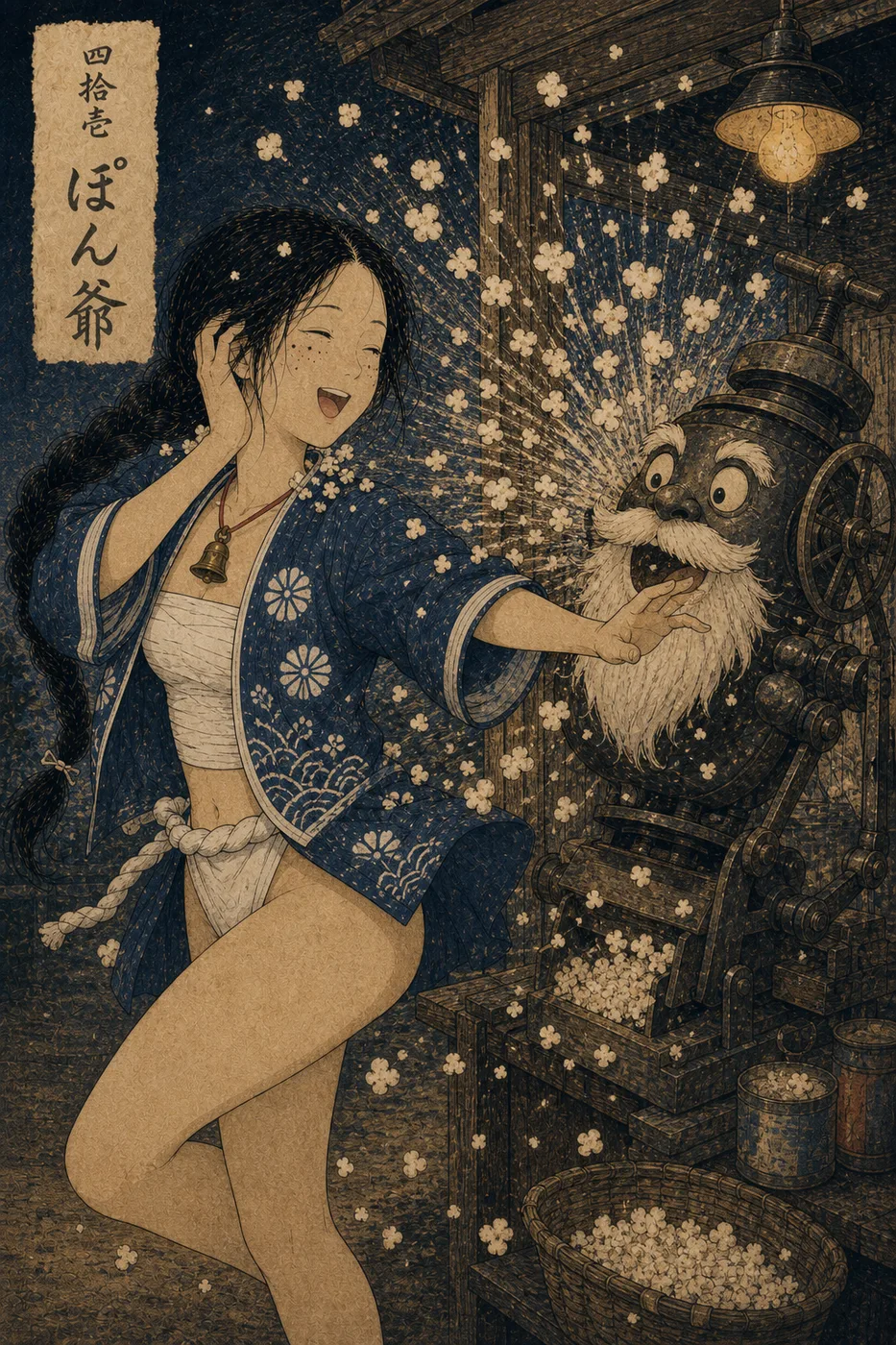
The stage is a single night of a town festival. Of the hundred yōkai, thirty-six follow tsukumogami lore drawn by Edo-period artists such as Toriyama Sekien; sixty-four were born for this festival alone. The girl does not run. Dressed in a happi coat, a chest wrap, and a rokushaku loincloth, she answers drum with drum, tug with tug, lottery box with every ticket at once. A night when yōkai and human laugh to the same beat comes once in a hundred years.
Even a night of laughter has its morning. The final plate belongs to Kosuzu, the last grain of a kagura bell rack, whose duty is to ring the night to its close. The girl takes the little bell at her own throat and quietly joins its sound. The festival ends; the implements return to being tools. Whether what keeps ringing is the hundred implements, or the single bell at her chest — only those who turn every page will know.
Sample plates
Other books