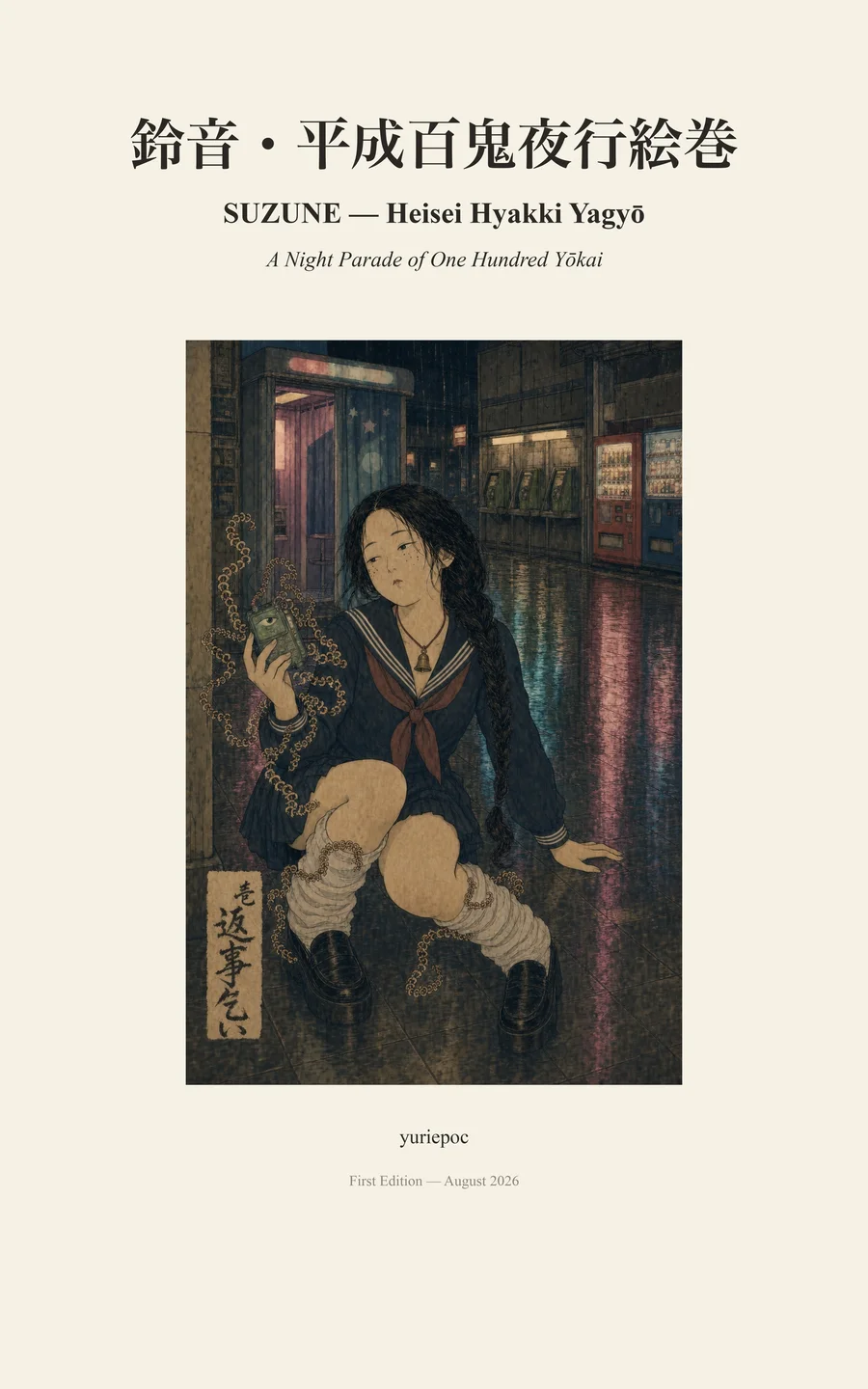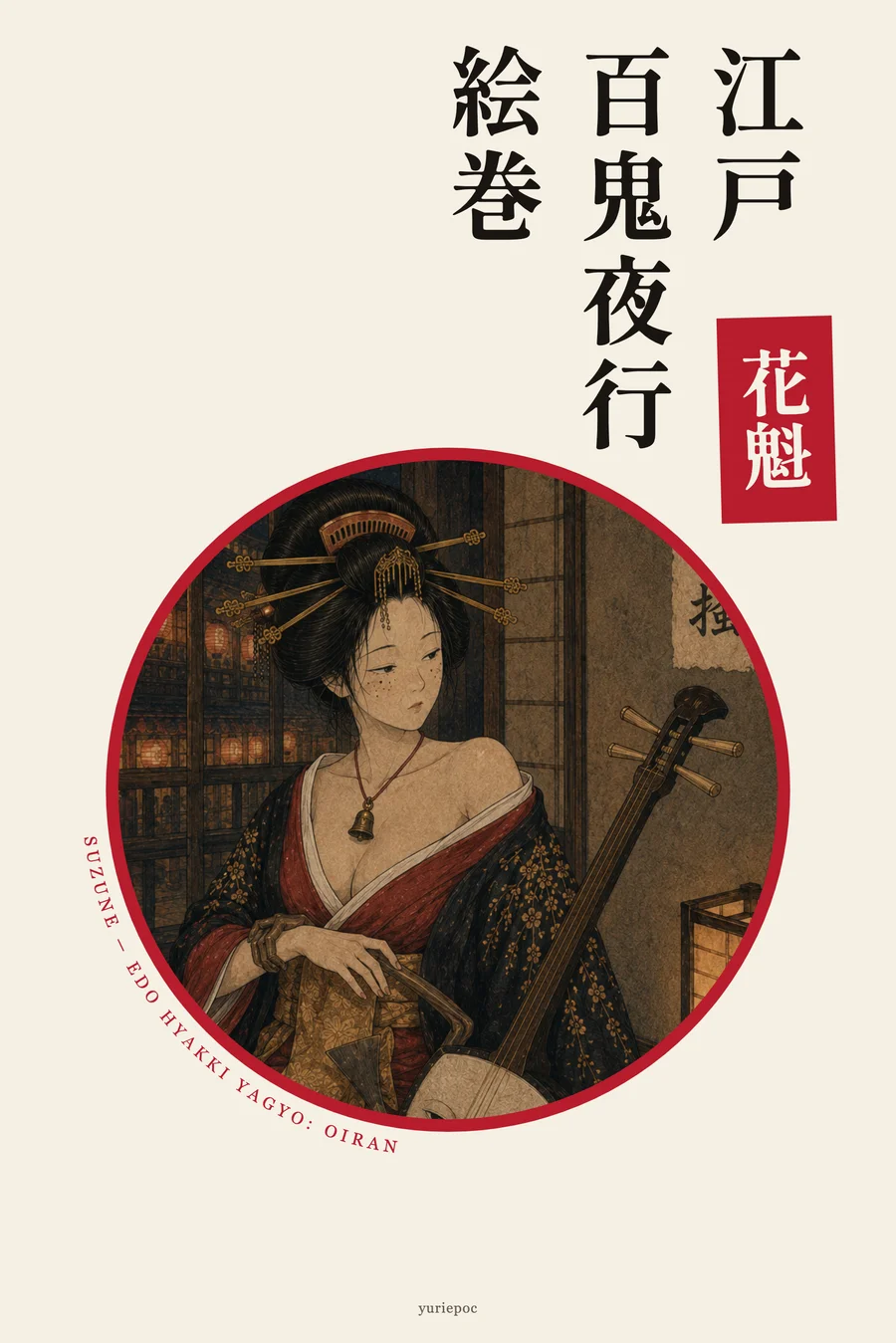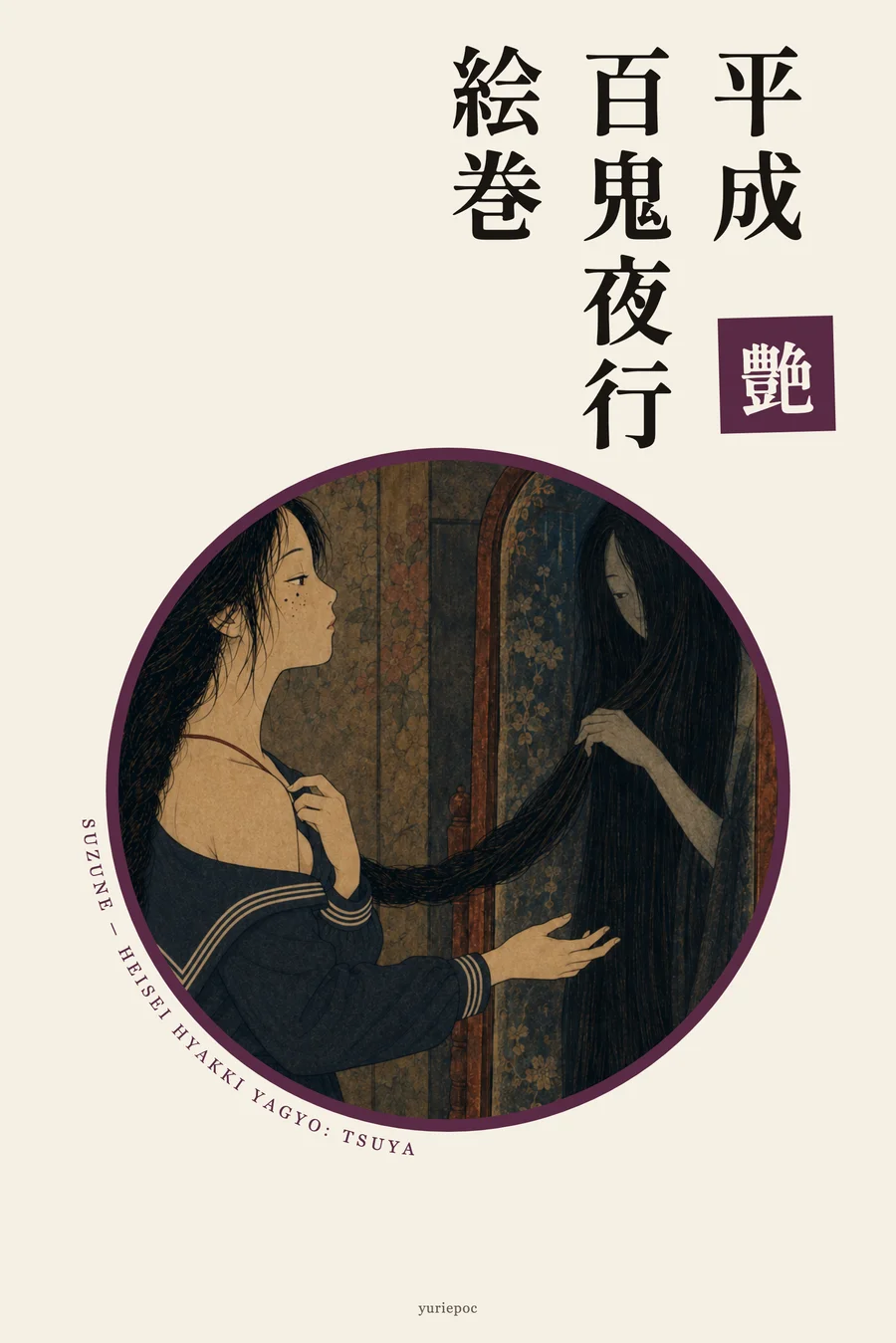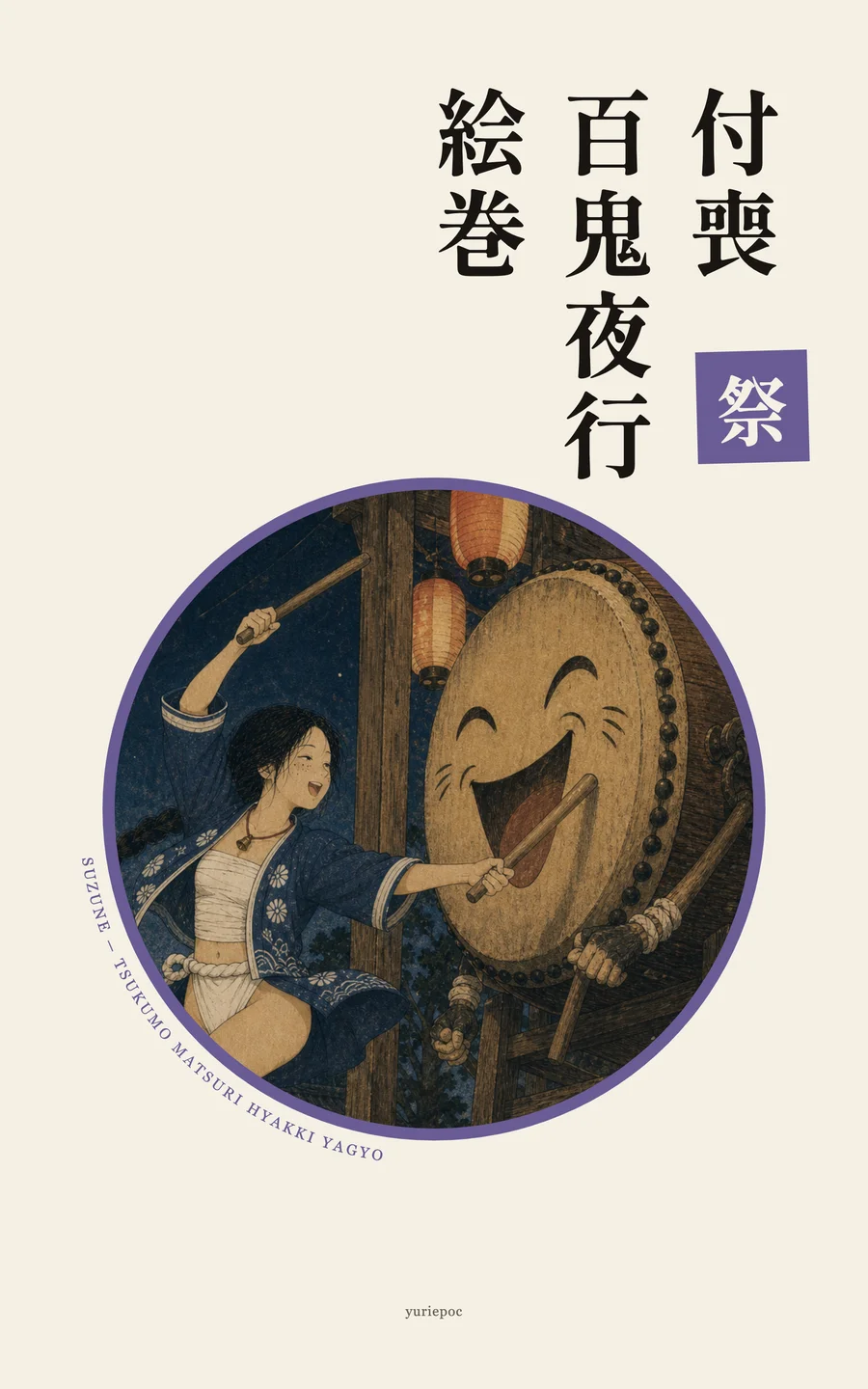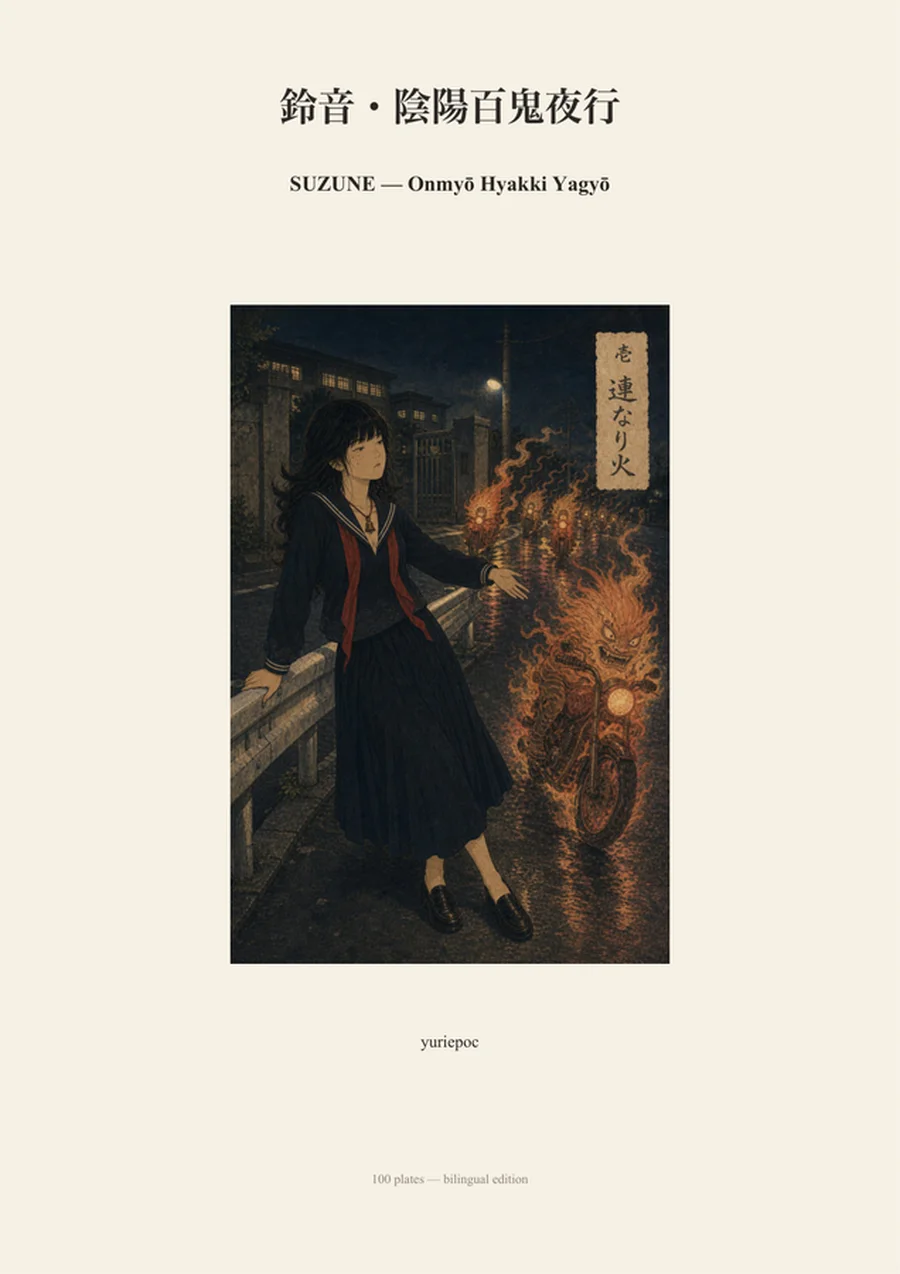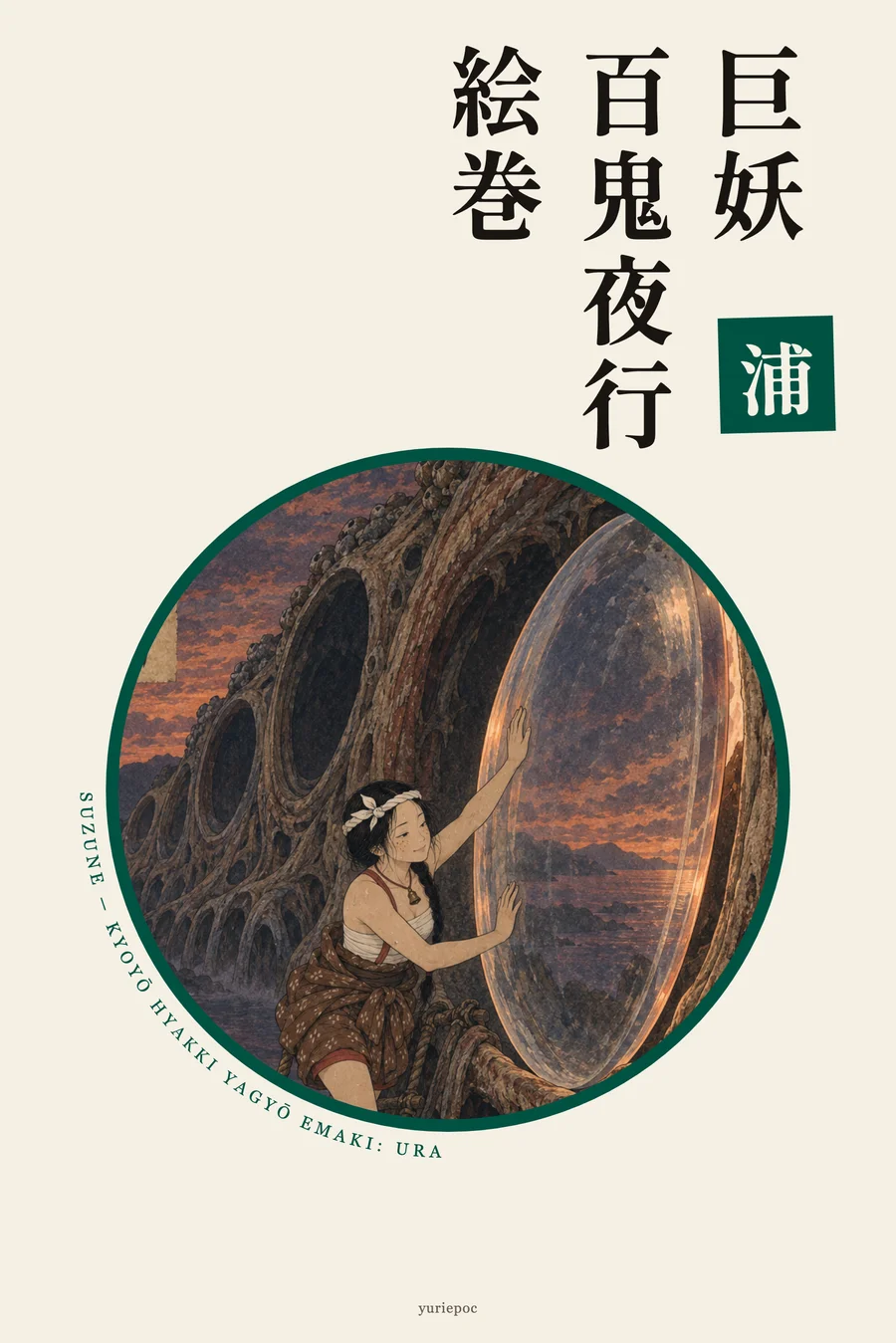
About this book
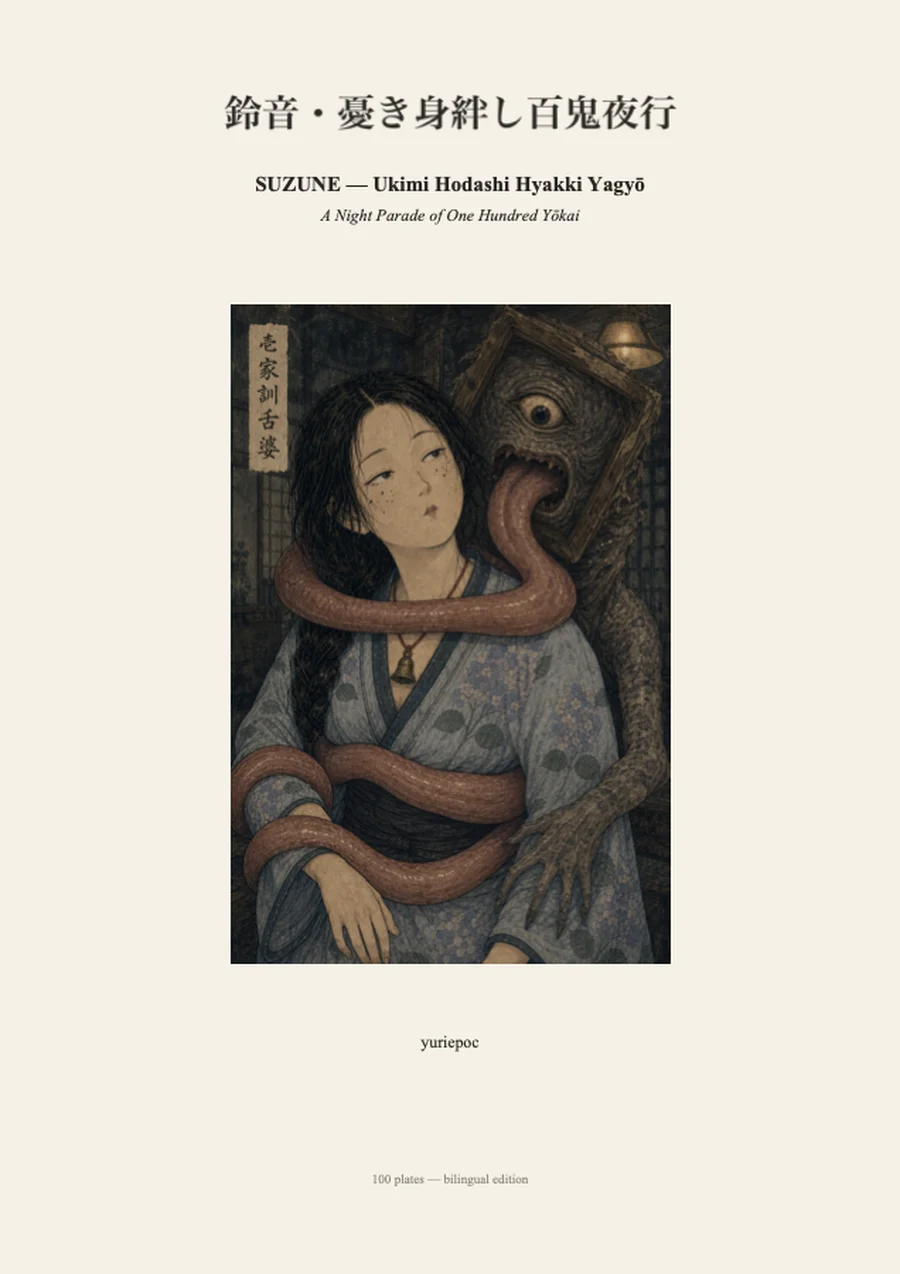
One hundred giant yōkai, and one hundred materials taken from them.
The setting is a bay called Urumigaura. One hundred giants, each as large as a cliff or a house, live there. Suzune wraps her chest in cotton, goes barefoot, and works through one night with the villagers to take their materials. They do not kill any giant. They tend the part that troubles it, and they take what comes loose: an eye shell, an old layer of horn, thread, sand, a fin skin, a whisker, oil, a piece of bone.
Facing each plate is a field-guide page. It explains what kind of creature the giant is (ecology), what material it gives, from which part, and why the material has the nature it has (material), why the material can be taken and why it is taken (harvest), and what it is first used for (where it goes). It is written so that, after reading it, you can explain the giant and its material to someone else.
What they take becomes the tools of the bay. The eye shell becomes a magnifier that lights the dark work of the night harvest (Plate 1), and the springy whisker becomes a towing rope and a harvest pole (Plate 21). A tool made from one material is used to take the next. The chain runs through all one hundred plates. The eye shell (Plate 1), the oil (Plate 81), the glowing bead (Plate 82), and the bone piece (Plate 100) are joined, at the end, into a new lighthouse for the harbor.
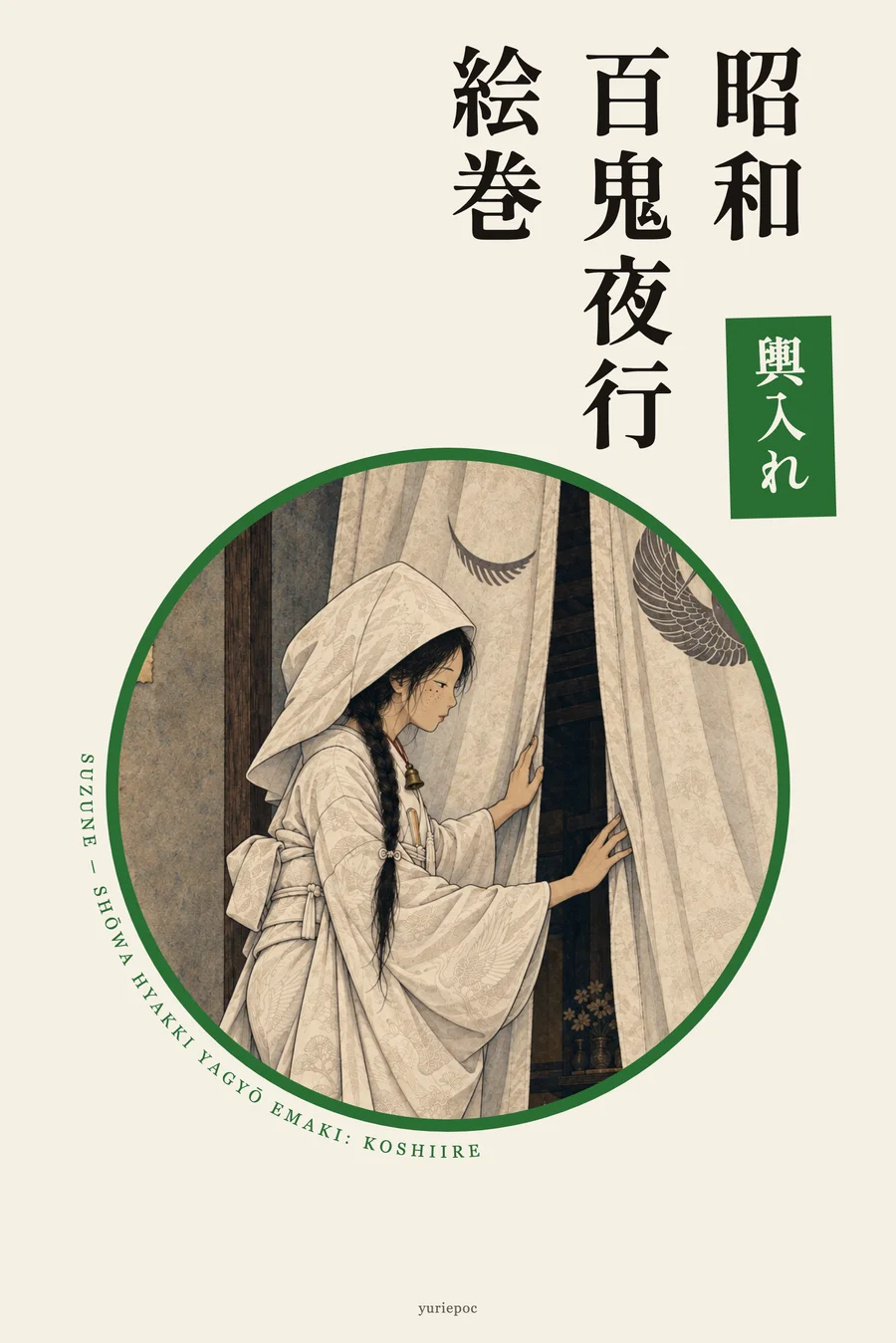
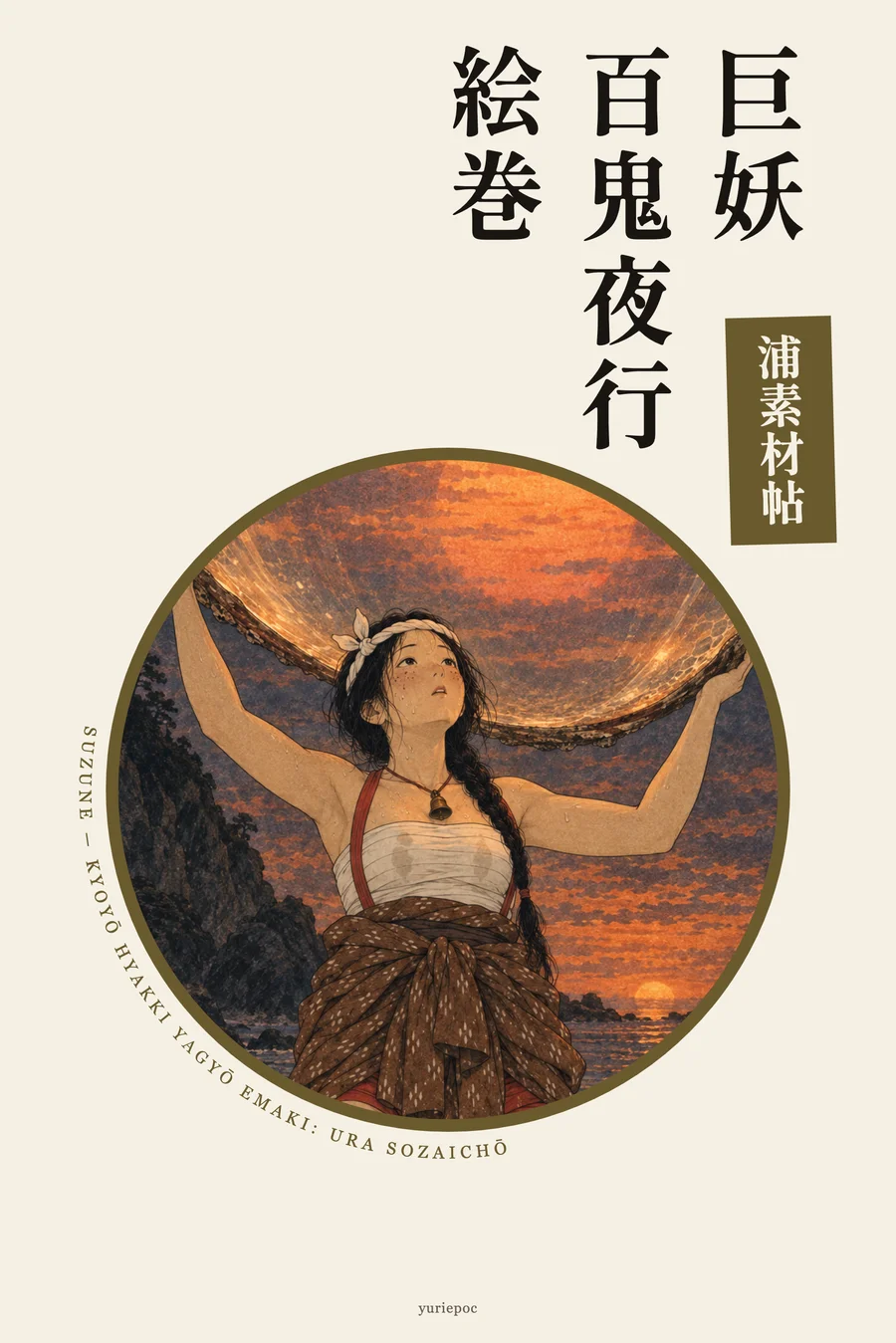
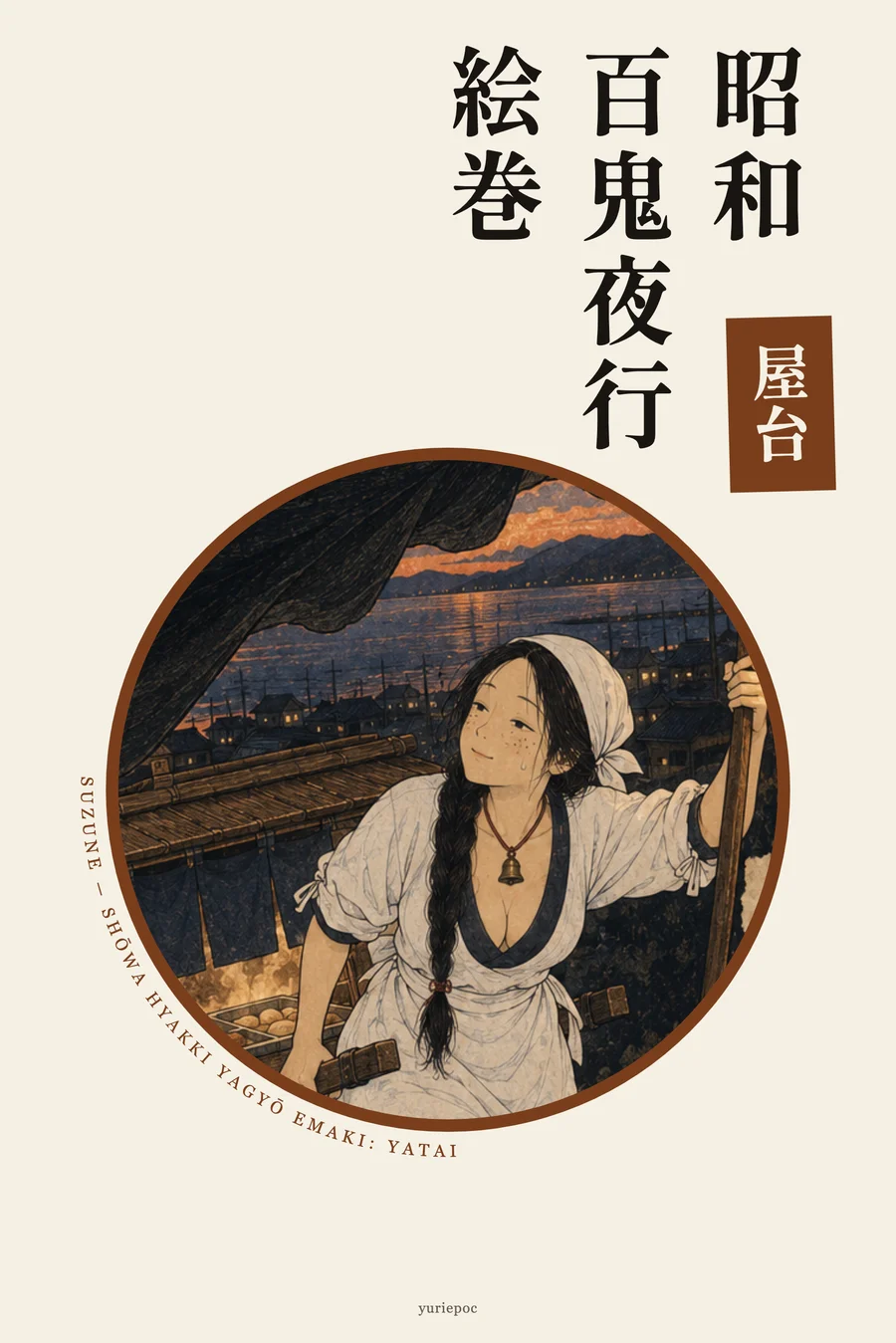
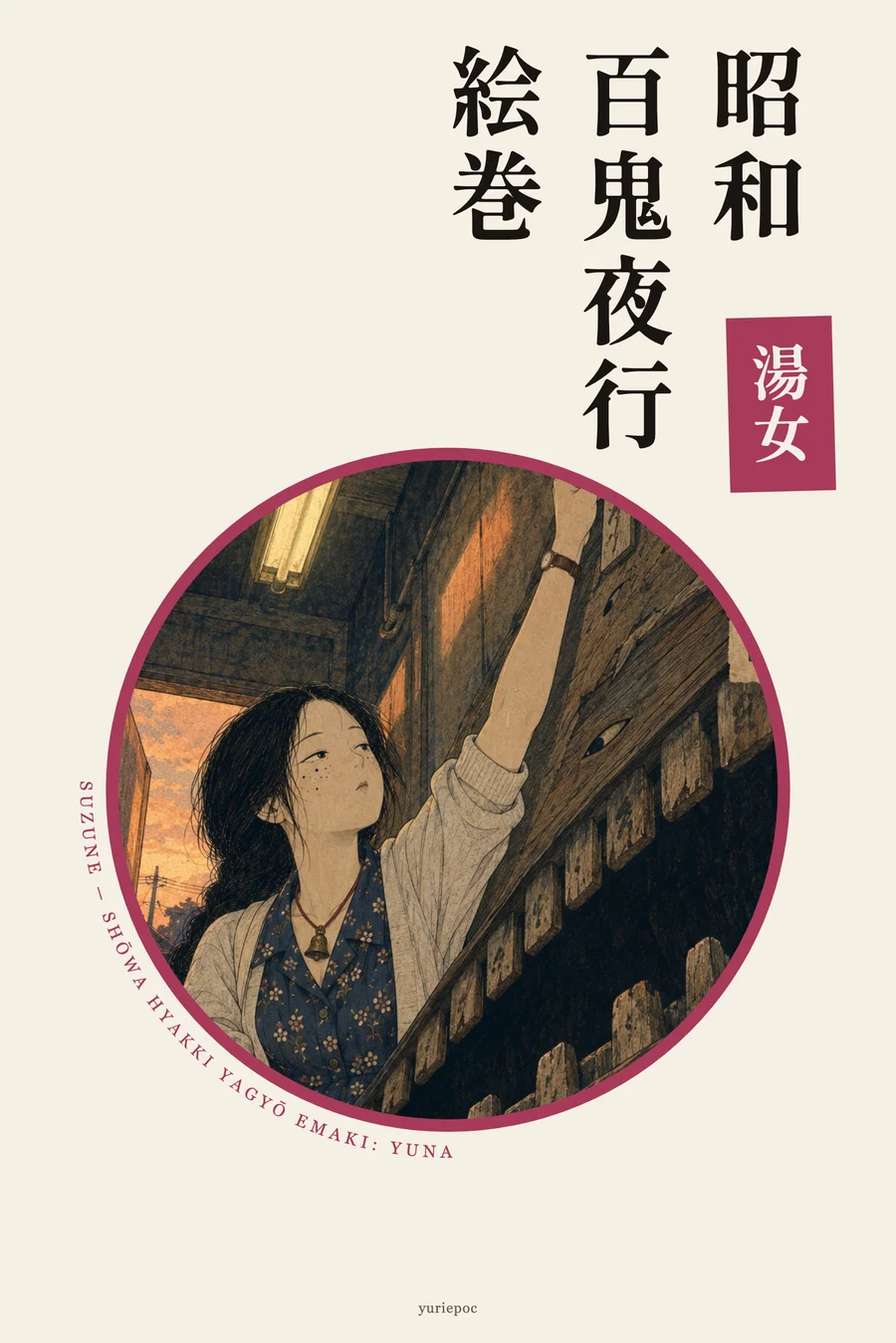
The companion volume, "SUZUNE — Kyoyō Hyakki Yagyō Emaki: Ura Sozaichō," shows Suzune using the materials in daily life, plate by plate under the same numbers. Take them here, use them there. The two books are a pair.
100 plates, 204 pages. All one hundred giants were created for this book.
Sample plates
-
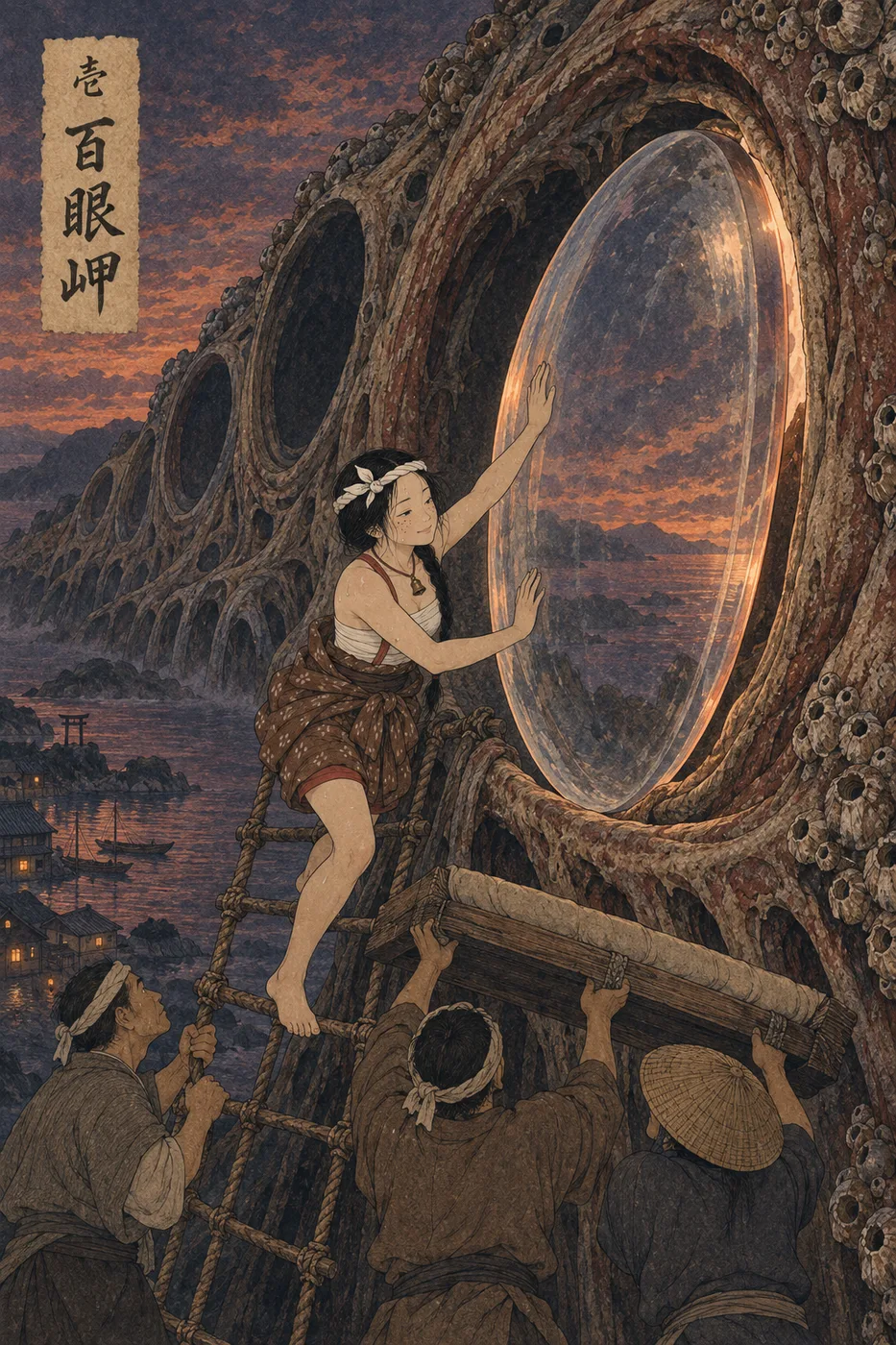
Plate 1
Hundred-Eyes Cape
百眼岬Hyakumanako-misaki
Ecology
Hyakumanako-misaki is the empty shell of a giant beetle. Its owner walks the sea floor at night, gathering starlight with a hundred eyes to find shellfish.
百眼岬は、巨大な甲虫の抜け殻である。殻の主は夜の海の底を歩き、百の目で星明かりを集めて貝を探す。
-
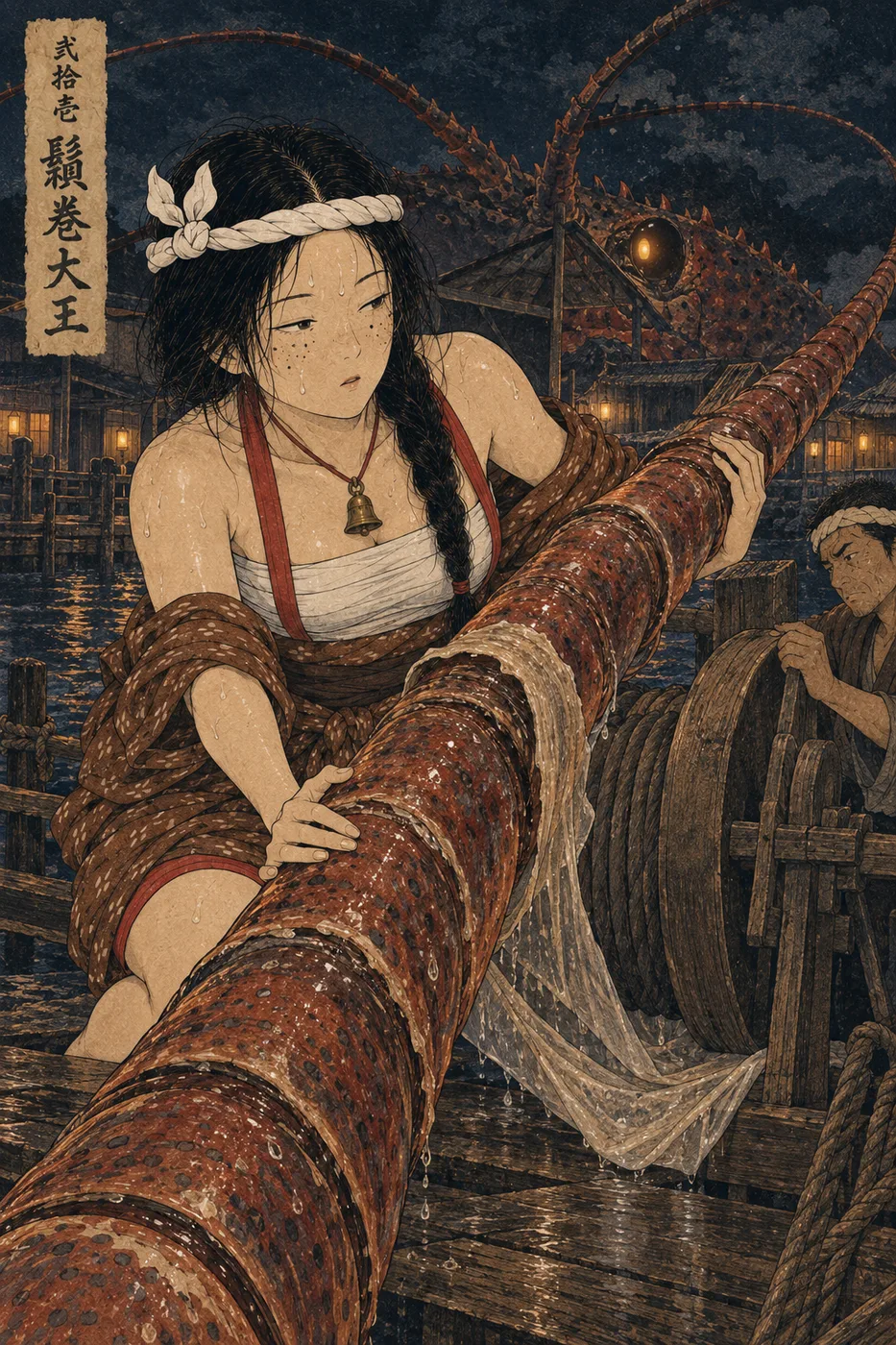
Plate 21
The Whisker-Winding King
鬚巻大王Higemaki-daiō
Ecology
At nightfall a giant spiny lobster, Higemaki-daiō, climbs onto the wharf. It is alive and sinks into the sea by day.
夜入りの船着場に、巨大な伊勢海老の鬚巻大王が上がる。生きていて、昼は海に沈む。
-
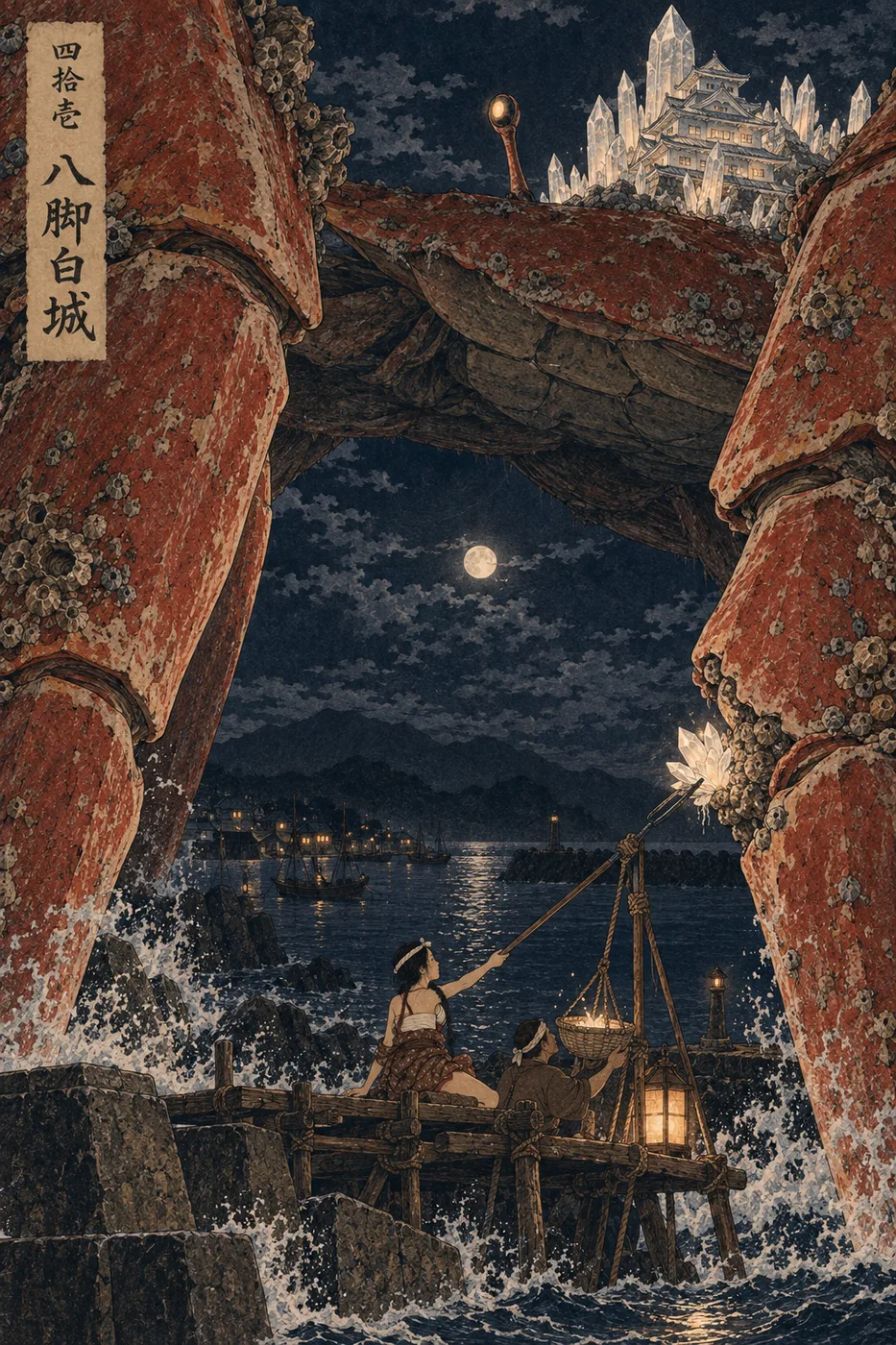
Plate 41
Eight-Legged White Castle
八脚白城Yatsuashi-hakujō
Ecology
Yatsuashi-hakujō is a living giant crab that stands on eight legs. It rests in the shallows by day and walks outside the breakwater at midnight, eating seaweed.
八脚白城は、八本の足で立つ生きた巨大な蟹である。昼は浅瀬で休み、夜半に防波堤の外を歩いて藻を食べる。
-
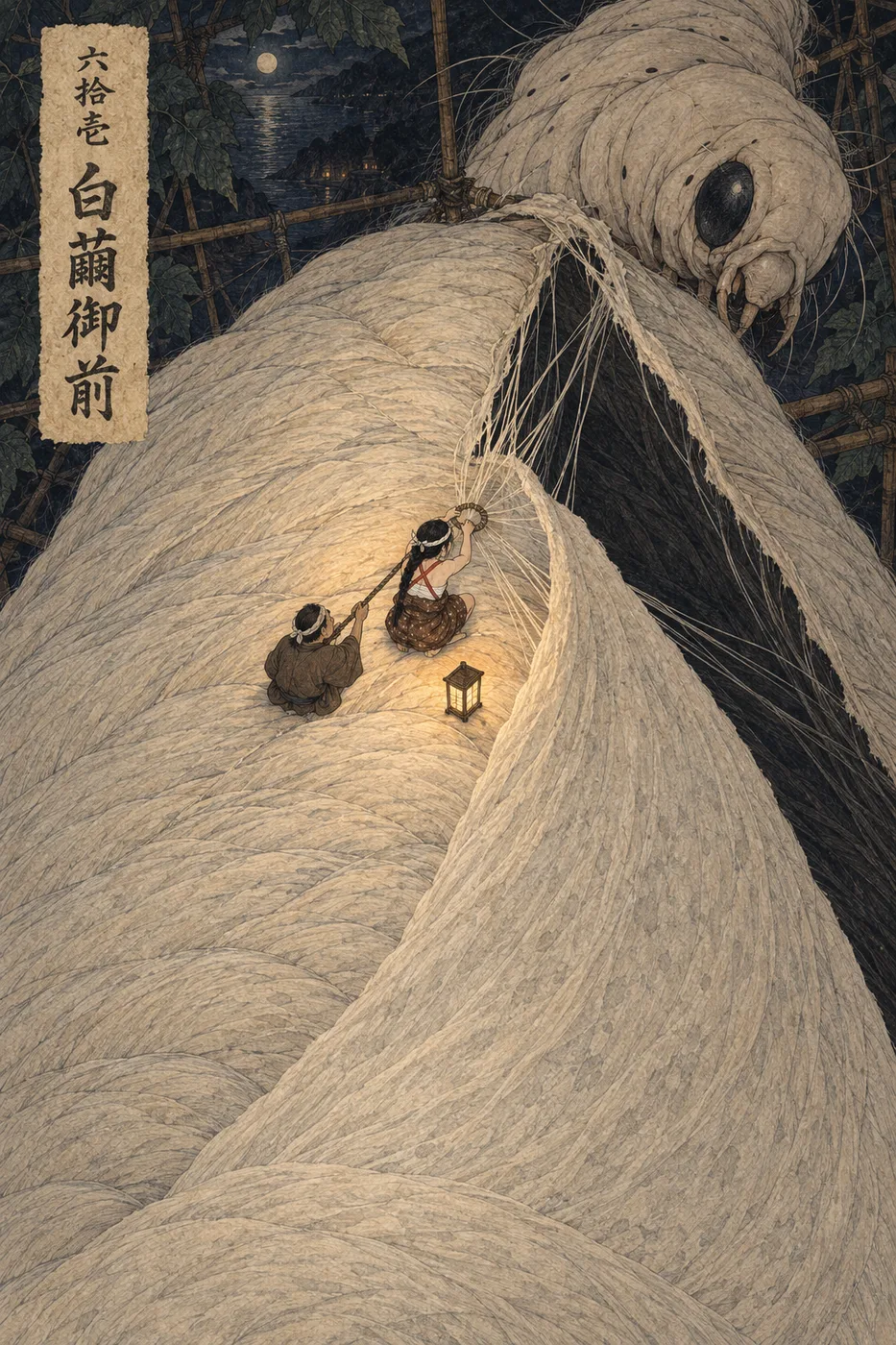
Plate 61
Lady White Cocoon
白繭御前Shiromayu-gozen
Ecology
Shiromayu-gozen is a giant silkworm that lives on the great mulberry racks. By day it eats mulberry leaves, and once a year, in a single night, it spins a cocoon.
白繭御前は、桑の大棚にすむ巨大な蚕である。昼は桑の葉を食べ、一年に一度、夜のうちに繭を作る。
-
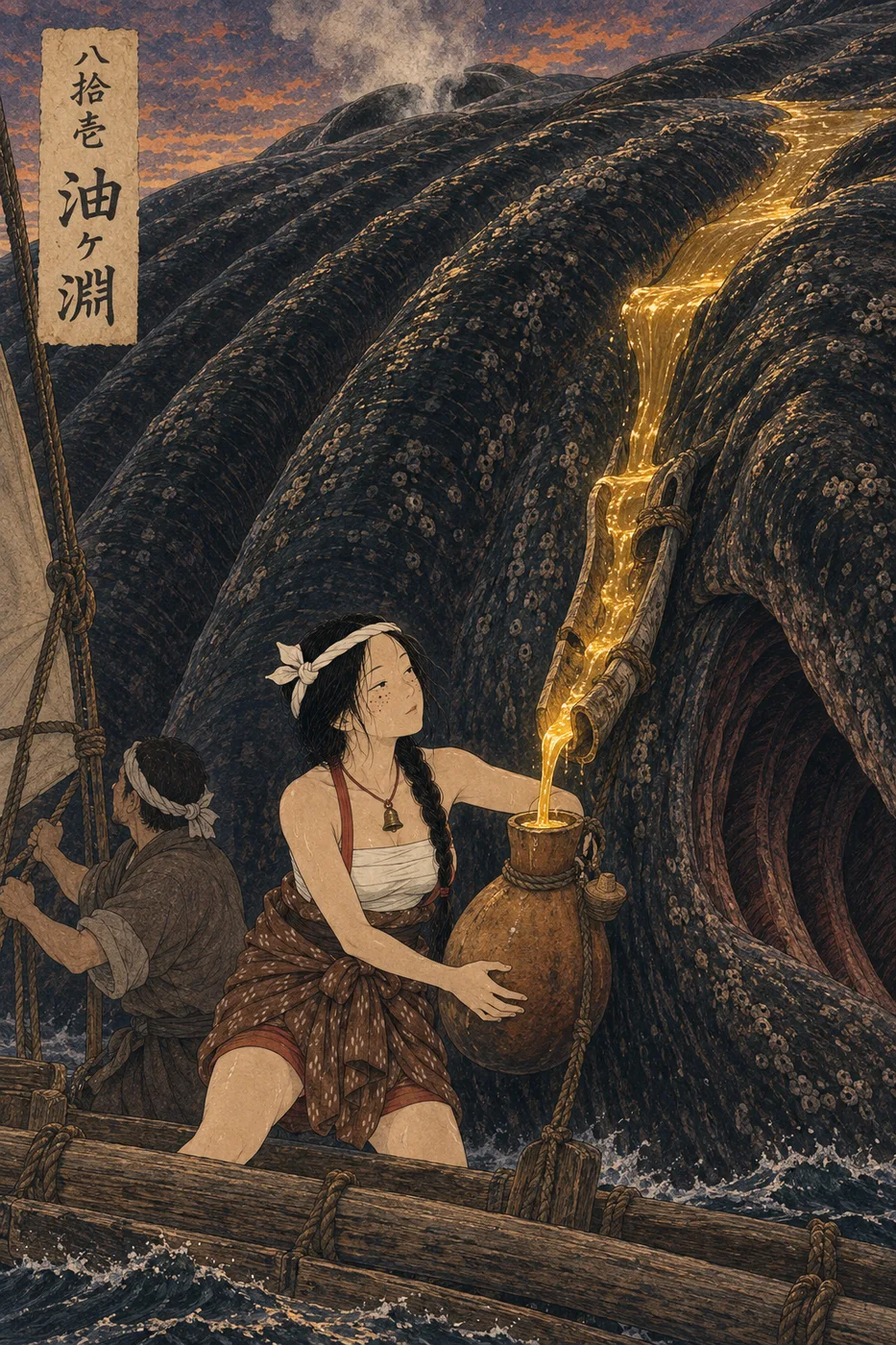
Plate 81
Oil-Deep Whale
油ヶ淵Aburagafuchi
Ecology
Aburagafuchi is a giant whale that lives far out at sea. Its back has deep grooves that store an oil to protect its skin while it dives.
油ヶ淵は、沖で暮らす巨大な鯨である。背の溝に、潜るあいだ肌を守る油をためる。
Other books