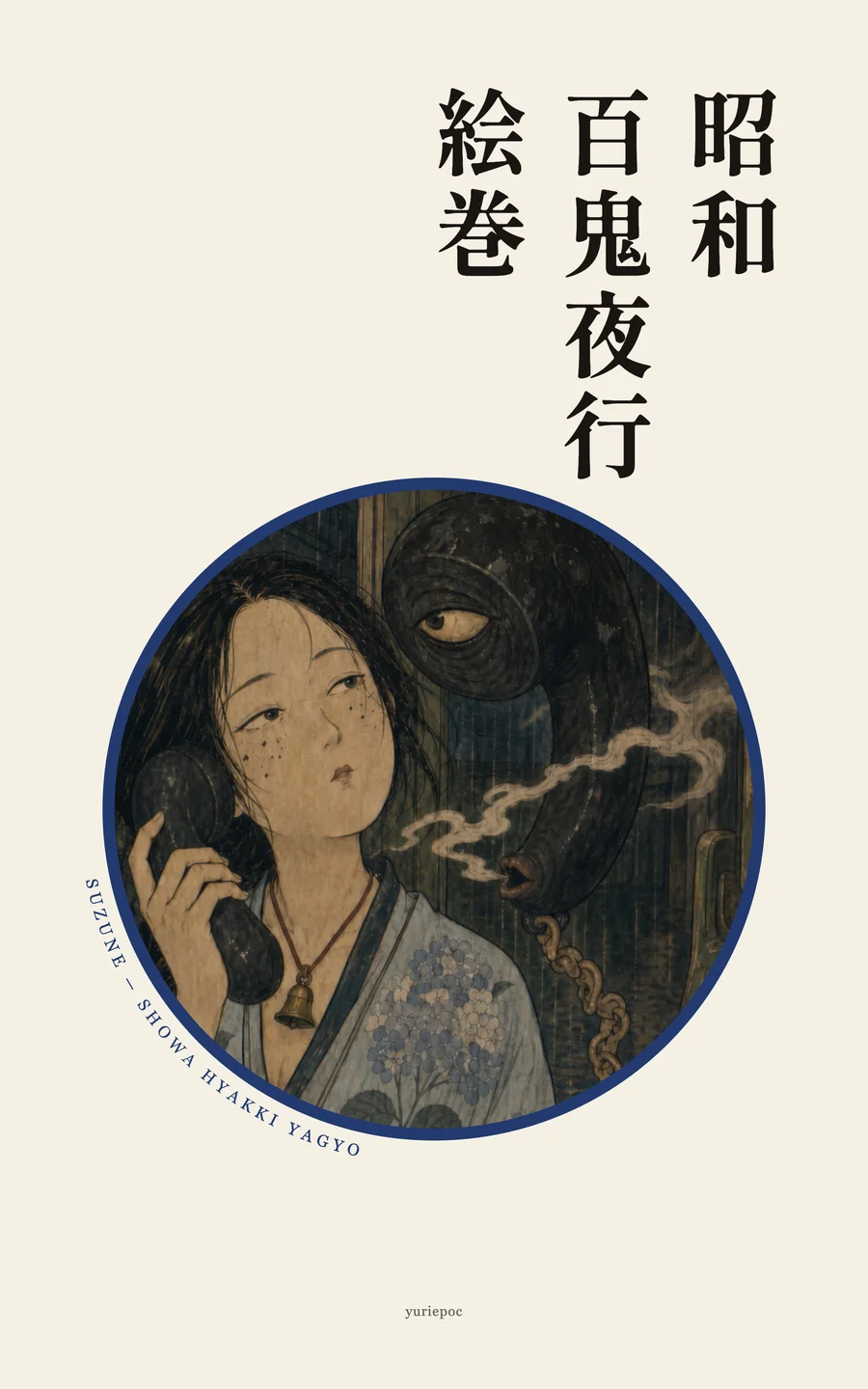
About this book
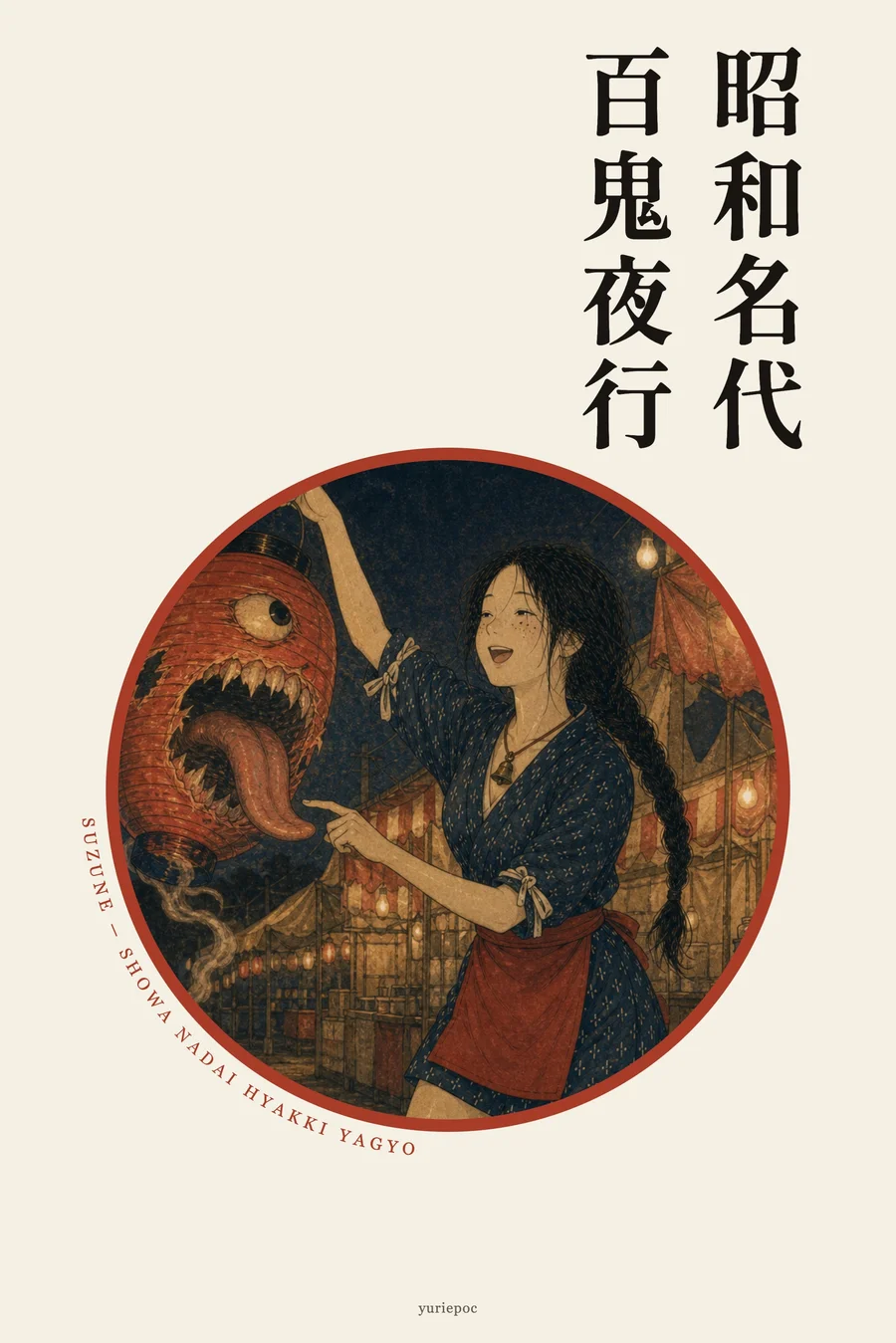
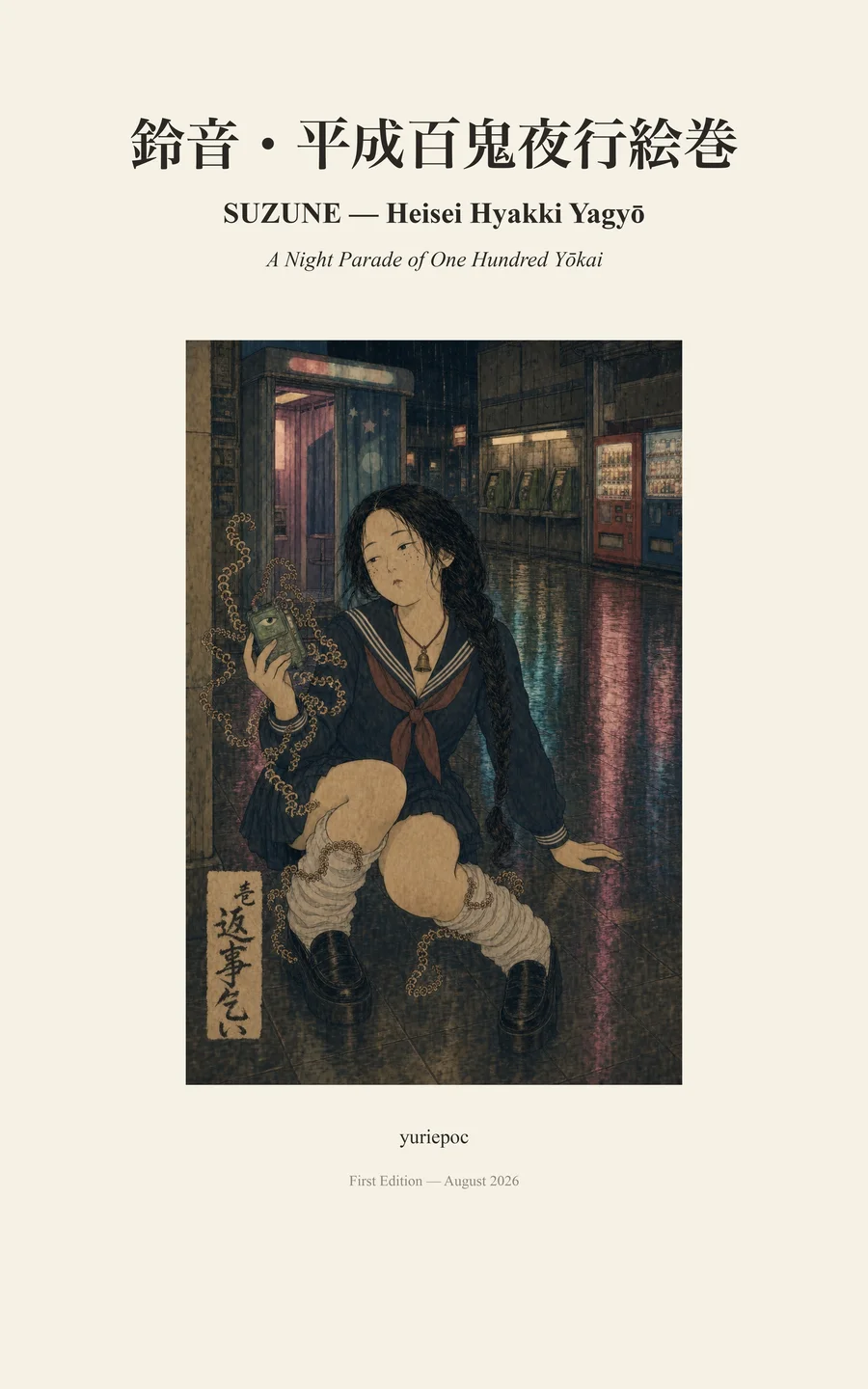
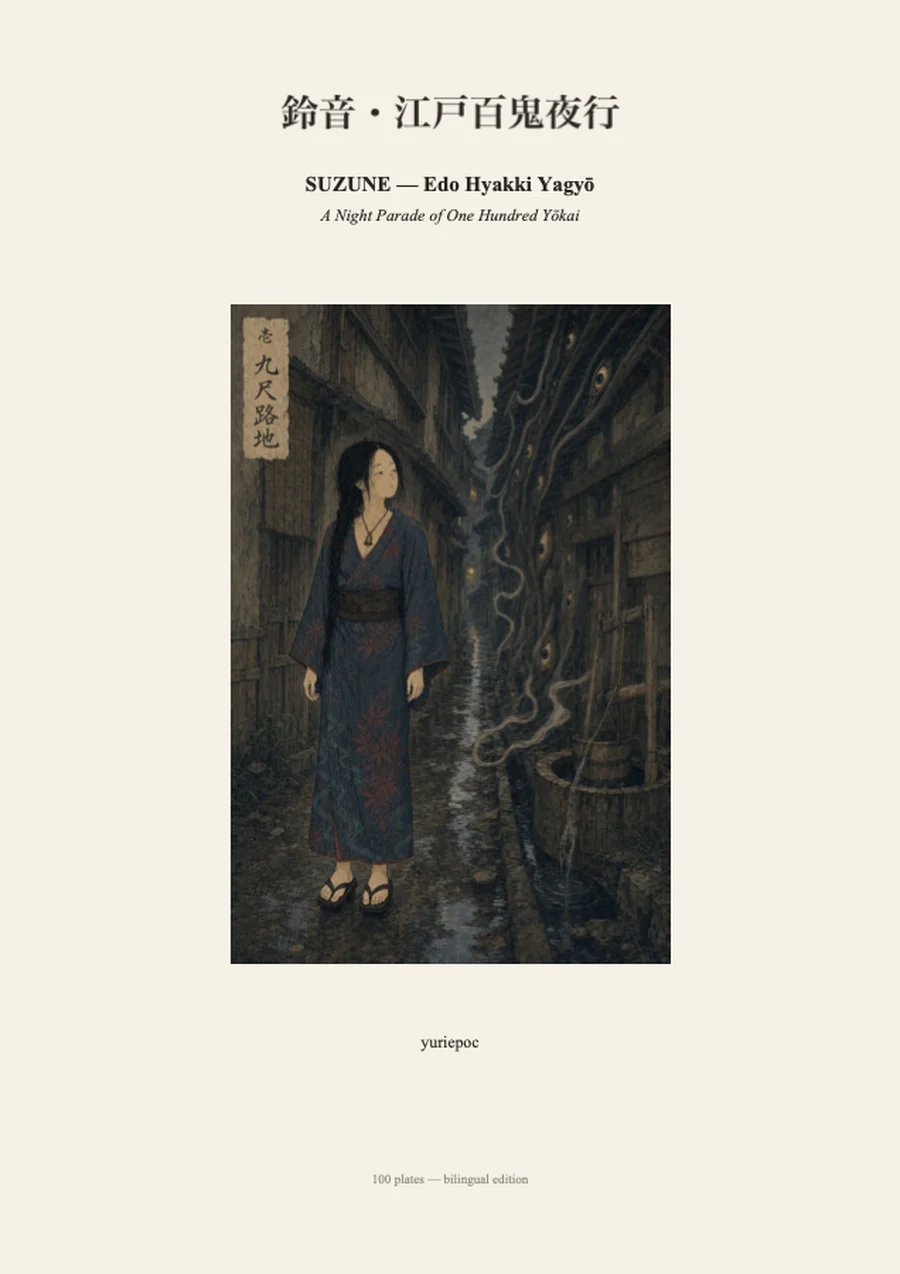
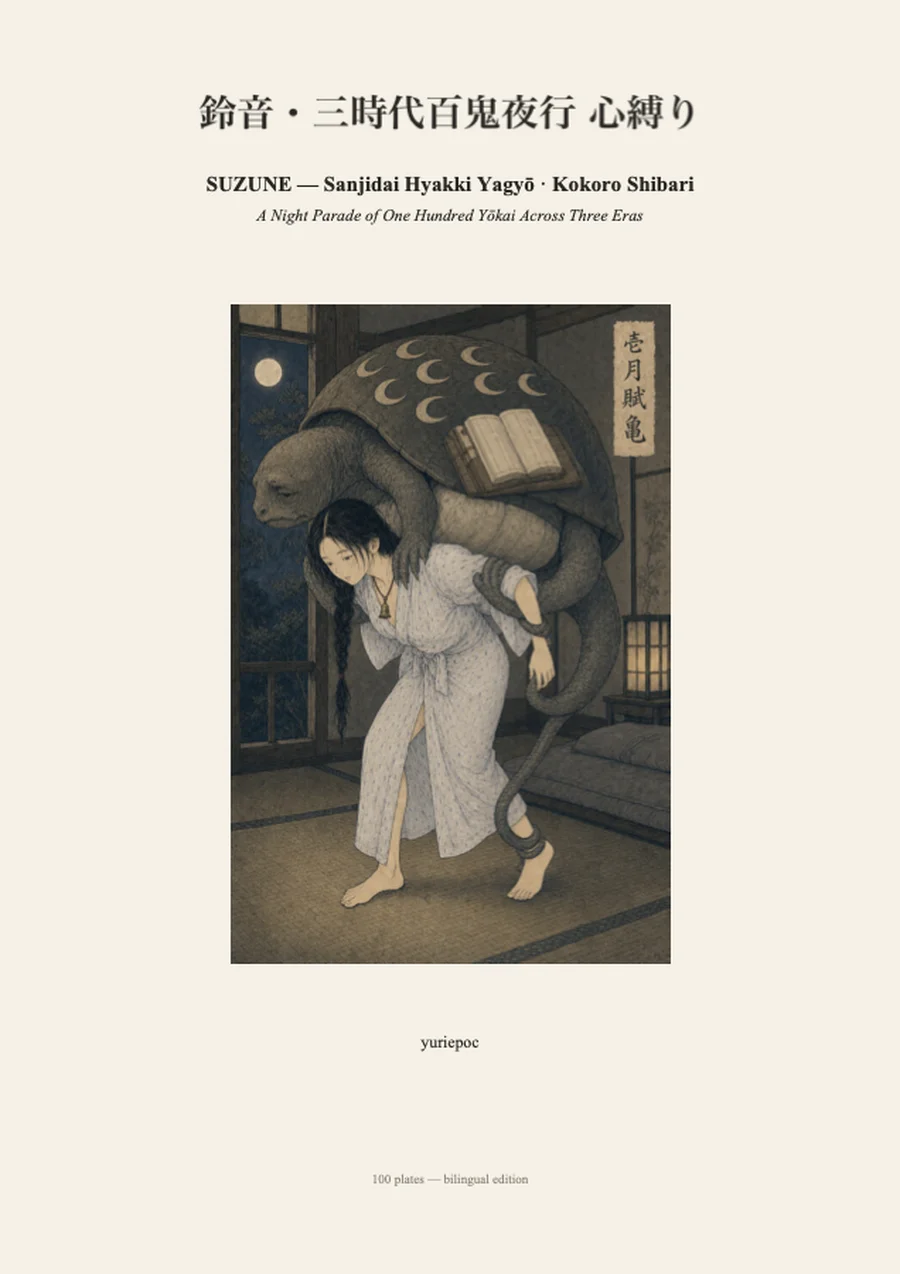
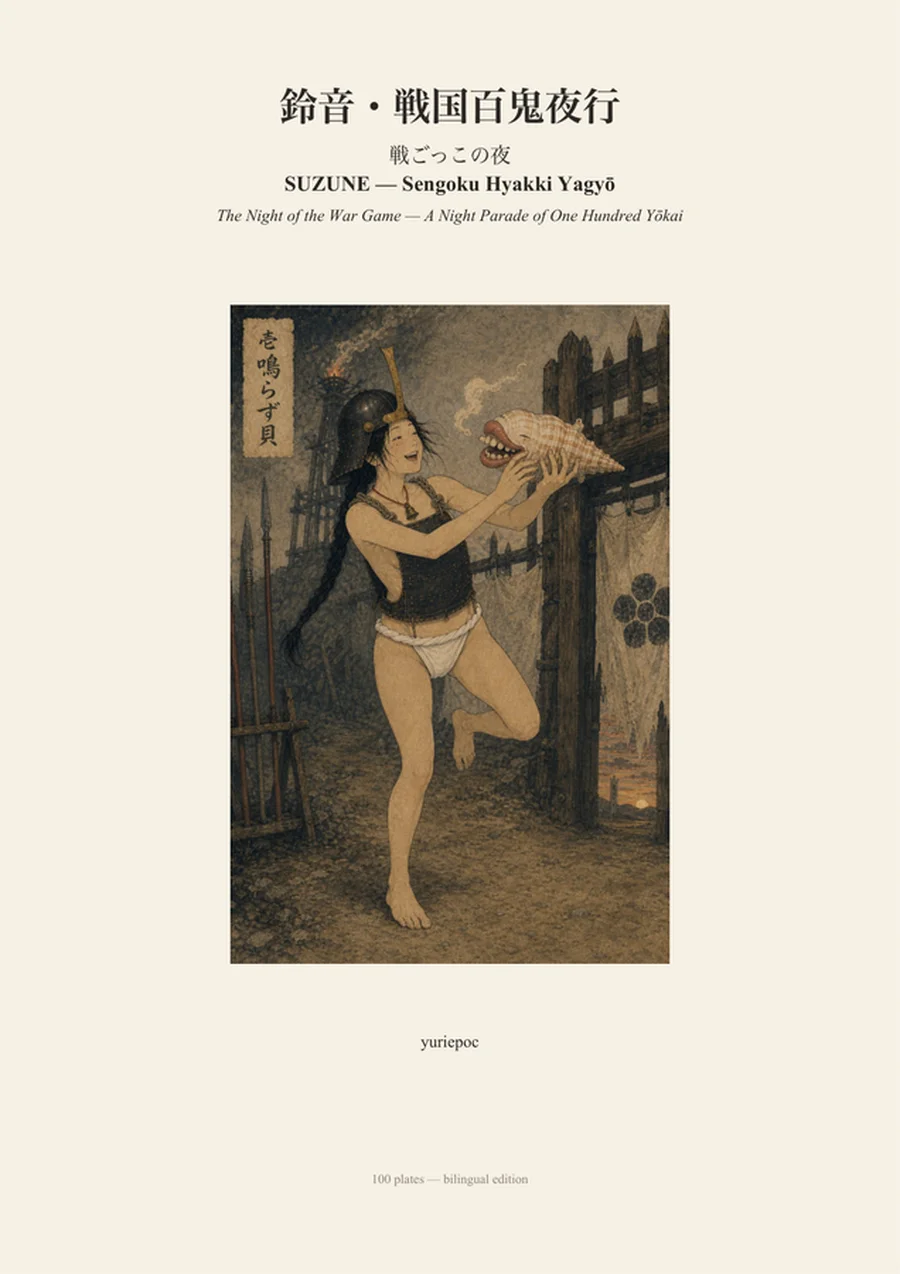
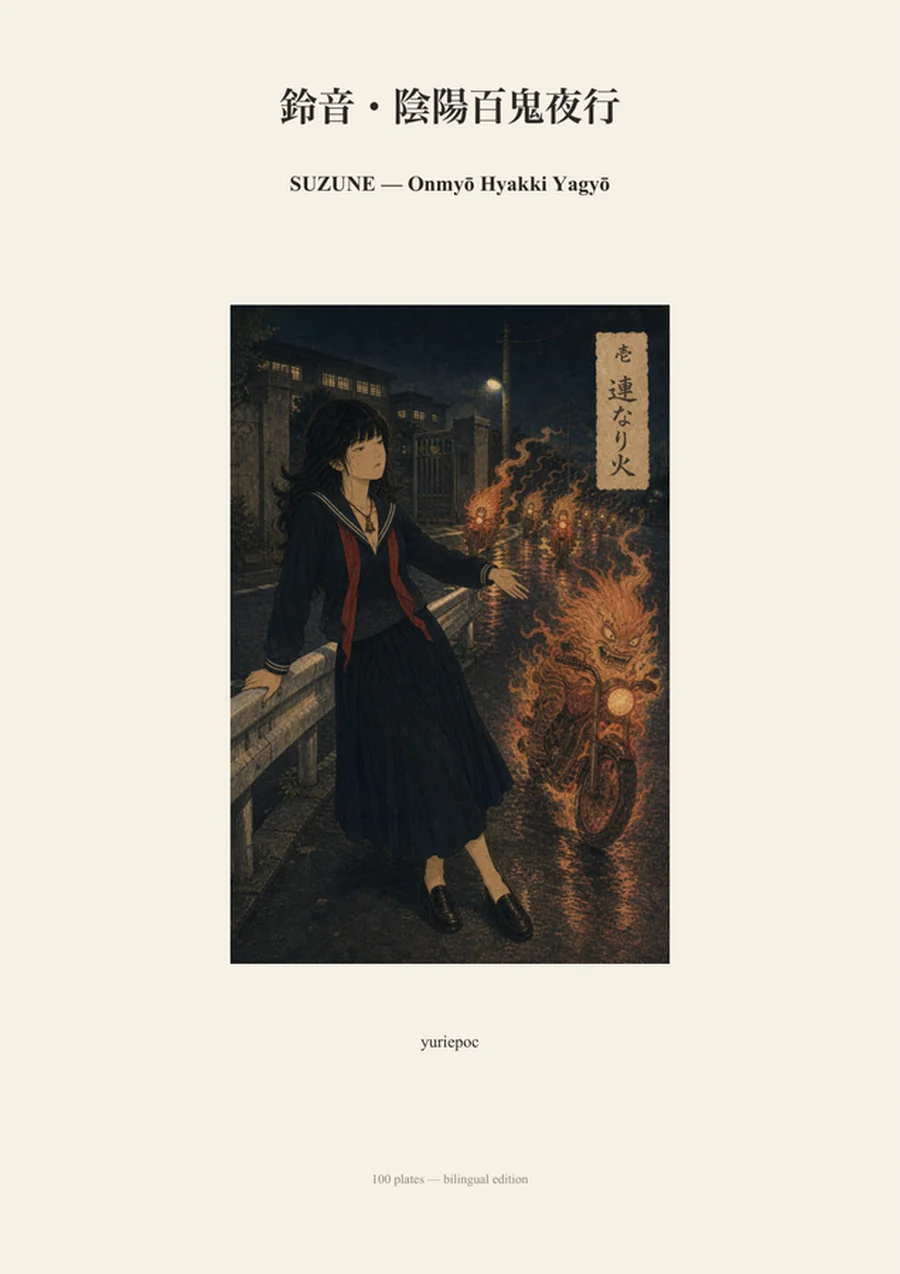
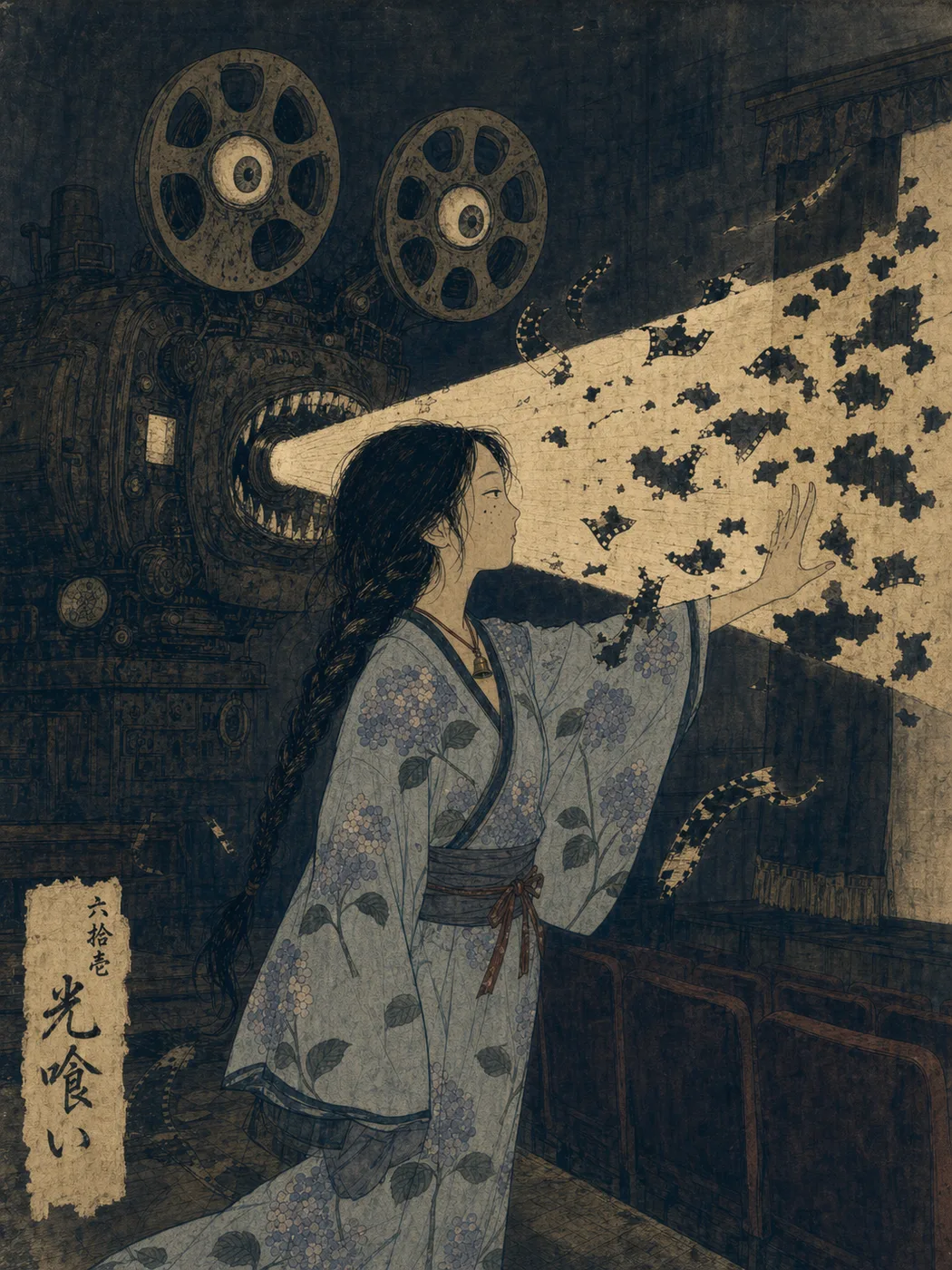
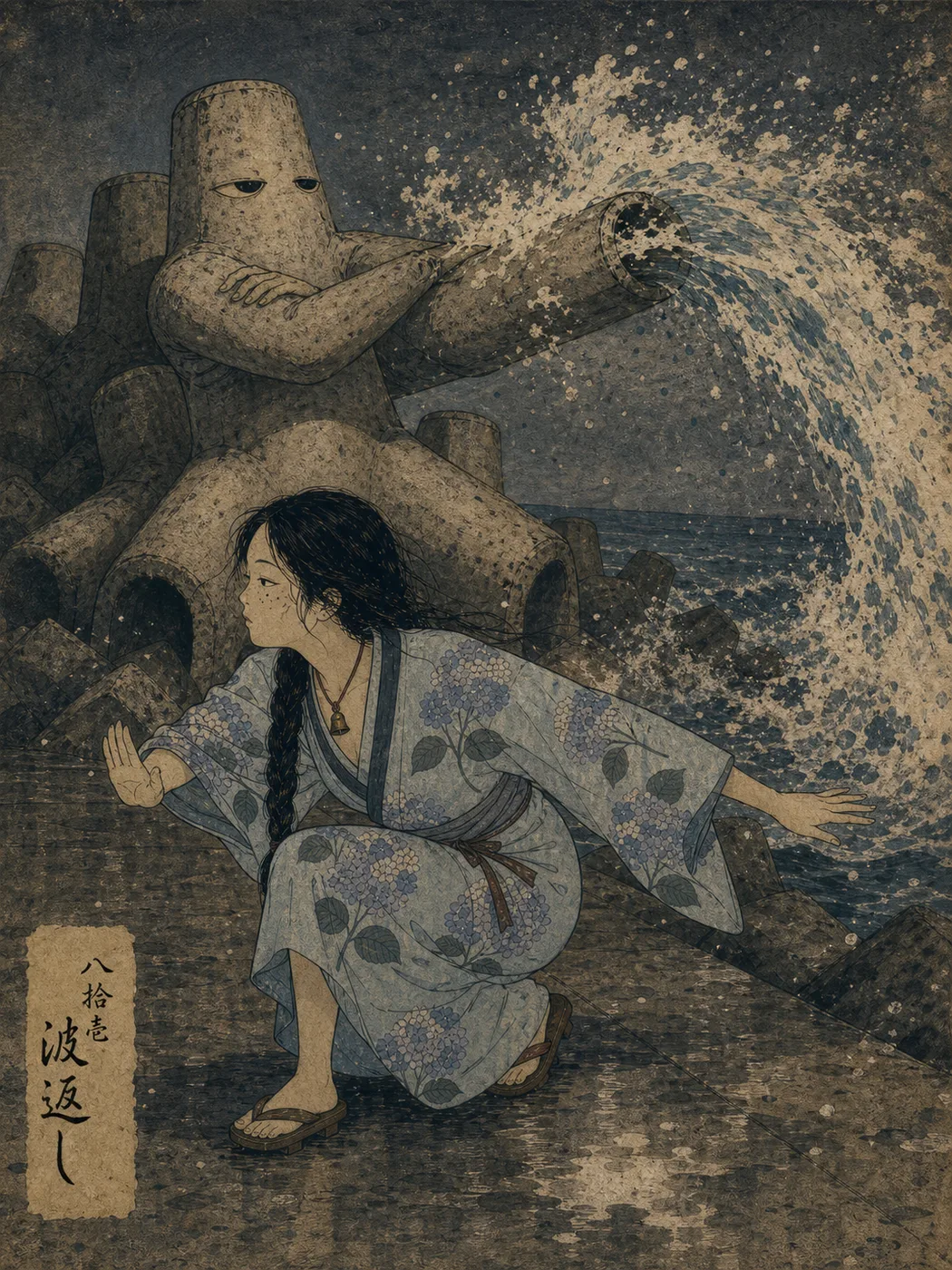
Behind the everyday objects of Shōwa-era Japan (1926–1989) — payphones, fluorescent tubes, twin-tub washing machines, the scale at the public bathhouse, black rotary telephones, wind-up tin toys, the last line of a bus timetable — something without a name has been quietly living. SUZUNE — Shōwa Hyakki Yagyō borrows the classical night-parade motif and repopulates it entirely with new, invented yōkai — one plate for each of one hundred beings born from these objects, painted in a woodblock-print spirit. None of them are drawn from documented folklore; all one hundred are original creations made for this book.
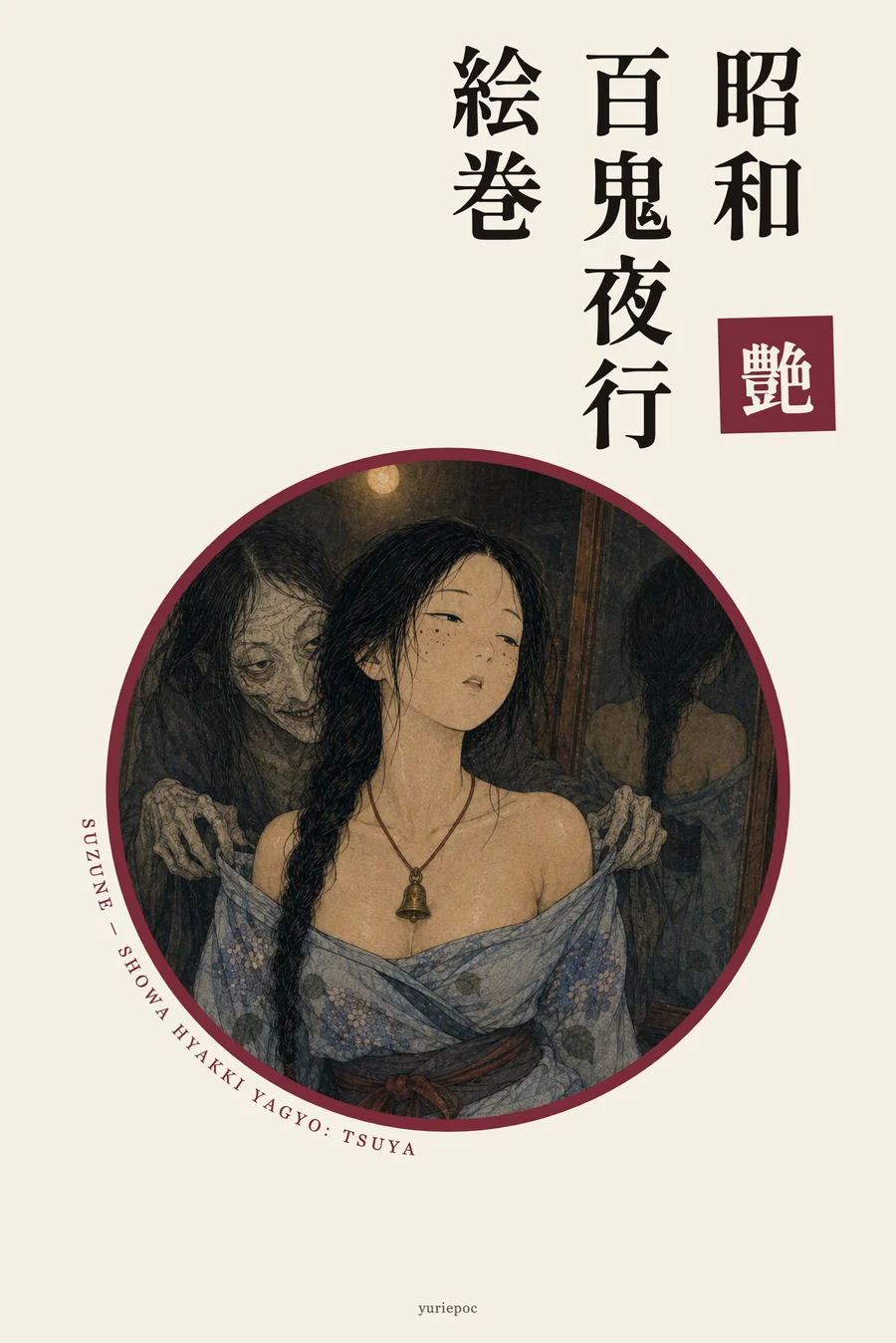
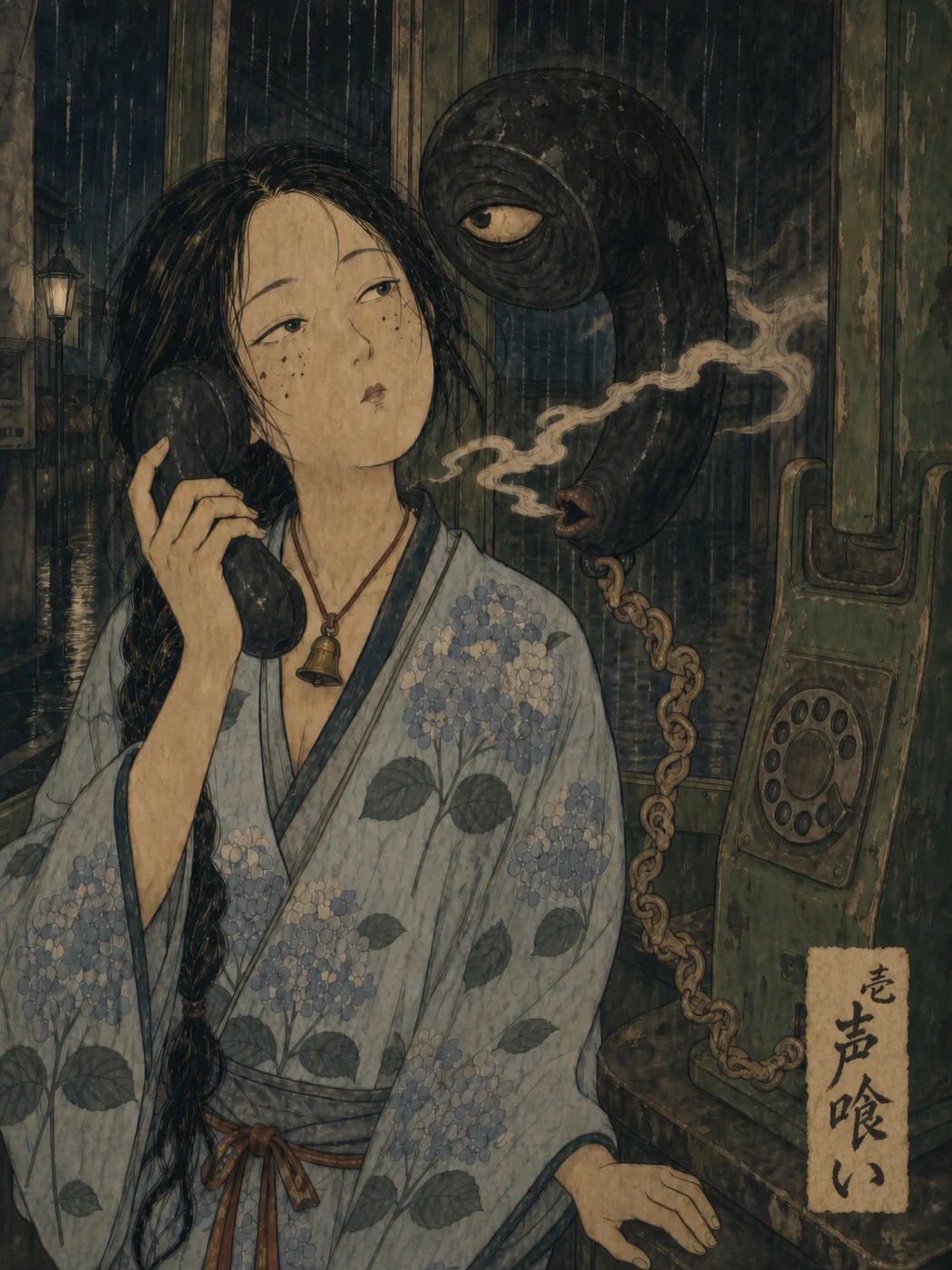
At the center of the procession walks Suzune Yachi, a photographer with a small red bell at her throat, recording the parade night after night. Plate 1, The Voice Eater, feeds on the words left unsaid at the bottom of a payphone box. Plate 25, The Weight Thief, carries off a little of you each time the bathhouse scale weighs you. Plate 50, The Boy in the Bell, grips the striker inside a black telephone, still waiting for it to ring. What plate 100 finally reveals is why the hundredth place in the parade has always been left empty.
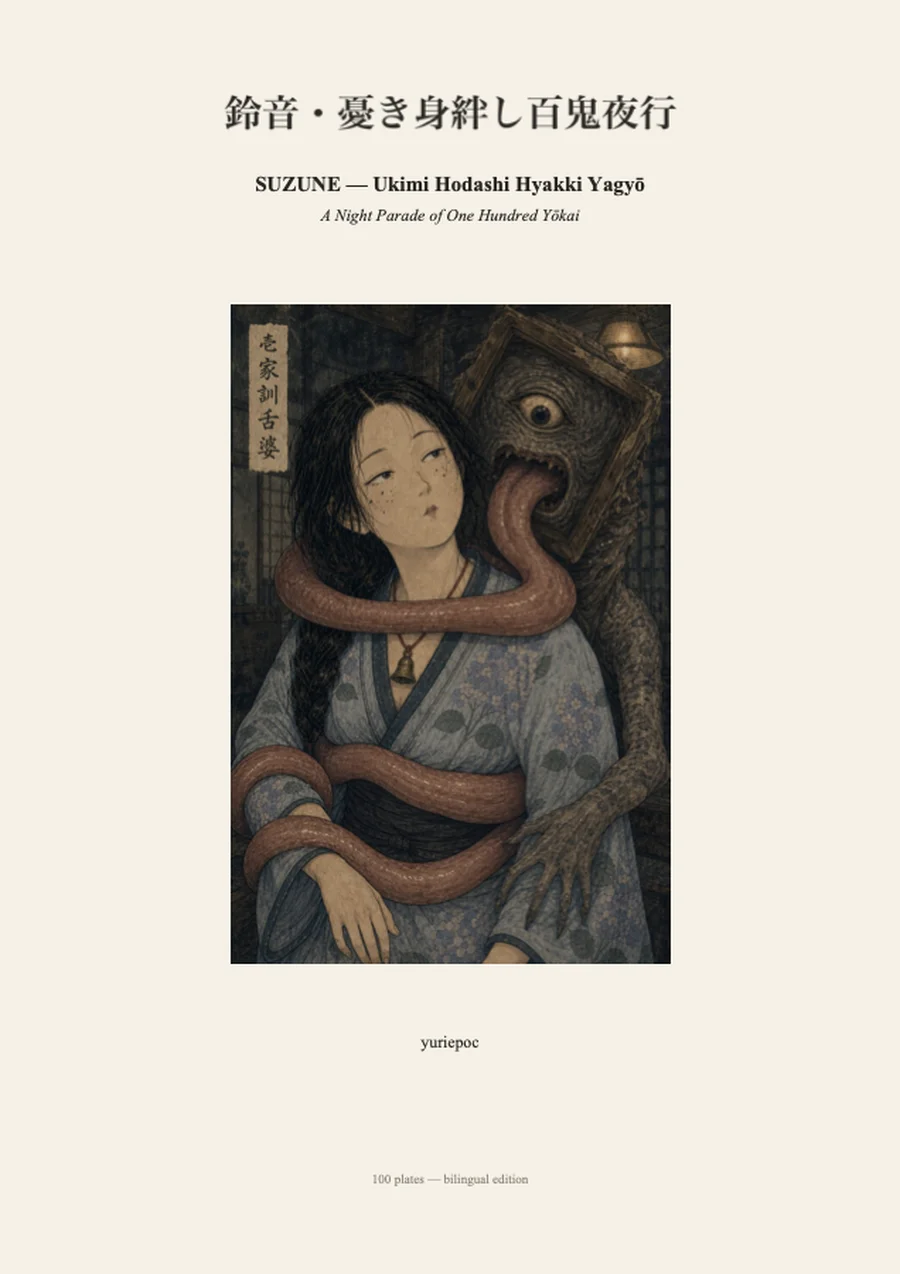
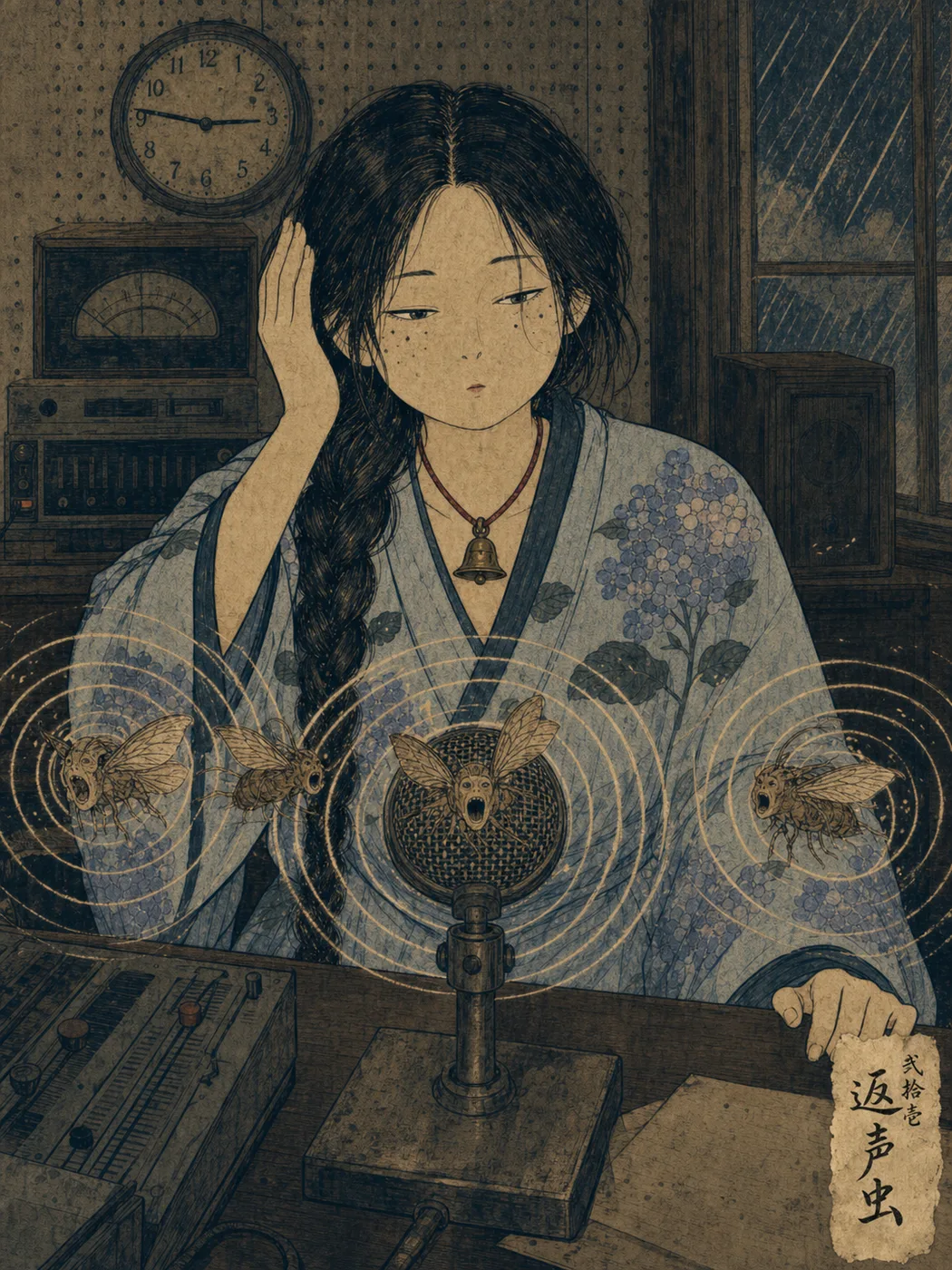
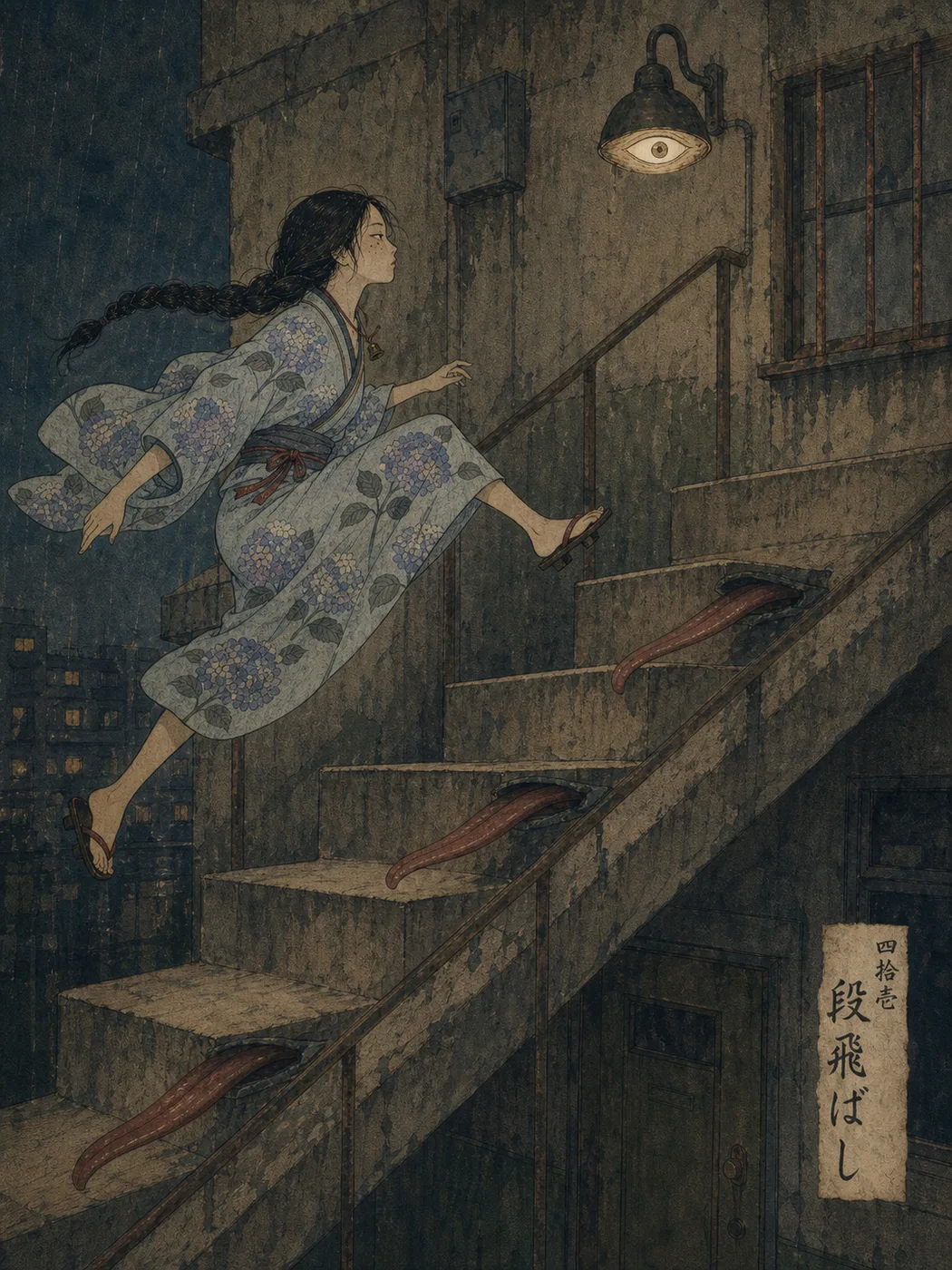
Every plate carries a hand-brushed title slip bearing the yōkai's name. Facing it is a bilingual commentary in three parts — Origin, Signs, and Practice — explaining how the being came to be, how to recognize an encounter, and what to do about it, down to a closing line of practical instruction. Read it plate by plate like a field guide, or straight through as a portrait of an entire era remembered through its objects.
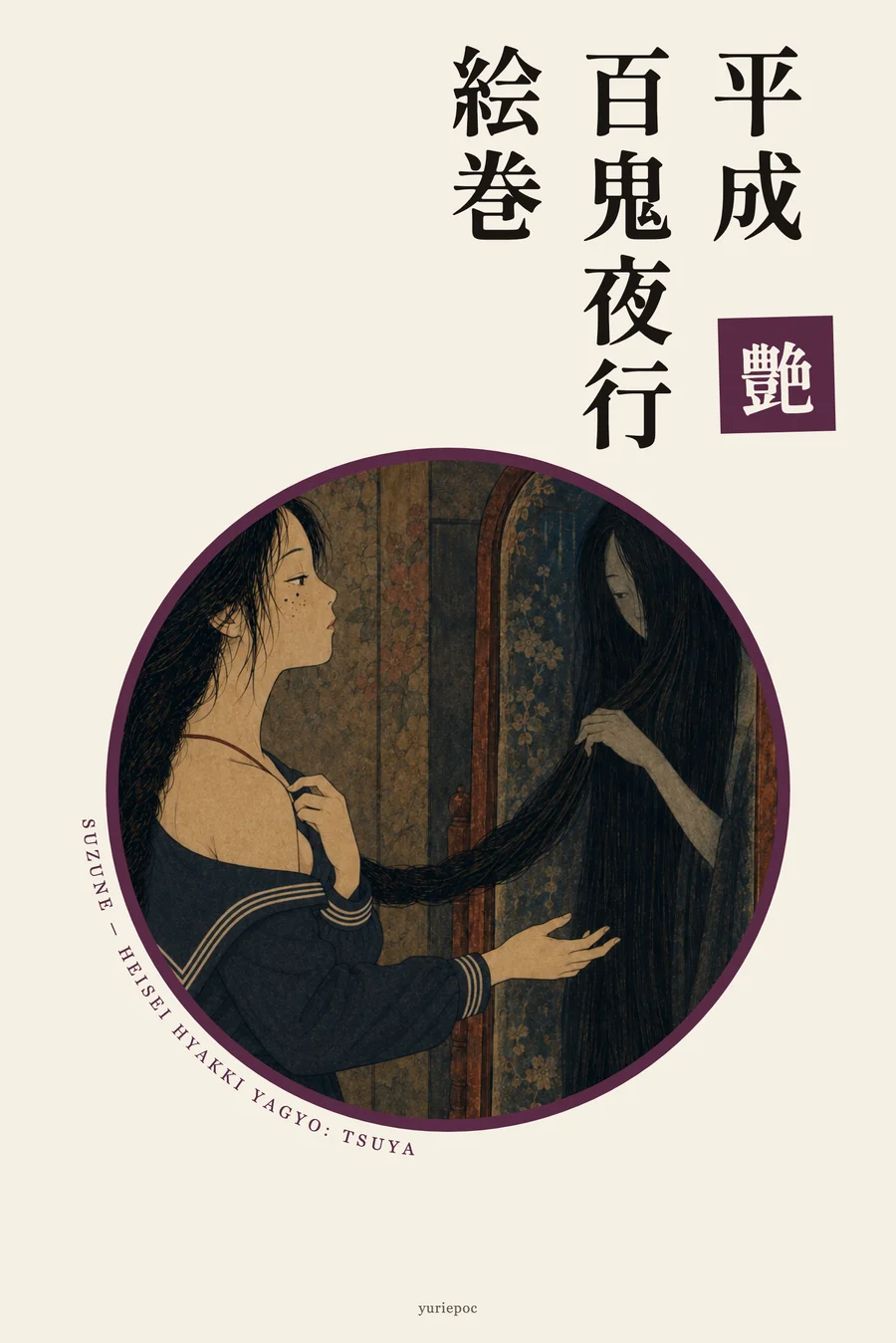
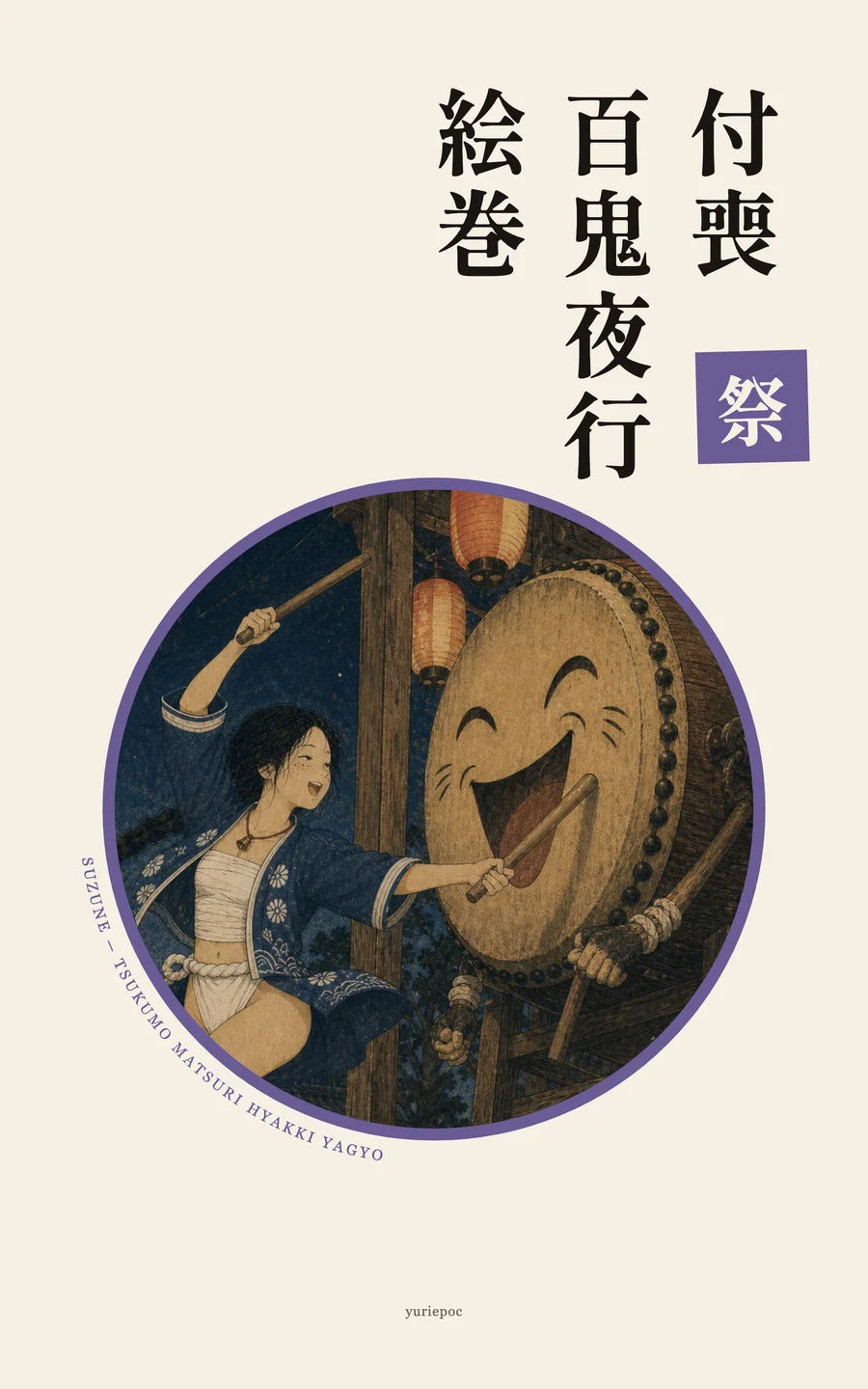
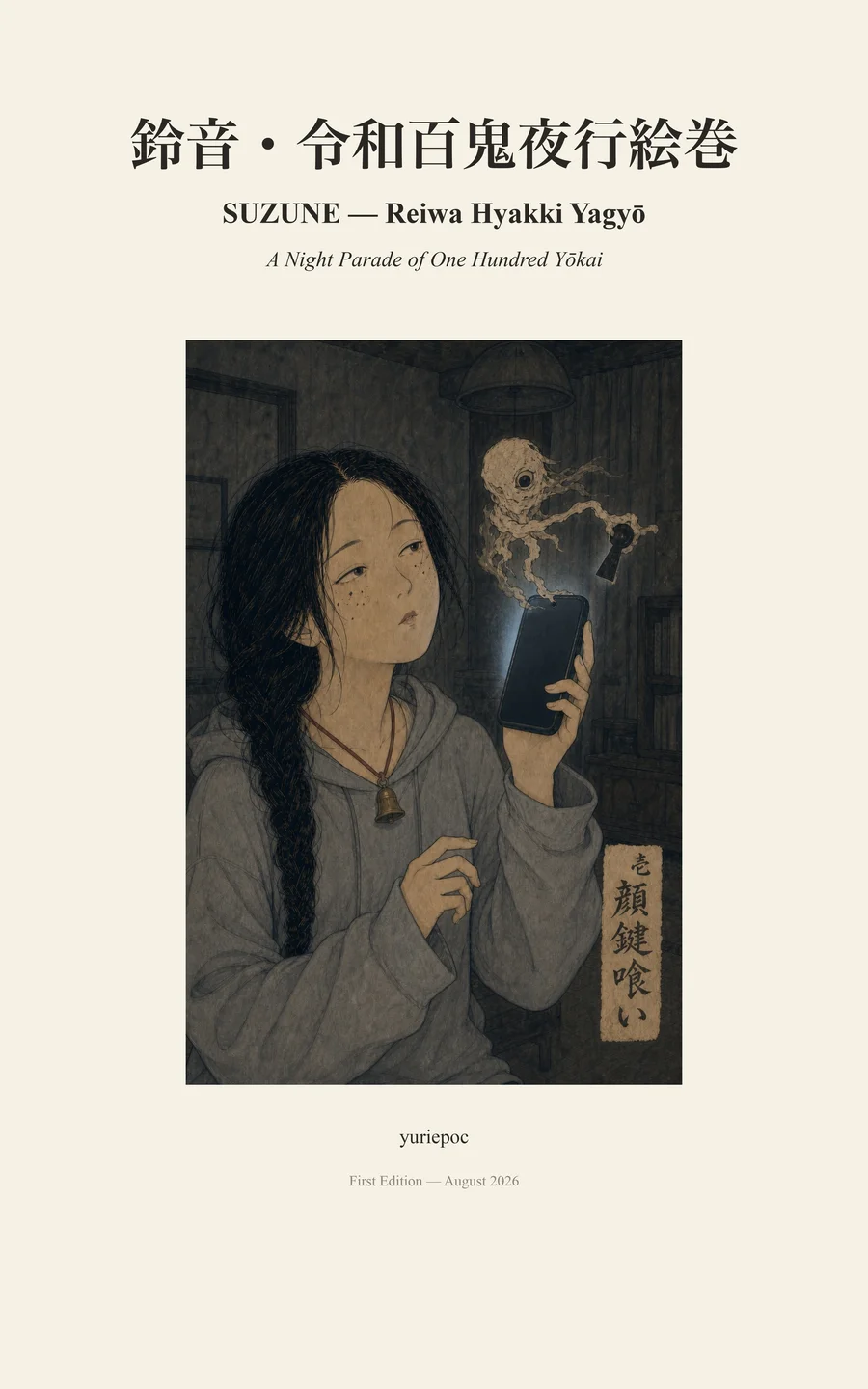
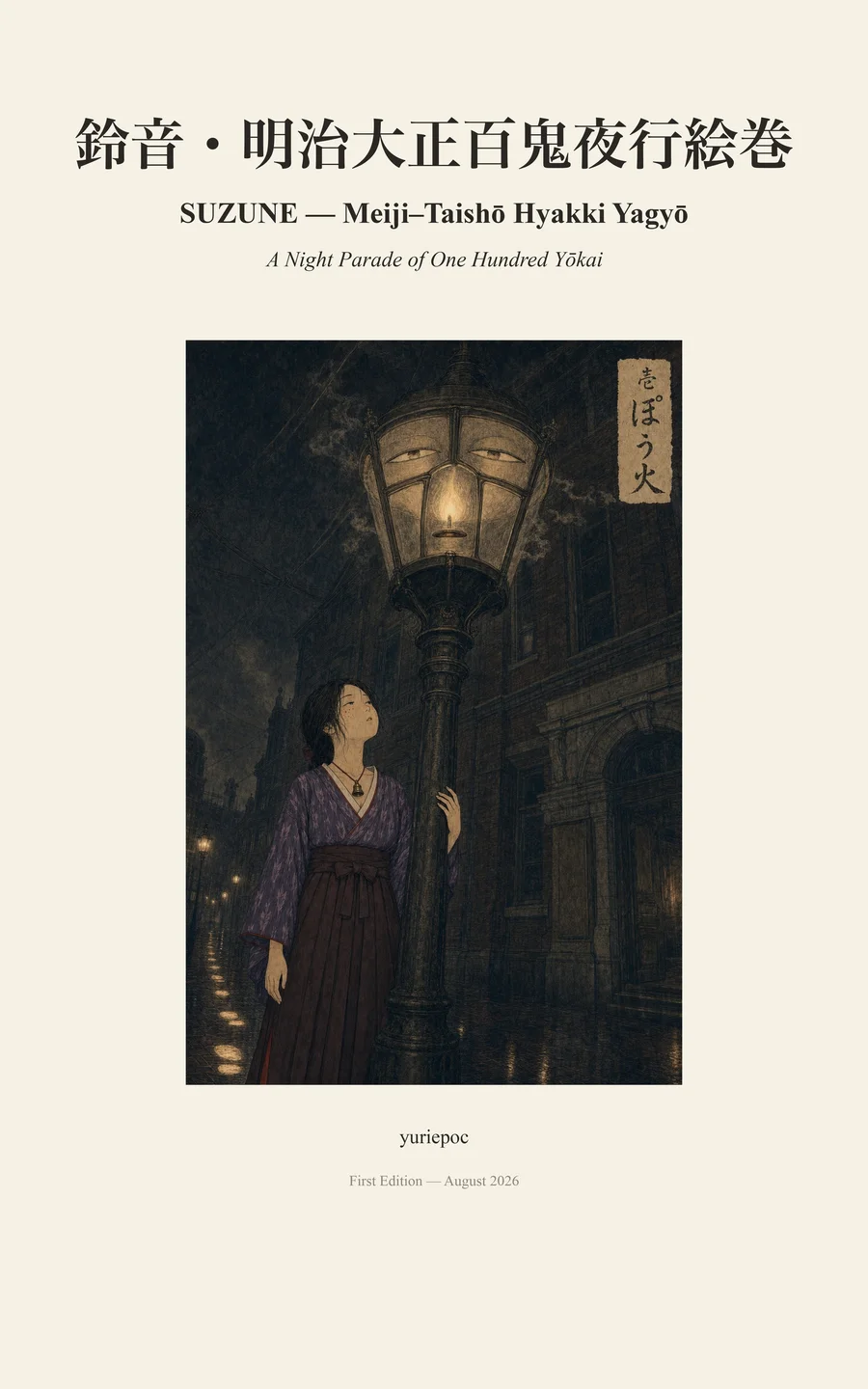
Fully bilingual in Japanese and English throughout — plates, captions, and commentary alike. All one hundred plates were created using AI image-generation tools, individually directed, hand-selected, retouched, and quality-controlled by the artist. This is the first volume of the SUZUNE — Hyakki Yagyō series; the Heisei and Reiwa volumes continue the same parade into later eras.
Sample plates
Other books