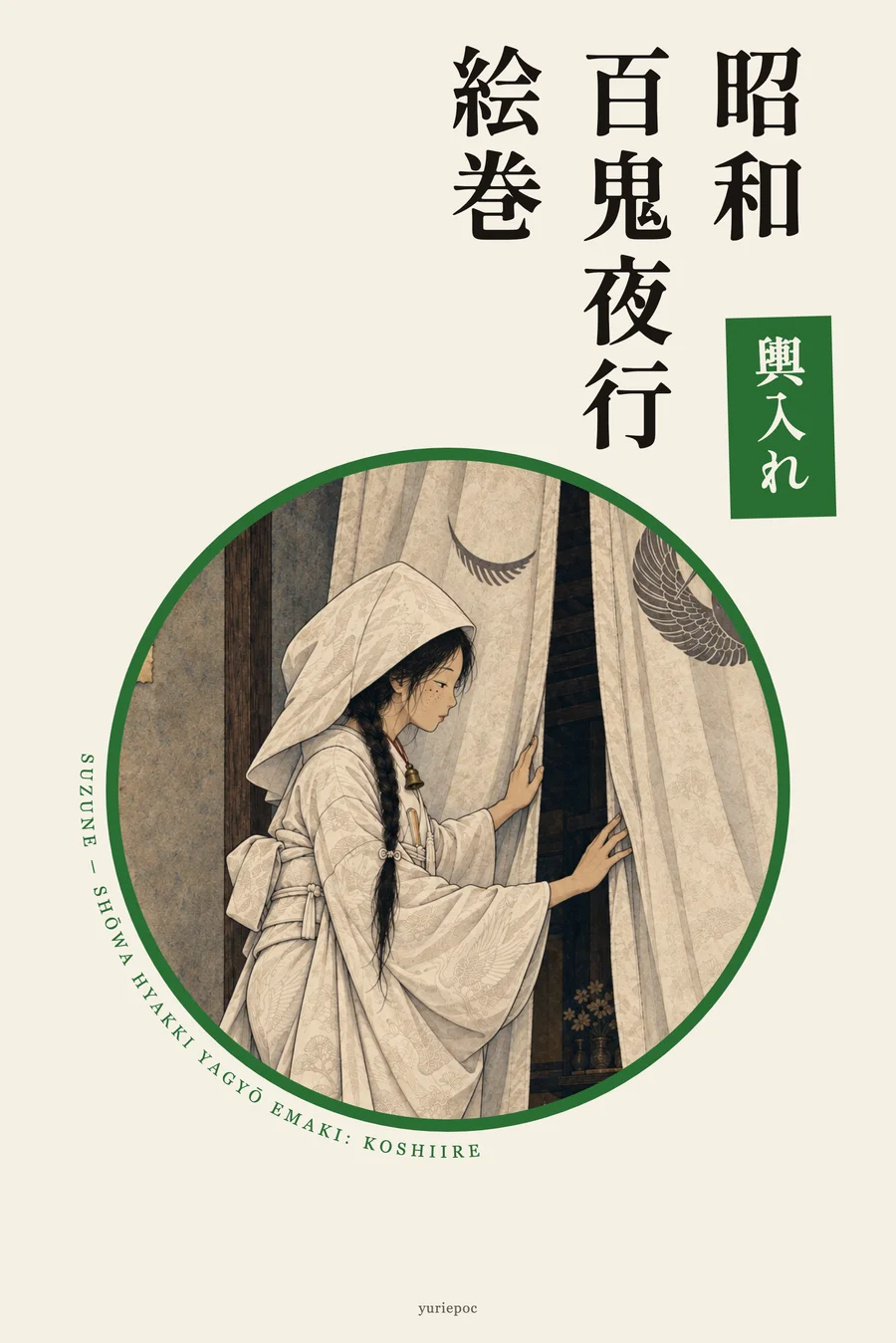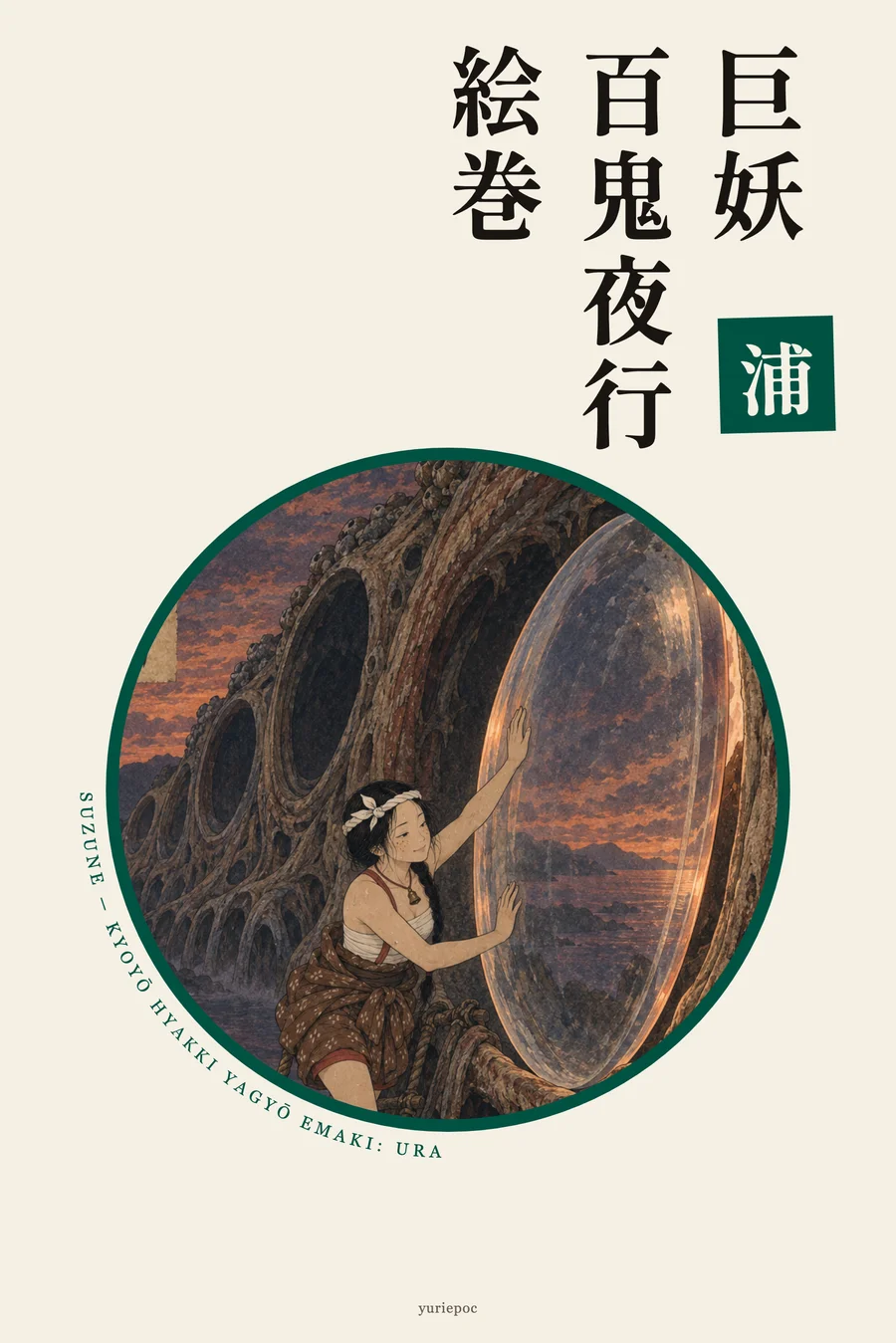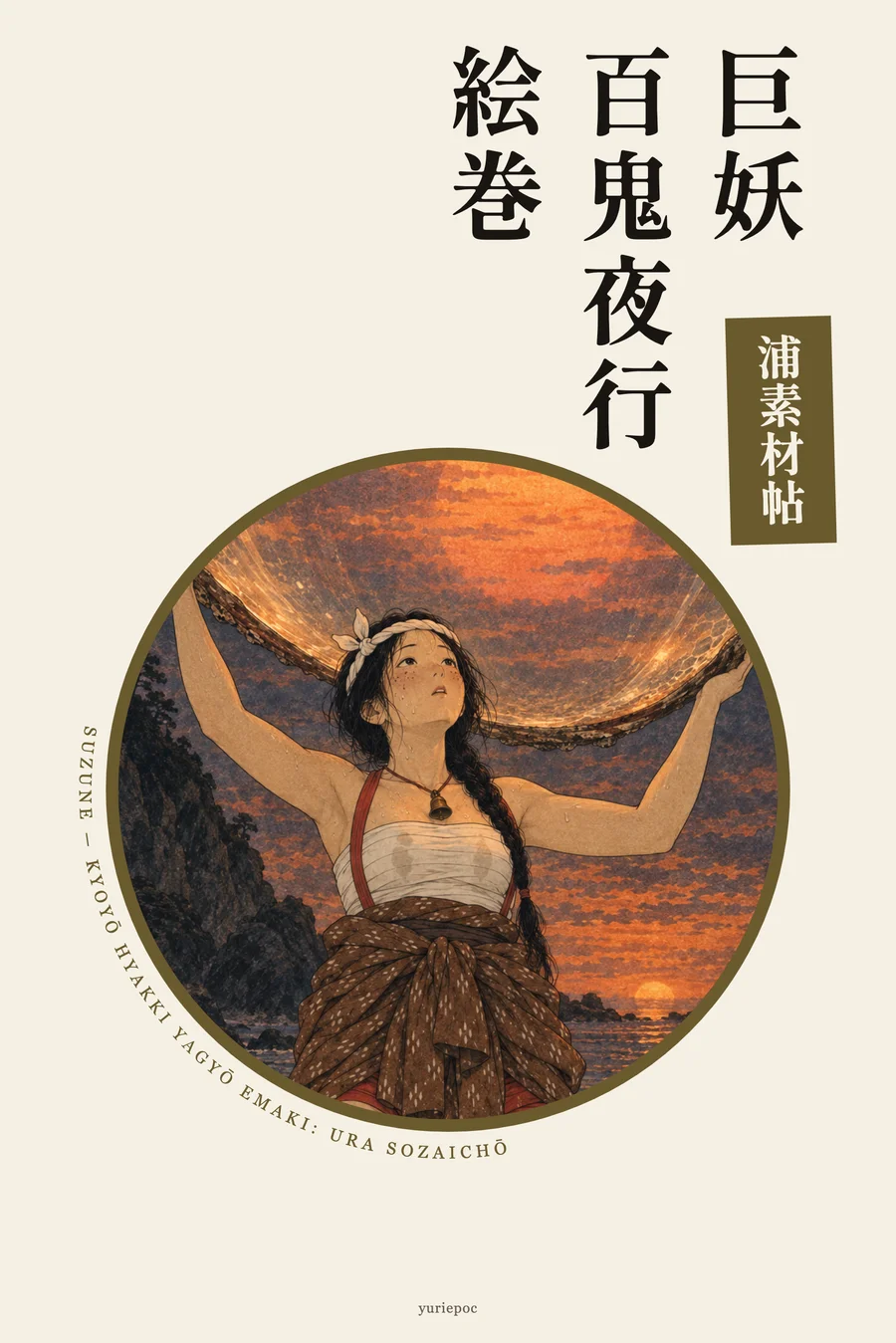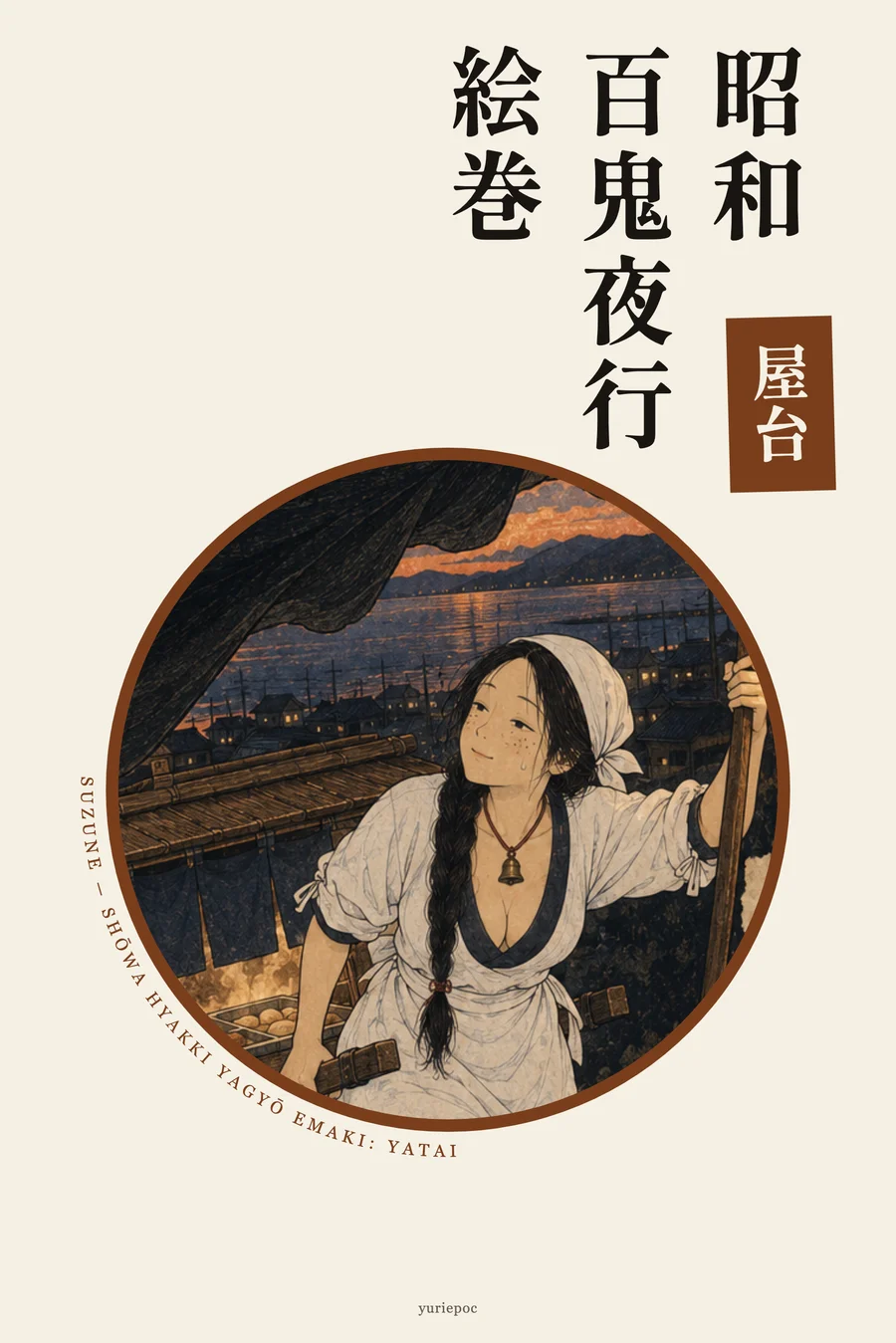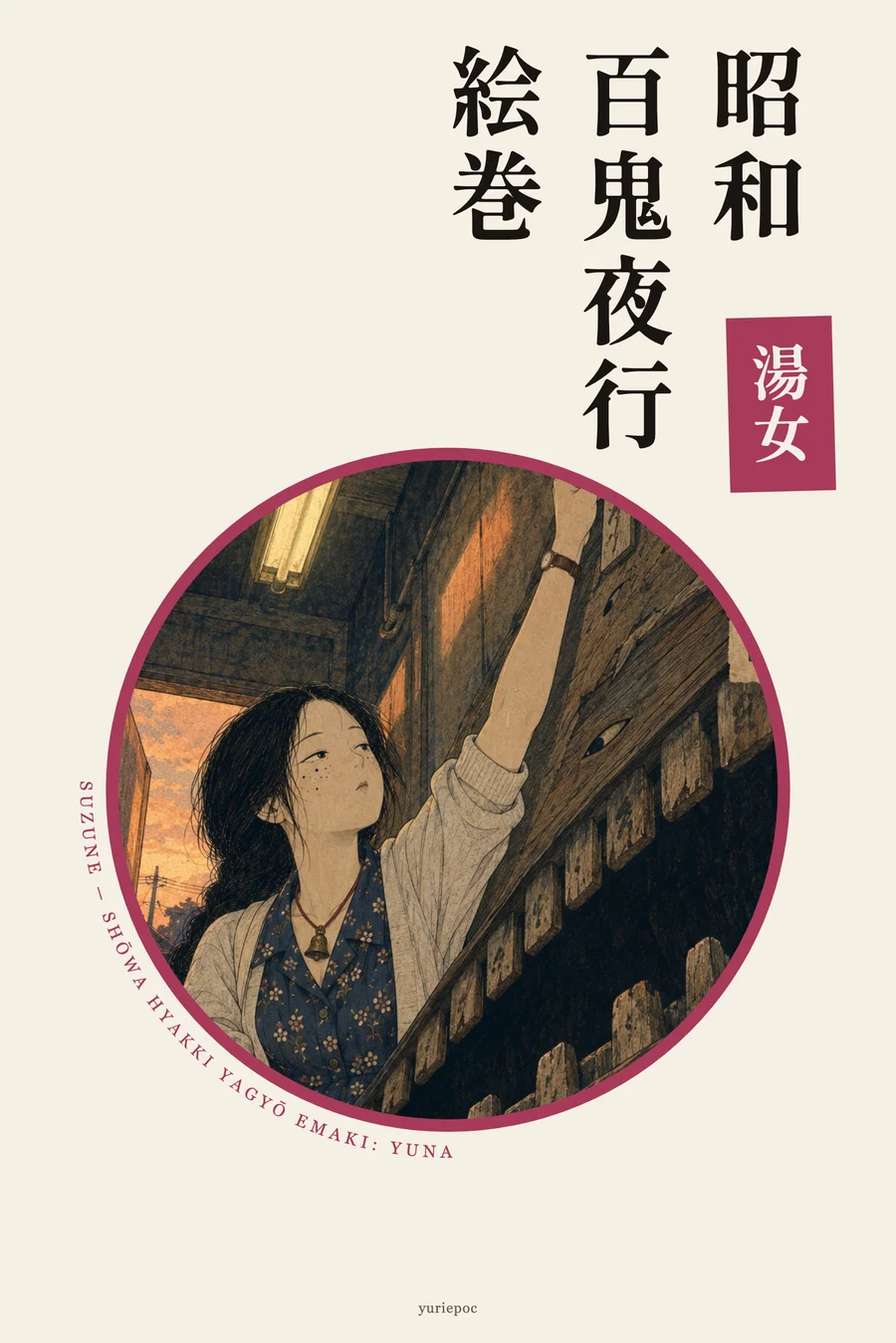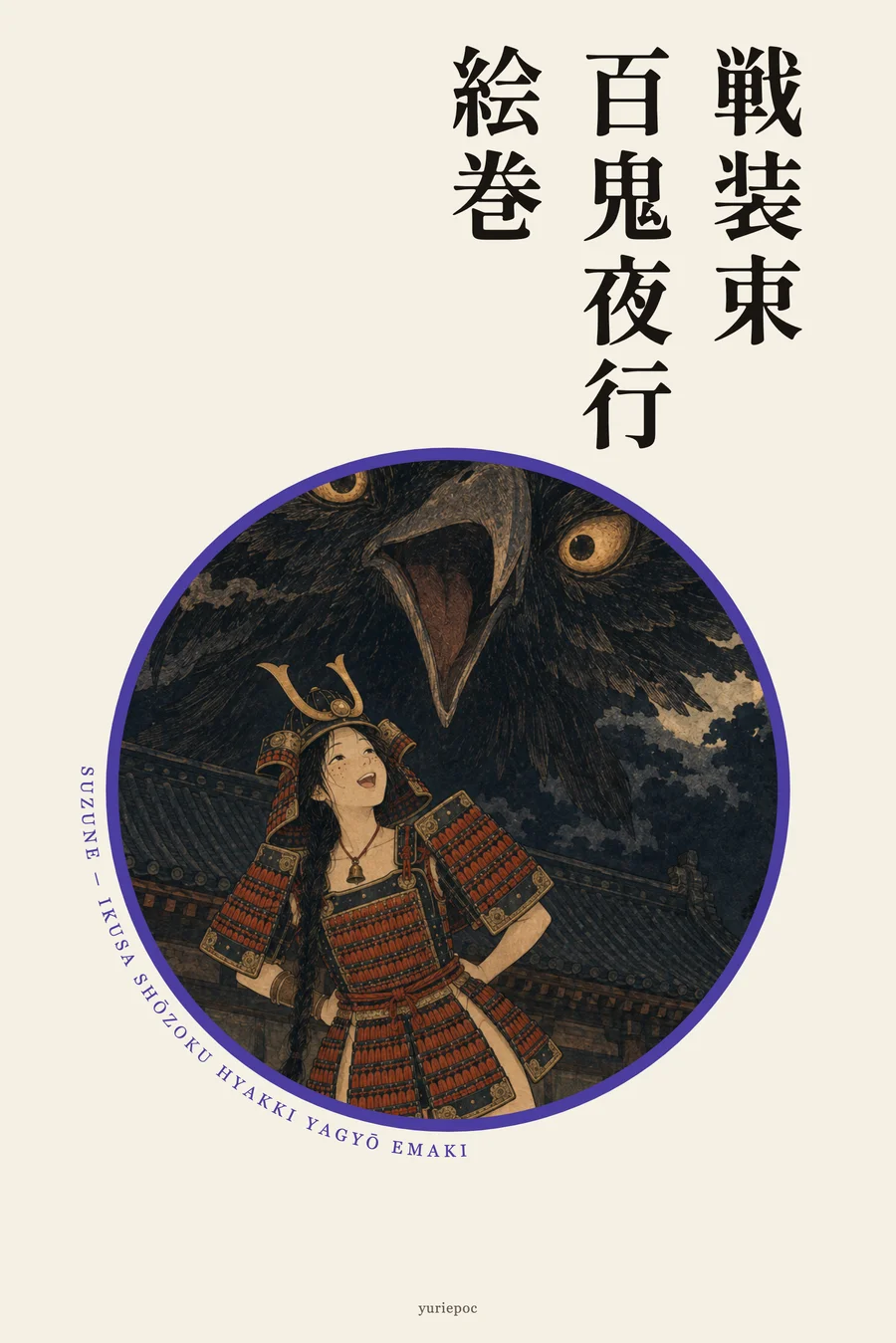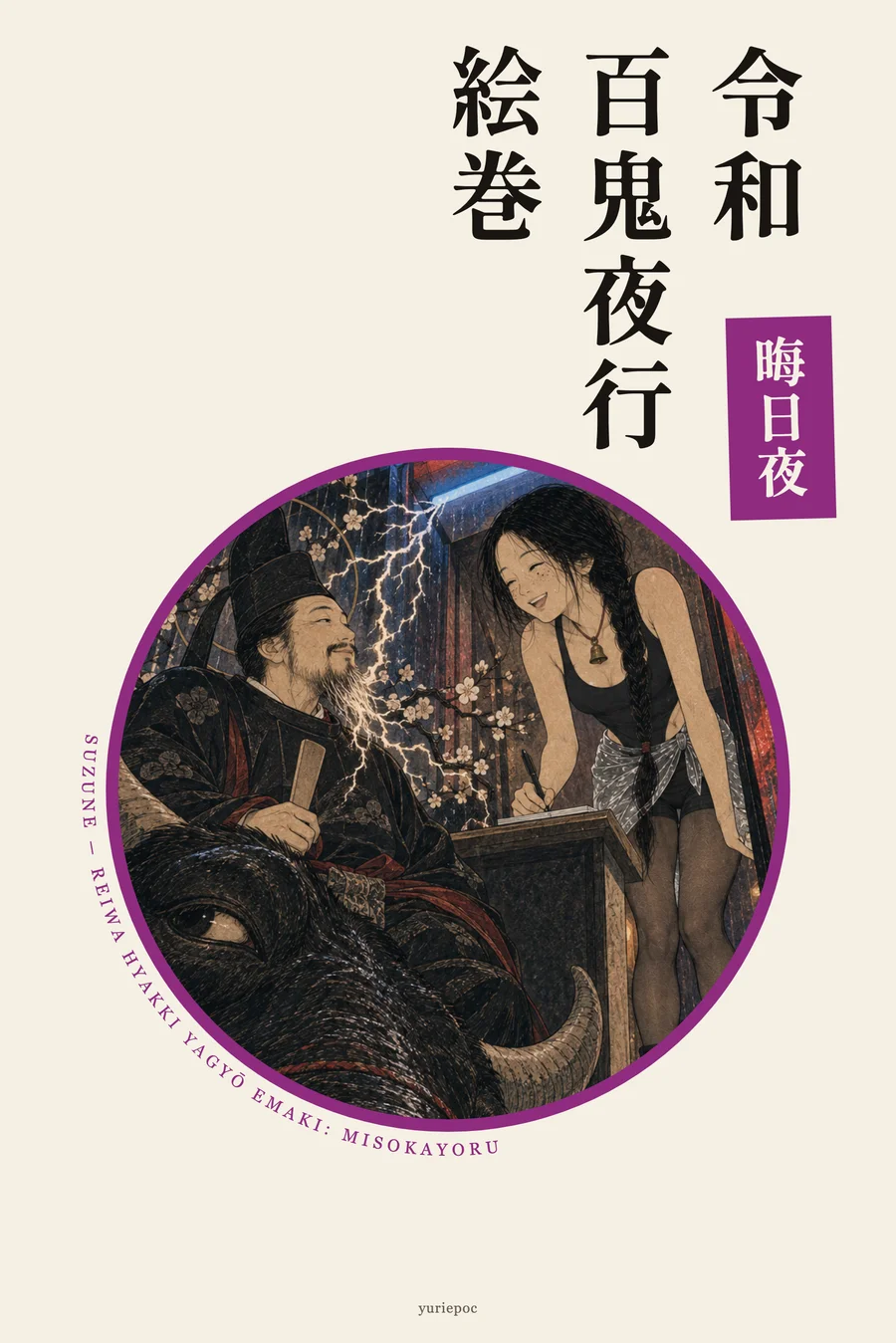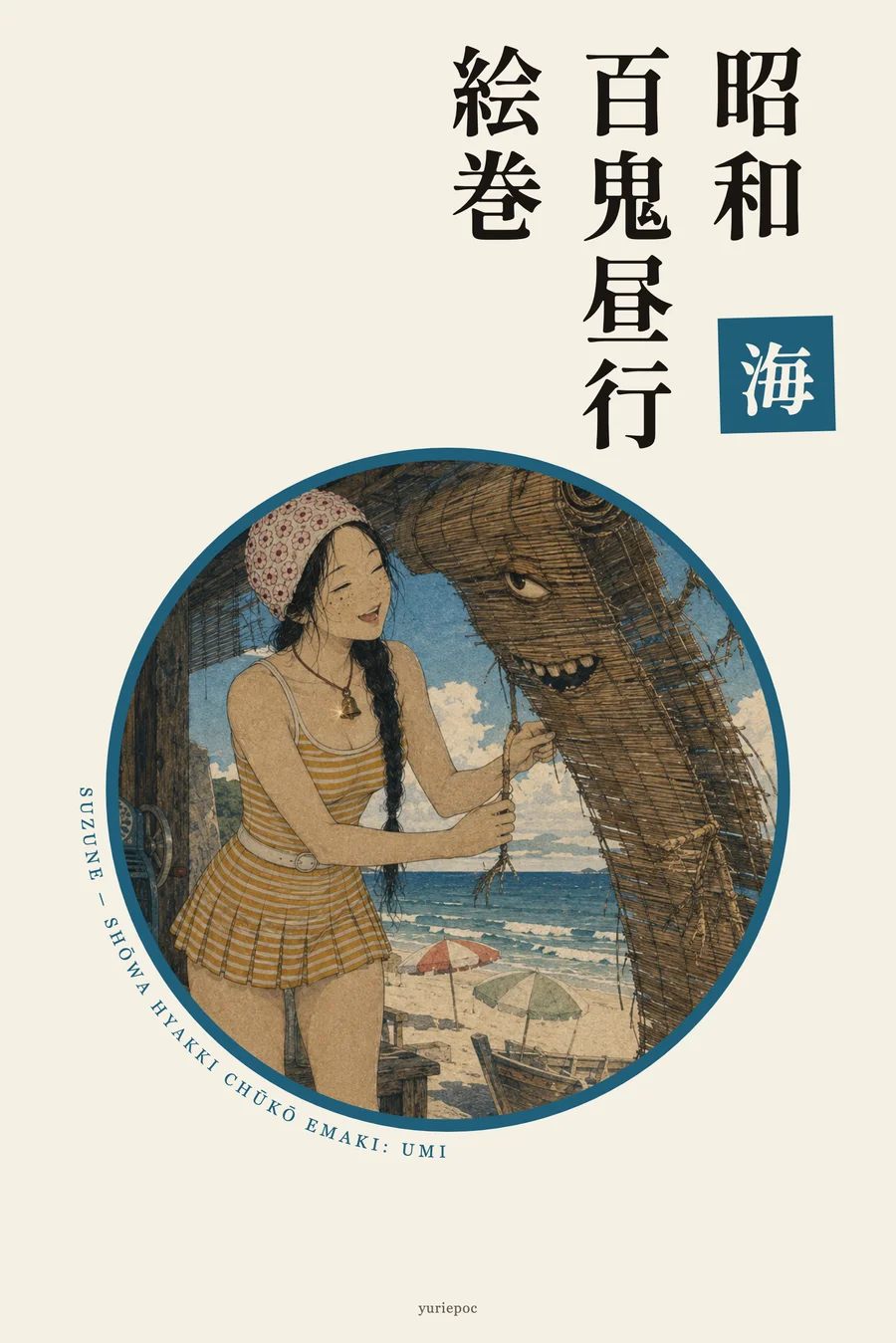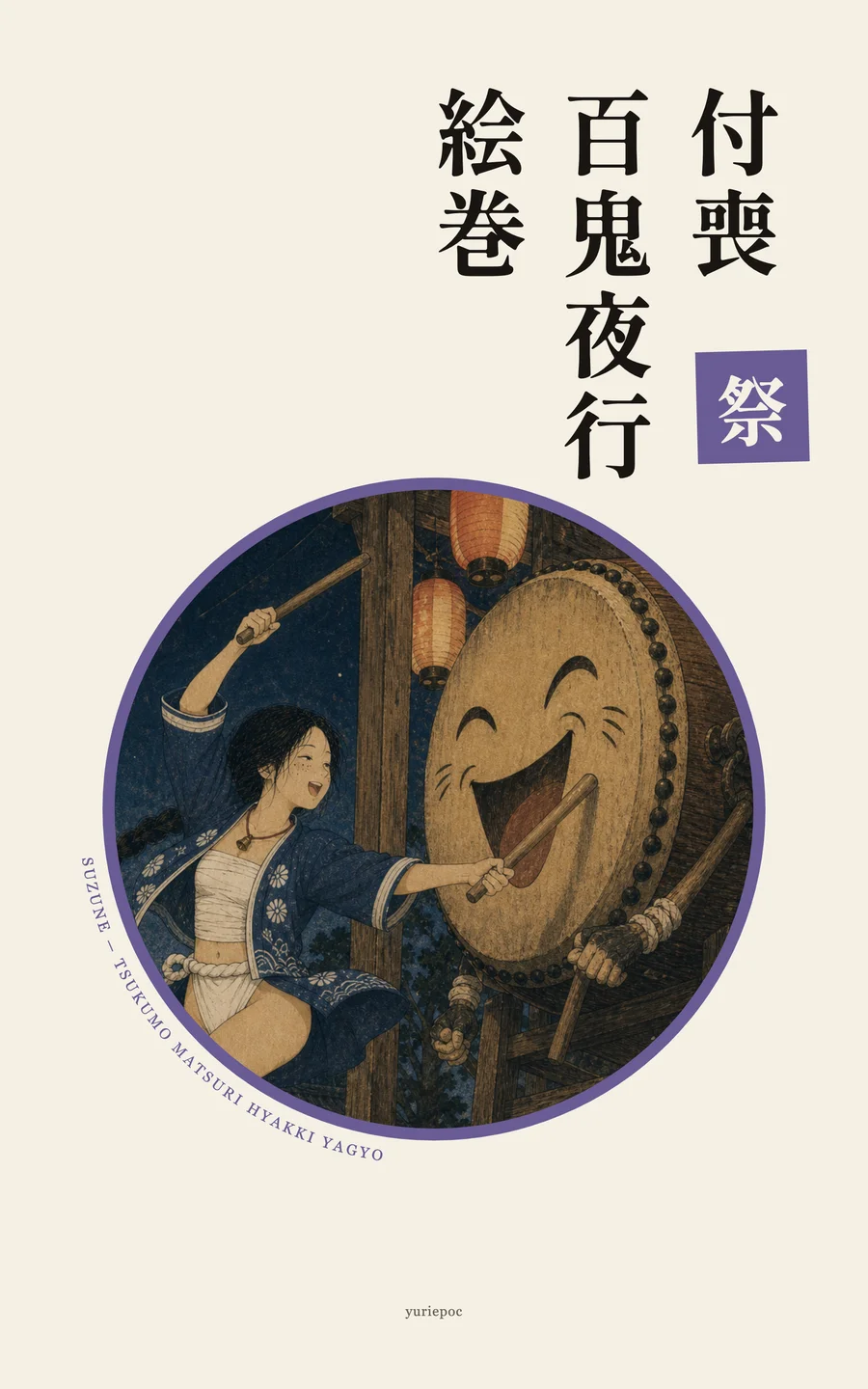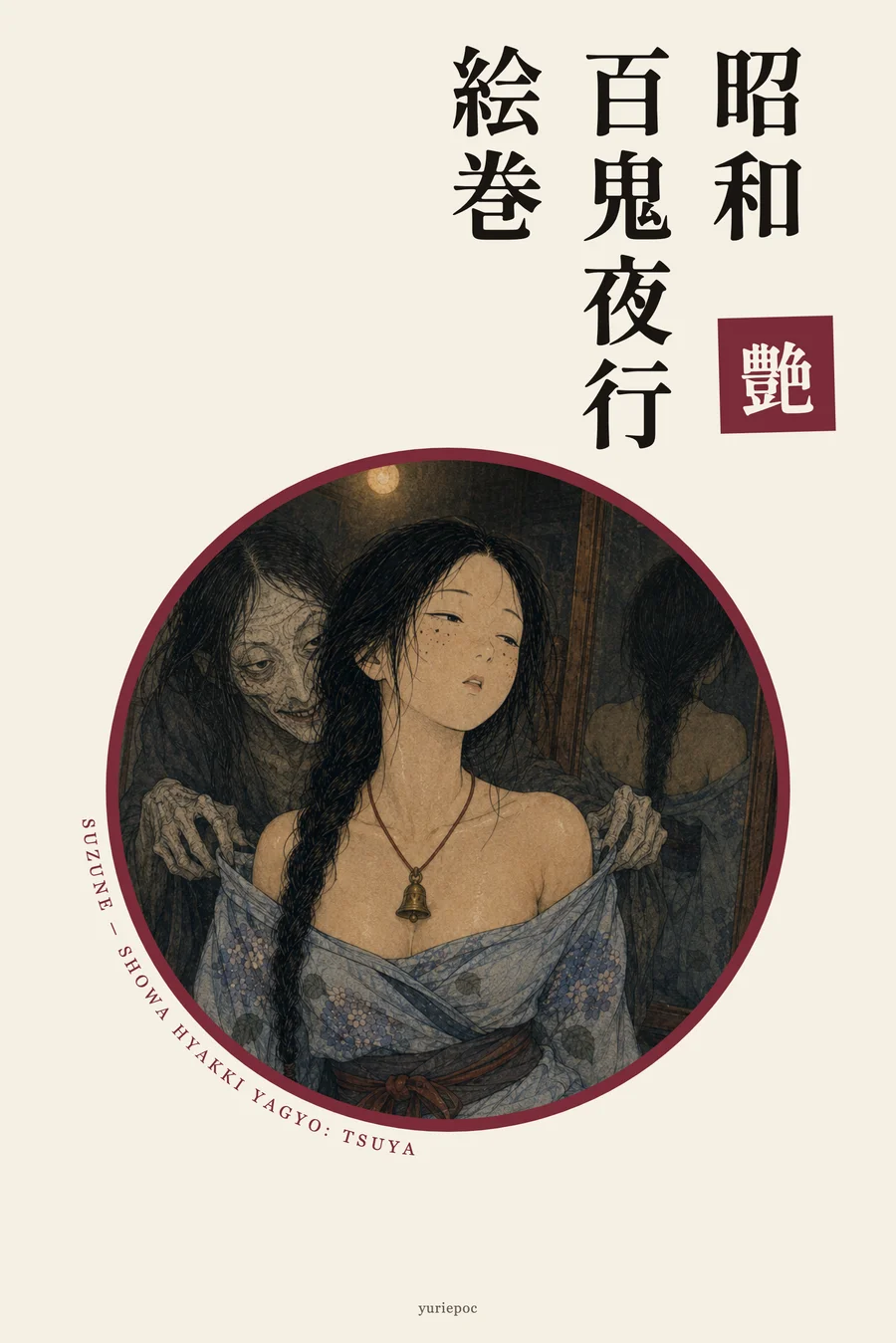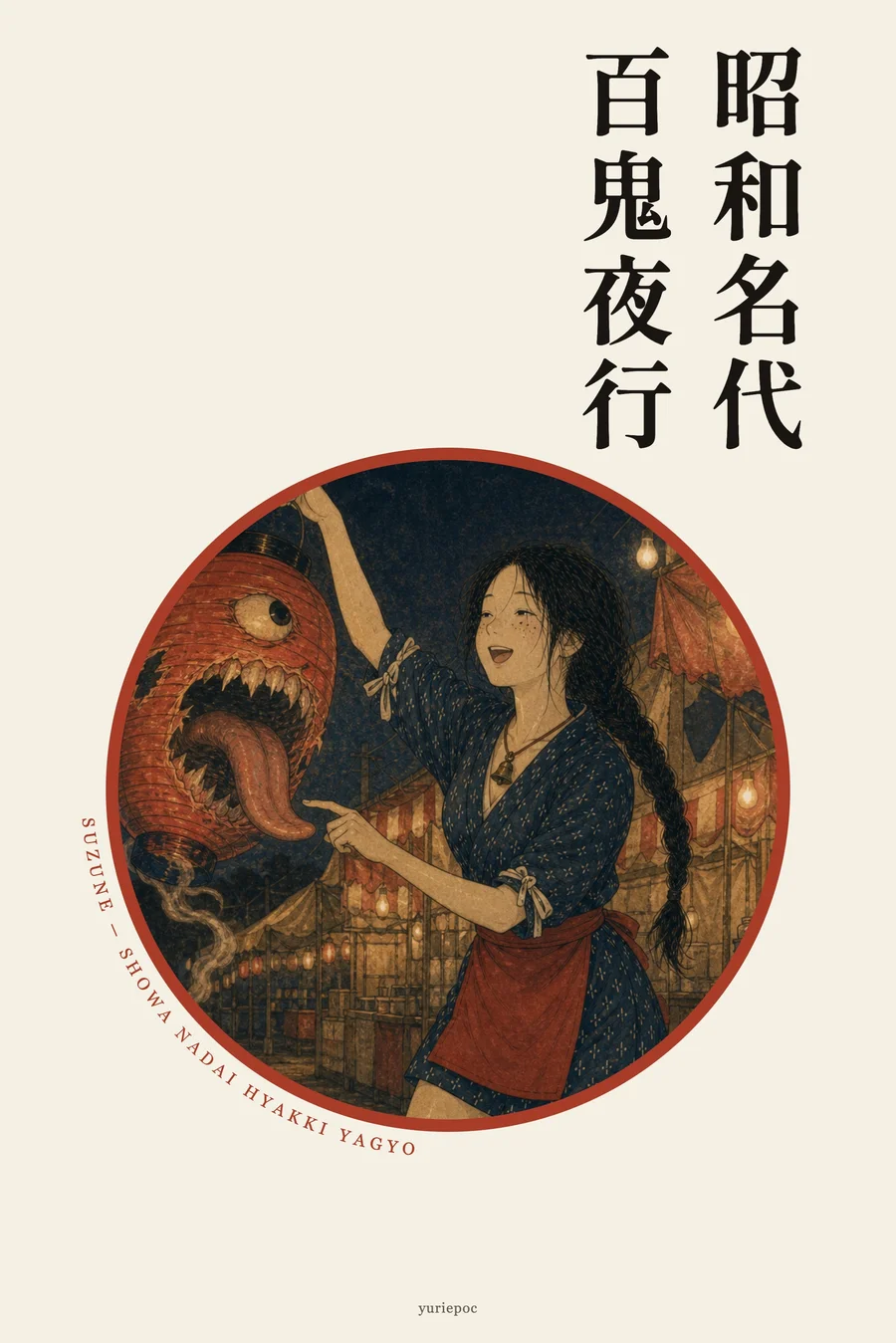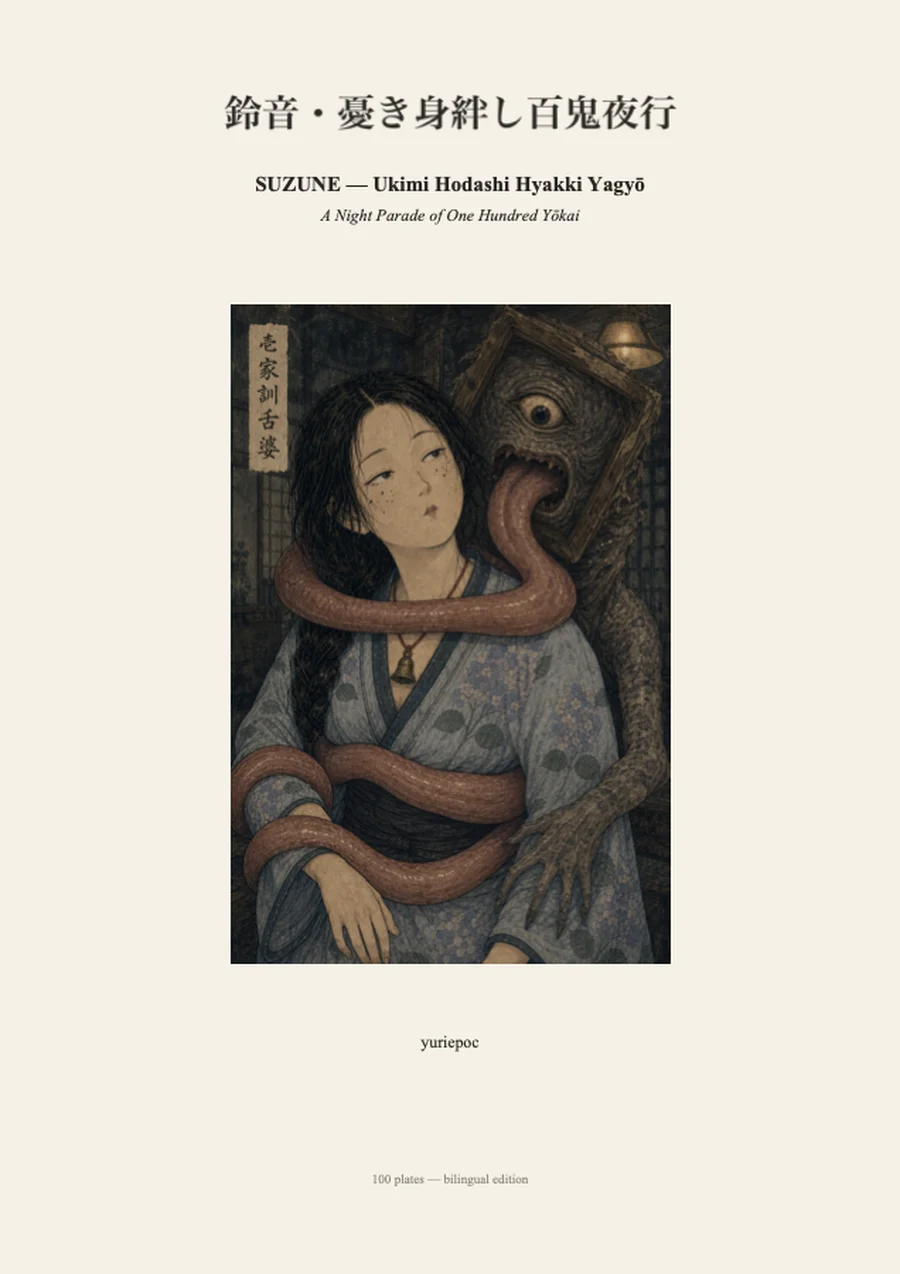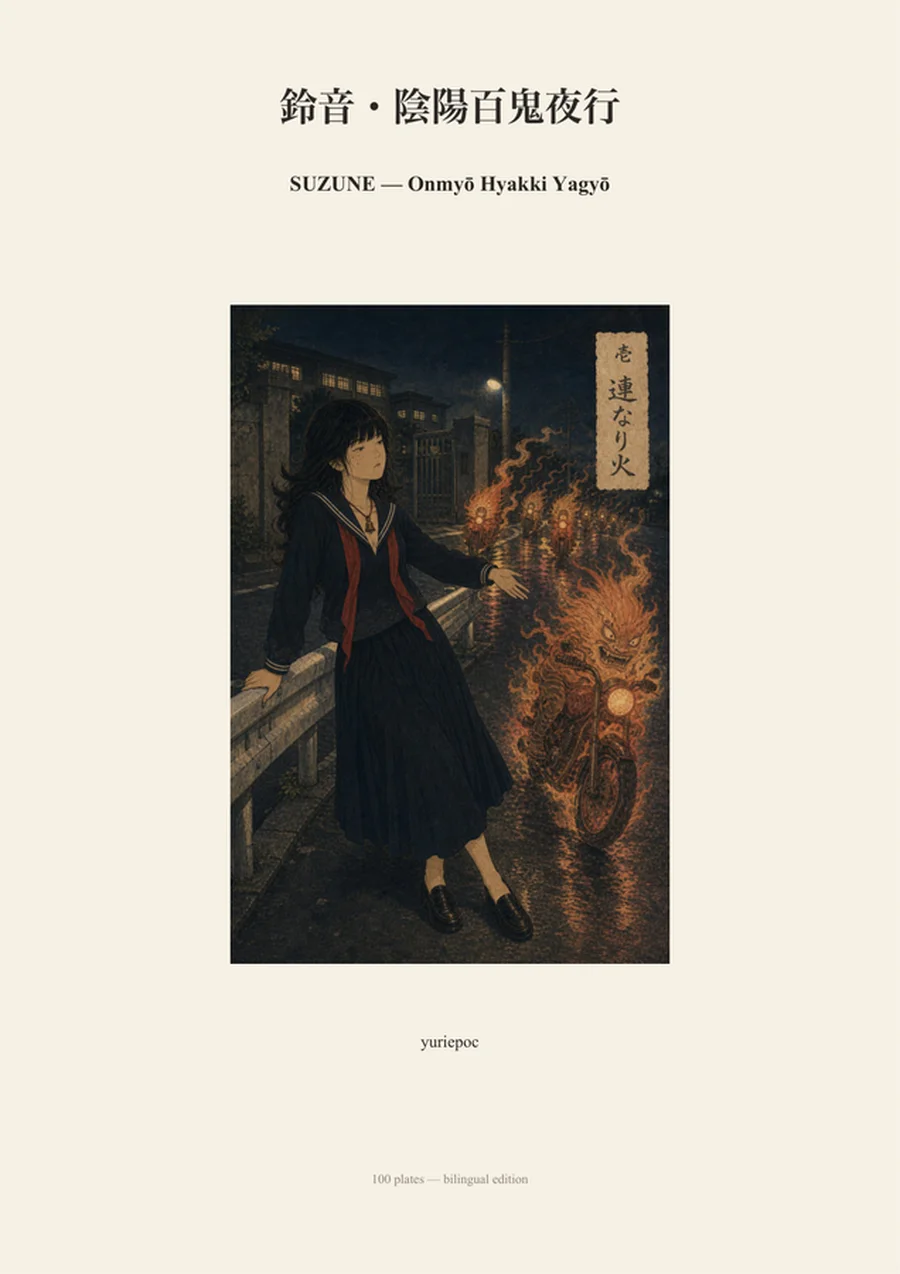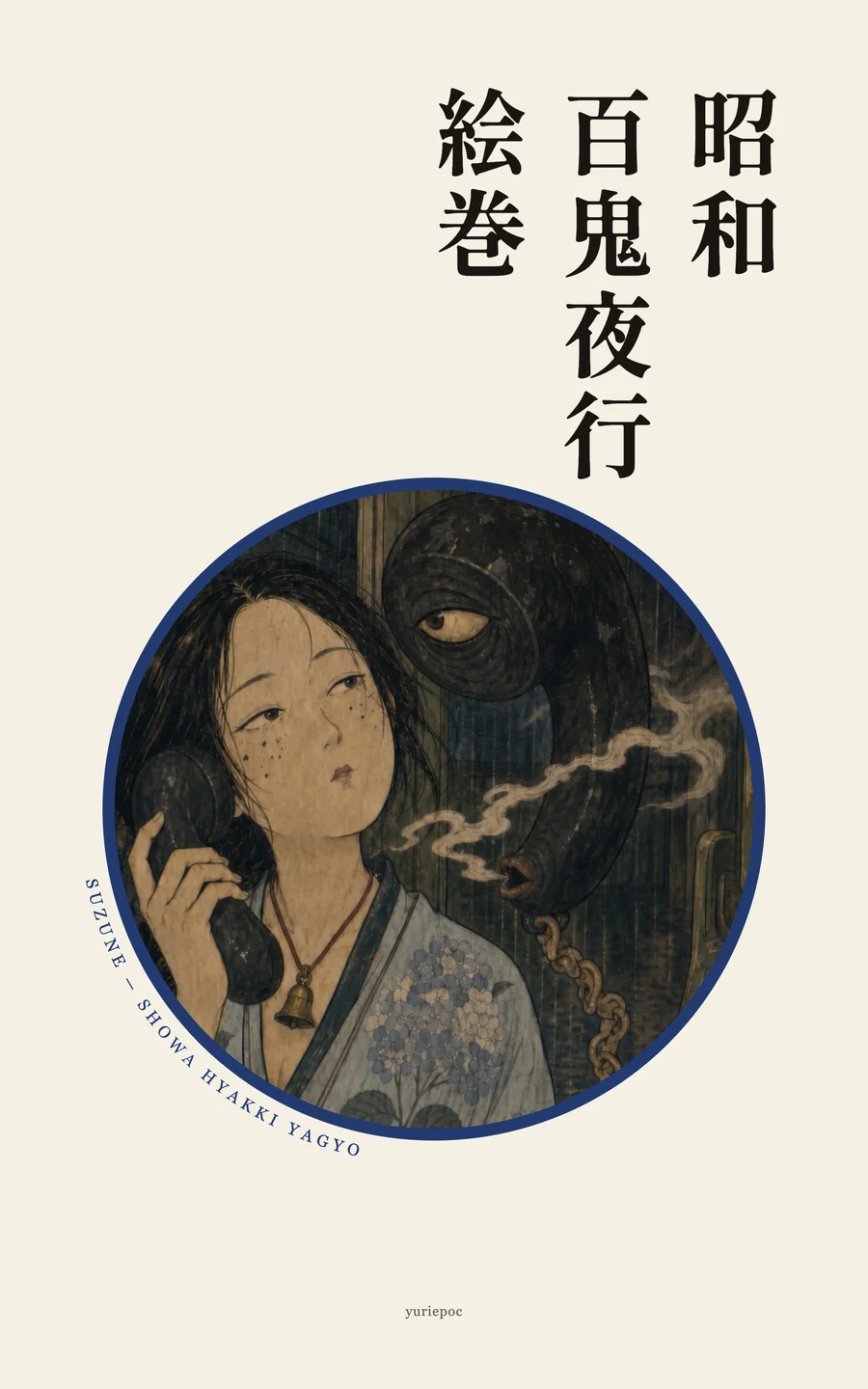
紹介About this book
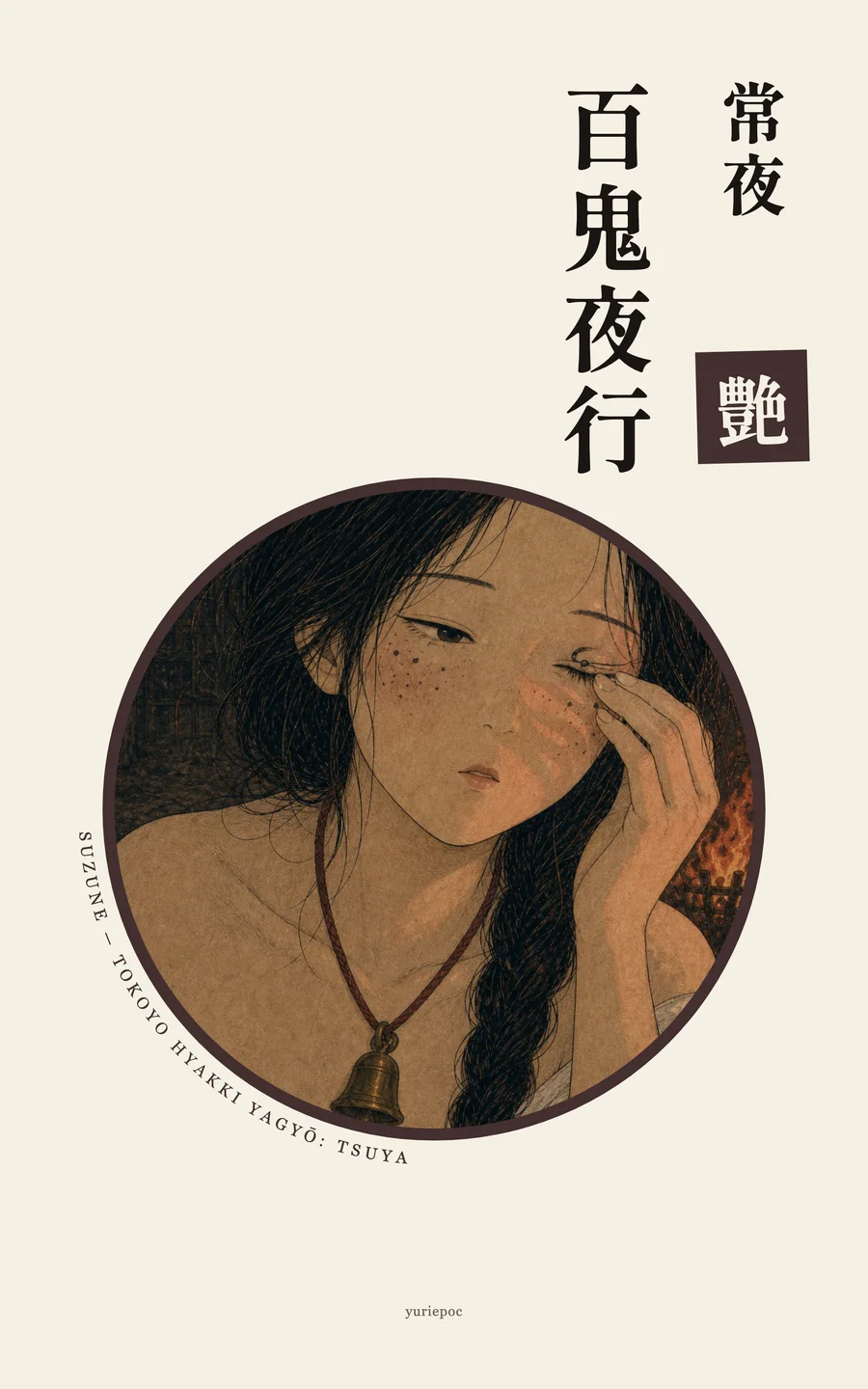
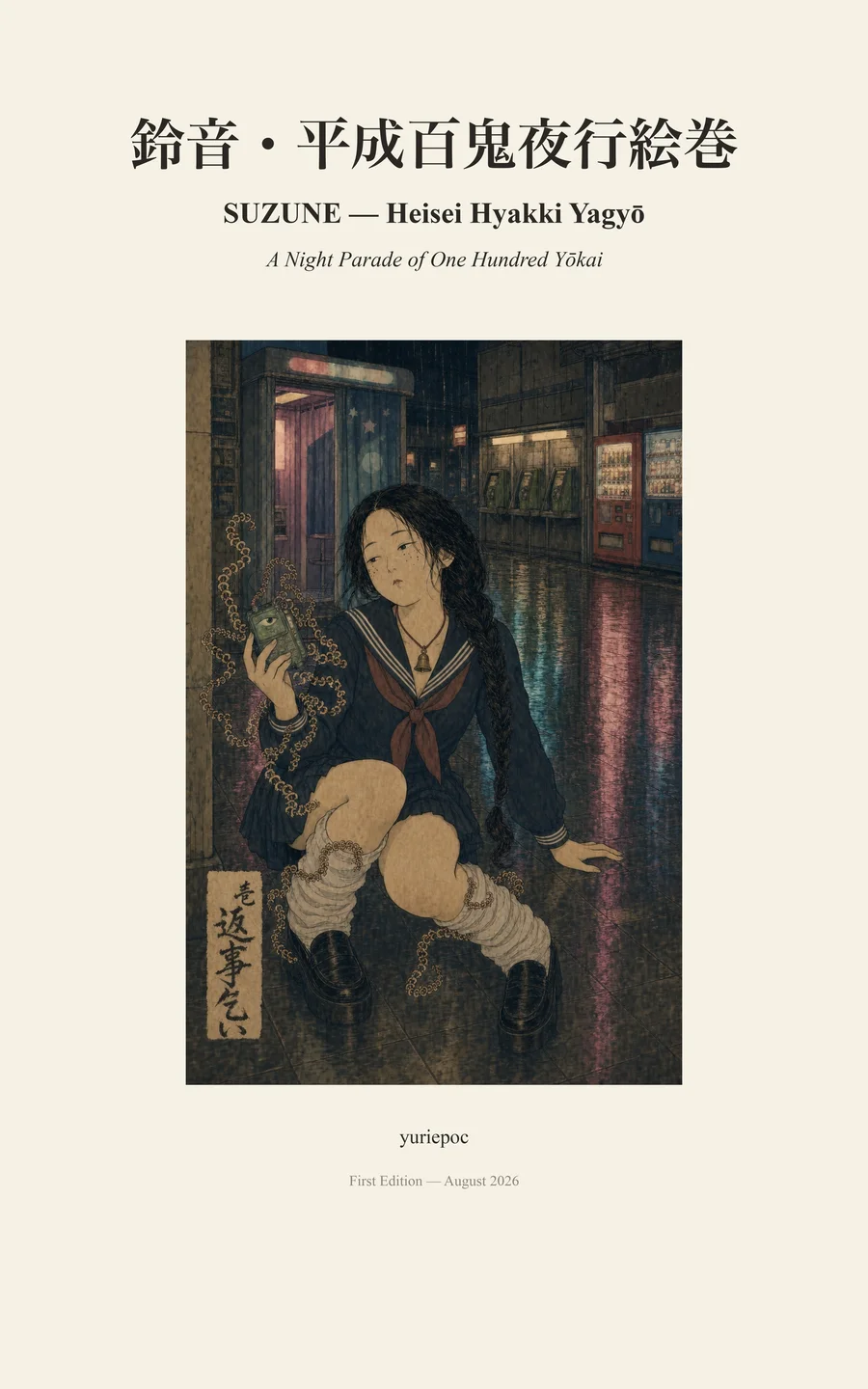
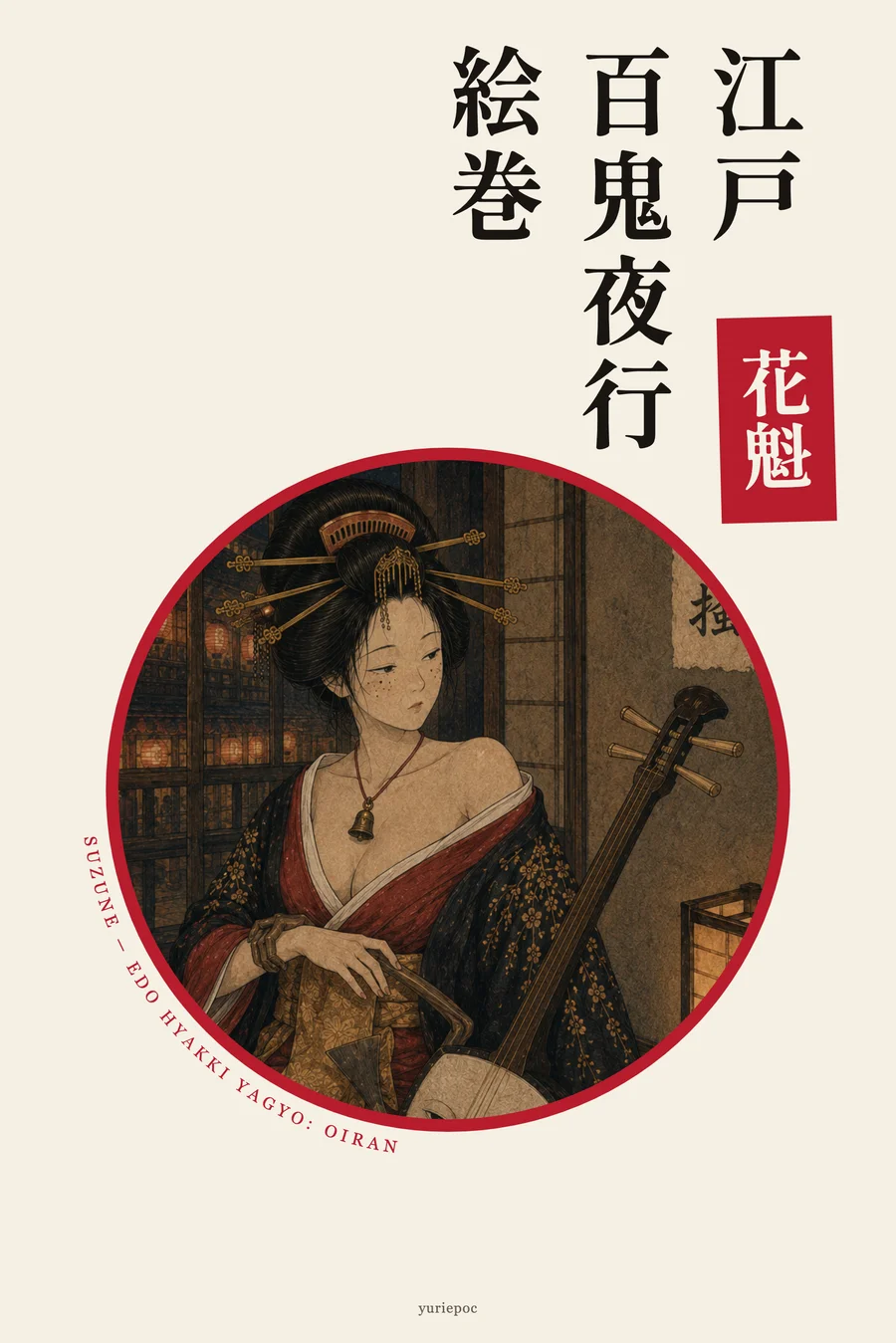
昭和という時代を生きた道具たちに、もし名前のない気配が宿っていたら――。本書『鈴音・昭和百鬼夜行絵巻』は、公衆電話、蛍光灯、二槽式洗濯機、番台の秤、黒電話、ブリキのおもちゃ、最終バスの時刻表など、昭和(1926-1989)の暮らしを支えた百の器物から立ち上がった妖怪たちを、古典の百鬼夜行というモチーフを借りて一図一体・全百図に描き切った、バイリンガルの創作アートブックです。妖怪はすべて本書のための新作で、実在の伝承や地名は引いていません。
行列の中心を歩くのは、首に小さな赤い鈴を提げた写真師・谷内鈴音。彼女は夜ごとその行列を追い、一枚また一枚と姿を記録していきます。図壱「声喰い」は、公衆電話の底に沈んだ、言えなかった言葉を食べる者。図五拾「呼び鈴坊」は、黒電話のベルの内側で撞木を握り、鳴る日を待ち続ける少年。図弐拾五「目方盗り」は、番台の秤が量るたびに少しずつ持ち去っていく重さ。図九拾「首傾げ」は、曲がった標識が道より先に首を傾げている気配。そして図百「鈴返し」で、行列の百番目の席がなぜ空いているのかが、静かに明かされます。
一枚絵には、妖怪の名を記した手書き調の題字札が必ず一枚。その対向ページには、木版画の気配をまとった絵と対になる形で、その妖怪の「由来・見分け・作法」――生まれた理由、遭遇したときの徴候、そして「~してはいけない、代わりにこうせよ」という実用的な対処――を日本語と英語で見開きに配しました。図鑑のように一図ずつ拾い読みすることも、昭和という時代そのものの記憶をたどる一冊として通読することもできる構成です。
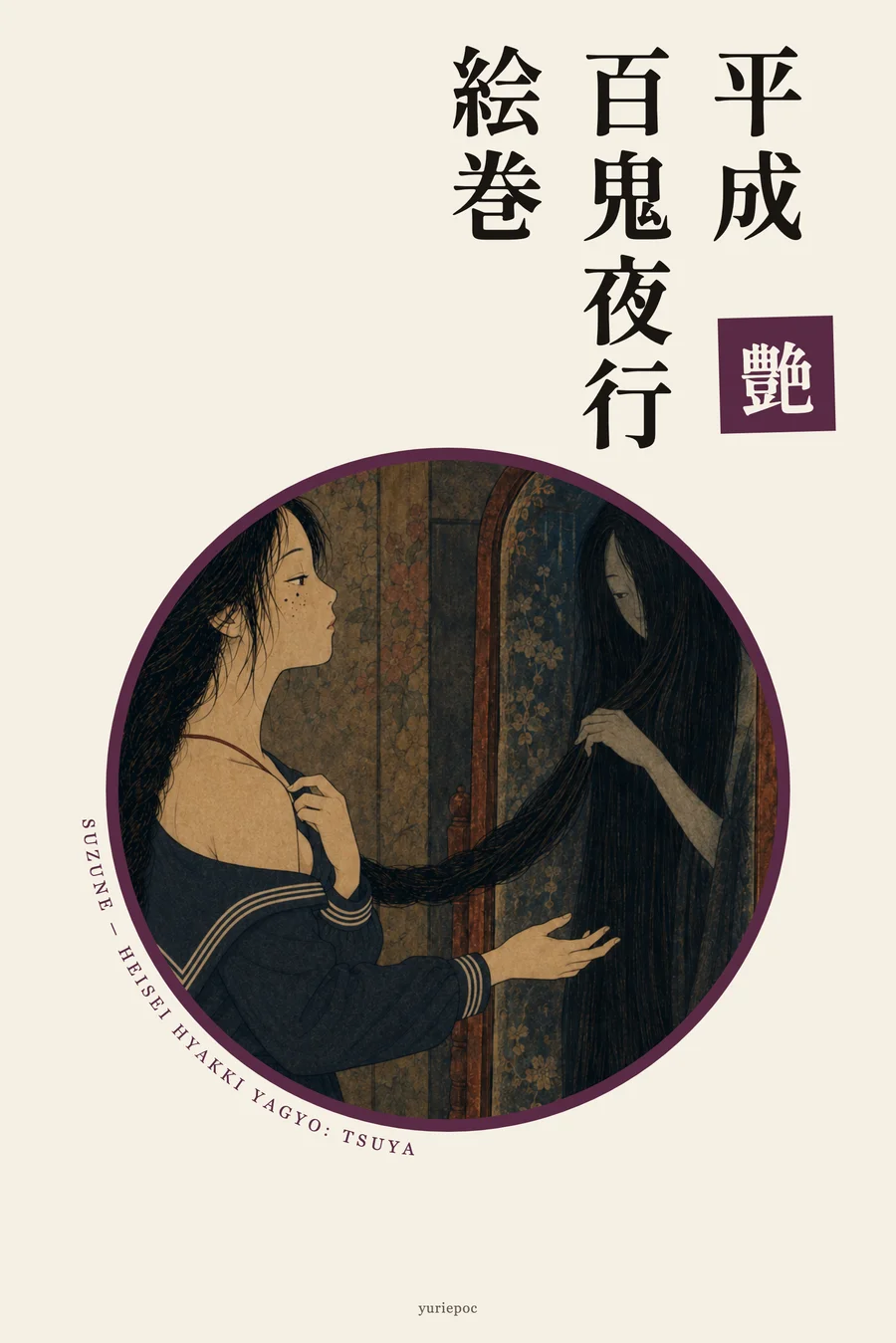
図版・詞書・解説文まで全ページ完全バイリンガル(日本語/英語)。全100図はAI画像生成ツールを用いて制作し、作者本人が一点ごとに方向づけ・選定・レタッチ・品質管理を行いました。本書は「鈴音・百鬼夜行絵巻」シリーズの第一集にあたります。続く平成・令和の巻とあわせて読むと、三つの時代の器物と気配がひとつの行列としてつながっていきます。
Behind the everyday objects of Shōwa-era Japan (1926–1989) — payphones, fluorescent tubes, twin-tub washing machines, the scale at the public bathhouse, black rotary telephones, wind-up tin toys, the last line of a bus timetable — something without a name has been quietly living. SUZUNE — Shōwa Hyakki Yagyō borrows the classical night-parade motif and repopulates it entirely with new, invented yōkai — one plate for each of one hundred beings born from these objects, painted in a woodblock-print spirit. None of them are drawn from documented folklore; all one hundred are original creations made for this book.
At the center of the procession walks Suzune Yachi, a photographer with a small red bell at her throat, recording the parade night after night. Plate 1, The Voice Eater, feeds on the words left unsaid at the bottom of a payphone box. Plate 25, The Weight Thief, carries off a little of you each time the bathhouse scale weighs you. Plate 50, The Boy in the Bell, grips the striker inside a black telephone, still waiting for it to ring. What plate 100 finally reveals is why the hundredth place in the parade has always been left empty.
Every plate carries a hand-brushed title slip bearing the yōkai's name. Facing it is a bilingual commentary in three parts — Origin, Signs, and Practice — explaining how the being came to be, how to recognize an encounter, and what to do about it, down to a closing line of practical instruction. Read it plate by plate like a field guide, or straight through as a portrait of an entire era remembered through its objects.
Fully bilingual in Japanese and English throughout — plates, captions, and commentary alike. All one hundred plates were created using AI image-generation tools, individually directed, hand-selected, retouched, and quality-controlled by the artist. This is the first volume of the SUZUNE — Hyakki Yagyō series; the Heisei and Reiwa volumes continue the same parade into later eras.
見本図Sample plates
-
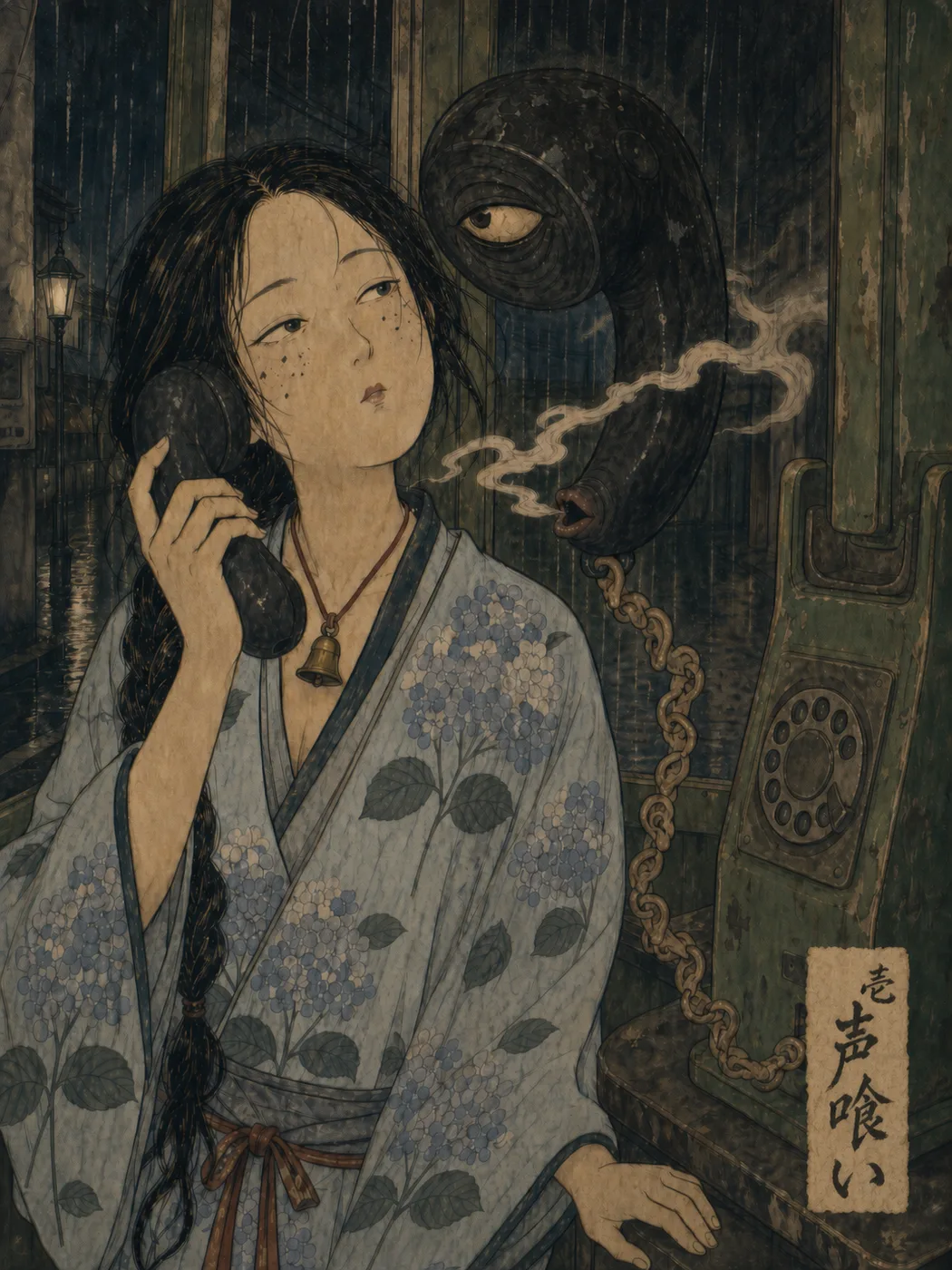
第一図 / Plate 1
声喰いKoekui
The Voice Eater
由来 / Origin
声喰いは、公衆電話の箱の底にいる妖怪である。電話で言おうとして言えなかった言葉は、箱の底にたまる。
Koekui lives at the bottom of a public payphone box. Words you meant to say but never said sink down and collect there.
-
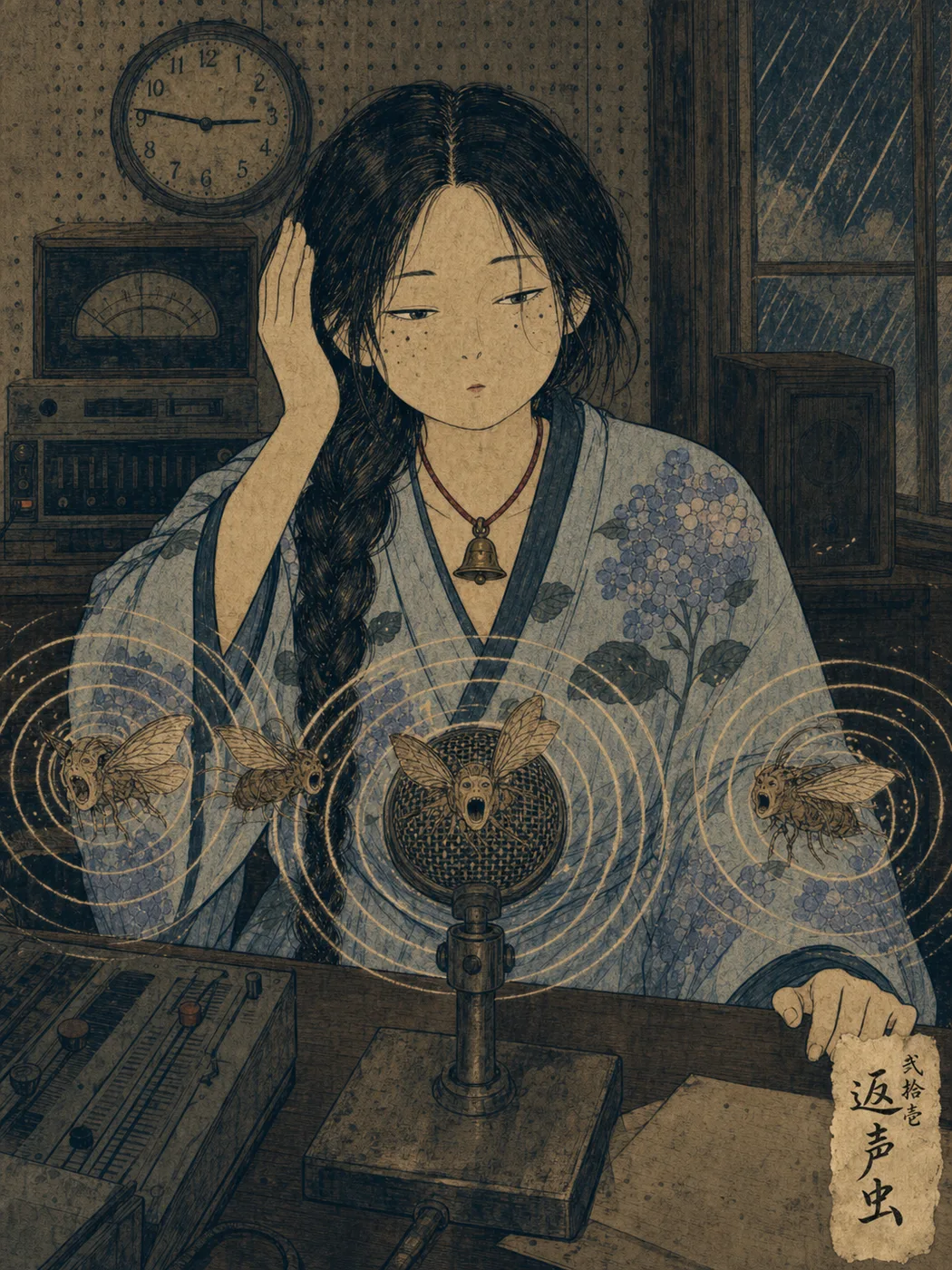
第二十一図 / Plate 21
返声虫Kaeshigoe-mushi
The Answering Worm
由来 / Origin
返声虫は、放送室のマイクにいる妖怪である。電源を切った後も、配線には一呼吸ぶんの電気が残る。
Kaeshigoe-mushi lives in the microphone of a school broadcast room. Even after the switch is turned off, a little electricity stays in the wires for one breath.
-
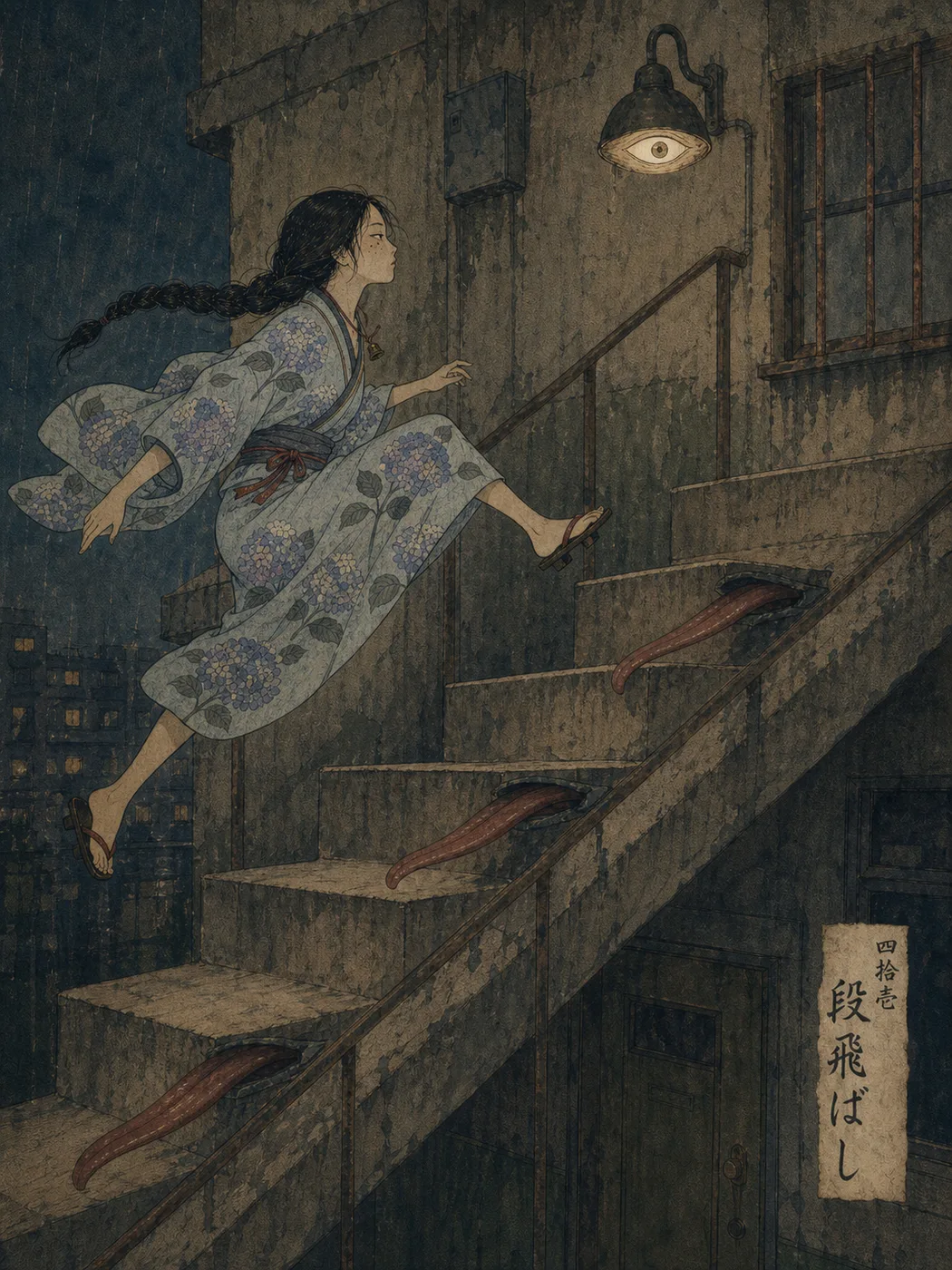
第四十一図 / Plate 41
段飛ばしDan-tobashi
The Step Skipper
由来 / Origin
段飛ばしは、団地の階段にいる妖怪である。上と下から別々に段を数えた大工がいた。
Dan-tobashi lives on the stairs of an apartment block. Two carpenters once counted the steps from opposite ends, one from the top and one from the bottom, and their tallies disagreed by exactly one step just before the landing.
-
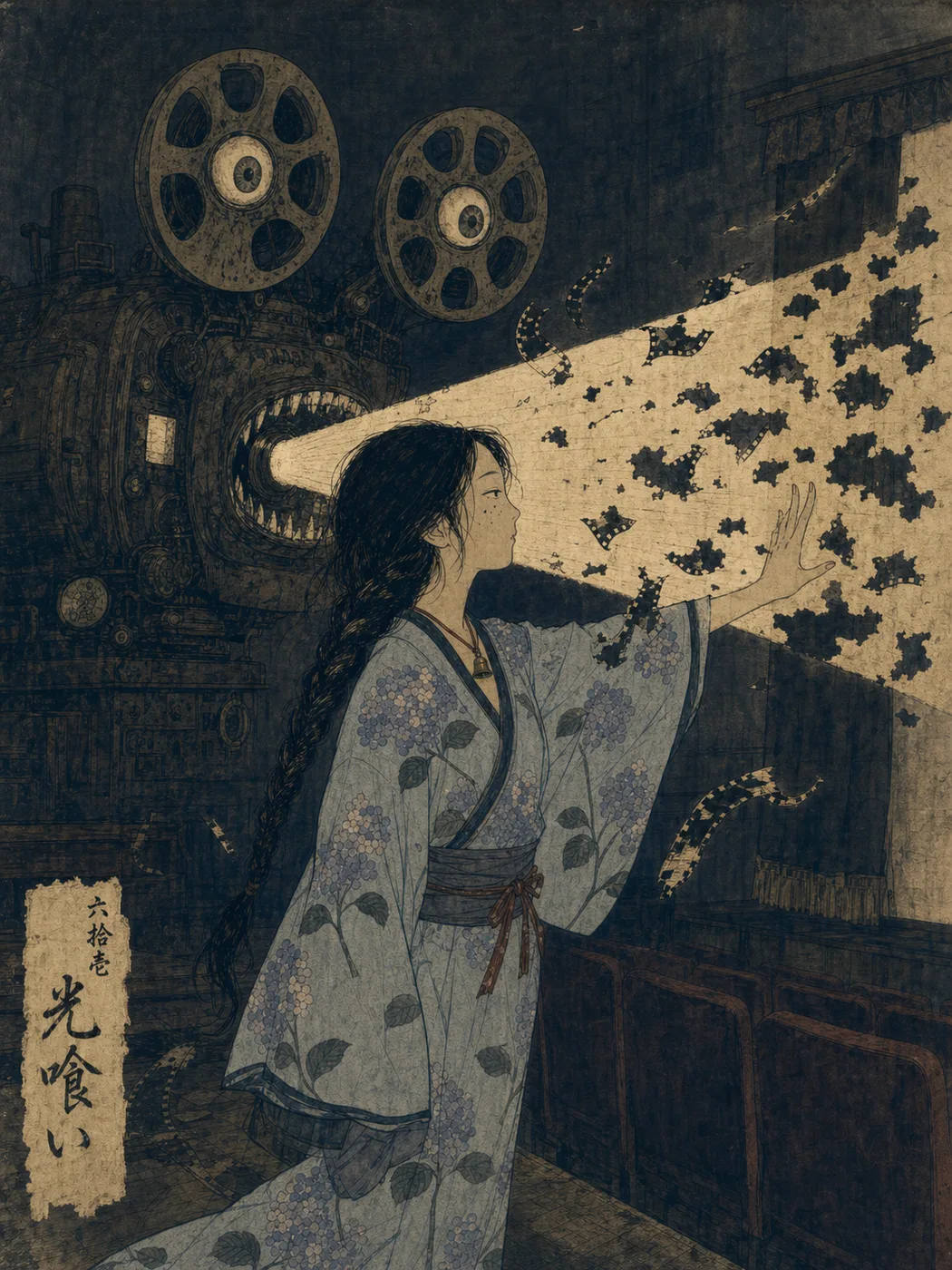
第六十一図 / Plate 61
光喰いHikari-kui
The Light Eater
由来 / Origin
光喰いは、映画館の映写機にいる妖怪である。同じ一巻を掛けるたび、ランプに行き場のない熱がたまる。
Hikari-kui lives in the movie theater's projector. Every time the same reel runs, the lamp banks up heat with nowhere to go.
-
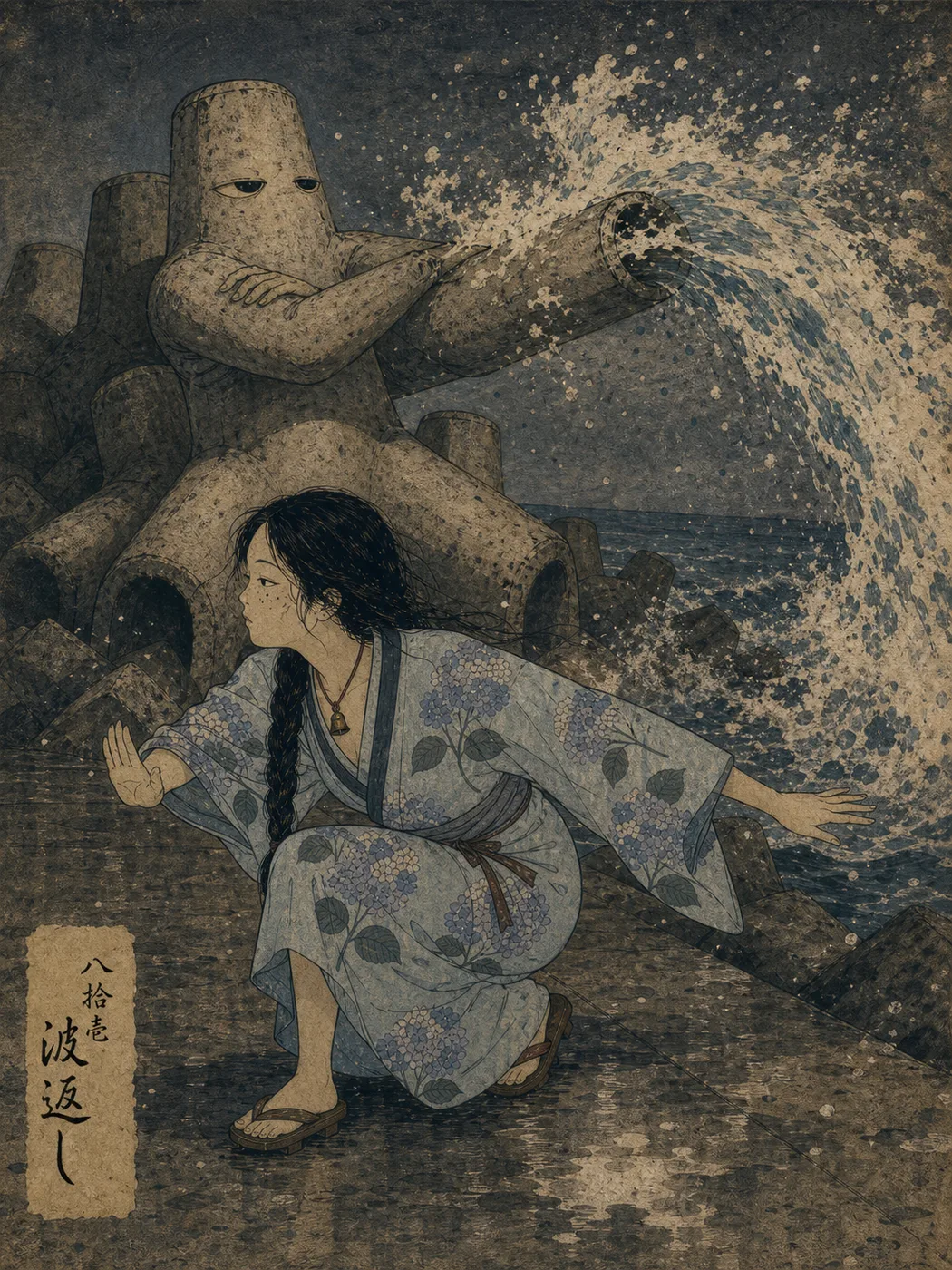
第八十一図 / Plate 81
波返しNami-gaeshi
The Wave Returner
由来 / Origin
波返しは、堤で波を海へ押し返す妖怪である。押し返された波は行く先を失い、同じ形でまた寄せてくる。
Nami-gaeshi lives on the breakwater and throws every wave it receives back out to sea. A wave sent back loses its way and returns in the same shape.
ほかの本Other books