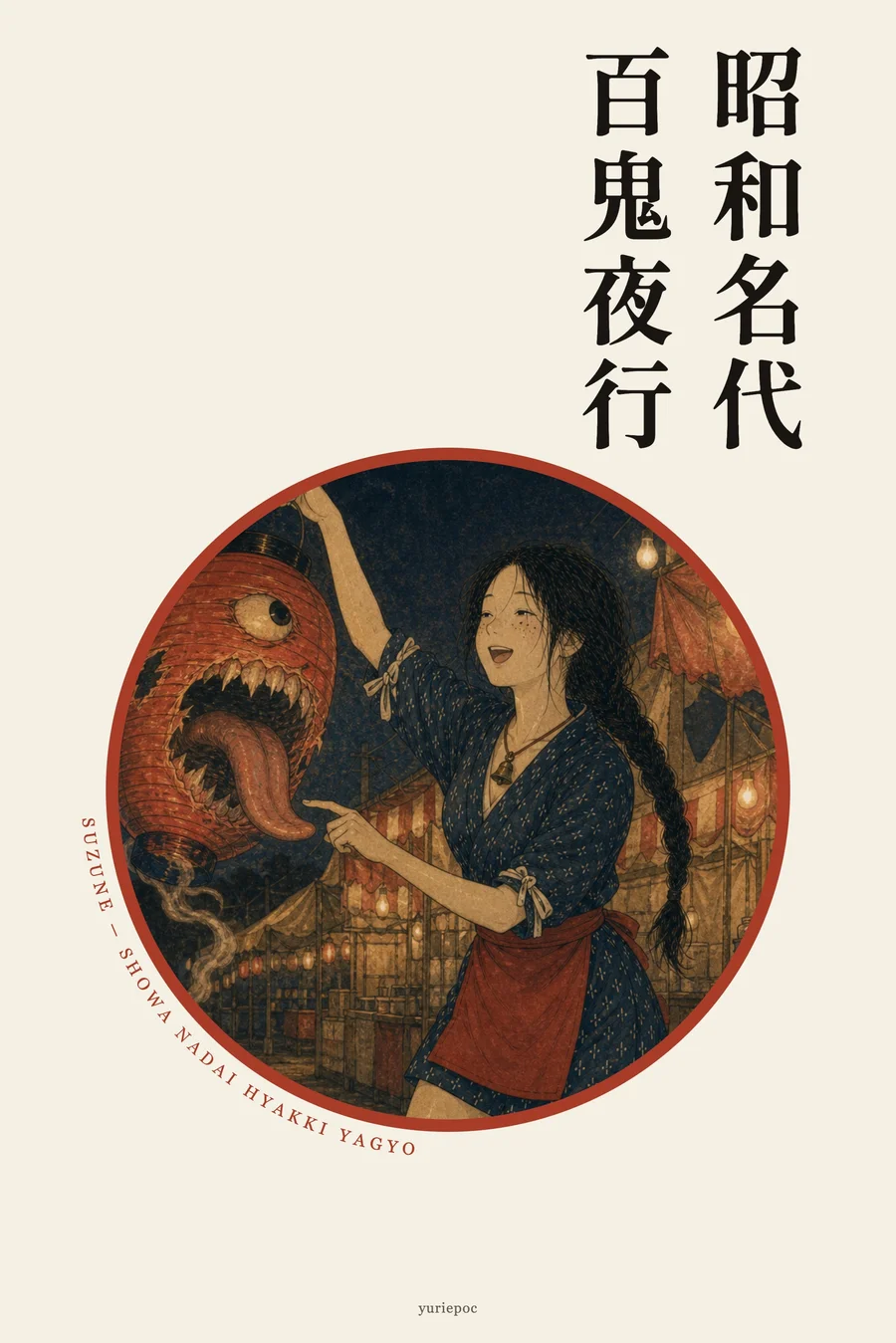
紹介About this book
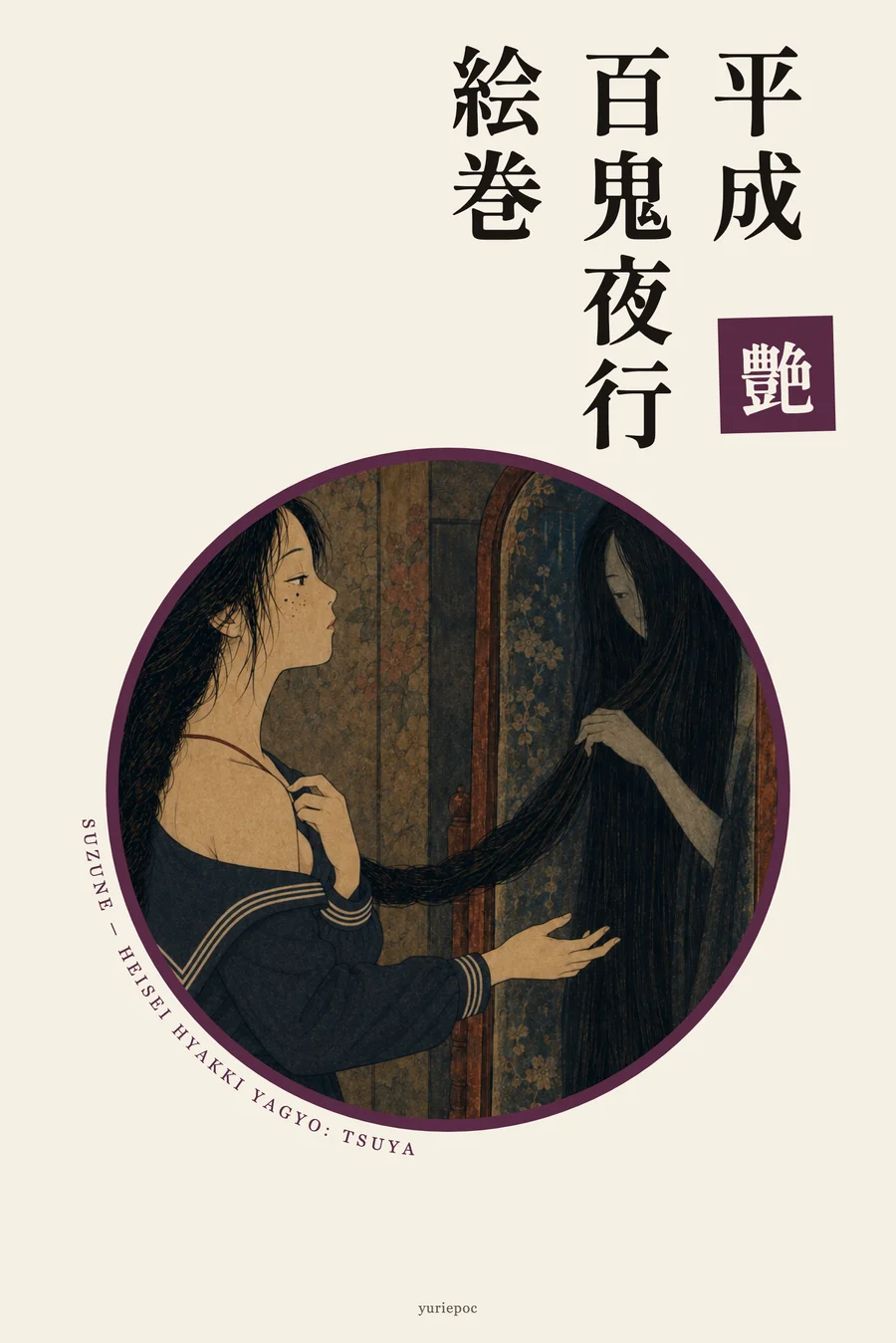
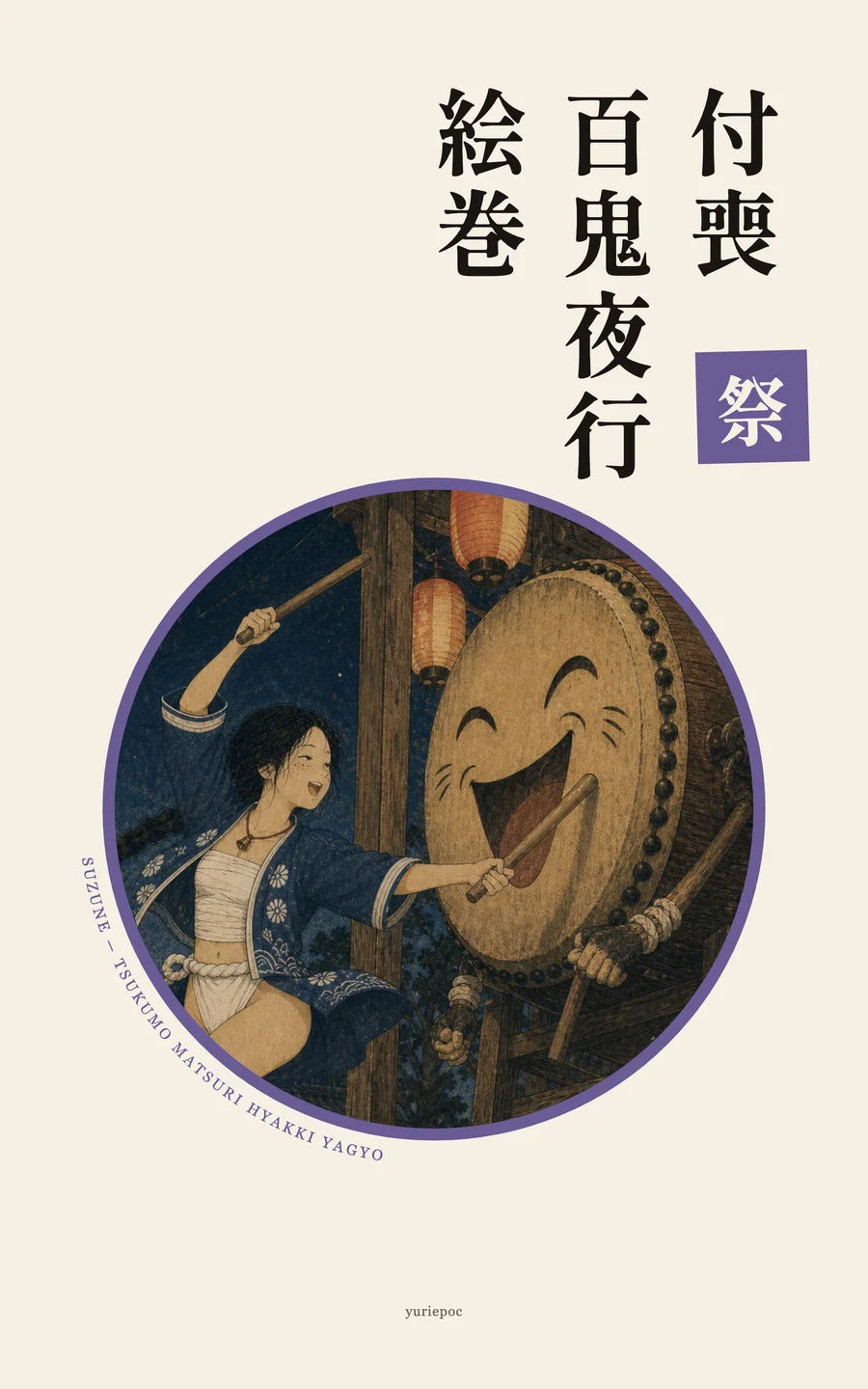
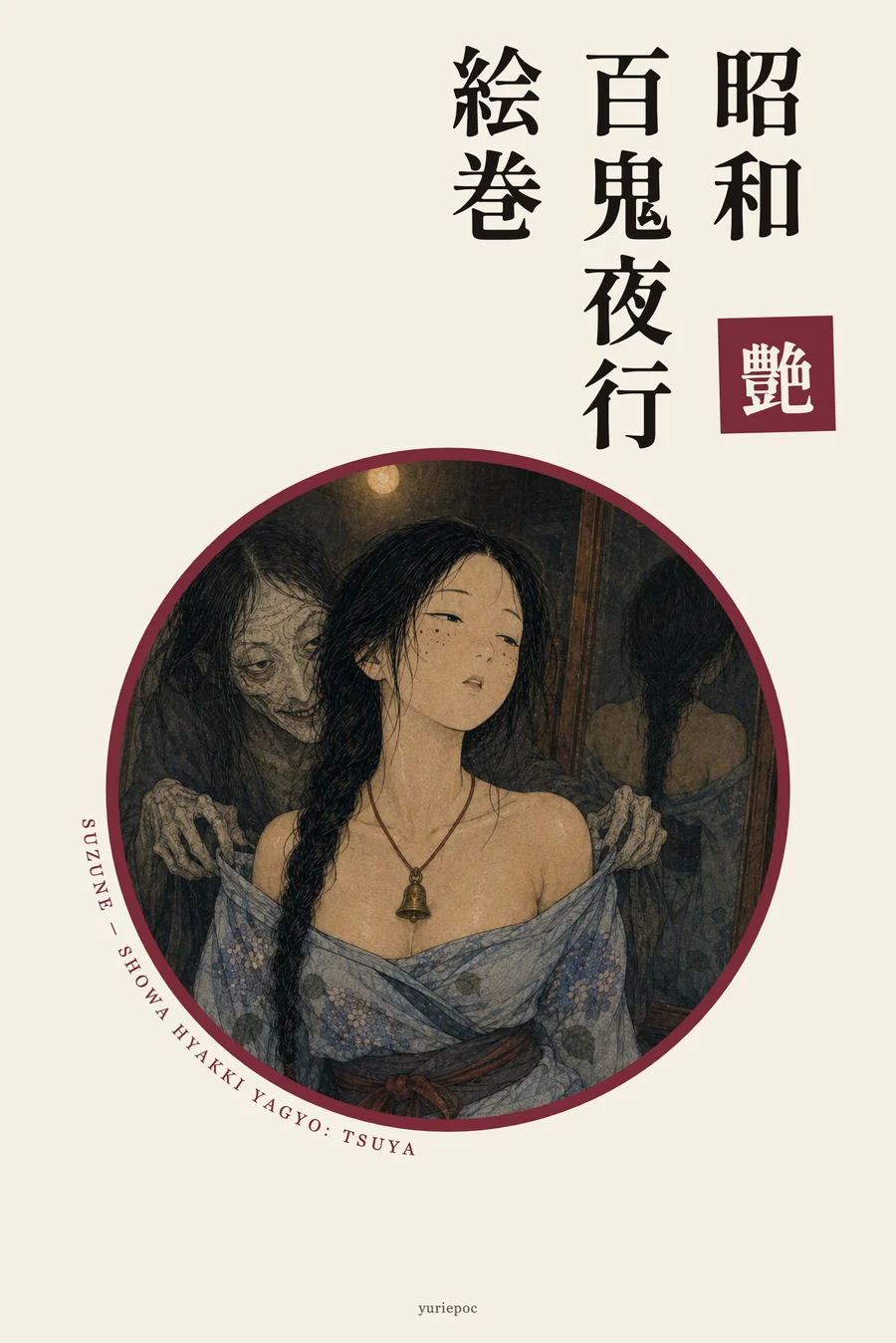
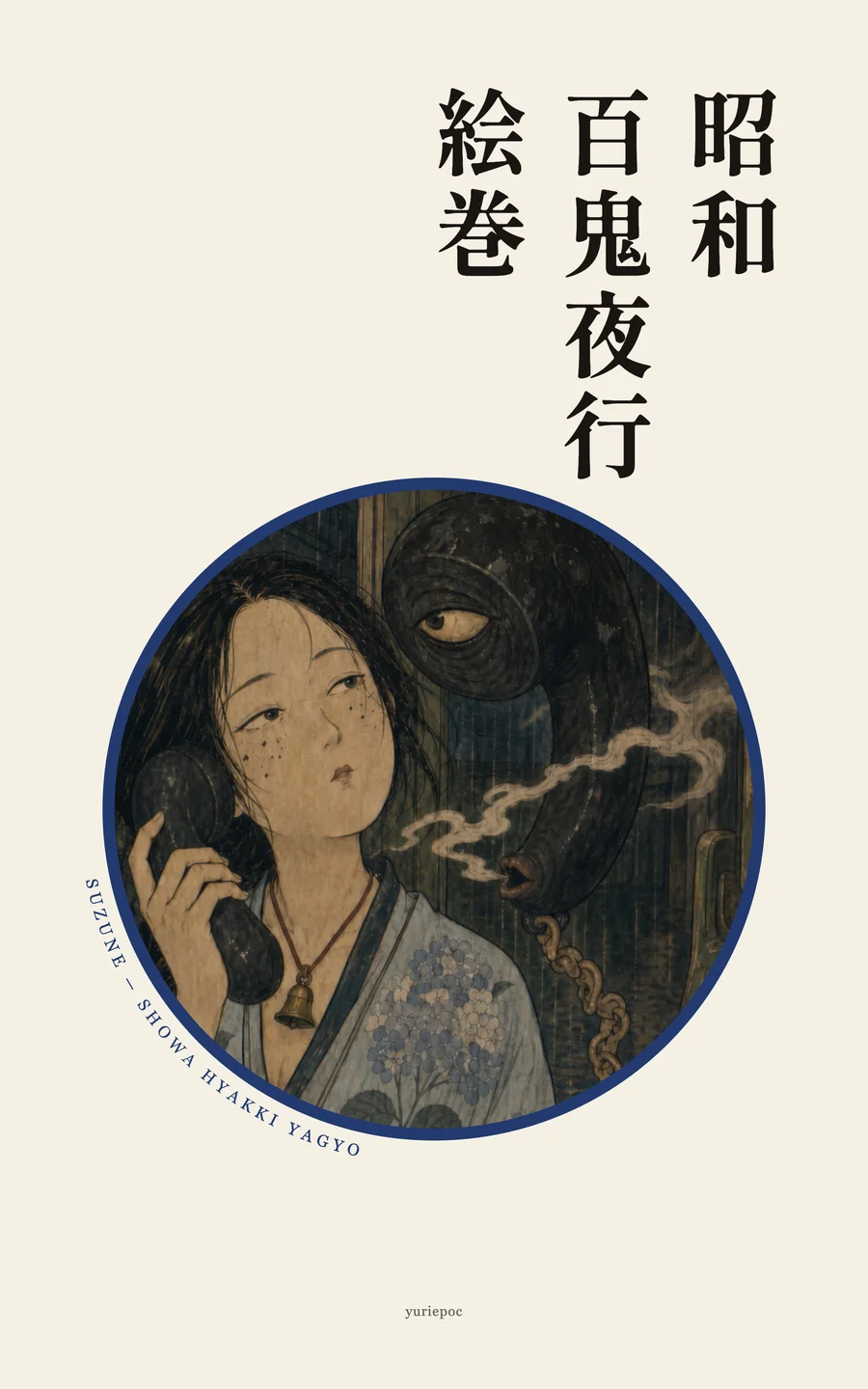
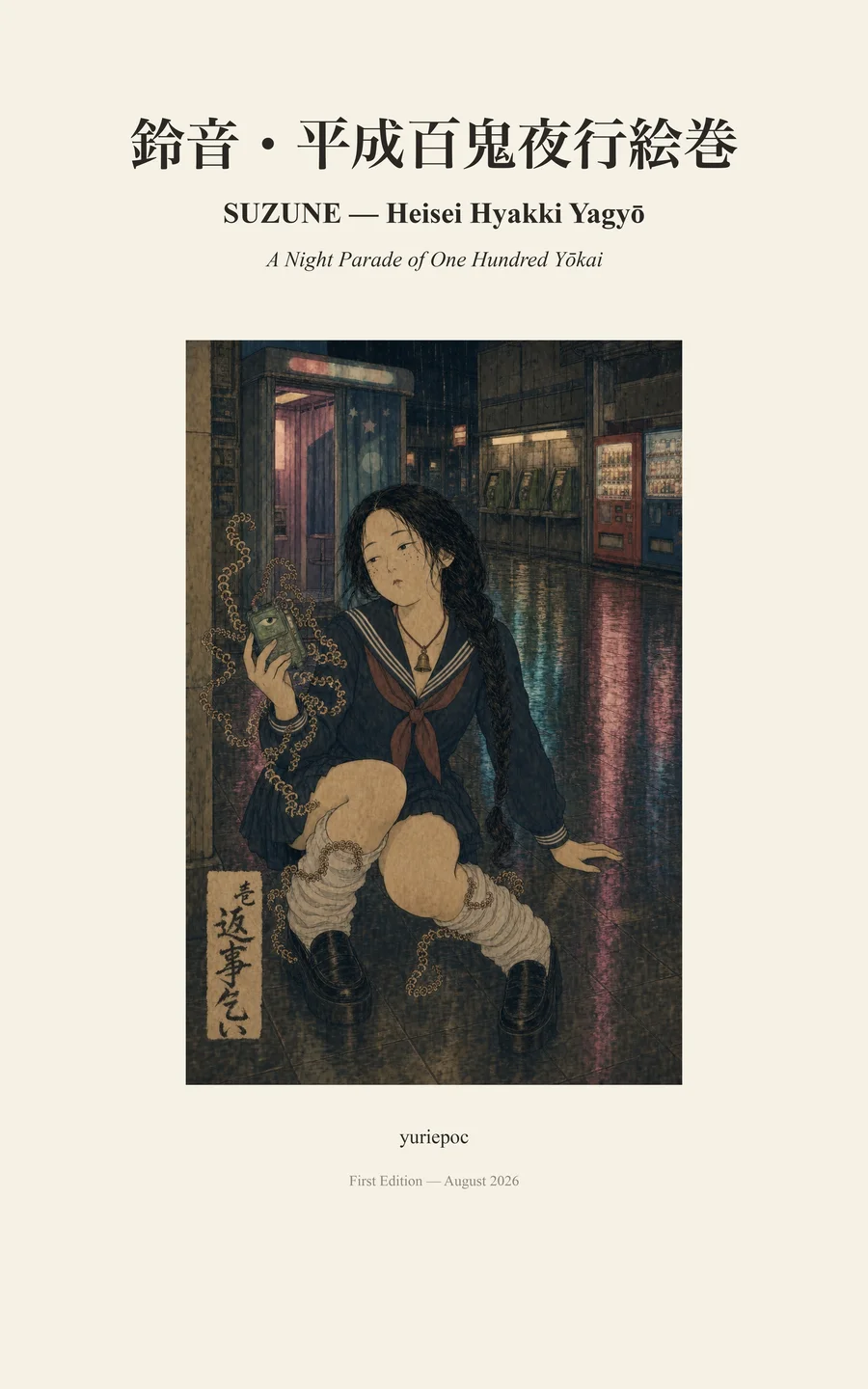
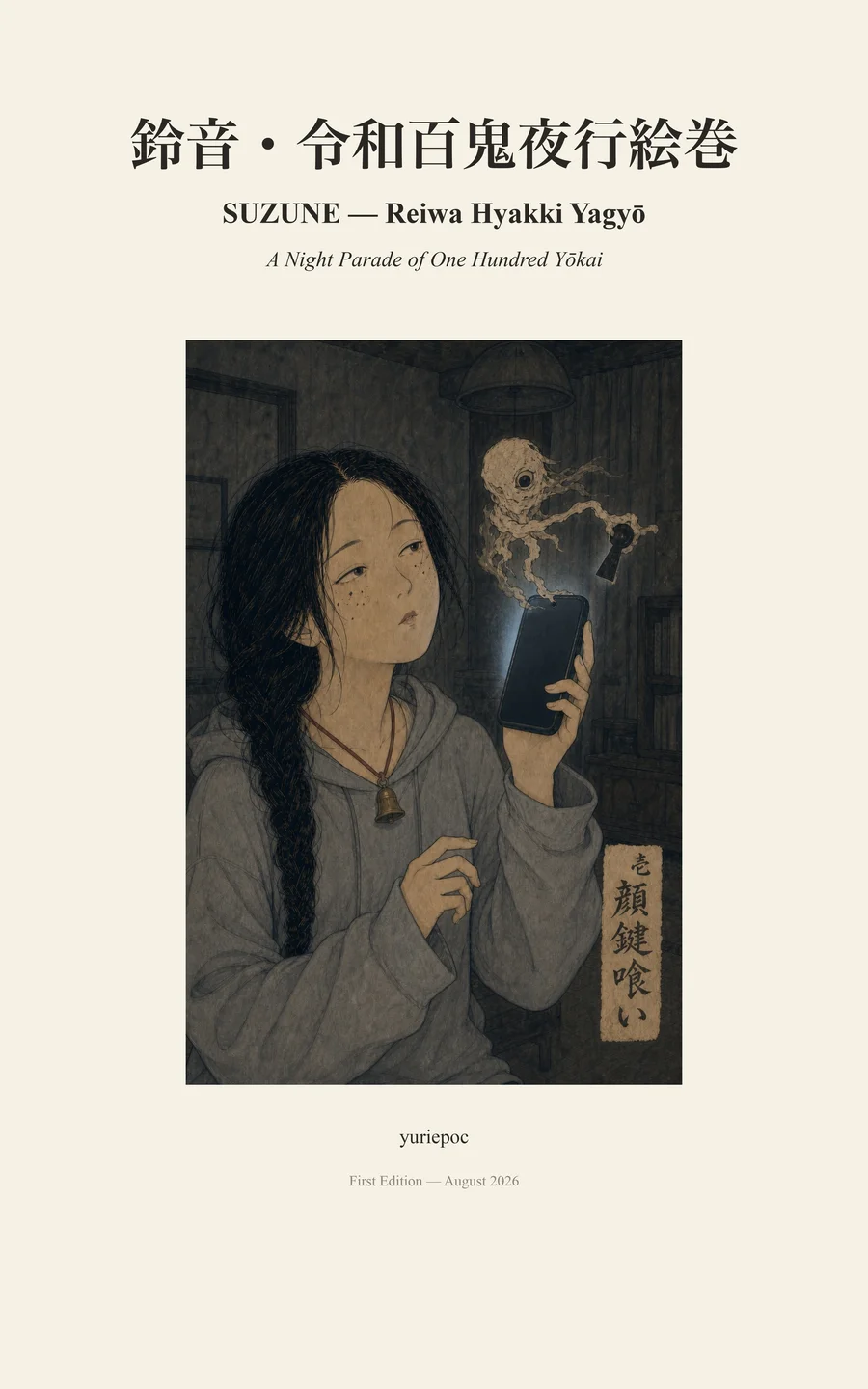
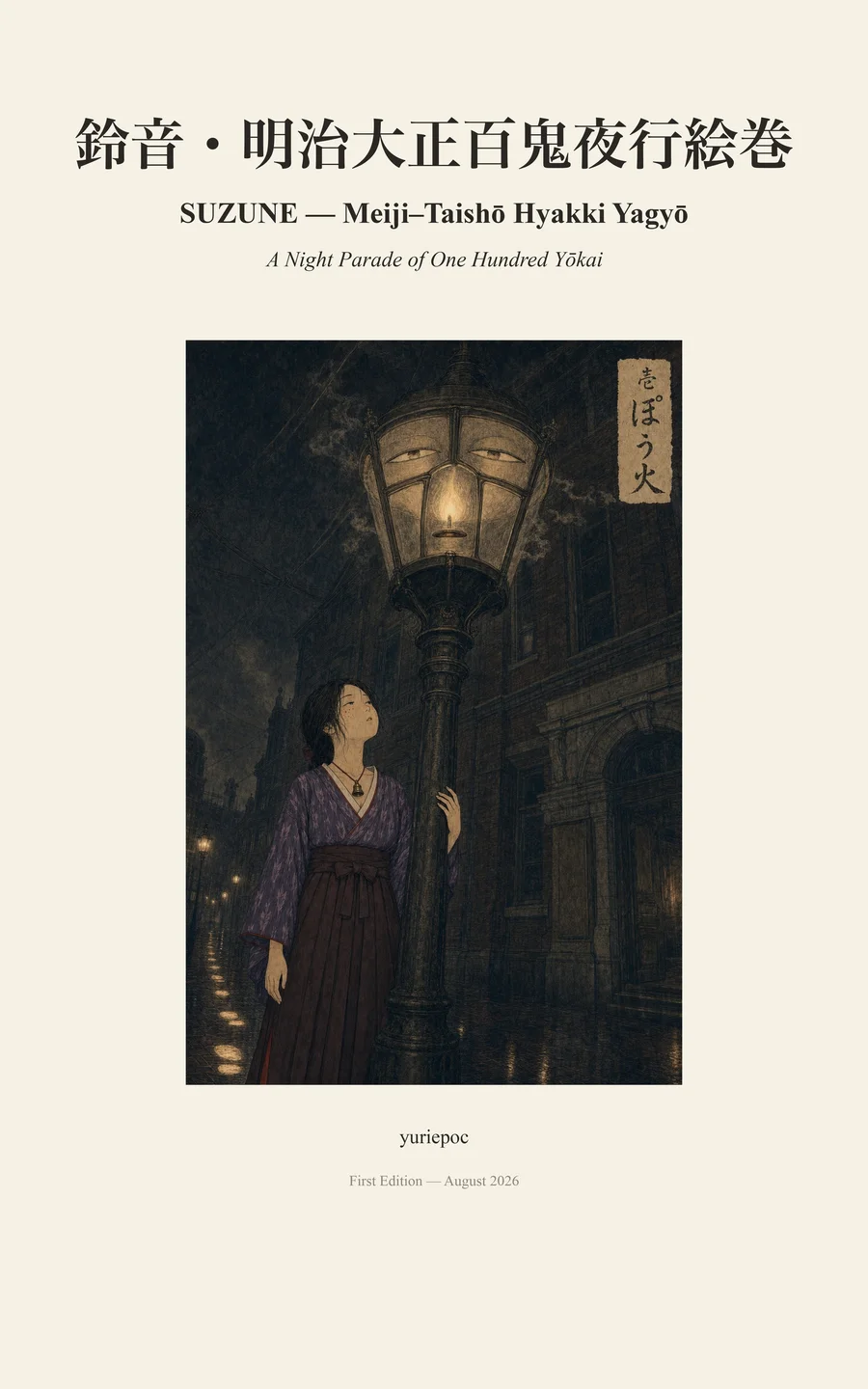
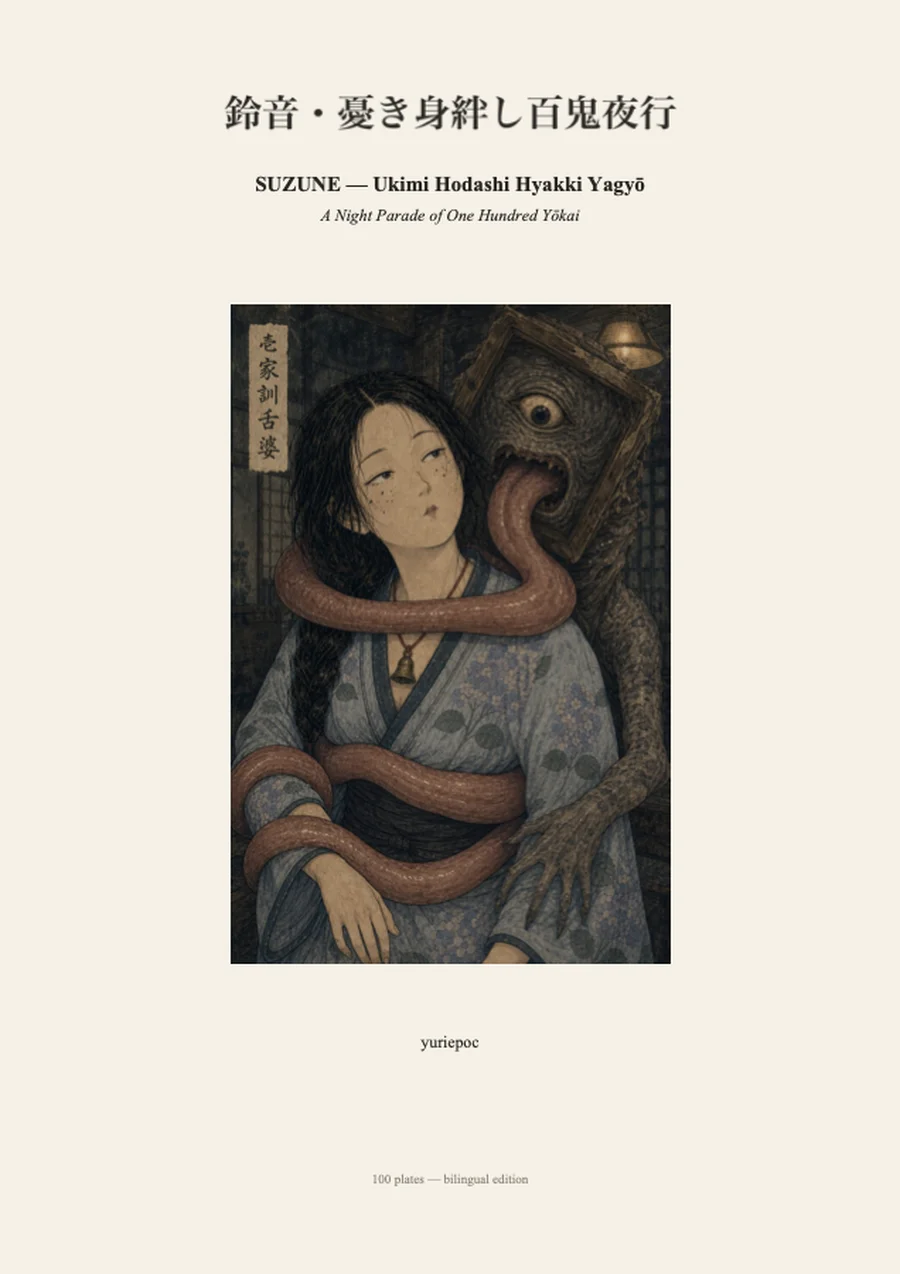
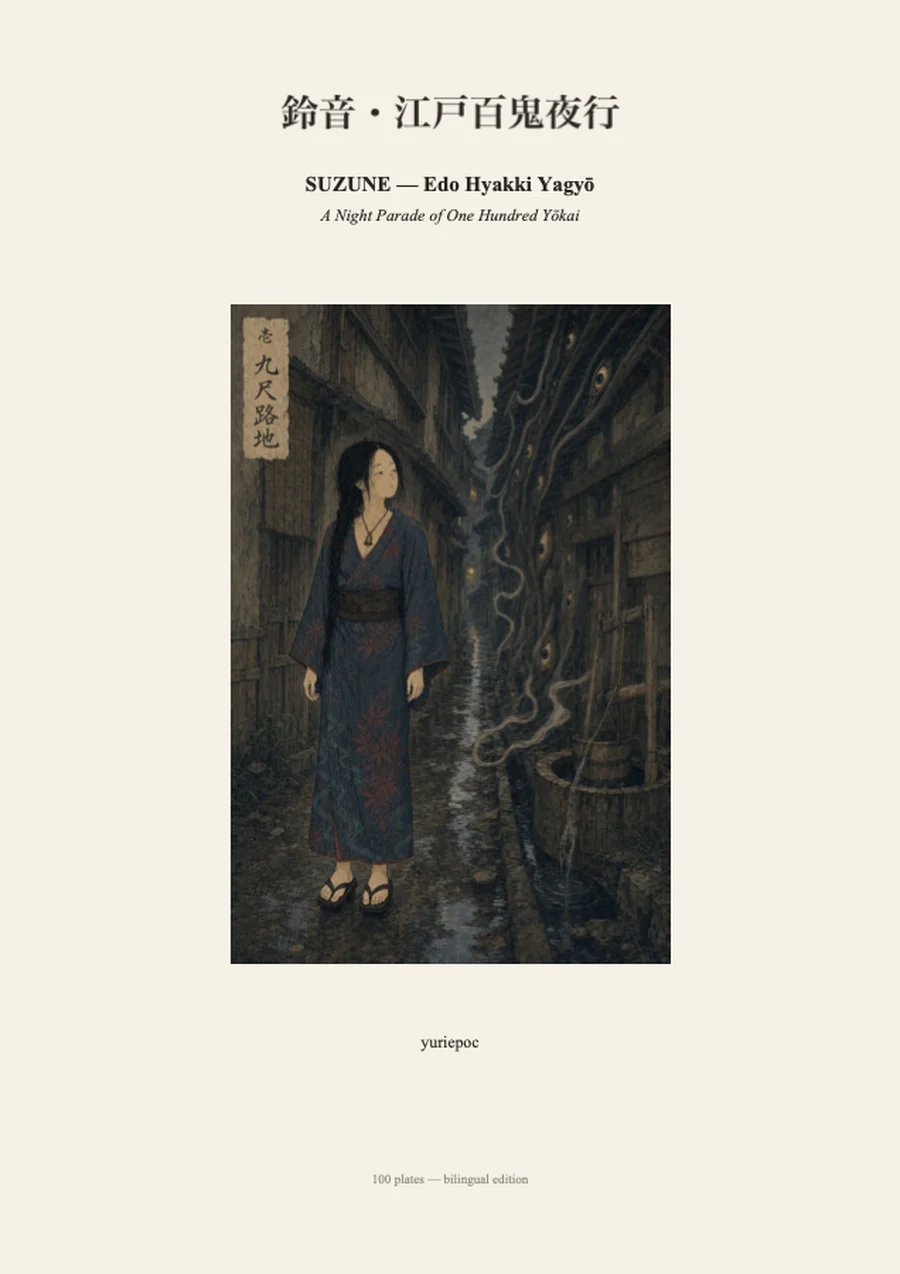
名代(なだい)とは、看板になるほど名が通っている、ということである。妖怪の世界にも、名代がいる。絵巻に描かれ、かるたに刷られ、落語に呼ばれ、子どもでも顔と名前が一致する顔ぶれ——提灯お化けに唐傘お化け、座敷童子、ろくろ首。本書はその名代ばかりを百体、招いた。
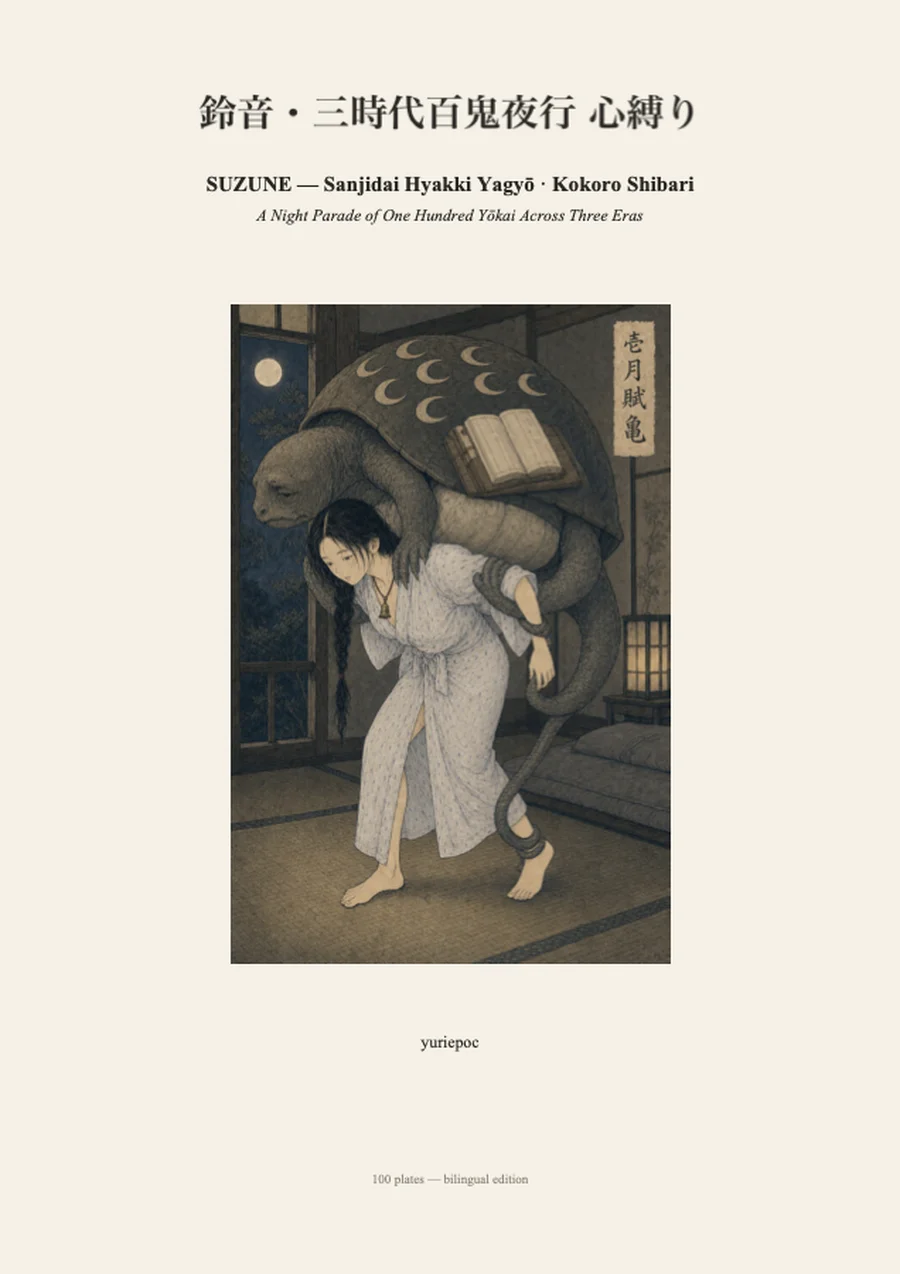
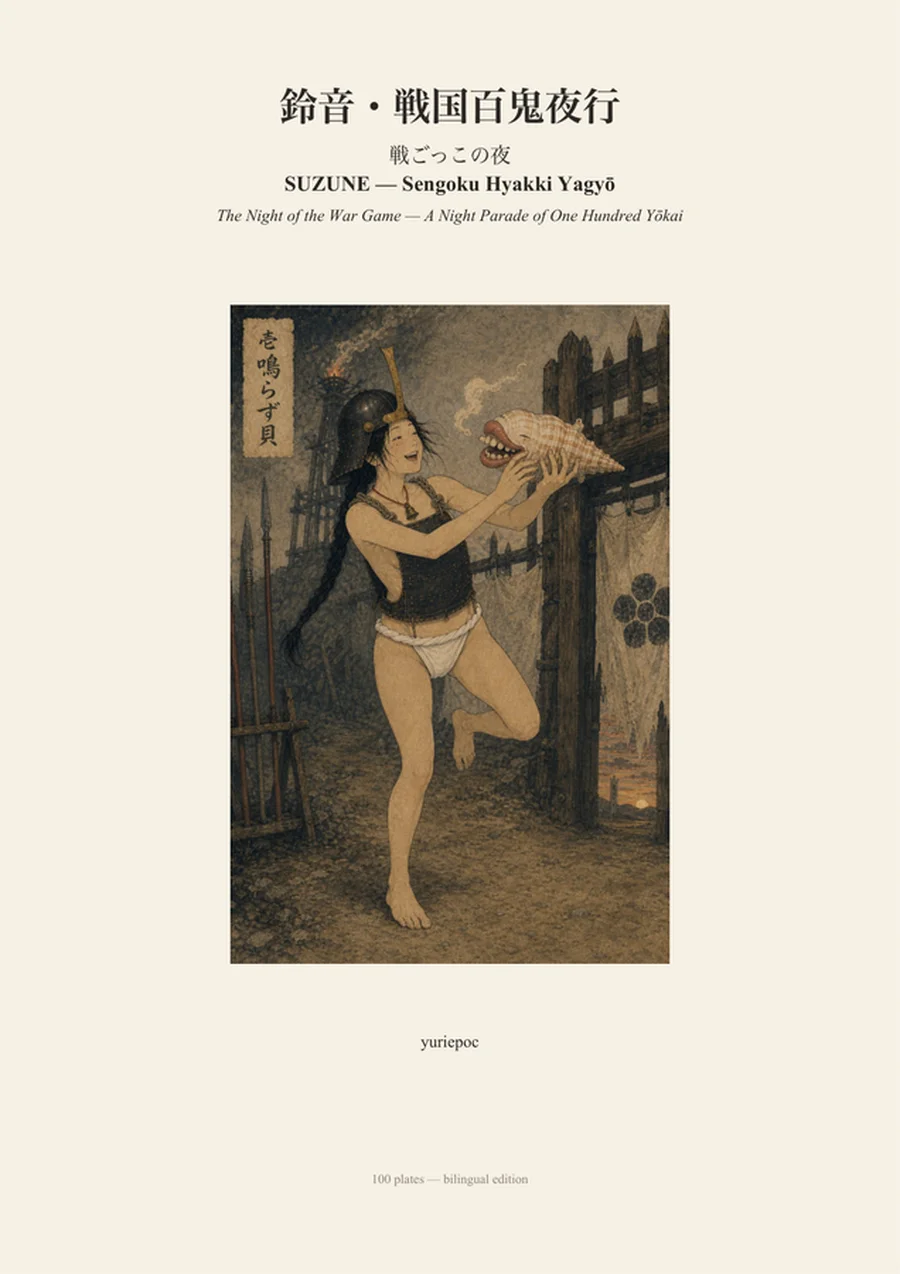
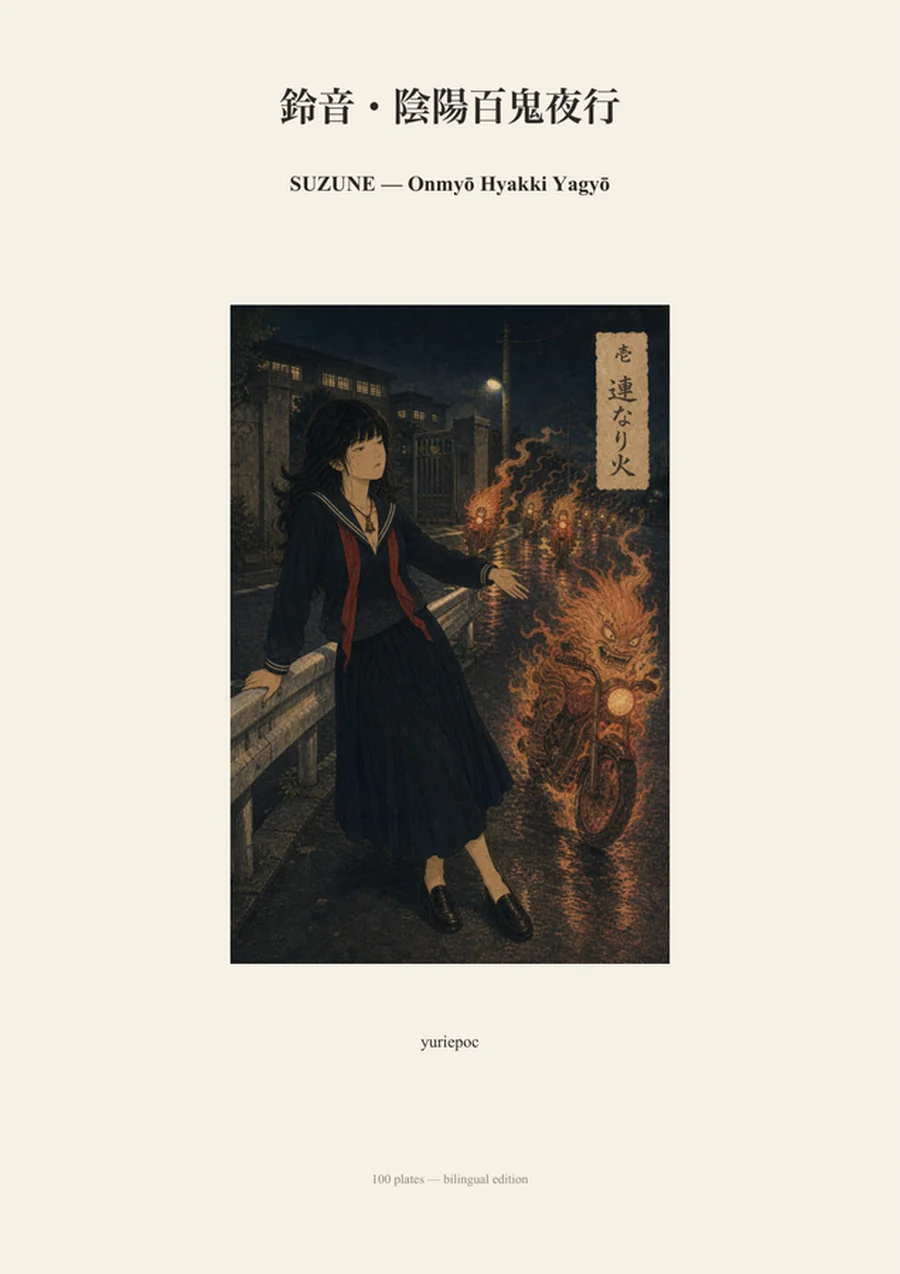
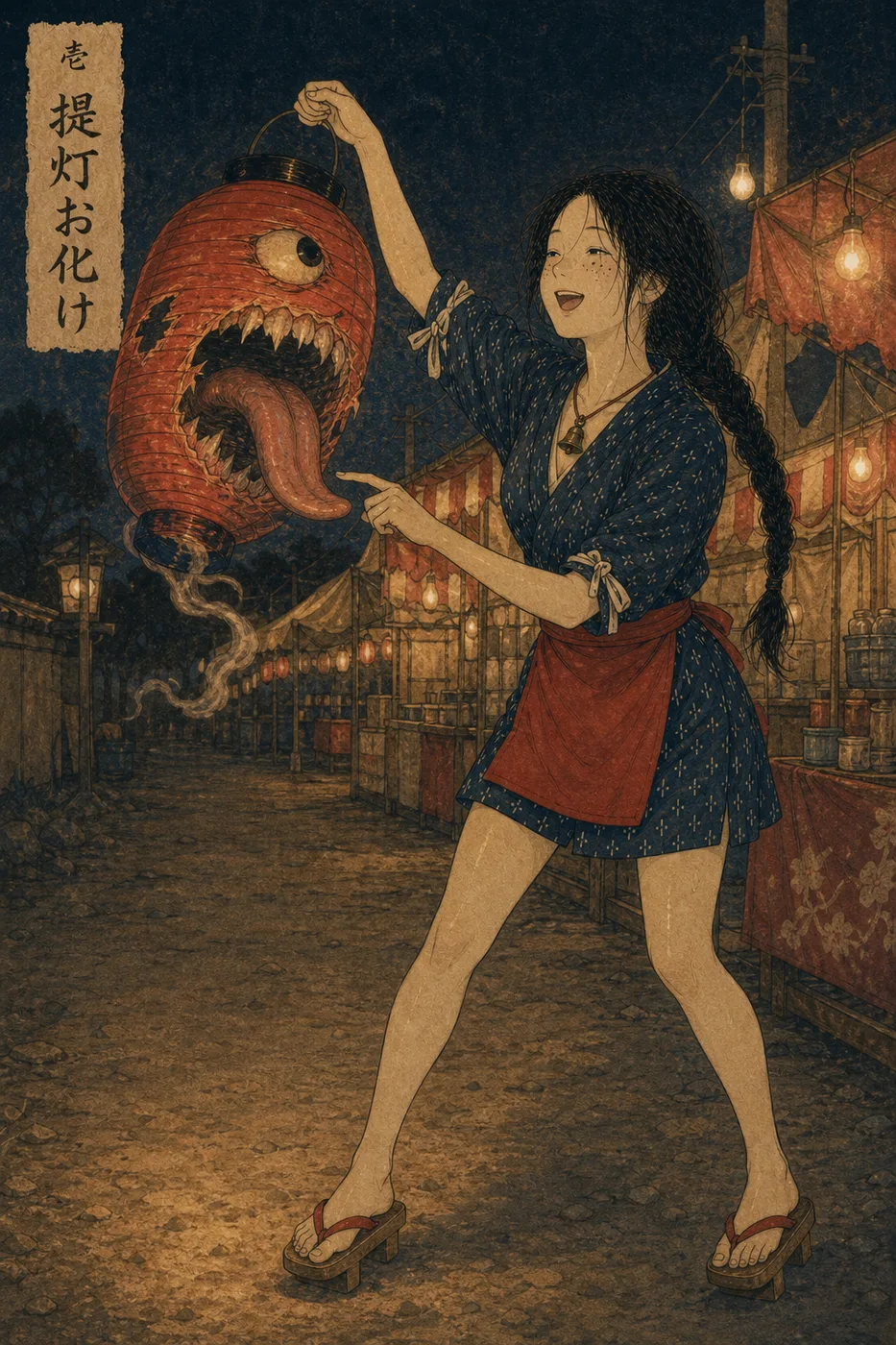
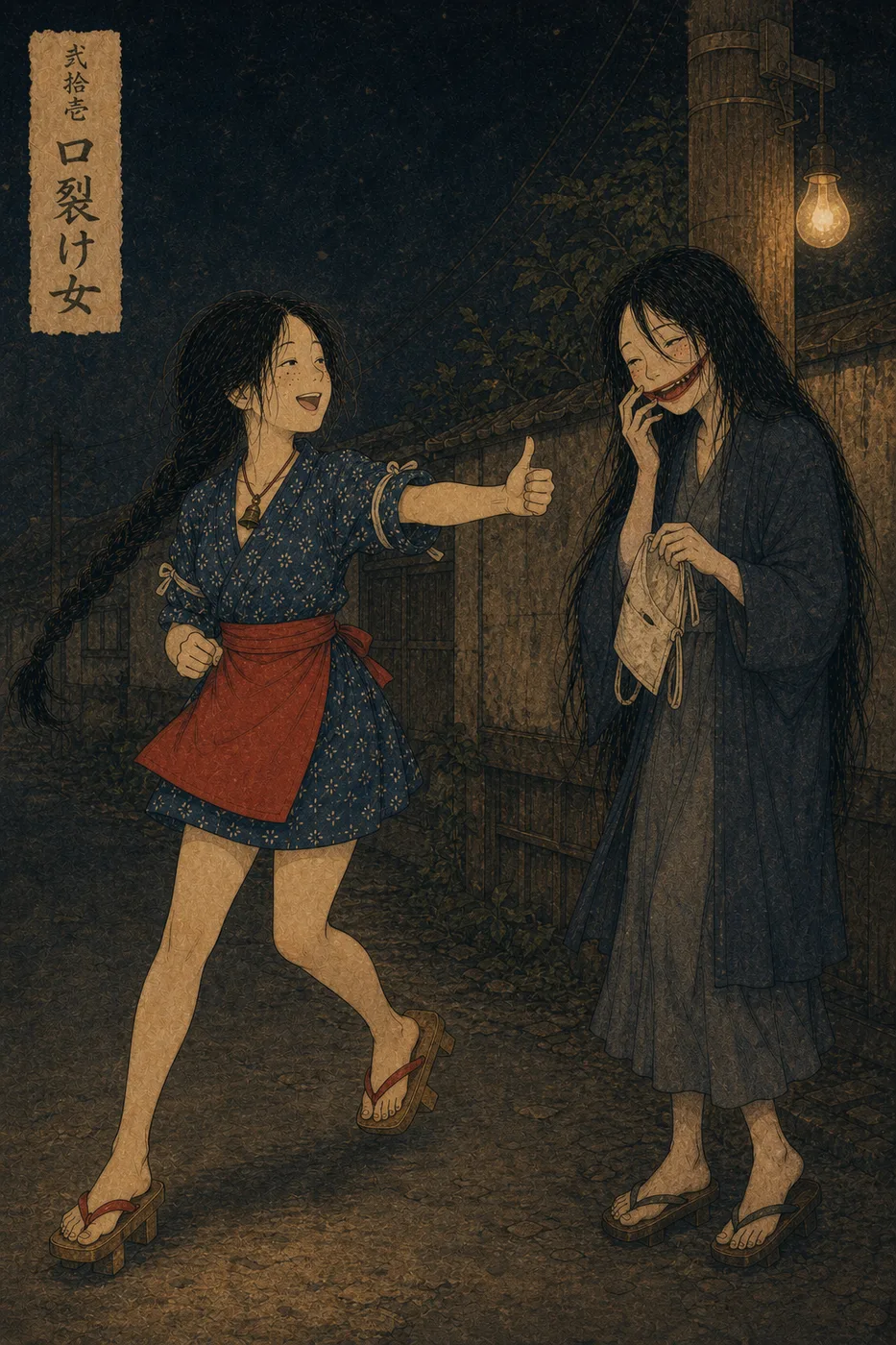
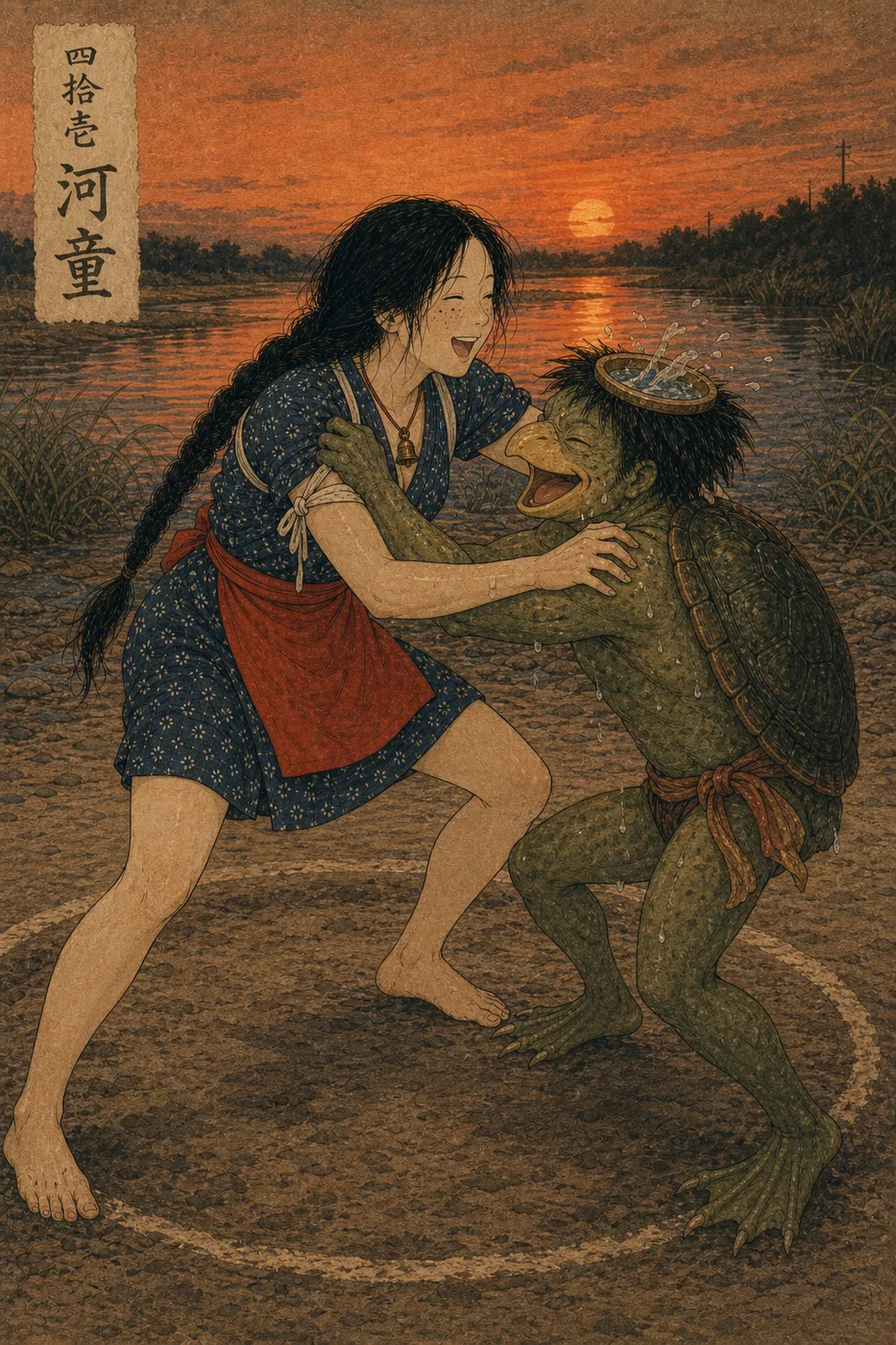
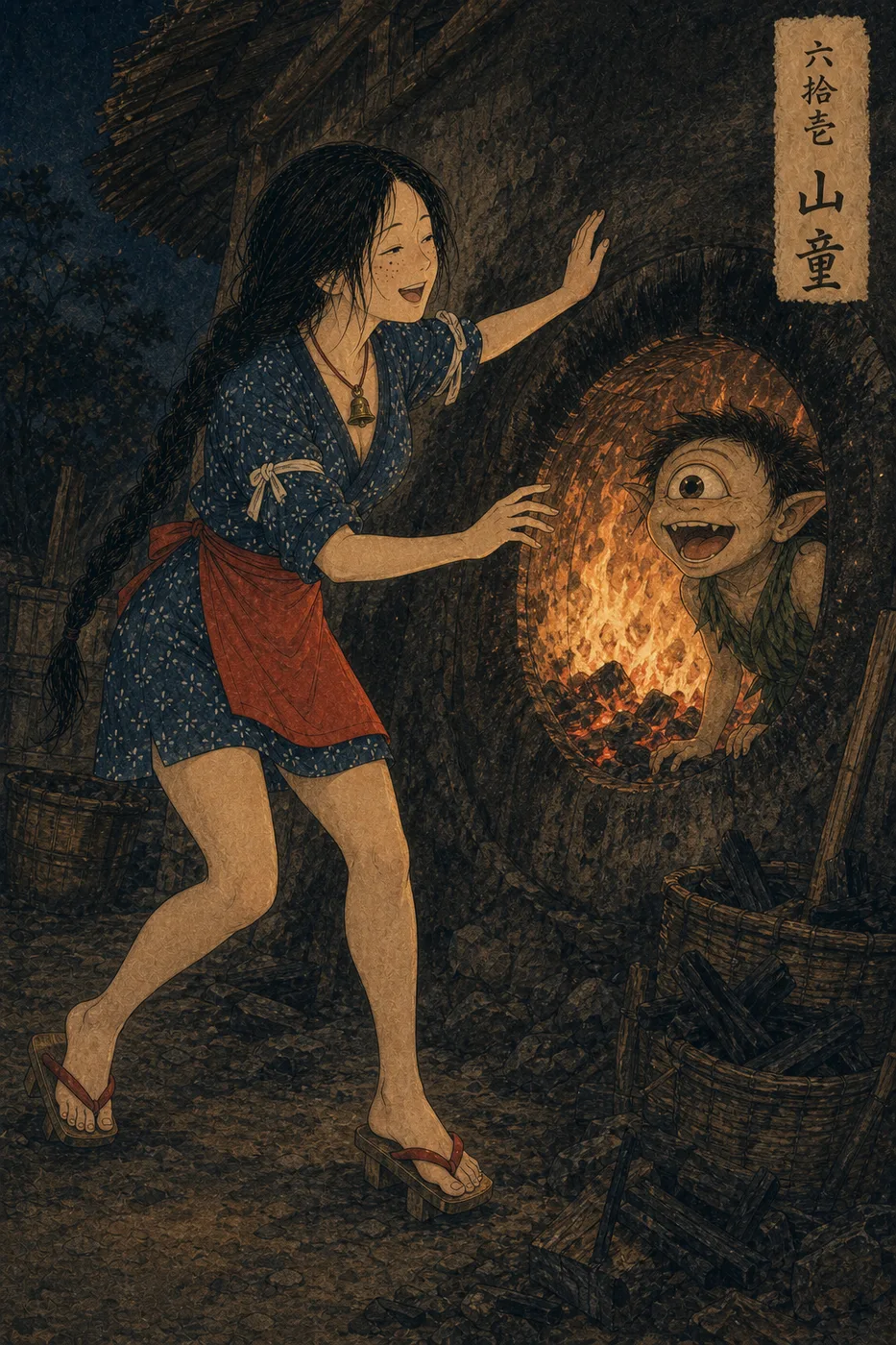
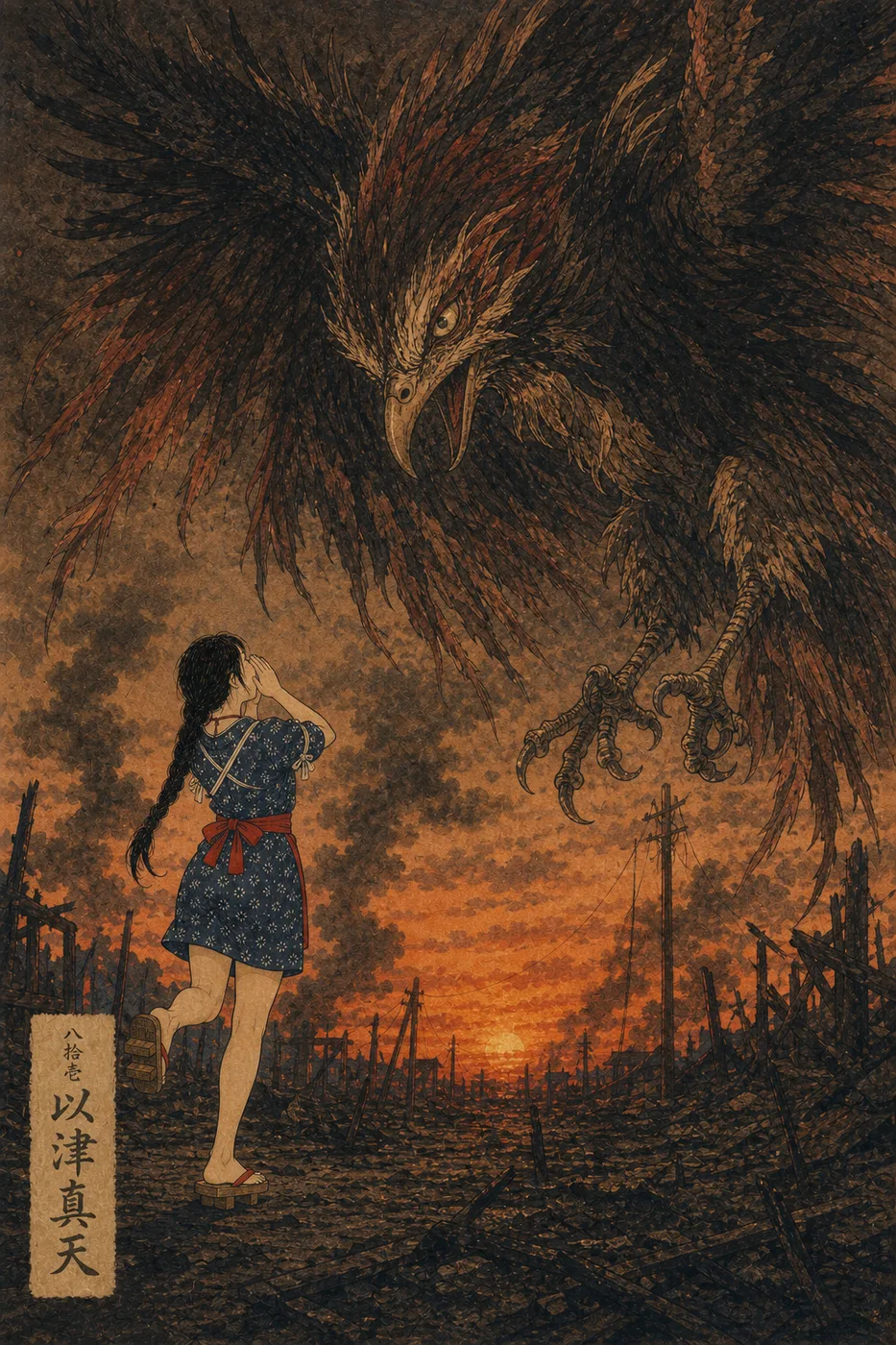
舞台は昭和である。縁日の赤提灯に、炬燵の宴に、五右衛門風呂に、名高い彼らはするりと混ざる。脅かしに来たはずが、この家の娘は驚かない。笑い、つつき、時には競走になる。伝承は古いまま、夜だけが新しい。
百物語の作法では、百話目を語り終えたとき、ほんとうの怪が現れるという。だから百枚目には、青行燈が待っている。どうか急がず、九十九の夜を数えてから、最後の一枚をめくってほしい。
Nadai means a name so renowned it becomes the signboard itself. The yōkai world has its celebrities too — painted in scrolls, printed on karuta cards, summoned in comic storytelling, recognized on sight even by children: the lantern ghost, the umbrella ghost, the house child zashiki-warashi, the long-necked rokurokubi. This book invites one hundred of these renowned figures, and no others.
The stage is Shōwa-era Japan. Into the red lanterns of festival nights, the kotatsu gatherings, the iron goemon bathtubs, these famous creatures slip as if they had always lived there. They come to frighten — but the girl of this house does not startle. She laughs, she pokes back, and sometimes it turns into a footrace. The lore stays old; only the night is new.
In the tradition of hyakumonogatari — one hundred ghost stories told by lantern light — the real one appears only after the hundredth tale. That is why Ao-andon, the blue lantern spirit, waits on the final plate. Take your time. Count all ninety-nine nights before you turn the last page.
見本図Sample plates
ほかの本Other books