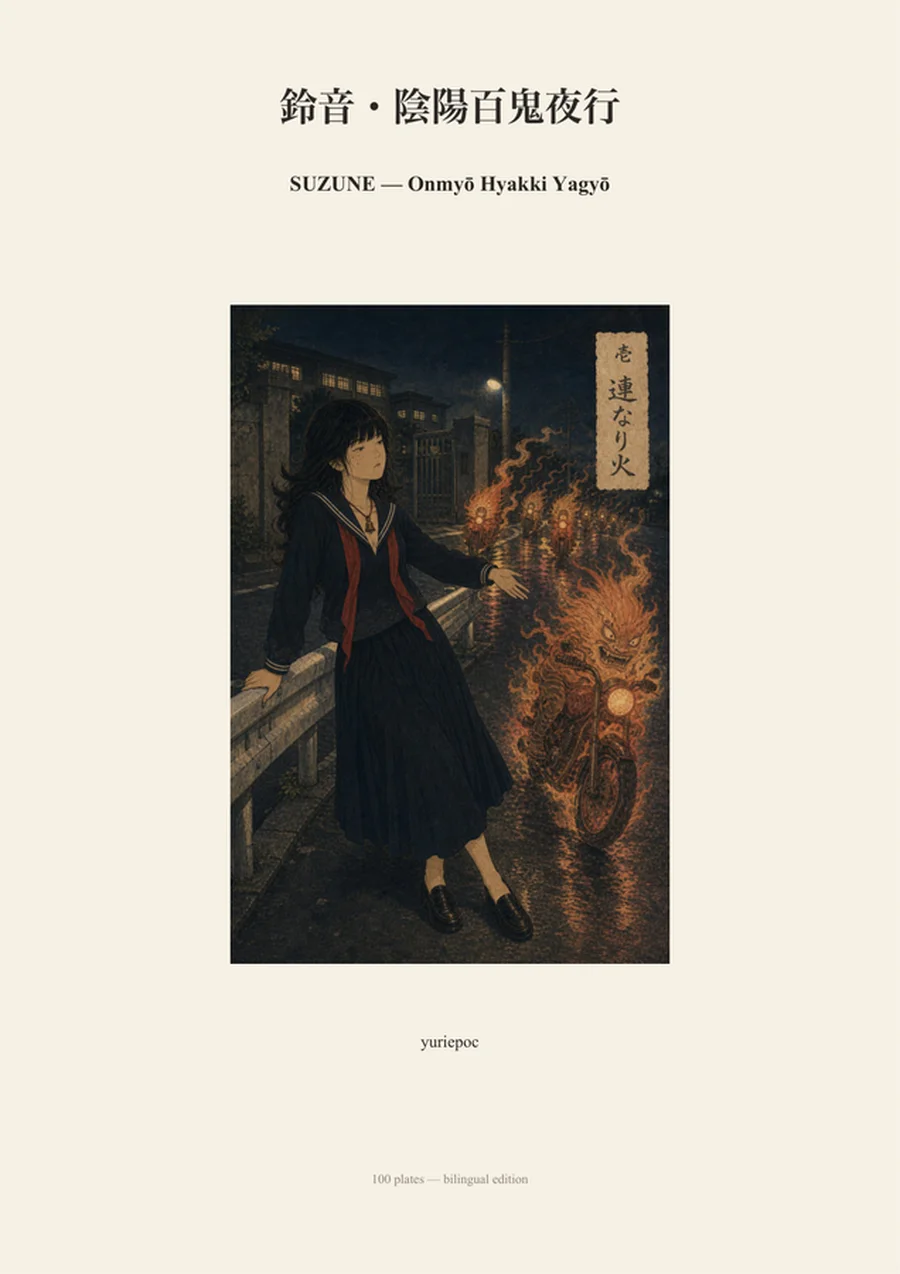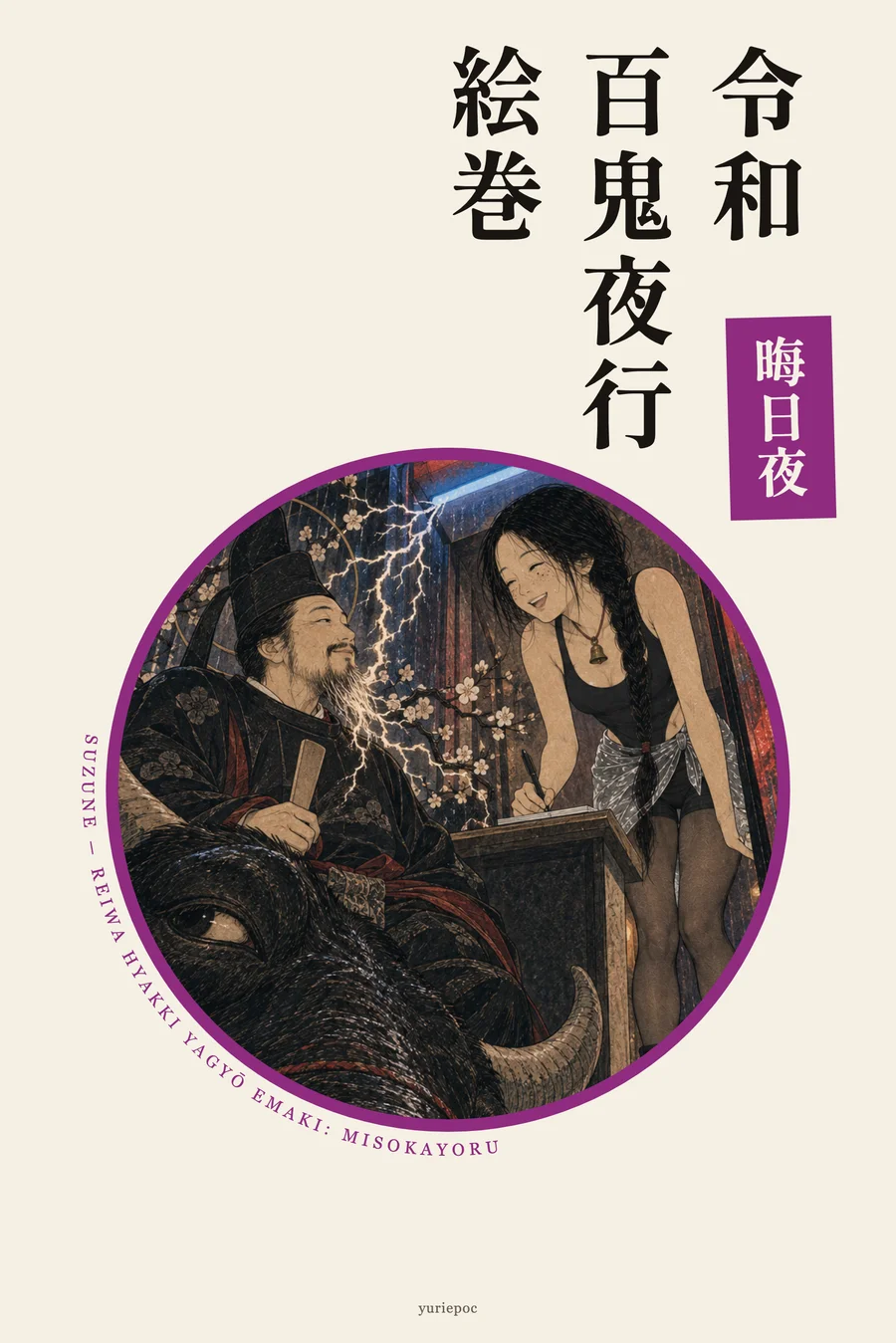
紹介About this book
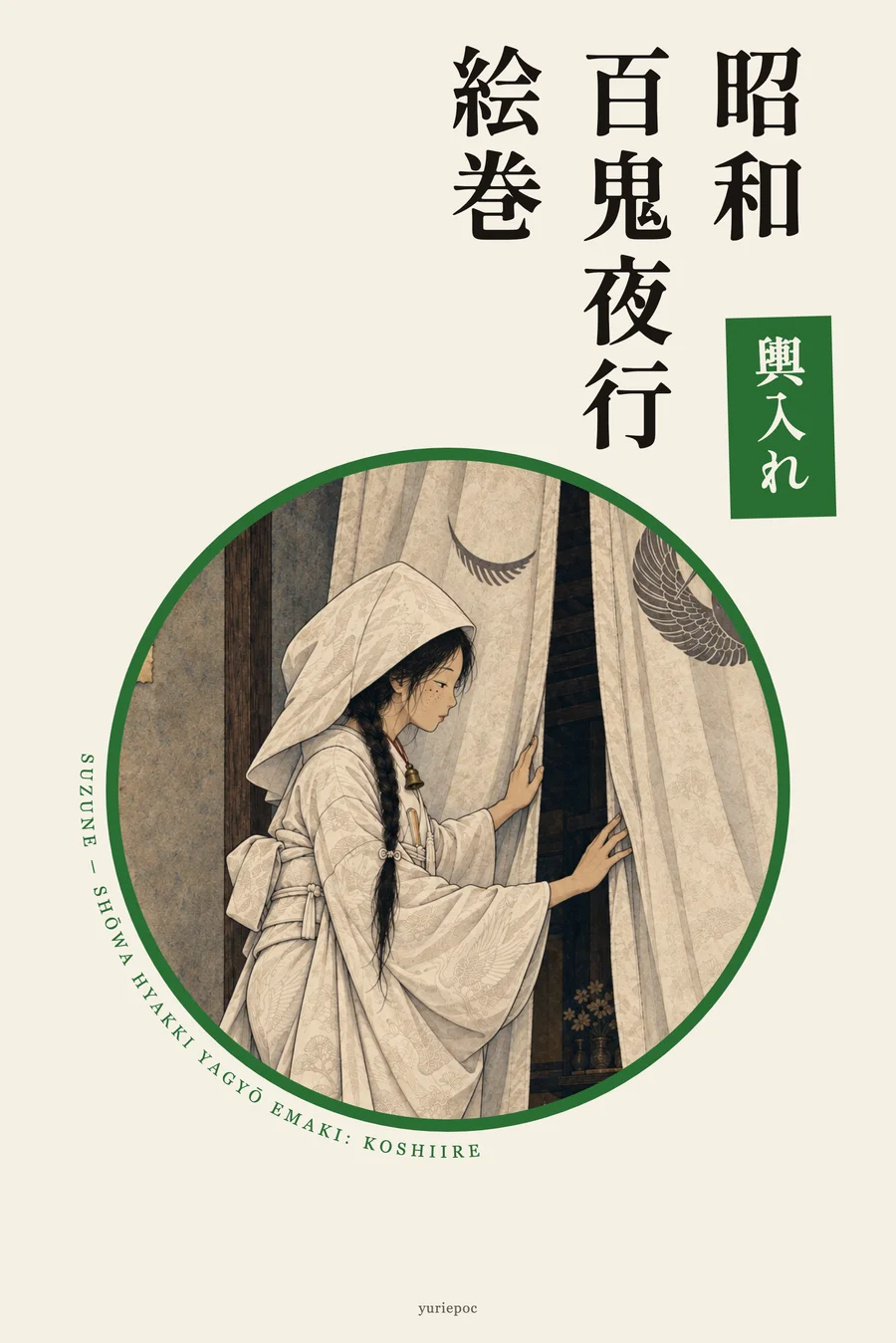
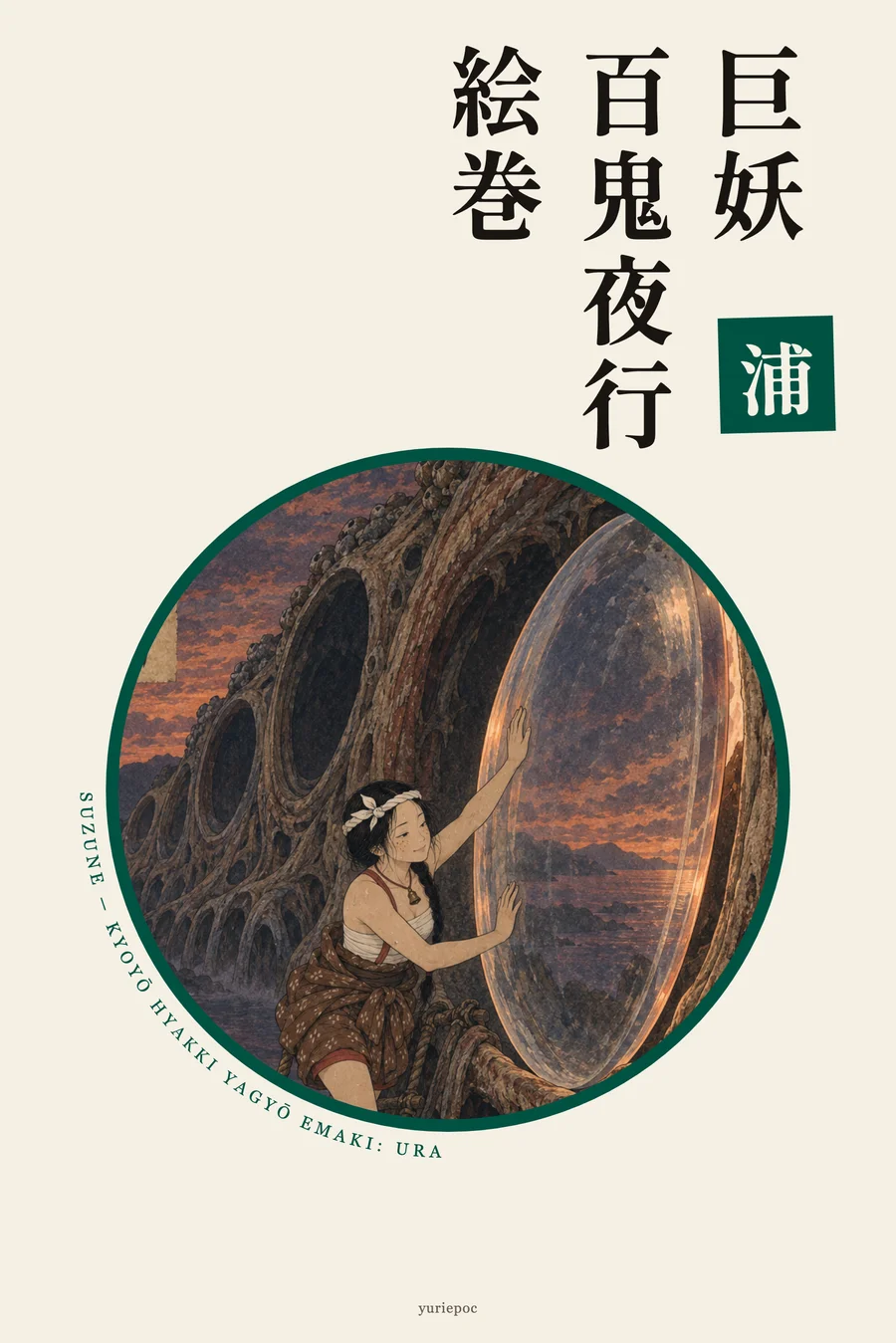
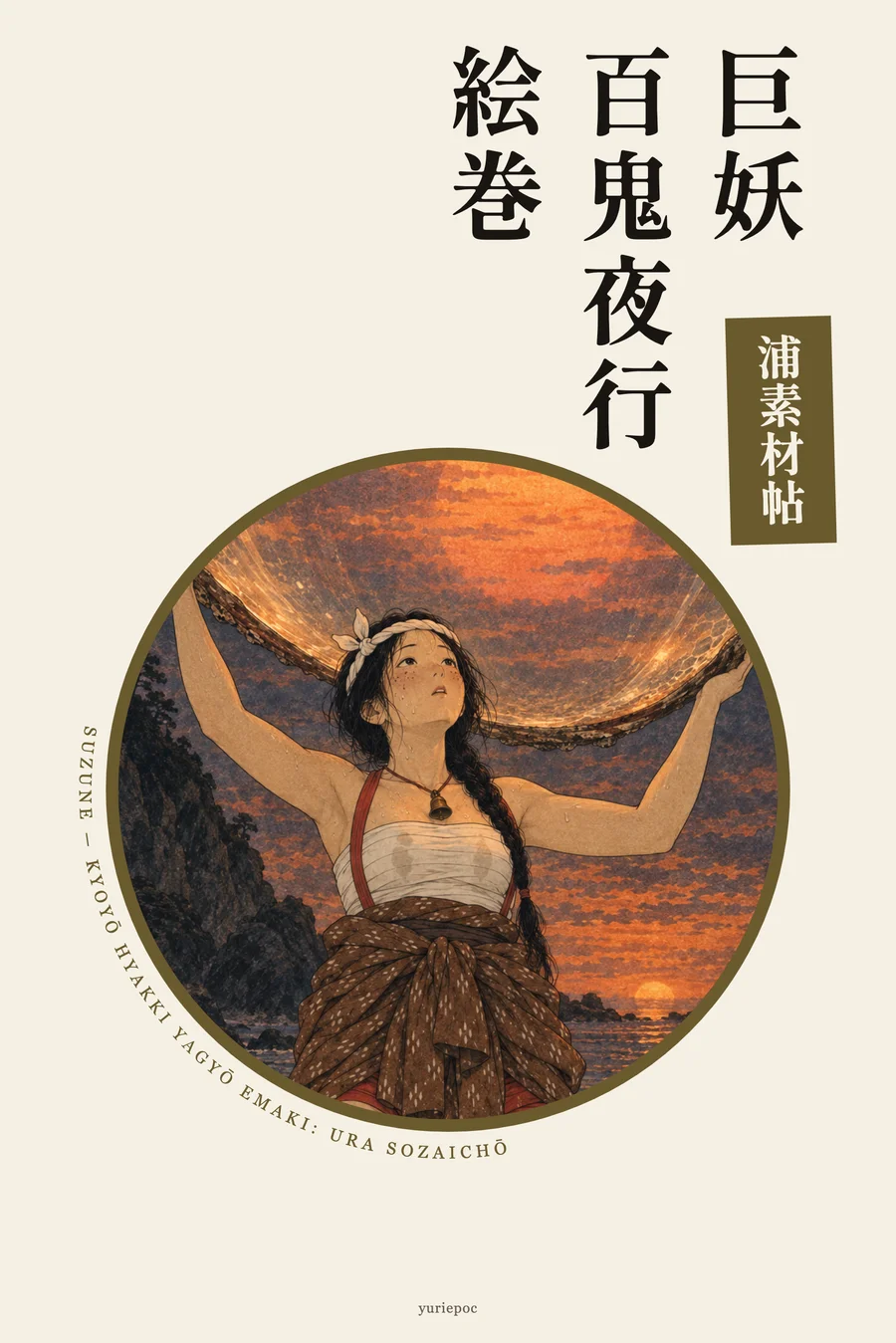
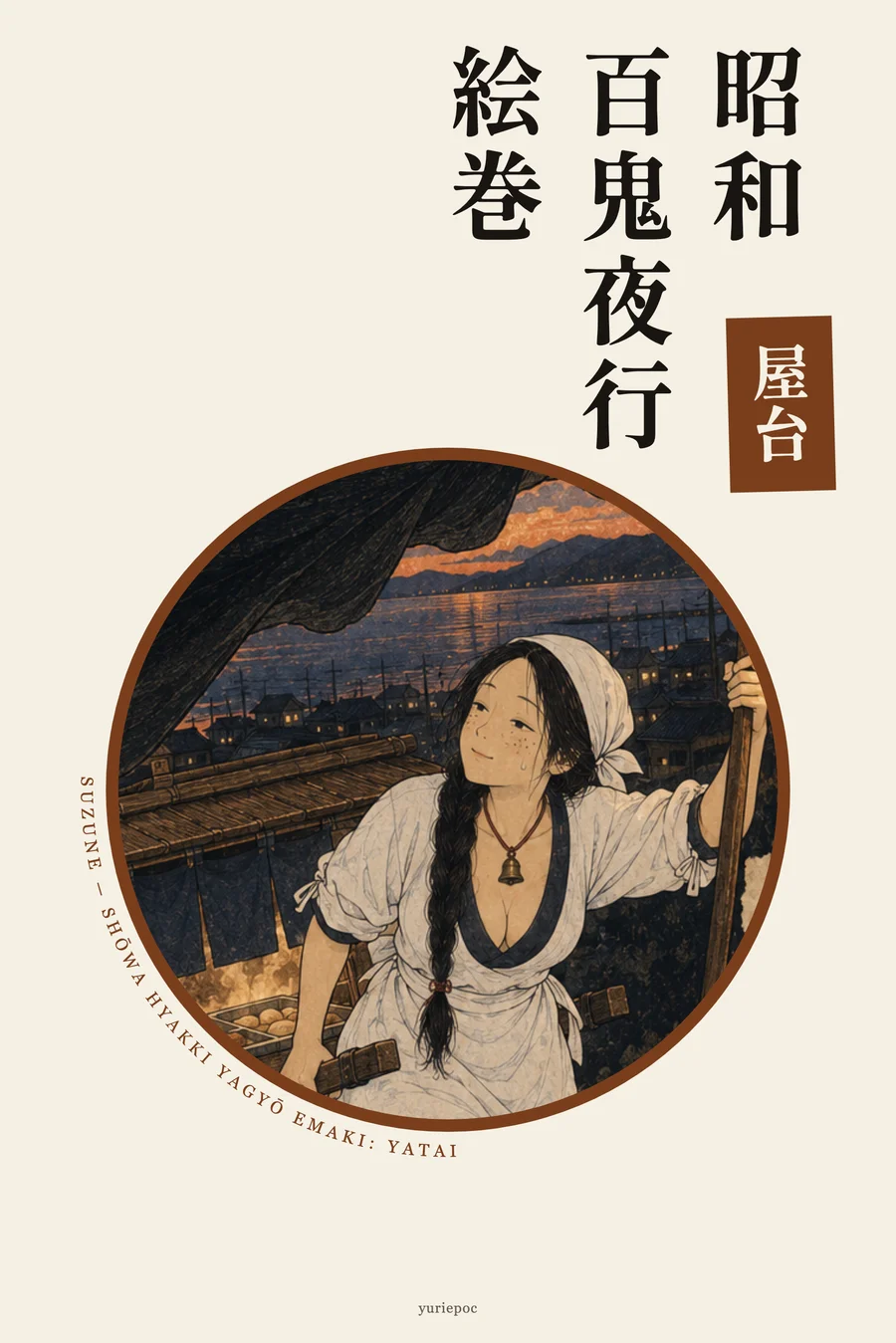
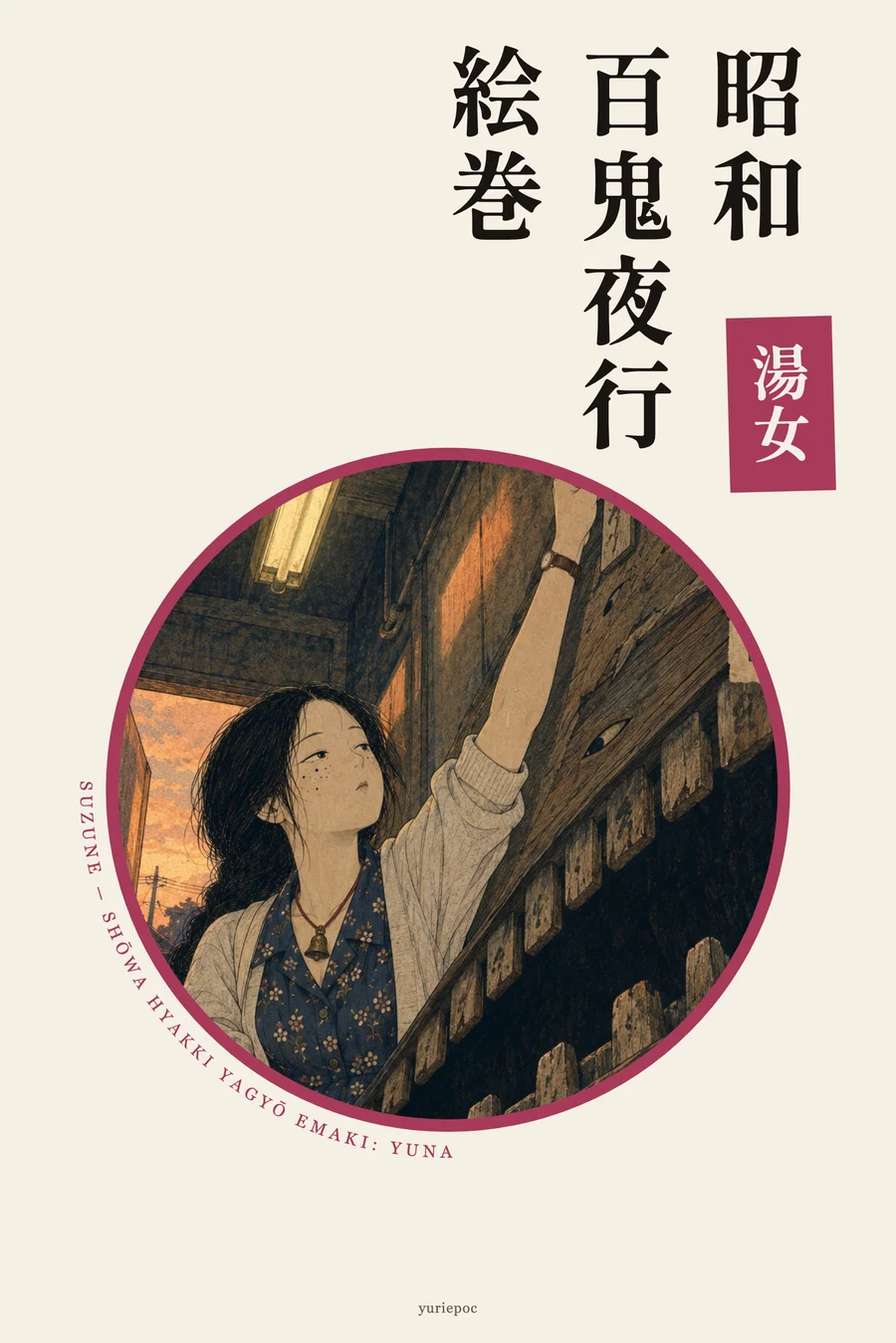
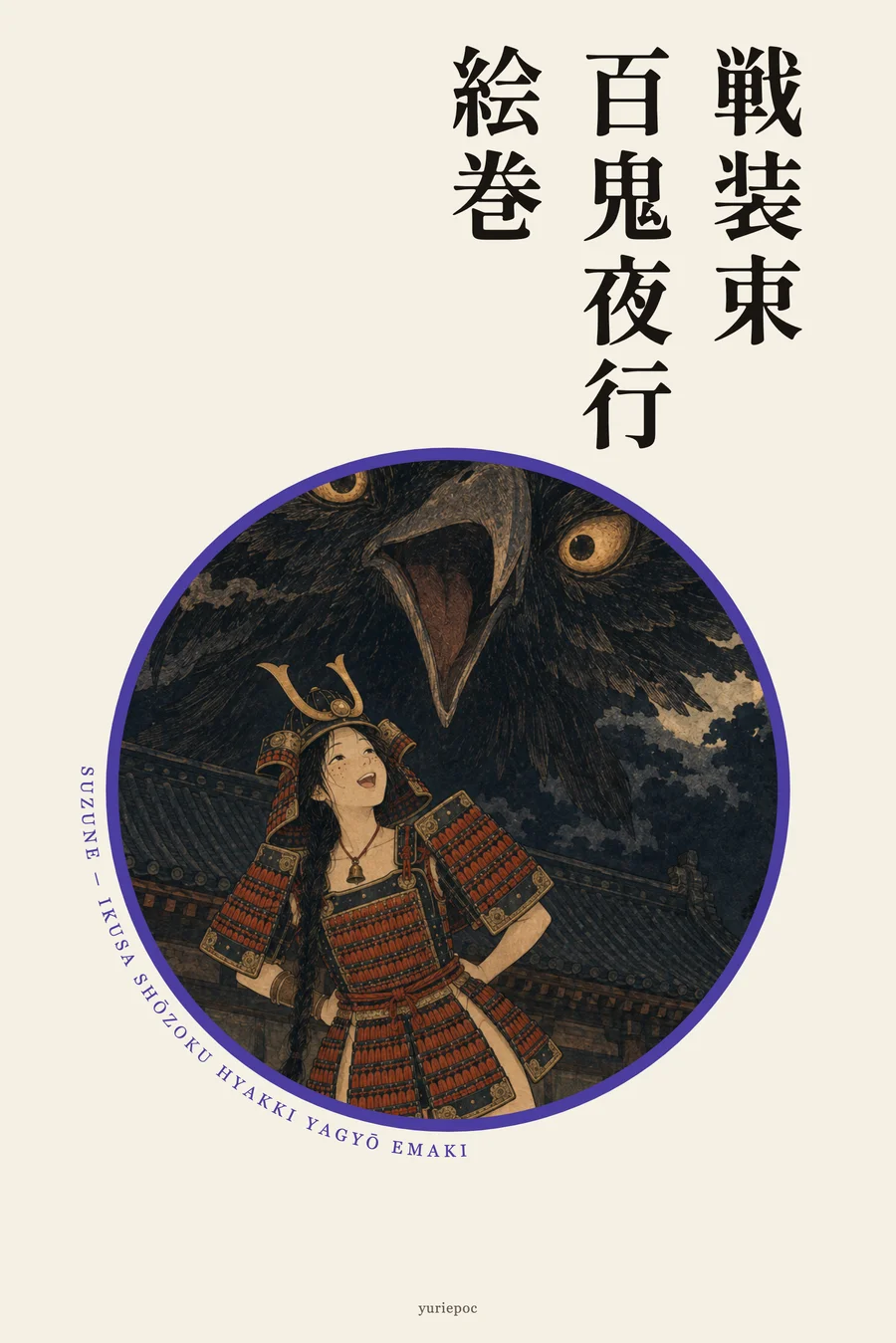
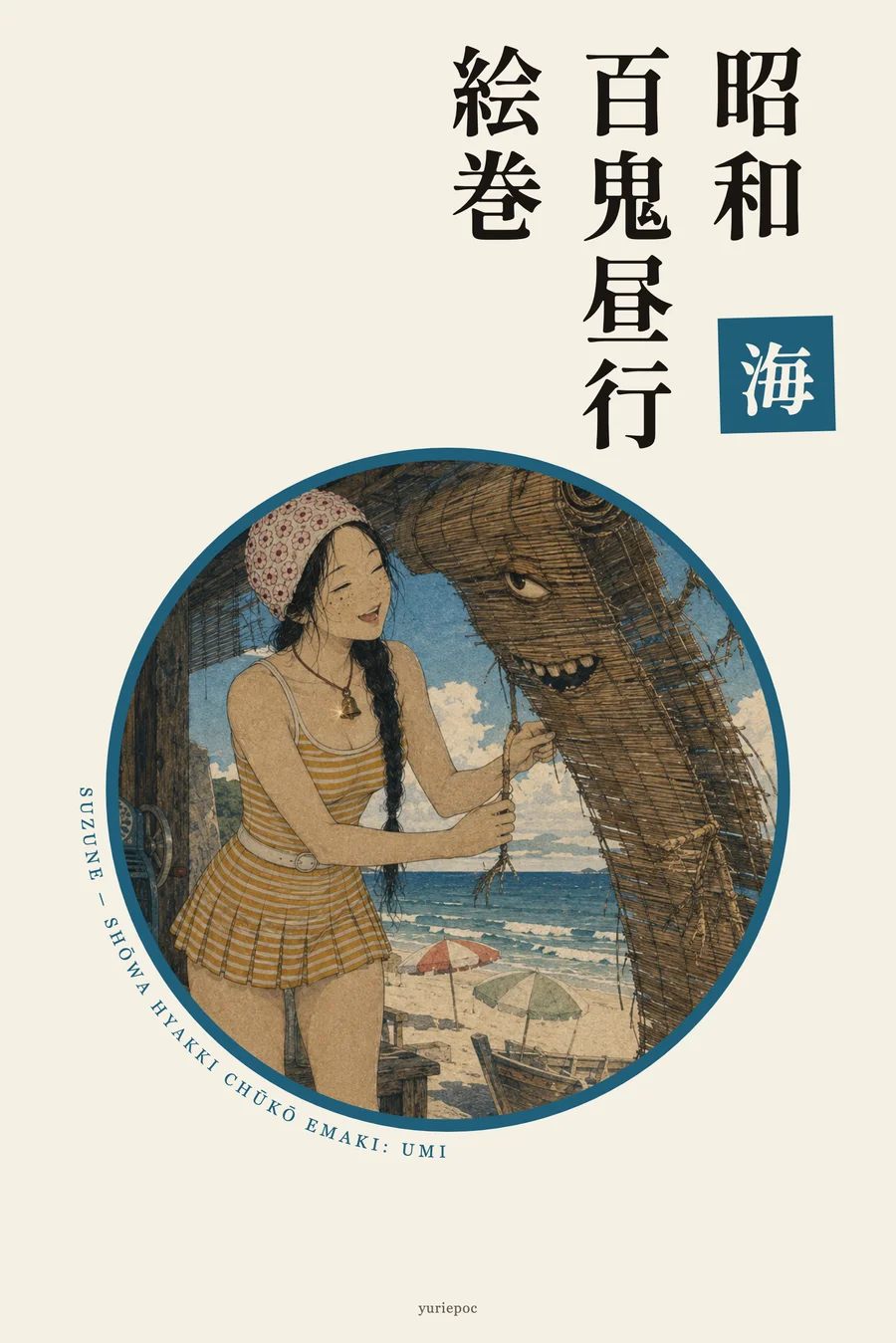
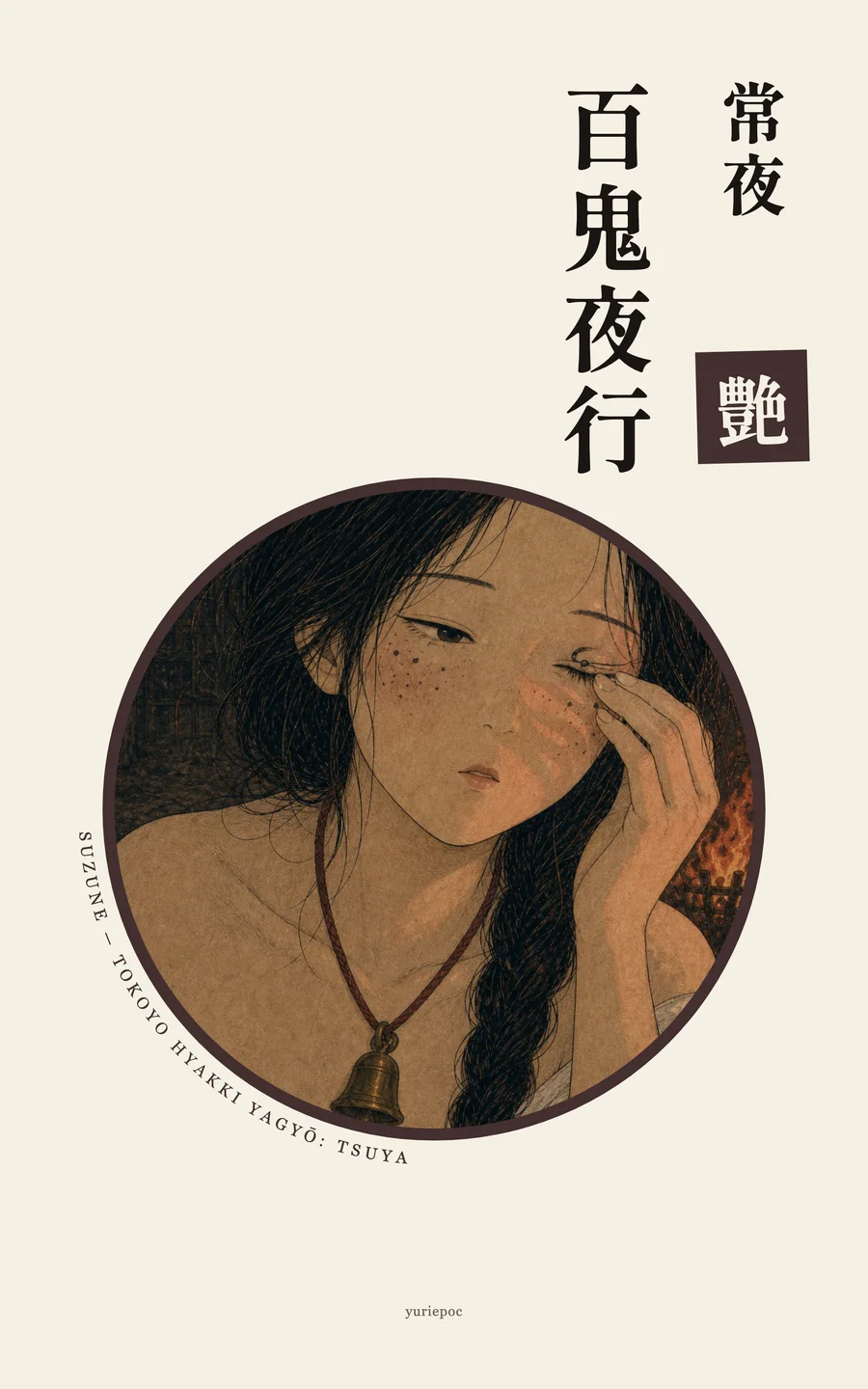
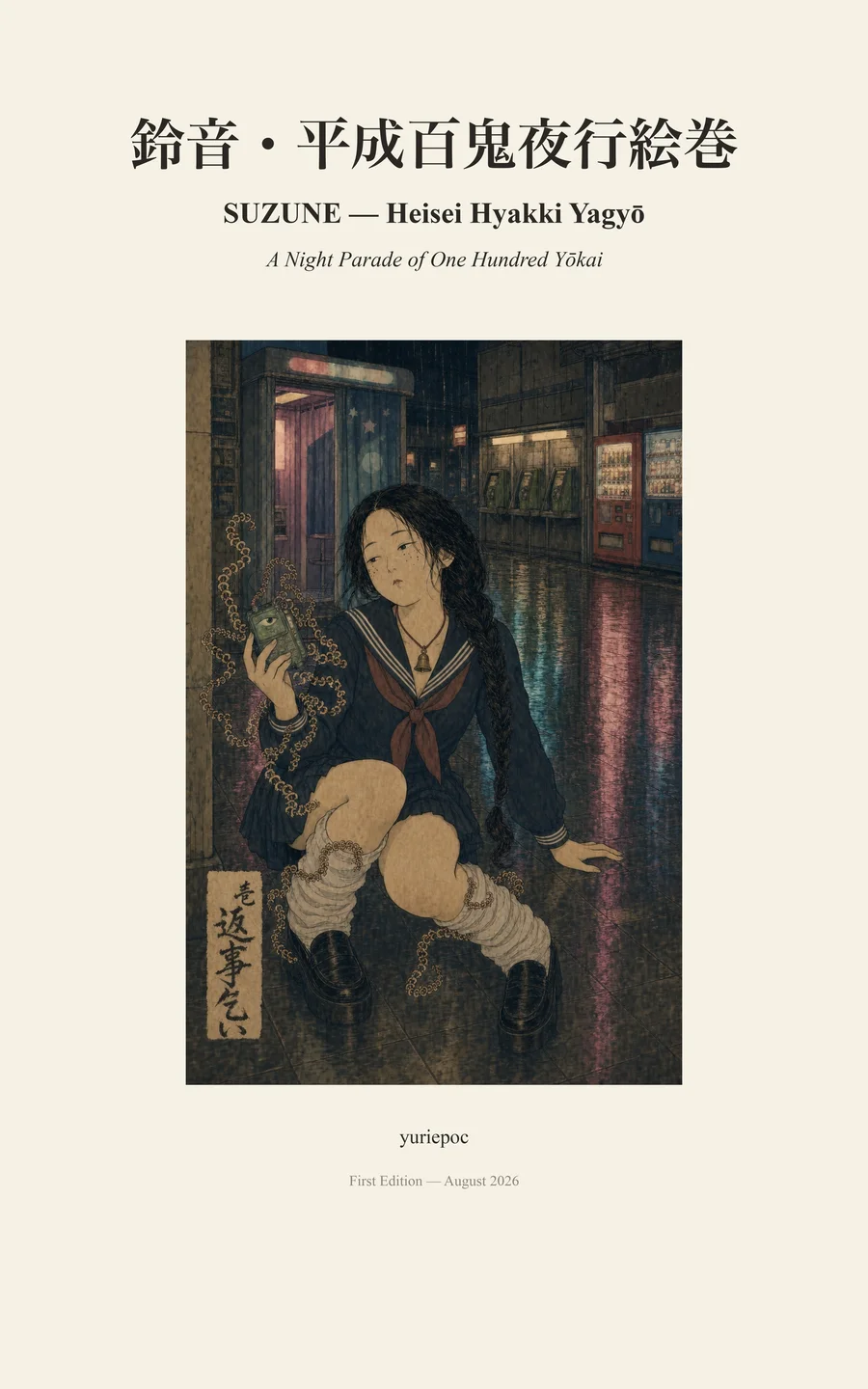
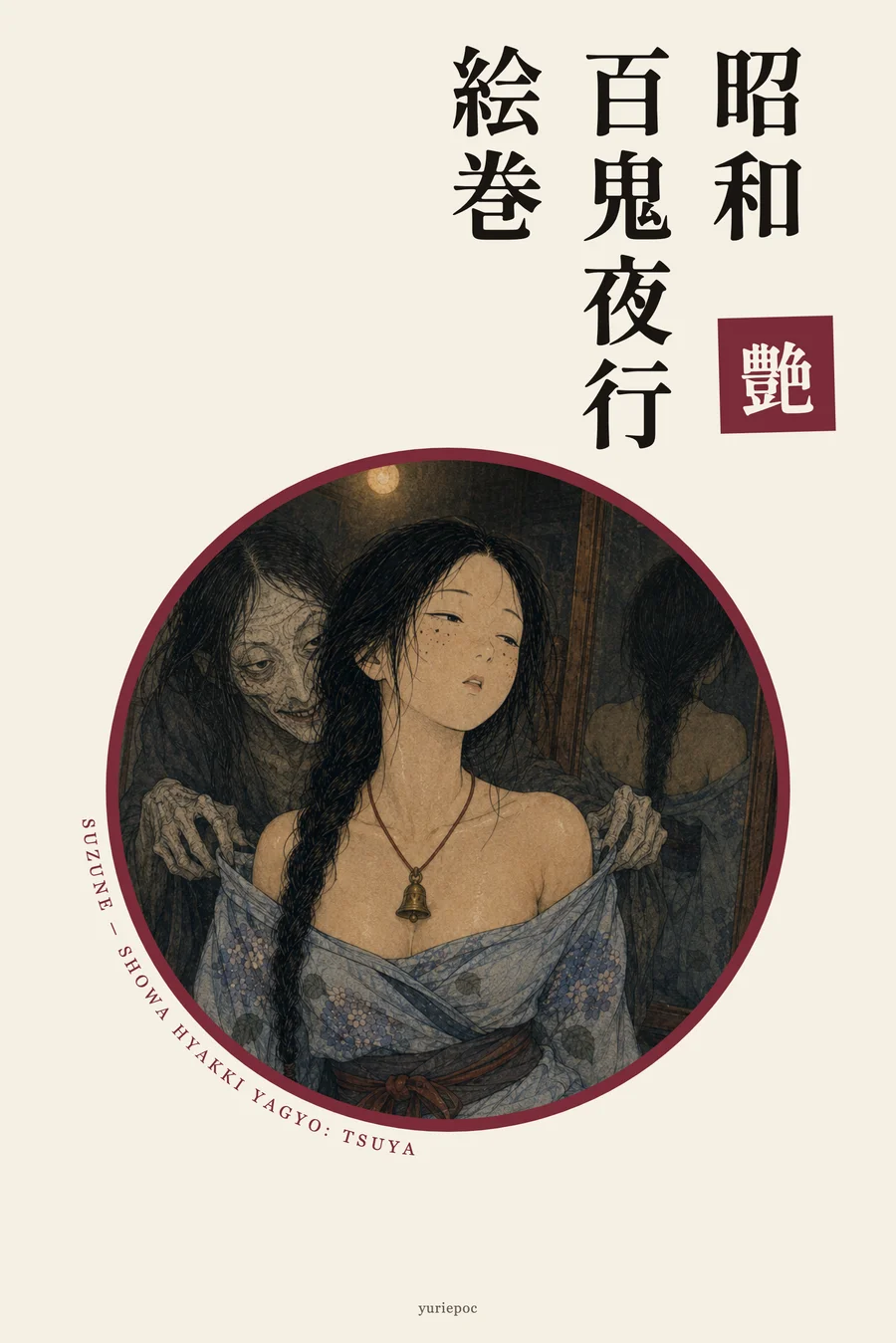
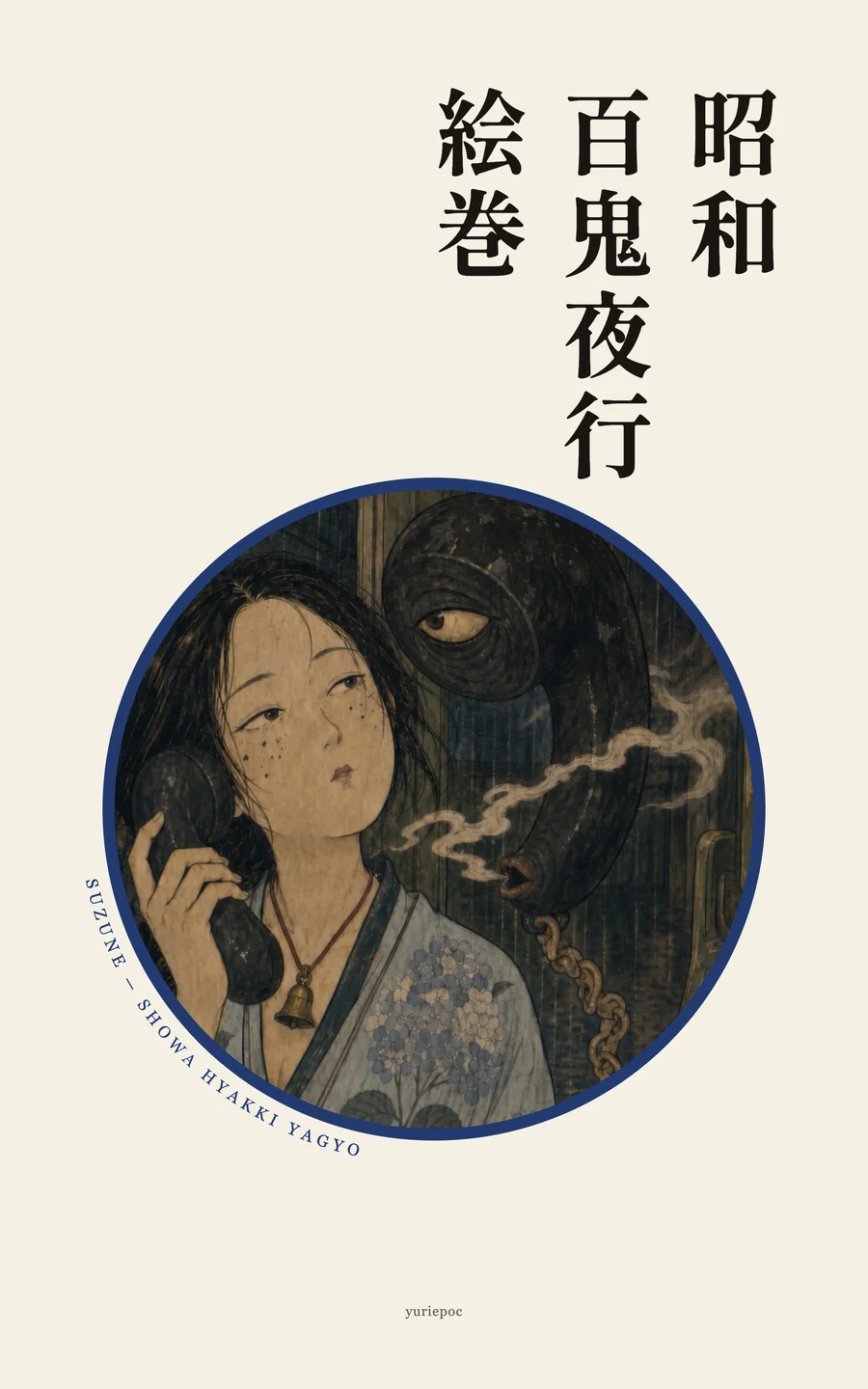
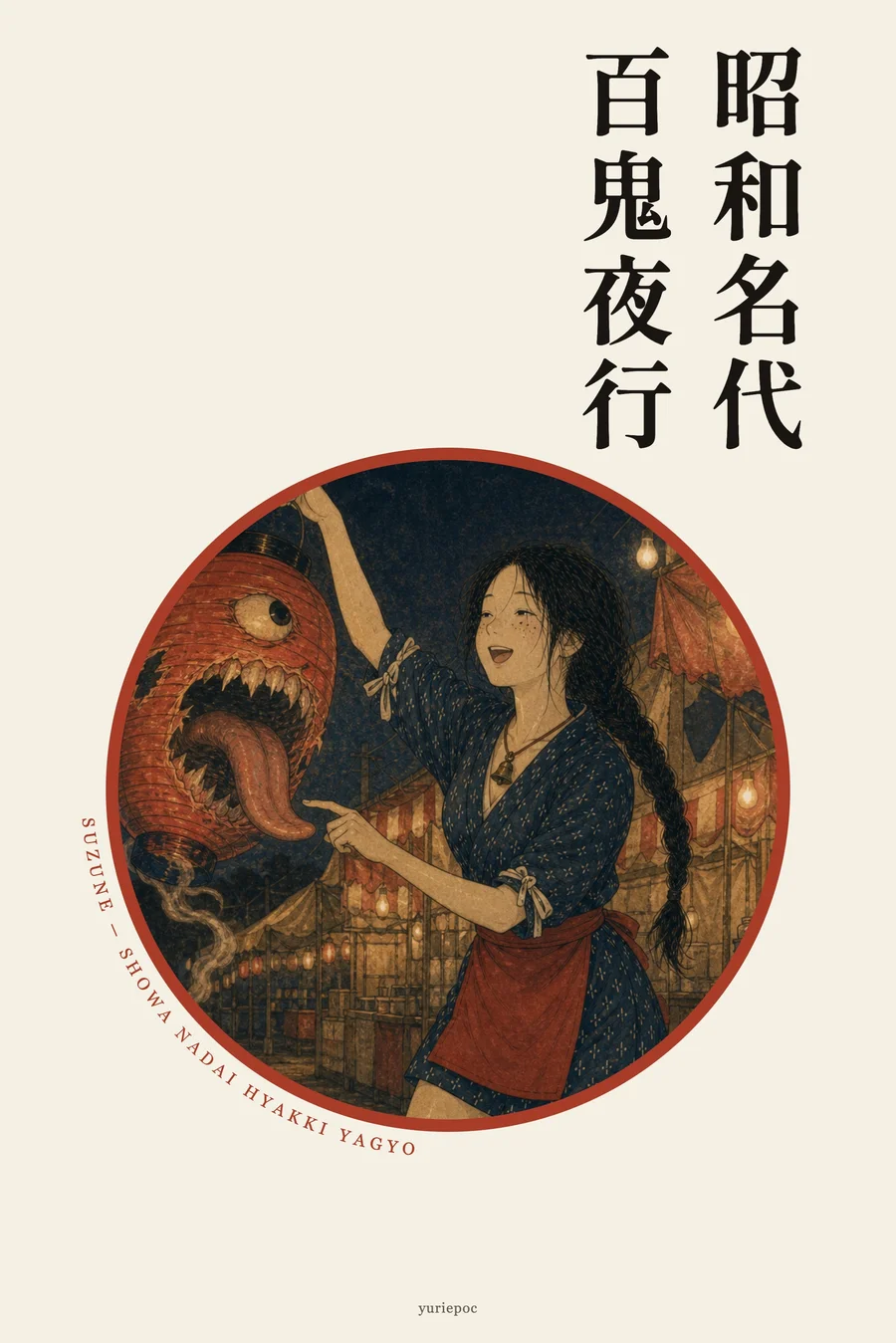
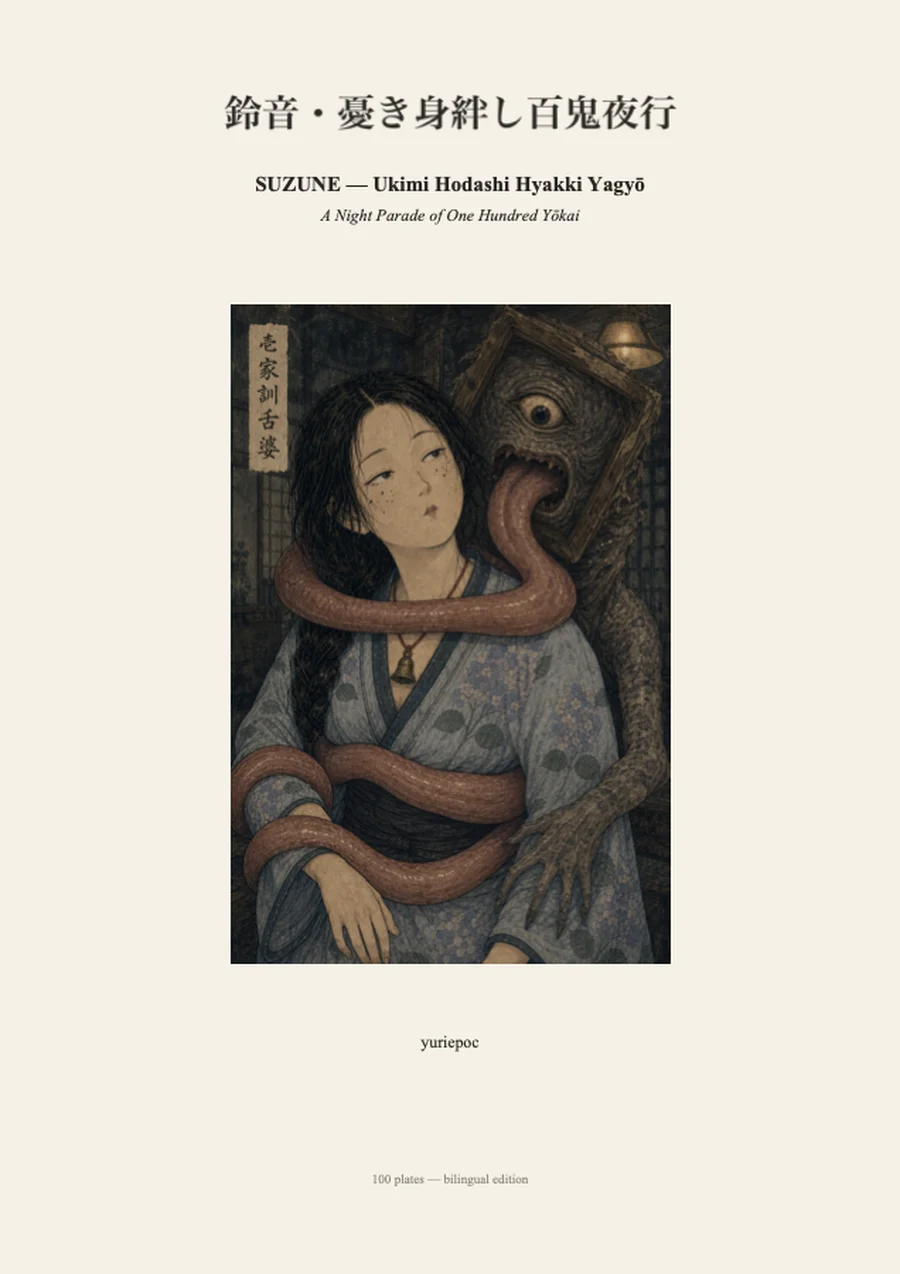
大晦日の夜、あるクラブに、神さまが百柱あつまる。
鈴音は入口のゲストリスト係。来た神さまの名を、一人ずつ紙に書いていく。飛梅の牛をつれた菅原道真。受付台にすわりこむ天海。義賊の鼠小僧。多くは昔の人間で、いまは神社や寺に祀られている神さまである。祀る人が減った神さまは、そのうち妖怪のようなものになる。けれどこの夜の神さまたちは、こわくない。羽目をはずして、踊って、鈴音とふざけあう。
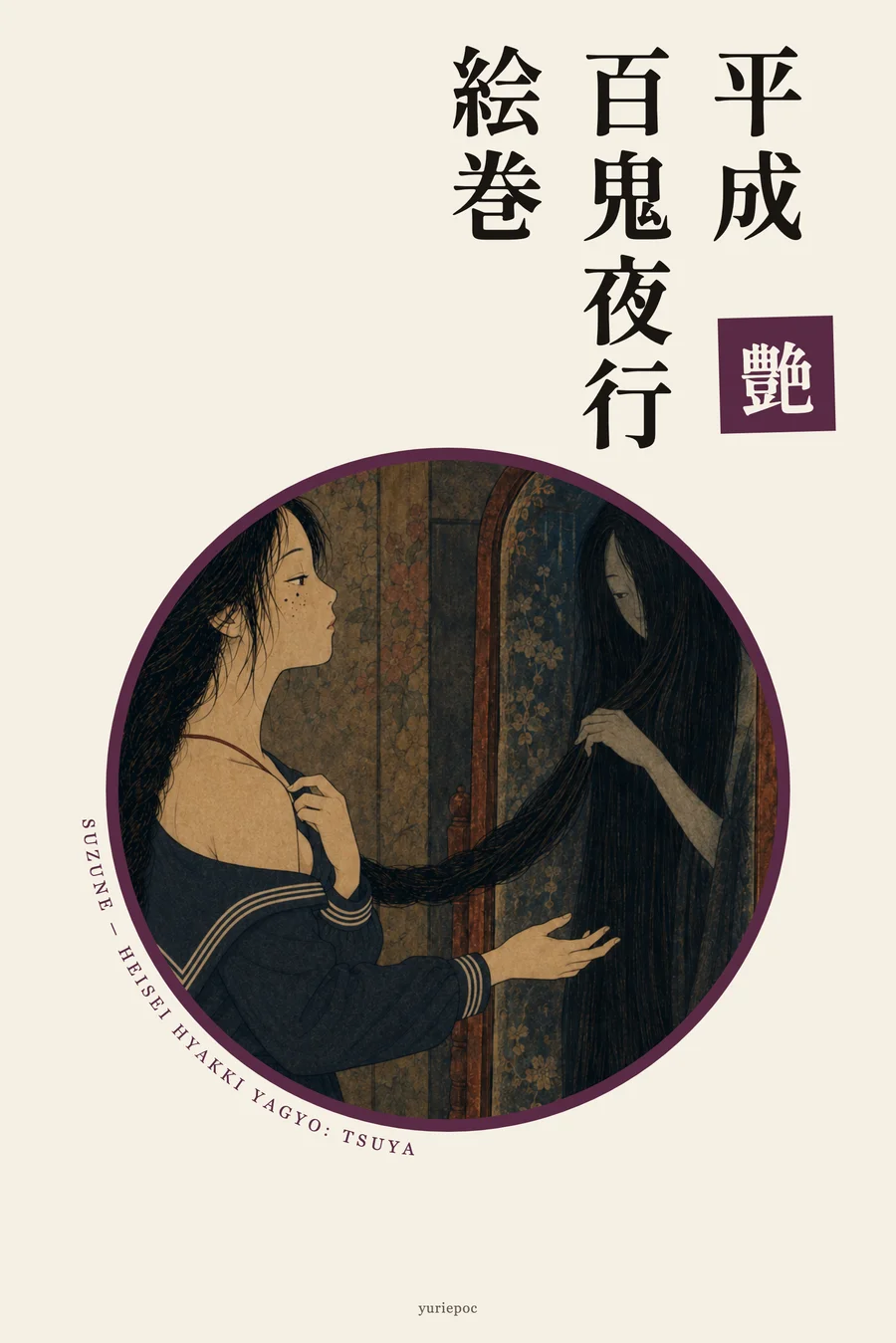
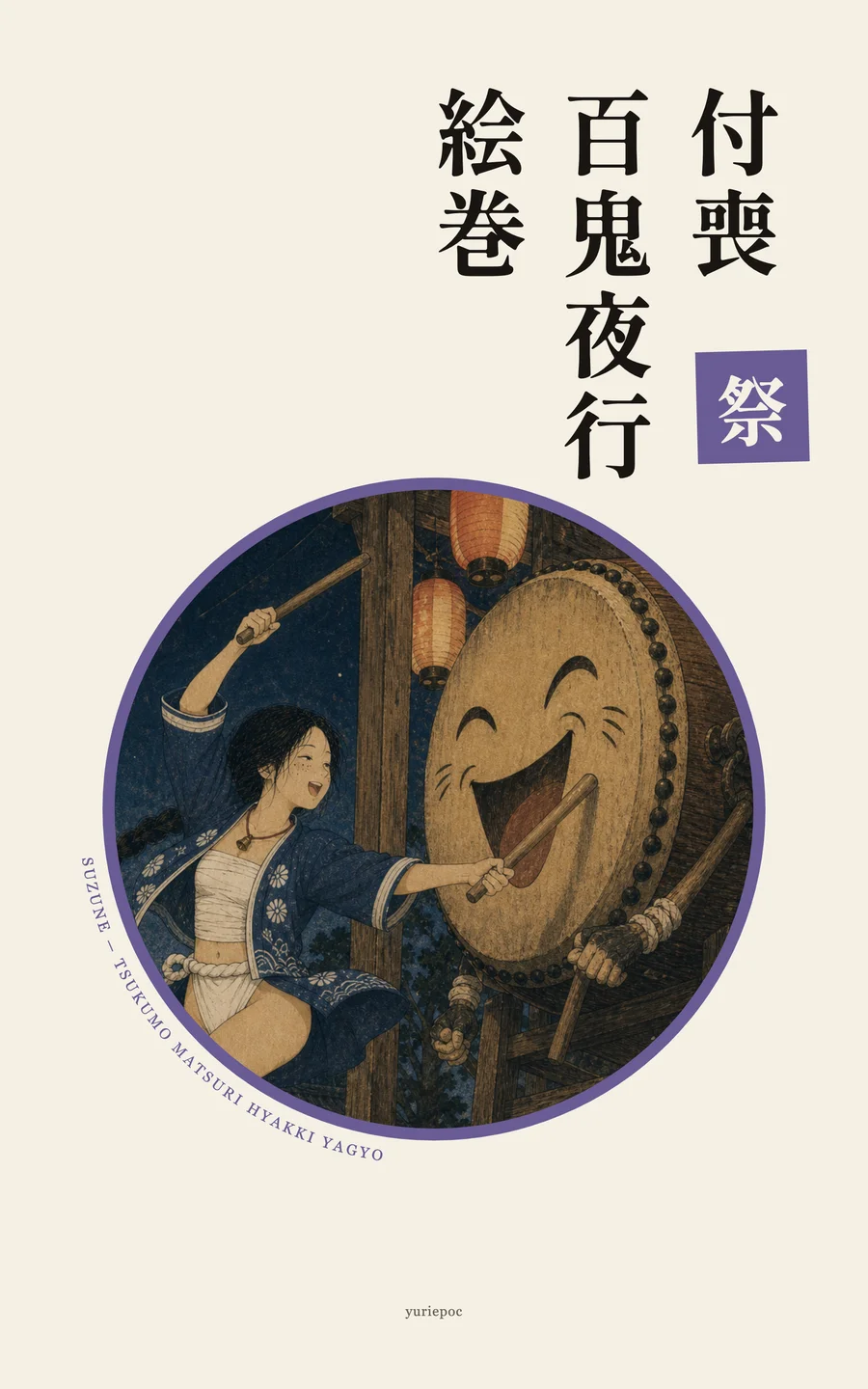
舞台は令和のクラブ。開店は午後九時、閉店は朝の五時。ミラーボールの下、バーカウンター、VIPのソファ、厨房の裏口、非常階段。場所ごとに神さまが変わり、鈴音は首の赤い鈴を鳴らしながら、笑って一晩を走りぬける。図一〇〇で、鶏が鳴き、神さまたちは社殿へ帰っていく。
図版100点、全204ページ。各図の向かいのページに、その神さまの「由来」「見分け」「作法」を、日本語と英語で書いた。歴史に詳しくなくても読めるように、やさしい言葉で書いてある。
On New Year's Eve, one hundred gods crowd into a club.
Suzune keeps the guest list at the door and writes each arrival's name on a slip of paper. Sugawara no Michizane comes with his flying-plum ox. The priest Tenkai settles in at the reception desk. The folk-hero thief Nezumi Kozō strolls in. Most of them were once living people; now they are enshrined as gods in shrines and temples. Gods who lose their worshippers drift toward becoming yōkai. But tonight they are not frightening. They cut loose, dance, and play with Suzune.
The setting is a club in present-day Japan, from opening at nine in the evening to closing at five in the morning: under the mirror ball, at the bar counter, on the VIP sofas, at the kitchen's back door, on the emergency stairs. Every spot brings a different god, and Suzune, her small red bell at her throat, laughs her way through the night. On plate one hundred a rooster crows, and the gods go home to their shrines.
100 plates, 204 pages. Facing each plate, in Japanese and English, are the god's origin, how to recognize them, and how to behave around them. It is written in plain words, so that readers who know little Japanese history can follow it.
見本図Sample plates
-
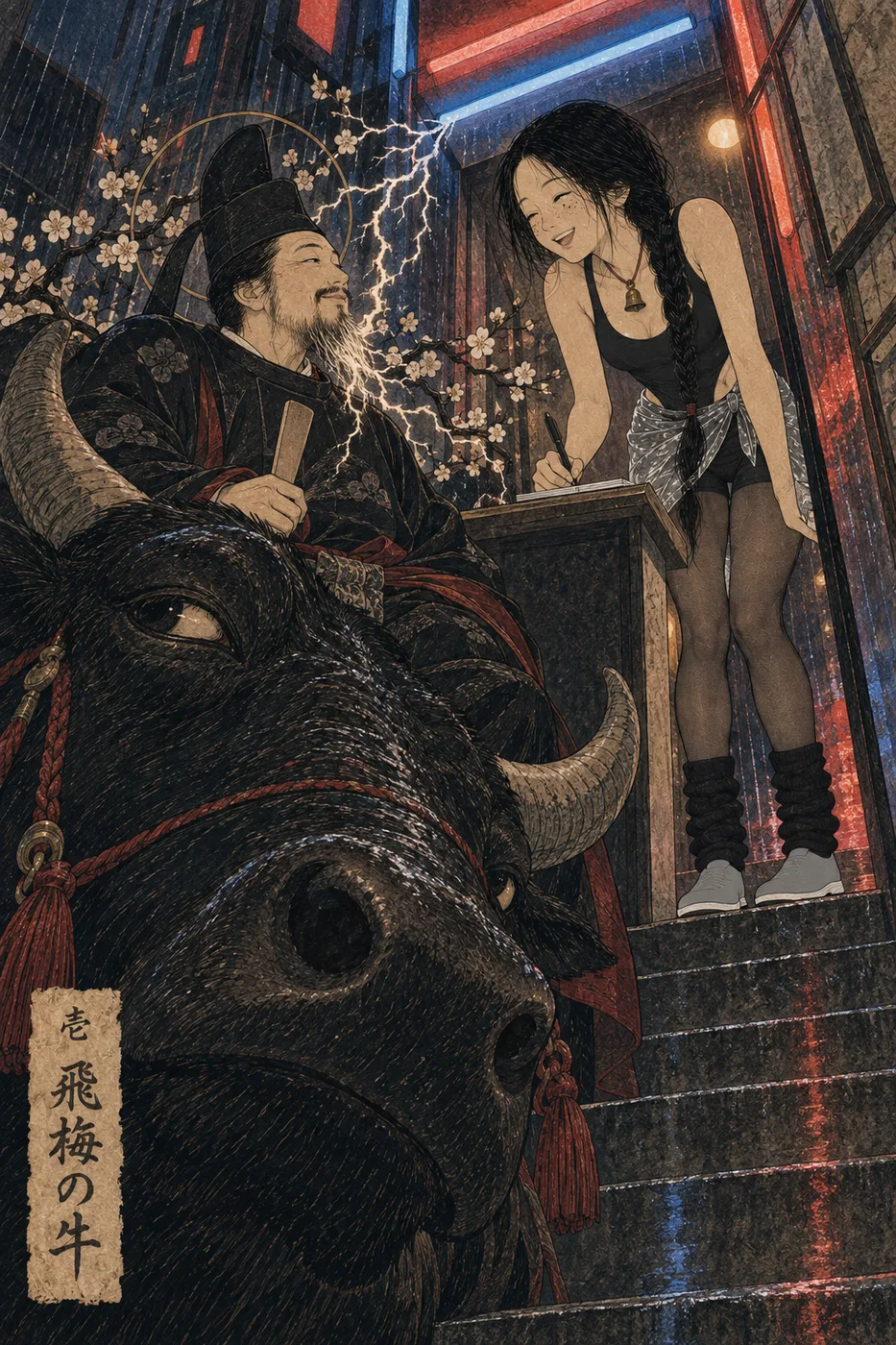
第一図 / Plate 1
飛梅の牛Tobiume no Ushi
The Ox That Lights the Neon
由来 / Origin
天神の菅原道真が、牛にまたがる飛梅の牛になって来た。道真は無実の罪で大宰府に流された。
Michizane Sugawara, the god Tenjin, has come as Tobiume no Ushi, riding an ox. He was exiled to Dazaifu for a crime he did not commit.
-
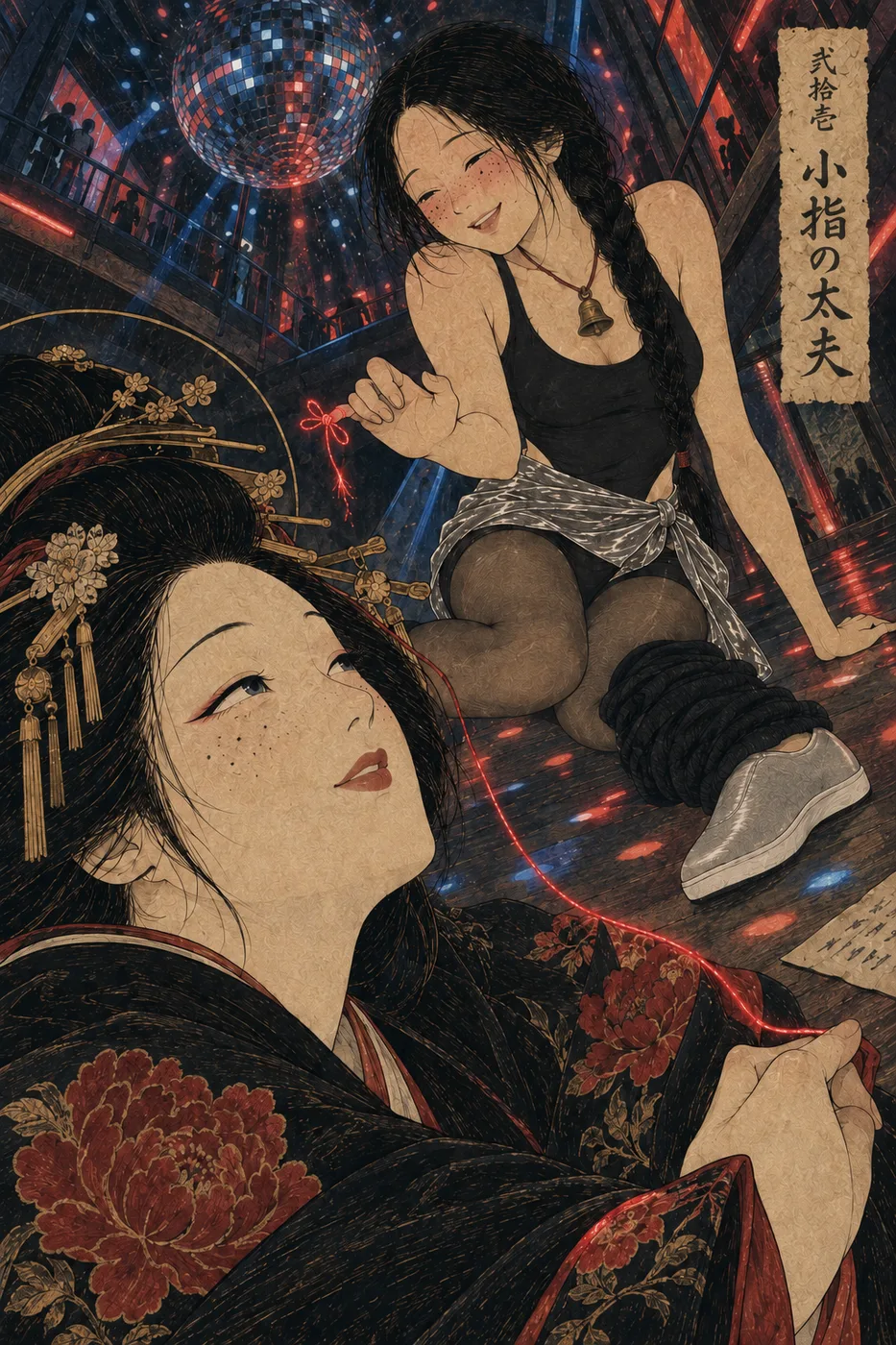
第二十一図 / Plate 21
小指の太夫Koyubi no Tayū
The Courtesan of the Red Thread
由来 / Origin
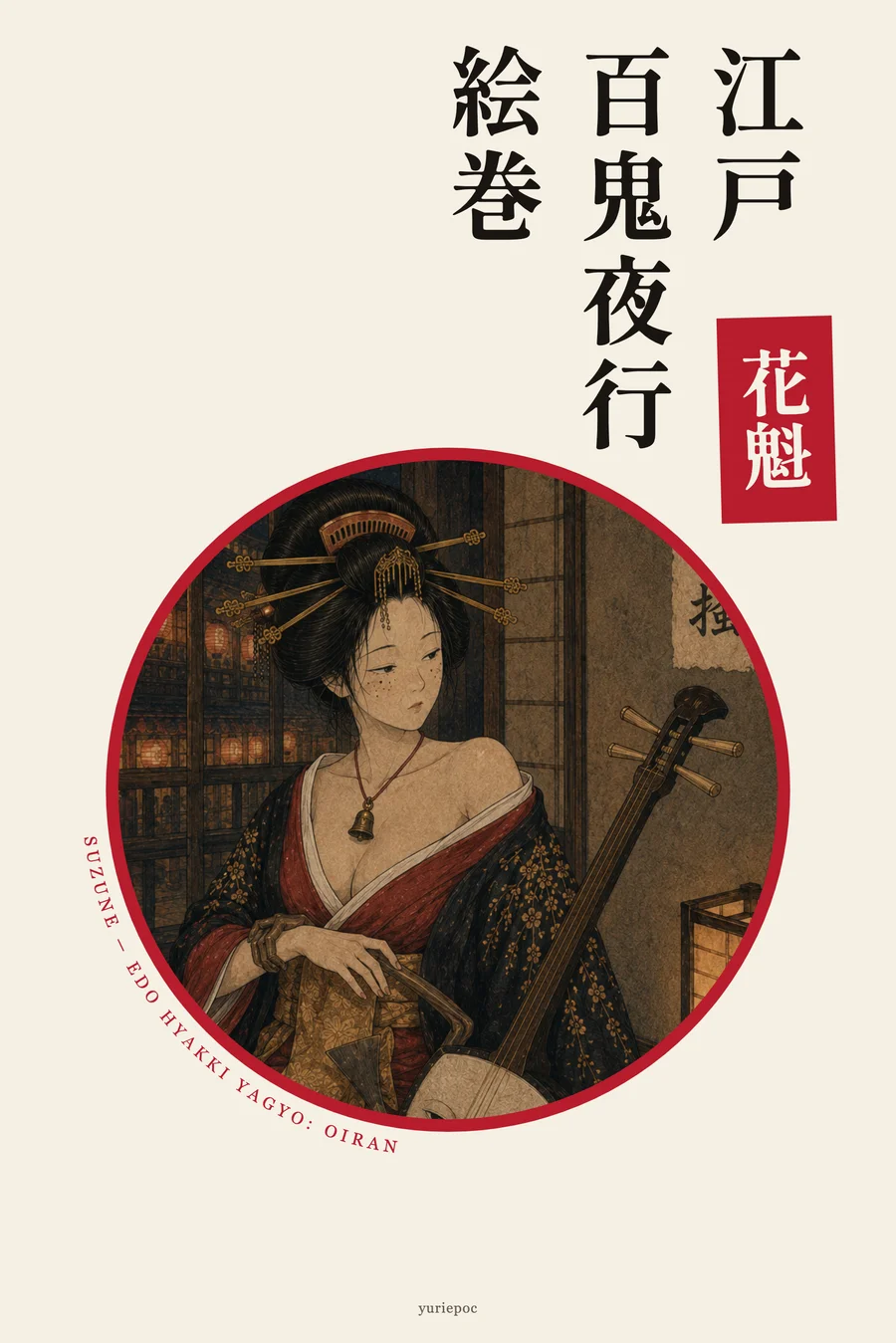
高尾太夫は、江戸の吉原にいた最高位の遊女である。高尾稲荷神社に祀られ、縁結びと縁切りの神として信じられた。
Takao Dayū was the highest-ranking courtesan in Yoshiwara in Edo. She is enshrined at Takao Inari Shrine and was trusted as a deity who ties and cuts bonds between people.
-
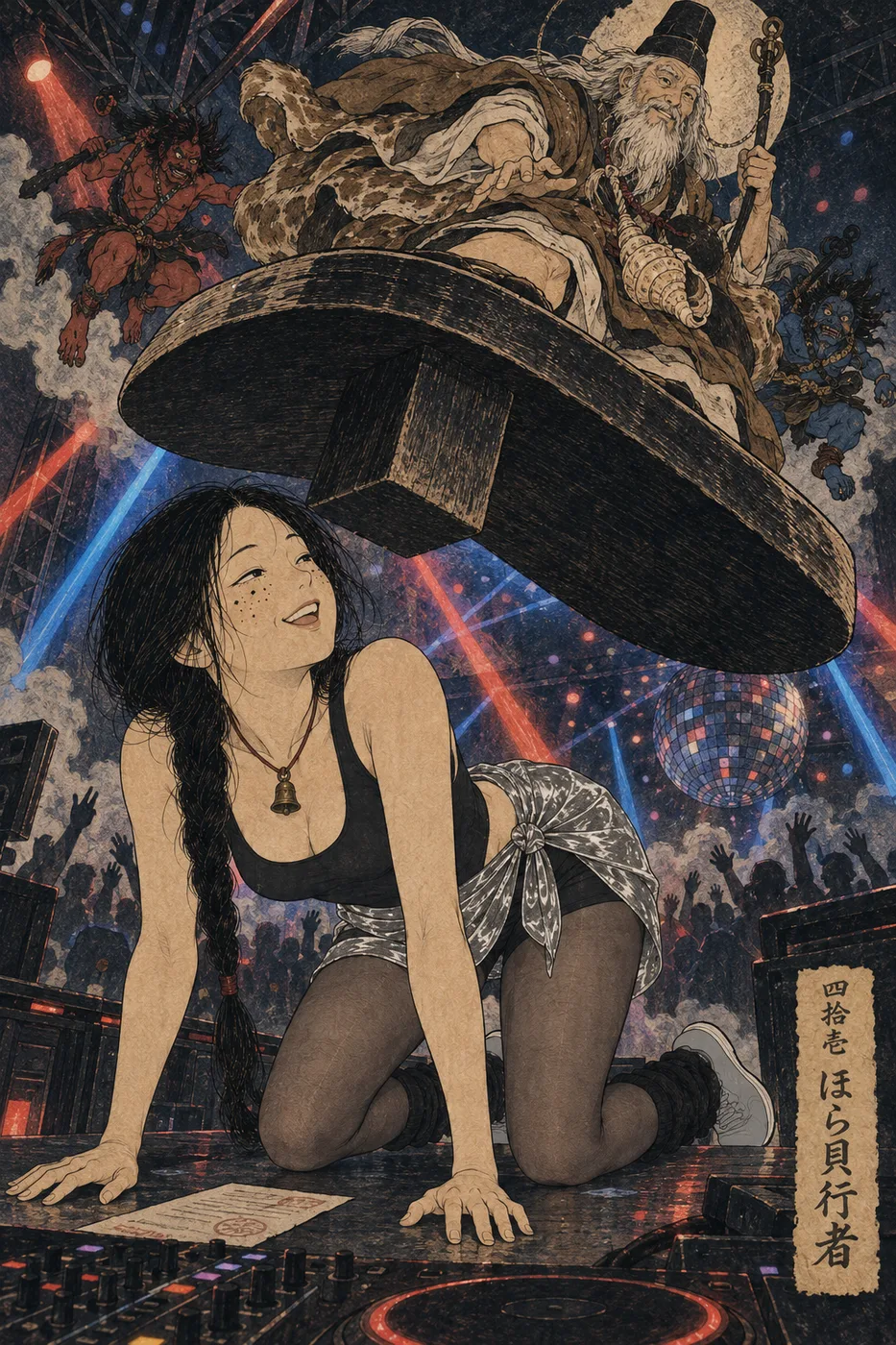
第四十一図 / Plate 41
ほら貝行者Horagai Gyōja
The Ascetic on a One-Toothed Geta
由来 / Origin
役小角は、飛鳥時代の山岳修行者で、修験道の開祖と敬われている。夫婦の鬼、前鬼と後鬼を従えた話がある。
En no Ozunu was a mountain ascetic of the Asuka period, honored as the founder of Shugendō. A tale says he commanded a pair of demons, Zenki and Goki.
-
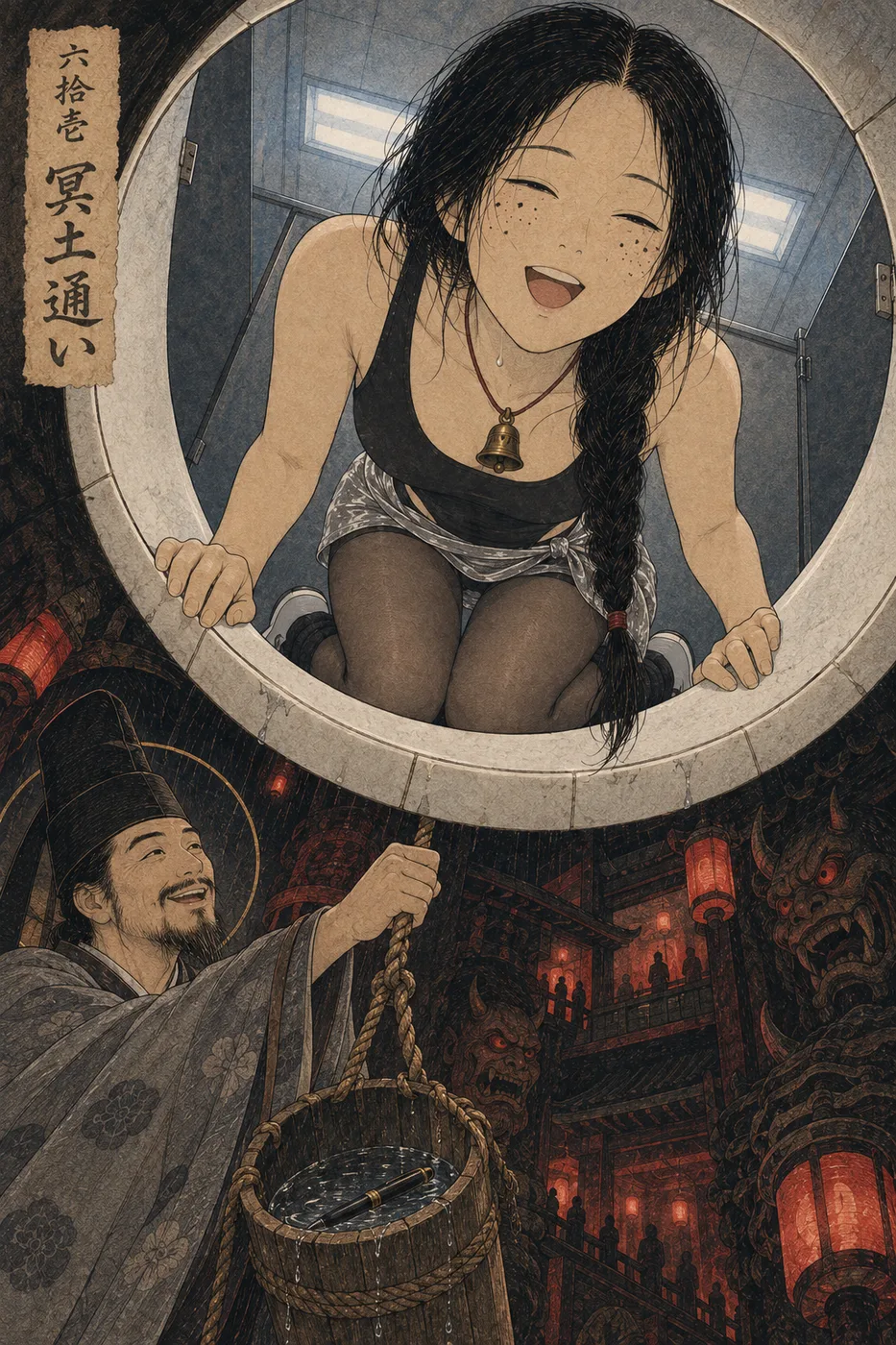
第六十一図 / Plate 61
冥土通いMeidogayoi
The Official Who Commutes to the Underworld by Well
由来 / Origin
小野篁は、夜ごと井戸から閻魔の役所へ通ったと語られる平安時代の役人で、京都の六道珍皇寺にその井戸が伝わる。冥土に通う人なので、下半身が井戸に変わった。
Ono no Takamura was a Heian official who is told to have gone down a well every night to the court of Enma, the king of the dead, and the well is kept at Rokudo Chinno-ji in Kyoto. Because he commuted to the underworld, the lower half of his body turned into a well.
-
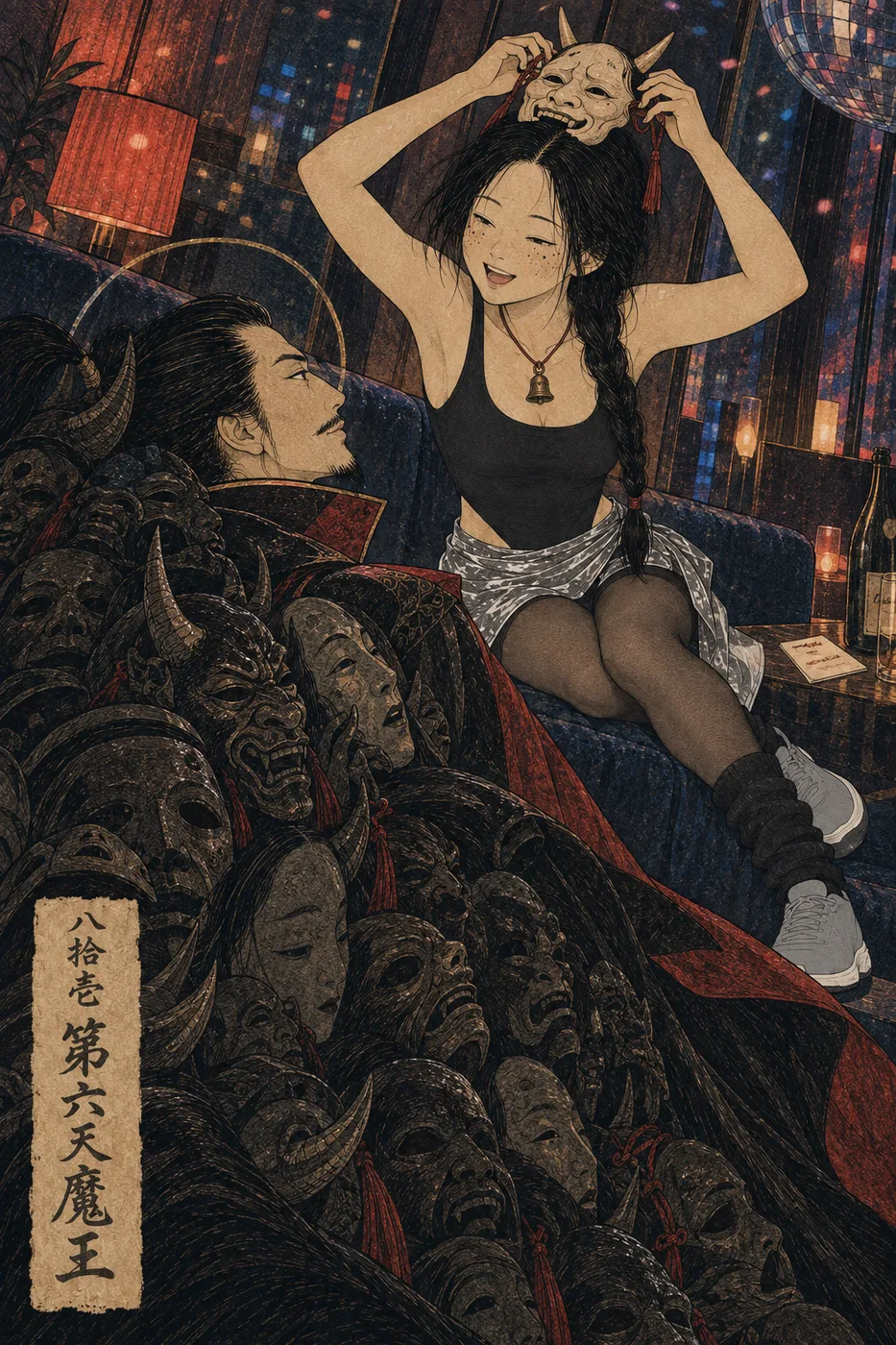
第八十一図 / Plate 81
第六天魔王Dairokuten Maou
The Demon King With a Hundred Masks on His Back
由来 / Origin
織田信長は、尾張から天下に迫り、「第六天魔王」と名乗ったと語られる戦国の武将で、京都の建勲神社に祀られる。恐れられた人なので、背中に百の面が生えた。
Oda Nobunaga was a warlord of the Sengoku era who rose from Owari to the brink of ruling the whole land, and it is told that he called himself the "Demon King of the Sixth Heaven." He is enshrined at Kenkun Shrine in Kyoto. Because he was a man people feared, a hundred masks grew on his back.
ほかの本Other books