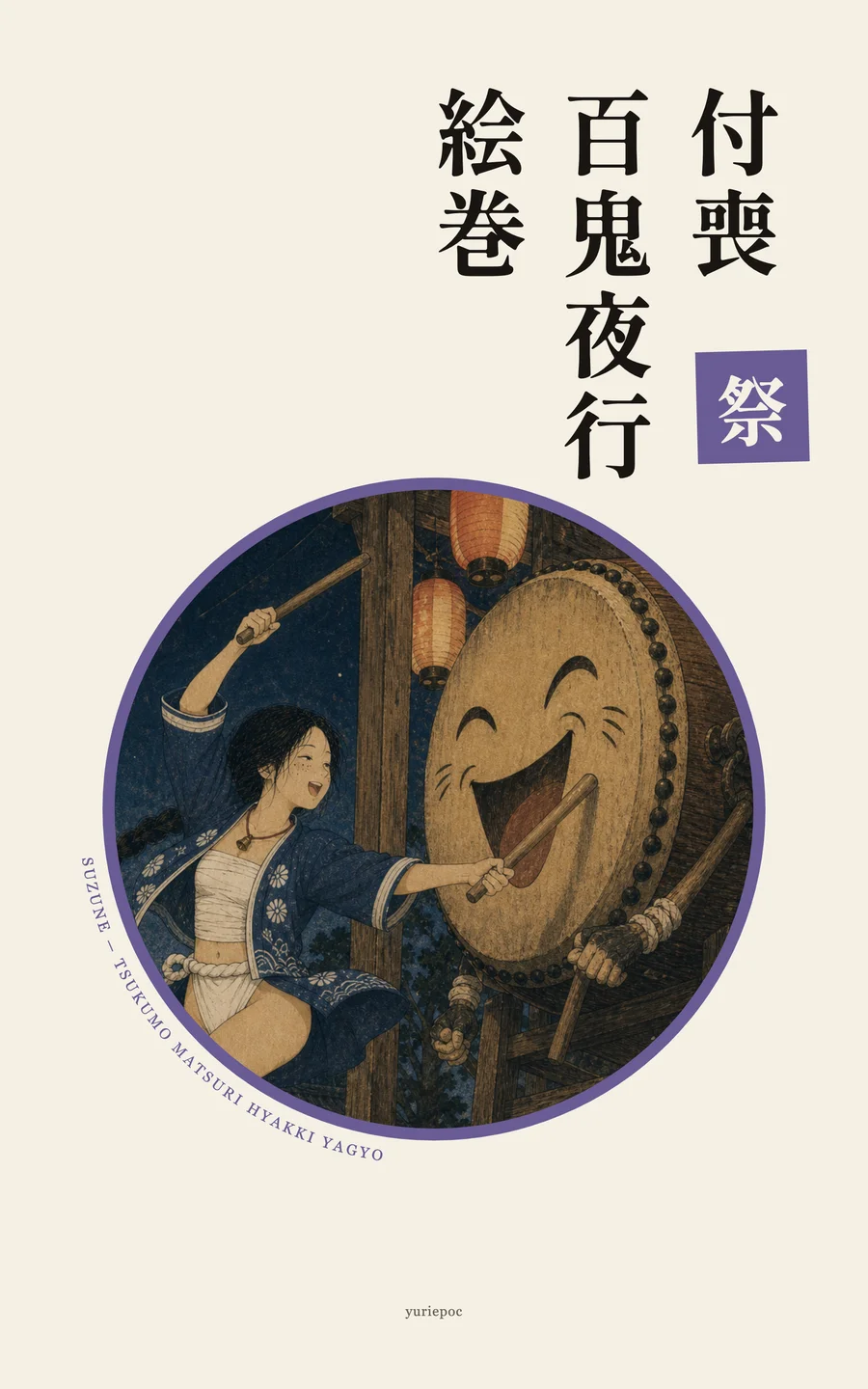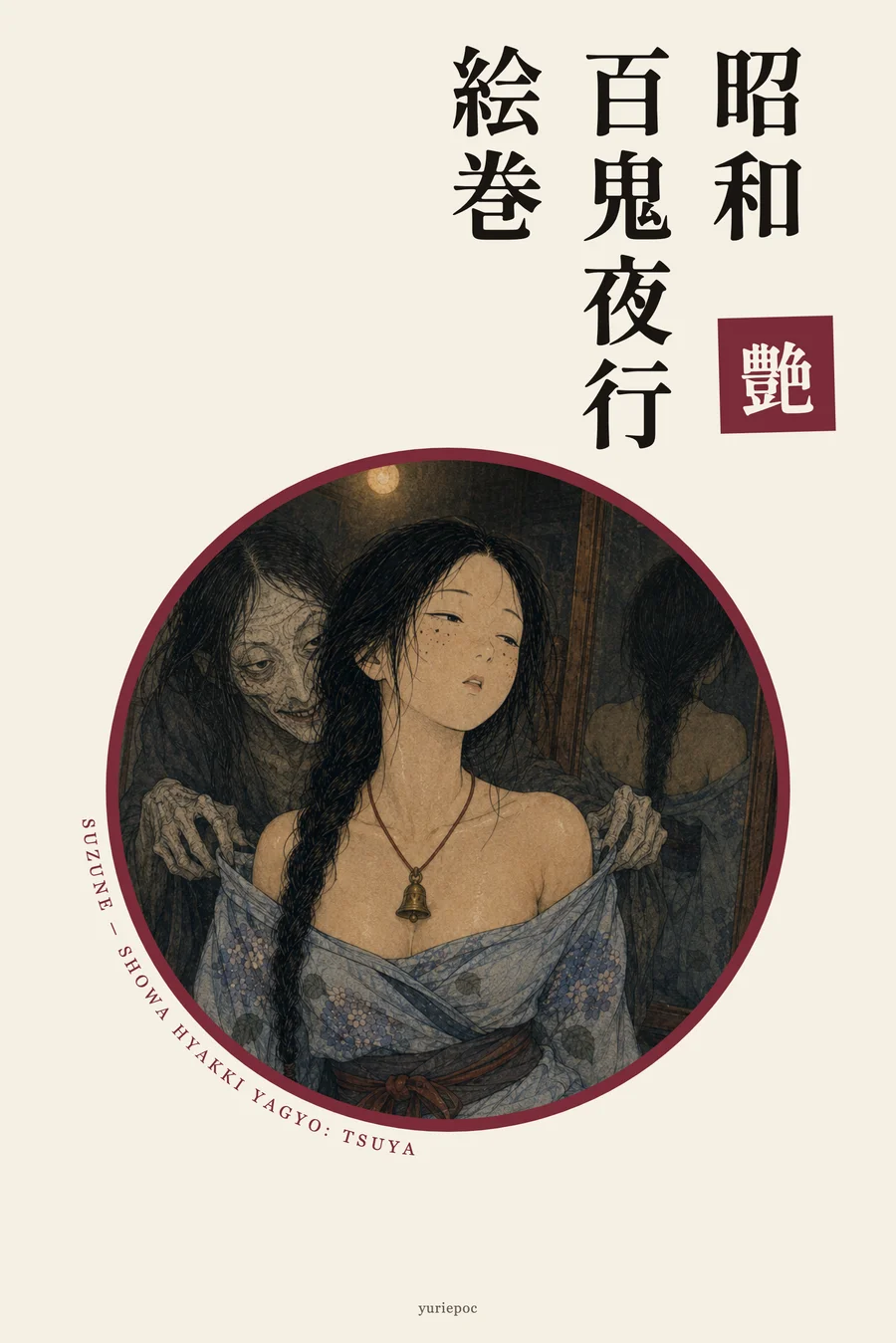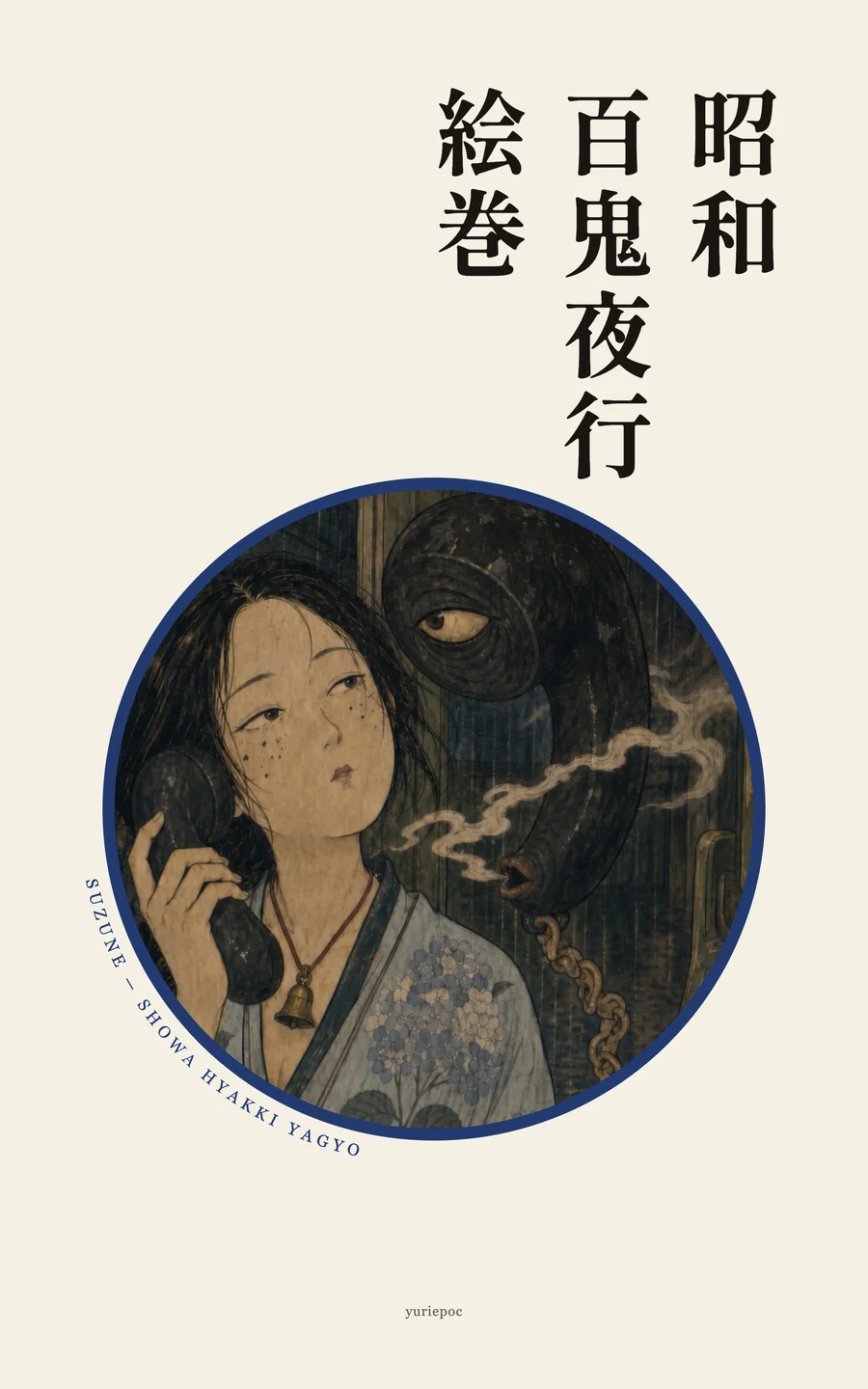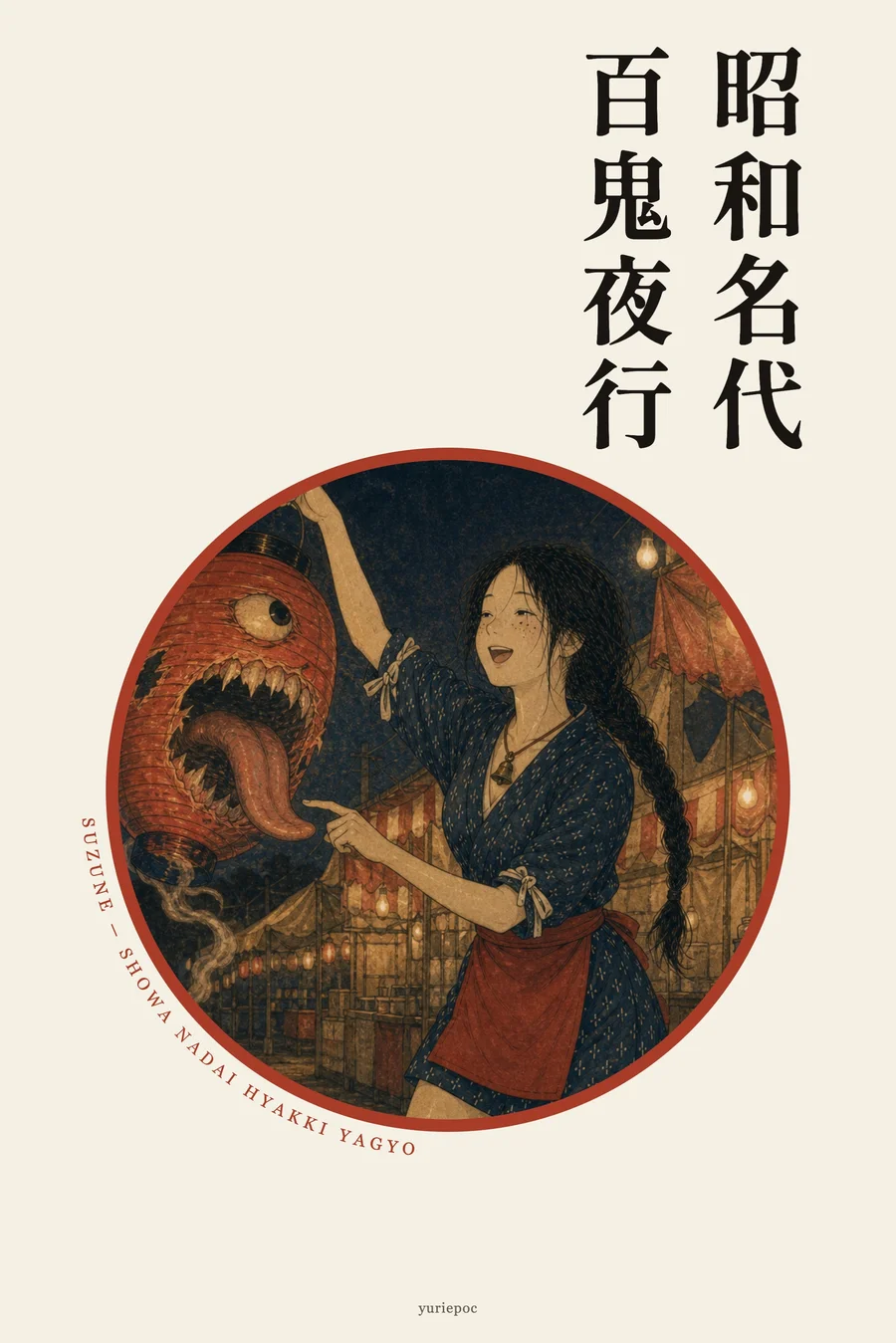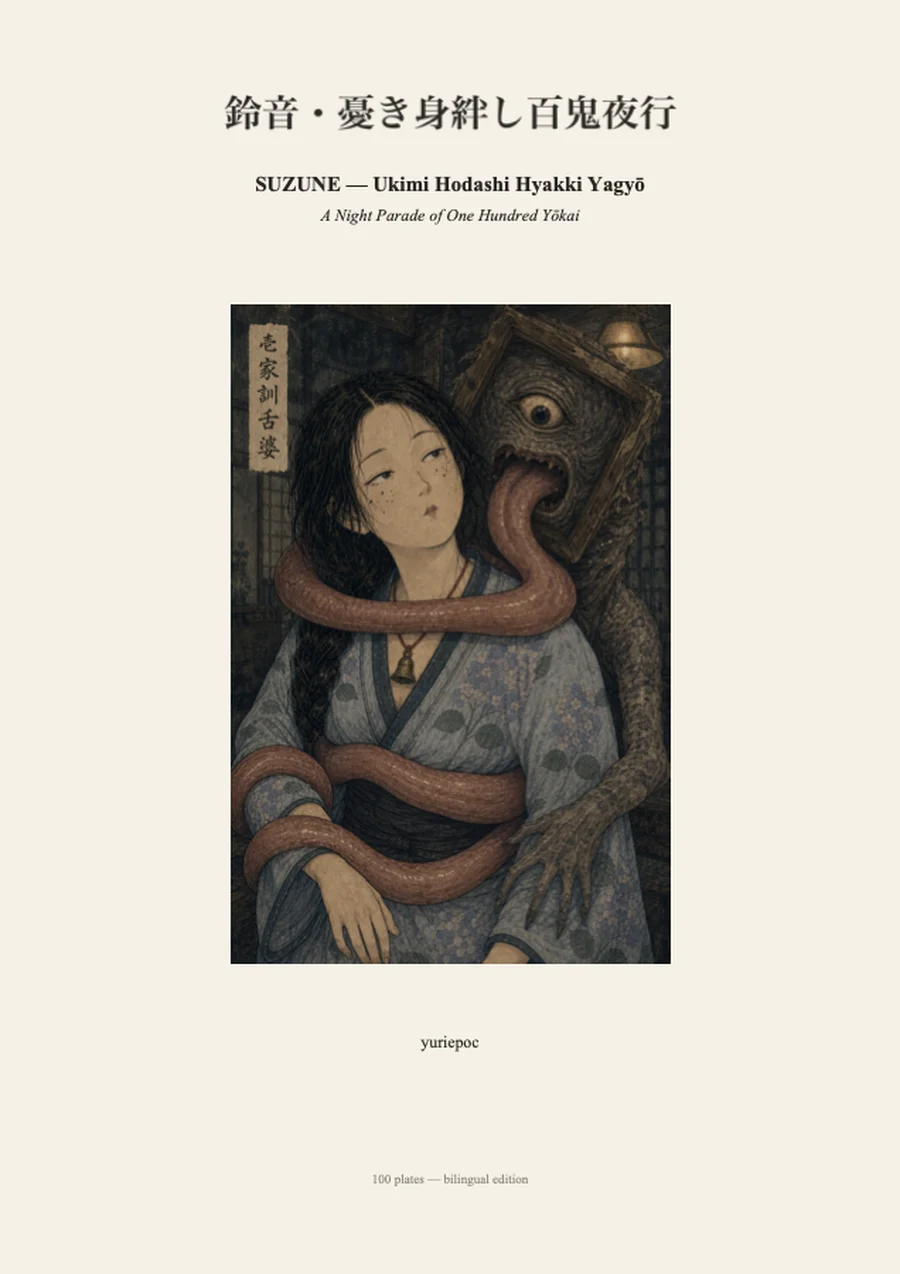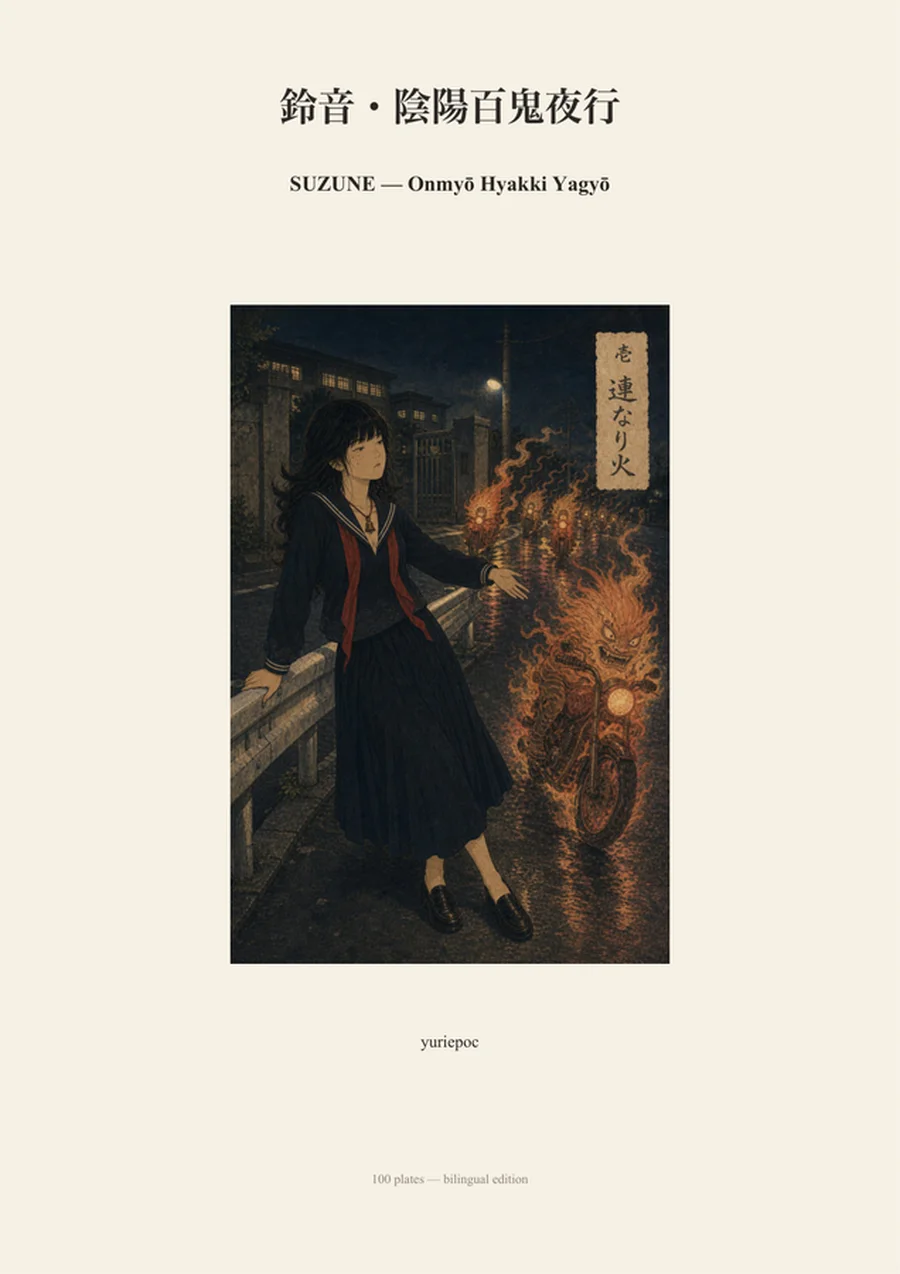
紹介About this book
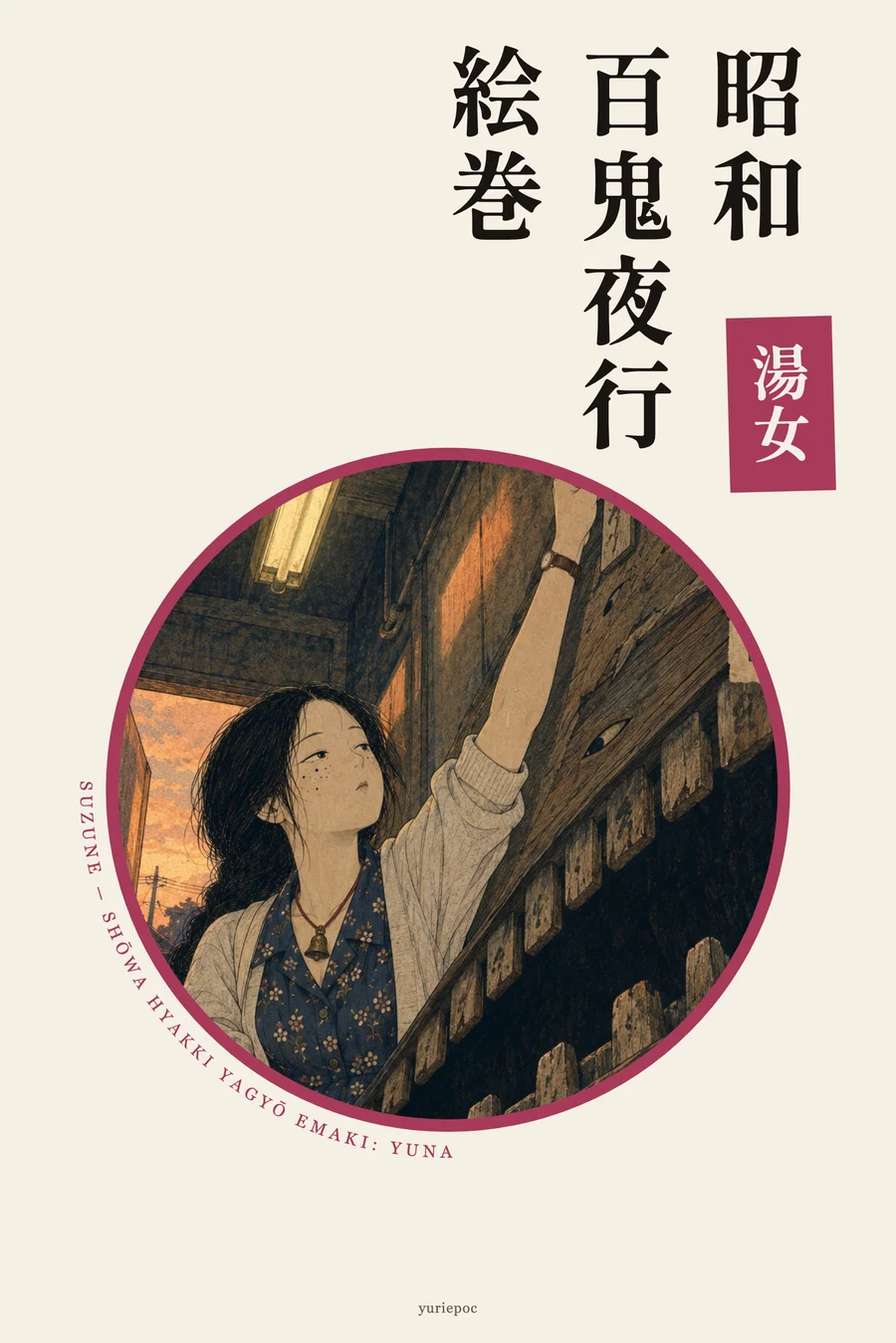
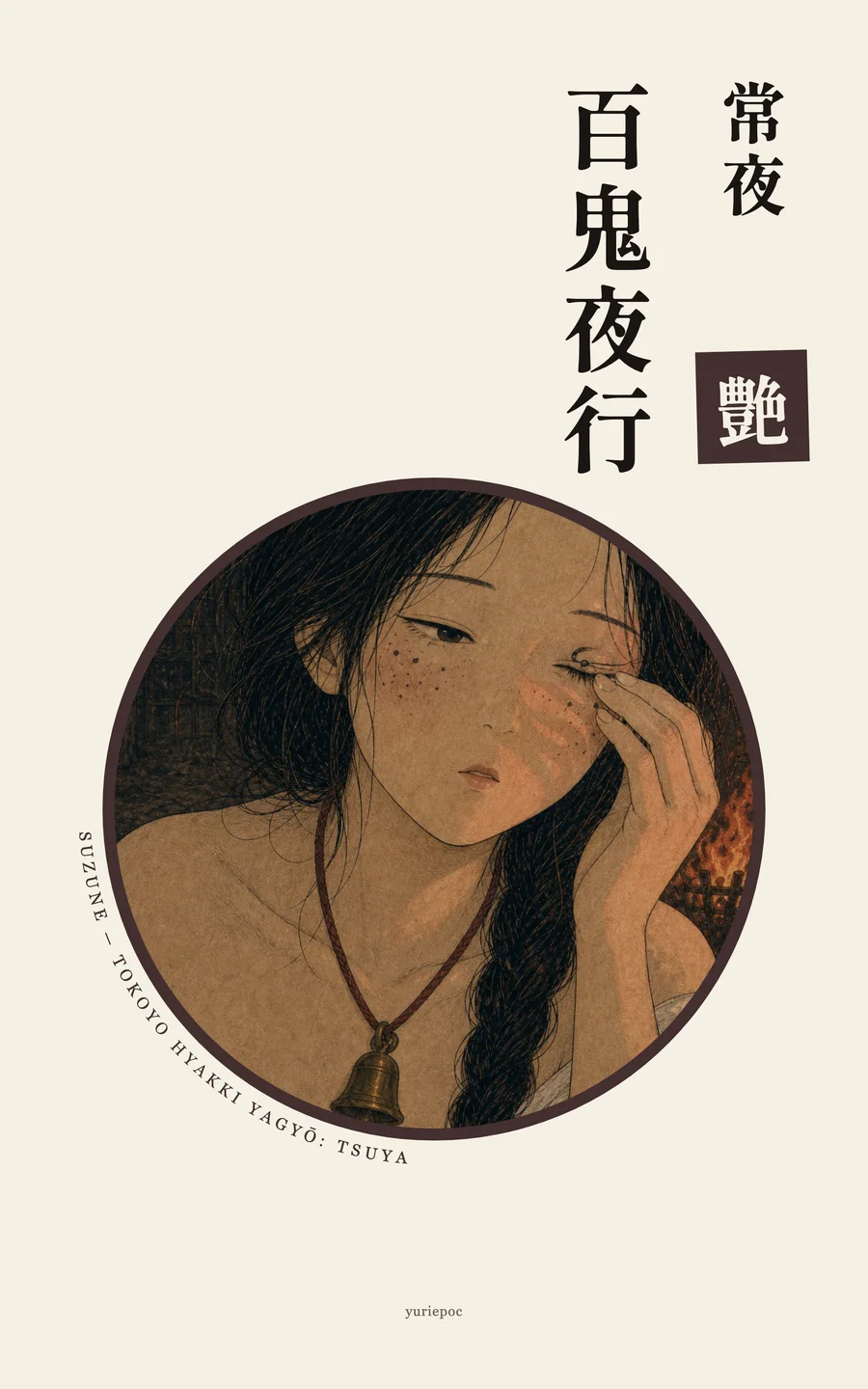
1970年代後半、日本のある一年の夜々から生まれた百の怪異——名前を書いた面だけがすり減る消しゴム、剥がされたポスターの四つの画鋲跡が夜だけ目を開くもの、コンサート会場の紙扇がいっせいに同じ一陣を送るもの、手紙の来ない家の前で欠伸をするポスト。丸ごと化けるのではない。持ち主が置き去りにしたものの一部が、その晩だけ勝手に動き出す。
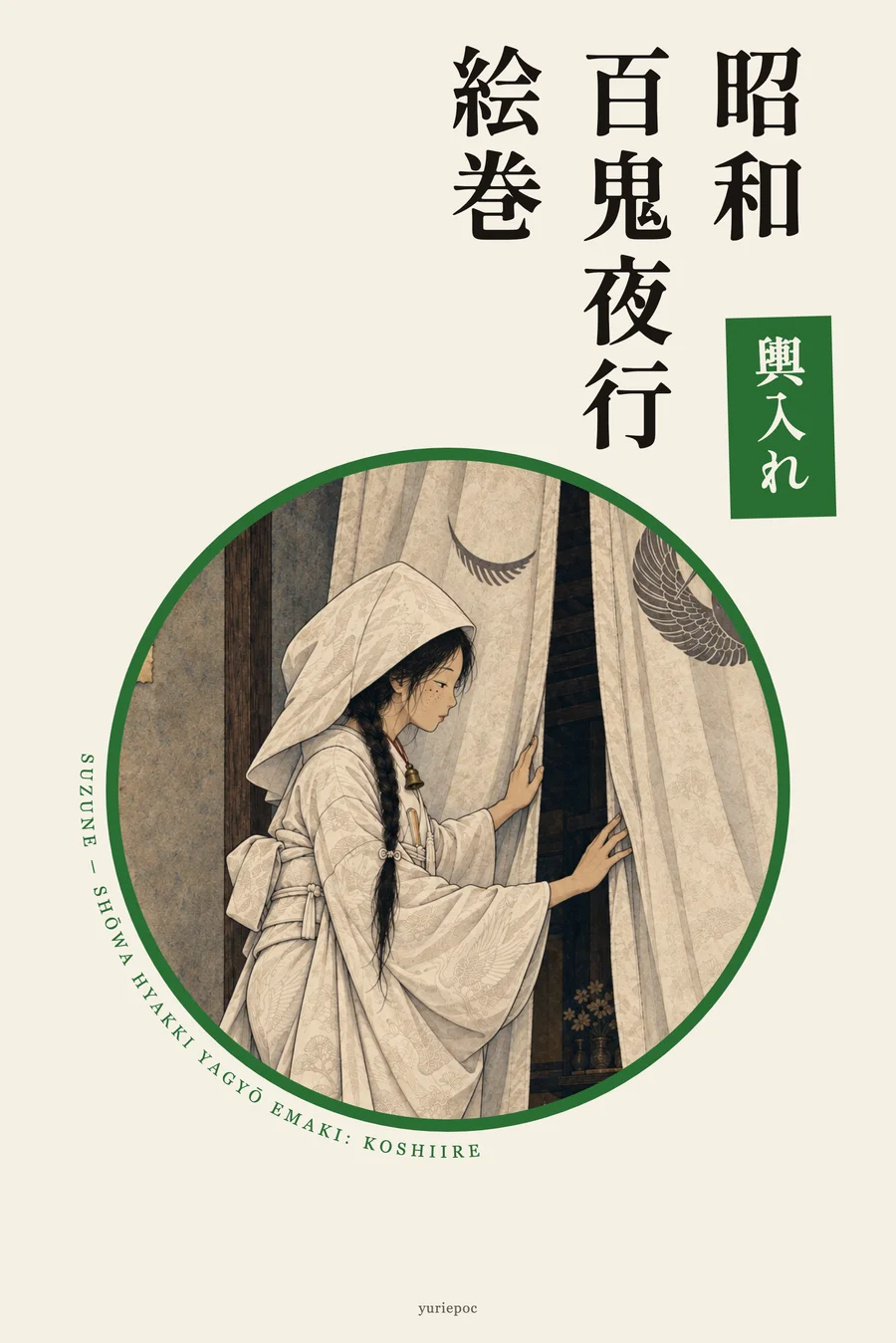
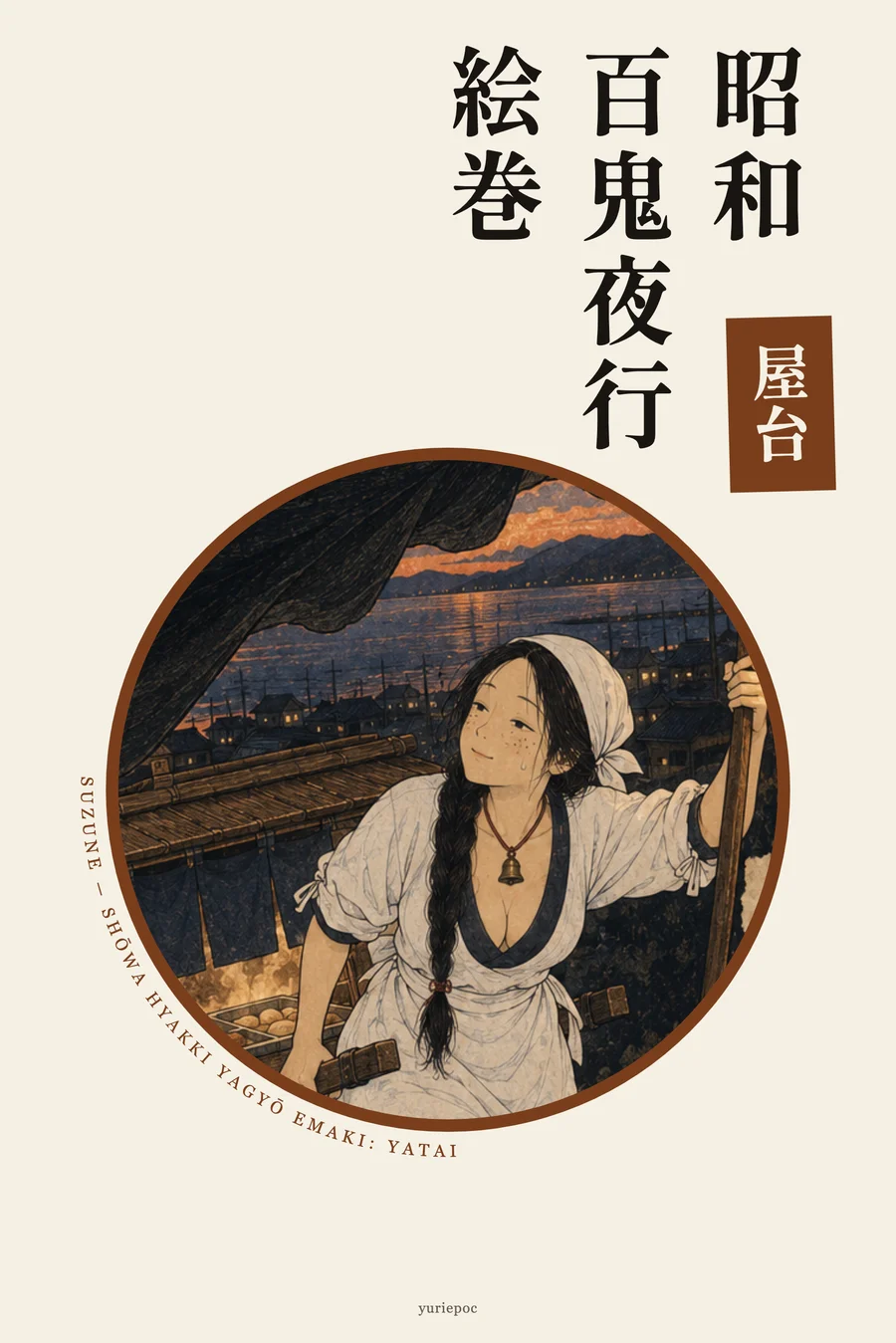
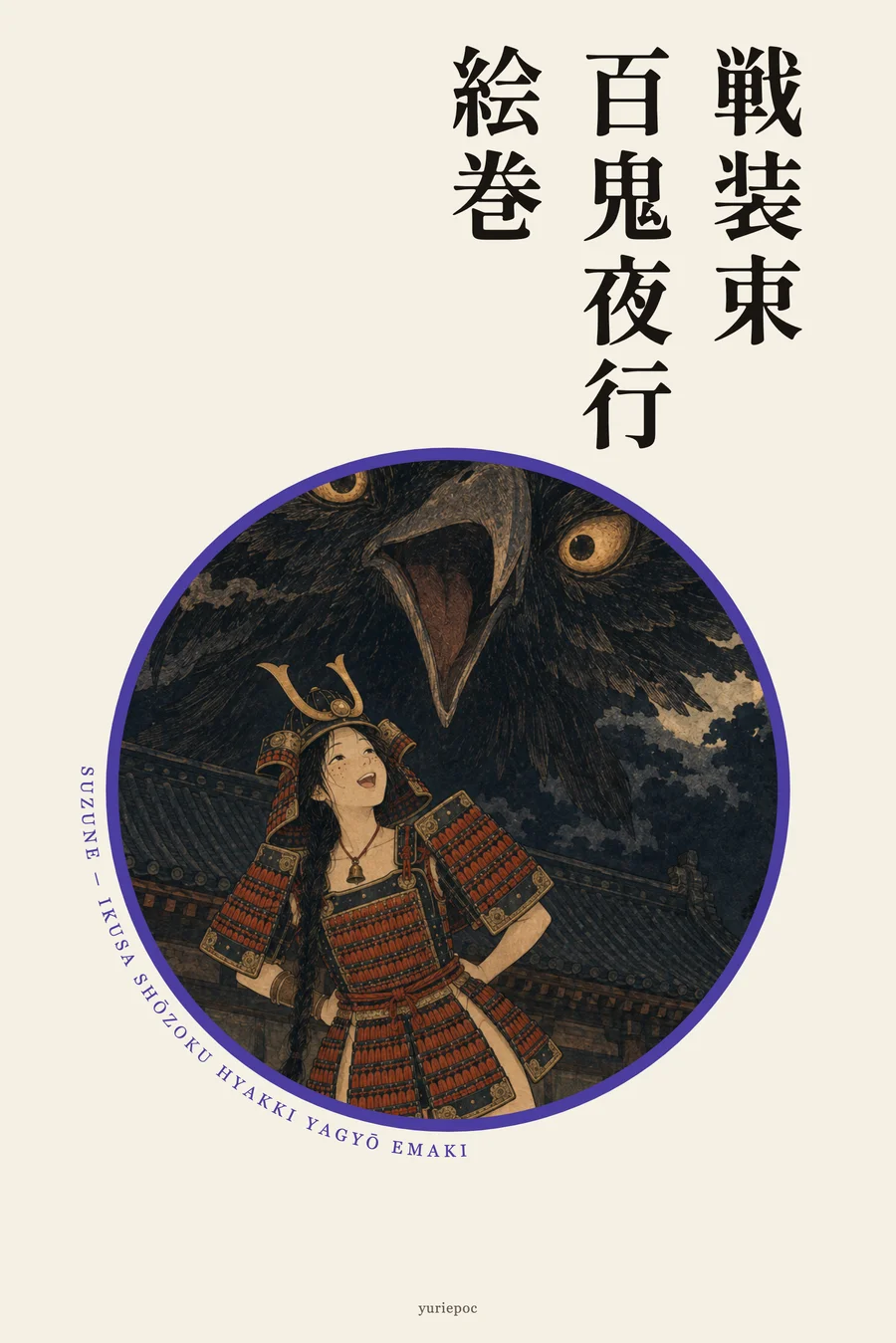
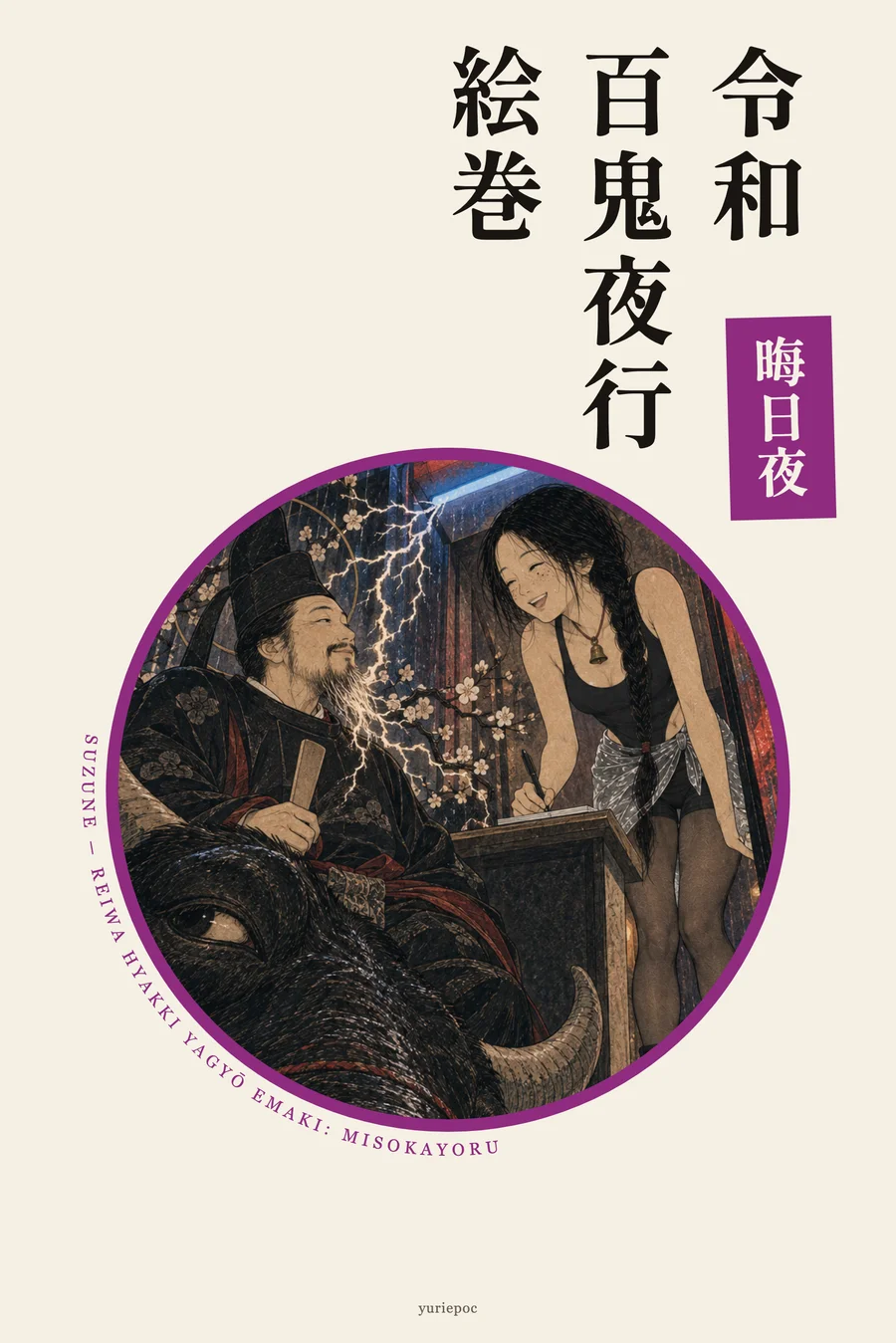
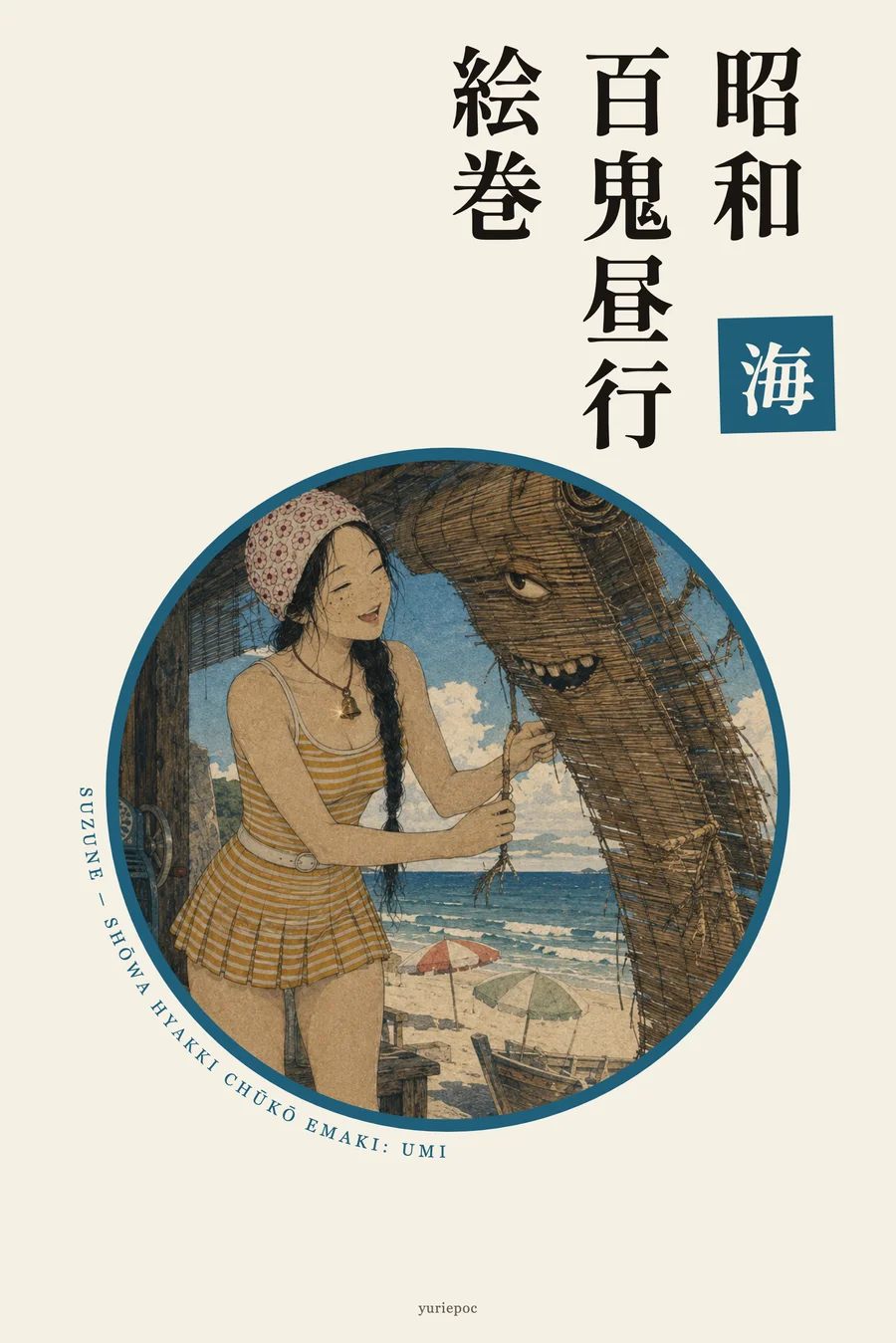
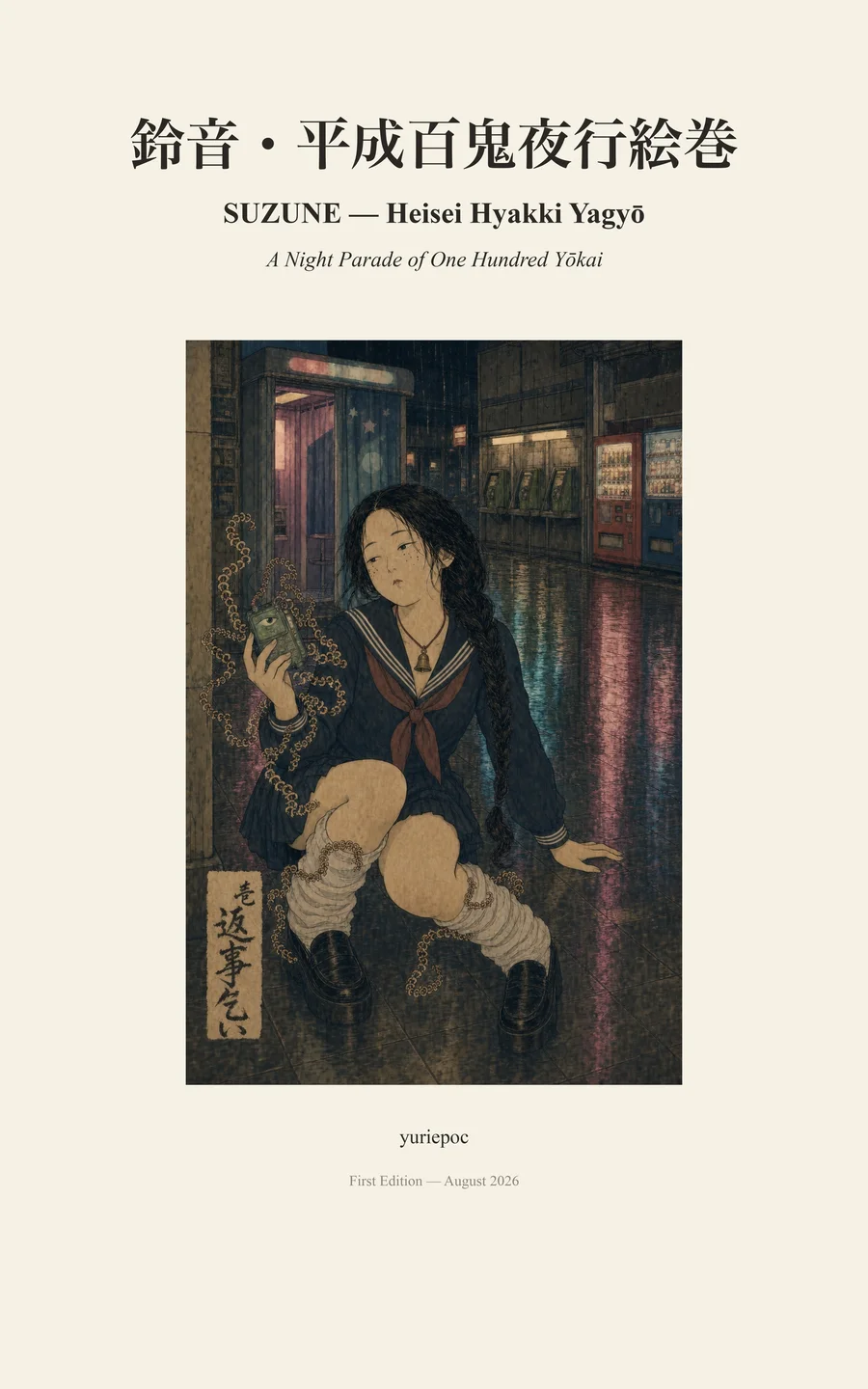
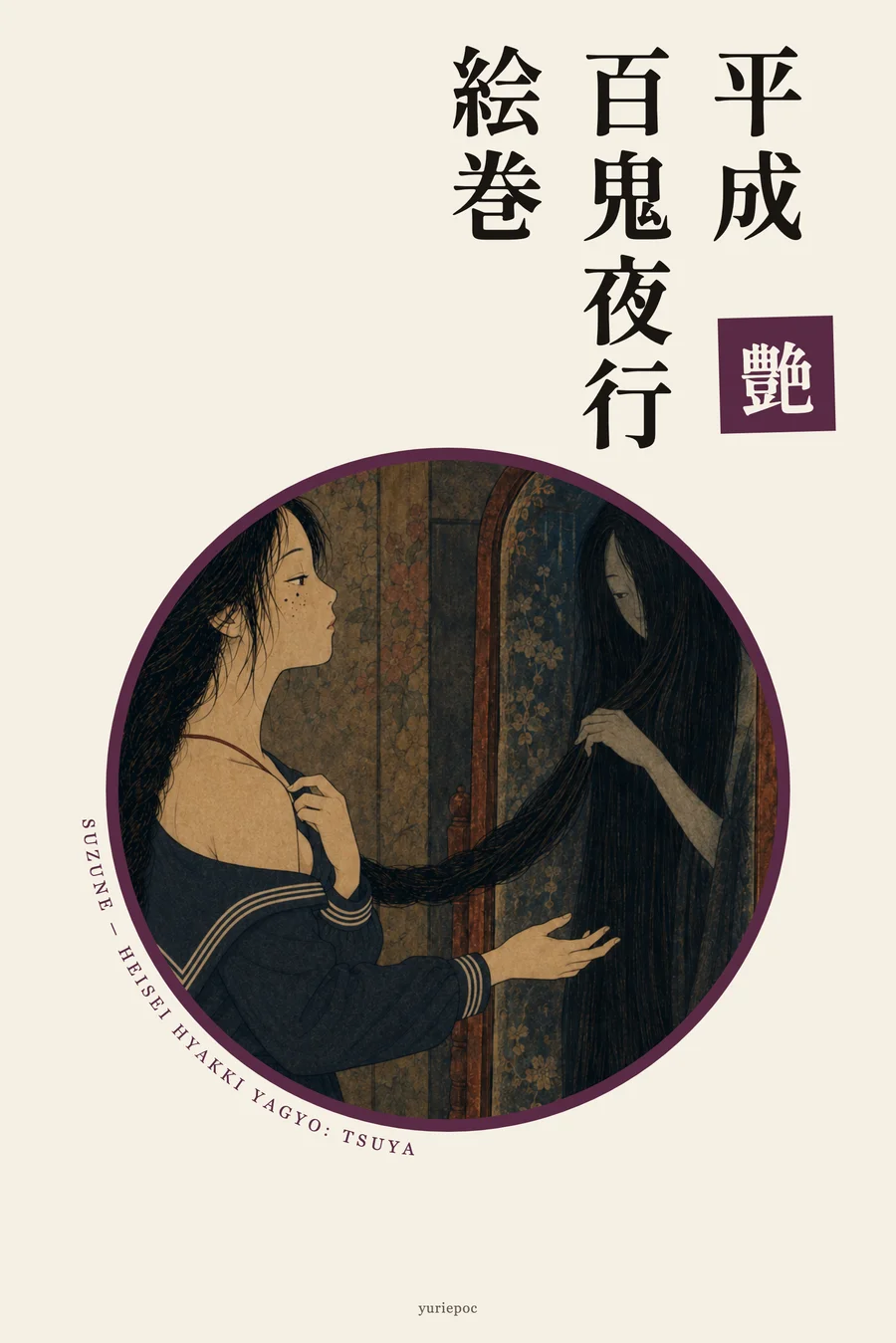
中心にいるのは、首に小さな赤い鈴を下げた娘・鈴音——ここでは彼女は二人いる。ひとりは人目のない夜の側を、不良の長いプリーツスカートで歩く。深夜の国道、階段の踊り場、屋上のフェンス、校舎裏の焼却炉。もうひとりは人目のある側を、アイドルとして歩く。楽屋、舞台袖、中継車、録画していない赤いランプのカメラ。同じ顔、同じ鈴——二人は最後まで出会わない。図九十九、姿見が娘をひとり多く数える。図百、解散コンサートの明け方、二人の娘が鈴をひとつずつ下げて並び立ち、鳴るのは一音だけである。どちらが本物だったのかは、この本のどこにも書かれていない。
妖怪百体はすべて創作で、古典の伝承からの引用は一体もない。それぞれがその年代の実在の物や習慣から生まれている。雑誌付録のソノシート、生徒手帳、喫茶店の有線リクエスト、ブロマイド、焼却炉、校庭の百葉箱など
One hundred hauntings from the nights of a single year in late-1970s Japan — the eraser that wears away only on the face where a name was written, the four pinholes left by a torn-down poster that open their eyes after dark, the paper fans in a concert hall that all send the same single gust, the postbox that yawns in front of a house where no letter ever comes. Nothing transforms whole. Some part its owner left behind simply begins to act on its own, for the length of one night.
At the center is Suzune, the girl with a small red bell at her throat — and here there are two of her. One walks the unwatched side of the night in a delinquent's long pleated skirt: the national road at midnight, the stairwell landing, the roof fence, the incinerator behind the school. The other walks the watched side as an idol: the dressing room, the wings of the stage, the relay van, the red lamp of a camera that is not recording. Same face, same bell — and they do not meet until the end. On the ninety-ninth plate a folding mirror counts one girl too many. On the hundredth, at the dawn of a farewell concert, two girls stand side by side wearing two bells, and only one note sounds. Which of them was the real one is written nowhere in this book.
All one hundred yōkai are original creations — not one is borrowed from classical lore. Each was born from a real object or custom of the decade: a flexi-disc bound into a magazine, a student handbook, a piped-in request at a coffee shop, a bromide portrait, an incinerator, a schoolyard weather box
For personal enjoyment only.
見本図Sample plates
-
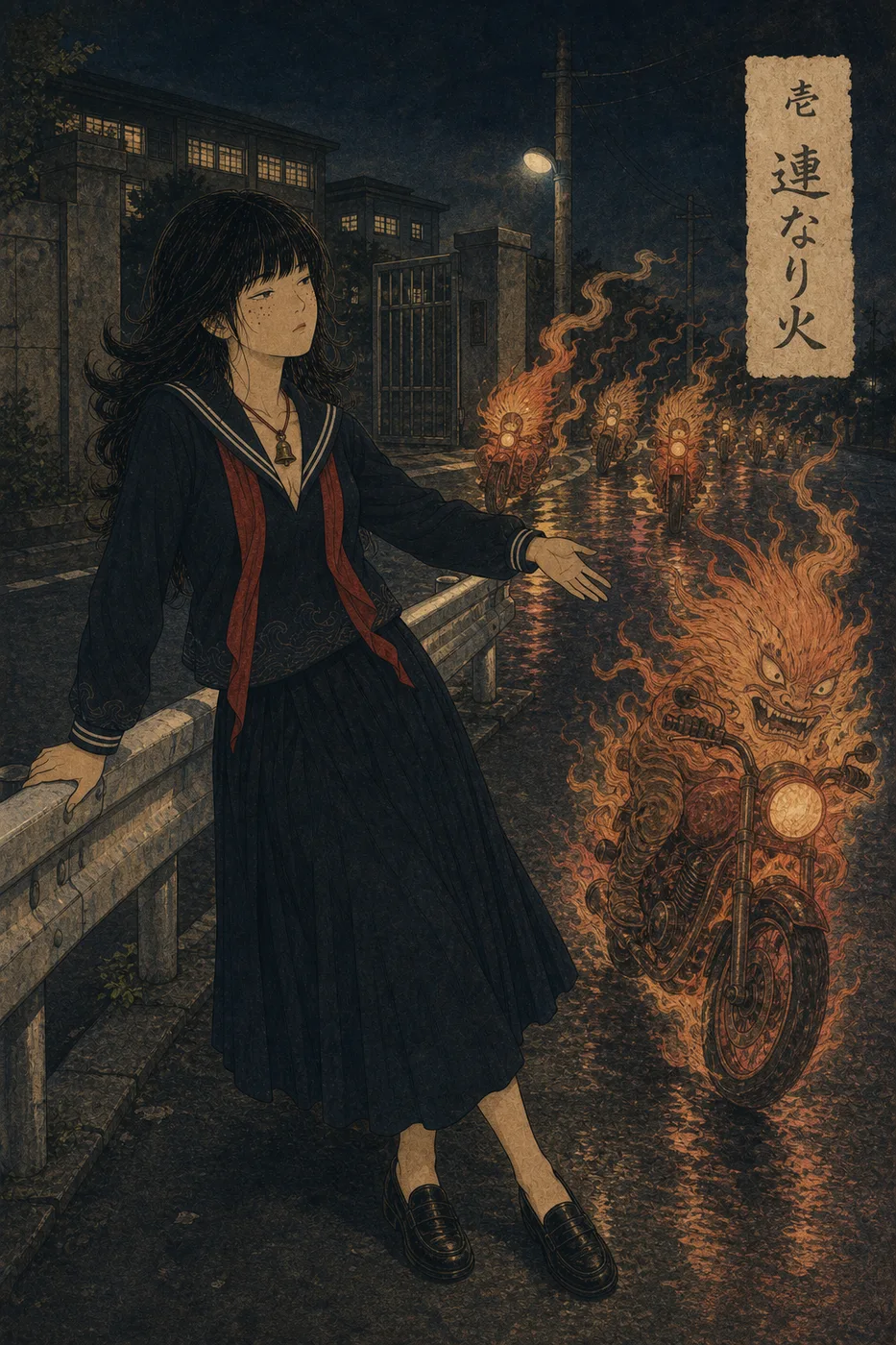
第一図 / Plate 1
連なり火Tsuranaribi
The Convoy of Borrowed Heat
由来 / Origin
連なり火は、国道の赤信号の下にいる妖怪である。単車のライトは、毎晩同じ場所で重なって止まる。
Tsuranaribi is a spirit that lives under the red light on a highway. Motorcycle headlights stop in the same spot every night and overlap.
-
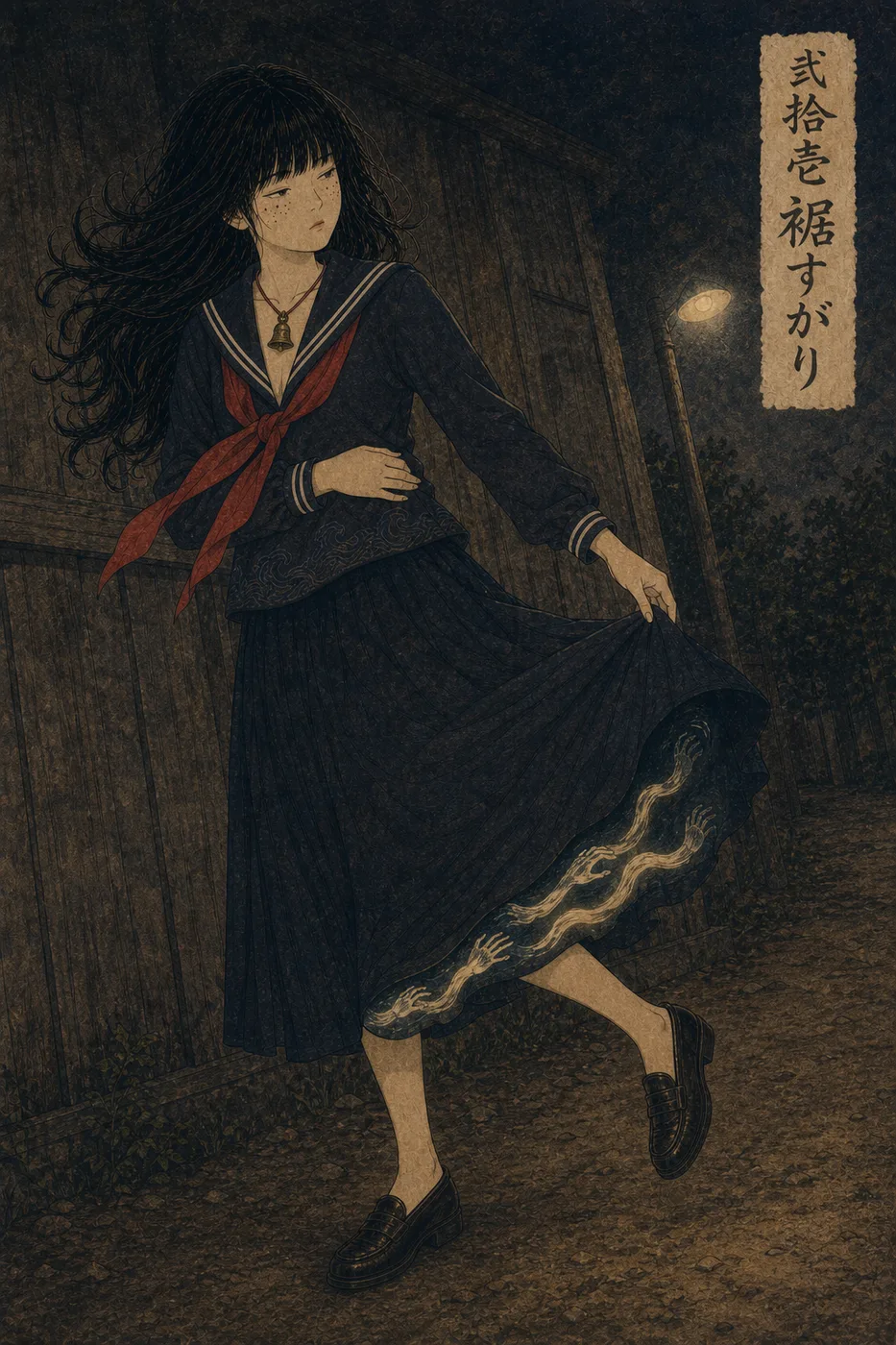
第二十一図 / Plate 21
裾すがりSusosugari
The Hem That Hides Wandering Hands
由来 / Origin
裾すがりは、直したスカートの裾にいる妖怪である。裾を伸ばすと、折り目に日に焼けなかった白い線が残る。
Susosugari is a spirit that lives in the hem of a mended skirt. When a hem is let down, the old fold leaves a pale line that the sun never reached.
-
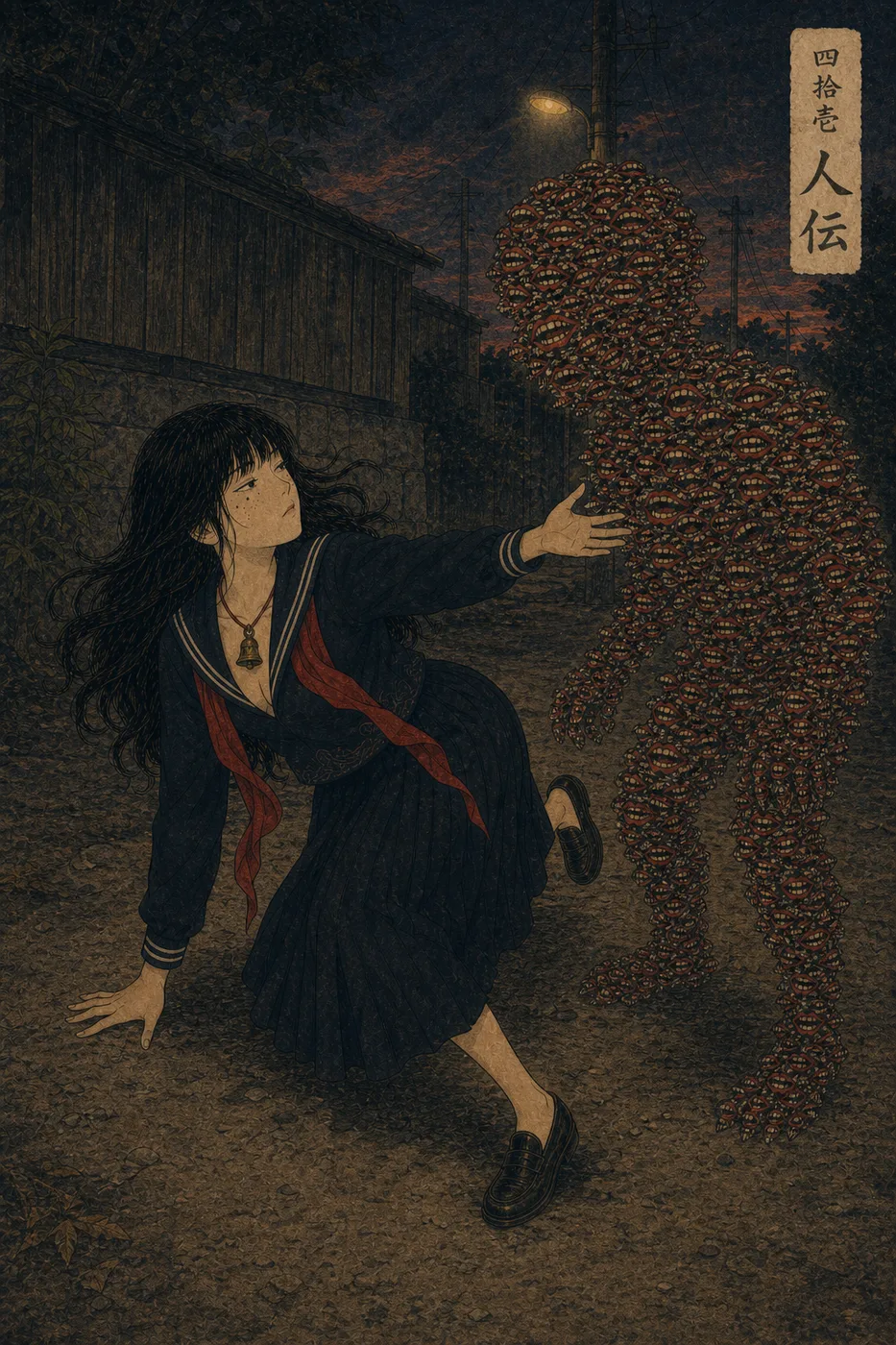
第四十一図 / Plate 41
人伝Hitozute
The Rumor With a Thousand Borrowed Mouths
由来 / Origin
人伝は、下校路の角にいる妖怪である。噂は人から人へ渡るたび、言い出した人の名を落としてゆく。
Hitozute is a rumor that stands at a corner on the way home. Each time a rumor passes from one mouth to another, it loses the name of the person who started it.
-
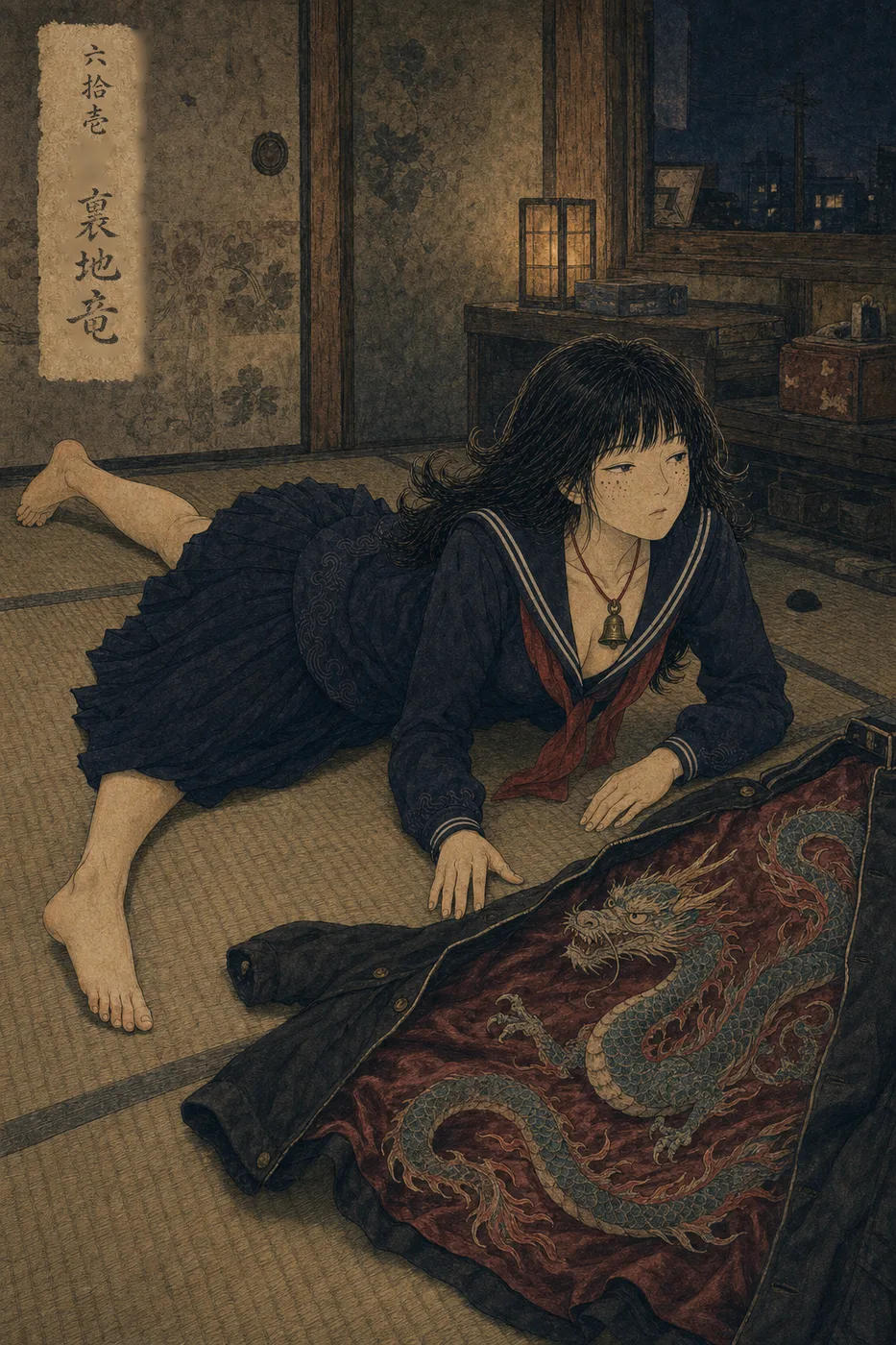
第六十一図 / Plate 61
裏地竜Urajiryū
The Dragon Stitched Into a Jacket's Lining
由来 / Origin
裏地竜は、丈や幅をわざと変えた変形学生服の裏地にいる妖怪である。糸の結び目が汗と体温を吸いすぎ、ぬくもりを手放せずに竜になった。
Urajiryu lives in the lining of an altered school jacket, one whose length and width were changed on purpose. Sweat and body heat soaked into the knots of thread.
-
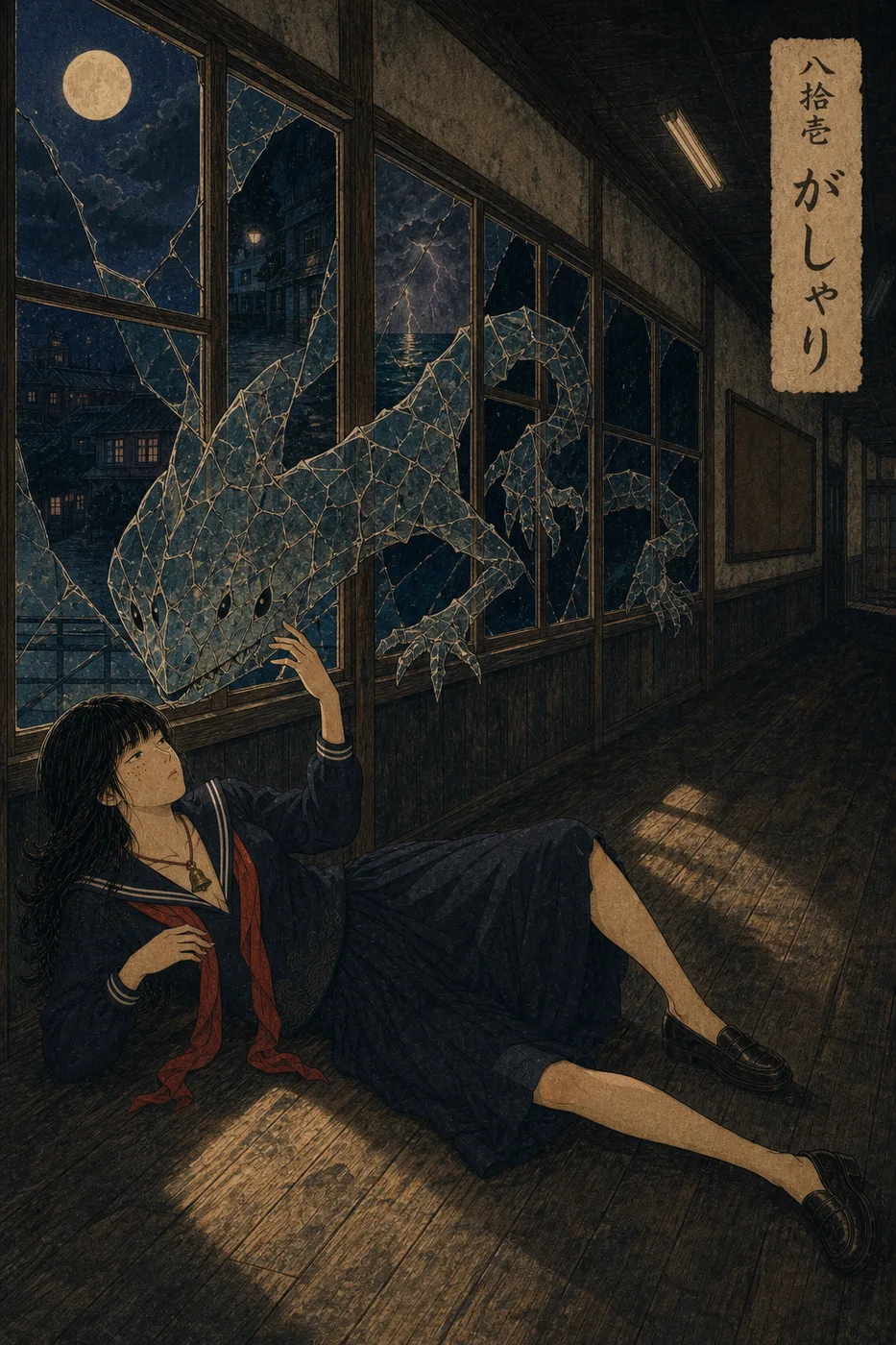
第八十一図 / Plate 81
がしゃりGashari
The Broken Window With a Beast Inside
由来 / Origin
がしゃりは、校舎の割れ窓にいる妖怪である。何年も直されない窓は、月の光だけを浴びてきた。
Gashari is a monster that lives in the broken windows of a school hallway. The windows were never repaired, and for years they took in only moonlight.
ほかの本Other books