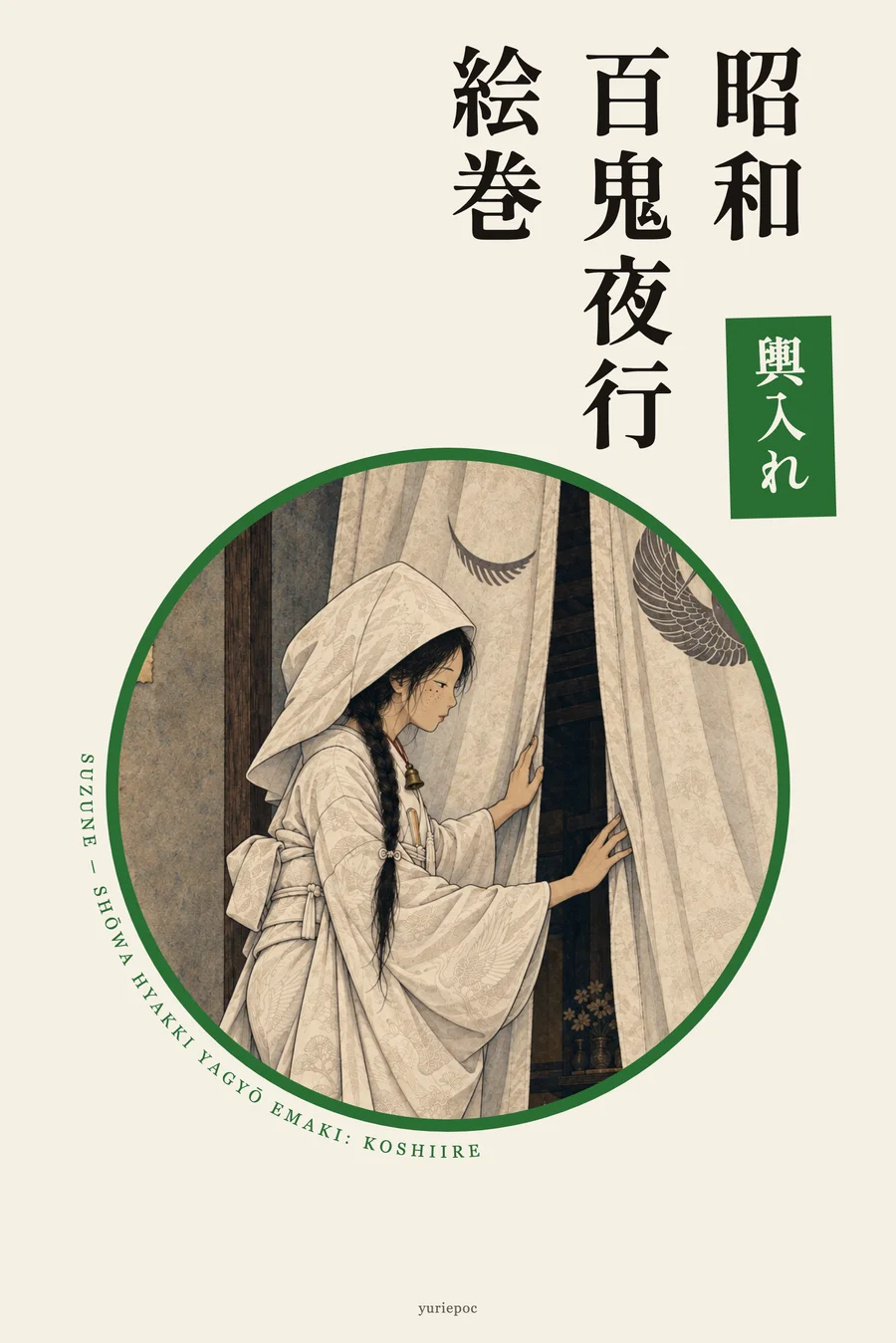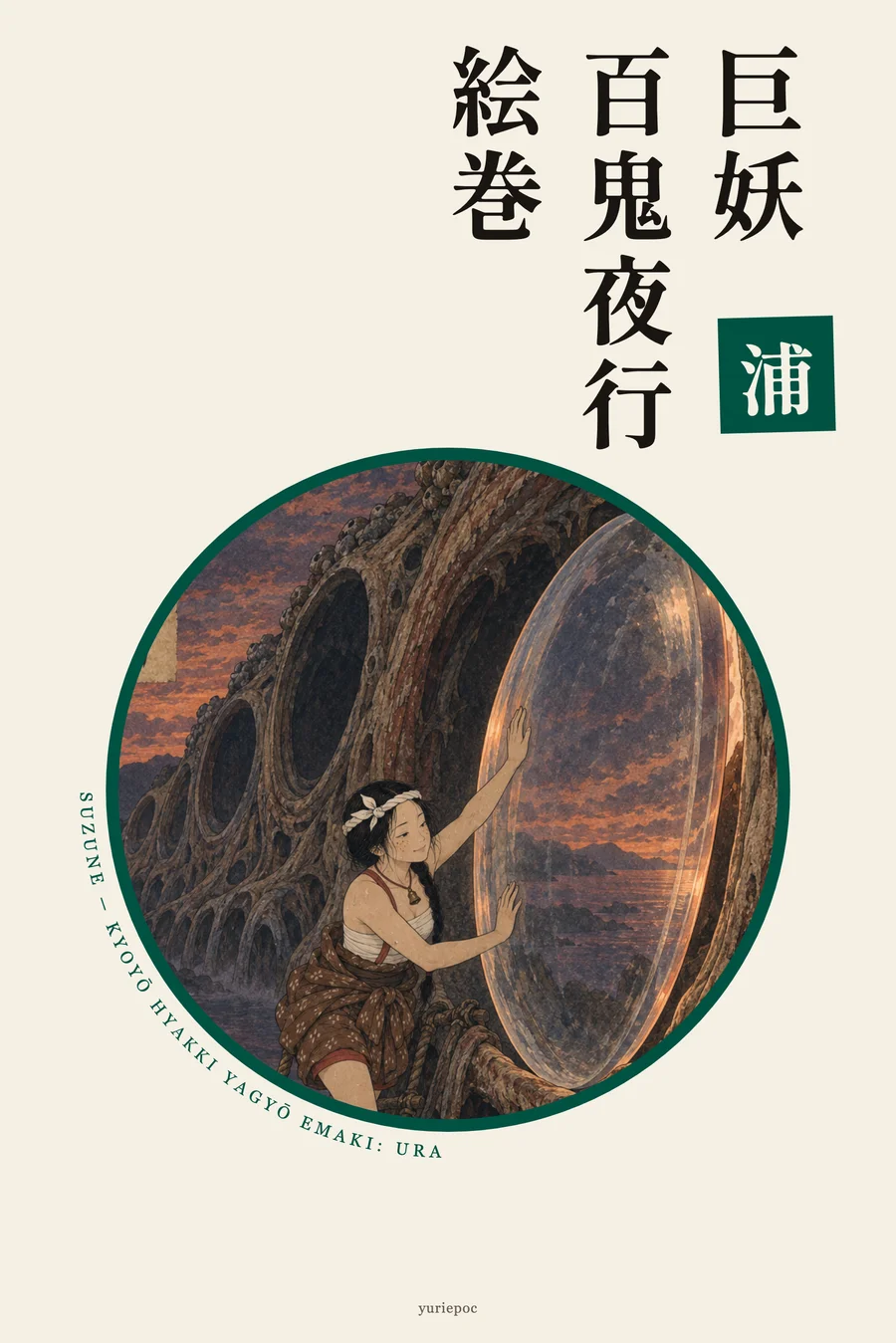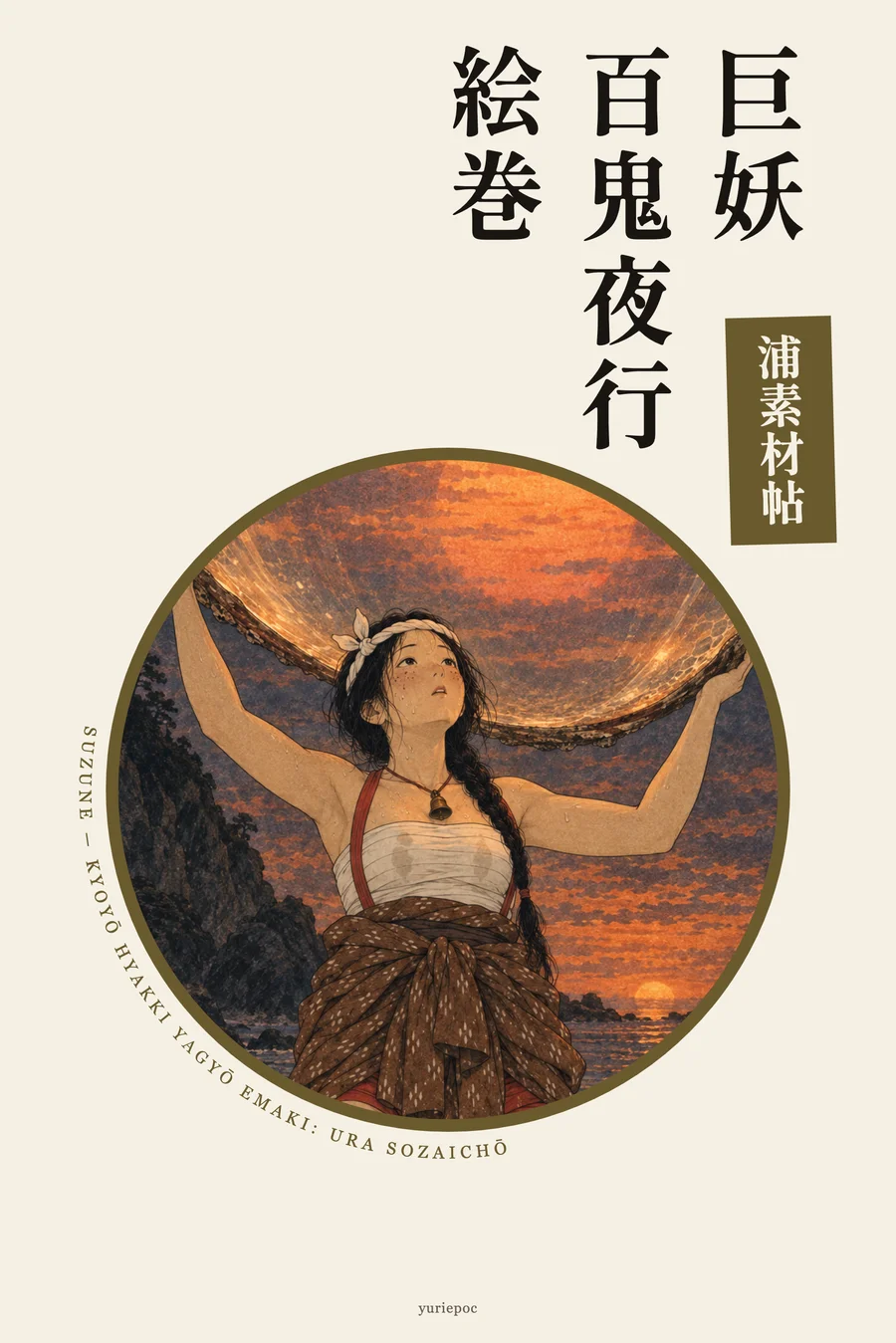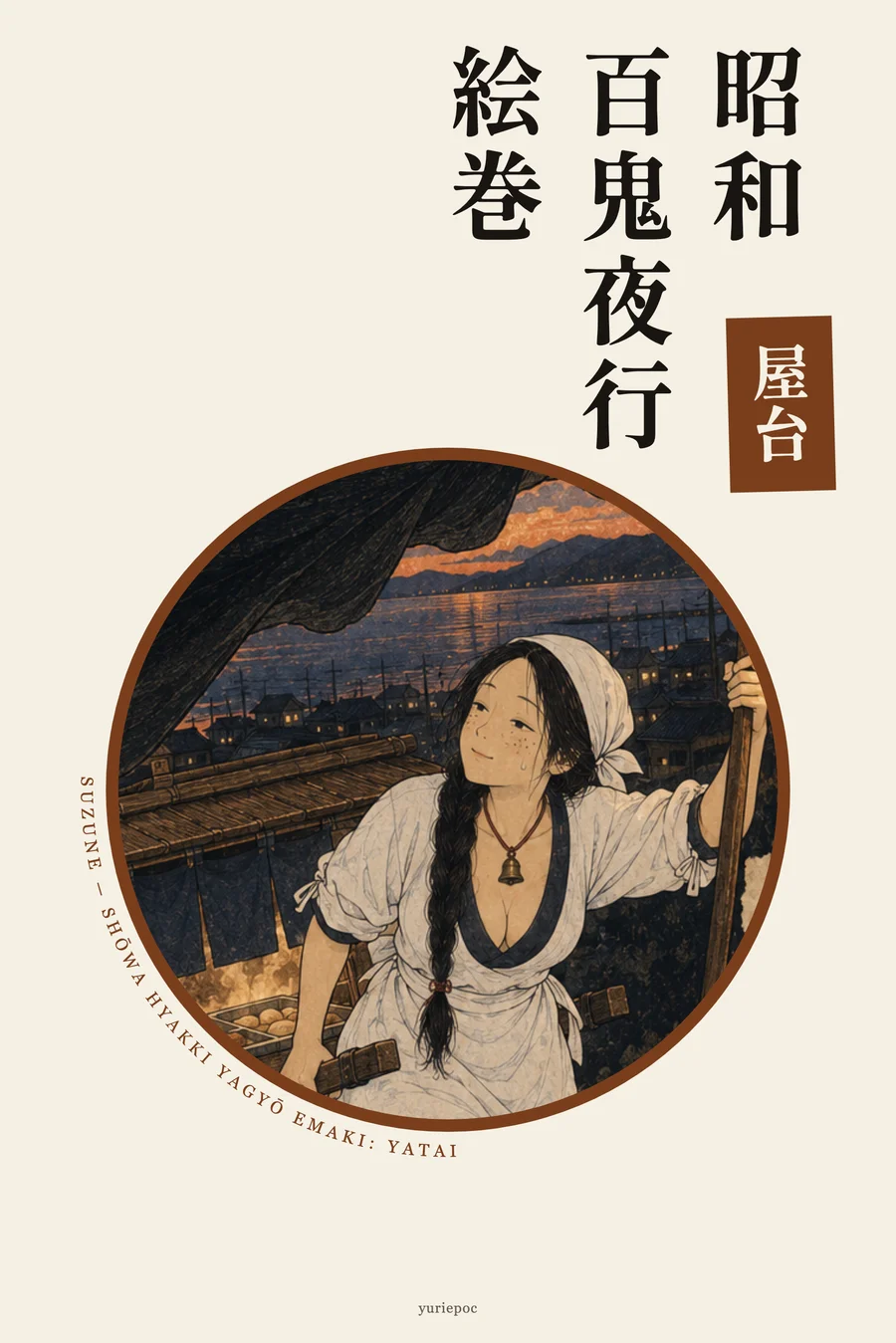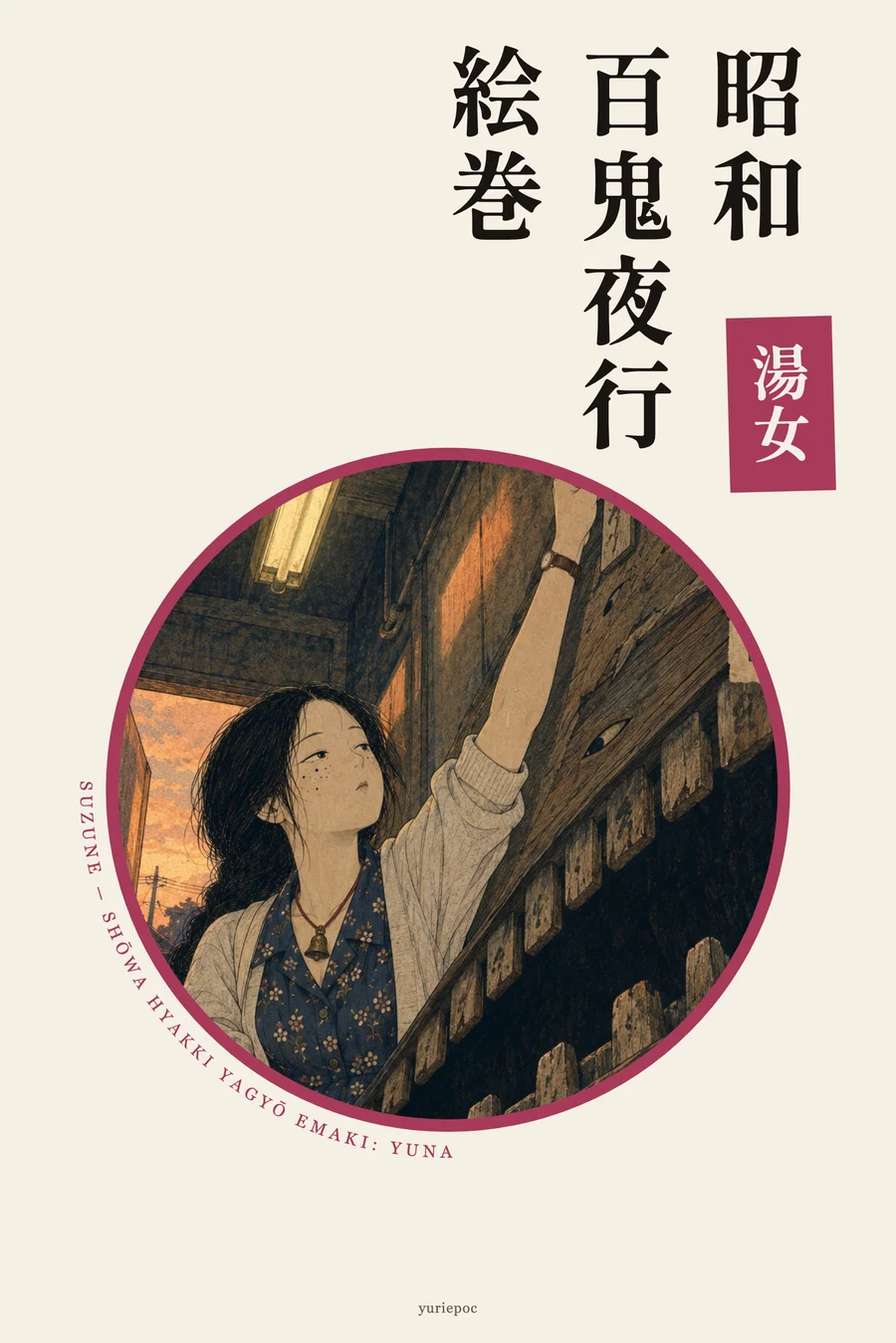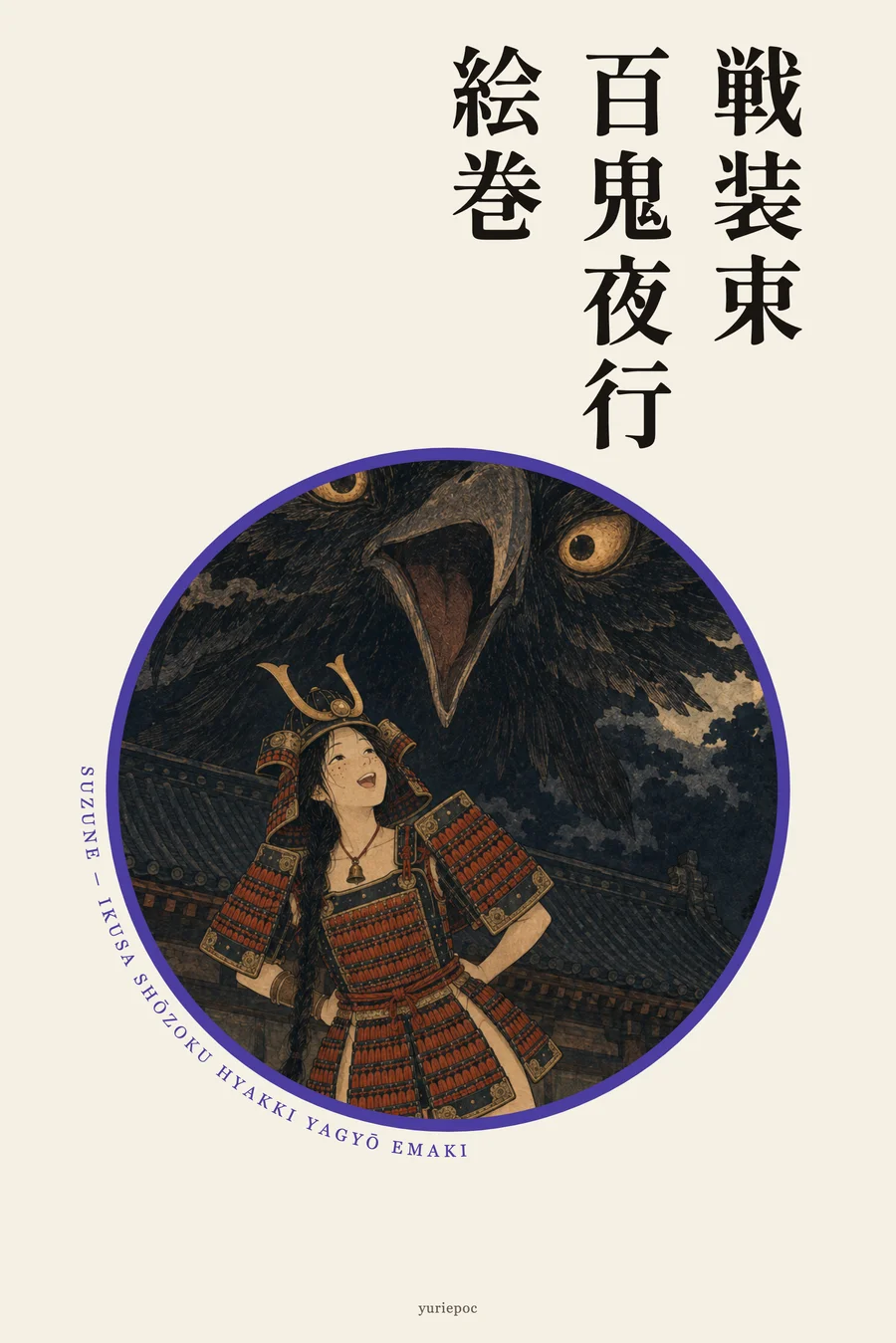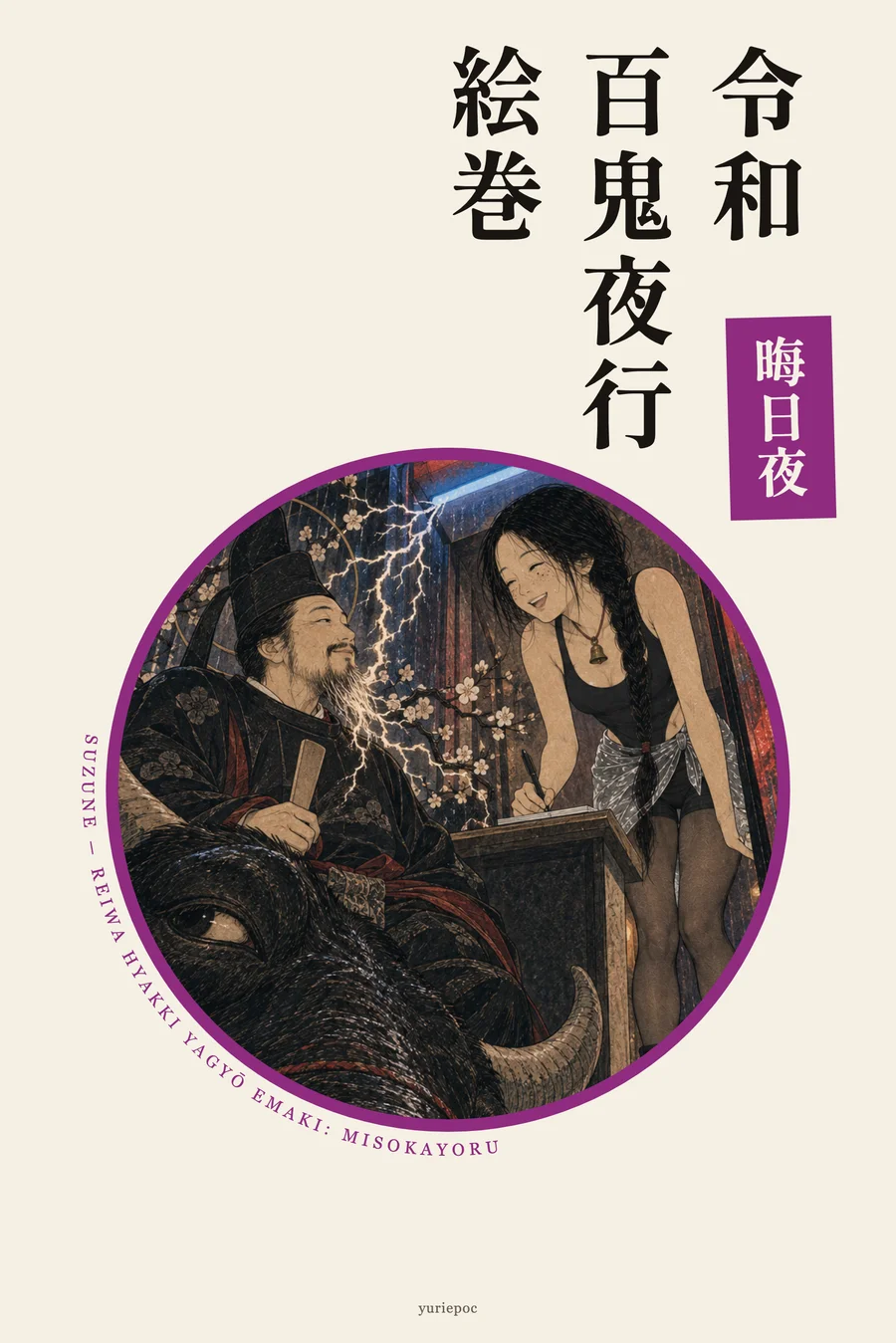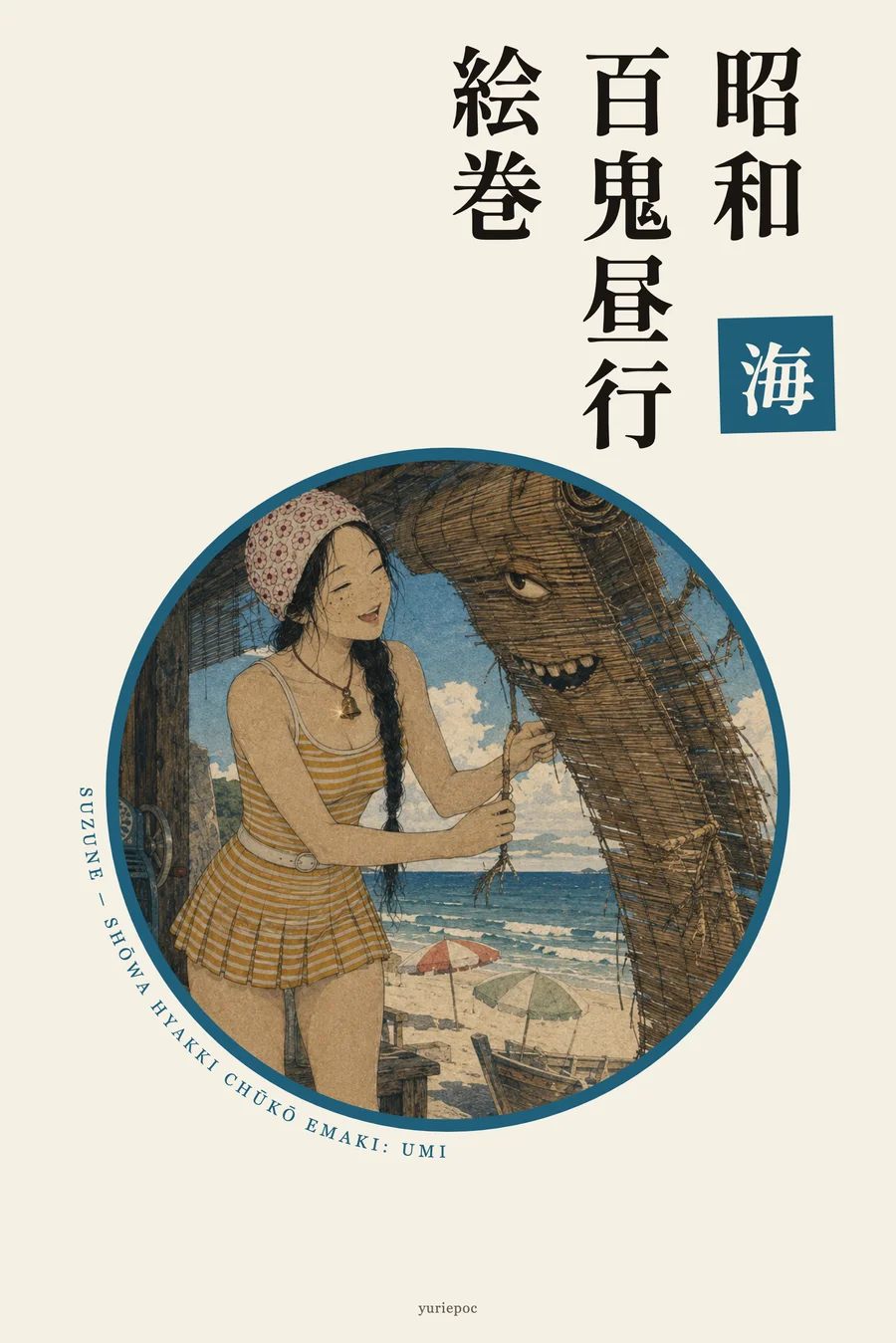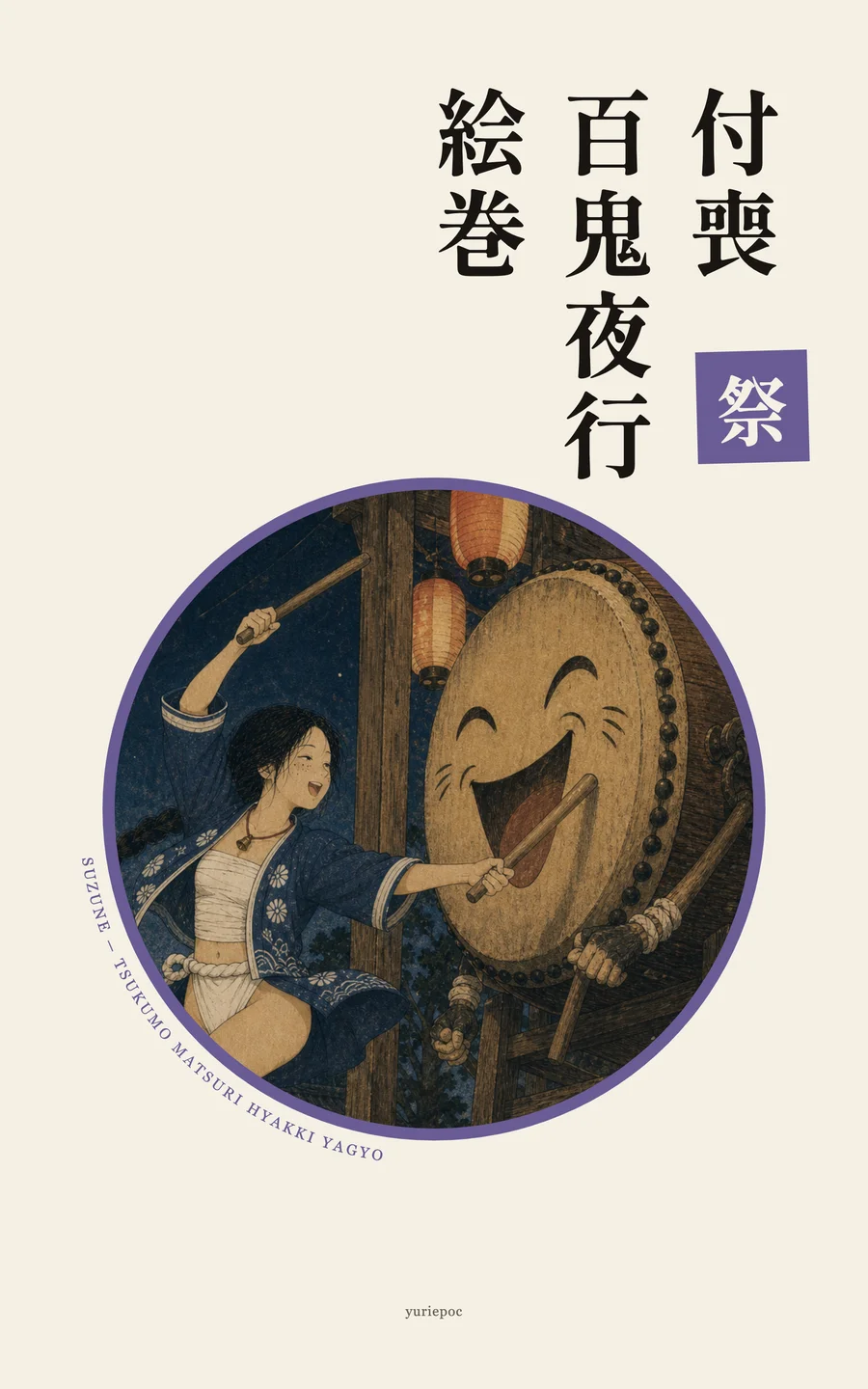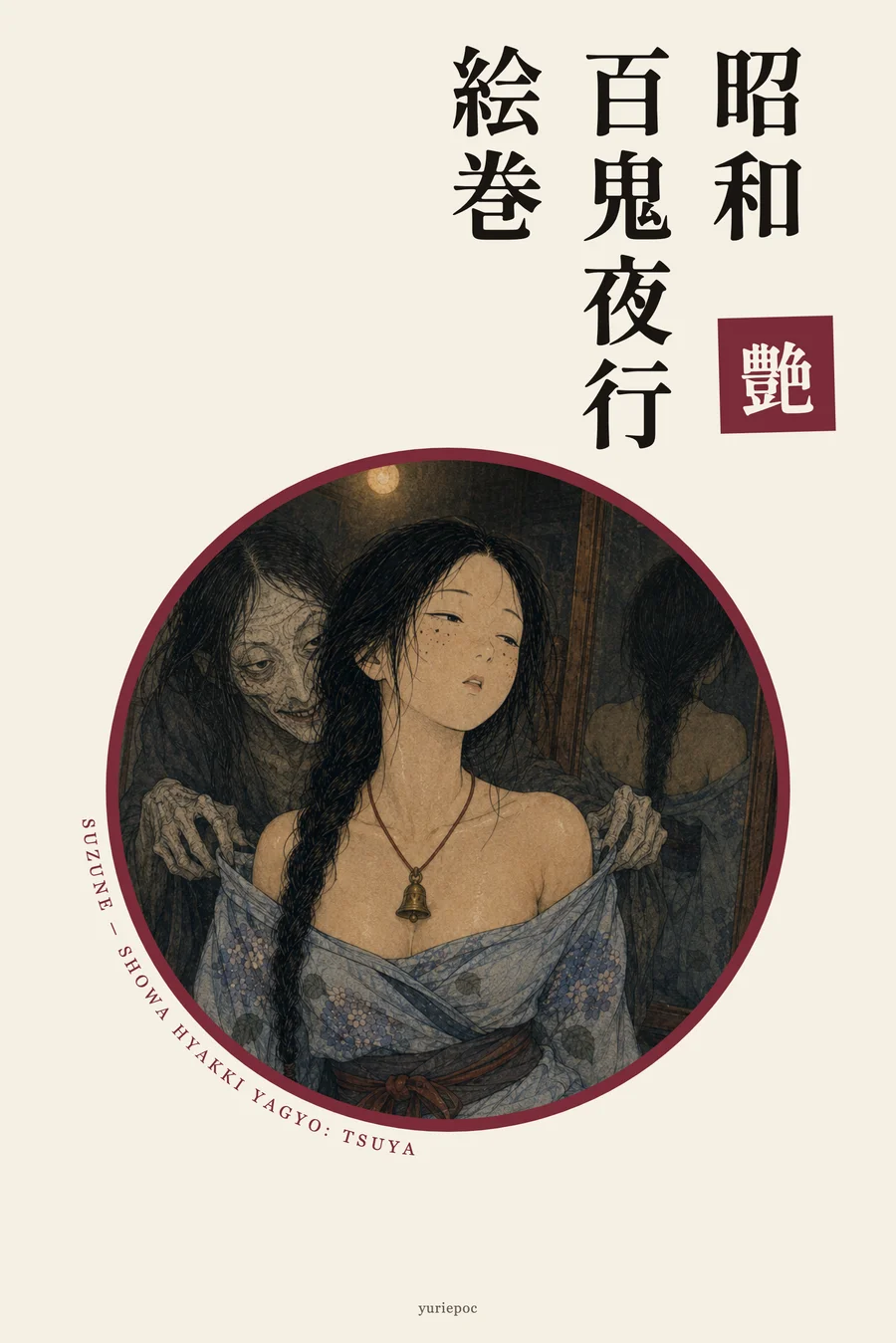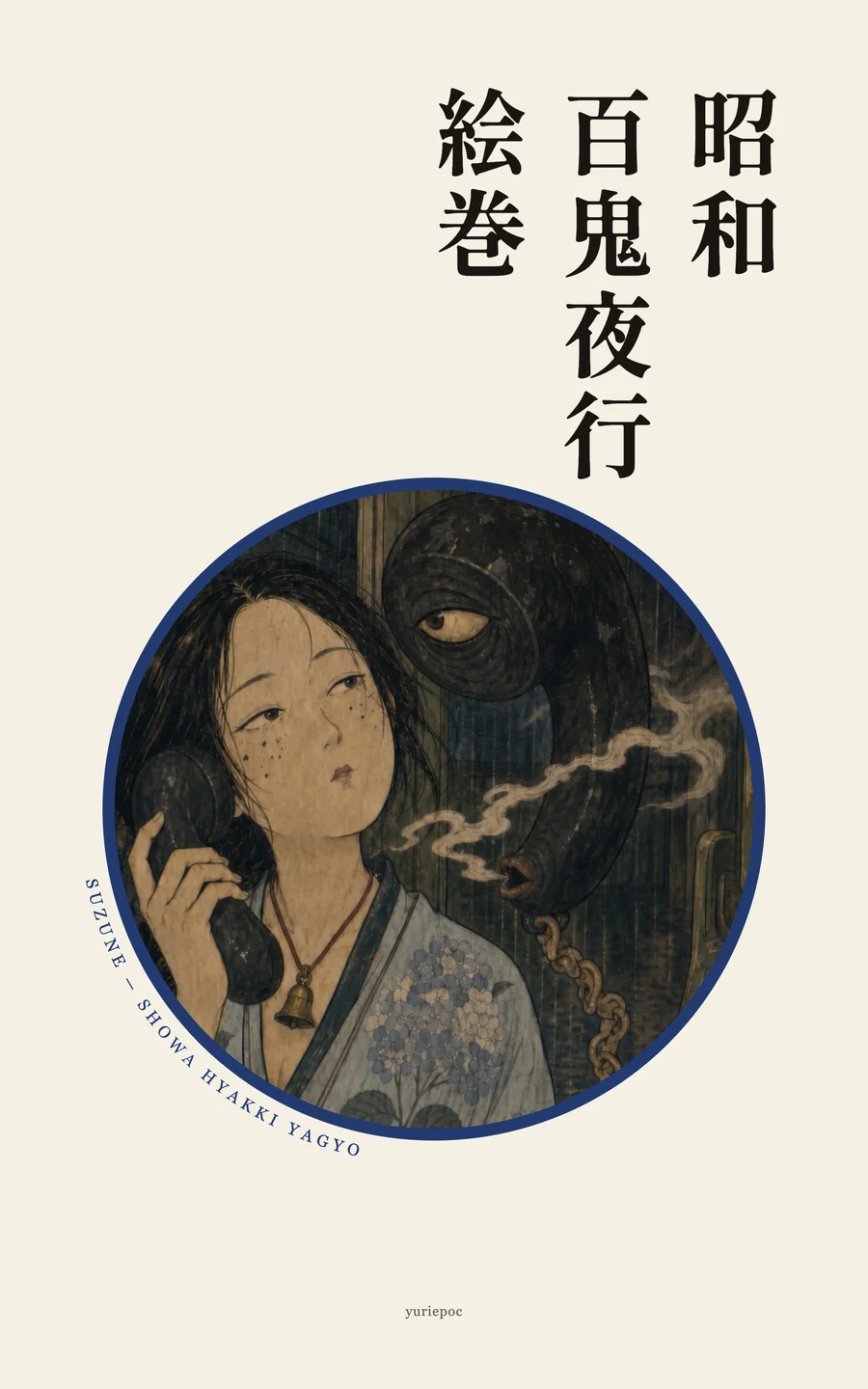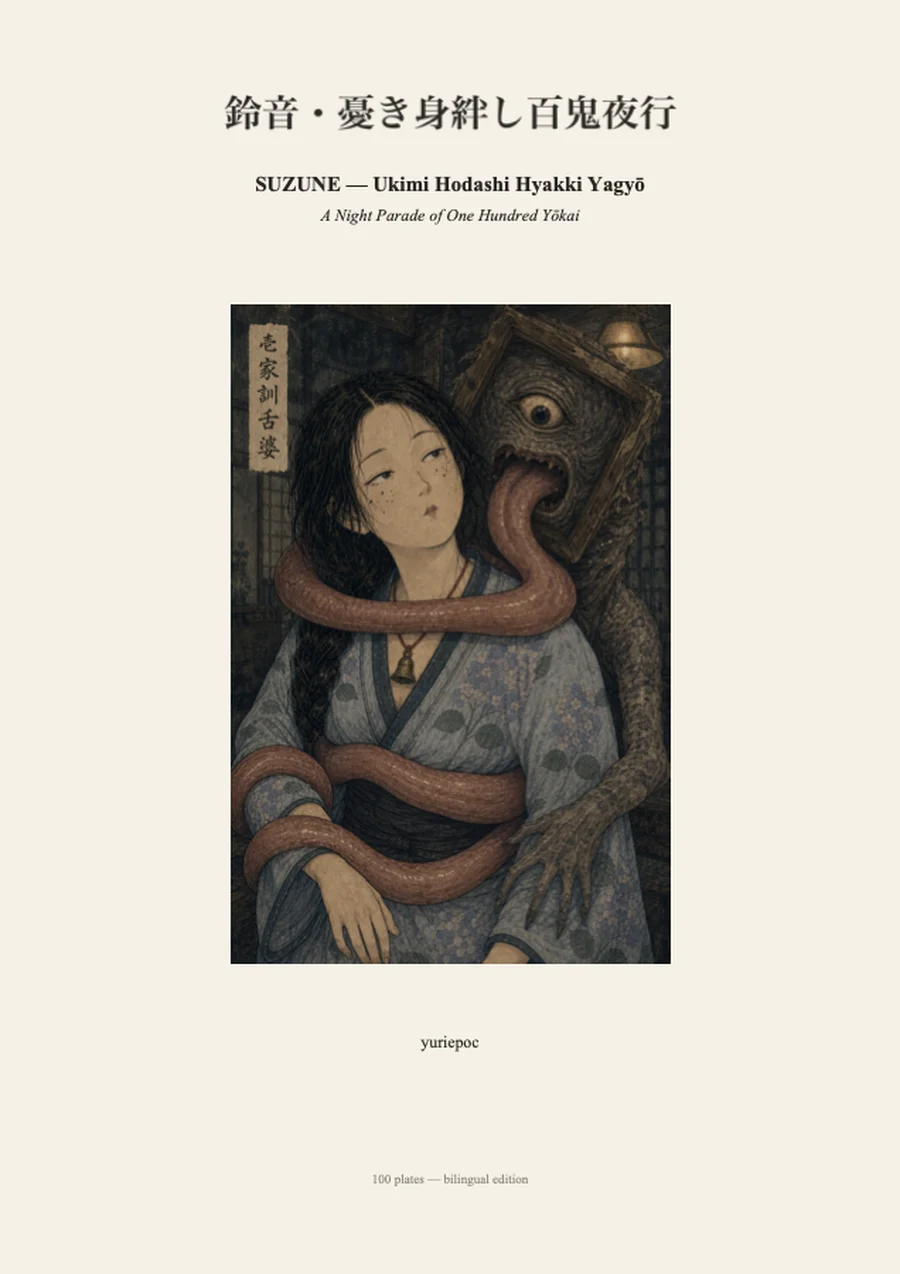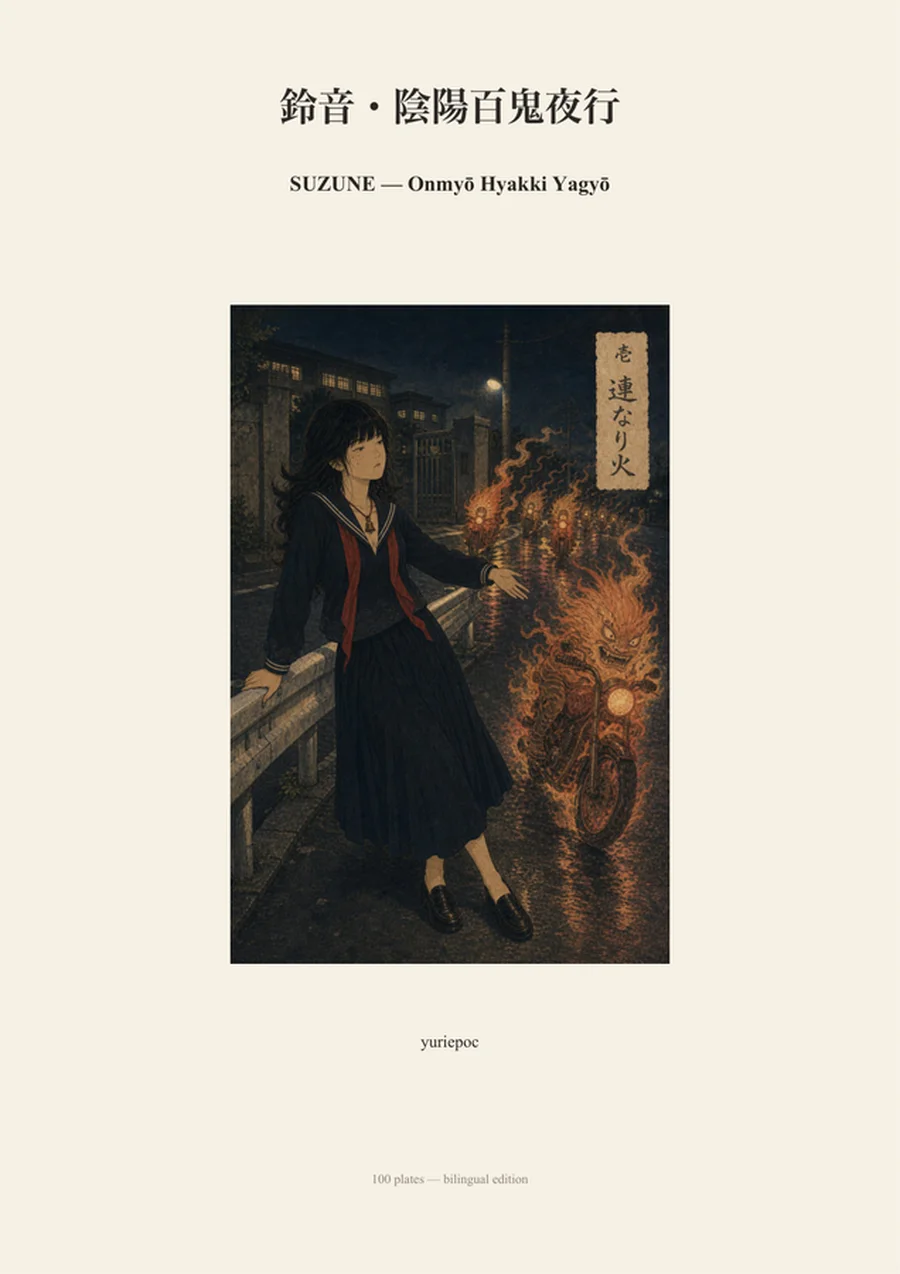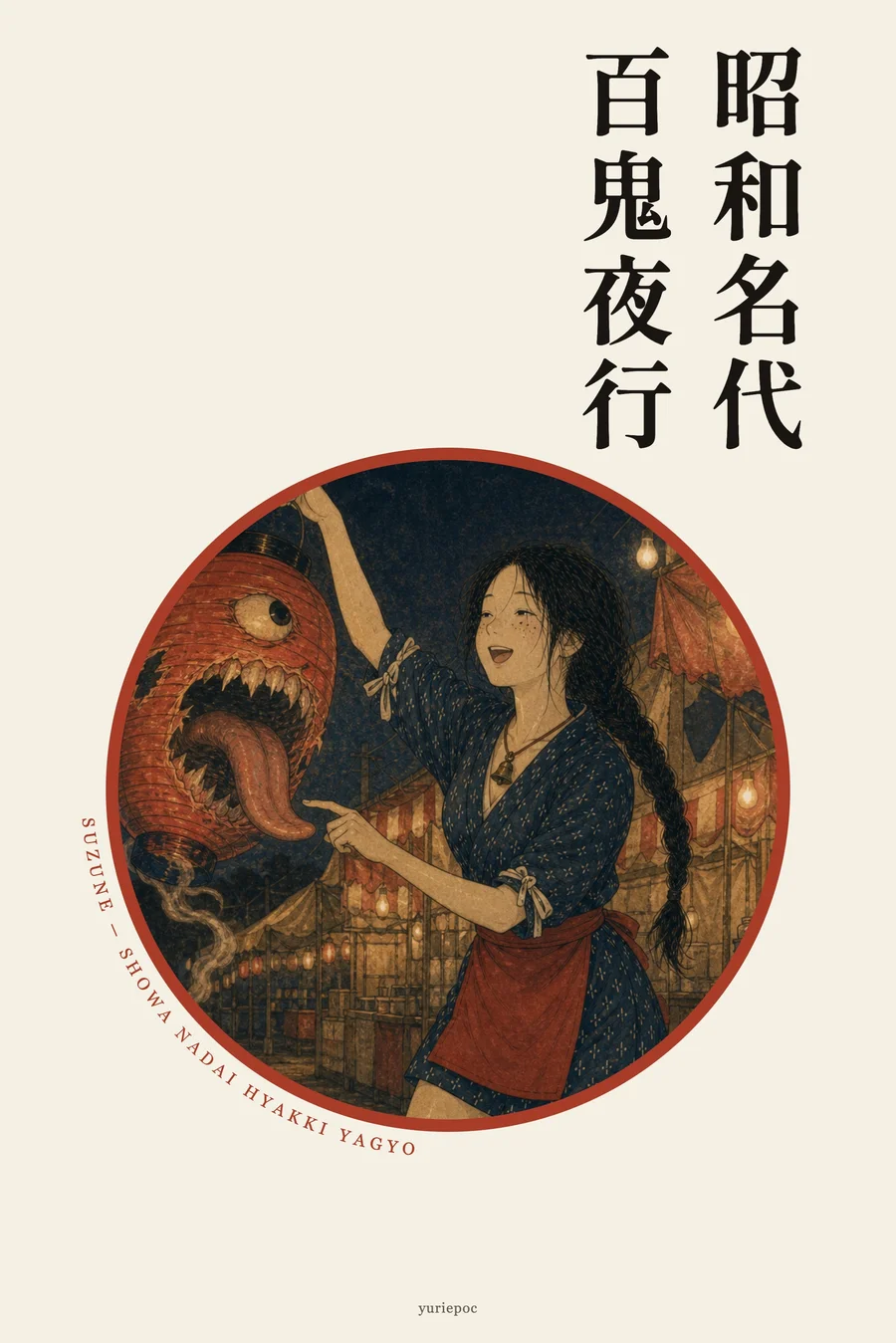
About this book
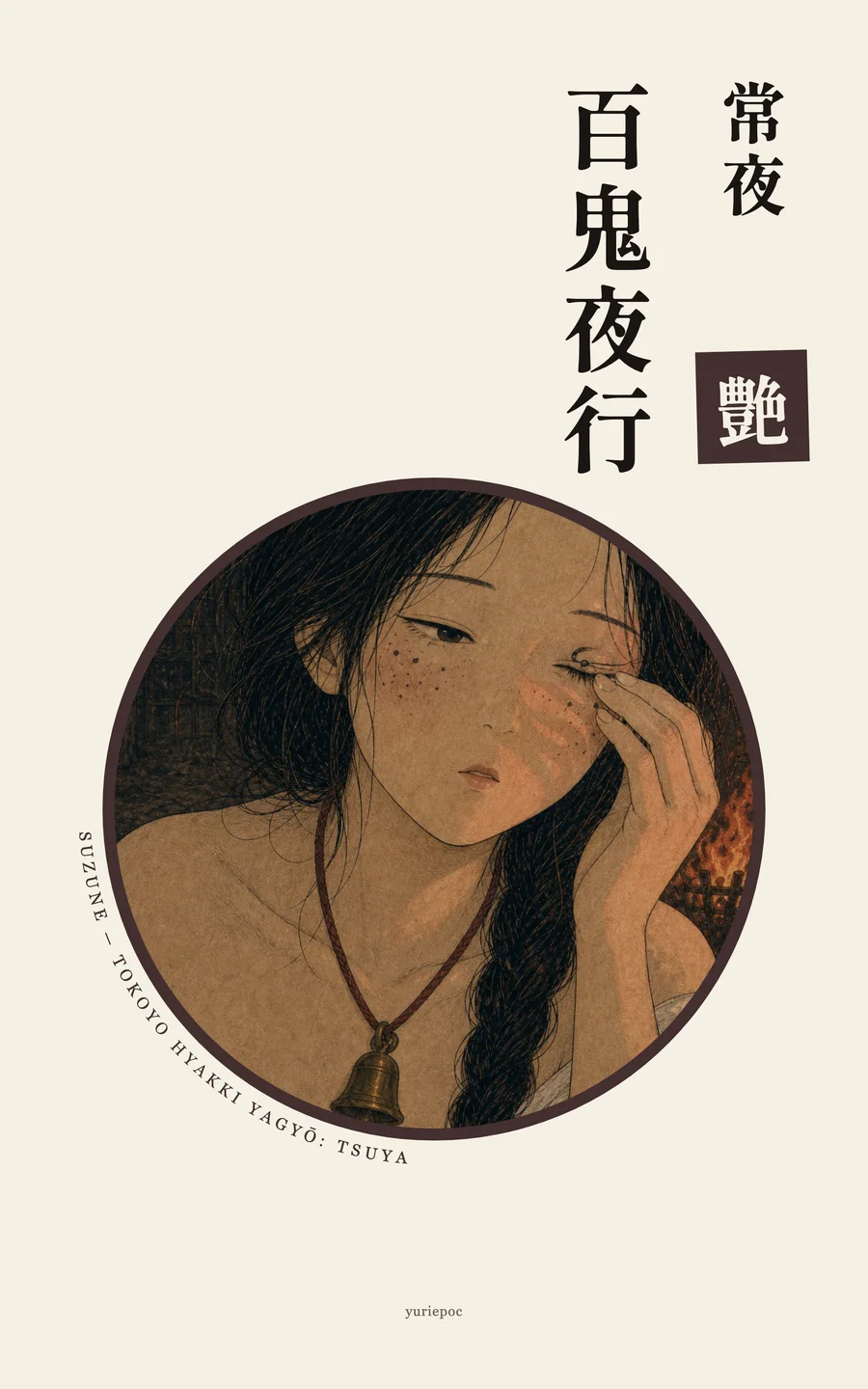
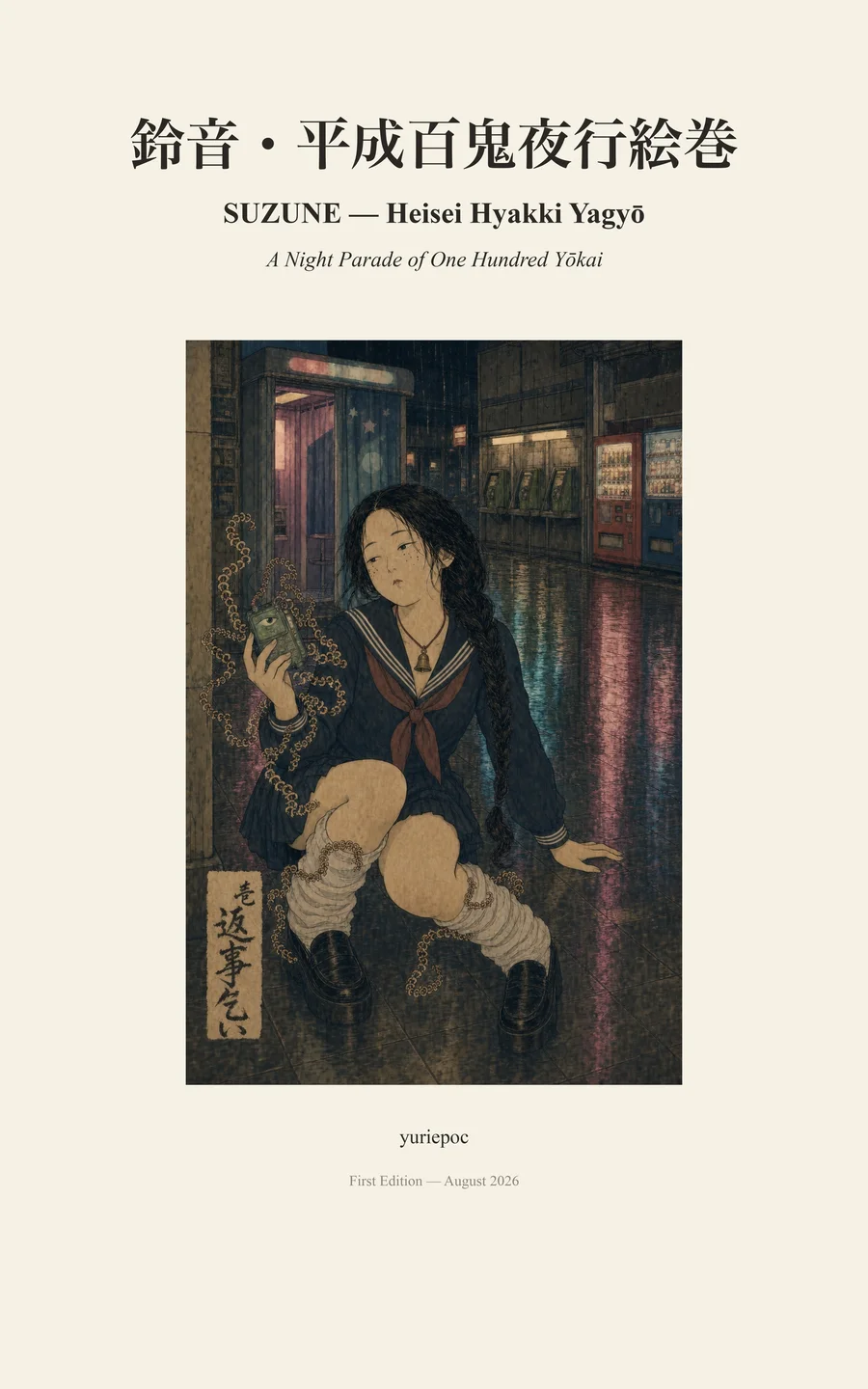
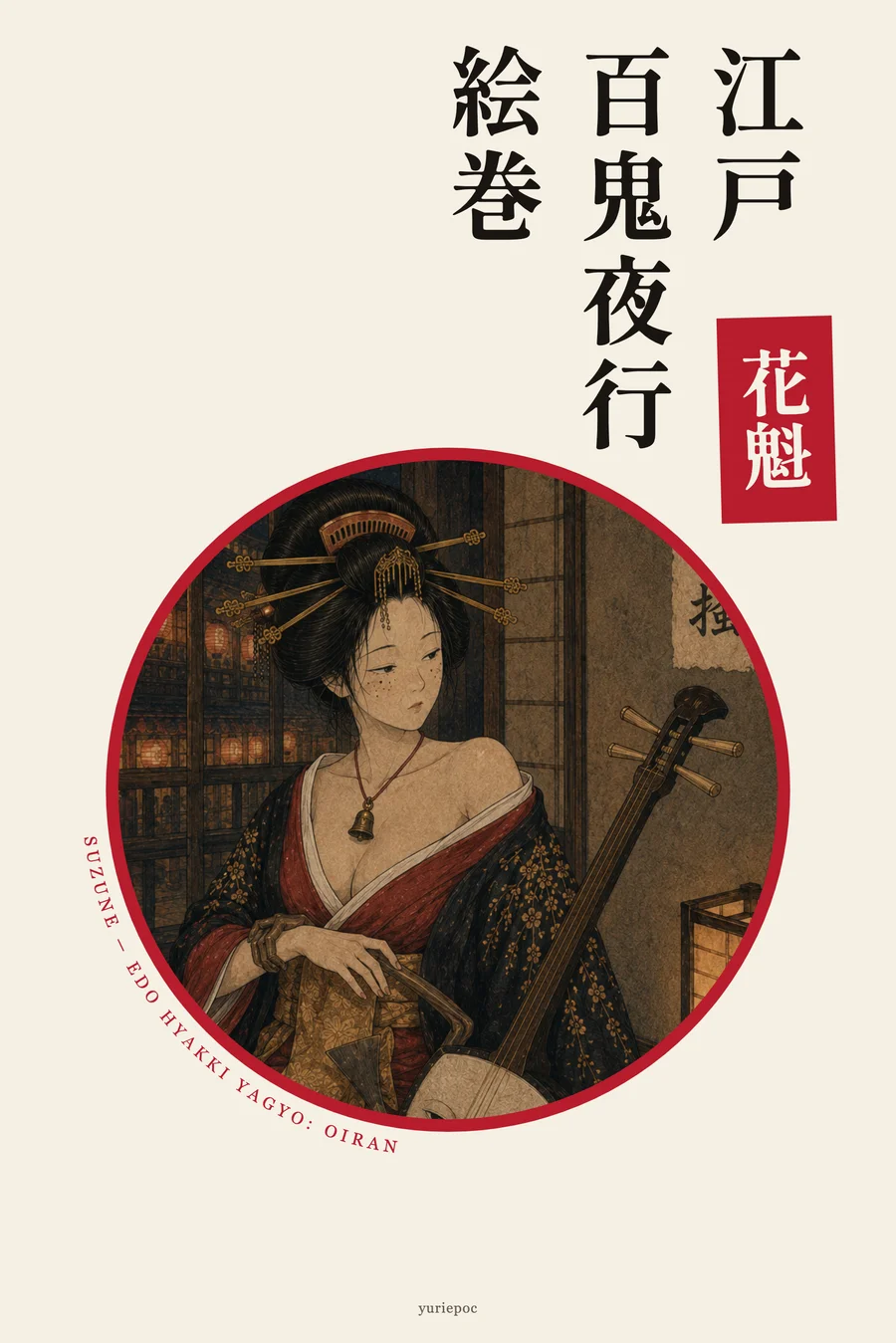
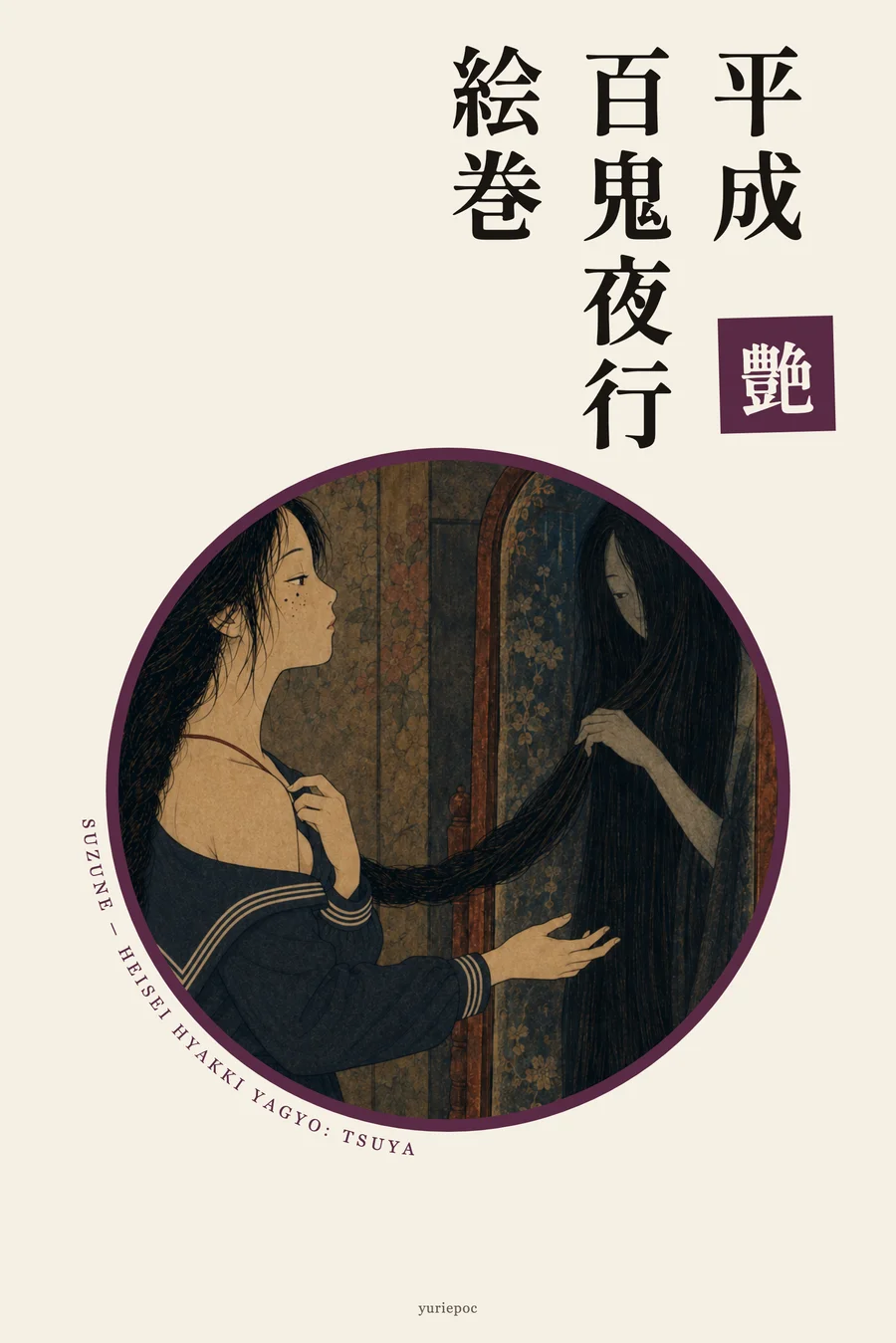
Nadai means a name so renowned it becomes the signboard itself. The yōkai world has its celebrities too — painted in scrolls, printed on karuta cards, summoned in comic storytelling, recognized on sight even by children: the lantern ghost, the umbrella ghost, the house child zashiki-warashi, the long-necked rokurokubi. This book invites one hundred of these renowned figures, and no others.
The stage is Shōwa-era Japan. Into the red lanterns of festival nights, the kotatsu gatherings, the iron goemon bathtubs, these famous creatures slip as if they had always lived there. They come to frighten — but the girl of this house does not startle. She laughs, she pokes back, and sometimes it turns into a footrace. The lore stays old; only the night is new.
In the tradition of hyakumonogatari — one hundred ghost stories told by lantern light — the real one appears only after the hundredth tale. That is why Ao-andon, the blue lantern spirit, waits on the final plate. Take your time. Count all ninety-nine nights before you turn the last page.
Sample plates
-
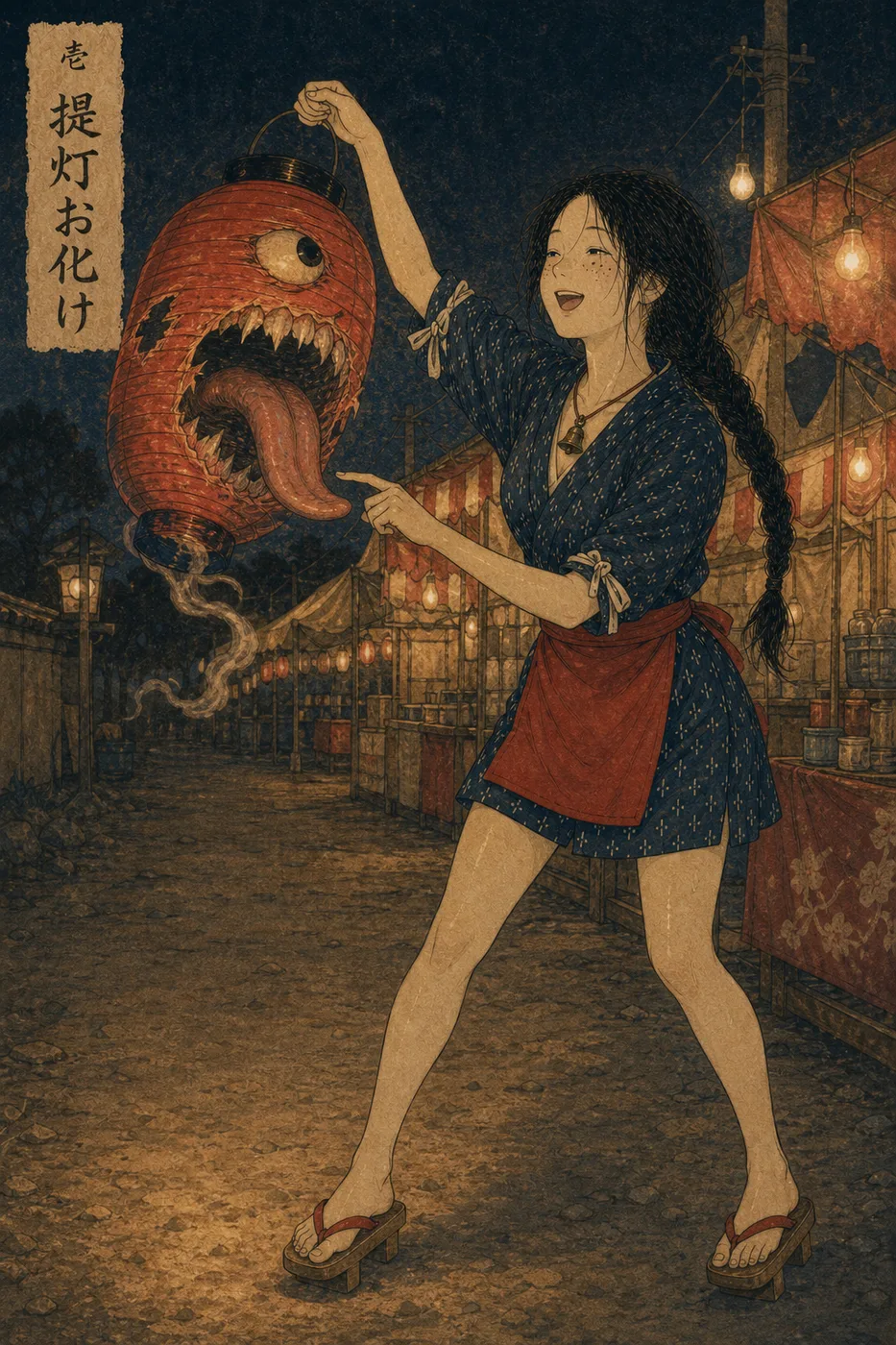
Plate 1
The Lantern Ghost
提灯お化けChōchin-obake
Origin
No tale or scroll precedes the lantern ghost. From the mid-Edo period on, karuta cards and toy prints mass-produced the same trick, eyes, nose, and a tongue drawn onto a torn paper shade, until the design was everywhere.
提灯お化けに先立つ説話は無い。江戸中期以降、破れた火袋に目鼻と舌を描く趣向を、お化けかるたと玩具絵が型として量産し流布させた。
-
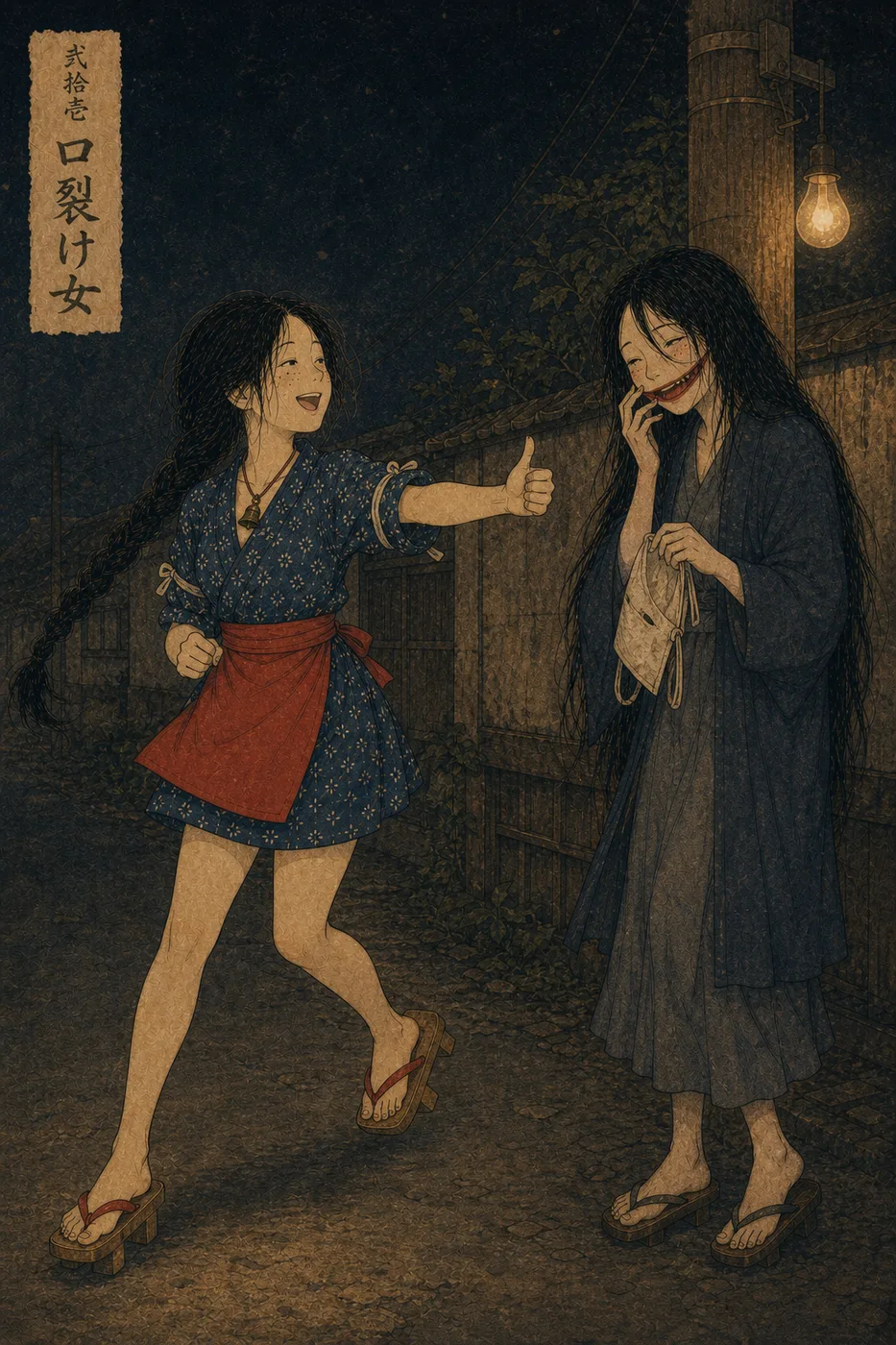
Plate 21
The Slit-Mouthed Woman
口裂け女Kuchisake-onna
Origin
In 1978 and 1979, a rumor swept the nation of a masked woman on the road who asks, 'Am I pretty?' Scholar Komatsu Kazuhiko reads it as a modern repetition of the same narrative pattern found in the yamauba and Izanami myths.
昭和五十三年から翌年、マスクの女に道で「きれい?」と問われる噂が全国を走った。小松和彦はこれを山姥やイザナミの神話と同じ型の反復と見る。
-
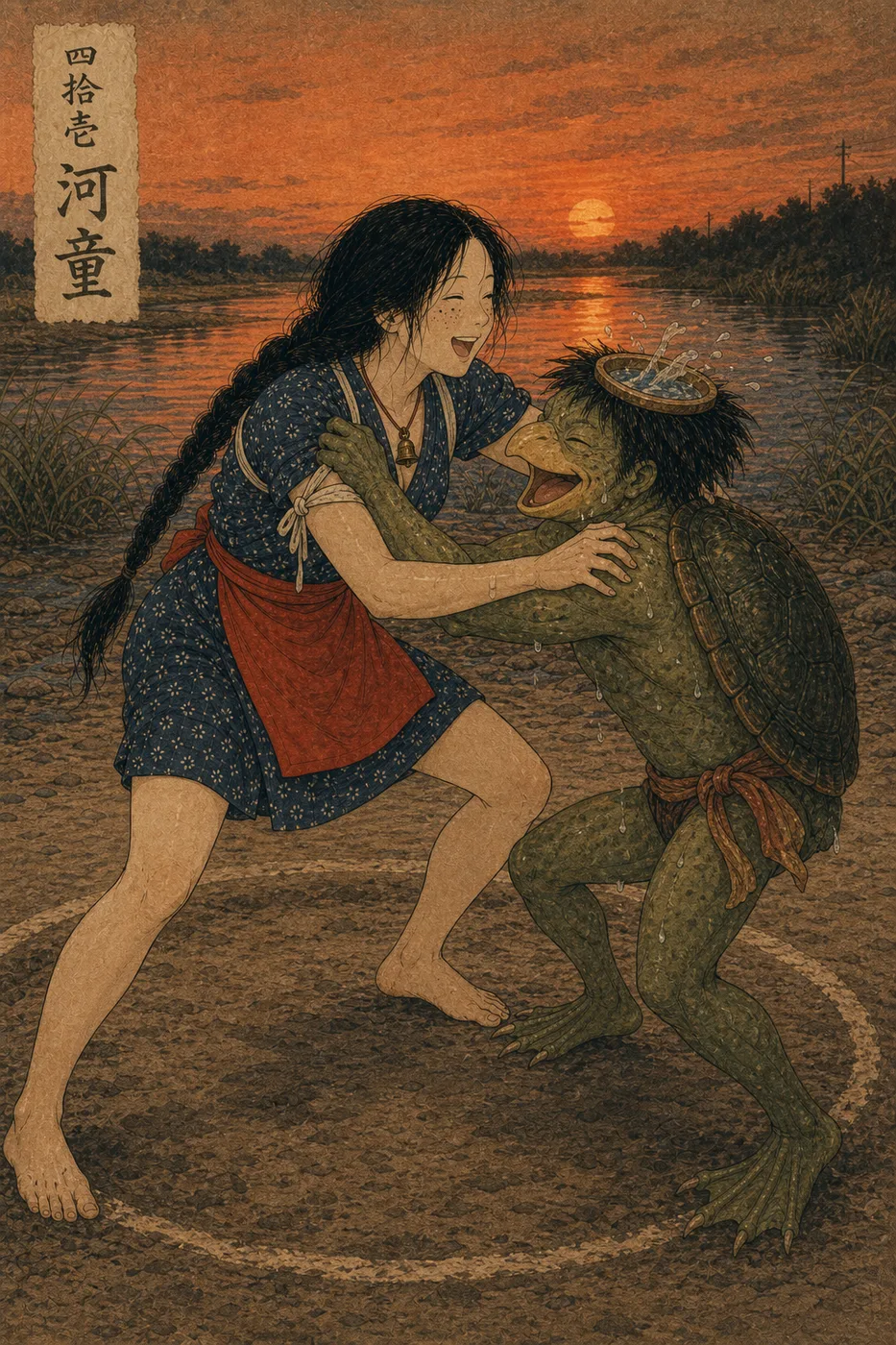
Plate 41
The River Child
河童Kappa
Origin
Tōno Monogatari and other records describe this master of the river pool. Some say a doll gained a soul, others trace it to the monk Gyōki, still others call it the ox-headed god's own child — the origin story never settles on just one.
遠野物語などが伝える淵の主。人形が魂を得た、行基にちなむ、牛頭天王の御子神――生まれの説明は土地ごとに幾通りも並び立ち、一つに定まらない。
-
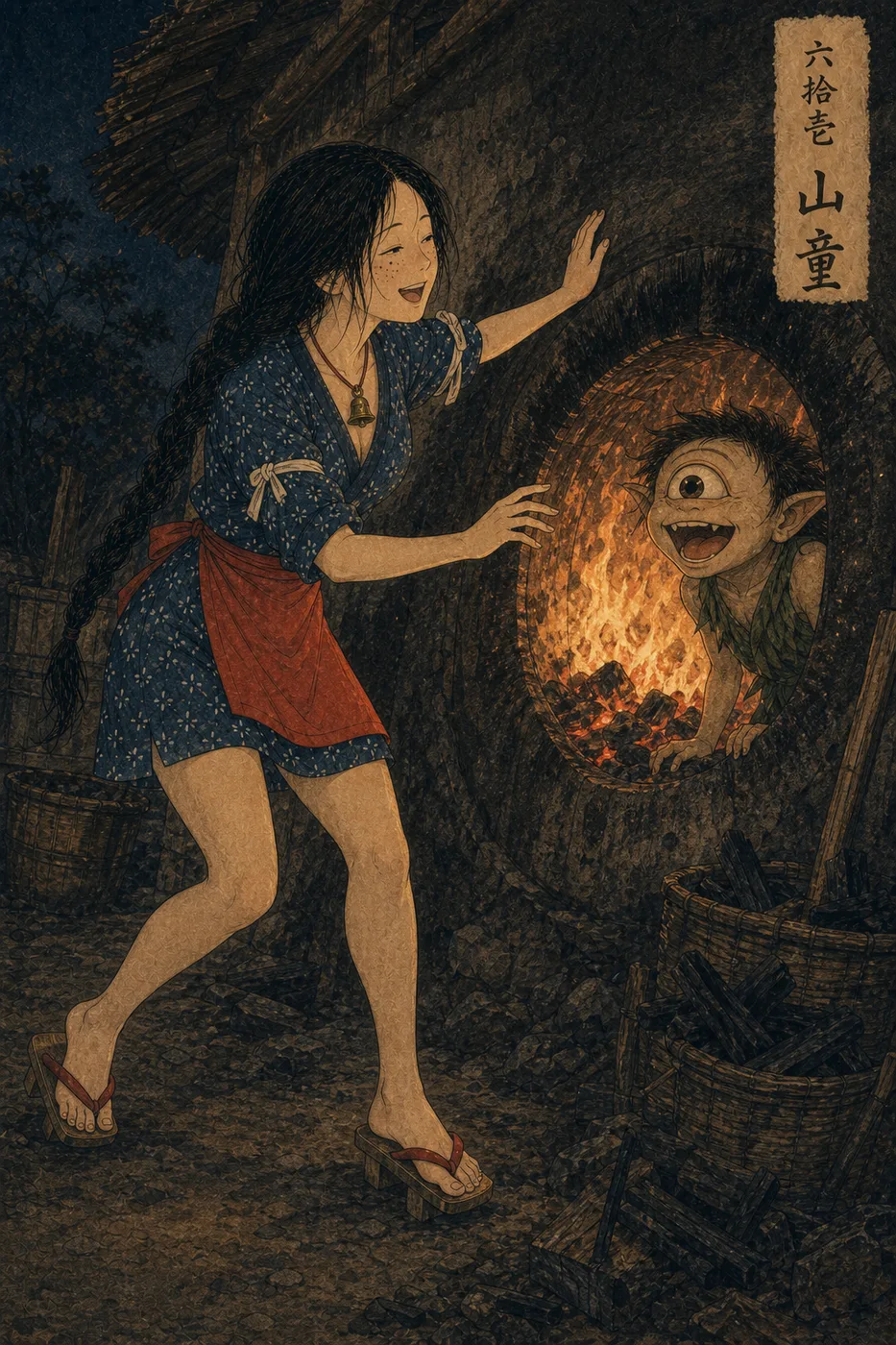
Plate 61
The Mountain Child
山童Yamawaro
Origin
In Kuma, Kumamoto Prefecture, the yamawaro is a one-eyed spirit of the mountains. It is best known through the belief that it becomes a kappa when it returns to the rivers each summer, though no original printed source for the tale has yet been identified.
熊本県球磨地方に伝わる山中の一つ目妖怪。冬は山に入って山童となり、夏は川へ戻って河童になるという異類同体説で広く知られるが、原典の書名は今回特定されていない。
-
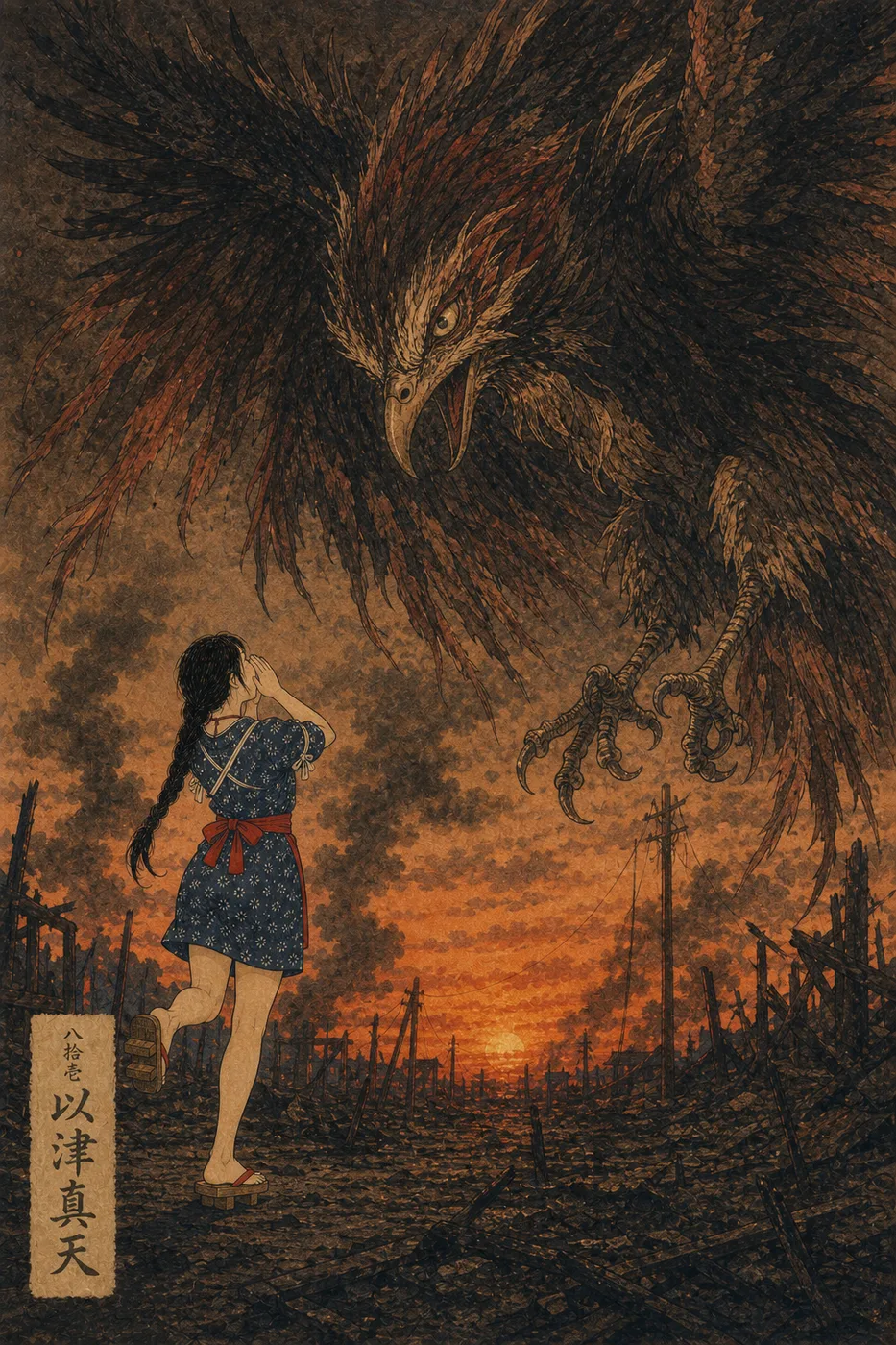
Plate 81
The Plague-Warning Bird
以津真天Itsumade
Origin
The medieval chronicle Taiheiki records a monstrous bird that appeared over the imperial palace crying 'how much longer, how much longer.' The grudge of the unmourned dead grew wings and a voice before it grew anything else.
『太平記』は、内裏の上空で「いつまで、いつまで」と鳴いた怪鳥を記す。弔われぬ亡骸の怨みが、羽と声だけを先に持った。
Other books