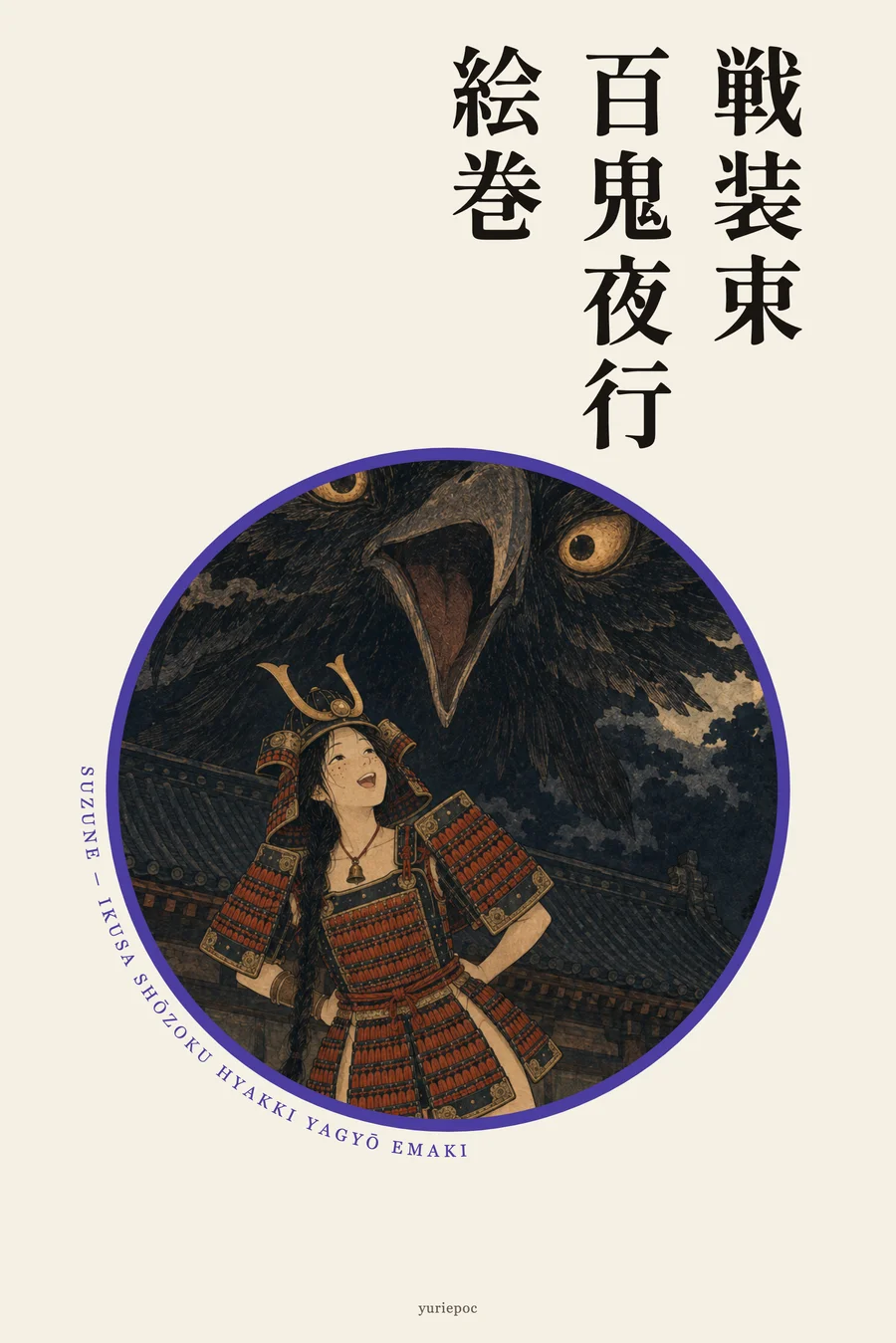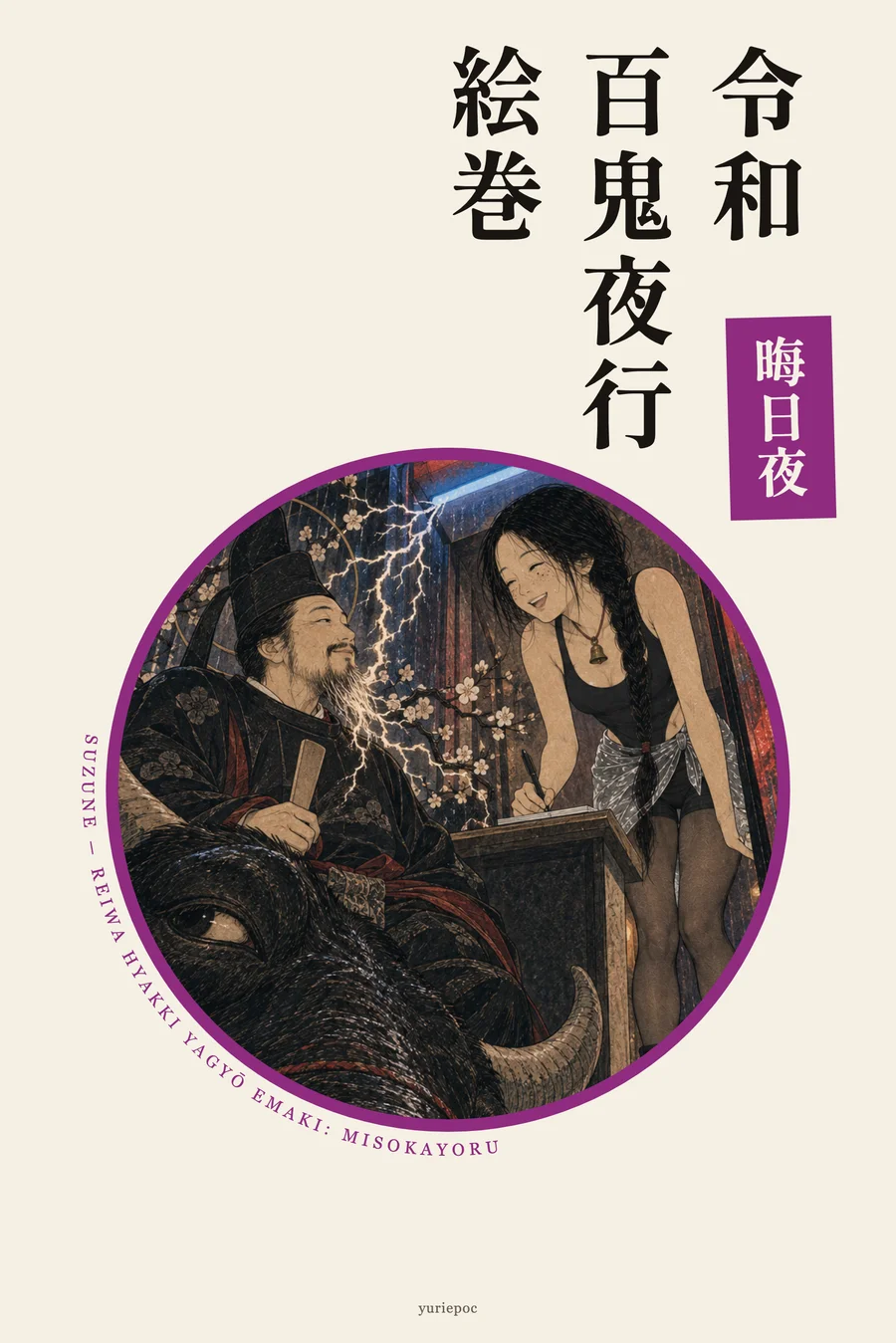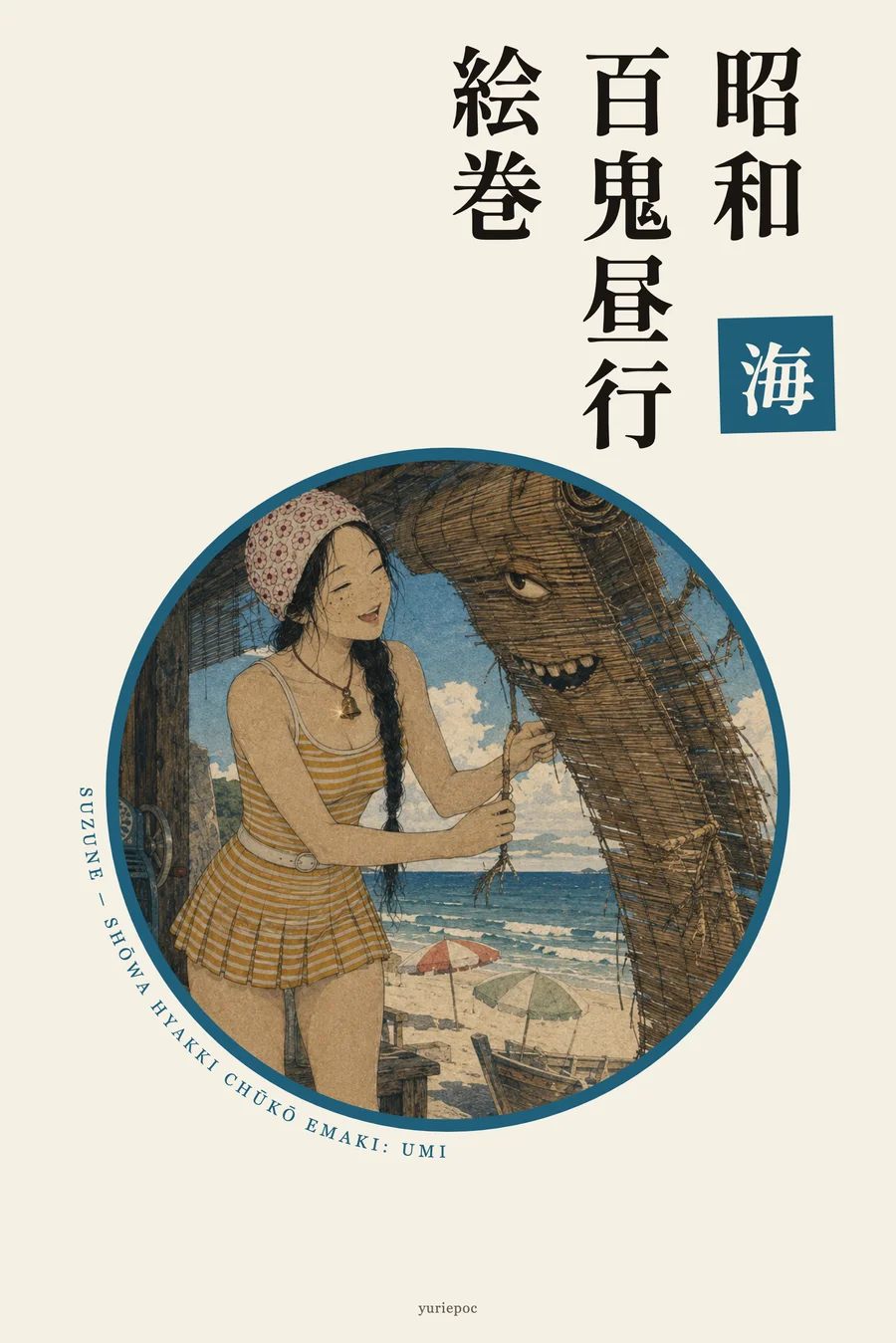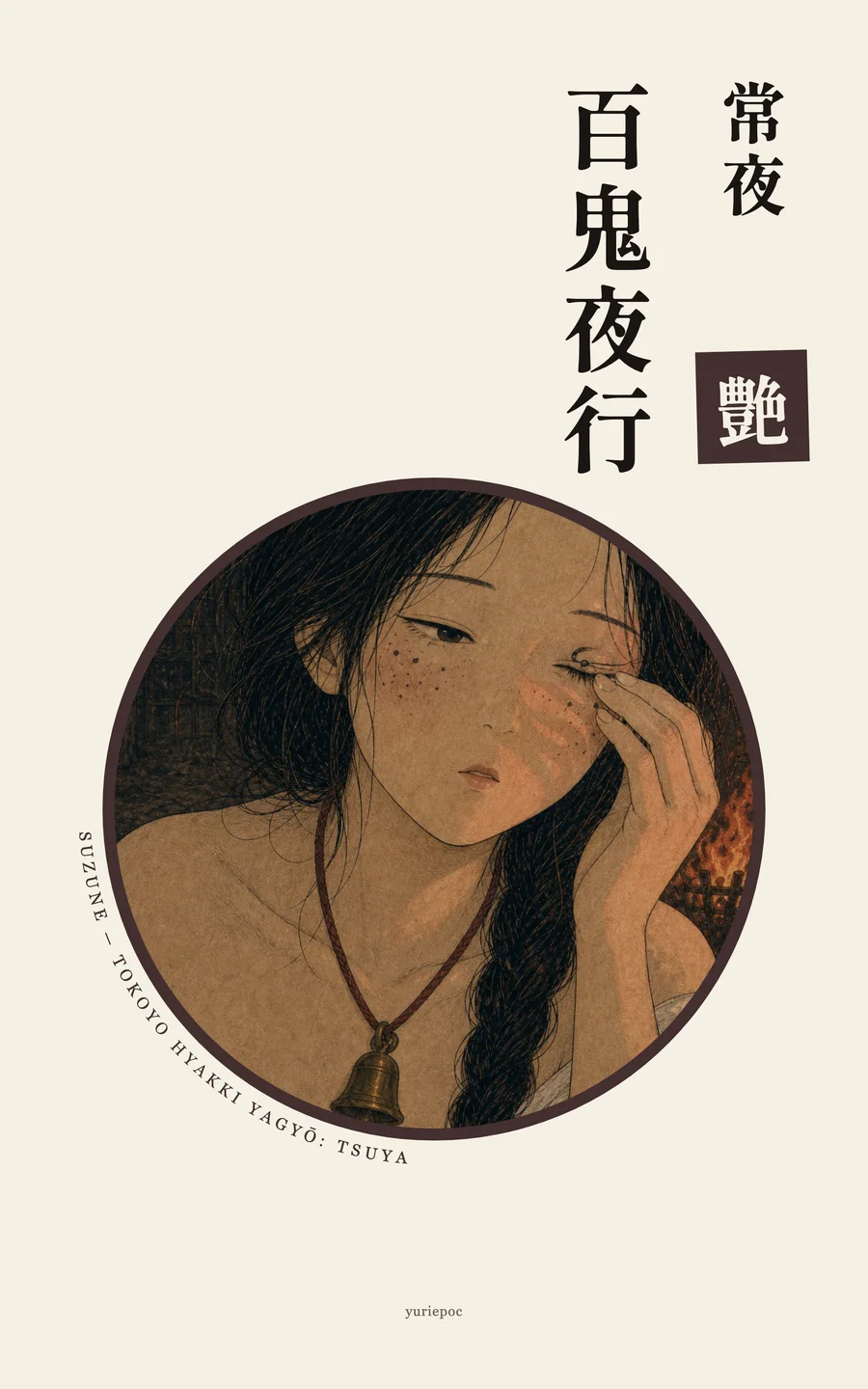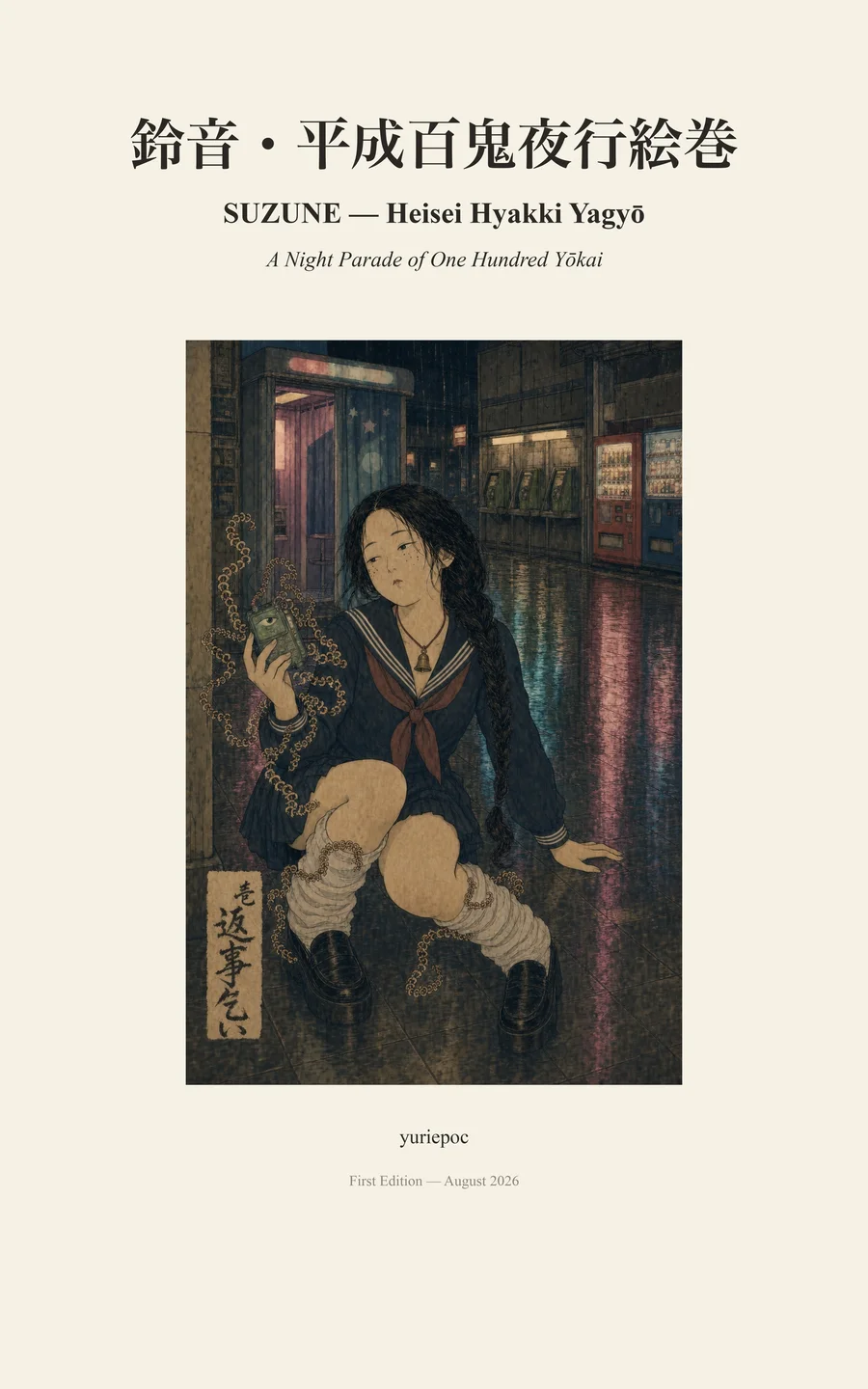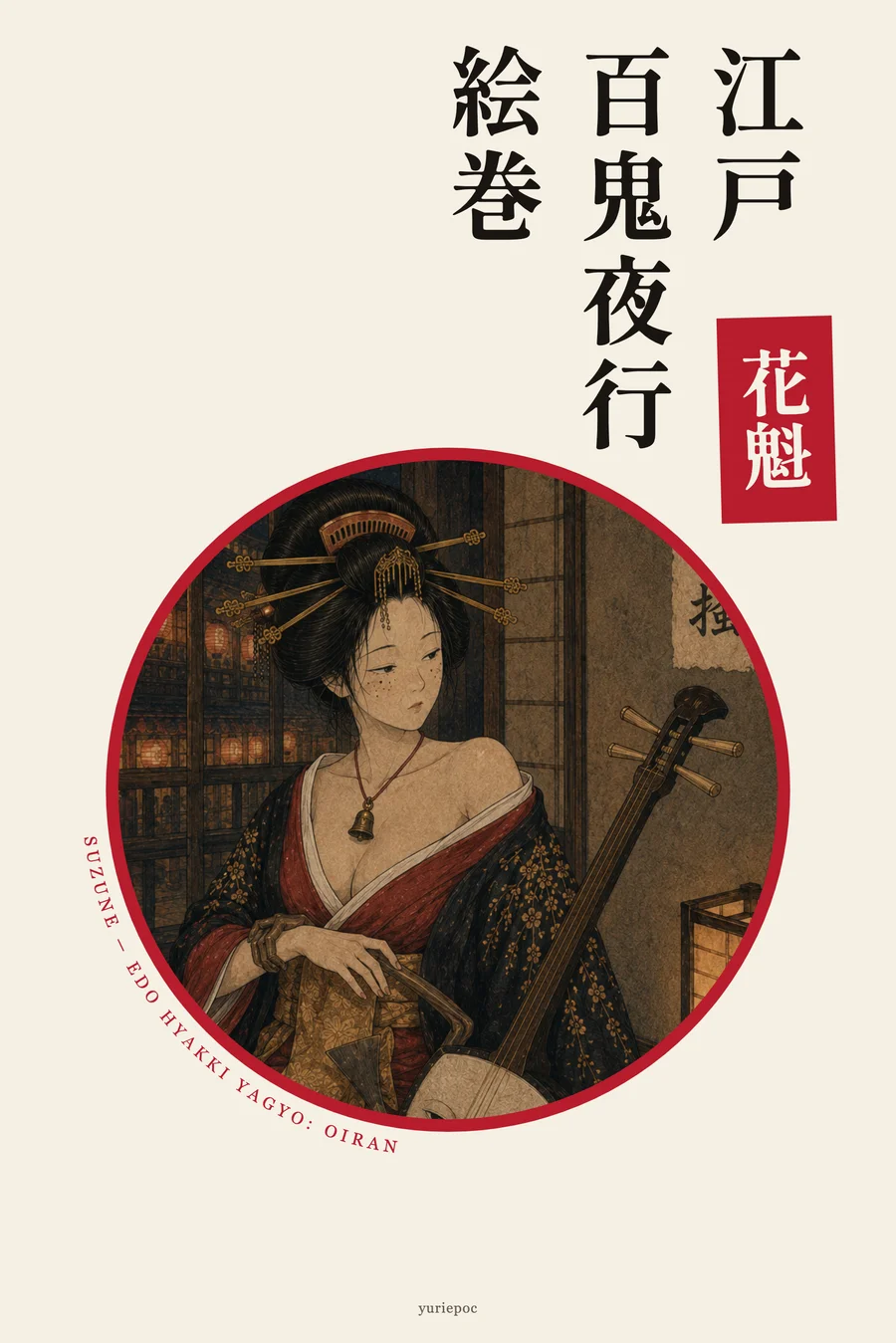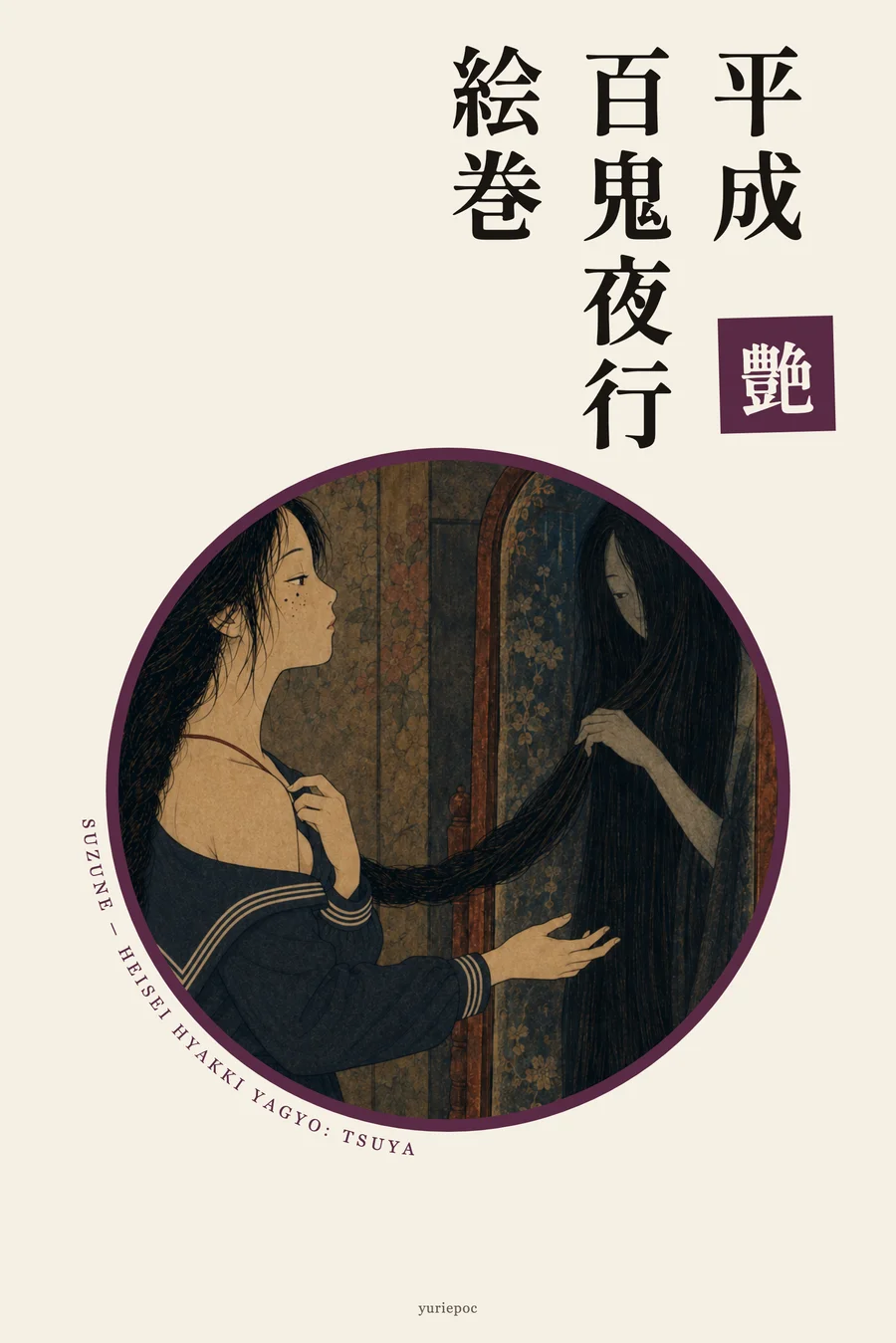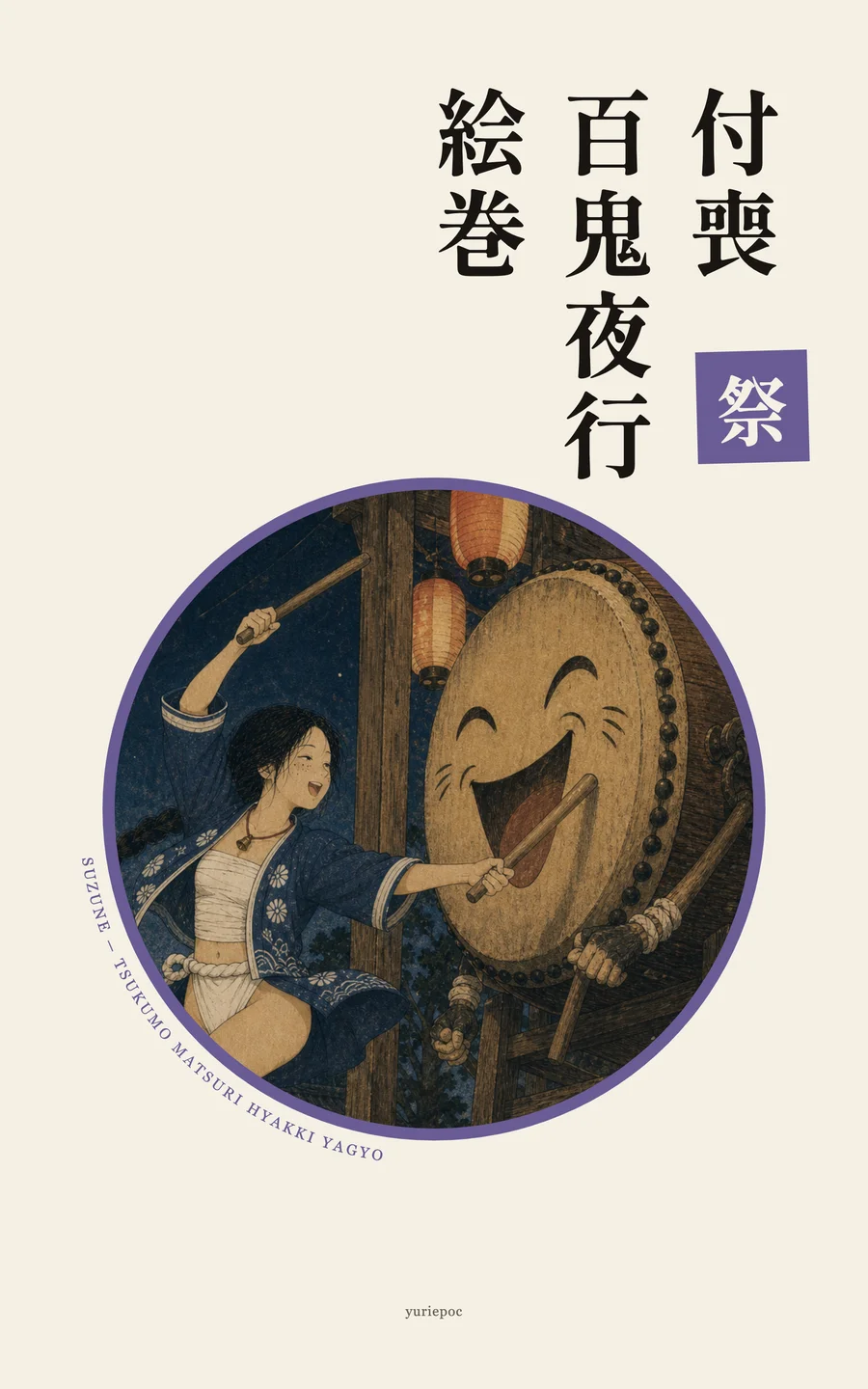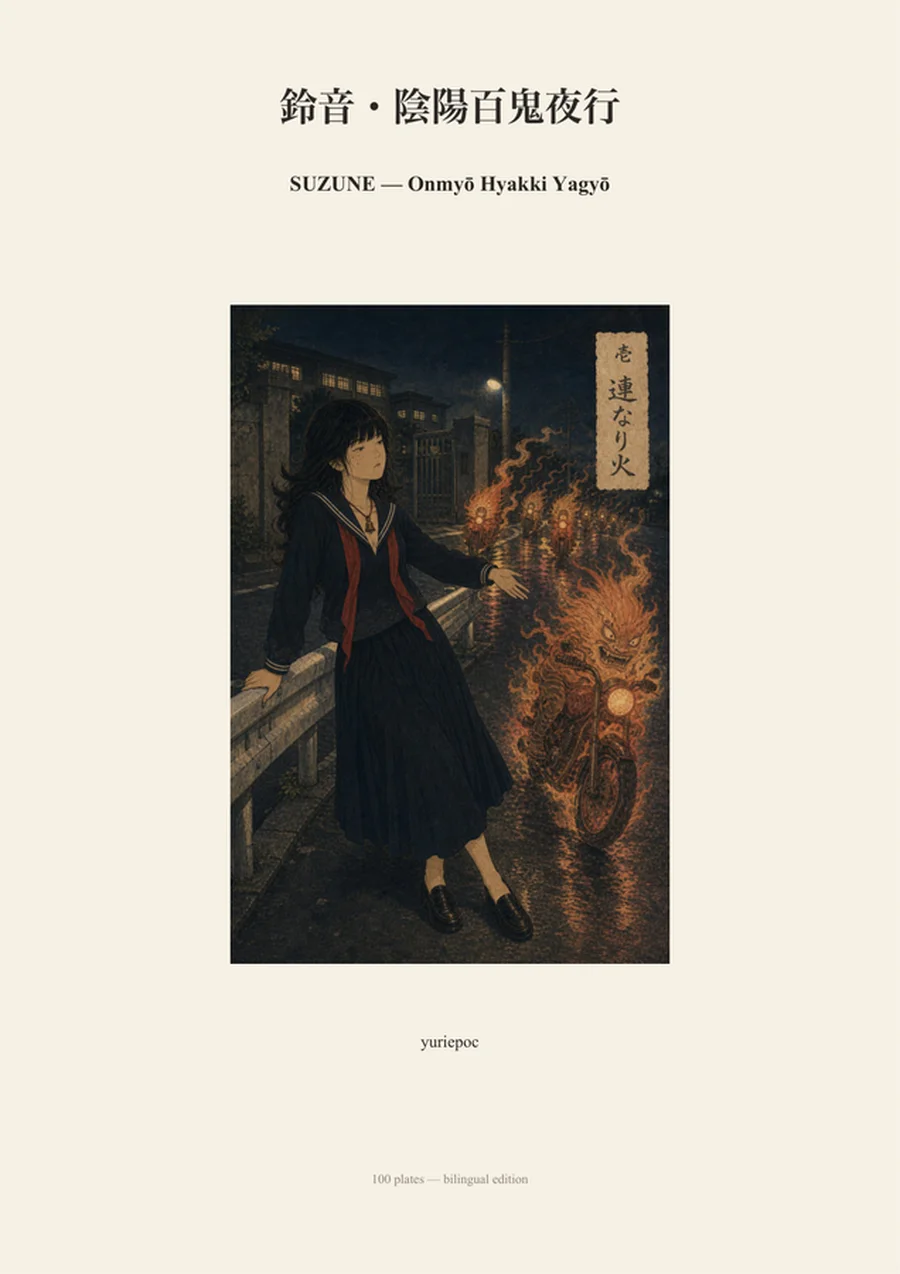
About this book
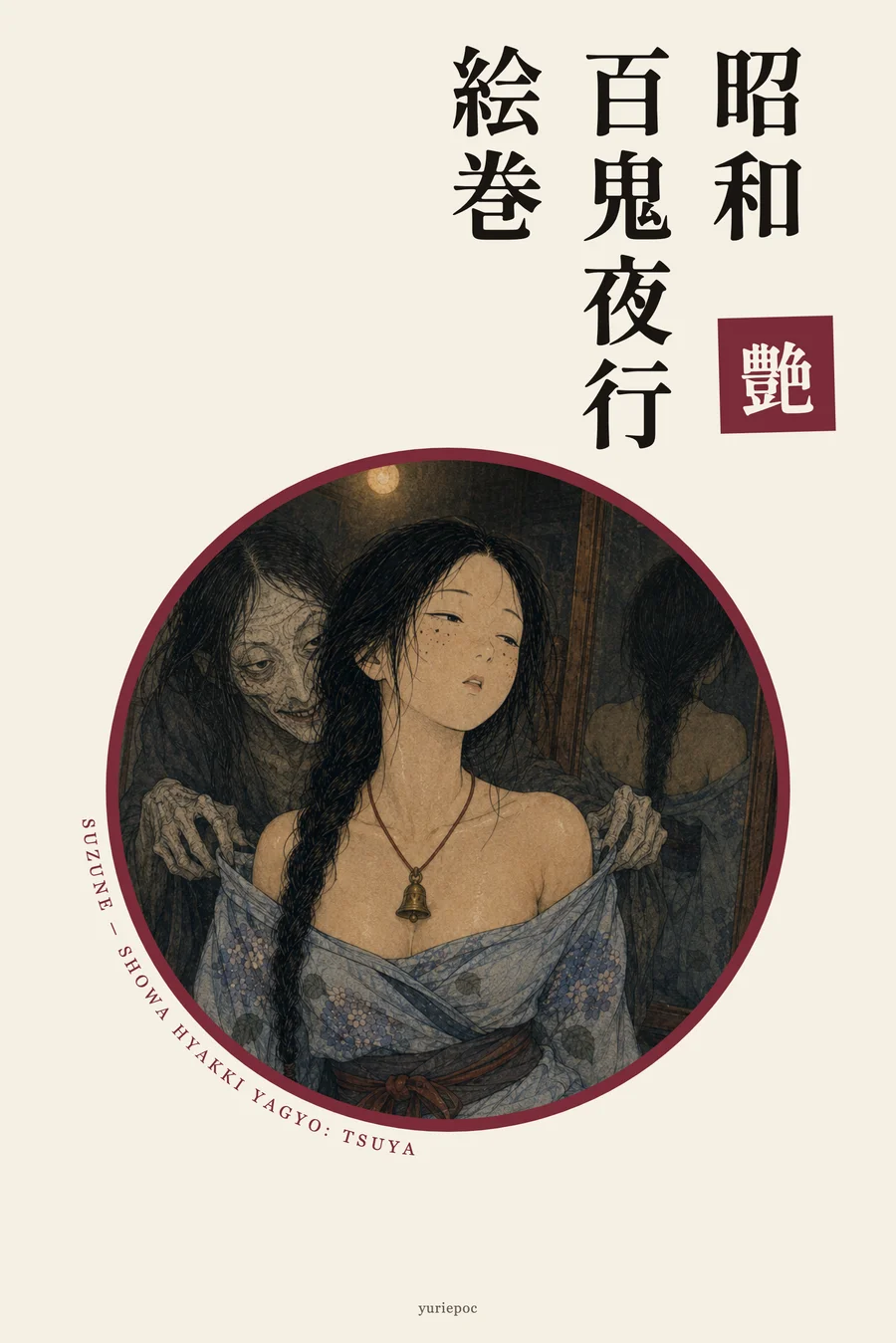
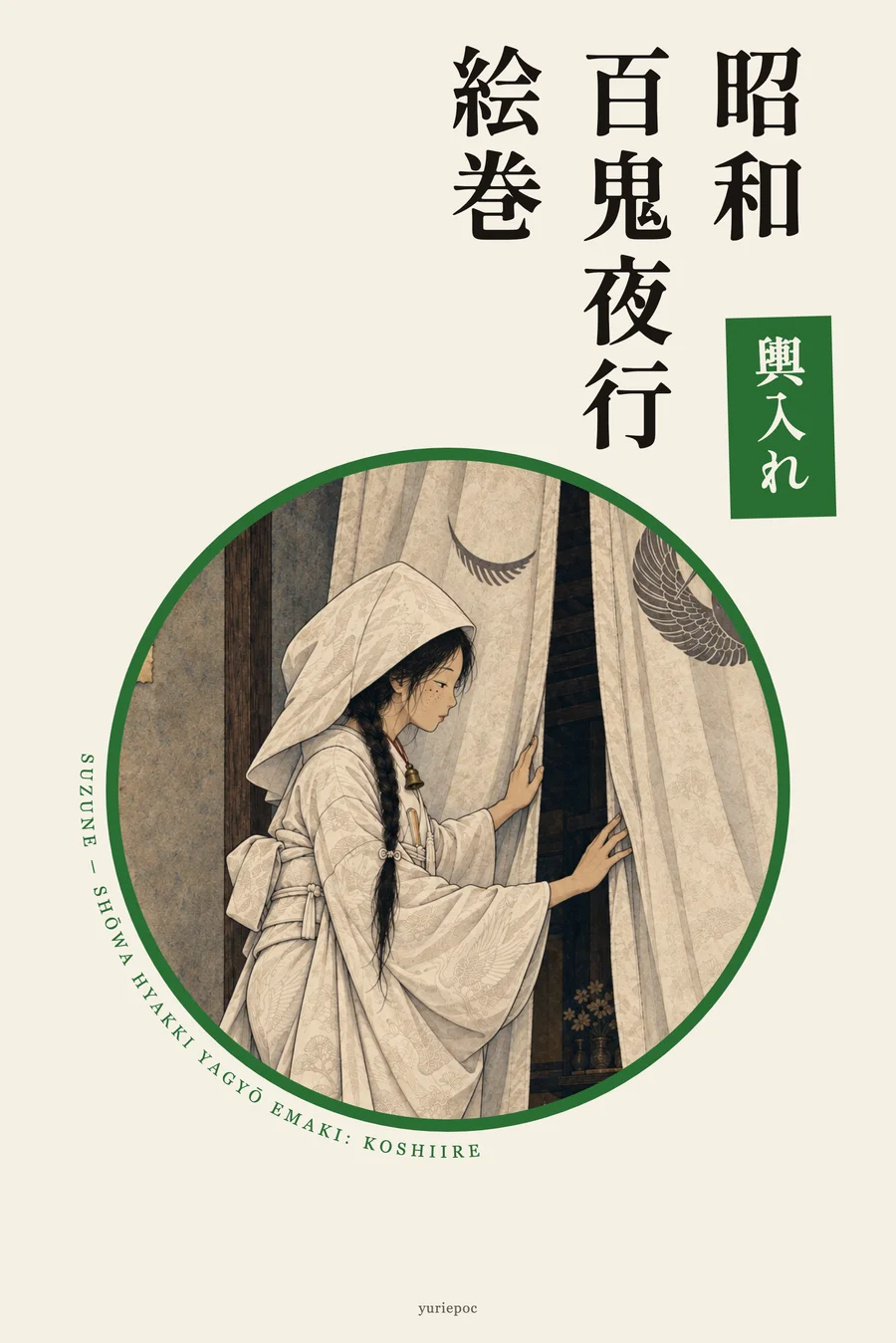
In front of the family altar room, Suzune, in a white bridal kimono, passes under the bridal noren. That is where her wedding journey begins.
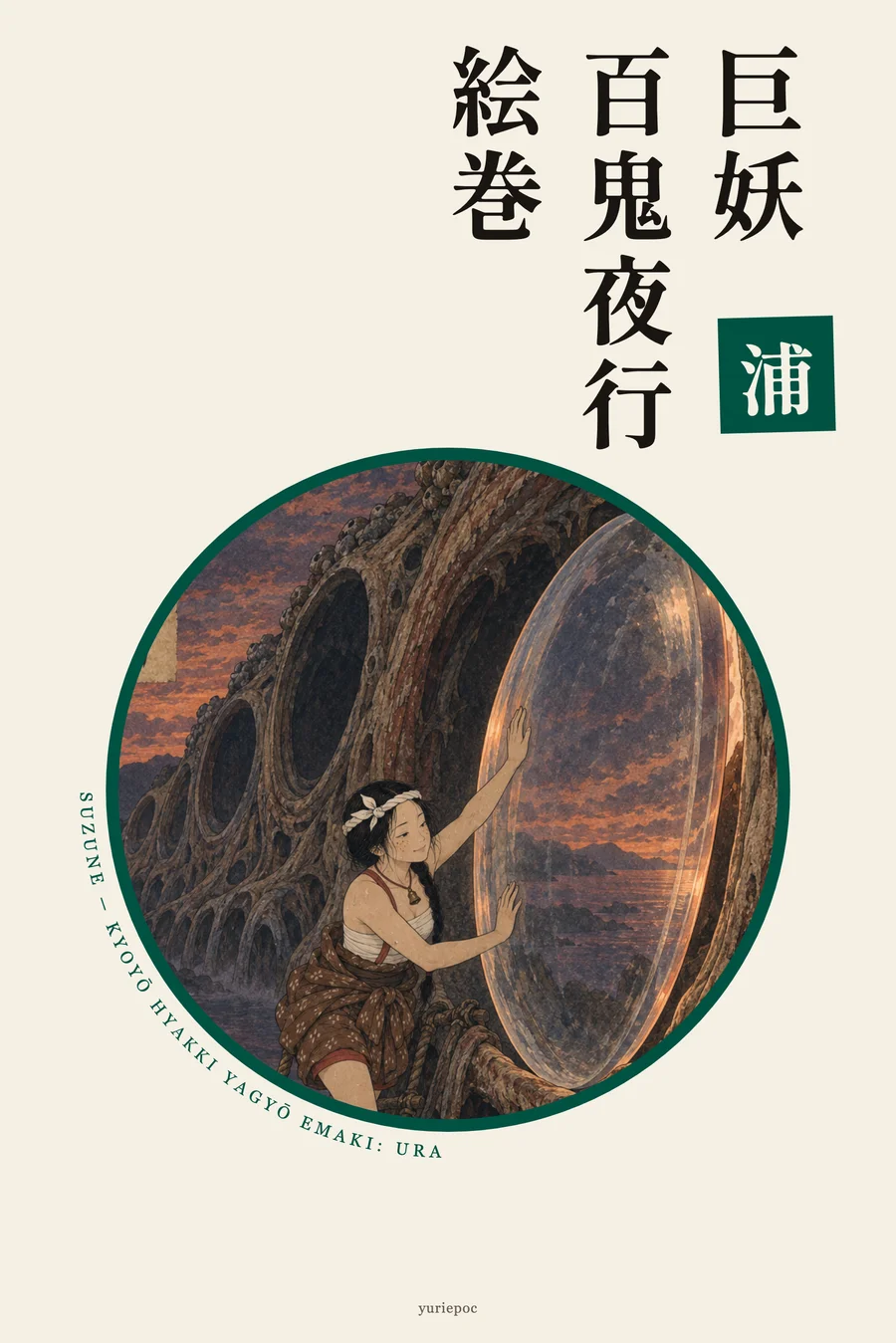
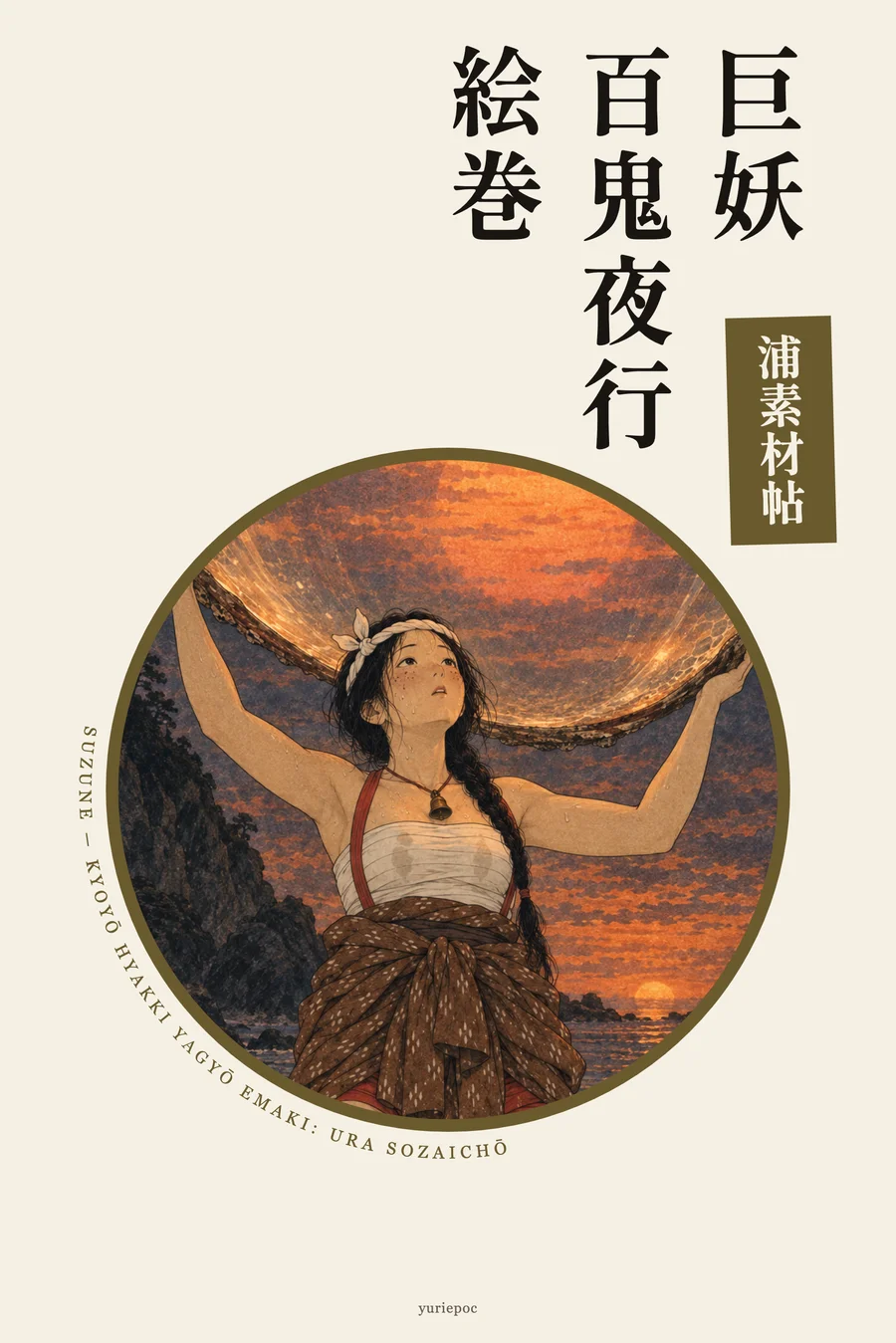
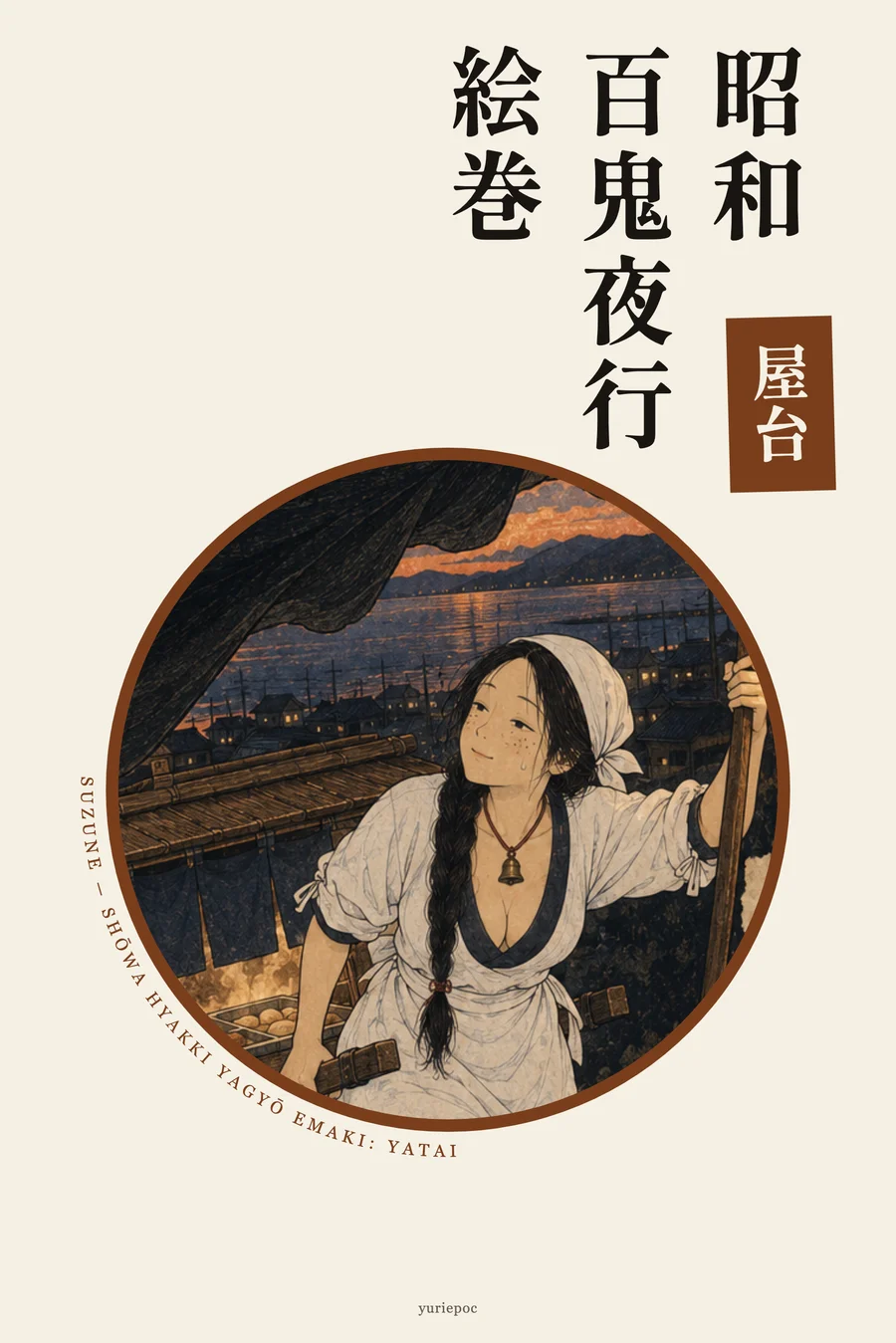
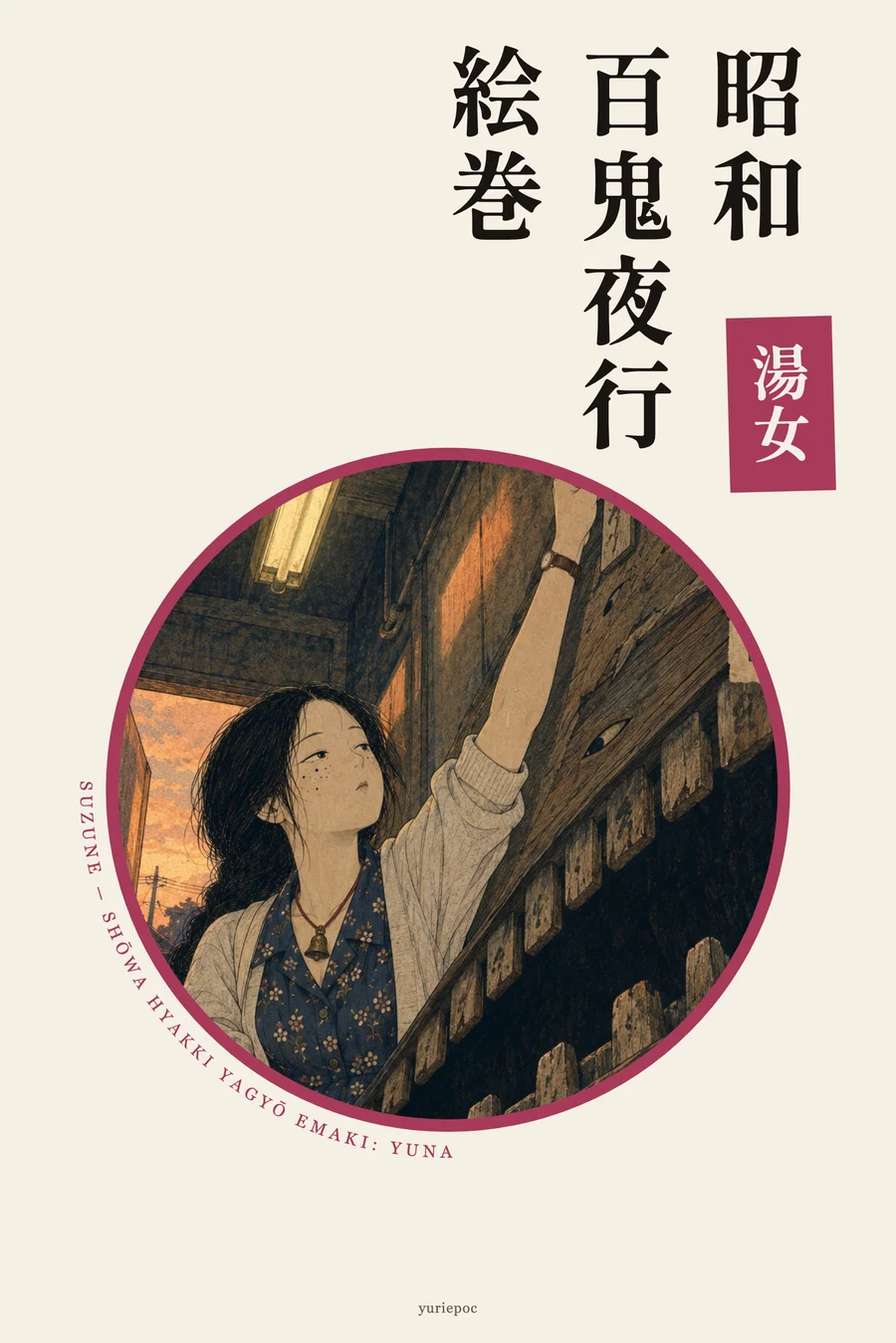
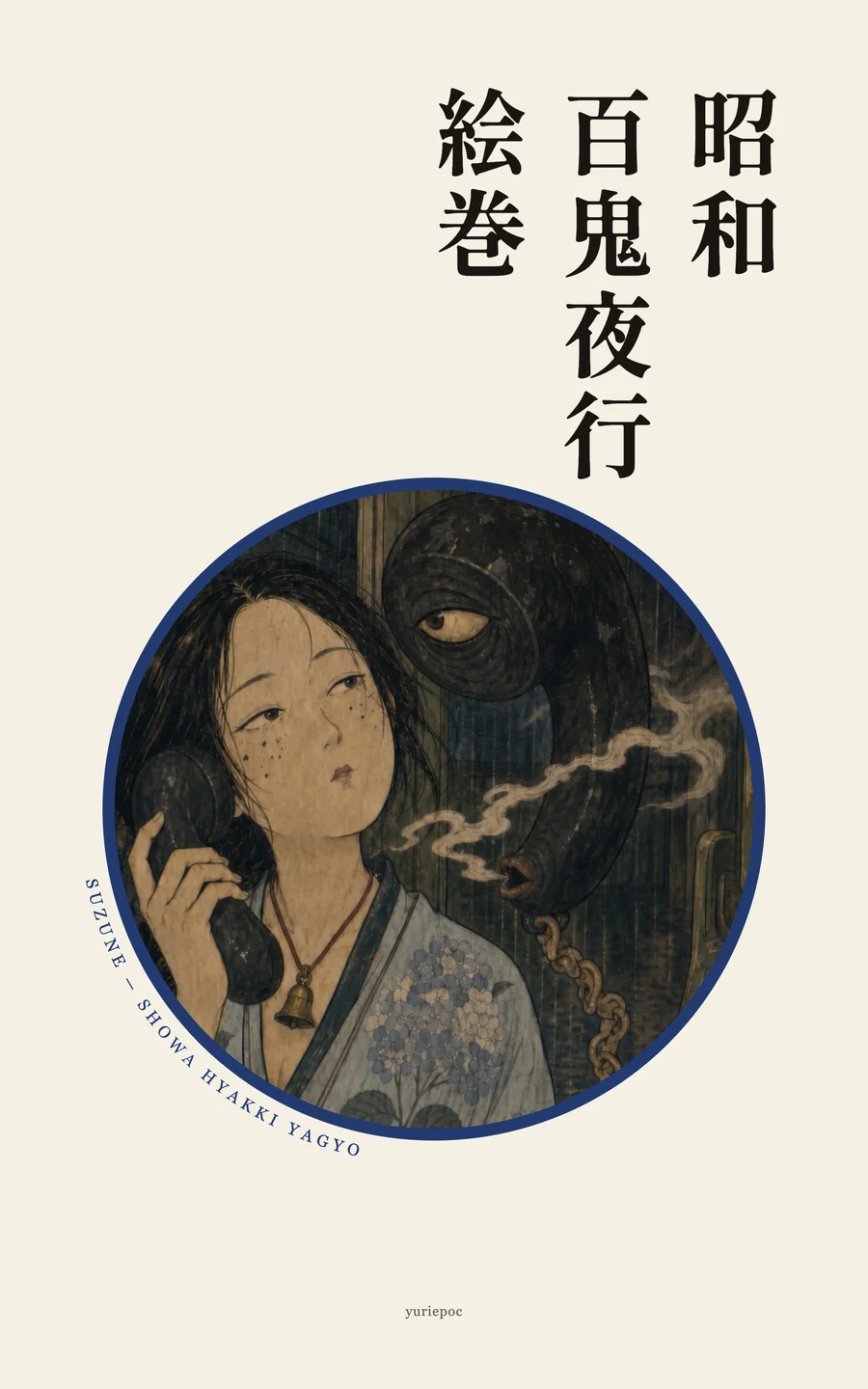
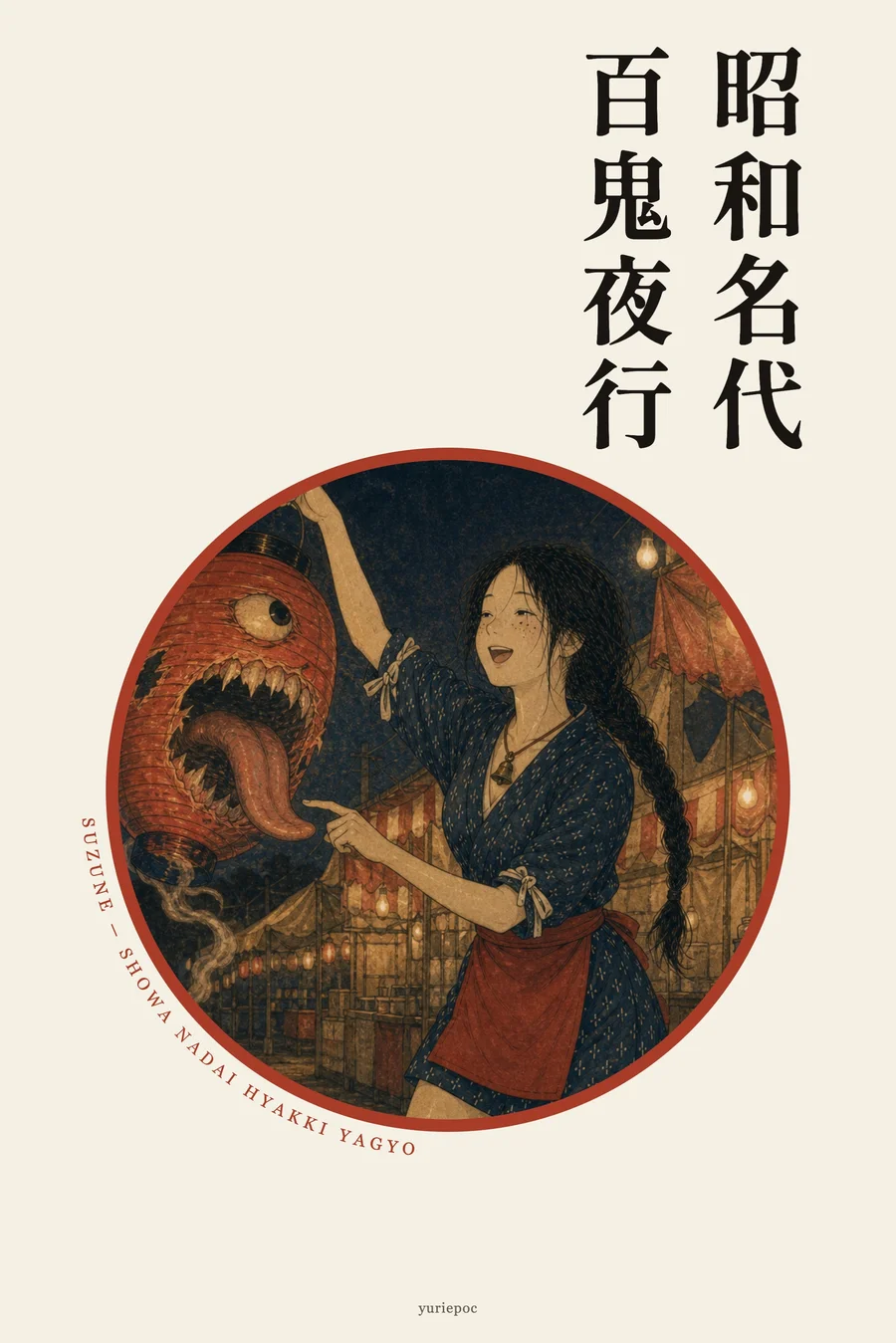
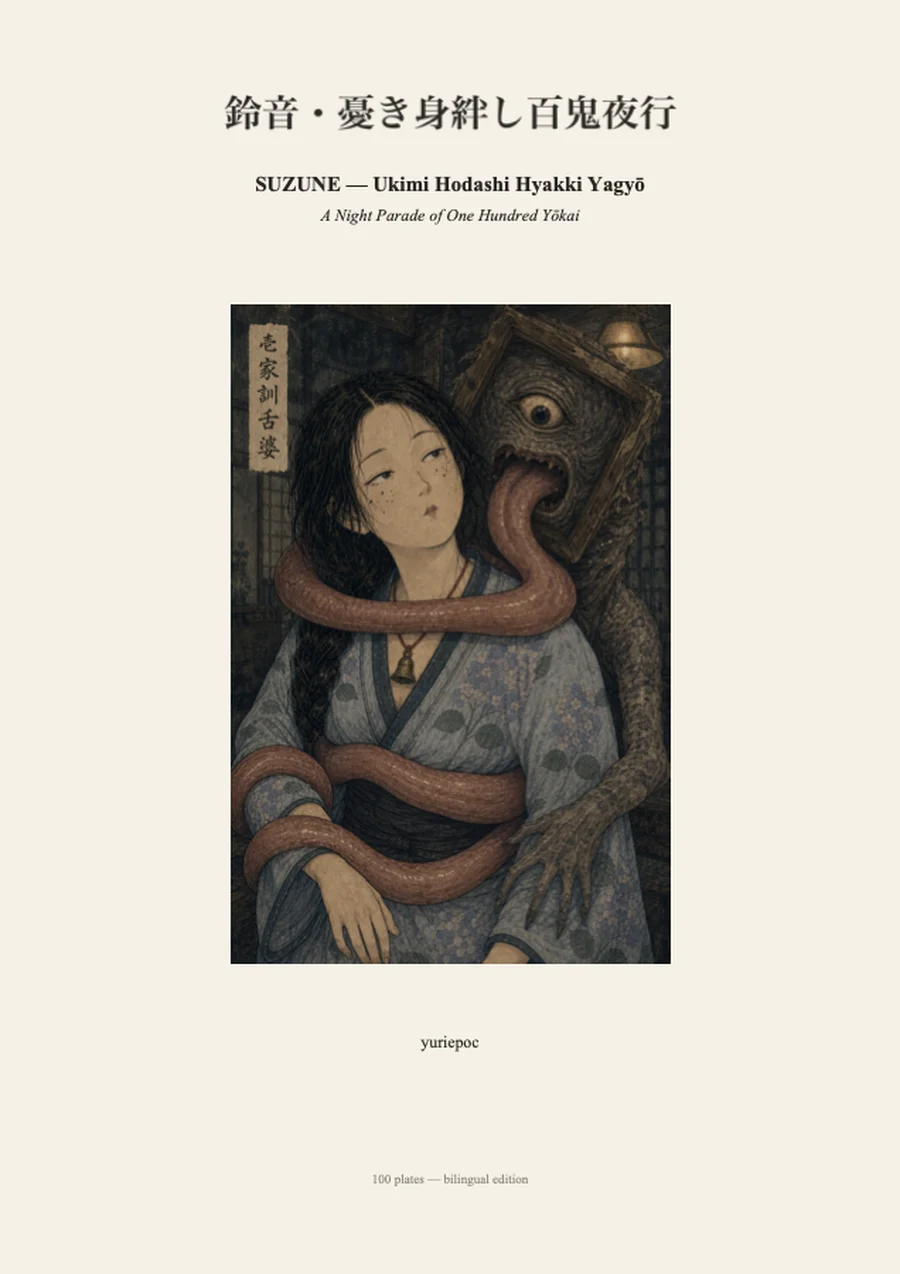
Suzune, a girl with a small red bell at her neck, is married into one yōkai after another, going into the body of each, and then into the body of the next. Each yōkai performs one wedding custom and welcomes her into its own body. The world of the next plate is made of the inside of that yōkai's body. With every page she goes one layer further in.
The setting is Hokuriku from the early to the late Shōwa years, the last age of weddings held at home and of bridal processions on the road. Passing under the noren, sharing the wedding cups, stepping over a fire: these customs were really practiced, mostly in Hokuriku, and each plate states what could be confirmed. The last plate is inside the bell at Suzune's neck, and there, once again, is the morning room of the first plate.
100 plates, 204 pages. Facing each plate is its origin, signs, practice, and story in Japanese and English. Ninety-two of the yōkai were made for this book from the things and customs of a wedding: noren, Yūzen silk, chests and more. The other eight, the fox fires, the Umi-nyōbō, the messenger of the Dragon Palace, the serpent bridegroom, the crane wife, Princess Uriko, the mouse's wedding, and the mask that clung to the flesh, come from tradition and folktales.
Sample plates
-
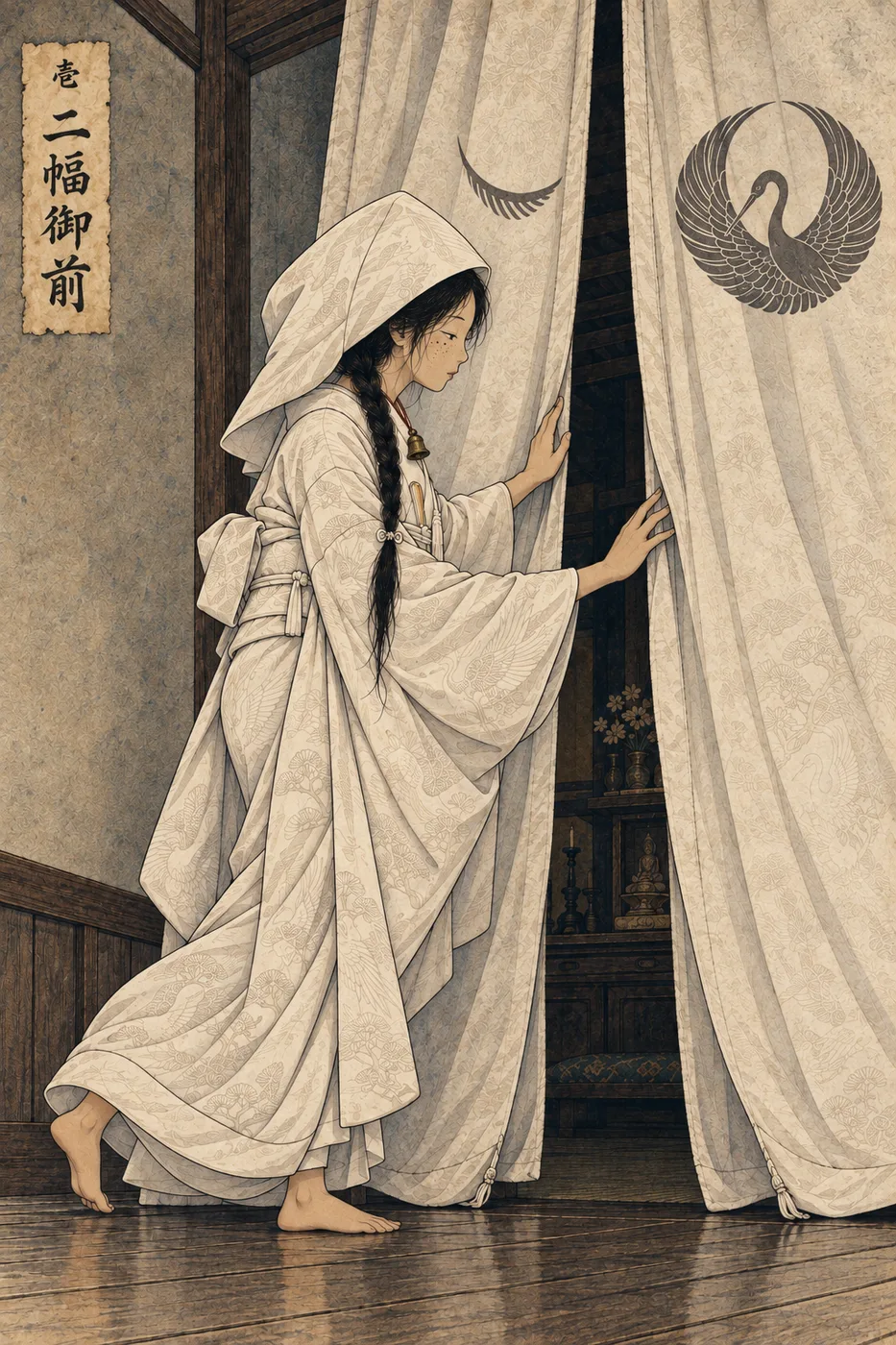
Plate 1
The Lady of Two Panels
二幅御前Futahaba-gozen
Origin
The bridal noren is a pair of cloth panels. In Noto and Kaga, in Ishikawa Prefecture, the bride's mother prepared them and hung them at the entrance of the Buddhist altar room in the groom's house.
花嫁のれんは、二枚の布である。石川県の能登と加賀で、花嫁の母が用意し、婚家の仏間の入口に掛けた。
-
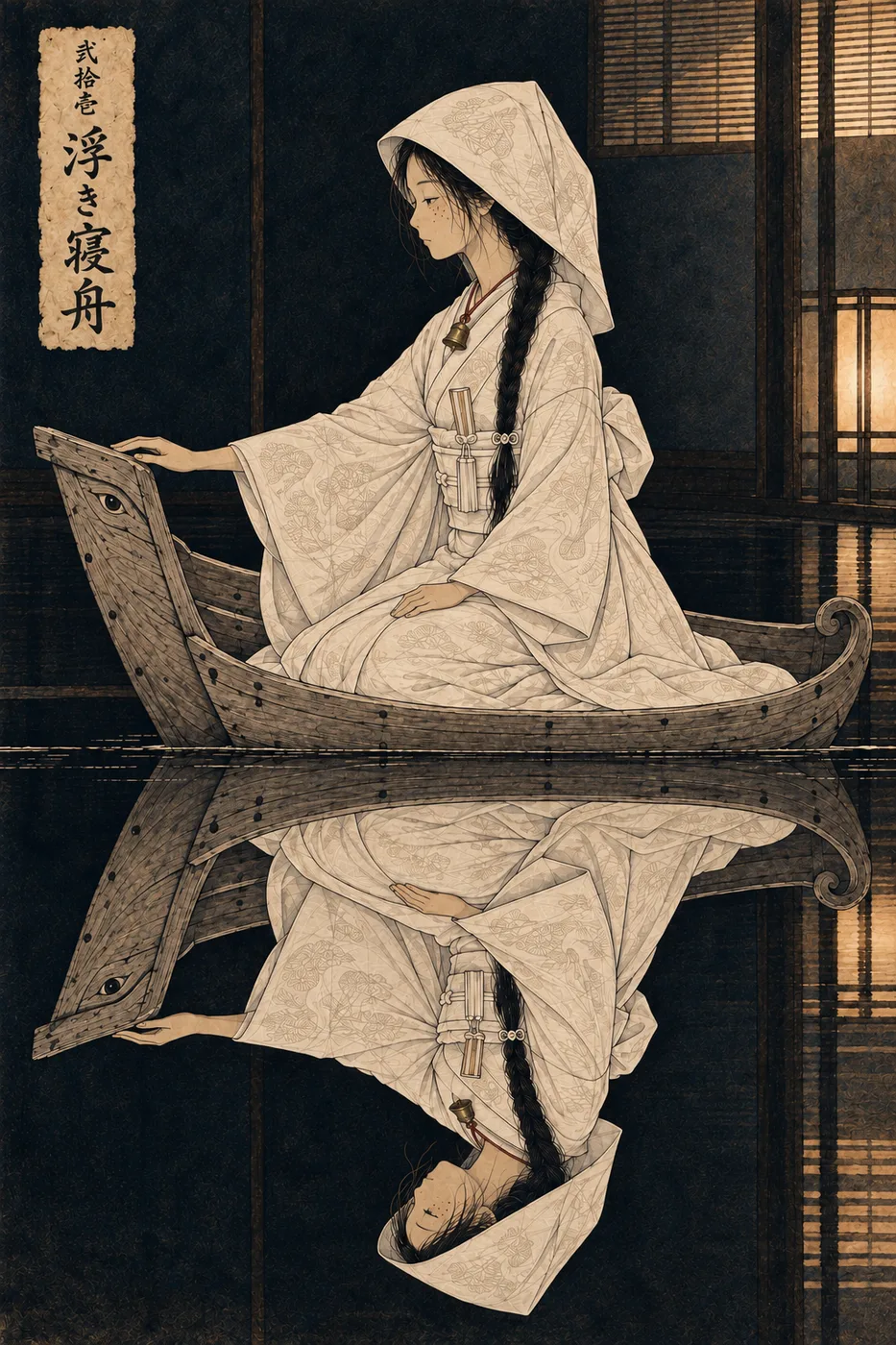
Plate 21
The Drifting-Sleep Boat
浮き寝舟Ukinebune
Origin
In the water country of Itako in Ibaraki, a flat rowboat once carried the bride across the river together with her household goods. Ukinebune is that bridal boat turned yokai, and it carries them across without spilling a single drop of water.
茨城県の潮来の水郷では、かつて嫁入りにろ舟を使い、家財道具と花嫁を乗せて川を渡った。浮き寝舟は、その嫁入り舟が妖怪になったもので、水を一滴もこぼさずに運ぶ。
-
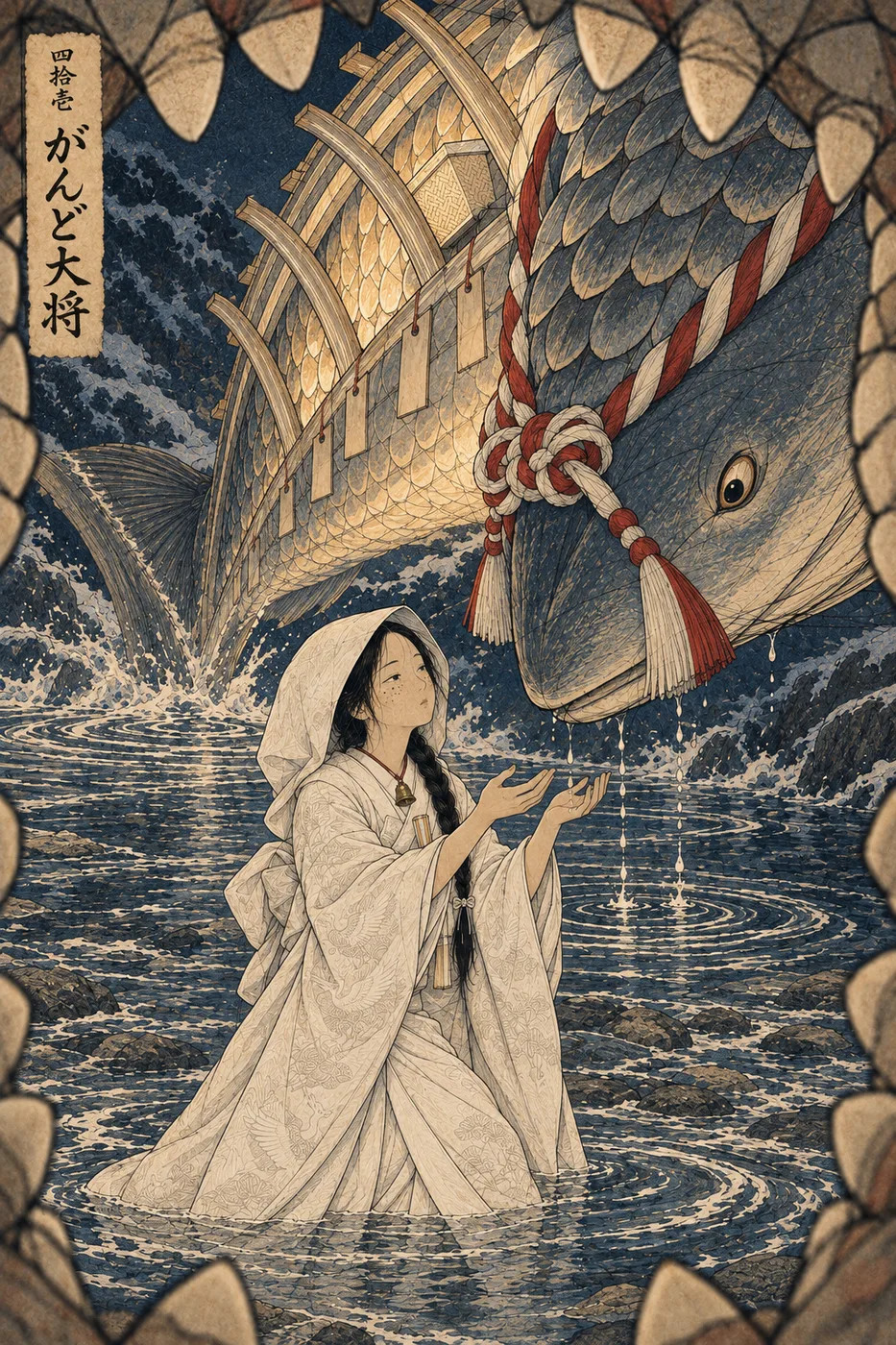
Plate 41
General Gando, the Yellowtail
がんど大将Gando Taishō
Origin
Gando Taishō is a yokai born from the yellowtail of yomeburi. Yomeburi is a custom along the Toyama coast. In the year of a marriage, the bride's family sends a yellowtail to the groom's house at the end of the year.
がんど大将は、嫁ぶりの鰤から生まれた妖怪である。嫁ぶりは、嫁いだ年の暮れに嫁の実家が鰤を贈る、富山の海沿いの風習である。
-
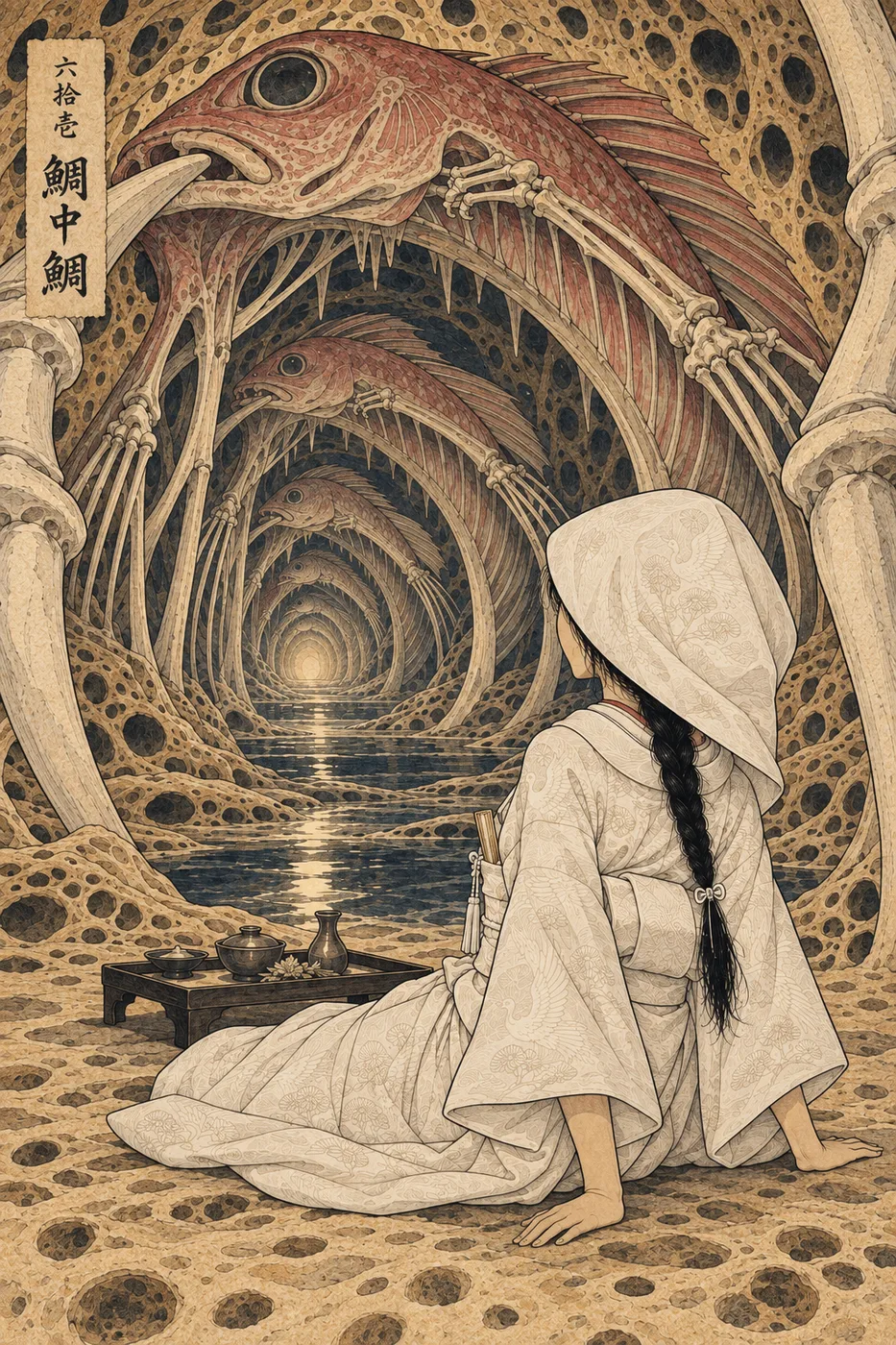
Plate 61
The Bream Within the Bream
鯛中鯛Taichūtai
Origin
Taichūtai, the Bream Within the Bream, is a spirit born from the sea bream at a wedding feast. At a wedding feast, a bream is served whole, from head to tail.
鯛中鯛は、祝い膳の鯛から生まれた妖怪である。祝言の膳には、頭から尾までそろった鯛が出る。
-
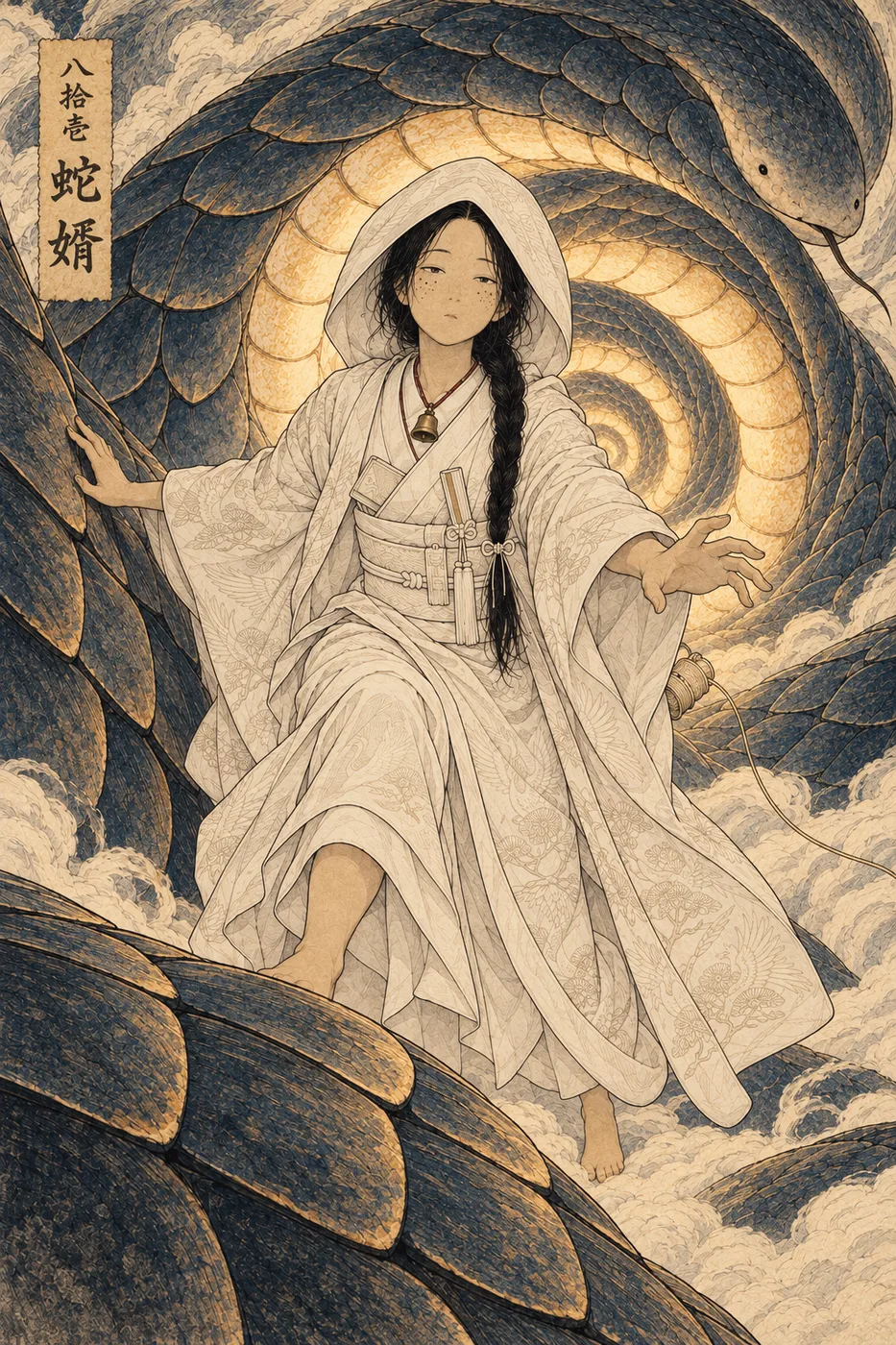
Plate 81
The Serpent Bridegroom
蛇婿Hebimuko
Origin
Hebimuko, the Serpent Bridegroom, is the husband who visits a girl every night. In the Kojiki, in the story of Mount Miwa, the girl pins a needle with thread to the hem of the man's clothes.
蛇婿は、夜ごと娘のもとへ通う婿の妖怪である。『古事記』の三輪山の話では、娘が男の裾に糸付きの針を刺した。
Other books