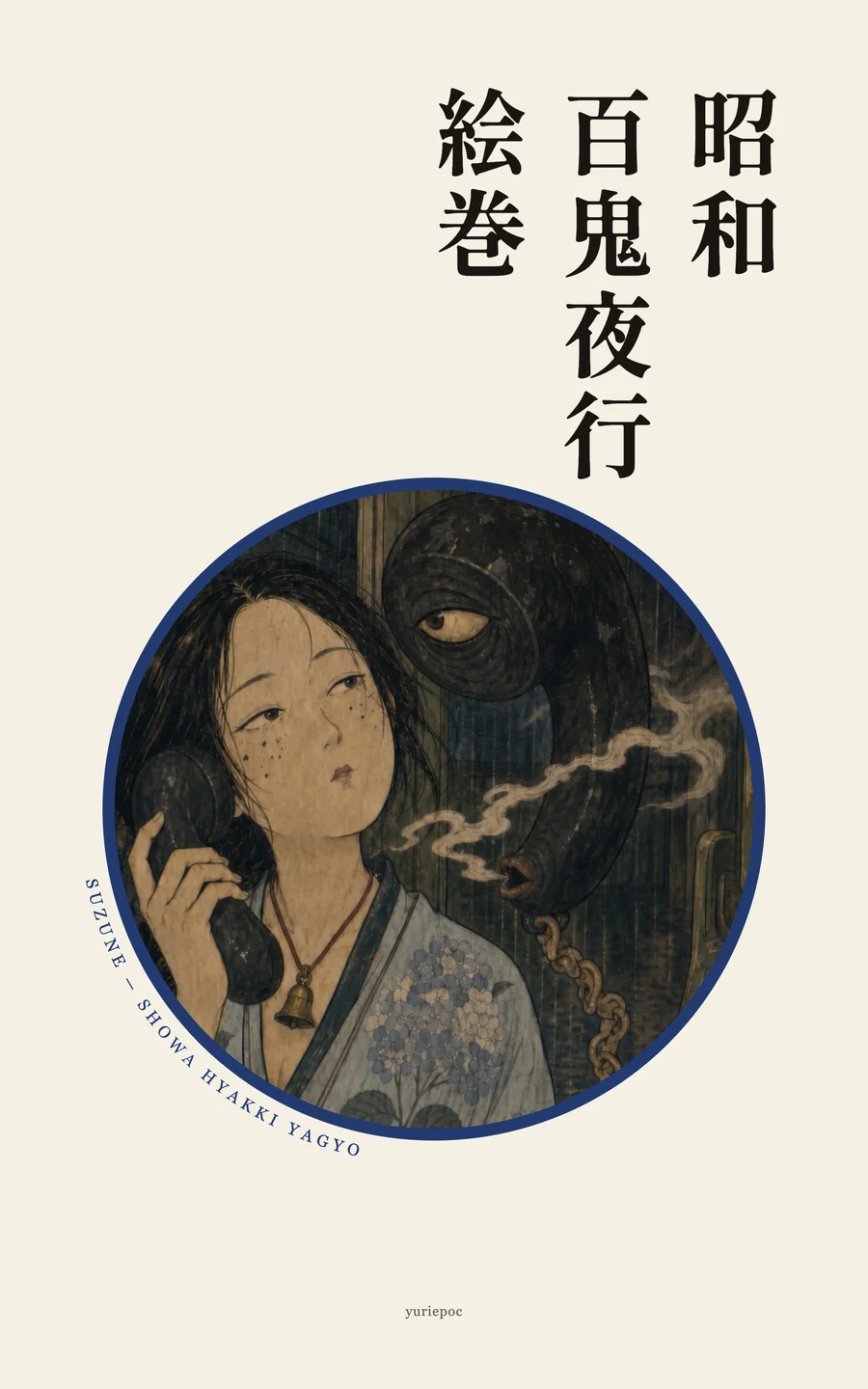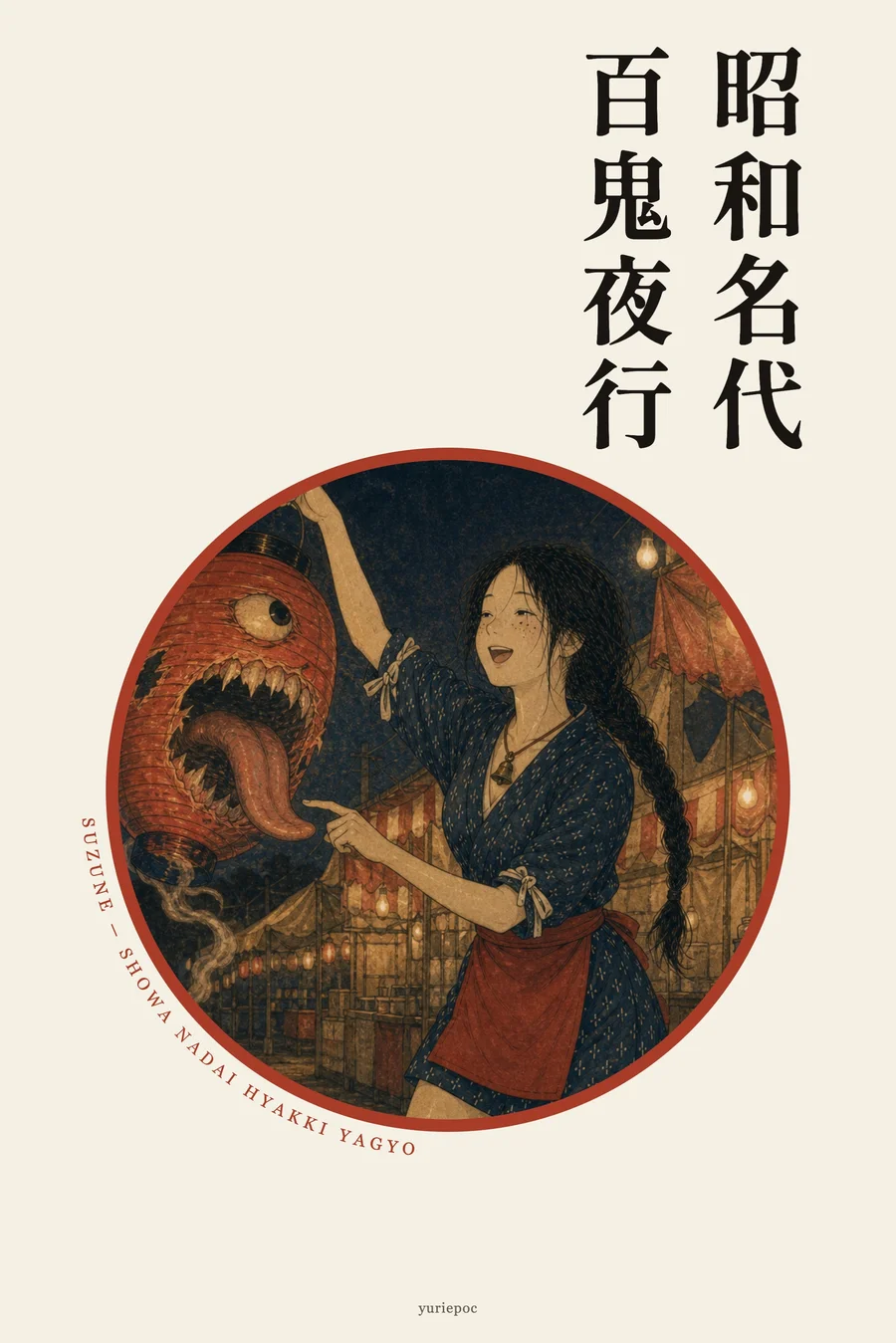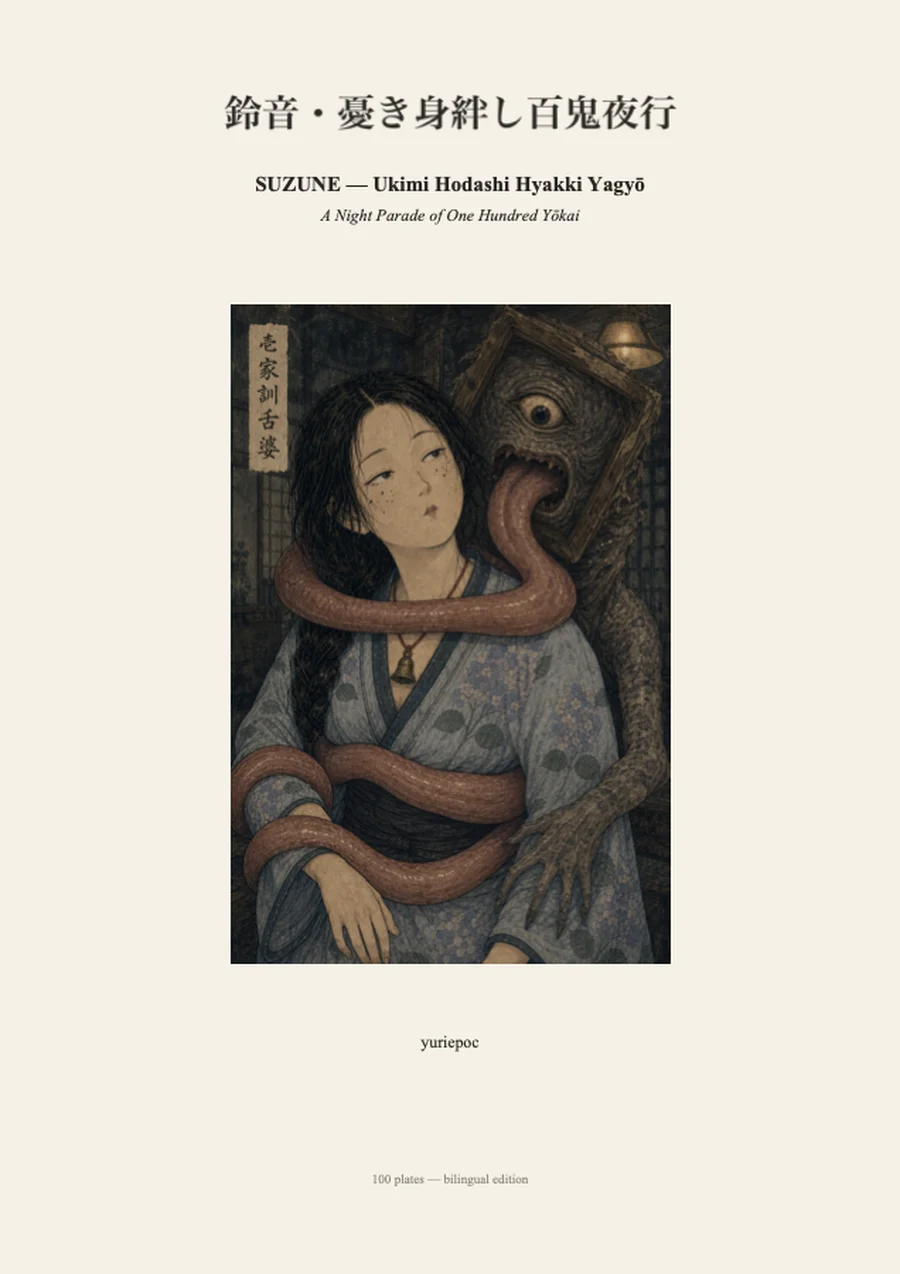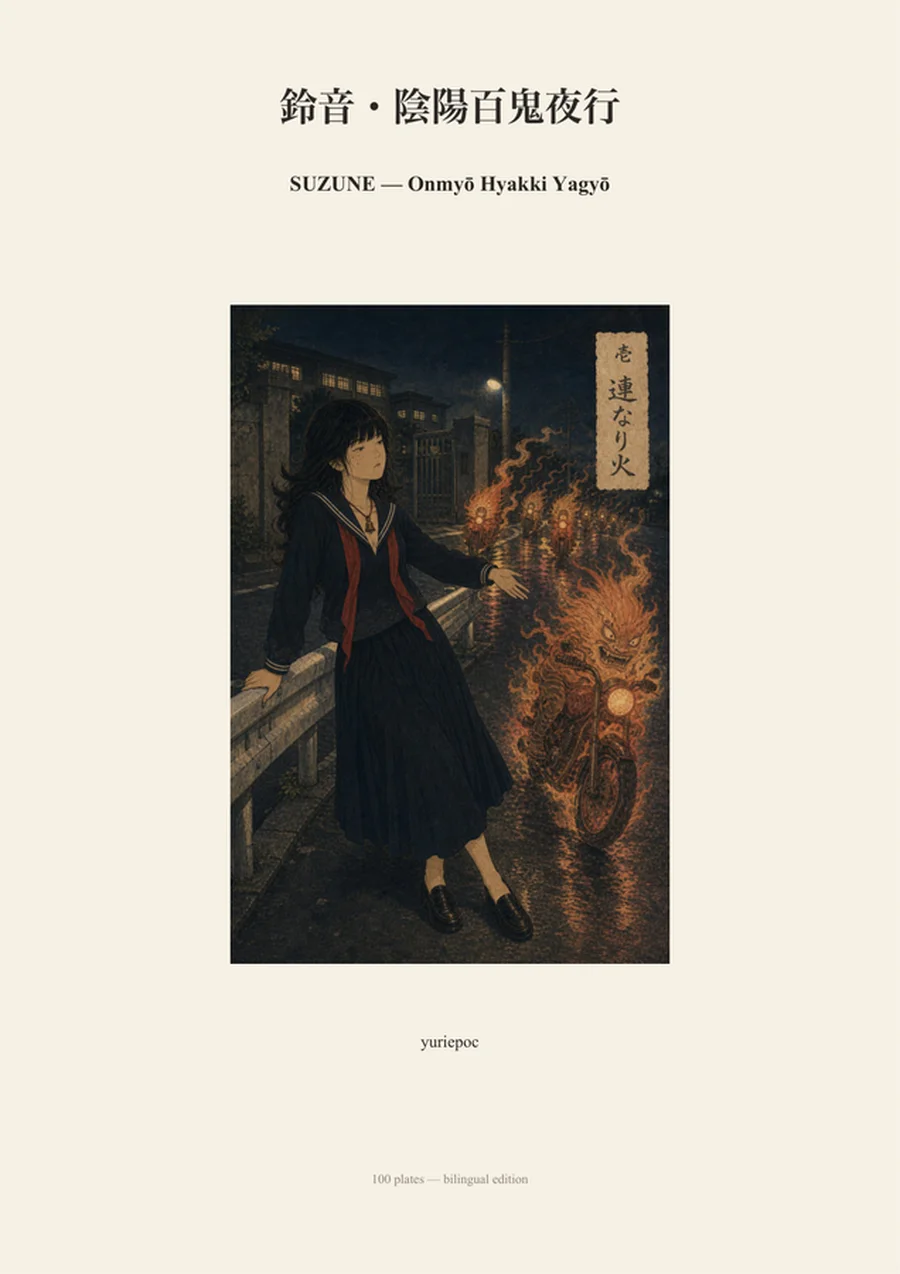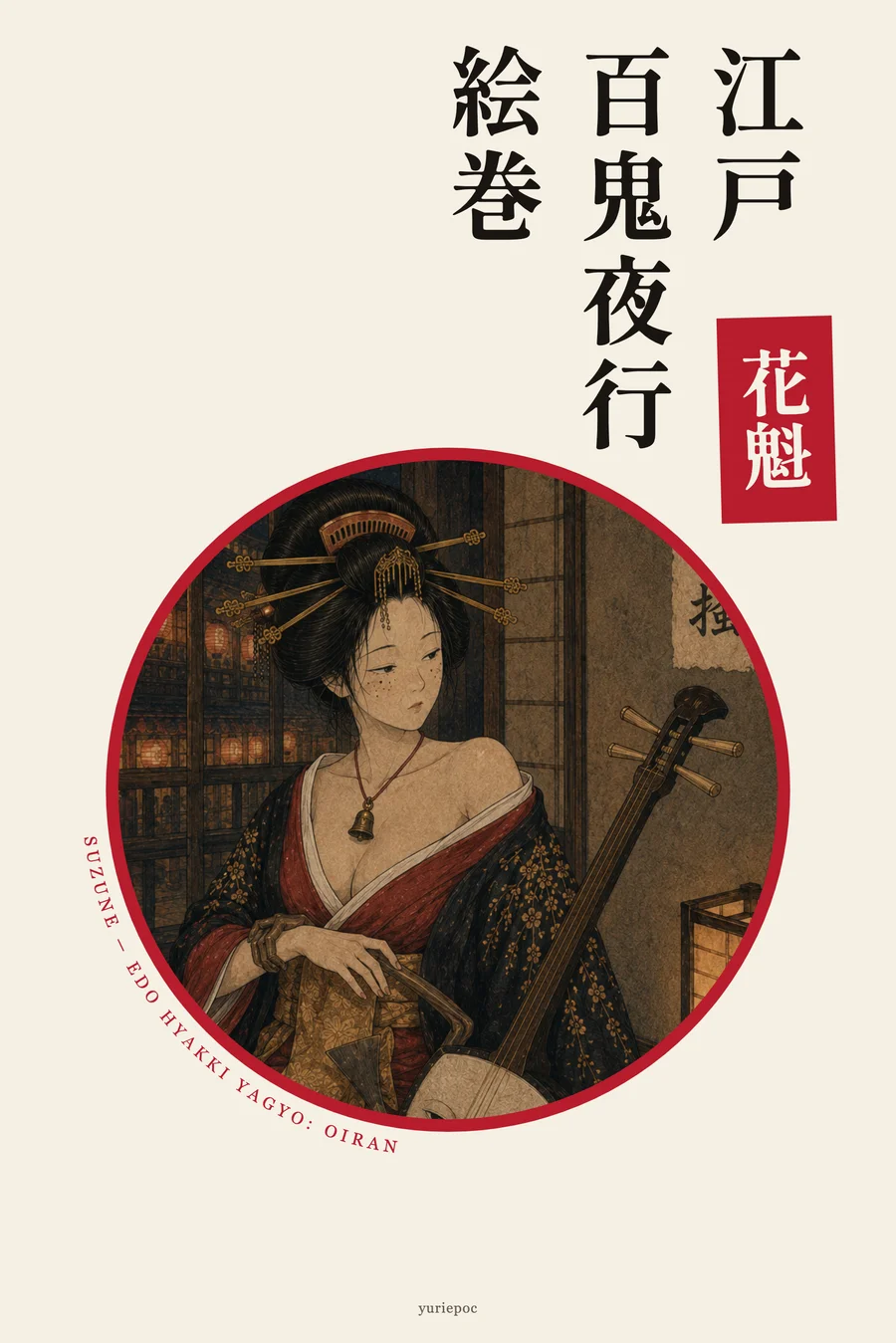
Sobre este libro
En la noche del barrio de placer, las cosas se mueven solas.
Un shamisen suena su primera frase sin que nadie lo sostenga, y la celosía tasa a su vez la bolsa del cliente. Nada se transforma por completo. Solo una parte de la vida de las casas, los salones y las alcobas se suelta de la mano de su dueño y empieza a actuar por su cuenta: esa es la gramática de los fenómenos extraños de este barrio. El desfile no hace ruido; se mezcla entre el sonido de la música de apertura y el roce de las telas.
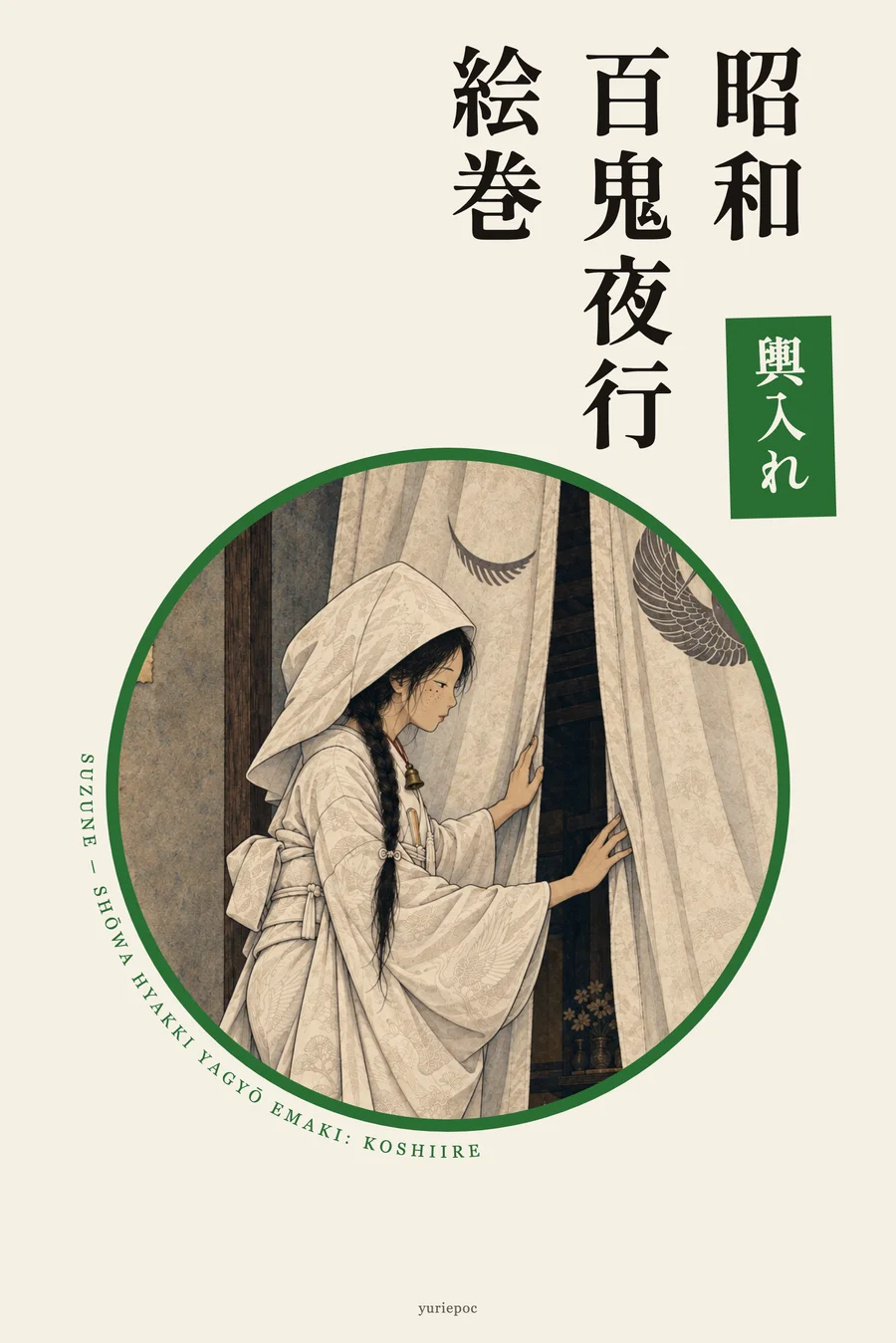
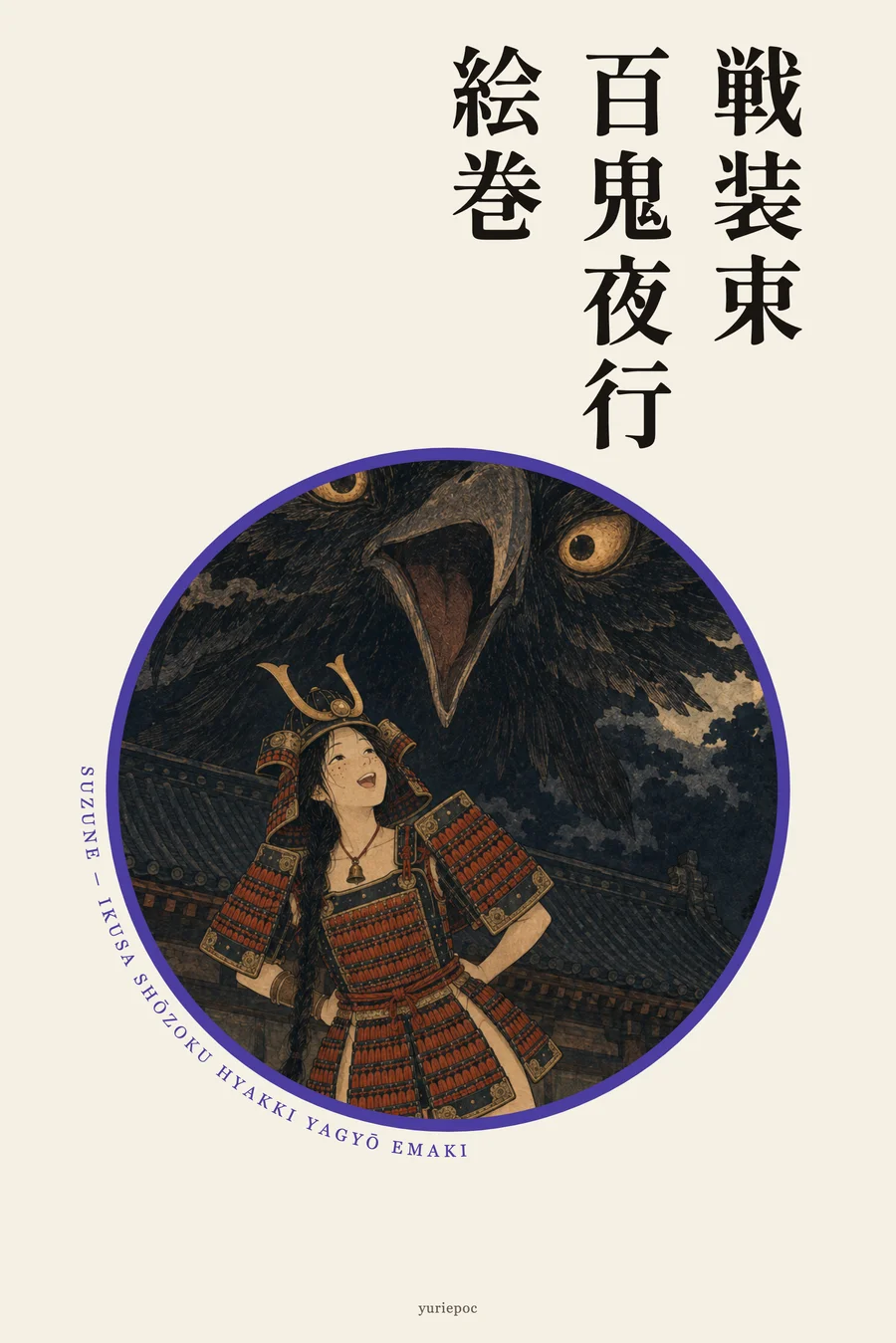
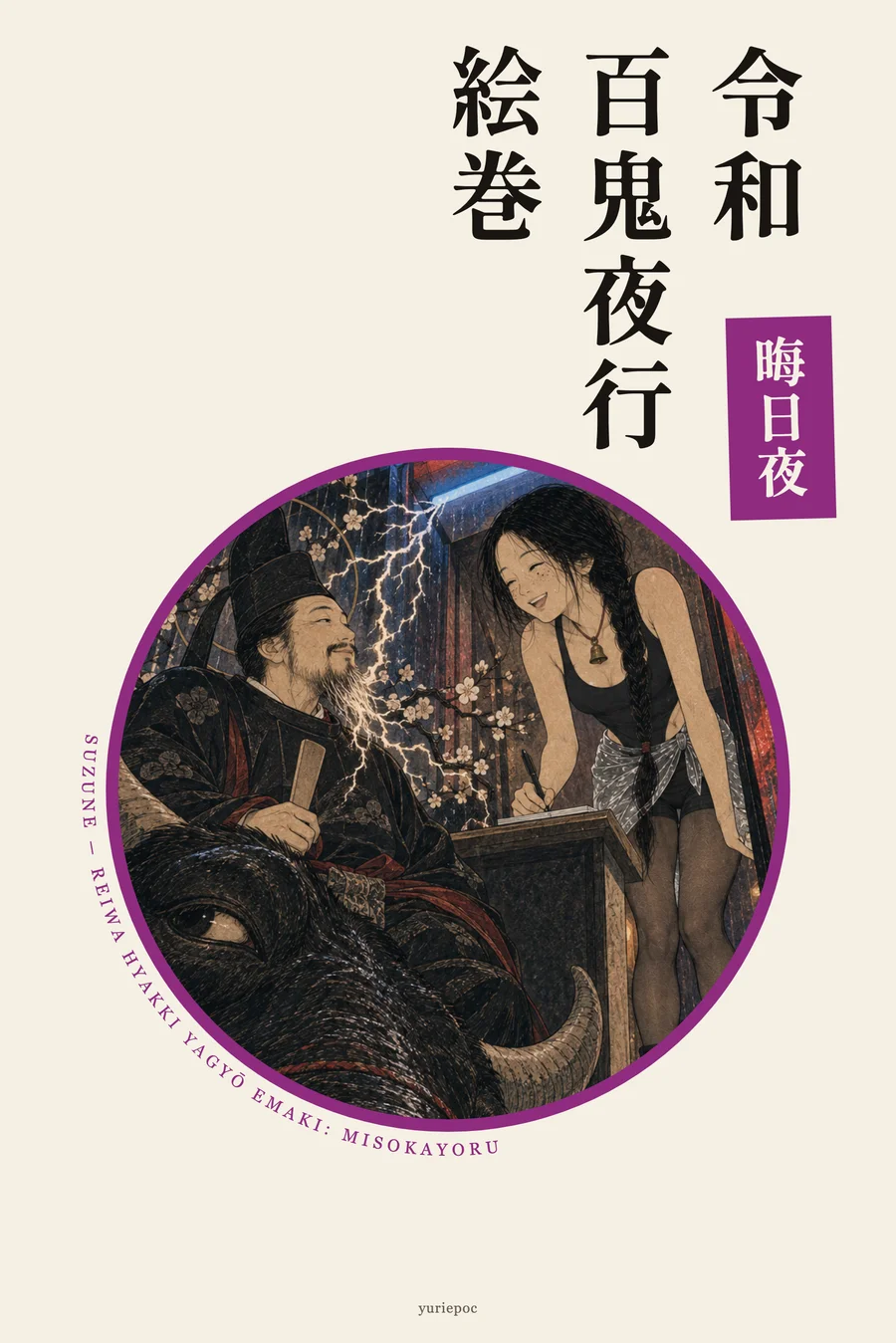
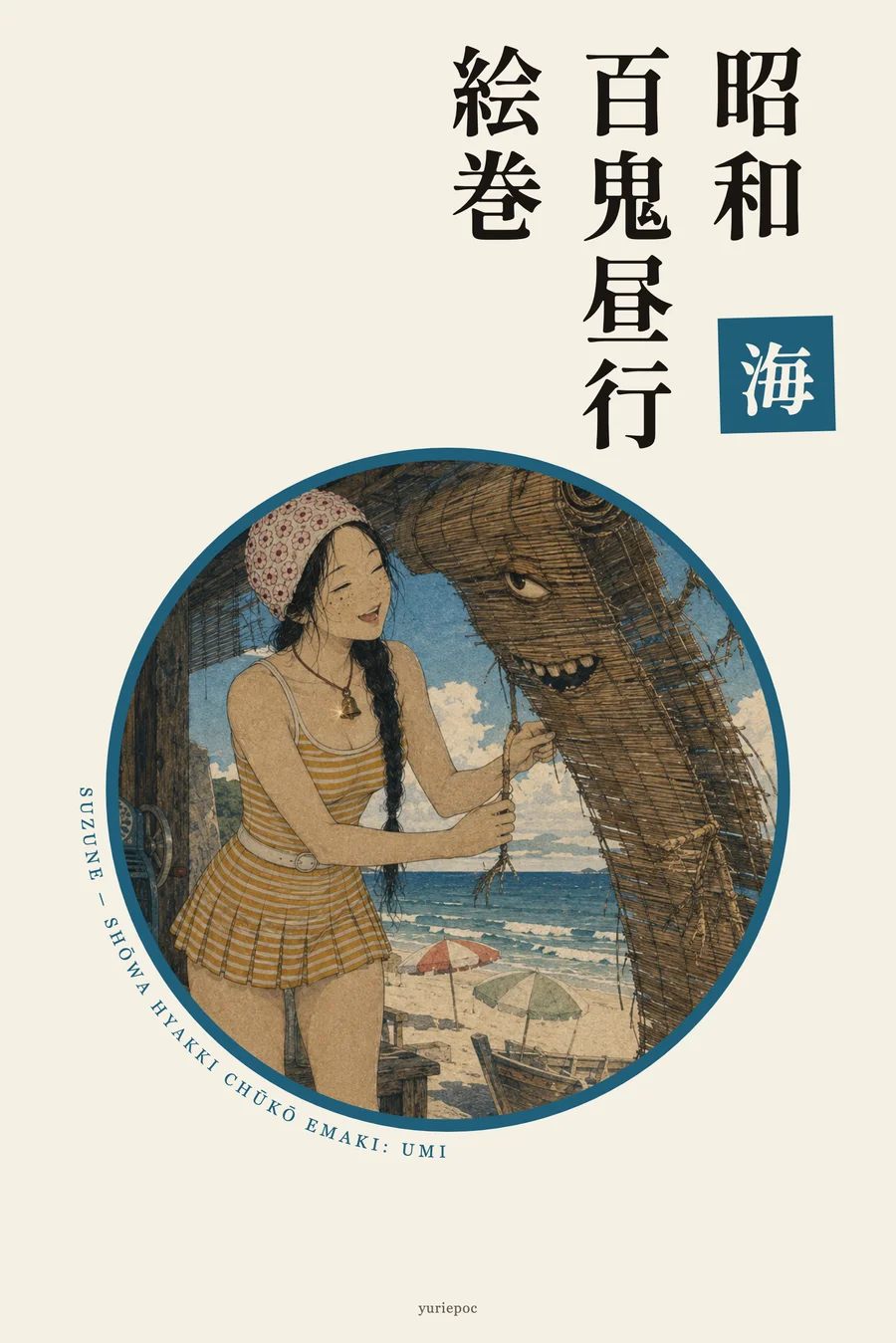
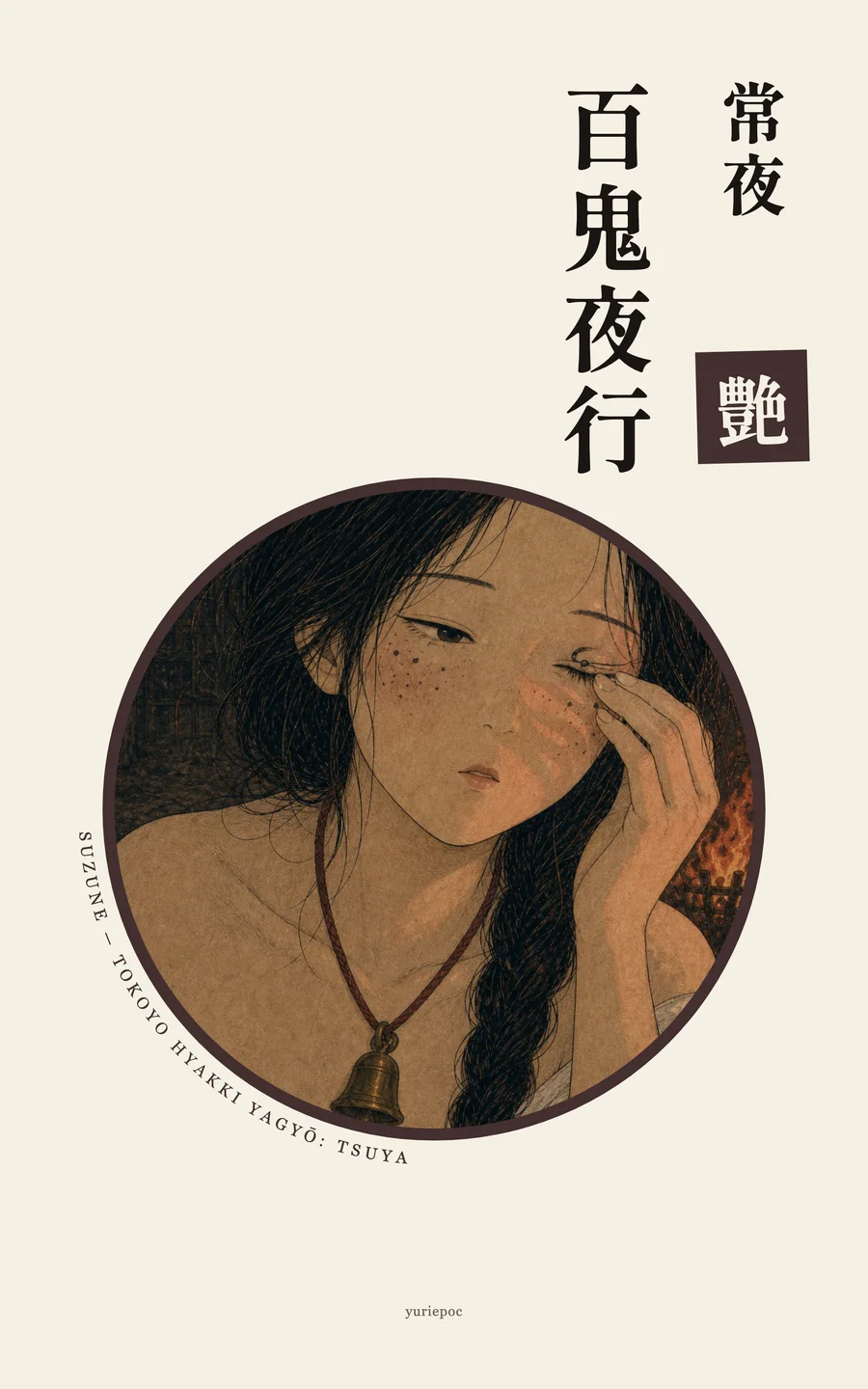
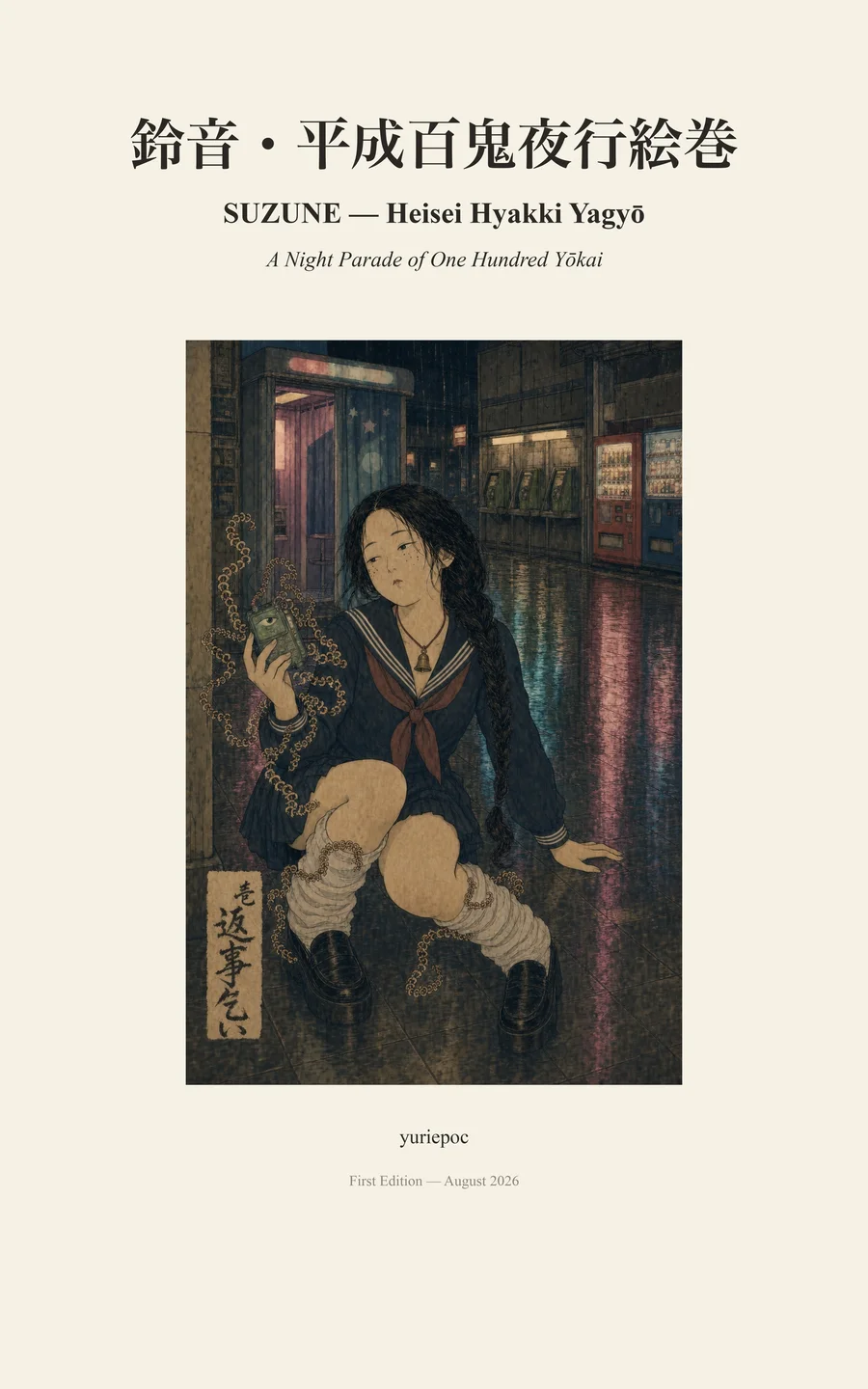
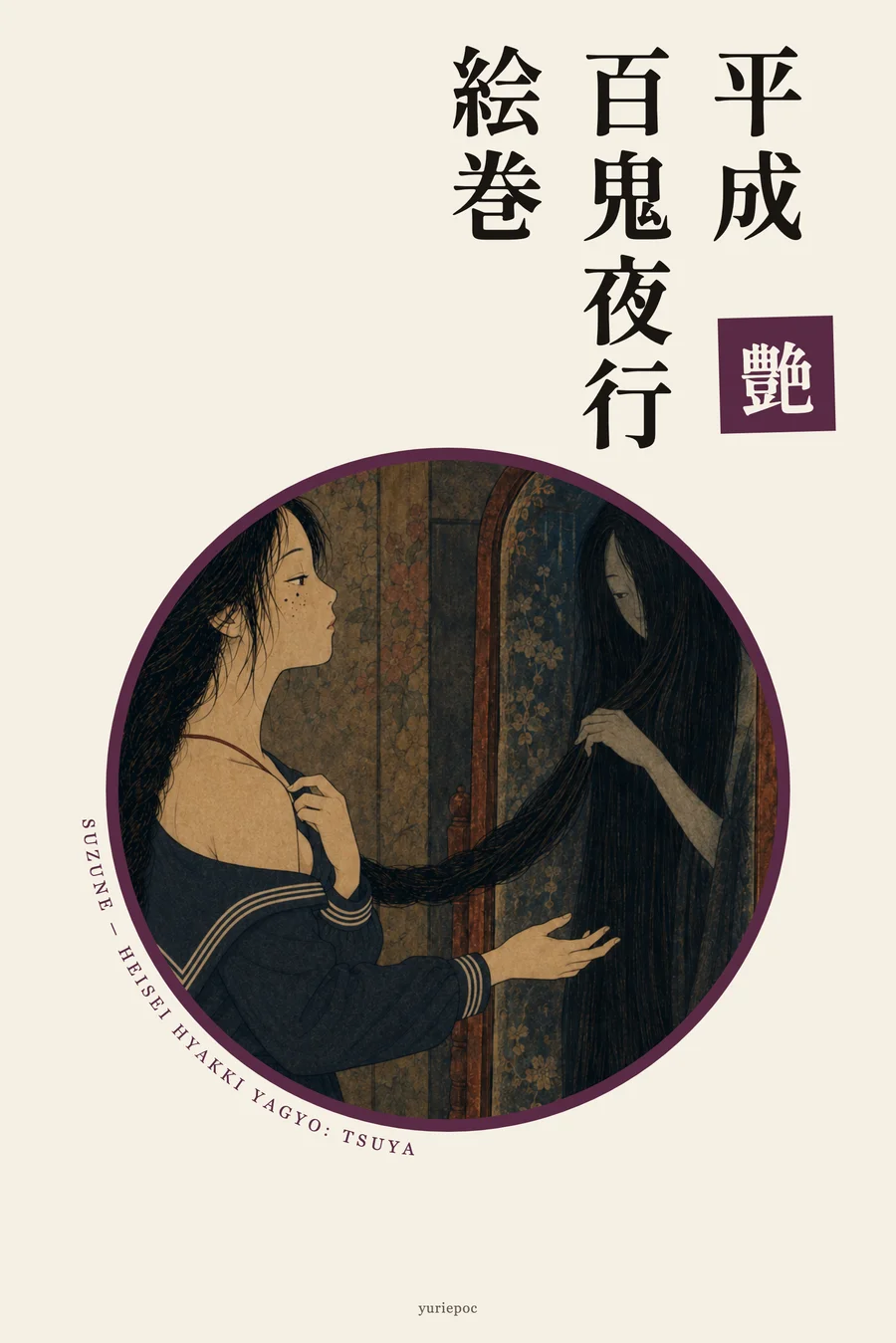
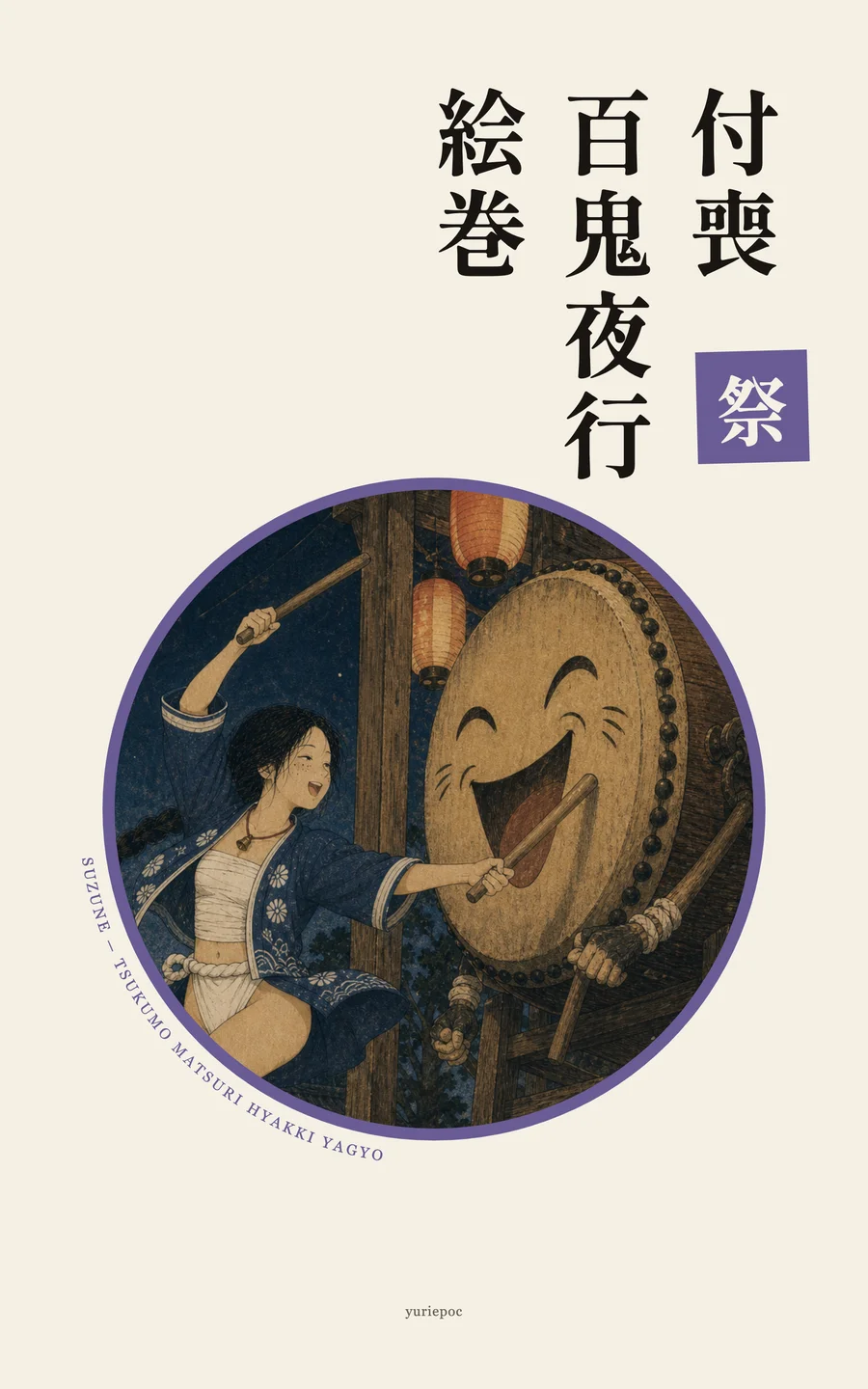
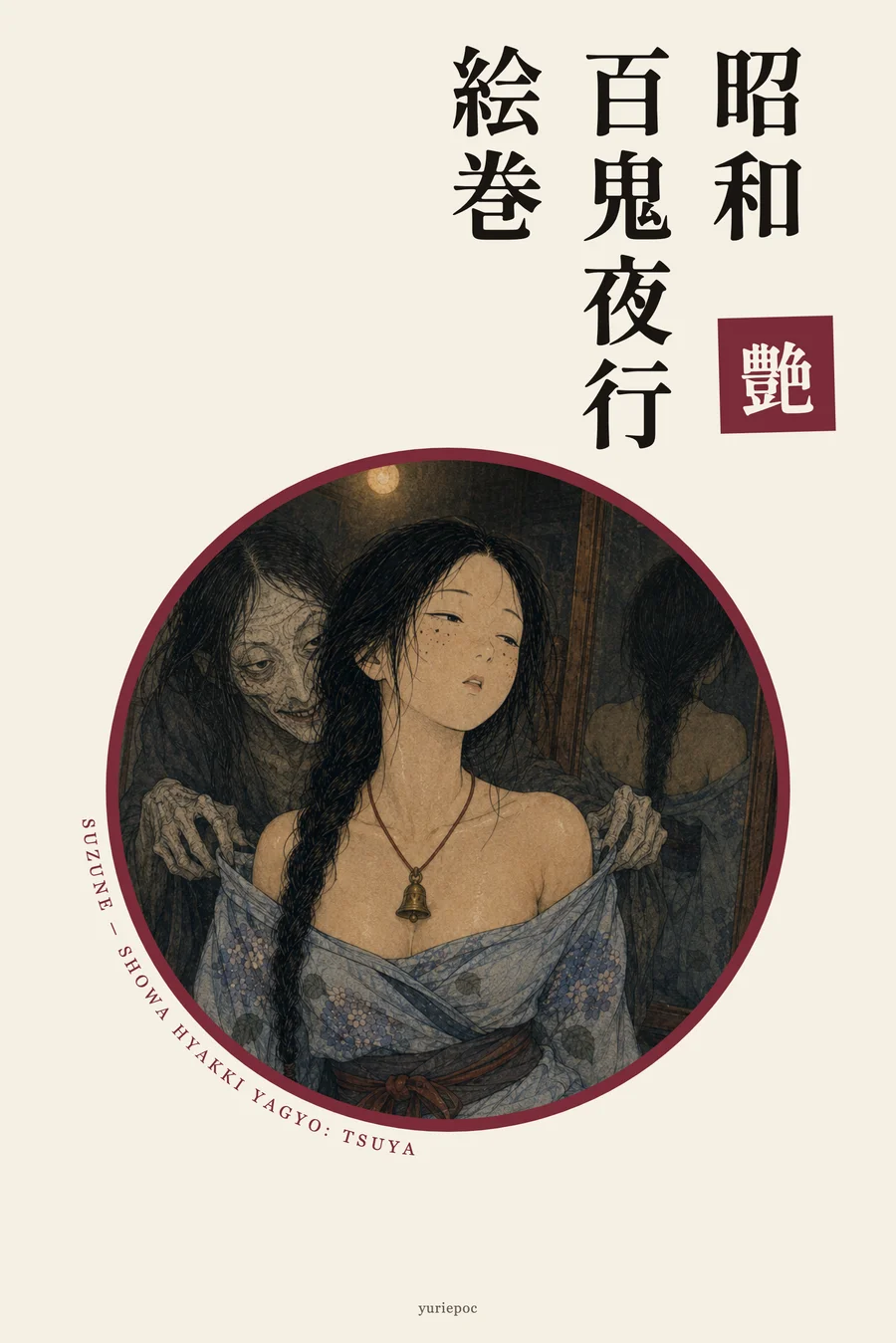
Al centro camina Suzune, una joven con una pequeña campana roja al cuello. La escena es una sola noche en Yoshiwara, entre las eras Bunka y Bunsei y el final del shogunato. Suzune no vigila desde fuera. Recorre la procesión como la propia oiran, vestida de satén negro con un cerezo llorón dorado; no toca a nadie, guarda las costumbres y es testigo de cien fenómenos extraños. En la lámina cien, al amanecer, aparece Akegarasu, un cuervo que parte hacia el cielo de la mañana llevándose el desfile de cien. Cuando Suzune hace sonar su campana, el cuervo se va, los objetos vuelven a ser simples herramientas y el barrio vuelve a ser una simple mañana. Aun así, en algún lugar queda un sonido sin apagarse.
Una noche, un barrio, un desfile. Las cien láminas pertenecen a esa misma noche, antes del amanecer.
Láminas de muestra
-
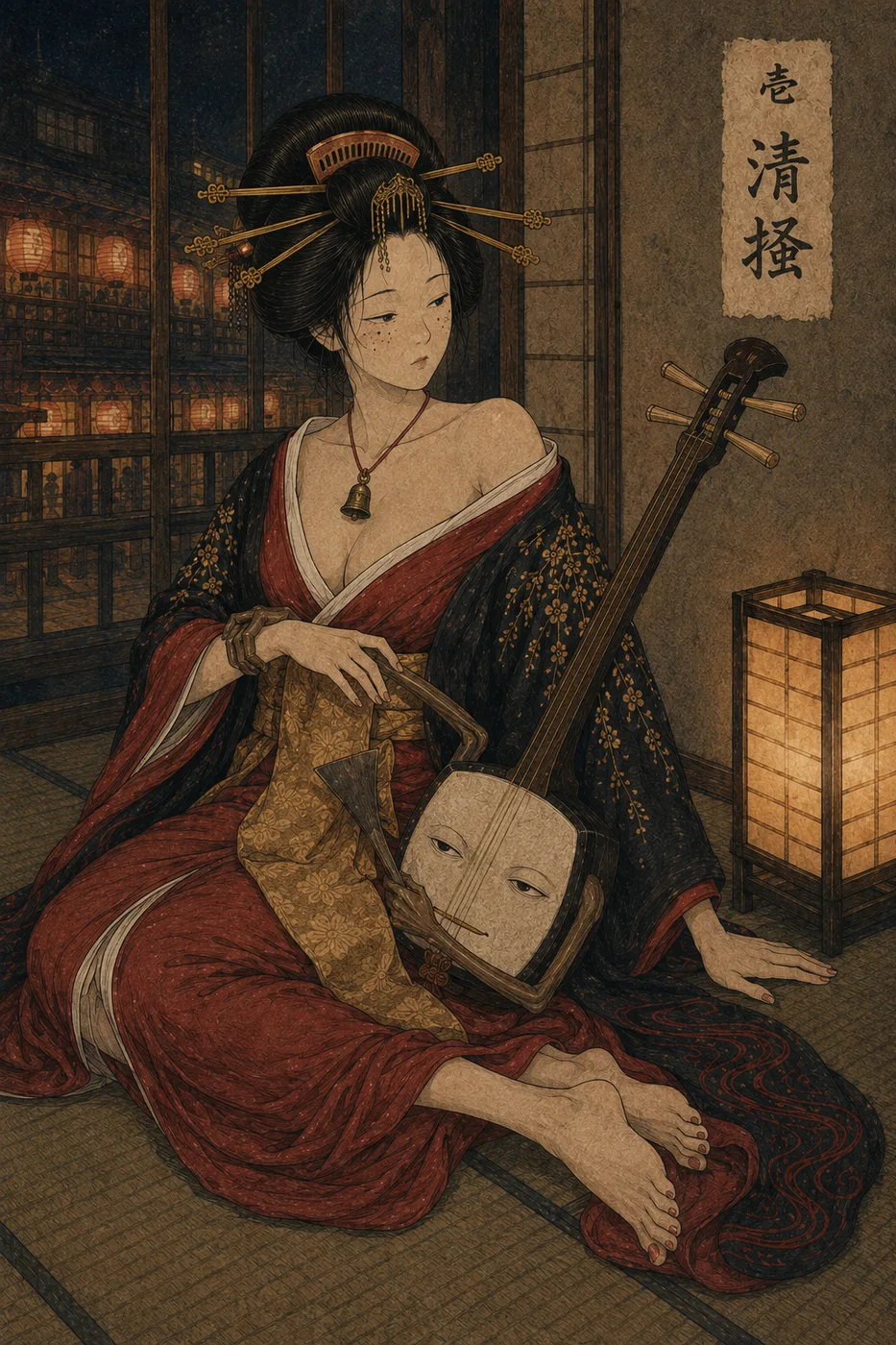
Lámina 1
The Hand-Guiding Shamisen
清掻Sugagaki
Origen
Sugagaki is a spirit living inside a shamisen. Each night the opening phrase passes to a new player, so no one ever gets credit for sounding it first.
清掻は、三味線の中にいる妖怪である。最初の一節はいつも次の弾き手に譲られ、絃の手柄にならない。
-
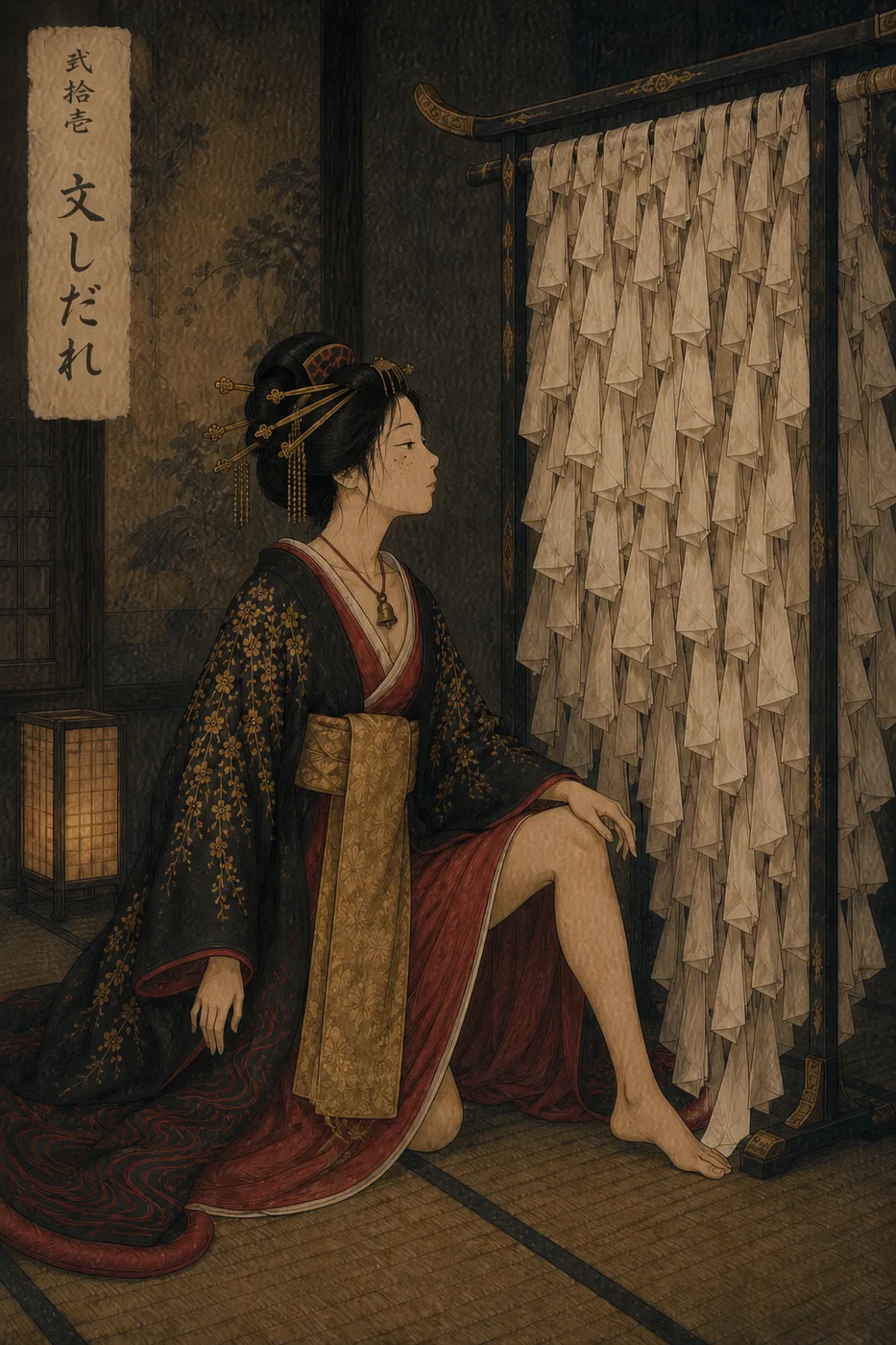
Lámina 21
The Vine of Waiting Letters
文しだれFumishidare
Origen
Fumishidare lives in a letter hung on the clothing rack. Folded and unfolded too many times, the paper keeps only the habit of waiting for a reply.
文しだれは、着物を掛ける衣桁にすむ妖怪である。畳んでは開く文の折り目に、返事を待つ癖だけが残った。
-
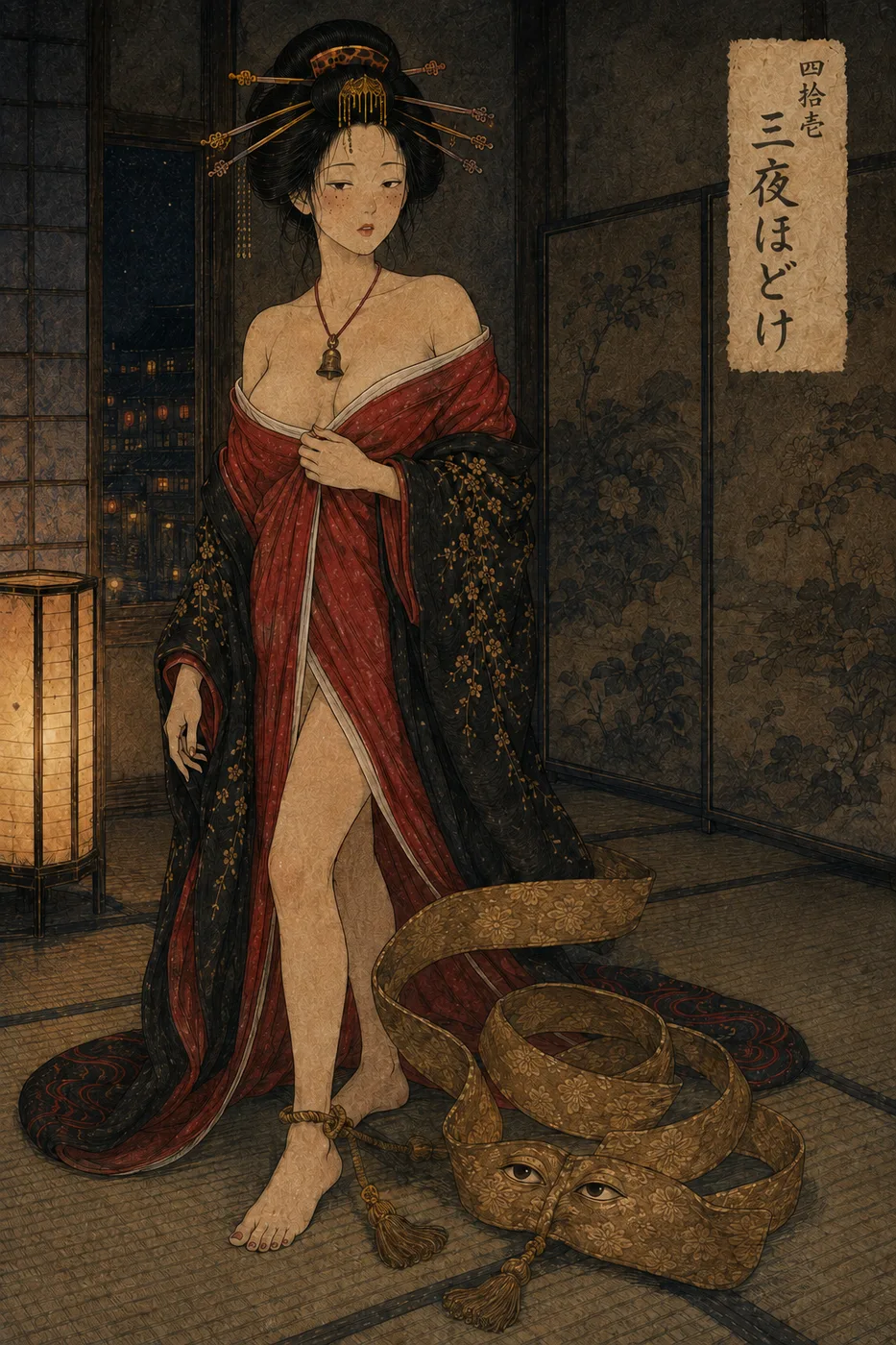
Lámina 41
The Third-Night Unraveler
三夜ほどけMiyohodoke
Origen
Miyohodoke lives inside a sash shared with the same guest for three nights. On the first two nights it stays properly tied, but on the third night alone, it wants to come undone by its own will.
三夜ほどけは、同じ客と三夜を重ねた帯に棲む妖怪である。二夜はきちんと締まるが、三夜目だけ帯は自分の意思でほどけたくなる。
-
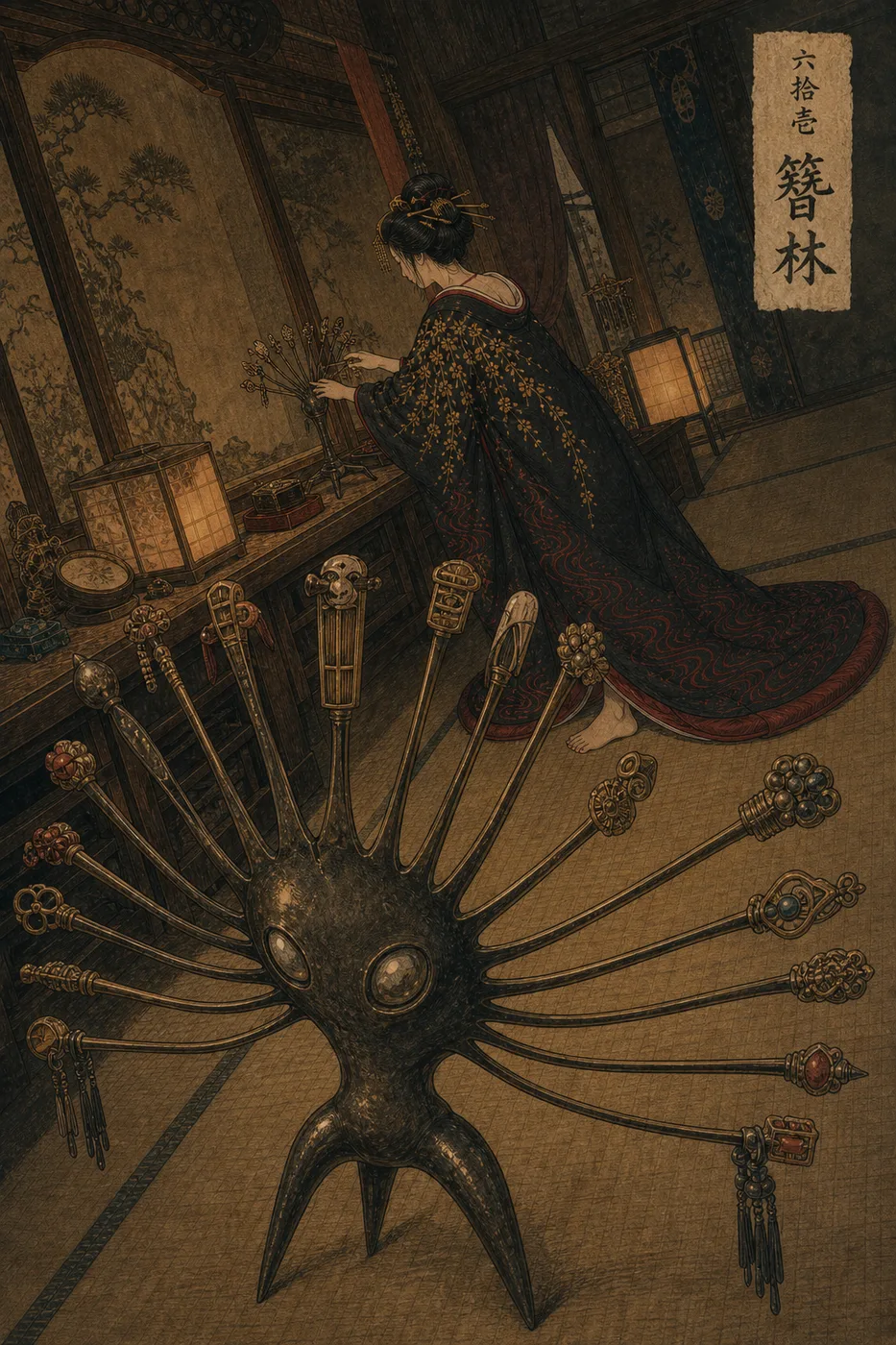
Lámina 61
The Hairpin Grove
簪林Kanzashibayashi
Origen
Kanzashibayashi is a yokai that lives inside a mirror stand. The stand keeps its own count of every hairpin pressed into the hair. When the fingers stop at nineteen, the stand believes one is still missing.
簪林は、鏡台に棲む妖怪である。鏡台は挿された簪の数を自分で数え、指が十九本で止まると足りないと思う。
-
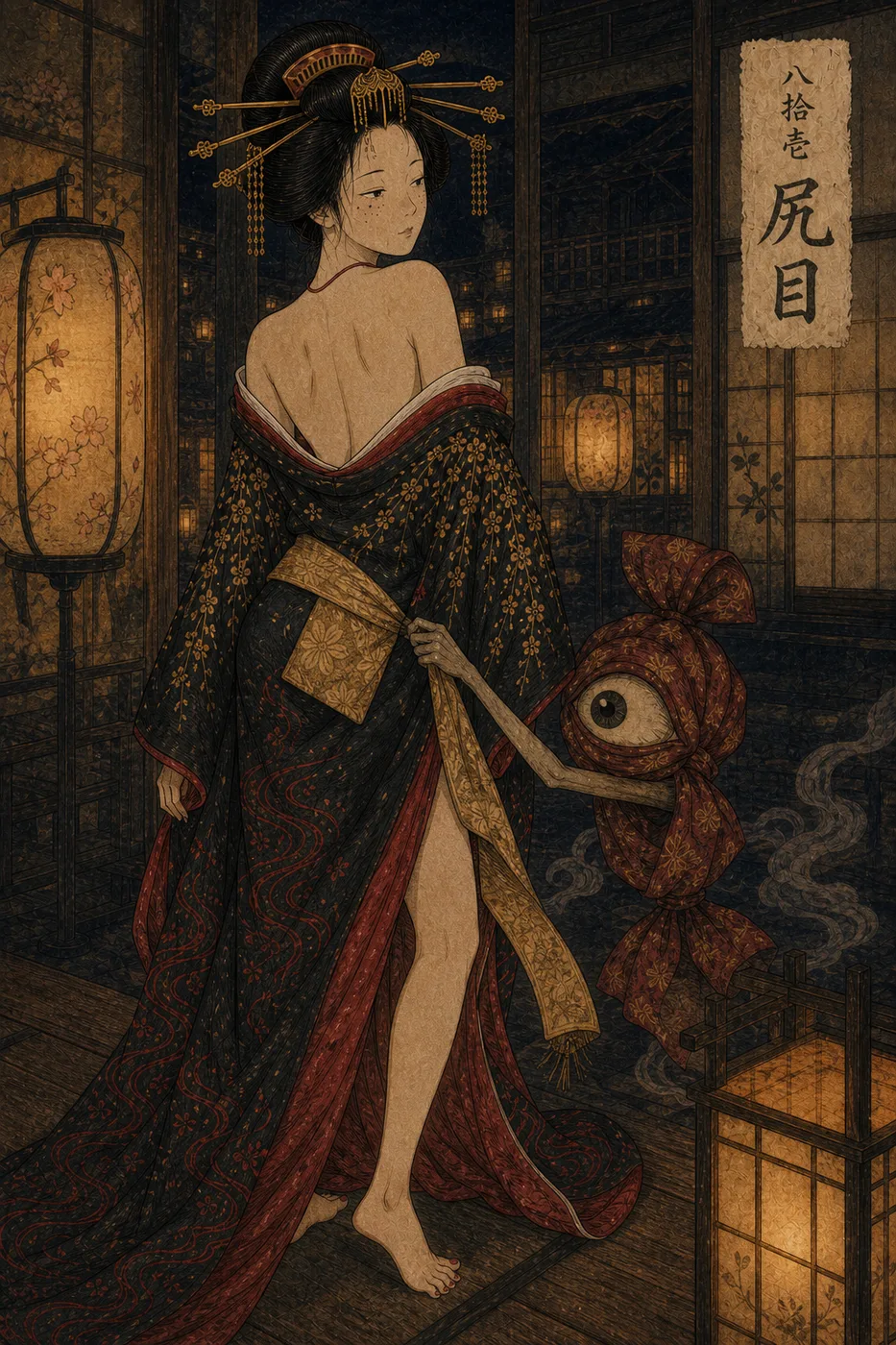
Lámina 81
The Eye Below the Sash
尻目Shirime
Origen
Shirime is a yokai passed down in Kyoto two hundred years ago. In the instant a voice calls someone to turn, the face arrives blank, its eyes and nose gone.
尻目は、二百年ほど前の京都に伝わる妖怪である。呼び声に振り向かせた一瞬、顔は空白になる。
Otros libros