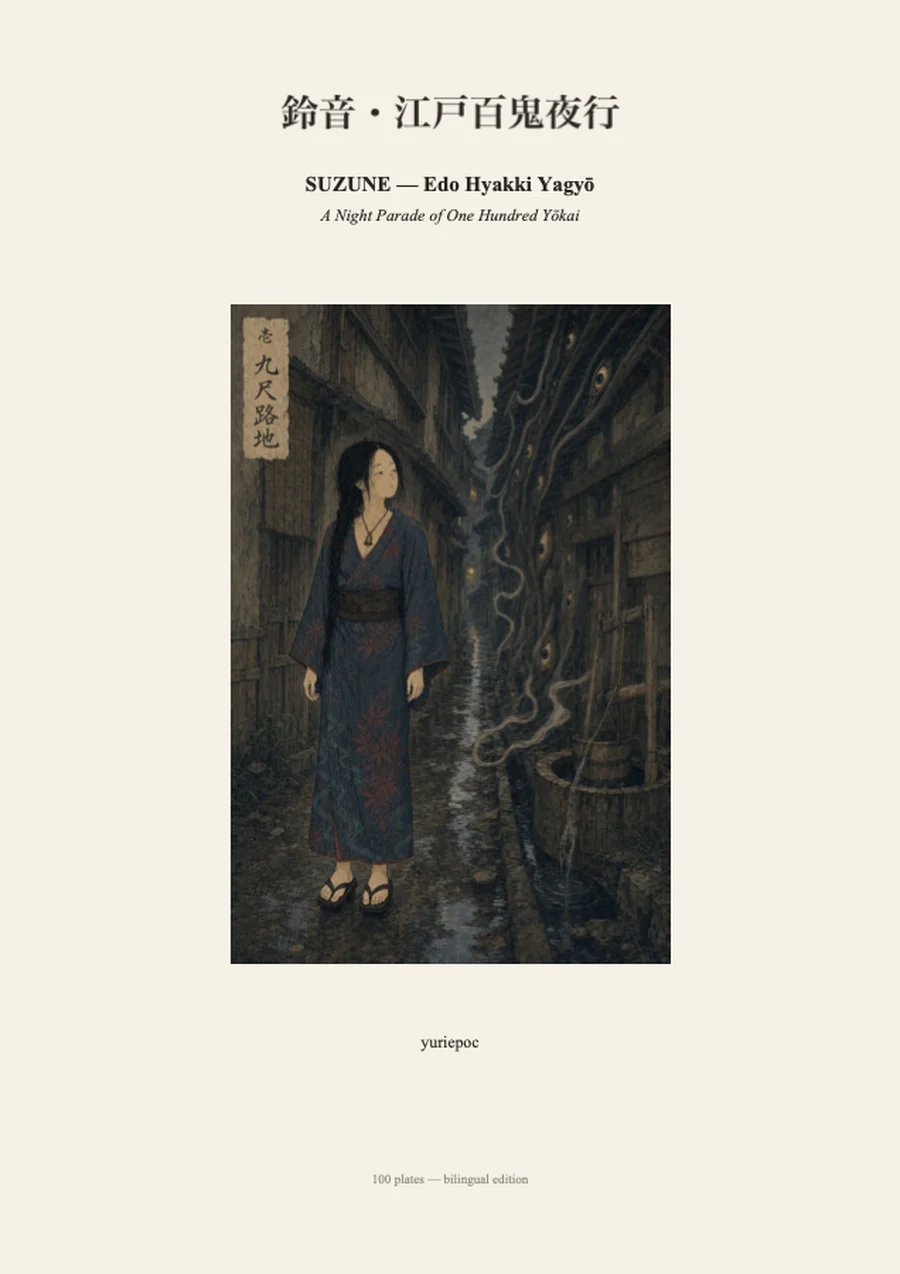
紹介About this book
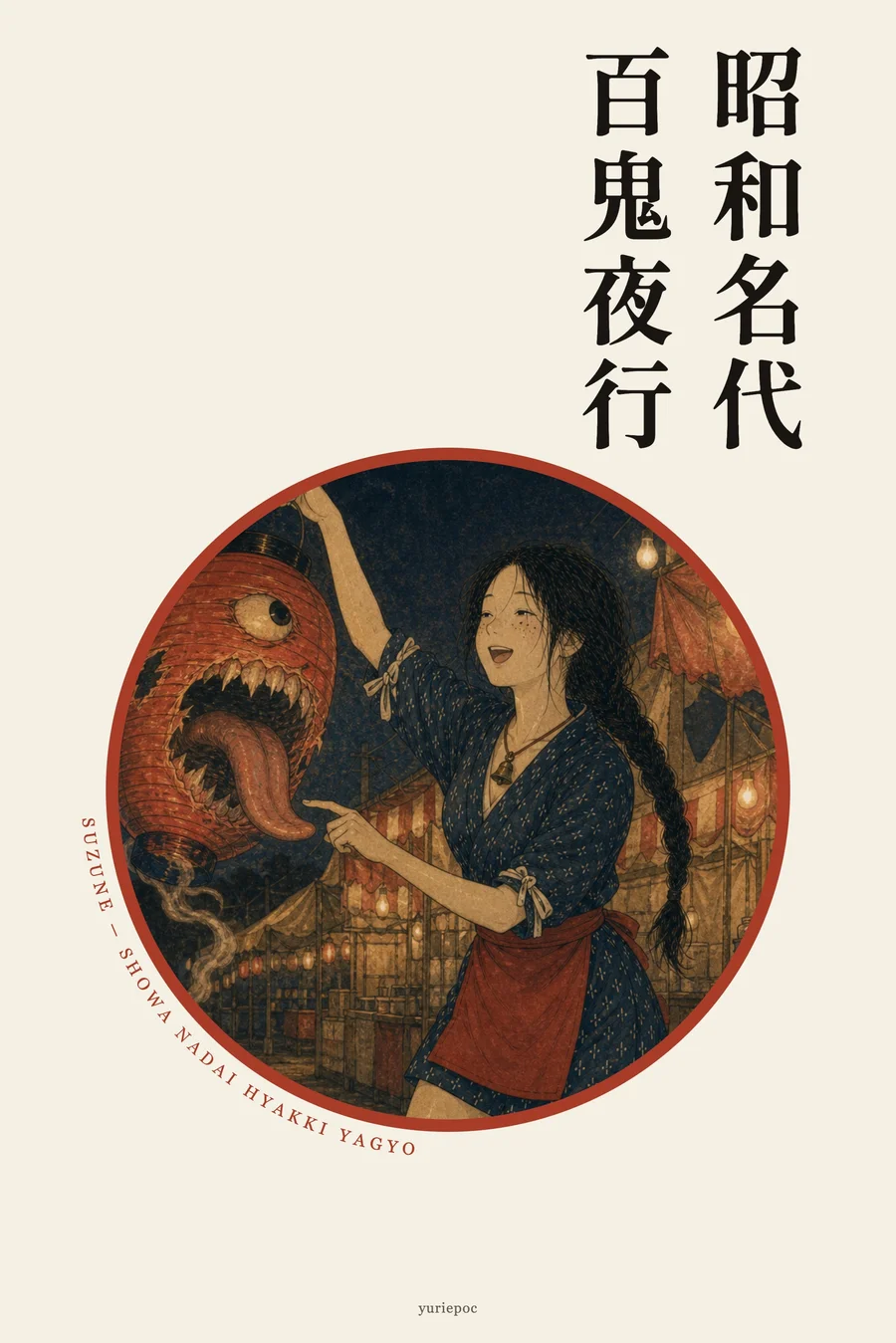
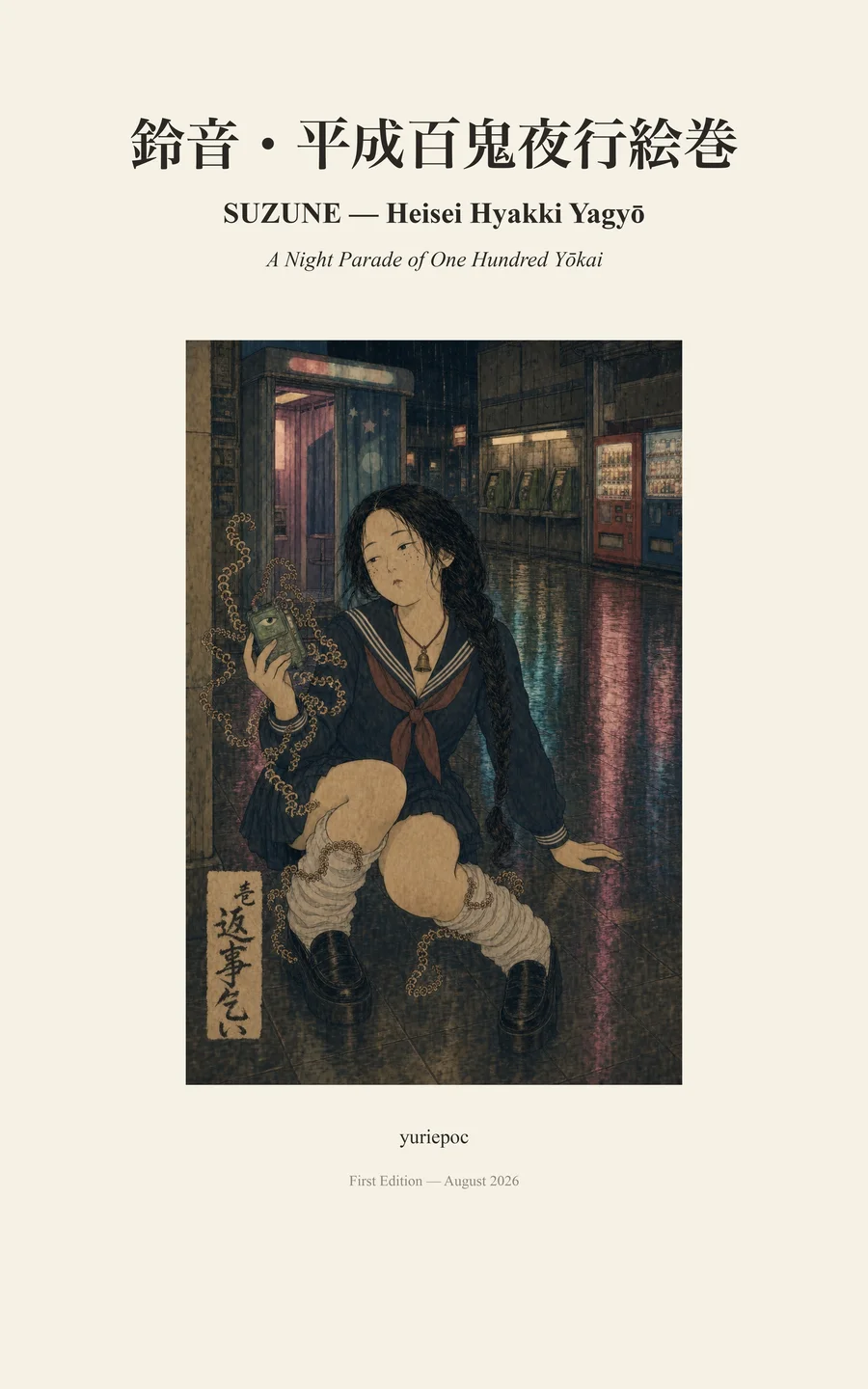
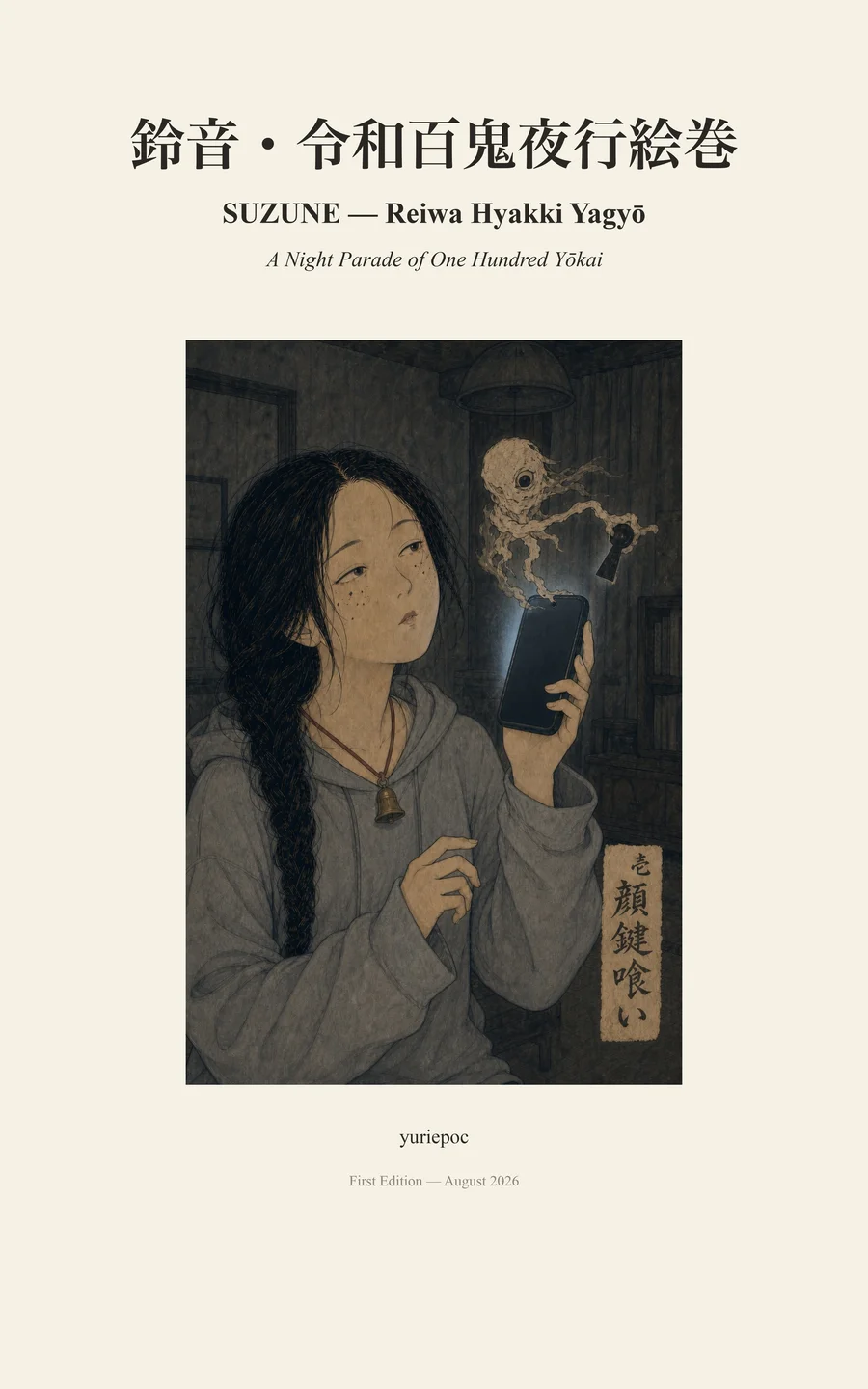
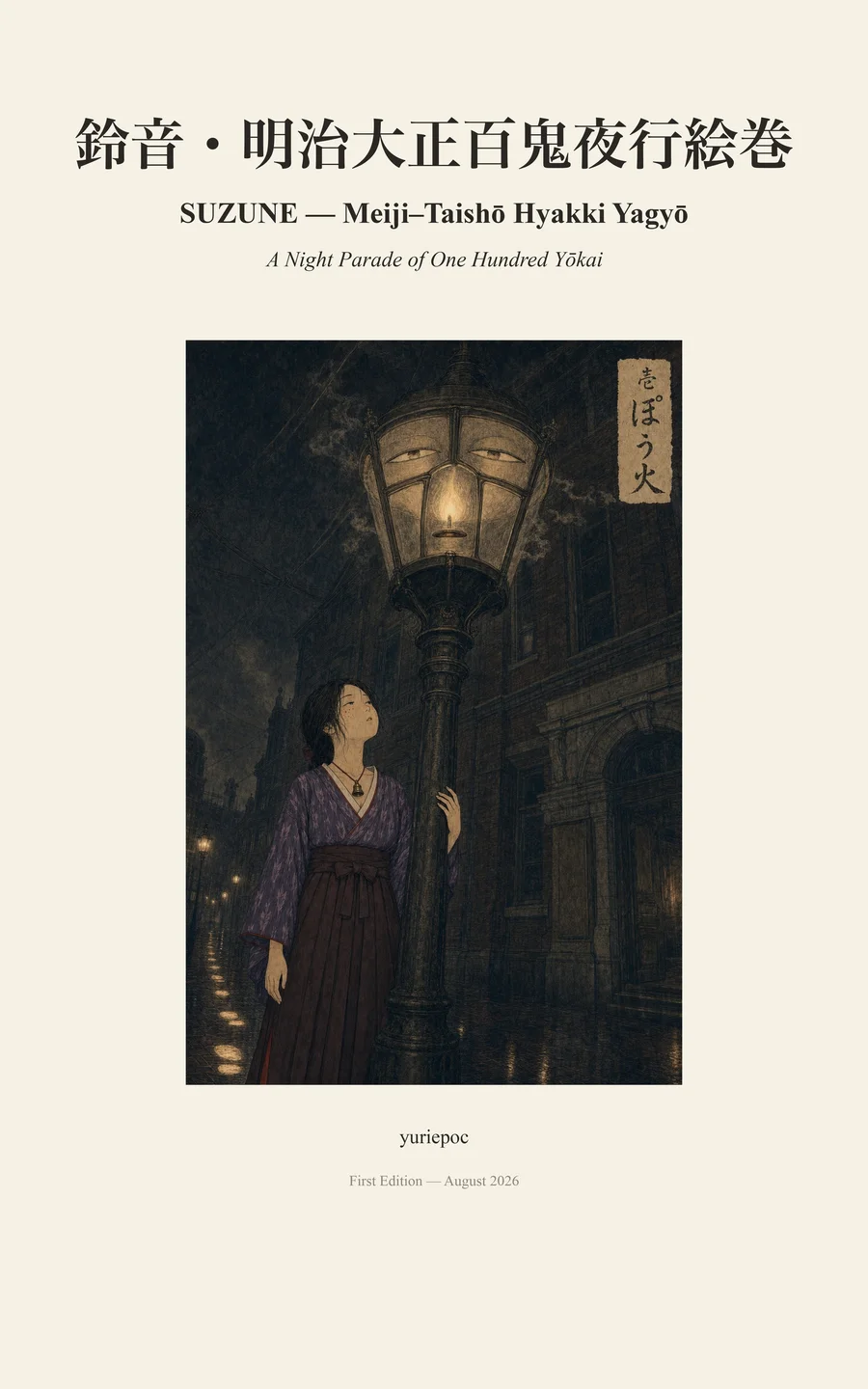
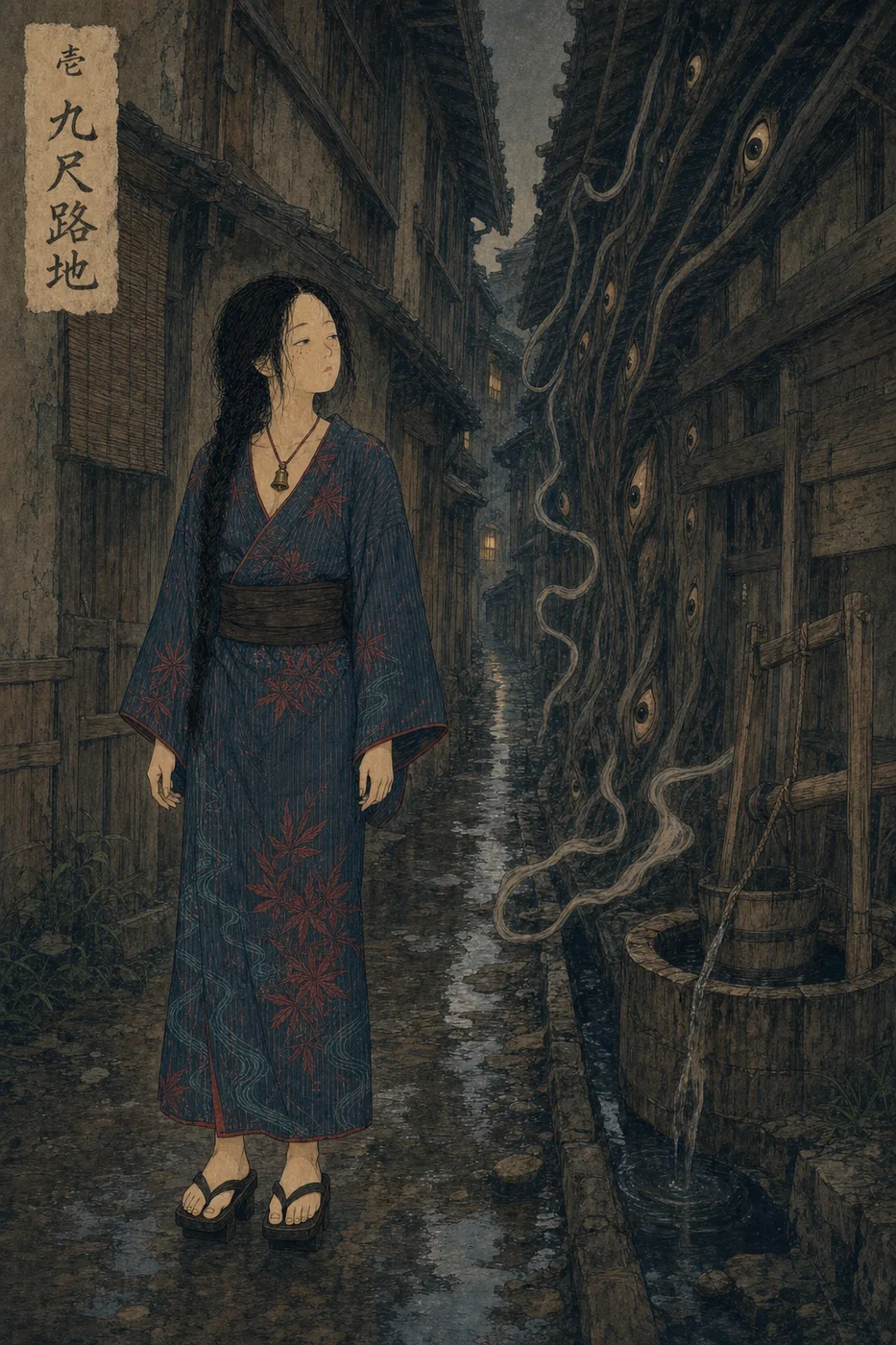
江戸の夜は、物がひとりでに動く。裏長屋の間口だけが一尺ずつ狭まり、羽釜の蓋だけが米粒の数に合わせて跳ね、蹄の音だけが馬より先に橋を渡る。丸ごと化けるのではない。暮らしの一部だけが持ち主の手を離れて勝手を始める——それがこの町の怪異の文法である。行列は騒がない。水音と拍子木と衣擦れの間に、静かに紛れている。
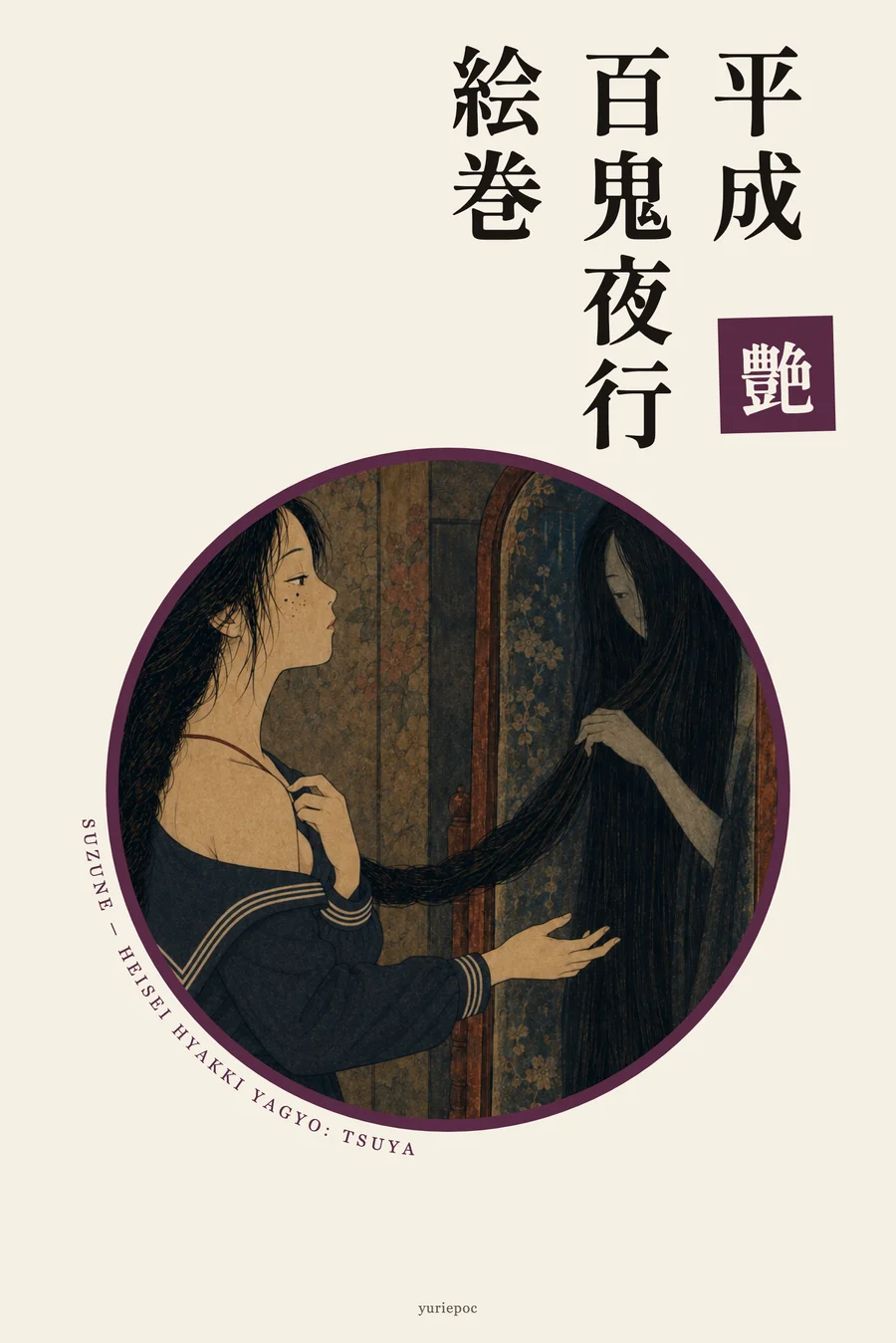
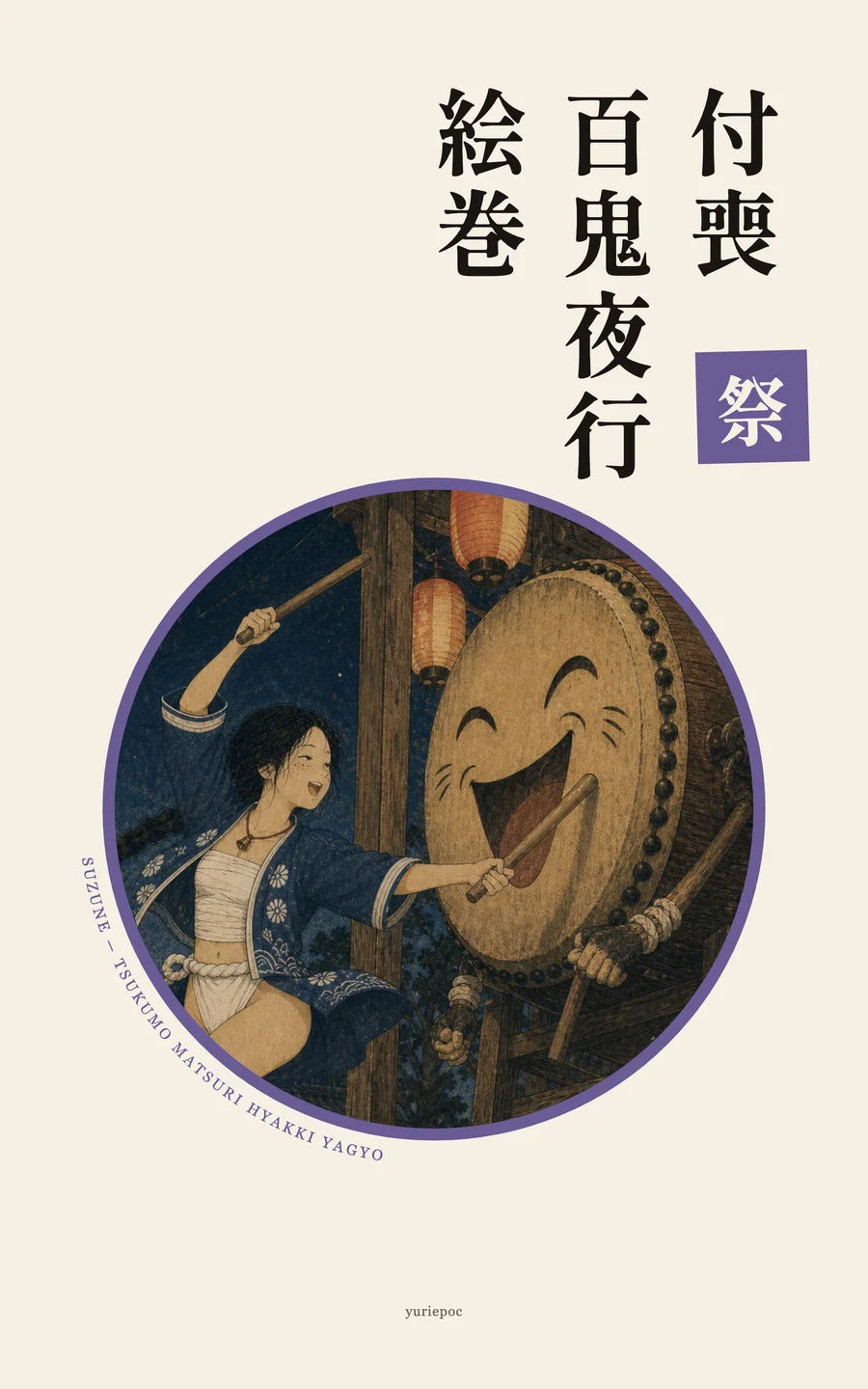
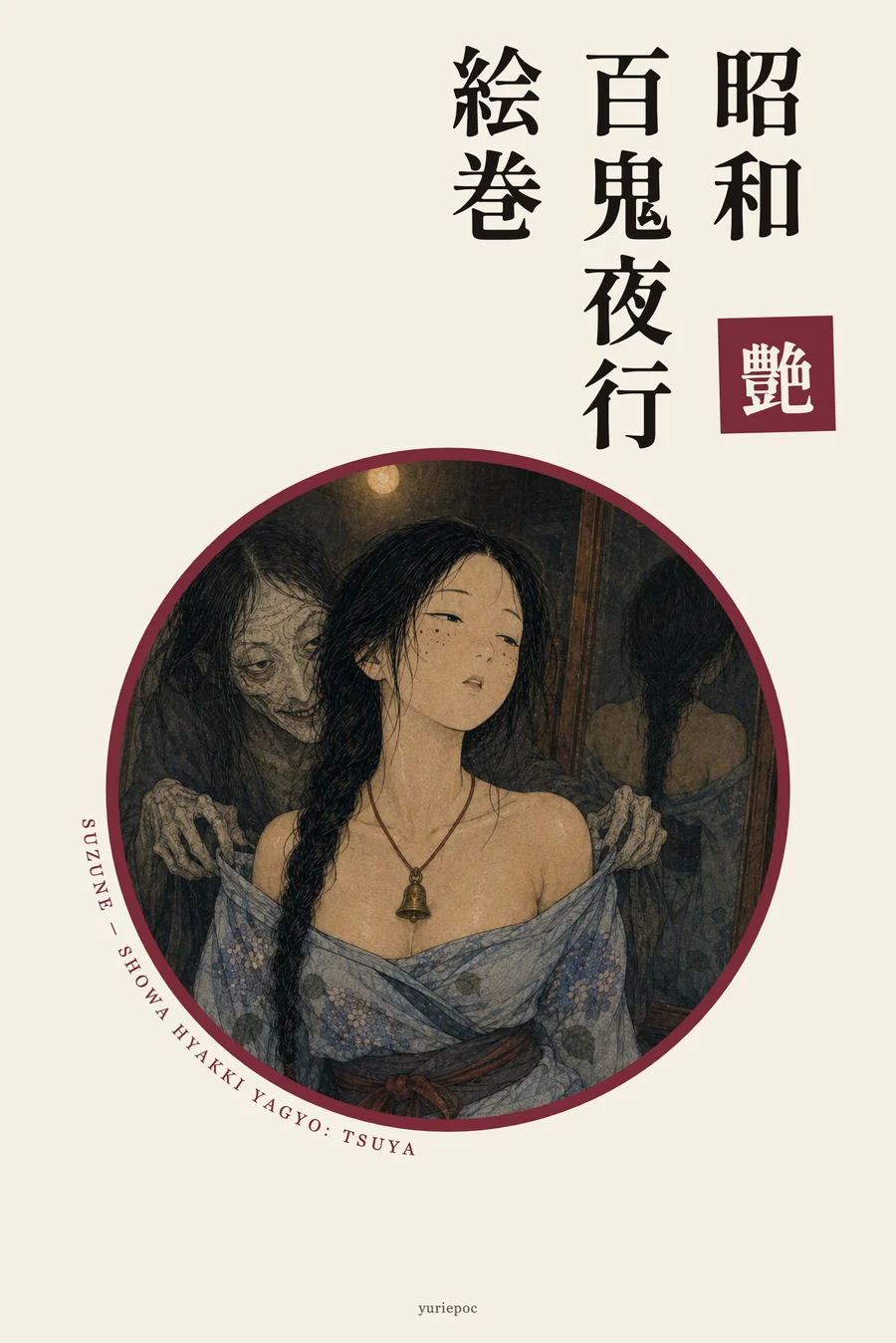
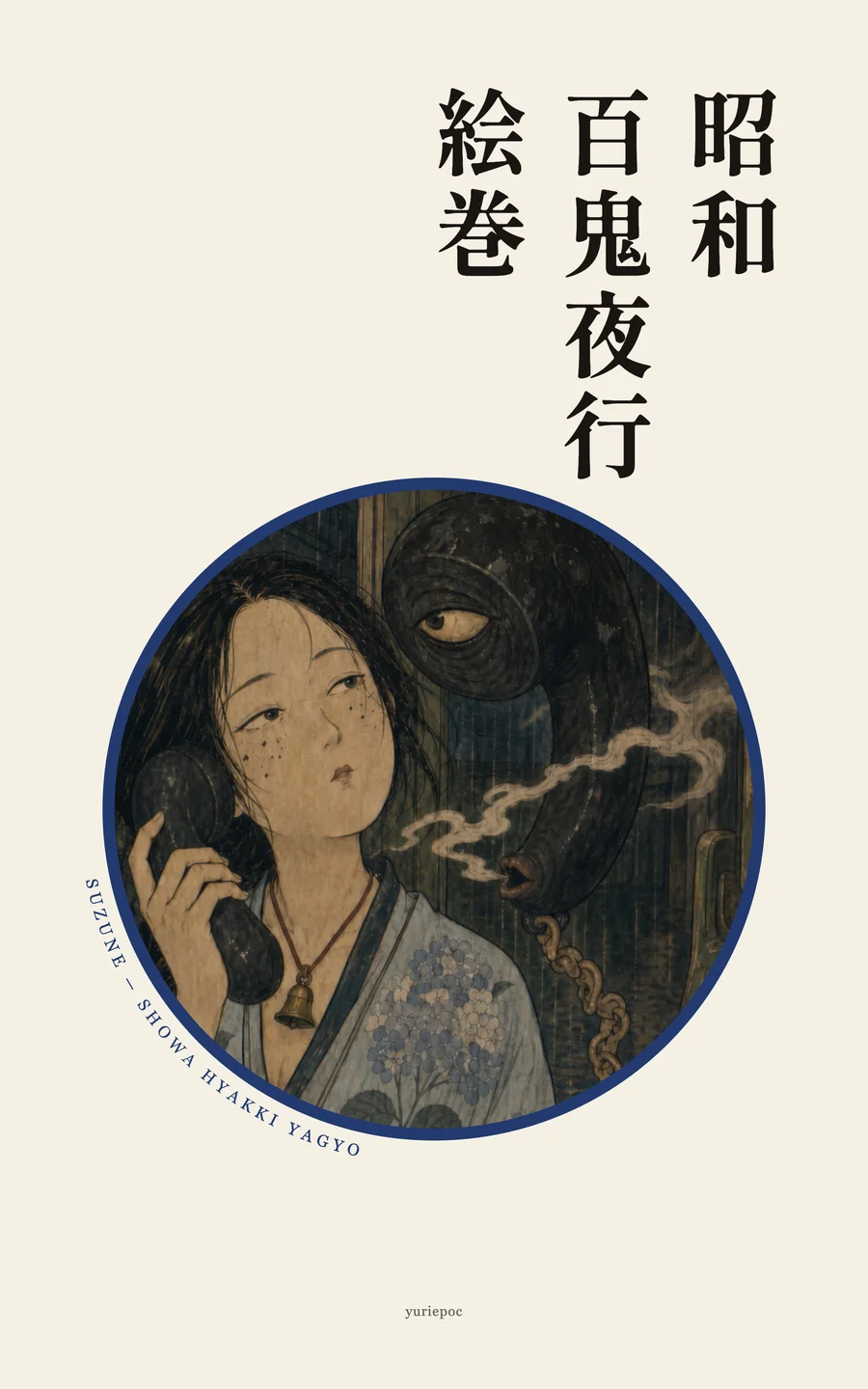
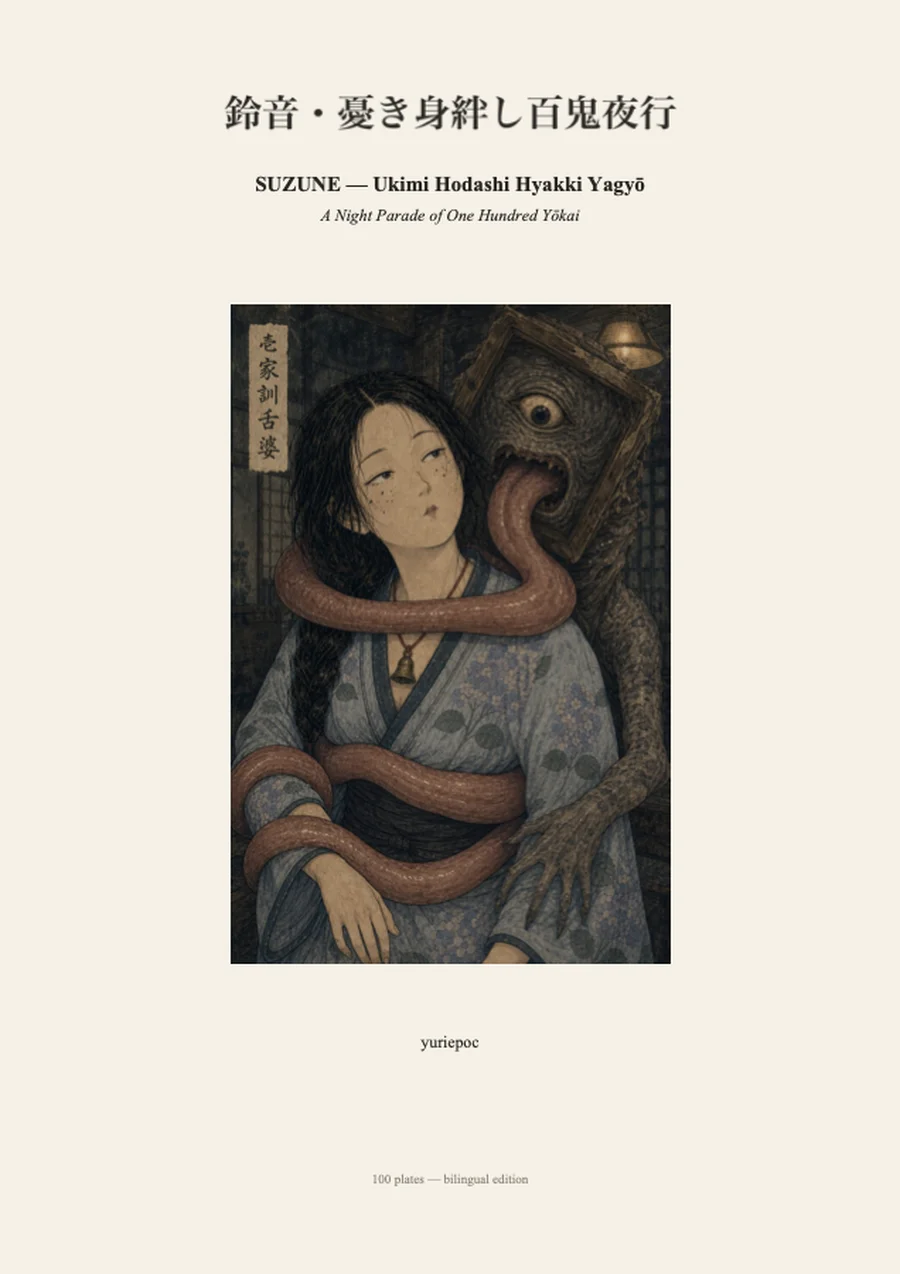
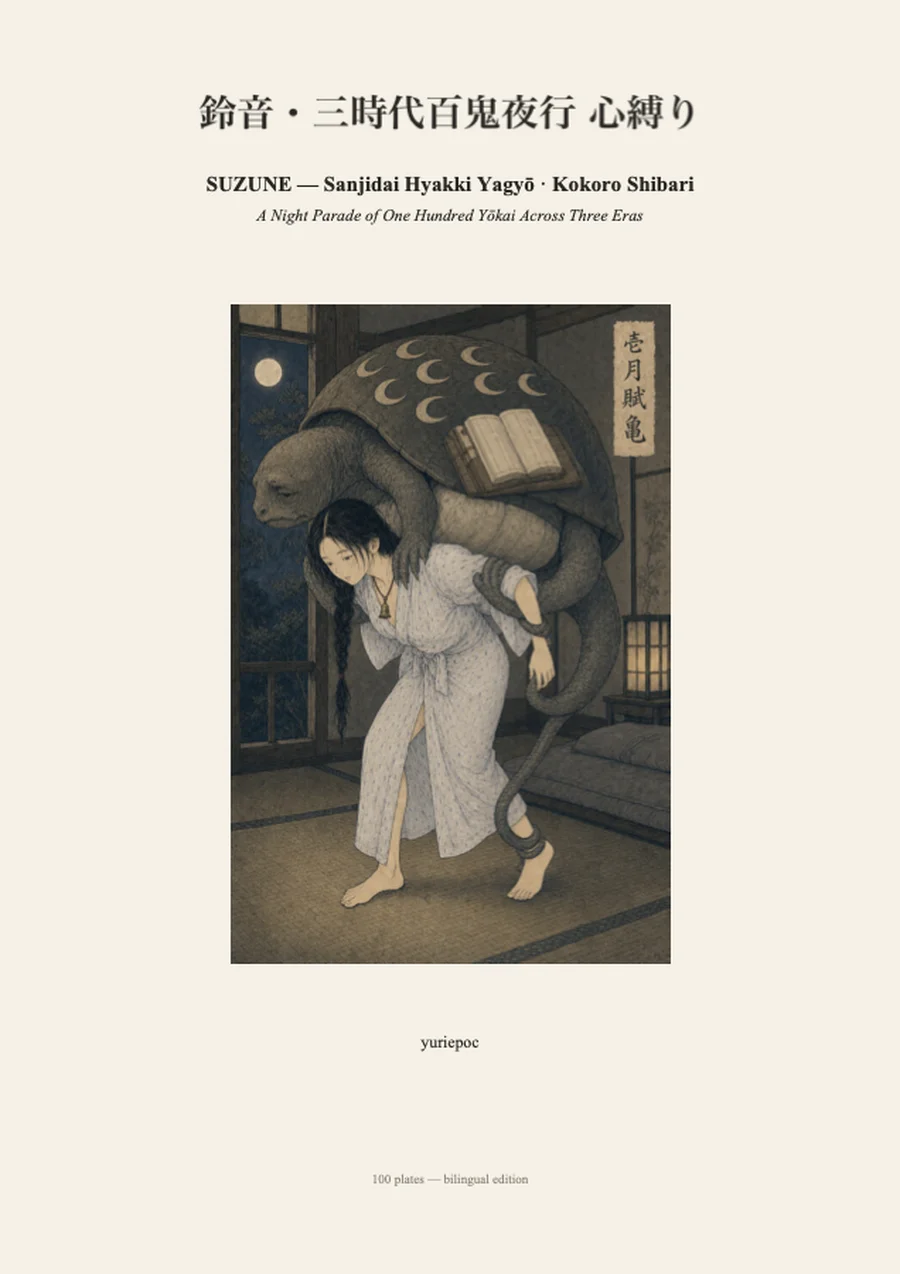
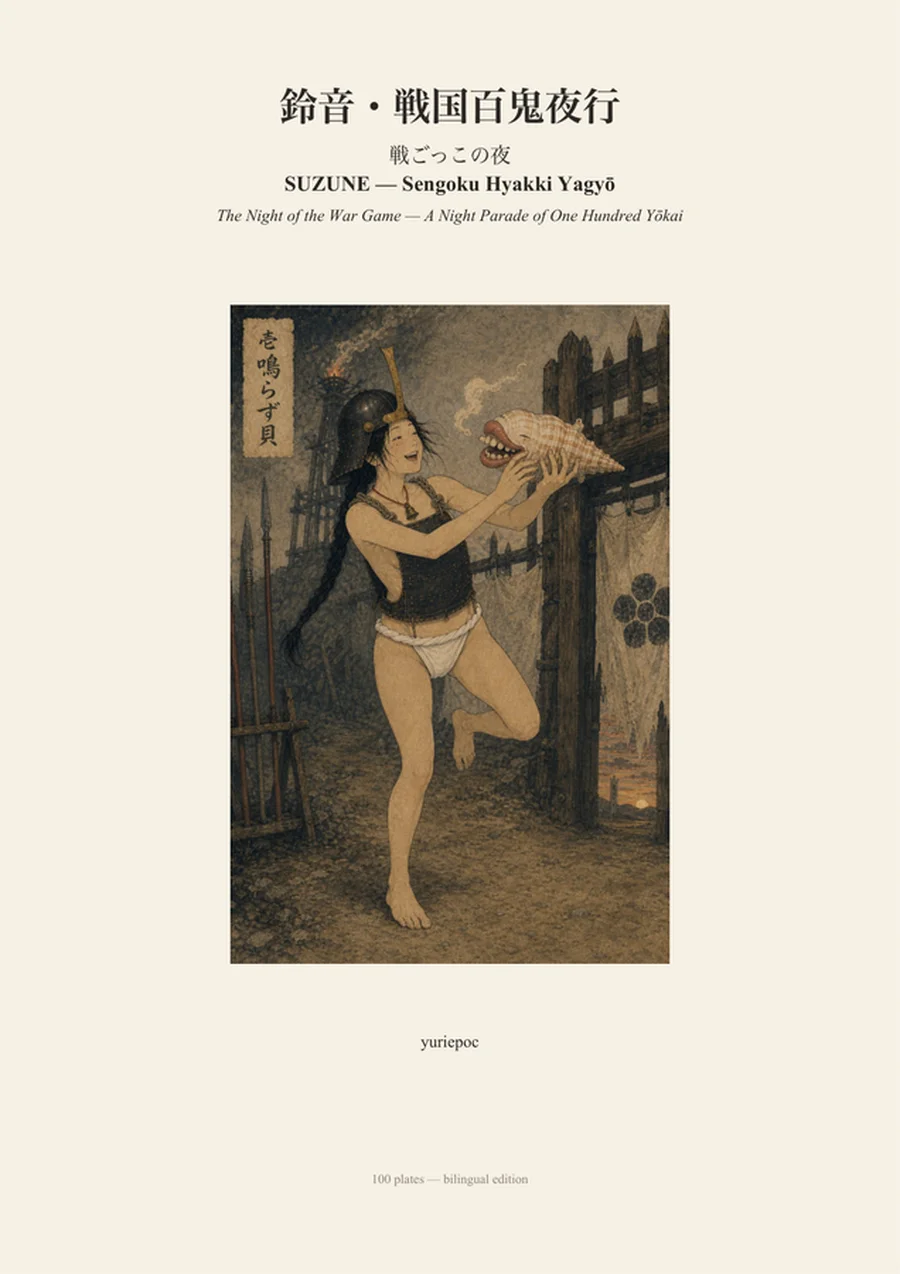
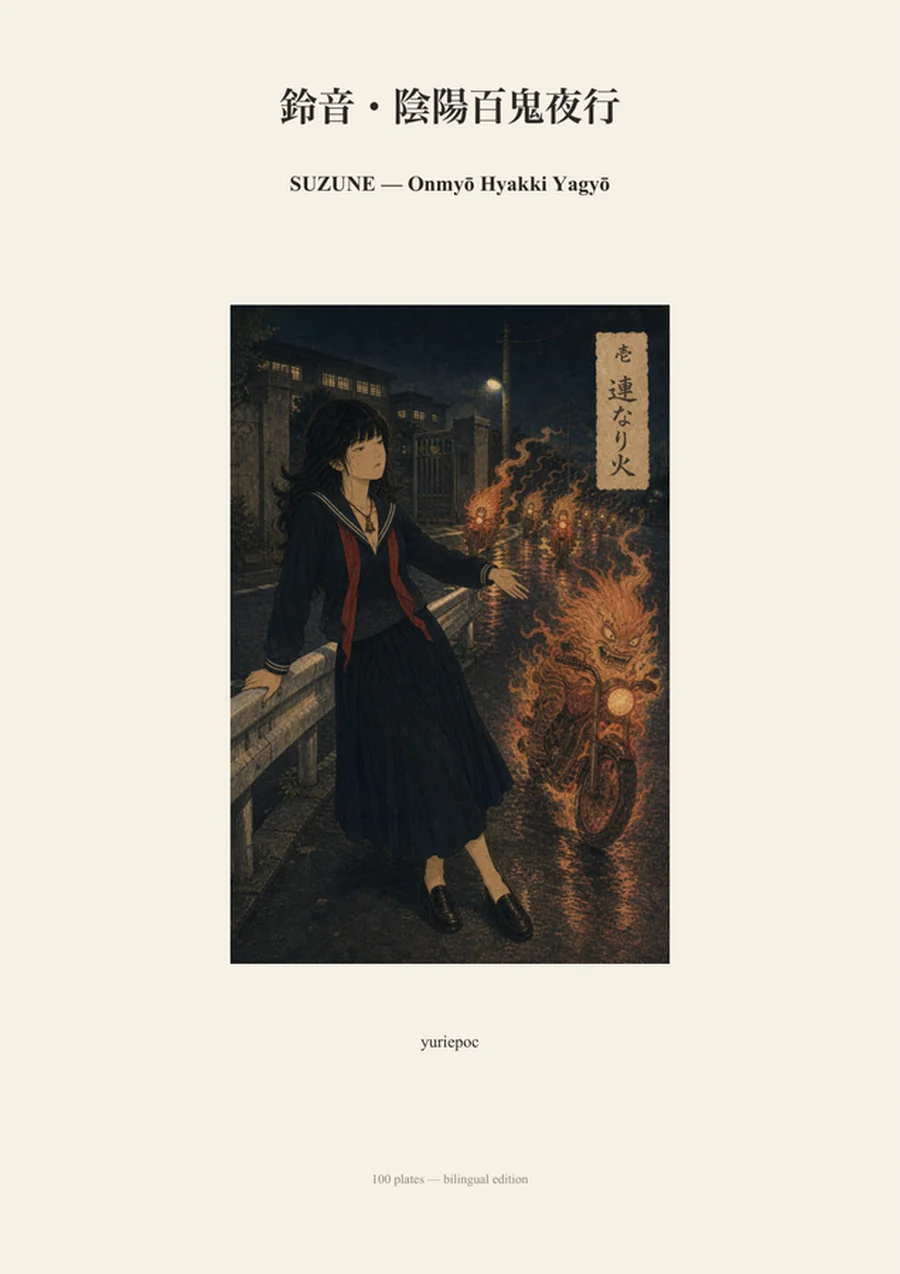
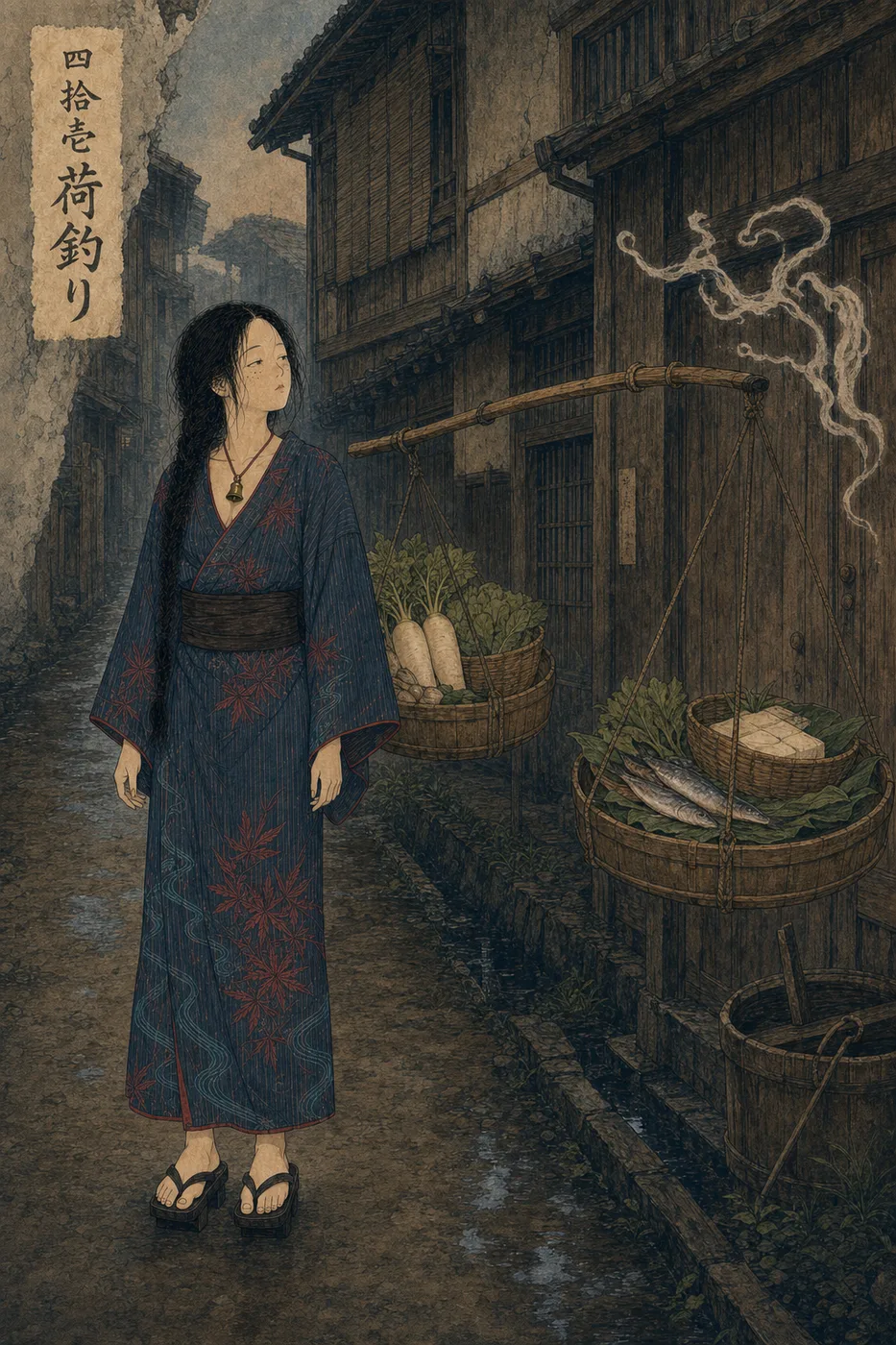
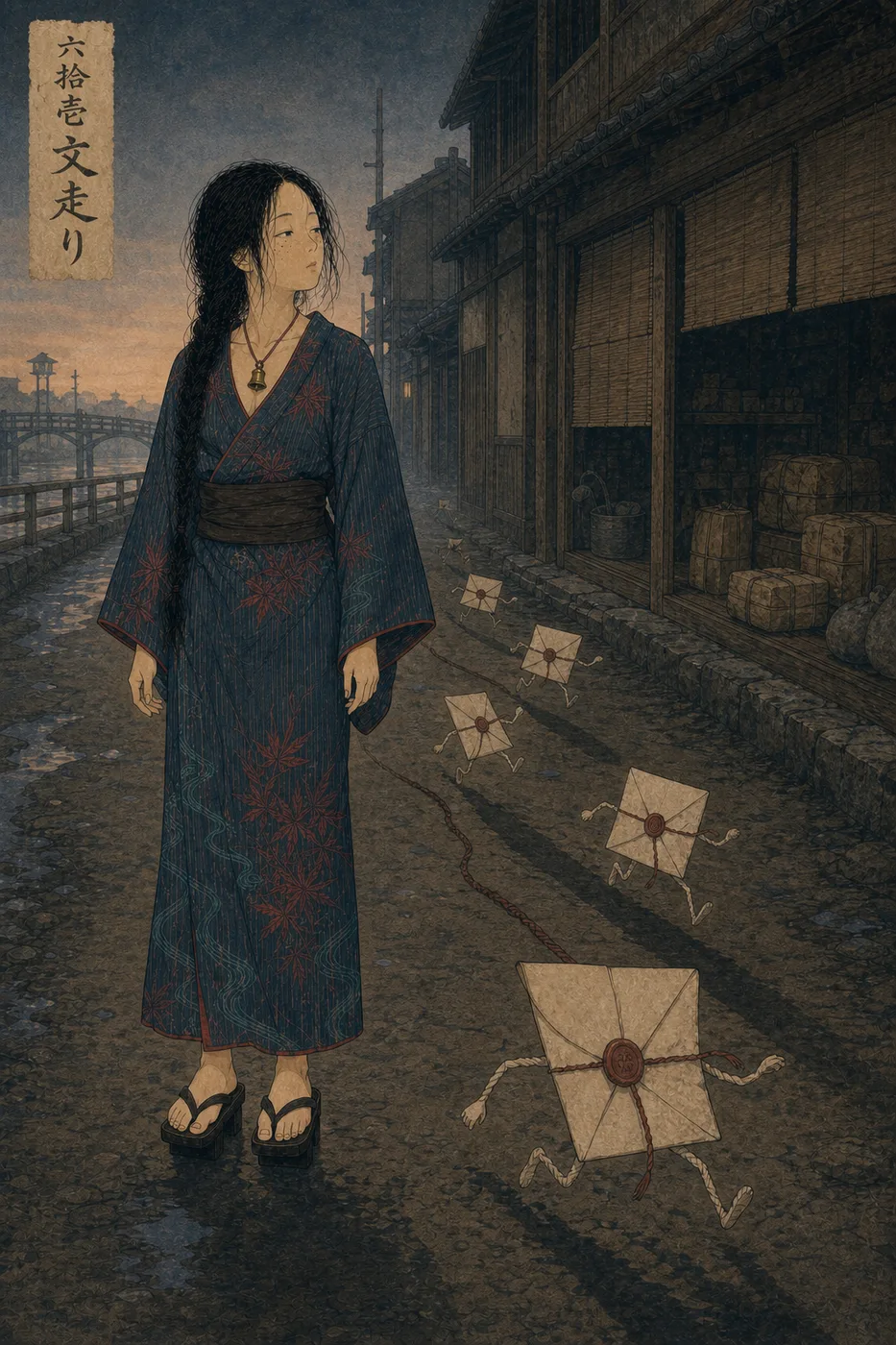
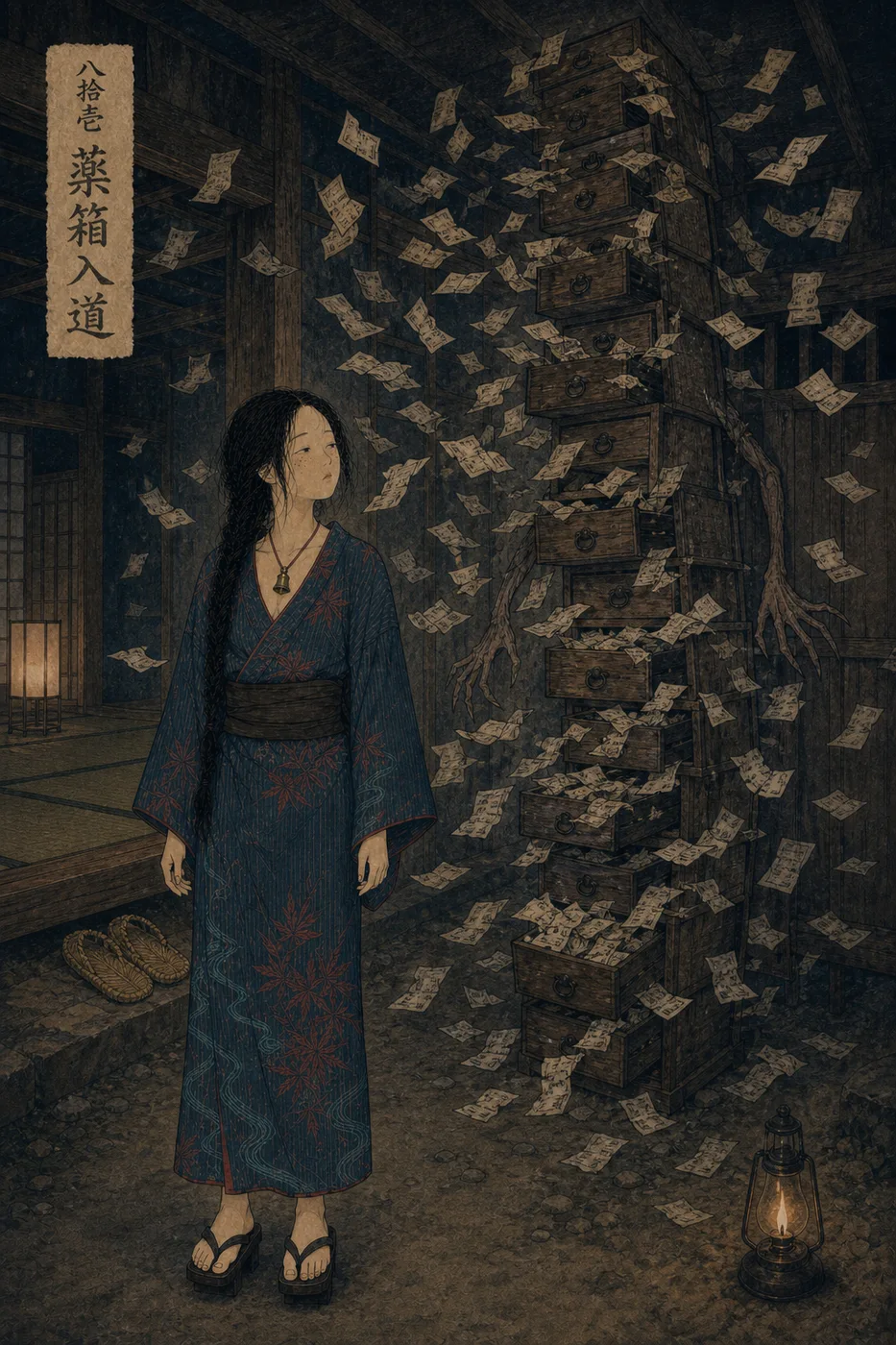
舞台は文化文政から幕末へかかる頃の、ある町の一夜である。百のうち四十は、鳥山石燕、葛飾北斎、歌川国芳ら江戸の絵師と版元が描き残した伝承の妖怪。六十は町の暮らし——長屋、井戸、湯屋、火の見櫓、問屋場、版元、掘割——から新しく生まれた。娘は逃げない。単衣の町娘のなりで夜の町を見廻り、手は出さず、作法をひとつずつ守って、百の怪異を一図ずつ見届ける。
どれほど深い夜にも、明け六つは来る。最後の一枚に立つのは有明行灯の「有明女」——夜通し灯りを保つ行灯に宿り、百の怪影が引いたあとへひとり残る影である。娘が首の鈴をひと粒鳴らすと、その一音を合図に女影は薄れ、器物はただの道具へ、町はただの朝へ戻ってゆく。それでも、どこかで音がひとつ消え残る。夜の名残に出会ったら、拾わず、指をささず、黙って通り過ぎること——それがこの本の、ただひとつの作法である。
At night in Edo, things move on their own. Only the frontage of a back-alley tenement narrows, a foot at a time; only the lid of a rice kettle hops in time with the grains inside; only the sound of hooves crosses the bridge ahead of the horse. Nothing transforms whole. One part of daily life slips its owner's hand and begins to act for itself — that is the grammar of this town's hauntings. The parade makes no clamor. It hides quietly between the sound of well water, the night watchman's clappers, and the rustle of cloth.
The stage is a single night in a townsmen's quarter, late in the Edo period — the decades from Bunka and Bunsei down to the last days of the shogunate. Of the hundred yōkai, forty come from the lore drawn and printed by Edo's own artists and publishers — Toriyama Sekien, Katsushika Hokusai, Utagawa Kuniyoshi among them. Sixty were newly born from the life of the town itself: its tenements, wells, bathhouses, fire towers, post stations, print shops, and canals. The girl does not run. Dressed as a town girl in a plain single-layer kimono, she walks the night streets as if on watchman's rounds — laying a hand on nothing, keeping each small custom, seeing all one hundred apparitions through, plate by plate.
However deep the night, the dawn bell always comes. The final plate belongs to Ariake-onna, the woman of the all-night lantern — a shade that dwells in the lamp kept burning until morning, and lingers alone after the hundred shadows have withdrawn. When the girl rings the small bell at her throat, that single note is the signal: the woman thins away, implements return to being tools, and the town returns to being morning. And yet, somewhere, one sound is left unfaded. If you should meet a remnant of the night, do not pick it up, do not point — pass by in silence. That is the one piece of etiquette this book asks of you.
見本図Sample plates

ほかの本Other books