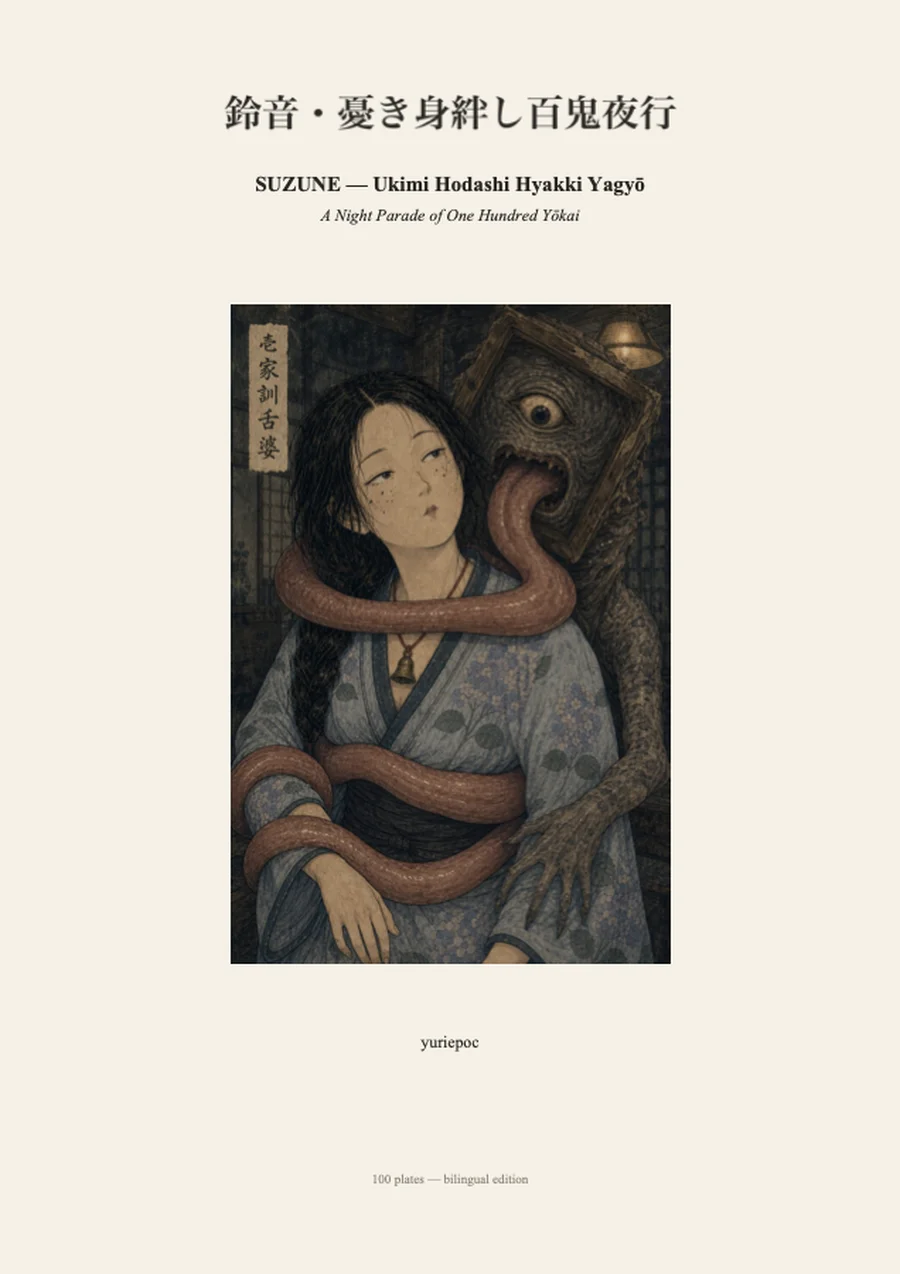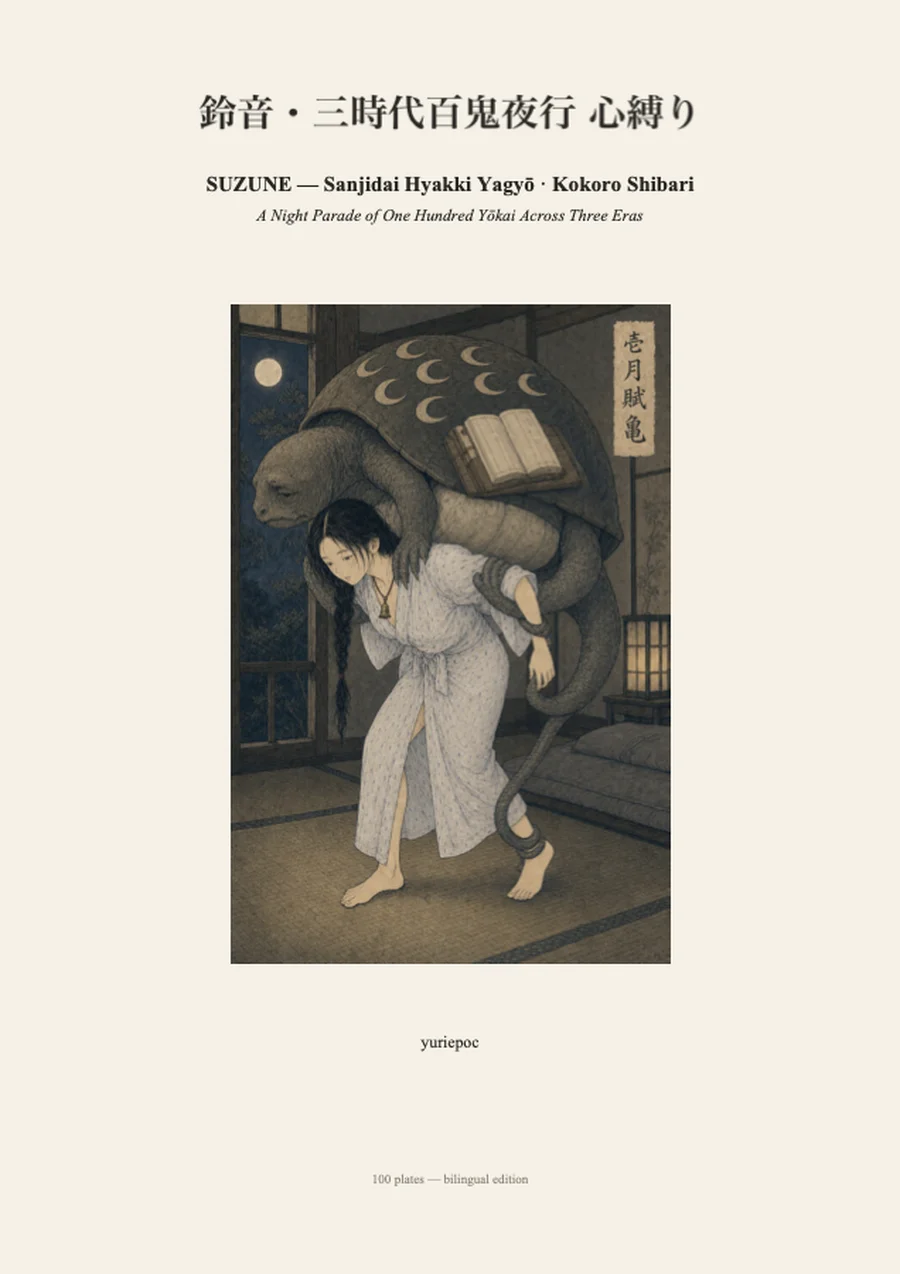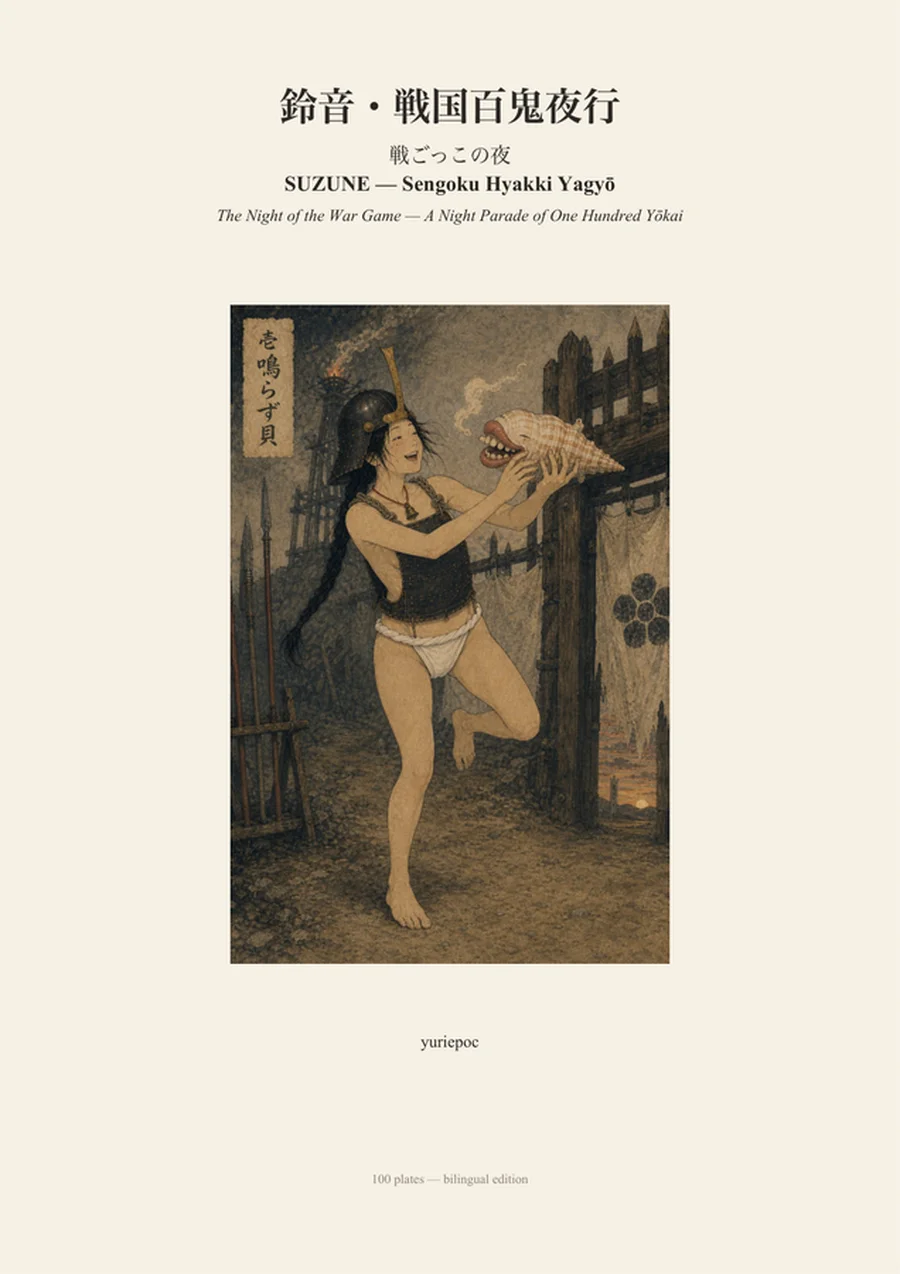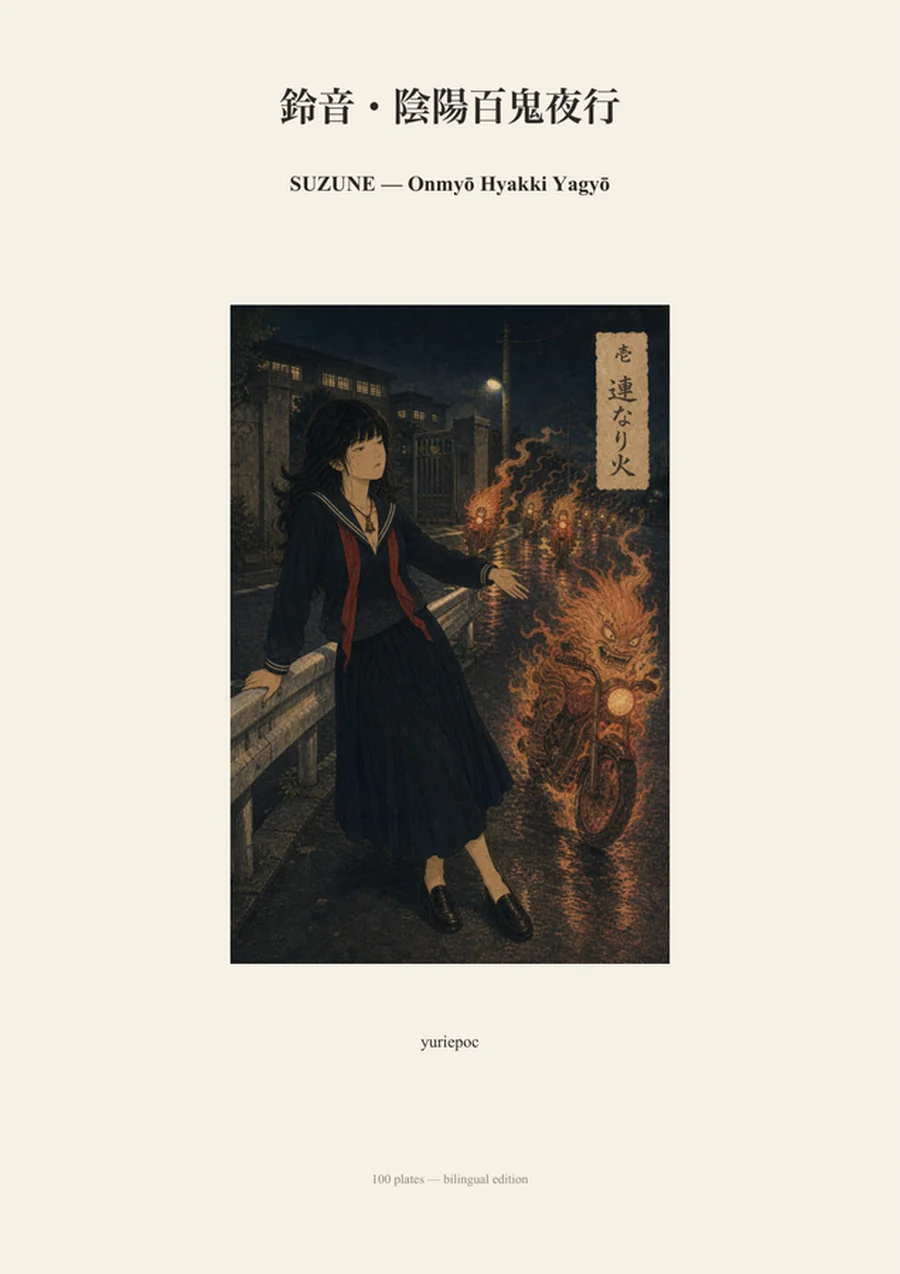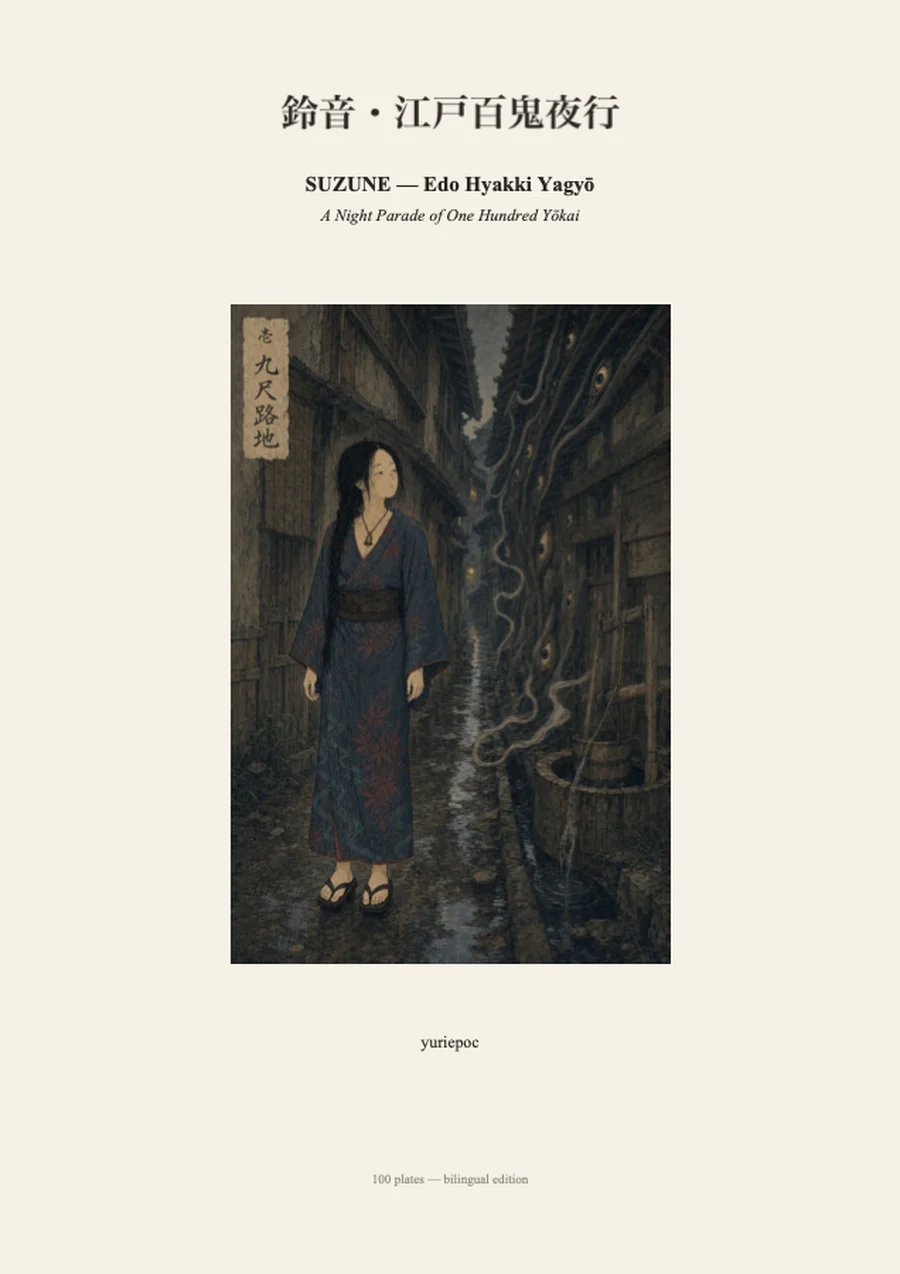
About this book
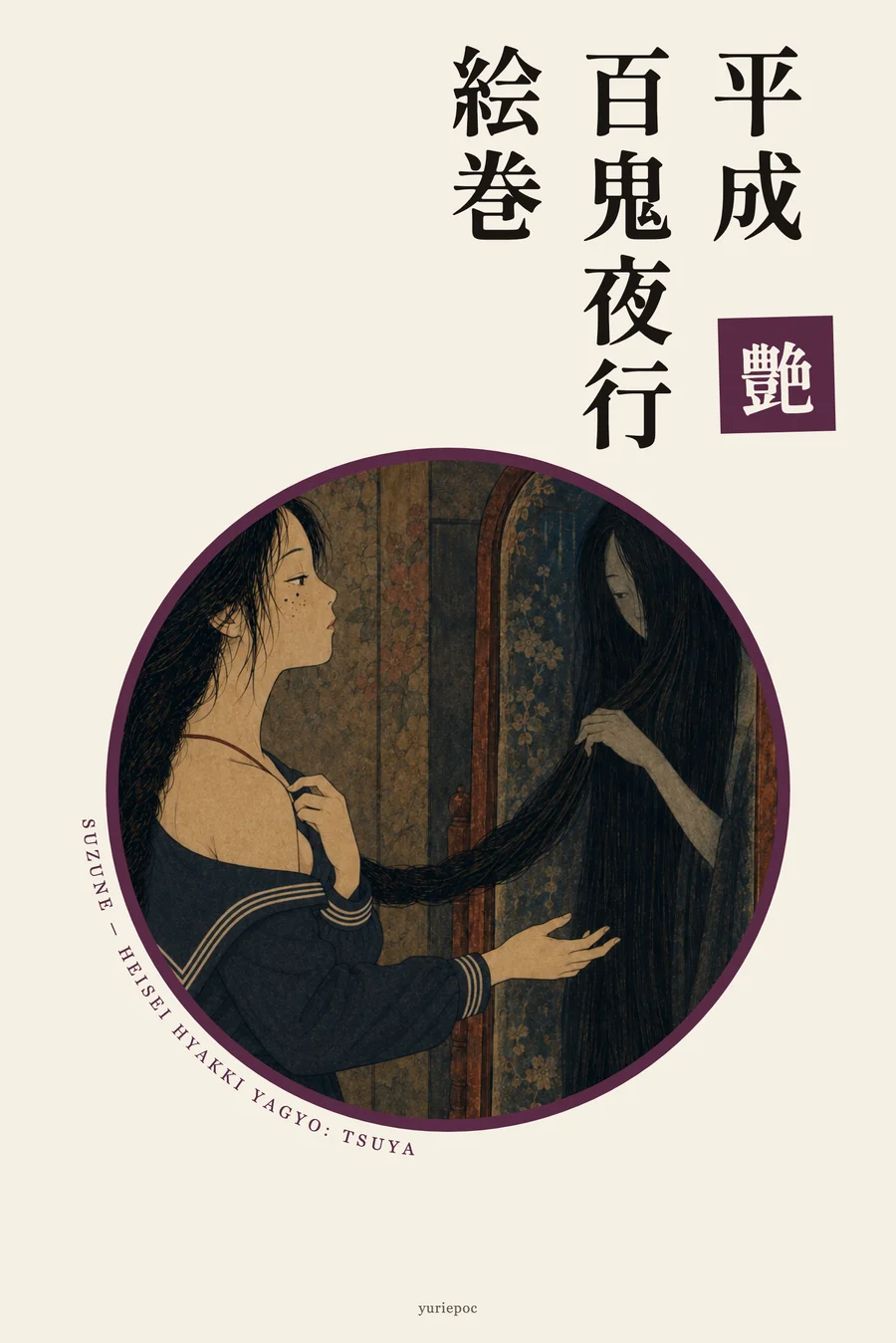
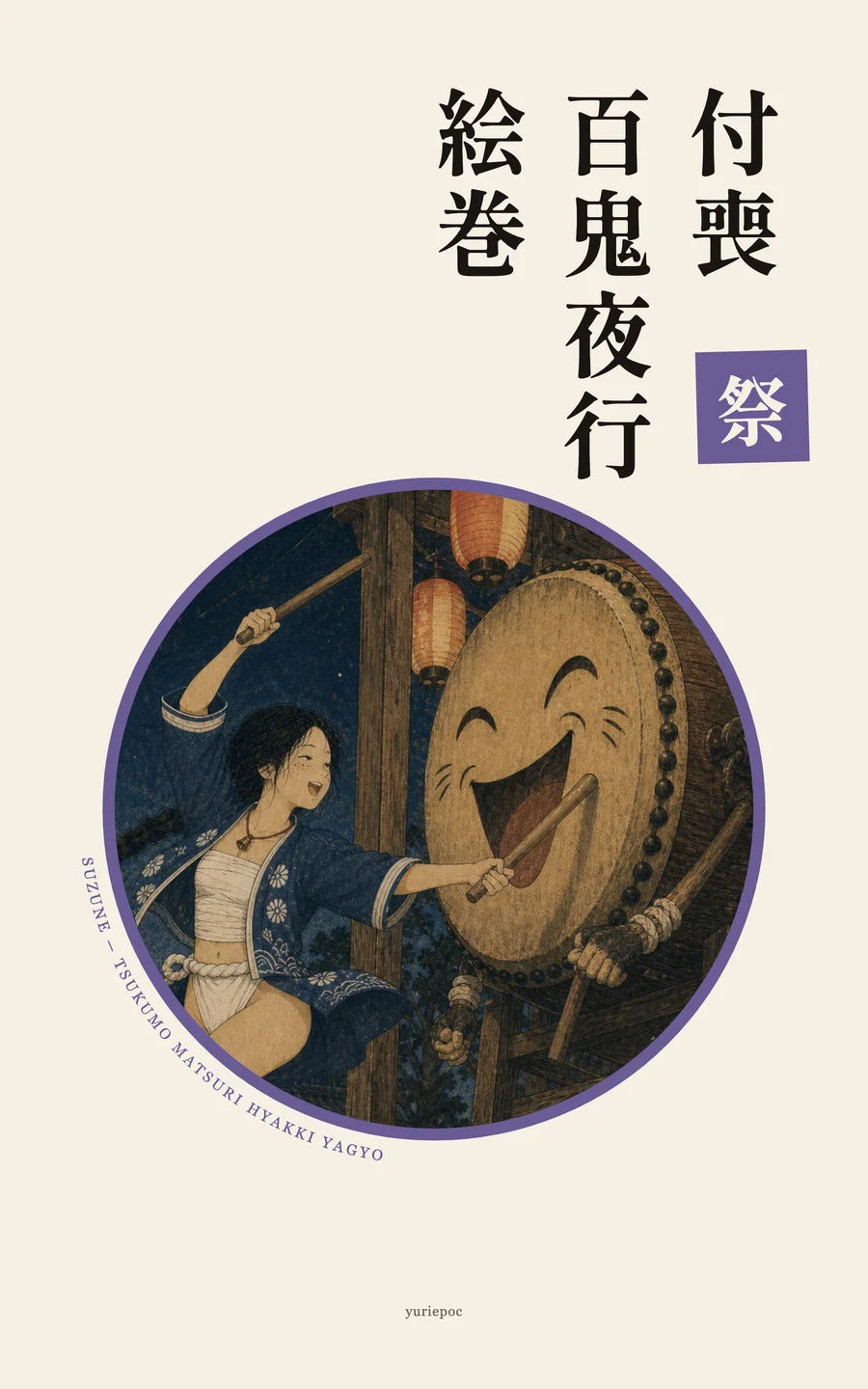
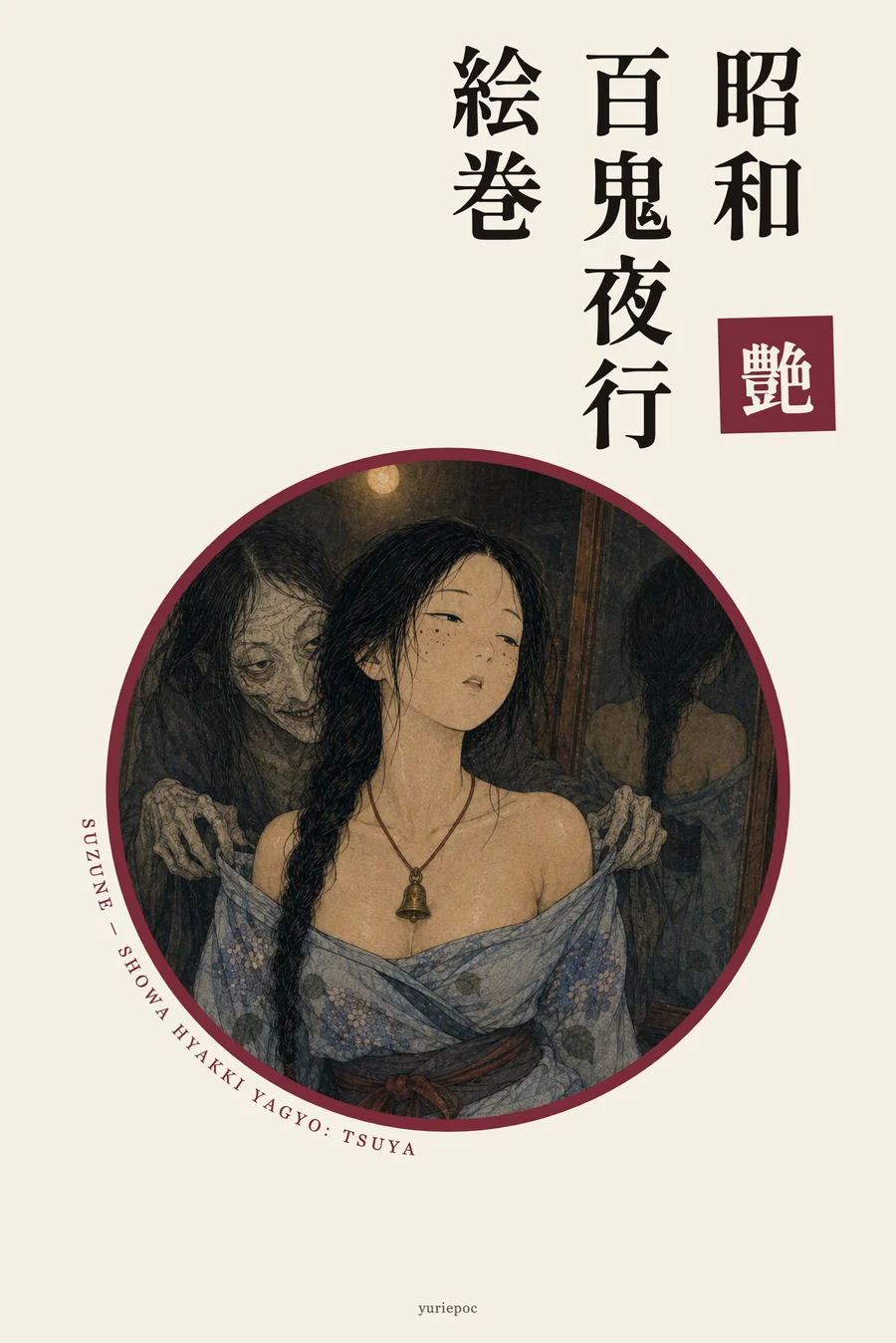
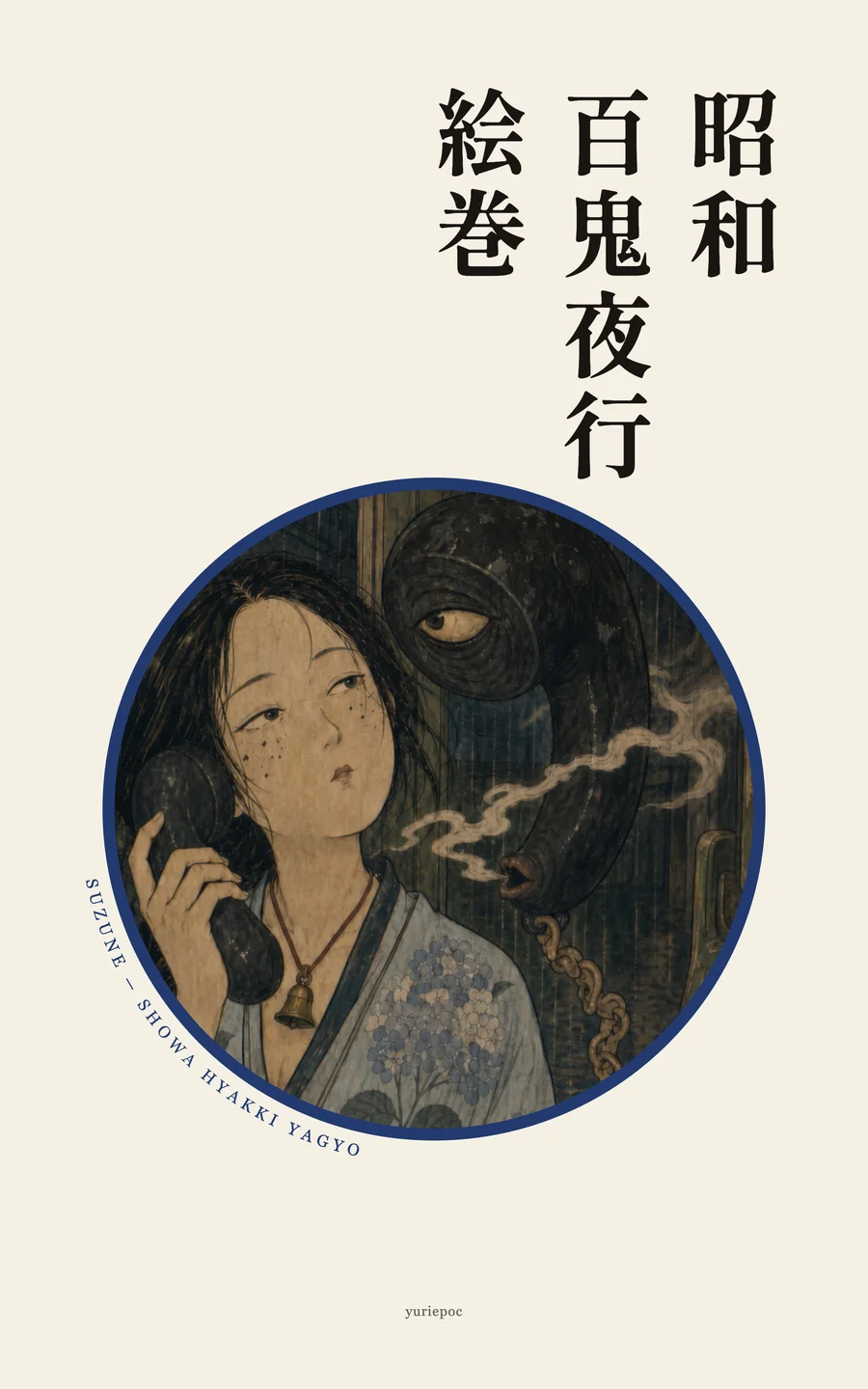
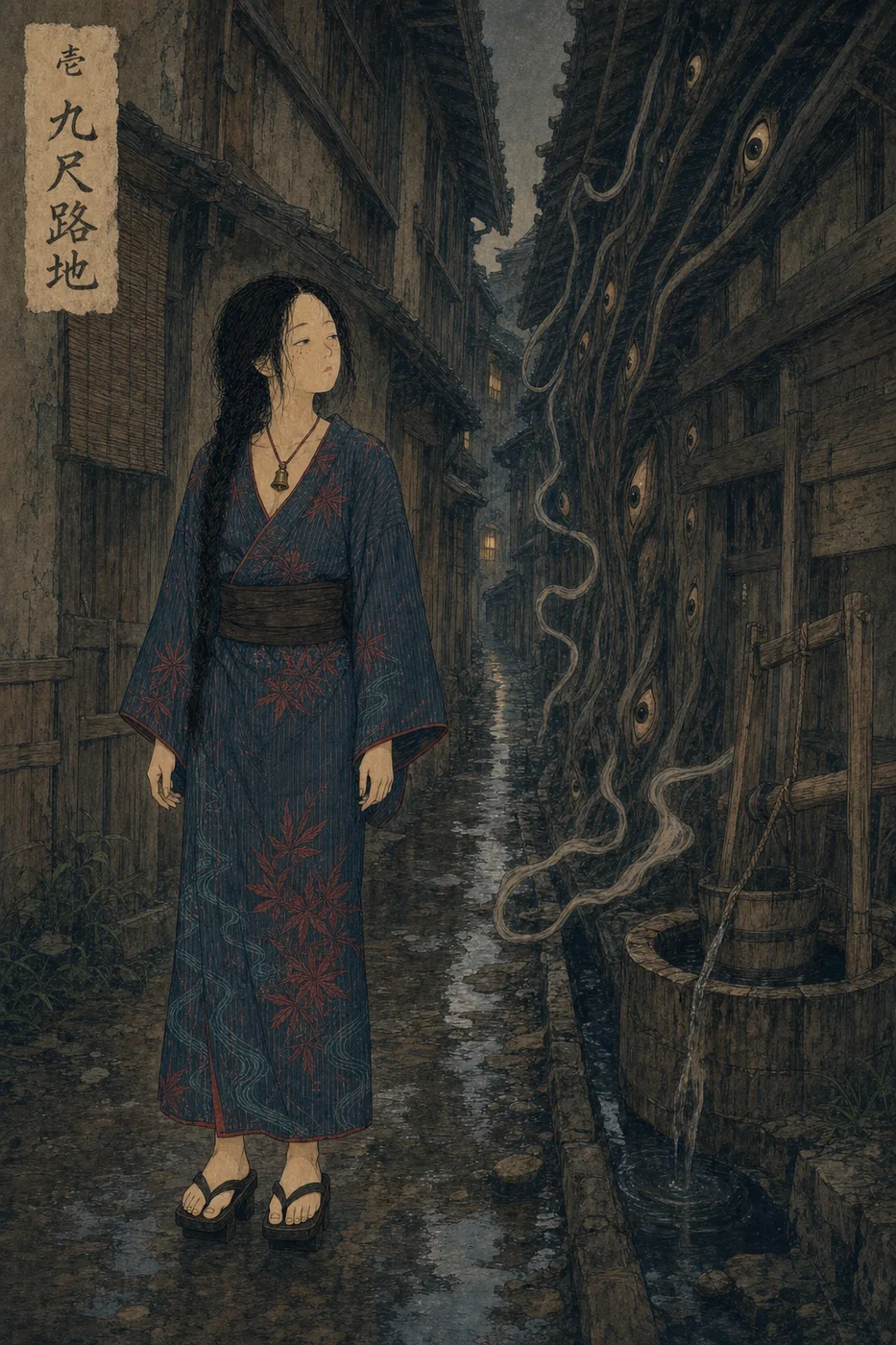
At night in Edo, things move on their own. Only the frontage of a back-alley tenement narrows, a foot at a time; only the lid of a rice kettle hops in time with the grains inside; only the sound of hooves crosses the bridge ahead of the horse. Nothing transforms whole. One part of daily life slips its owner's hand and begins to act for itself — that is the grammar of this town's hauntings. The parade makes no clamor. It hides quietly between the sound of well water, the night watchman's clappers, and the rustle of cloth.
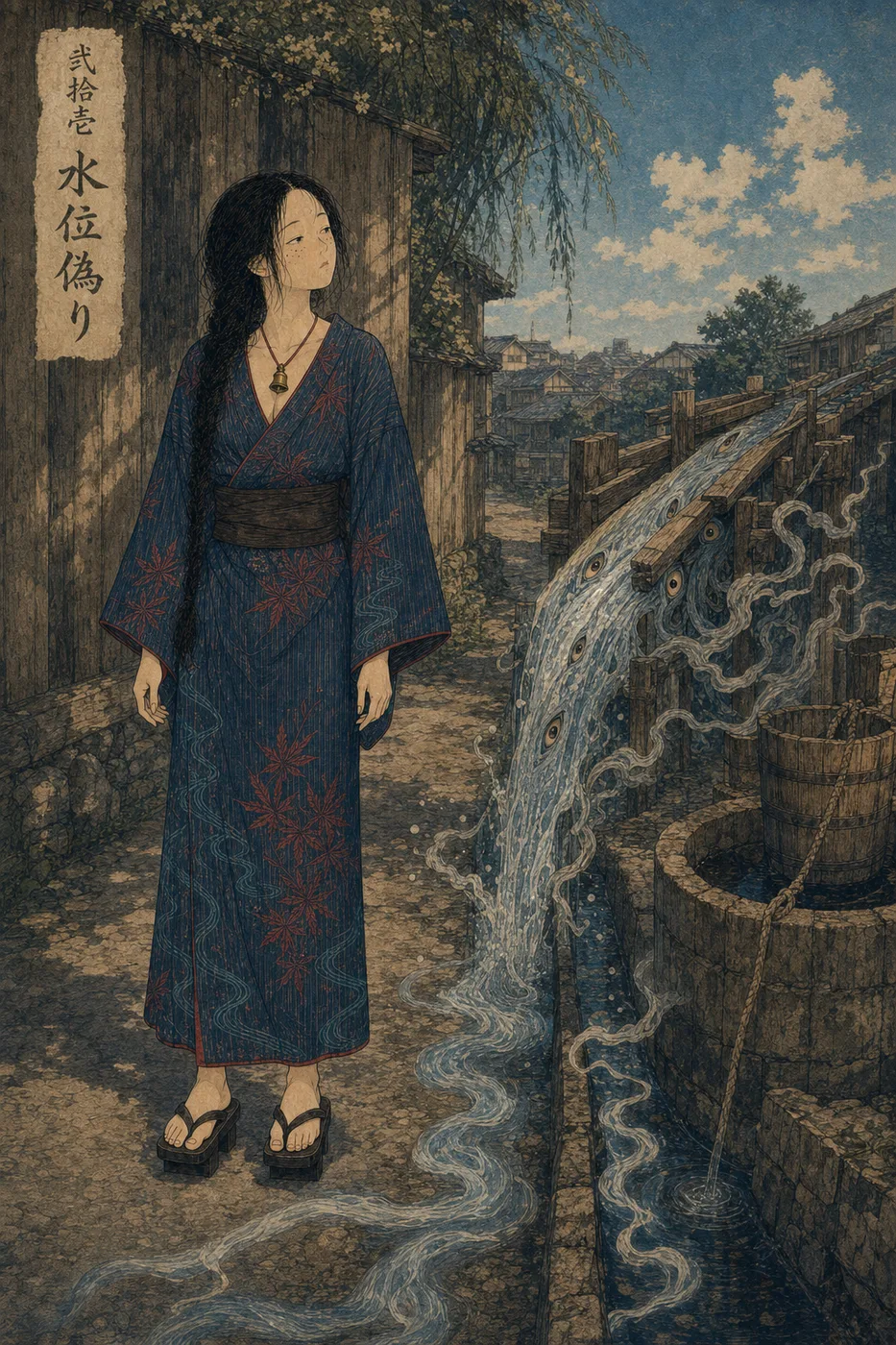
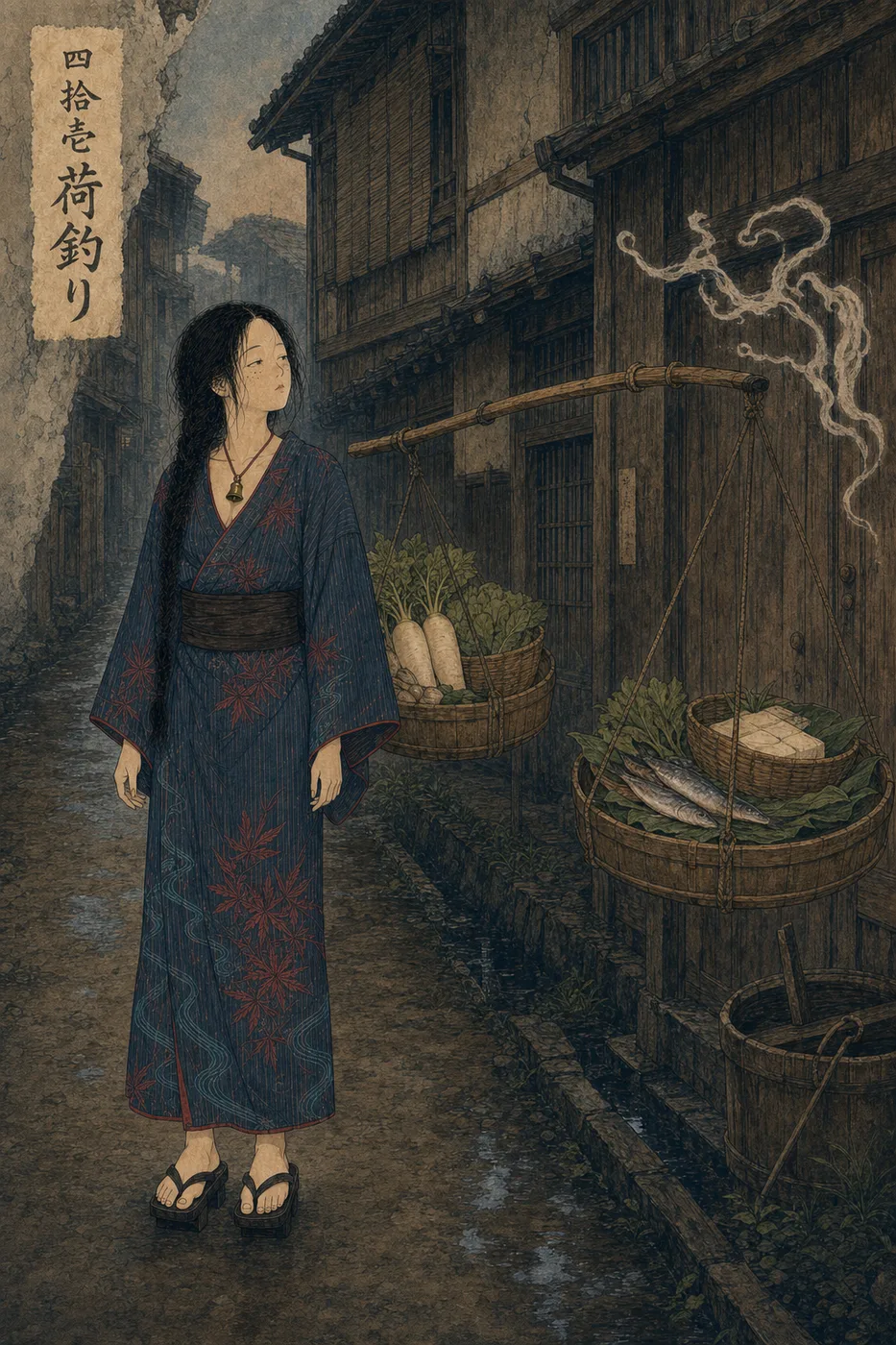
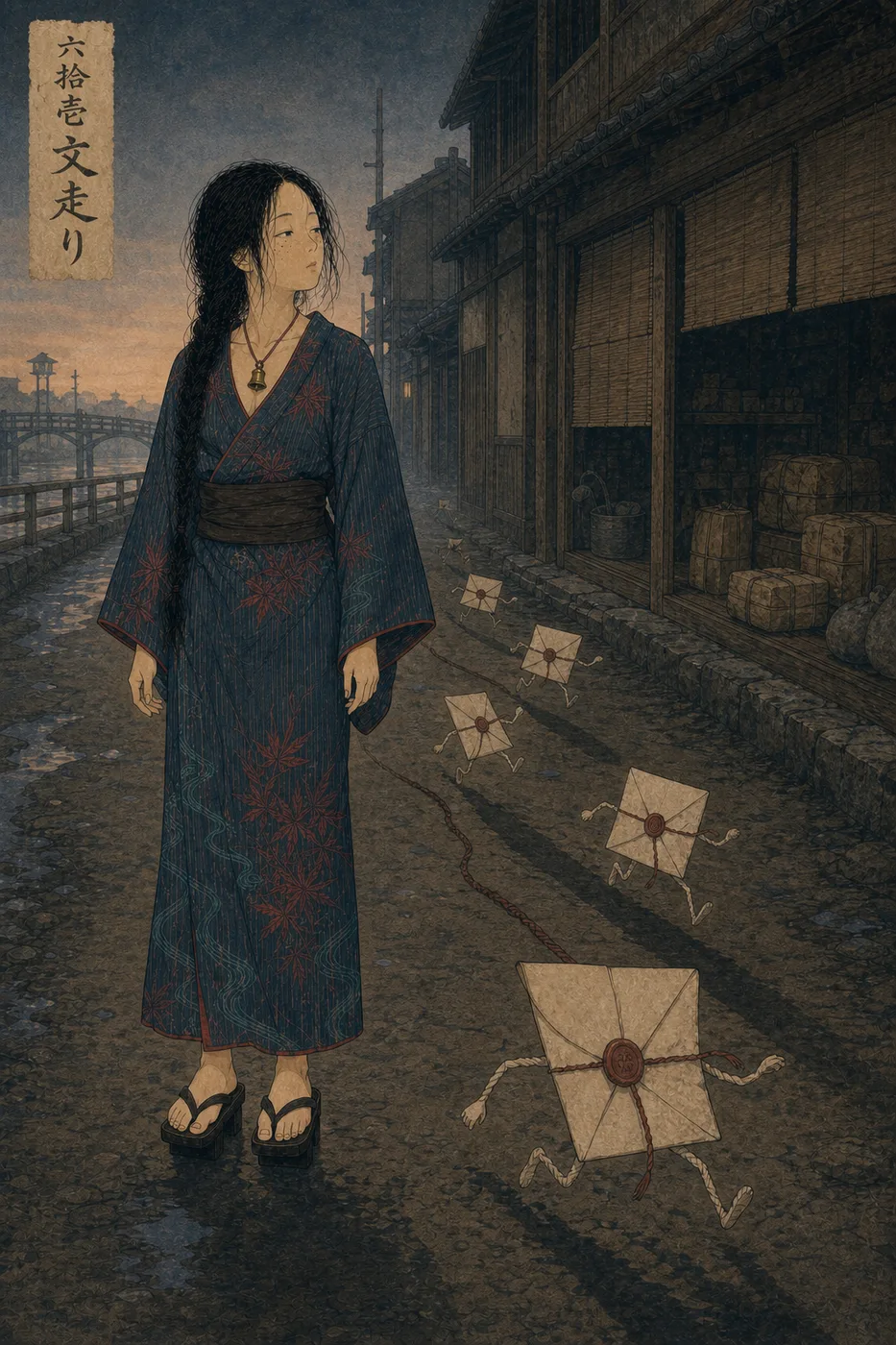
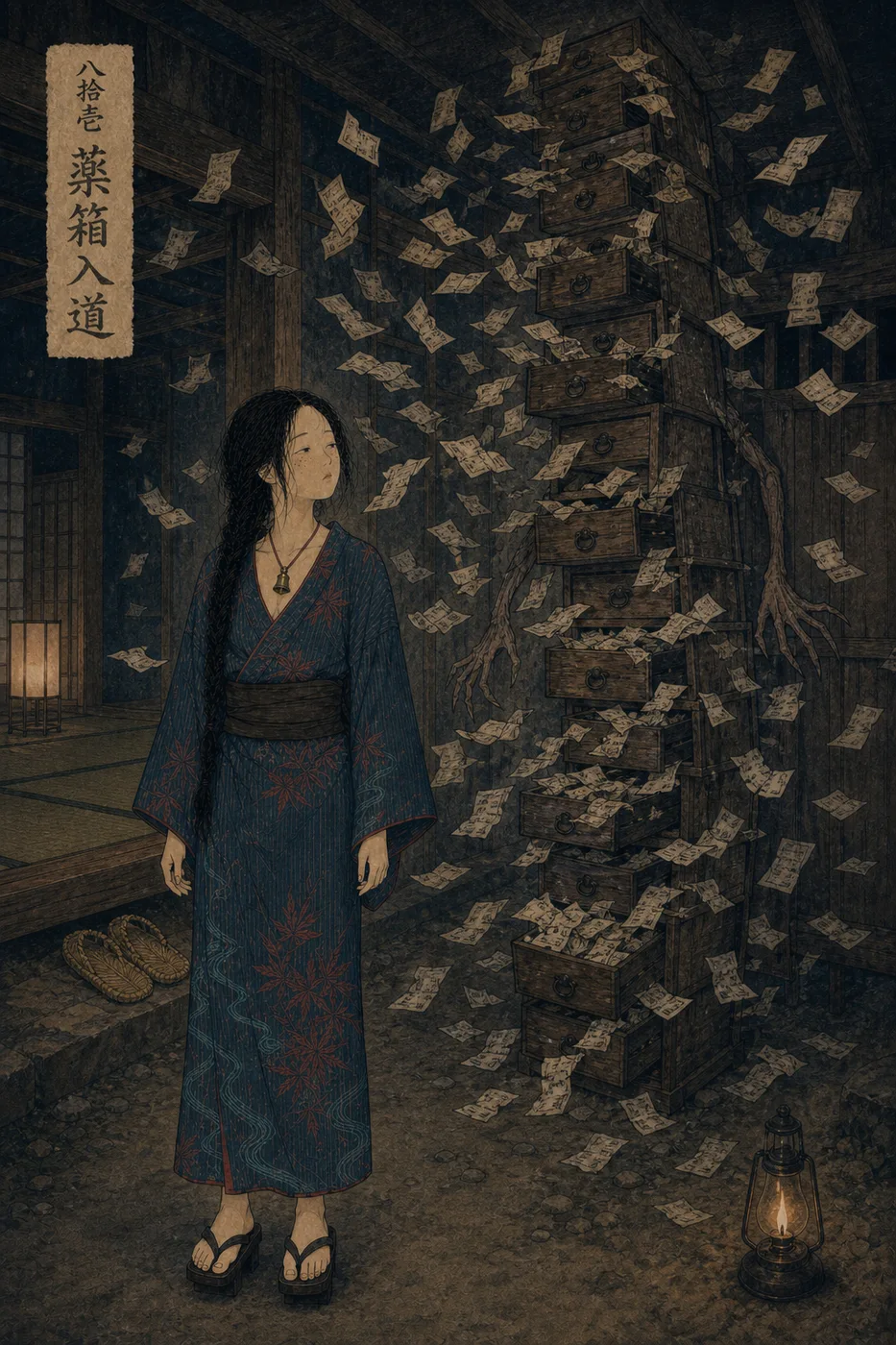
The stage is a single night in a townsmen's quarter, late in the Edo period — the decades from Bunka and Bunsei down to the last days of the shogunate. Of the hundred yōkai, forty come from the lore drawn and printed by Edo's own artists and publishers — Toriyama Sekien, Katsushika Hokusai, Utagawa Kuniyoshi among them. Sixty were newly born from the life of the town itself: its tenements, wells, bathhouses, fire towers, post stations, print shops, and canals. The girl does not run. Dressed as a town girl in a plain single-layer kimono, she walks the night streets as if on watchman's rounds — laying a hand on nothing, keeping each small custom, seeing all one hundred apparitions through, plate by plate.
However deep the night, the dawn bell always comes. The final plate belongs to Ariake-onna, the woman of the all-night lantern — a shade that dwells in the lamp kept burning until morning, and lingers alone after the hundred shadows have withdrawn. When the girl rings the small bell at her throat, that single note is the signal: the woman thins away, implements return to being tools, and the town returns to being morning. And yet, somewhere, one sound is left unfaded. If you should meet a remnant of the night, do not pick it up, do not point — pass by in silence. That is the one piece of etiquette this book asks of you.
Sample plates
Other books